
When Sherlock Holmes announces "You have been in Afghanistan, I perceive," readers experience the satisfaction of seemingly magical reasoning, a detective who can deduce vast conclusions from minimal evidence.
The word "deduce" is central to Holmes's myth, and the myth is largely inaccurate about which type of reasoning he actually uses.
Holmes, as Arthur Conan Doyle's stories make clear, typically works from a tan line, a posture, and a type of soil on a boot to infer that a man has served in Afghanistan. That is not deduction. That is abduction: reasoning to the most probable explanation from a set of clues.
The confusion matters, because deduction, induction, and abduction are genuinely different cognitive operations, each with distinct strengths, failure modes, and appropriate applications. Understanding them clearly is foundational to critical thinking, scientific literacy, and effective professional reasoning.
Deductive Reasoning: From General to Specific
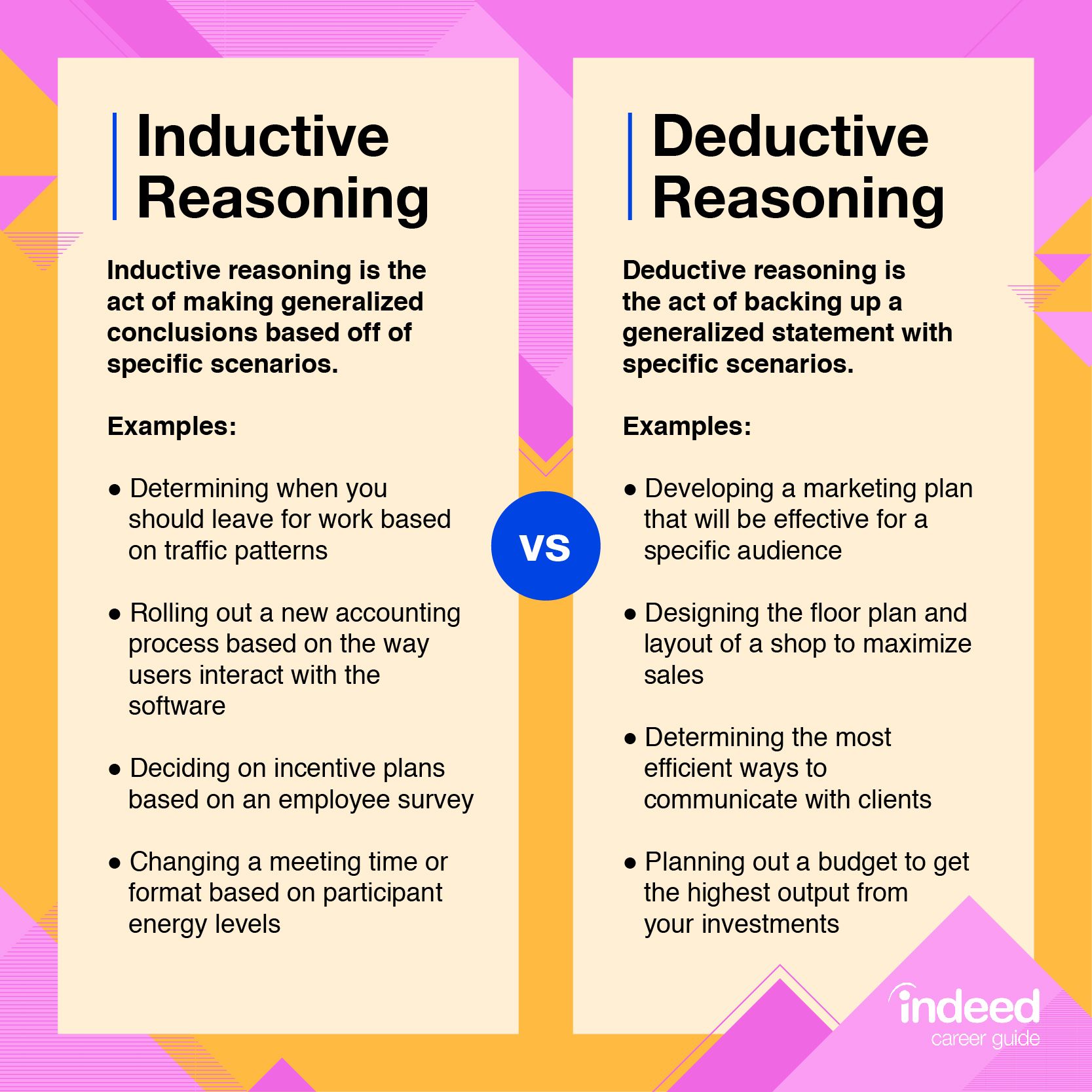
Deductive reasoning is the process of deriving a specific conclusion from general premises. The defining feature of valid deductive reasoning is that if the premises are true and the argument is logically valid, the conclusion must be true.
There is no room for probability or uncertainty: a valid deductive argument with true premises produces a guaranteed true conclusion.
The classic form is the syllogism, formalized by Aristotle in the Prior Analytics (circa 350 BC). Aristotle's systematization of logical inference was so complete that it dominated Western logical thought for nearly two thousand years.
Bertrand Russell noted that Aristotle's logic was essentially unchallenged from its inception until Gottlob Frege's development of modern predicate logic in the 1870s-1880s:
All men are mortal. Socrates is a man. Therefore, Socrates is mortal.
This is the pure form: a major premise (a general claim about a category), a minor premise (a specific claim assigning an instance to that category), and a conclusion that follows necessarily.
The formal logic term for this structure is modus ponens, "affirming the antecedent":
- If P, then Q.
- P is true.
- Therefore Q is true.
Deduction has two distinct requirements that both must be met for the reasoning to be reliable:
- Validity: The logical form is correct, the conclusion follows necessarily from the premises.
- Soundness: The premises are actually true in the world.
An argument can be valid without being sound:
All birds can fly. Penguins are birds. Therefore penguins can fly.
The logic is valid, the conclusion follows from the premises. But the conclusion is false because the first premise is false. Evaluating deductive arguments requires both checking the logical structure and verifying the factual premises.
In practice, the most common source of error in apparently deductive reasoning is not logical invalidity but factual falsity in the premises: a category error that skilled arguers frequently exploit by embedding disputed premises so deeply in the argument structure that they escape examination.
The Historical Importance of Deductive Systems
Euclid's Elements (circa 300 BC) is the paradigmatic example of a fully deductive system in practice. Starting from five axioms and five common notions, Euclid derives hundreds of geometric propositions through chains of valid deduction.
The system was so compelling as a model of knowledge that philosophers from Spinoza to Newton attempted to structure their own works deductively, building from self-evident first principles toward derived conclusions.
The limitation this revealed, that the power of deduction depends entirely on the truth of its starting premises, which cannot themselves be deductively established, was one of the driving problems of early modern epistemology, and contributed directly to the empiricist turn that generated the scientific revolution.
Inductive Reasoning: From Specific to General
Inductive reasoning moves in the opposite direction: from specific observations to general principles. The defining feature is that the conclusion is probable but not certain, it can always be falsified by new evidence.
The classic example of inductive reasoning:
I have observed 100 swans. All 100 were white. Therefore, all swans are white.
This argument is inductively strong, the evidence supports the conclusion, but not deductively valid. The conclusion does not follow with necessity from the premises.
And in 1697, when Dutch explorer Willem de Vlamingh discovered black swans (Cygnus atratus) in the Swan River region of western Australia, the inductive generalization was falsified by a single counterexample.
The black swan has since become a powerful metaphor, popularized by Nassim Taleb in The Black Swan (2007), for the rare, unpredictable event that retrospective narrative assigns inevitability to but that prior inductive reasoning could never have anticipated.
The swan example illustrates the fundamental epistemological limitation of all empirical generalization: no finite set of observations can establish a universal claim with logical certainty.
This is the fundamental difference between deduction and induction: deductive conclusions are guaranteed by their premises; inductive conclusions are only supported by them.
The Problem of Induction
The philosopher David Hume identified what he called the problem of induction in his 1739 Treatise of Human Nature: there is no logical justification for inferring general rules from particular observations. We have seen the sun rise every day in recorded history; we believe it will rise tomorrow.
But that belief, Hume argued, is grounded in habit and psychological necessity, not in logical inference. No amount of observed sunrises logically entails that the sun will rise tomorrow.
Hume's problem is not merely academic. It strikes at the heart of the scientific enterprise, which depends fundamentally on the assumption that observed regularities reflect genuine causal structures that will continue to operate.
Hume's answer was that we have no rational justification for this assumption: we simply cannot help making it, because it is built into the structure of human psychology. He called this custom or habit: the mind's tendency to expect future events to resemble past ones.
This problem is genuinely unsolved in formal philosophy. Karl Popper proposed the most influential response in The Logic of Scientific Discovery (1934): science should not be in the business of verifying general claims inductively but in the business of falsifying them deductively.
A scientific hypothesis is not confirmed by accumulating confirming observations; it is tested by deriving specific predictions from it and checking whether they hold. When a prediction fails, the hypothesis is falsified, and that failure is a deductively valid result.
"No amount of observations of white swans can allow the inference that all swans are white, but the observation of a single black swan is sufficient to refute that conclusion." (Karl Popper, The Logic of Scientific Discovery, 1934)
Popper's solution replaces inductive verification with deductive falsification as the engine of scientific progress.
The price is that scientific theories are never "proven", they are only "not yet refuted." Many philosophers and scientists find this price acceptable; others argue that it does not fully dissolve Hume's problem because even falsification relies on inductive trust in the reliability of our observations.
Abductive Reasoning: Inference to the Best Explanation
The third major form of reasoning, and the one Holmes actually uses, is abductive reasoning, formalized by American philosopher Charles Sanders Peirce in the late 19th century.
Peirce, working in the tradition of American pragmatism, was interested in how scientific discovery actually happens, not in the formal logic of confirmation or falsification, but in the creative process by which new hypotheses are generated in the first place.
Peirce defined abduction as the process of forming an explanatory hypothesis: given an observation, what is the best explanation for it? Unlike deduction (which derives consequences from principles) or induction (which generalizes from observations), abduction works backward from an observation to a cause.
The formal structure:
I observe surprising fact C. Hypothesis H would, if true, explain C. Therefore there is reason to believe H is true.
Peirce called this "inference to the best explanation": the hypothesis that is selected is not the only possible explanation, but the one that most parsimoniously and plausibly accounts for the evidence.
Medical diagnosis is the purest everyday example of abductive reasoning. A physician observing fever, productive cough, and bilateral lung consolidation on a chest X-ray considers multiple possible explanations (bacterial pneumonia, viral pneumonia, pulmonary edema, tuberculosis) and selects the hypothesis that best fits the full pattern of evidence, while remaining open to revision as new information arrives.
Internist Gurpreet Dhaliwal, who has published extensively on clinical reasoning (Dhaliwal & Detsky, 2013), describes expert diagnosis as precisely this process: iterative hypothesis generation and testing guided by incoming information.
The philosopher Gilbert Harman (1965) formalized the concept of inference to the best explanation in analytic philosophy, arguing that abduction is more widespread in good reasoning, scientific and everyday, than formal philosophical accounts acknowledge.
Peter Lipton's Inference to the Best Explanation (2004) provides the most thorough philosophical treatment, analyzing what makes one explanation "best" and when abductive reasoning is epistemically justified.
| Reasoning Type | Direction | Conclusion Type | Example |
|---|---|---|---|
| Deductive | General to Specific | Certain (if premises are true and argument is valid) | All mammals are warm-blooded; dolphins are mammals; therefore dolphins are warm-blooded |
| Inductive | Specific to General | Probable (stronger with more evidence, but always revisable) | Every raven I have observed is black; therefore ravens are black |
| Abductive | Observation to Best Explanation | Plausible (the most likely explanation given the evidence) | The grass is wet; the most parsimonious explanation is that it rained |
How Scientists Use Both Forms
The actual practice of science uses deductive and inductive reasoning in a cycle that is more complex than either the popular image of "doing experiments" or the formal philosophical models suggest.
The Hypothetico-Deductive Method
The dominant model of scientific reasoning in the 20th century is the hypothetico-deductive method, described by philosophers including Carl Hempel, Popper, and Imre Lakatos. The structure:
- Observation (inductive): Repeated observations suggest a pattern. "Patients who take this compound seem to recover faster."
- Hypothesis formation (abductive): The best explanation for the pattern is proposed. "This compound inhibits bacterial protein synthesis."
- Prediction derivation (deductive): Specific, testable predictions are derived from the hypothesis. "If the compound inhibits protein synthesis, then bacteria grown in its presence should show reduced ribosomal activity."
- Testing: Experiments check whether the predictions hold.
- Revision: If predictions hold, the hypothesis gains support. If they fail, the hypothesis must be revised or abandoned.
This cycle is not linear, hypothesis formation and prediction testing iterate continuously. The key contribution of Popper's falsificationism is the emphasis on step 3: good scientific hypotheses must be falsifiable, meaning they must make specific predictions that could in principle be proved wrong.
Lakatos's modification of Popper, the research programme model (1978), adds the important observation that scientists rarely abandon a hypothesis on the basis of a single falsifying result.
Instead, they protect their core theories with a "protective belt" of auxiliary hypotheses, and revise the auxiliary hypotheses when predictions fail, abandoning the core only when the research programme is no longer "progressive" (generating new, confirmed predictions).
Induction in Statistics
Modern science relies heavily on statistical induction: drawing probabilistic conclusions from sample data about populations. A randomized controlled trial of a drug treats a sample of 1,000 patients and observes that 60% of the treatment group recovers compared to 40% of the control group.
The inductive inference is that the drug improves recovery rates in the broader population from which the sample was drawn.
Statistical methods provide formal tools for managing inductive uncertainty: confidence intervals, p-values, and effect sizes describe how reliable and meaningful the generalization from sample to population is likely to be. But these tools do not eliminate the fundamental inductive challenge: they quantify it.
The distinction between frequentist statistics (which treats probability as the long-run frequency of outcomes) and Bayesian statistics (which treats probability as a degree of belief, updated by evidence) maps directly onto different philosophical responses to the problem of induction.
The Bayesian approach explicitly incorporates prior beliefs into the analysis, while the frequentist approach aims to derive conclusions purely from data without reference to priors.
Both approaches have strengths and contexts where they perform better, and the tension between them reflects genuine philosophical differences about the nature of inductive inference.
Logical Fallacies in Deductive Reasoning
Because deductive validity depends on logical form, specific patterns of invalid reasoning, formal fallacies, can be identified and described precisely.
Affirming the Consequent
The valid deductive form (modus ponens):
- If A then B; A; therefore B.
The fallacy (affirming the consequent):
- If A then B; B; therefore A.
Example: "If it is raining, the street is wet. The street is wet. Therefore it is raining." But the street could be wet for many reasons: a burst pipe, recent washing, morning dew. That the street is wet does not logically entail that it is raining.
This fallacy is extremely common in medical and scientific reasoning. "If the patient has condition X, they will show symptom S. The patient shows symptom S. Therefore the patient has condition X." Many conditions produce overlapping symptoms, making the valid deductive form of diagnostic reasoning much rarer than it appears.
Denying the Antecedent
- If A then B; not A; therefore not B.
Example: "If it is raining, the street is wet. It is not raining. Therefore the street is not wet." Again, the street could be wet for other reasons. The valid form here is modus tollens (if A then B; not B; therefore not A), which is a legitimate deductive inference.
Invalid Syllogisms
- All A are B; all C are B; therefore all A are C.
Example: "All cats are mammals. All dogs are mammals. Therefore all cats are dogs." The conclusion is false because the premises share a predicate (mammals) rather than establishing a chain of inclusion.
This fallacy structure appears in arguments like "All terrorists are extremists; all gun rights advocates are extremists; therefore all gun rights advocates are terrorists", structurally invalid regardless of the specific content.
The Undistributed Middle
A classic formal fallacy in syllogistic logic where the middle term (the term that connects the two premises) is not distributed (does not refer to all members of the class) in either premise:
- Some politicians are liars.
- Some liars are criminals.
- Therefore some politicians are criminals.
The middle term "liars" is not distributed in either premise, so the inference is invalid, even though the conclusion might happen to be true for other reasons.
Logical Failures in Inductive Reasoning
Inductive reasoning has its own characteristic failure modes, distinct from formal logical fallacies because they involve the quality of evidence rather than the validity of logical form.
Hasty Generalization
Drawing a general conclusion from an insufficient or unrepresentative sample.
Example: A manager interviews three software engineers who all prefer remote work and concludes that all software engineers prefer remote work. The sample is too small and potentially unrepresentative (the manager may have a selection bias in which engineers they spoke with) to support the generalization.
Stack Overflow's annual developer survey, which samples tens of thousands of developers globally, provides a far more reliable basis for this inference, and its data on remote work preferences is considerably more nuanced.
Survivorship Bias
Observing only the cases that survived a selection process and generalizing from them to all cases.
Abraham Wald's World War II analysis of aircraft damage provides the canonical example. The U.S. military observed that returning bombers showed the most damage in the fuselage and wings, and initially proposed reinforcing those areas. Wald pointed out the selection bias: the planes being observed were the ones that survived.
The areas showing the most damage on returning planes were the areas where planes could sustain damage and still fly. The areas showing least damage on returning planes were where they had been hit and did not return. The reinforcement should go where the returning planes were undamaged: the engines and cockpit.
Survivorship bias pervades business reasoning. Studies of successful companies' management practices (such as Peters and Waterman's In Search of Excellence, 1982) suffer from this problem: they examine companies that succeeded and identify their characteristics, while failing to examine companies with the same characteristics that failed.
Phil Rosenzweig documented this systematically in The Halo Effect (2007), showing that many of the most celebrated business management studies are methodologically compromised by survivorship selection.
Inductive Leap
The gap between observed patterns and the universal claim they are used to justify.
Research on the effectiveness of a teaching method finds that it improves outcomes in 12 studies across three countries. The inductive leap to "this method works for all students everywhere" is considerably larger than the evidence justifies.
The method may work in the cultural and institutional contexts studied while performing differently in others.
The history of educational research is littered with methods that showed strong effects in initial studies and disappointing results when scaled to broader and more diverse populations, a phenomenon sometimes called "voltage drop" in implementation science.
The Gambler's Fallacy
The erroneous belief that after a series of outcomes in one direction, the reverse is "due." After ten consecutive red results on a roulette wheel, a gambler believes black is more likely, as if the wheel "remembers" its past outcomes.
This is an inductive error: the observations of past results are incorrectly used to infer a higher probability for future results, when the wheel's mechanism makes each spin independent.
The reverse error, the hot hand fallacy, involves believing that a person on a streak is more likely to continue succeeding. Gilovich, Vallone, and Tversky's famous 1985 analysis of basketball shooting found that the perceived "hot hand" did not appear in the actual shot data.
(More recent work by Miller and Sanjurjo, 2018, has complicated this finding, suggesting the original analysis had a statistical artifact, in itself a useful illustration of how robust even widely-cited scientific results can be difficult to establish.)
Applications in Law, Medicine, and Research
Law
Legal reasoning is a particularly rich domain for observing both types of reasoning operating in tandem.
Statute application is fundamentally deductive: the statute defines a general rule (all persons who meet criteria X are liable for penalty Y); the facts establish that this defendant meets criteria X; therefore this defendant is liable for penalty Y.
Legal advocacy largely takes the form of contesting the premises, disputing whether the defendant's conduct falls under the statutory category, or arguing that the statute is unconstitutional.
Common law development is fundamentally inductive. Common law systems (the UK, US, Canada, Australia) develop law through judicial decisions. Judges examine prior cases, identify the principles that seem to explain their outcomes, and apply (or distinguish) those principles in new cases.
Over decades, the accumulated pattern of decisions inductively builds a body of general principle, though the individual decisions are deductively derived from existing precedent applied to new facts.
Ronald Dworkin's theory of legal reasoning in Law's Empire (1986) describes this as an interpretive practice that combines both inductive reconstruction of principle and deductive application: "law as integrity."
Criminal standards of proof illustrate the stakes of managing inductive uncertainty in legal contexts.
The "beyond reasonable doubt" standard applied in criminal trials is designed to manage the asymmetry between false positive (convicting an innocent person) and false negative (acquitting a guilty one) errors, a fundamentally probabilistic judgment, even though courts are reluctant to express it numerically.
Medicine
Medical reasoning combines all three forms:
- Abductive: Diagnosis, inferring the most likely condition from observed symptoms and test results
- Deductive: Treatment protocol application, if condition X, administer treatment Y; patient has condition X; administer Y
- Inductive: Clinical research, accumulating observations from patient populations to establish general treatment guidelines
Evidence-based medicine, formalized in the 1990s by Gordon Guyatt and colleagues at McMaster University, is an explicit commitment to grounding medical decisions in inductively established population-level evidence rather than anecdote, tradition, or pure clinical intuition.
Its hierarchy of evidence, with systematic reviews and meta-analyses of randomized trials at the top and clinical opinion at the bottom, is a practical framework for calibrating confidence in inductive inferences based on the strength of the evidence generating them.
Analyses of treatment effectiveness, such as the long-running BMJ Clinical Evidence project, have estimated that only a minority of widely used medical treatments are clearly supported by high-quality evidence; a substantial fraction rest on expert opinion, small observational studies, or theoretical reasoning rather than robust inductive evidence.
This does not mean those treatments are ineffective, only that we do not have strong inductive grounds for confidence in them.
Research and Analysis
The distinction between deductive and inductive approaches maps onto two broad research strategies in social science:
Deductive (theory-testing) research starts with a theory, derives testable hypotheses, collects data, and evaluates whether the data support the predictions. This is the dominant paradigm in quantitative social science.
Pre-registration, specifying hypotheses and analysis plans before data collection, has been increasingly adopted to prevent the post-hoc construction of hypotheses that fit observed data (HARKing: Hypothesizing After Results are Known).
Inductive (theory-building) research starts with observations, looks for patterns, and develops theoretical explanations of those patterns. Qualitative research, grounded theory methodology (Glaser & Strauss, 1967), and ethnography use primarily inductive approaches.
Barney Glaser and Anselm Strauss's grounded theory explicitly prohibits beginning with a pre-formed theoretical framework, to preserve the inductive openness to findings that diverge from existing theory.
Most sophisticated research combines both: quantitative studies test deductively derived hypotheses but also generate new inductive insights; qualitative studies build inductively toward theory but use deductive logic when evaluating whether observed patterns are consistent with broader principles.
Why the Distinction Matters in Practice
The practical importance of distinguishing deductive from inductive reasoning is not academic. It is directly relevant to how you evaluate claims, arguments, and evidence in daily professional and personal life.
When someone presents a deductive argument, the right questions are: Are the premises actually true? Is the logical form valid, does the conclusion really follow? When you find a factual error in the premises or a logical error in the structure, the conclusion falls regardless of how compelling it seems.
When someone presents an inductive argument, "research shows that X", the right questions are: How representative was the sample? How many observations support the generalization? What is the effect size? Is there evidence that would falsify the claim?
Inductive conclusions are probabilistic: they can be well-supported or poorly supported, not simply true or false.
When someone presents an abductive argument, "the most likely explanation is Y", the right questions are: What alternative explanations were considered? What evidence would distinguish between them? Is the preferred explanation really the most parsimonious fit, or does it reflect prior belief?
A particularly common confusion is treating a well-supported inductive generalization as if it were a deductively certain conclusion.
"Studies show that exercise improves mental health" is a probabilistic inductive statement about populations; "therefore you should exercise to improve your mental health" involves additional assumptions about whether the population findings apply to you, what "improve" means in your case, and what other factors might mediate the effect.
The confidence warranted for the specific application is lower than the confidence warranted for the general finding, a distinction that health advice, medical, nutritional, and psychological, frequently elides.
Understanding which type of reasoning is being used in any given argument is the prerequisite for evaluating it correctly. A deductive argument is not stronger because it cites many examples, the examples are irrelevant to its validity.
An inductive argument is not stronger because of the confidence with which the conclusion is stated, the sample and methodology determine its strength. These distinctions are not subtle philosophical technicalities. They are the basic grammar of rigorous thought.
A Practical Summary: Testing Your Own Arguments
When constructing or evaluating any argument, three diagnostic questions reliably surface the most important weaknesses:
For deductive arguments: "Is this premise actually true?" and "Does the conclusion actually follow, or am I assuming a step?" The most dangerous deductive failures come from premises embedded so deeply in shared assumptions that they escape scrutiny.
For inductive arguments: "How representative and large is the evidence base?" and "What would falsify this generalization?" Strong inductive arguments specify not just supporting evidence but the conditions under which the generalization would not hold.
For abductive arguments: "What alternative explanations did I consider?" and "What evidence would distinguish between them?" The most common abductive failure is insufficient consideration of alternatives, particularly alternatives that are consistent with your values and prior beliefs going unexplored while uncomfortable hypotheses are examined exhaustively.
Applying these questions systematically, to your own arguments before presenting them, and to others' arguments before accepting them, is the single most transferable skill that a clear understanding of deductive, inductive, and abductive reasoning can provide.