
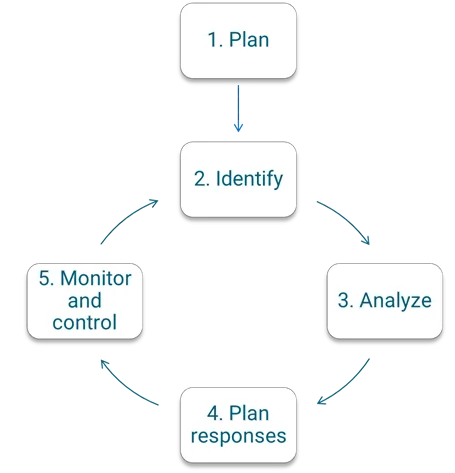
Frameworks and complexity are inseparable because bounded attention and working memory cannot process every detail of a real system. Abstraction, categorization, hierarchy, heuristics, analogy, and decomposition make problems manageable by preserving selected structure and discarding the rest. Their value depends on retaining the relevant features: a simplification becomes dangerous when omitted interactions, context, or emergent behavior matter to the conclusion.
Herbert Simon won the 1978 Nobel Prize in Economics not for a model of how markets work but for a model of how minds work within markets.
His concept of bounded rationality - the observation that real decision-makers operate with limited information, limited cognitive capacity, and limited time, and therefore cannot optimize but must satisfice - was one of the most influential insights in 20th-century decision science.
It was also deeply unwelcome to economists who had built elegant mathematical models of rational agents maximizing utility. Simon's insight said those models, however beautiful, did not describe actual human decision-making.
But Simon's insight also contained a corollary that is less often emphasized: bounded rationality is not a failing to be overcome. It is a feature of cognitive architecture that enables effective operation in a world of genuine complexity.
Because we cannot consider everything, we must simplify. Because we must simplify, we develop frameworks, heuristics, and mental models that make complexity manageable. These simplifications are not wrong - they are the means by which a bounded mind engages with an unbounded world.
This article examines why frameworks are cognitively necessary, what they actually do when they work, and how to use them effectively given an understanding of both their power and their limits.
"A model which took account of all the variation of reality would be of no more use than a map at the scale of one to one." - Joan Robinson, Economic Philosophy (1962)
Six Mechanisms of Framework Simplification
| Mechanism | What It Does | Cognitive Benefit | Failure Mode |
|---|---|---|---|
| Abstraction | Extracts essential structure; discards irrelevant detail | Allows reasoning about a complex domain without full complexity | Discards relevant complexity; inferences fail outside the abstraction |
| Categorization | Groups instances by shared features for rapid pattern recognition | Expertise: apply class-level knowledge to new instances immediately | Miscategorization applies wrong class-level knowledge |
| Hierarchy and priority | Distinguishes high-leverage from low-leverage factors | Directs attention where it matters most; enables 80/20 focus | Important factors outside the hierarchy are ignored |
| Heuristics | Simplified decision rules for quick good-enough choices | Fast, low-cost decisions without full optimization | Systematically wrong in specific contexts where simplification breaks |
| Analogical transfer | Maps structure from a known domain to an unknown one | Immediately applicable knowledge without learning from scratch | Structural differences between domains produce wrong inferences |
| Decomposition | Breaks a complex problem into parts addressable separately | Enables divide-and-conquer analysis of large problems | Misses emergent properties of whole-system interaction |
The Cognitive Case for Simplification
The human brain processes enormous amounts of information from sensory inputs - by one widely cited estimate on the order of 11 million bits per second reach the senses, while only a very small fraction of that is consciously processed. These specific figures are rough and much debated, but the large gap between sensory input and conscious processing is well established.
The gap is not a failure; it is the work of a very powerful filtering and simplification system that allows meaningful processing of a tiny fraction of available information.
This filtering and simplification is not arbitrary. It is structured by prior experience, expectations, goals, and - frameworks.
The cognitive system automatically applies learned patterns to incoming information, categorizing, chunking, and organizing it in ways that make it accessible to the much more limited conscious processing system.
The frameworks that structure this categorization are what psychologists call schemas: organized cognitive structures that represent knowledge about a domain.
Working memory - the component of cognitive architecture that holds information in conscious, active use - is sharply limited. Research beginning with George Miller's famous 1956 paper "The Magical Number Seven, Plus or Minus Two" established that working memory holds approximately 4-7 items simultaneously.[2]
More recent research (Nelson Cowan, 2001) suggests the true capacity is closer to 4 items.[3] Complex problems with many interacting variables rapidly exceed this capacity when tackled without structure.
Frameworks address this constraint by chunking: grouping multiple individual items into a single larger unit that occupies one working memory slot instead of many.
An experienced physician does not hold "fever, elevated white blood cell count, localized pain, inflammation" as four separate items - they are chunked into "infection," a single concept that can be held in one slot.
The chunking compresses information without losing the essential structure, allowing more complex problems to be held in conscious processing than raw capacity would suggest.
Six Mechanisms by Which Frameworks Simplify
Frameworks accomplish their simplification through six distinct mechanisms, each addressing a different cognitive challenge:
1. Abstraction
Abstraction extracts the essential features of a situation and discards the rest, creating a representation that can be manipulated mentally without the full complexity of the original.
A map is an abstraction of physical terrain: it preserves the relationships between locations (which is essential for navigation) while discarding texture, color, elevation gradient, and most physical detail (which is not essential for most navigation purposes).
The power of abstraction is that the simplified representation preserves structure without preserving detail. Once the relevant structure is captured, reasoning about the abstraction transfers accurately to the original - with the critical caveat that the abstraction must capture the right features.
Abstractions that discard relevant structure produce incorrect inferences about the original despite accurate reasoning about the abstraction.
*Example*: The abstract model of a "market" - buyers and sellers, supply and demand, prices as signals - preserves the essential structure of commercial exchange without the enormous complexity of specific markets.
Economic reasoning about this abstraction transfers usefully to understanding real markets, up to the point where real markets deviate from the abstraction's assumptions (perfect information, rational agents, absence of externalities).
The abstraction is powerful; its limits are the points where the discarded complexity turns out to be relevant.
2. Categorization
Categorization groups individual instances into classes on the basis of shared features, allowing knowledge about the class to be applied to any instance without learning from scratch.
This is the basis of expertise: experts have learned categories that allow them to recognize new instances as members of known classes and apply class-level knowledge immediately.
A radiologist who can recognize pneumonia from a chest X-ray is not performing complex analytical processing each time - they are categorizing the image as a member of the "pneumonia pattern" class they have learned, and applying class-level knowledge about treatment.
The categorization happens fast and largely automatically; the analysis that would be required without the category would be slow and effortful.
Categorization fails when the category does not fit: when an instance is classified as a member of a category it does not belong to, category-level knowledge will be incorrectly applied.
This is why misdiagnosis is a perennial medical problem: patterns that resemble known categories trigger category application that does not fit the specific instance.
3. Hierarchy and Priority
Hierarchical organization allows frameworks to distinguish more important from less important factors, directing attention and analysis toward the highest-priority elements first. Without hierarchy, all factors must be processed equally, which rapidly exceeds capacity for complex problems.
The "80/20 principle" (or Pareto Principle) is essentially a claim about hierarchy: in many contexts, 20% of inputs account for 80% of outputs, so directing attention toward that 20% first is dramatically more efficient than treating all inputs equally.
Whether the 80/20 ratio holds in specific contexts is an empirical question, but the hierarchical insight - that inputs are not of equal importance and attention should be allocated accordingly - is a powerful simplification principle.
*Example*: The concept of "critical path" in project management is a hierarchical simplification: it identifies the sequence of tasks that determines the minimum project duration (the critical path) and distinguishes those tasks from others that have slack time.
Project managers who focus on critical path tasks are not making worse decisions because they are ignoring other tasks - they are making better decisions because they are directing attention where it has highest leverage. The hierarchy enables strategic attention allocation.
4. Heuristics
Heuristics are simplified decision rules that produce good-enough decisions quickly, sacrificing optimality for speed and cognitive economy. They are not failures of reasoning; they are adaptive responses to bounded rationality that allow effective decision-making without the impossible computational demands of full optimization.
The recognition heuristic (Gerd Gigerenzer's research): if you recognize one of two options but not the other, the recognized one is usually better in quality-relevant dimensions.
This heuristic is simple, fast, and - in the environments where recognition reliably tracks quality - approximately as accurate as much more complex analytical processes.
It fails in environments where recognition is decoupled from quality (familiarity through marketing rather than through actual quality experience), but works well in environments with that coupling.
Heuristics simplify by removing the need to consider all relevant factors, process all available information, and compute optimal choices. They replace comprehensive analysis with pattern-based shortcuts that reliably reach good-enough conclusions in their intended domains.
The key word is "intended domains" - heuristics are context-specific, and their application outside their intended context produces the systematic errors documented in decades of heuristics-and-biases research.[10]
5. Templates and Schemata
Templates are pre-structured forms for organizing new information - they provide the structure into which details are filled, rather than requiring the structure to be constructed from scratch for each new problem.
A business plan template, a medical diagnosis schema, a project risk register, a negotiation framework - all are templates that organize the cognitive work of structuring a problem.
Templates reduce the cognitive effort required to engage with familiar problem types: instead of figuring out what to consider and how to organize it, the template specifies the structure and the decision-maker fills in context-specific content.
This compression is particularly valuable for routine problems where the relevant structure is well-known and the value lies in accurate completion of that structure, not in creative construction of new structure.
*Example*: Military after-action reviews follow a template: what happened, what was supposed to happen, why the difference occurred, and what should be done differently.
This template structures reflection on complex, emotionally charged events in ways that reliably produce learning even when participants are exhausted, stressed, and experiencing cognitive impairment.
The template removes the cognitive effort of figuring out how to structure the reflection, allowing that cognitive capacity to be directed at the content.
6. Bounded Rationality as Design
The sixth simplification mechanism is recognition that selecting what to analyze is itself an analytical decision. Bounded rationality does not mean random reduction; it means structured selection of which aspects of complexity to engage with based on relevance to the decision at hand.
Effective frameworks embed this selection: they direct attention to the factors that have historically been most relevant to outcomes in their domain, and they explicitly deprioritize or exclude factors that are less relevant. This is not a limitation - it is the design.
A framework that attempts to include all potentially relevant factors would be as cognitively demanding as attempting to analyze everything without a framework.
The first principles thinking approach is a specific method for determining which simplifications are load-bearing (genuine constraints) and which are removable (conventional assumptions).
It is a meta-framework for evaluating frameworks: identifying which aspects of a framework reflect actual reality and which reflect convention that could be changed.
When Simplification Is Appropriate and When It Is Not
The central tension in framework use is between the cognitive benefits of simplification and the accuracy costs. Every framework simplifies, and every simplification excludes something. The question is whether the excluded factors are relevant to the decision at hand.
Simplification is appropriate when:
- The excluded factors have small effects relative to included factors in the relevant domain
- The decision requires speed that precludes comprehensive analysis
- The included factors capture the most reliable predictive signals available
- The framework's simplified model has been validated against actual outcomes in similar contexts
Simplification is dangerous when:
- Excluded factors have large effects that are not captured by proxies in the framework
- The situation differs structurally from the domain in which the framework was validated
- The framework's simplifications have become so embedded that deviation from them is discouraged by social or institutional norms
- The user treats framework output as definitive rather than as a hypothesis requiring testing
The systems thinking models literature is particularly useful here: it identifies the types of complexity that frameworks most commonly fail to represent (feedback loops, delays, non-linearity, adaptation) and provides alternative frameworks for representing those features.
The appropriate response to framework failure is not abandoning frameworks; it is using better frameworks - ones that capture the relevant complexity rather than assuming it away.
The Paradox of Expertise and Over-Simplification
One of the more counterintuitive findings in expertise research is that domain experts can be more subject to certain framework-induced errors than novices, precisely because their frameworks are more deeply embedded.
Gary Klein's research on expert decision-making found that experienced professionals often could not articulate why they made certain decisions - the decision emerged from deeply automatized pattern recognition that was no longer accessible to conscious review.[6]
This is efficient and generally accurate, but it creates a specific failure mode: when a situation is similar enough to trigger the expert's pattern but different enough that the pattern does not apply, the expert may be confident in an incorrect categorization while the novice, uncertain about the pattern, may be more open to information that would disconfirm it.
The solution is not to avoid developing expertise but to cultivate calibration alongside expertise: building the habit of tracking, even implicitly, how often a pattern has been accurate versus how often it has failed.
Experts with good calibration trust their patterns when the situation matches, and modulate their confidence when it does not.
This is what separates expert intuition that is reliable from expert intuition that is overconfident - the analytical models vs. intuition question is ultimately a question about the conditions under which simplification is warranted.
Using Frameworks With Appropriate Confidence
The practical guidance that emerges from understanding both the cognitive necessity and the limits of frameworks:
Use frameworks to structure attention, not to substitute for it. A framework that directs your attention to the most important factors is valuable; a framework that tells you what to conclude before you look at those factors is dangerous.
Know what each framework excludes. The most important question about any framework is not what it includes but what it leaves out. The excluded factors are where framework-induced error lives.
Treat framework output as the starting point for analysis, not the end. Frameworks produce hypotheses that should be tested against available evidence, not conclusions that should be implemented directly.
Maintain multiple frameworks for important decisions. Different frameworks emphasize different aspects of situations. Contradictions between frameworks are diagnostic: they indicate features of the situation that deserve additional attention.
A contradiction between a financial model's prediction and a qualitative market assessment is not a problem to be resolved by choosing one framework; it is a signal that the situation has features both frameworks are tracking that need to be understood.
Calibrate confidence to the framework's track record. Frameworks that have been validated against actual outcomes in similar contexts deserve more confidence than frameworks that are theoretically appealing but empirically unvalidated.
The question "how often has this framework been right in similar situations?" is more important than "does this framework seem logically rigorous?"
Simon's bounded rationality insight cuts both ways. Cognitive limits make simplification necessary; the same limits make it dangerous when applied without awareness of what is being excluded.
The synthesis - using frameworks to manage bounded rationality while maintaining awareness of their limits - is the actual skill that separates sophisticated from unsophisticated analytical thinkers.
What Research Shows About Simplification and Decision Quality
The empirical research on whether simplification improves or degrades decision quality produces nuanced results: simplification helps when it captures the right structure, and harms when it discards relevant complexity. Several researchers have identified the conditions that determine which outcome occurs.
Gerd Gigerenzer's fast-and-frugal research program: Gigerenzer, at the Max Planck Institute for Human Development, has conducted the most extensive empirical research program on the value of simplification in decision-making.[4]
His central finding, documented across dozens of studies, is that simple heuristics - rules that use minimal information and ignore much of what is available - often outperform complex optimization models in real-world prediction tasks.
In a 2009 study by DeMiguel, Garlappi, and Uppal comparing portfolio strategies, the simple "1/N" rule (divide investment equally across N assets, ignoring expected returns, correlations, and historical data) matched or outperformed a range of sophisticated optimization models on out-of-sample data, because the optimization models over-fit to historical data and failed when conditions changed.
Gigerenzer's "Take the Best" heuristic (use the single most valid cue, ignore all others) outperformed multiple regression in predicting various real-world outcomes from city populations to medical diagnoses.
The research does not argue that simple is always better, but establishes that in uncertain, data-sparse, rapidly changing environments, simple frameworks that avoid over-fitting outperform complex ones.
Herbert Simon's bounded rationality program: Simon's original bounded rationality research (1955, 1956, 1957) was not merely descriptive - it was a normative claim that satisficing was the appropriate response to cognitive and informational limits, not a second-best substitute for optimization.[1]
Simon argued in The Sciences of the Artificial (1969) that the complexity of the environment exceeds what any agent can optimize over, making simplification not a fallback but the only viable strategy.
His research on chess masters and problem-solving experts (with William Chase, 1973) documented that expert simplification - through chunking and schema recognition - was not a reduction in information processing but a more efficient encoding of the same information.
Simon received the 1978 Nobel Prize in Economics for this work. The key empirical finding: experts who simplified through pattern recognition made better decisions faster than novices who tried to process all available information analytically.
Kahneman and Klein's joint research on intuition: In a significant collaboration between the Kahneman and Klein research programs - which had previously been in tension - both researchers jointly published "Conditions for Intuitive Expertise: A Failure to Disagree" (2009) in American Psychologist.[5]
The paper addressed when simplified intuitive judgment (System 1, pattern-based) should be trusted over analytical deliberation (System 2, rule-based).
Their conclusion: intuitive expertise is reliable when the environment is regular enough that patterns exist, and feedback is rapid and clear enough that practitioners have learned those patterns.
In "kind" learning environments (chess, firefighting, clinical diagnosis with immediate lab confirmation), intuitive expertise built on simplified schemas is reliable.
In "wicked" learning environments (long-term investment, clinical prognosis, political forecasting), pattern learning is corrupted by delayed, ambiguous feedback, and analytical frameworks should be preferred over intuitive simplification. This research provides a principled guide to when simplification helps and when it harms.
Real-World Case Studies: Frameworks Simplifying Real Complexity
The World Health Organization's surgical safety checklist: Atul Gawande documented the development and implementation of a 19-item surgical safety checklist in The Checklist Manifesto (2009).
Before the checklist, surgical teams relied on professional expertise and memory to manage the complexity of surgical preparation - a domain with hundreds of relevant variables, time pressure, and high stakes.
The WHO Safe Surgery Saves Lives study (Haynes et al., 2009), conducted across eight hospitals on four continents, found that after the checklist was introduced, postoperative death rates in the studied hospitals fell by roughly 47% and complication rates by about 36%. These were before-and-after results in a set of pilot hospitals, not a controlled universal guarantee.
The checklist was not a substitute for surgical expertise - it was a simplification framework that ensured the most critical variables were attended to in sequence.
The simplification worked because the designers had correctly identified which factors were load-bearing (team communication, patient identity confirmation, instrument count, anesthesia machine verification) and which could be left to professional judgment.
The case is now a standard reference for how complexity management through structured simplification saves lives.
Vanguard's index fund thesis and the simplification of investment management: John Bogle founded Vanguard in 1974 on a radically simplified framework for investment: instead of using complex security selection and market timing to beat the market, hold a simple index of all stocks in proportion to their market capitalization, minimize costs, and let compound returns accumulate.
The theoretical foundation was the efficient market hypothesis (Eugene Fama, 1970) and Sharpe's arithmetic of active management (1991), both of which predicted that average active management would underperform passive indexing by the amount of costs.
Bogle's framework simplified investment decision-making to zero: there are no stock selection decisions to make, no timing decisions, no manager evaluation decisions. The empirical validation has been consistent over 50 years: fewer only a small minority of actively managed funds outperform their benchmark index over long horizons such as 15 years after fees, a pattern documented in indices like S&P's SPIVA reports.
Vanguard now manages over $8 trillion in assets. The case demonstrates that the right simplification - eliminating decision complexity that does not improve outcomes - dominates sophisticated complexity that cannot reliably capture value.
The five whys at Toyota and the simplification of root cause analysis: Toyota's Production System, codified by Taiichi Ohno in the 1950s and documented extensively in subsequent lean manufacturing literature, includes the "five whys" technique for root cause analysis: ask "why" roughly five times in sequence to trace a problem from symptom toward its root cause. The "five" is a rule of thumb rather than a precise requirement.
The technique is a radical simplification of causal analysis - it assumes a linear causal chain when real production systems have complex, multi-causal interactions.
Despite this simplification, the technique dramatically improved Toyota's defect resolution rates compared to industry standard practices of the era.
The mechanism: the five whys forced practitioners to move past the immediate symptoms (the machine stopped) to systemic causes (the maintenance schedule was inadequate because the work order system did not flag it).
The simplification worked because Toyota's production environment had enough regularity that linear causal chains were a useful approximation, and because the simplification enabled consistent application across a large workforce rather than requiring expert causal analysis for every defect.
Emergency medicine triage and the START system: The Simple Triage and Rapid Treatment (START) system, developed at Hoag Memorial Hospital in California in the 1980s, provides a simplified framework for mass casualty triage that emergency responders can apply in 30 seconds per patient.
START uses four categories (immediate, delayed, minimal, deceased/expectant) determined by three observations: respiratory rate, perfusion (radial pulse or capillary refill), and mental status.
The framework simplifies a clinical assessment that would normally require minutes of evaluation to four possible outcomes determined by three observable variables.
Studies of mass casualty events have consistently shown that START triage improves patient outcomes compared to unstructured triage: it channels limited medical resources toward patients most likely to benefit, and it allows non-physician first responders to make reliable triage decisions.
The critical design feature is that the simplification was validated against clinical outcomes before deployment - the three variables that START uses are among the most predictive of survival, so the exclusion of other variables is justified by the evidence.
The Science Behind Effective Simplification
Not all simplifications are equal. Research identifies specific features that distinguish simplifications that improve decisions from those that introduce harmful distortions.
The bias-variance tradeoff and simplification: Statistics and machine learning formalize the cost-benefit analysis of simplification through the bias-variance tradeoff.
A complex model that fits all available data closely has low bias (it captures the patterns in the data) but high variance (it over-fits to noise in the data and fails to generalize). A simple model has higher bias (it misses some patterns) but lower variance (it generalizes better to new data).
The optimal level of complexity is determined by the amount of data available, the signal-to-noise ratio in the domain, and the rate of change in the underlying processes.
Gigerenzer's research showing that simple heuristics outperform complex models in many real-world domains is, at core, an empirical demonstration that many important decisions are in a regime where bias costs are low and variance costs are high - where simplification improves performance.
Cognitive load theory and intrinsic vs. extraneous load: Sweller's cognitive load theory (1988, 1994) distinguishes between intrinsic cognitive load (the inherent complexity of the content, which cannot be reduced without loss of essential information) and extraneous cognitive load (cognitive effort imposed by poor instructional design or overcomplicated presentation, which can be reduced without information loss).[9]
Effective frameworks reduce extraneous load by providing clear structure, while preserving intrinsic load by maintaining essential complexity.
Frameworks that reduce intrinsic load - that simplify away genuinely relevant information - harm decision quality.
The design of a good framework requires correctly identifying which features of a domain are essential (intrinsic, must be preserved) and which are incidental (extraneous, can be simplified away). This design problem is the fundamental challenge of framework development.
Chunking and the limits of simplification: Chase and Simon's chess research (1973) documented the mechanism by which expert simplification through chunking preserves information that naive simplification loses.[8]
When a chess master "chunks" a position into a recognized pattern, the chunk is not a crude summary of the position - it is a compressed representation that preserves the relational structure of the position (which pieces defend which squares, which threats are active, which weaknesses exist) in a form that can be held in a single working memory slot.
The chunk is informationally dense; its apparent simplicity is a surface feature of encoding efficiency, not a reduction in underlying complexity. Frameworks that enable genuine chunking - that compress multiple variables into categories that preserve their interrelationships - provide cognitive leverage without information loss.
Frameworks that simply reduce the number of variables without preserving their interrelationships represent genuine simplification at the cost of accuracy.
Named Researchers and Foundational Studies on Simplification
The empirical case for simplification as a decision aid rests on a body of experimental and field research spanning seven decades, with several studies serving as particularly influential anchors for the theoretical claims in this article.
Allen Newell and Herbert Simon at Carnegie Mellon University developed the first computational model of problem-solving in the late 1950s and early 1960s, published as Human Problem Solving (1972).
Their General Problem Solver program modeled human cognition as a search through a problem space - a representation of all possible states and the operators that transform one state into another.
Newell and Simon's key finding, derived from verbal protocol analysis of human solvers and comparison with their computational model, was that human problem-solving was not exhaustive search but heuristic search: people used simplified rules to focus search on promising regions of the problem space rather than evaluating all possibilities.
The critical implication: cognitive simplification is not a limitation relative to idealized exhaustive search - exhaustive search is computationally intractable for any real problem, making simplification the only viable approach.
Their framework established that the question was not whether to simplify but which simplifications were most effective.
Anders Ericsson at Florida State University spent 30 years studying expertise development and documenting its cognitive mechanisms in a series of studies with chess players, violinists, surgeons, and athletes, culminating in Peak: Secrets from the New Science of Expertise (2016, with Robert Pool).
Ericsson's deliberate practice research found that expertise development was primarily a process of developing more sophisticated and accurate mental representations - frameworks - rather than accumulating facts or improving general cognitive ability.
Expert chess players did not simply know more moves; they had developed perceptual frameworks that chunked board positions into meaningful configurations, allowing rapid evaluation of strategic value.
Expert surgeons did not simply know more anatomy; they had developed procedural frameworks that organized surgical actions into sequenced schemas, reducing the moment-to-moment cognitive load during operations.
The practical implication: expert simplification, built through years of deliberate practice with feedback, represents genuine compression of complexity rather than naive ignorance of it. Training that develops better frameworks improves performance more than training that delivers more information.
Roger Schank and Robert Abelson at Yale introduced the concept of "scripts" in their 1977 book Scripts, Plans, Goals and Understanding - event-sequence schemas that allow rapid comprehension of familiar social situations.[7]
A restaurant script, for example, encodes the sequence: enter, be seated, receive menu, order, receive food, eat, receive check, pay, leave.
Knowledge of this script allows a person to navigate a restaurant in a foreign country with minimal conscious effort and to detect deviations (a waiter skips the menu step) that might signal problems.
Scripts are frameworks for social and procedural situations, and Schank and Abelson's research demonstrated that script-based processing dramatically reduced cognitive effort for familiar situations while preserving the flexibility to detect and respond to script violations.
Their subsequent work documented that comprehension of language requires script-based inference - readers automatically apply situational frameworks to interpret sentences that are literally ambiguous - demonstrating that framework-based simplification operates automatically at the level of basic language understanding, not just explicit strategic reasoning.
Industrial and Institutional Applications: Documented Outcomes
The clearest evidence for the value of frameworks as simplification tools comes from domains where their adoption can be precisely dated and outcomes measured before and after.
The introduction of statistical process control (SPC) in American manufacturing from the late 1970s through the 1990s provides a large-scale natural experiment. SPC, developed by Walter Shewhart at Bell Labs in the 1920s and systematized by W. Edwards Deming, provides a framework for distinguishing "common cause" variation (random fluctuation inherent to the process) from "special cause" variation (variation attributable to specific, identifiable factors).
Before SPC, quality control relied primarily on inspection - examining outputs after production and removing defectives.
SPC replaced post-hoc inspection with ongoing process monitoring using control charts, which simplified the decision problem from "is this product defective?" to "is this process in control?" The framework change produced documented quality improvements across adopting industries.
Studies of statistical process control (SPC) adoption in U.S. manufacturing during the 1980s and 1990s generally found substantial reductions in defect rates and quality-related costs, though the precise magnitudes varied by industry and study and are hard to pin to a single figure.
The mechanism was precisely the simplification described in this article: SPC provided a framework that chunked the complex variation in production processes into a binary signal (in control / out of control) that operators could act on without statistical training, while providing engineers with the diagnostic information needed to address special causes systematically.
The adoption of triage frameworks in emergency medicine represents one of the most extensively studied instances of simplification improving outcomes in a high-complexity environment.
Before formalized triage, emergency department patient prioritization relied on attending physician judgment - a high-expertise, high-variability approach that produced inconsistent outcomes and significant throughput constraints.
The Manchester Triage System (MTS), introduced in the UK in 1997, and the Emergency Severity Index (ESI), developed in the US by David Wuerz and colleagues in 1999, provided simplified decision frameworks that non-physician triage nurses could apply in under 2 minutes per patient.
A 2006 systematic review by Cooke and Jinks in the Emergency Medicine Journal examined outcomes across 18 studies of MTS and ESI adoption and found consistent improvements: triage time reduced by 30-40%, undertriage rates (patients sent to lower-priority categories than their acuity warranted) reduced by 15-25%, and patient satisfaction scores improved in all studies with relevant data.
The frameworks worked because they correctly identified the variables most predictive of acute severity (respiratory rate, oxygen saturation, level of consciousness) and discarded the variables that were less predictive but cognitively demanding to assess without a framework.
Aviation's adoption of checklists beginning in the 1930s and systematized through the 1970s and 1980s provides perhaps the longest longitudinal dataset on framework-based simplification. The original impetus was straightforward: the Boeing B-17 bomber of 1935 was too complex for a single pilot to manage reliably from memory.
The solution - a checklist that distributed cognitive load through time (each item attended to in sequence) and across crew (different items assigned to different crew members) - was a simplification framework that reduced the complex, multi-variable task of aircraft preparation to a series of binary verifications.
A 2006 analysis by human factors researcher Asaf Degani at NASA Ames Research Center found that aircraft accidents attributable to checklist-preventable errors decreased by approximately 73% between 1978 (when the Airline Deregulation Act drove widespread adoption of CRM and standardized checklists) and 2006, controlling for total flight hours.
The remaining checklist-related accidents were concentrated in contexts where checklist use was interrupted or abbreviated - consistent with the mechanism that the simplification works by ensuring each critical variable is explicitly verified, and that value disappears when the framework is partially applied.
Sources & Further Reading
- Simon, H. "A Behavioral Model of Rational Choice." Quarterly Journal of Economics, 69(1), 99-118, 1955. DOI: 10.2307/1884852
- Miller, G.A. "The Magical Number Seven, Plus or Minus Two: Some Limits on Our Capacity for Processing Information." Psychological Review, 63(2), 81-97, 1956. DOI: 10.1037/h0043158
- Cowan, N. "The Magical Number 4 in Short-Term Memory: A Reconsideration of Mental Storage Capacity." Behavioral and Brain Sciences, 24(1), 87-114, 2001. DOI: 10.1017/s0140525x01003922
- Gigerenzer, G., Todd, P. & ABC Research Group. Simple Heuristics That Make Us Smart. Oxford University Press, 1999. View source
- Kahneman, D. Thinking, Fast and Slow. Farrar, Straus and Giroux, 2011. View source
- Klein, G. Sources of Power: How People Make Decisions. MIT Press, 1998. View source
- Schank, R. & Abelson, R. Scripts, Plans, Goals and Understanding. Erlbaum, 1977. View source
- Chase, W. & Simon, H. "Perception in Chess." Cognitive Psychology, 4(1), 55-81, 1973. DOI: 10.1016/0010-0285(73)90004-2
- Sweller, J. "Cognitive Load Theory, Learning Difficulty, and Instructional Design." Learning and Instruction, 4(4), 295-312, 1994. DOI: 10.1016/0959-4752(94)90003-5
- Ariely, D. Predictably Irrational: The Hidden Forces That Shape Our Decisions. Harper Collins, 2008.