
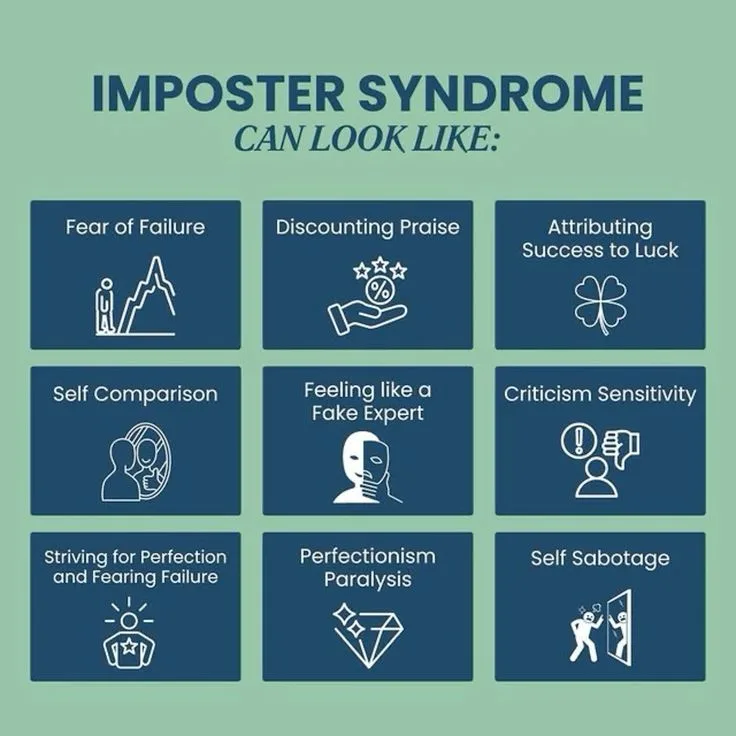
Comprehensive: Maya Angelou won three Grammys, a Presidential Medal of Freedom, and more than fifty honorary degrees. She wrote eleven books, was nominated for a Pulitzer Prize, and was reciting her poetry at a presidential inauguration.
Yet she told an interviewer: "I have written eleven books, but each time I think, 'Uh oh, they're going to find out now. I've run a game on everybody, and they're going to find out.'"
Tom Hanks, winner of two consecutive Academy Awards, said in a 2016 interview: "No matter what we've done, there comes a point where you think, 'How did I get here? When are they going to discover that I am, in fact, a fraud and take everything away from me?'"
This feeling has a name: imposter syndrome. And according to decades of research, roughly 70% of people experience it at some point in their lives.
The Original Research
The term "impostor phenomenon" was coined by psychologists Pauline Clance and Suzanne Imes in a 1978 paper in the journal Psychotherapy: Theory, Research and Practice.
Clance and Imes had noticed a pattern in their therapy work with high-achieving women: despite impressive academic records, professional accomplishments, and external validation, these women persistently believed they were not truly intelligent and that they had fooled the people who respected them.
The researchers described the core pattern: a belief that one's successes were due to luck, charm, timing, or having deceived others into overestimating one's abilities. Combined with a persistent fear that the deception would be exposed.
Despite repeated success that should have updated their self-assessment, the feeling persisted.
Clance and Imes initially studied only women, which led to the early assumption that imposter syndrome was a gendered phenomenon. Subsequent research quickly corrected this: the feeling affects people of all genders, though some patterns in its expression differ.
What the Research Has Found Since 1978
The field has expanded substantially. A 2011 review by Sakulku and Alexander in the International Journal of Behavioral Science analyzed 62 studies and found that approximately 70% of people experience imposter feelings at some point. The experience is concentrated in several populations:
- High achievers in competitive environments (graduate students, medical professionals, senior executives)
- People entering new roles or recently promoted
- Minority groups in workplaces where they are underrepresented
- First-generation professionals whose family backgrounds differ from workplace peers
The prevalence data from professional settings is striking. A 2020 review published in the Journal of General Internal Medicine found that 22-47% of medical students and residents reported clinically significant imposter feelings.
A 2022 KPMG study of 750 senior female executives found that 75% had personally experienced imposter syndrome. A 2019 study of software developers found that over 50% reported experiencing imposter feelings regularly.
The Five Patterns of Imposter Experience
In her subsequent clinical and research work, Clance identified five distinct patterns in how imposter feelings manifest. Most people who experience it identify with multiple types.
1. The Perfectionist
Perfectionists set standards so high that meeting them is nearly impossible. When they fall short - which, by design, is frequent - they take it as confirmation that they are not truly capable. A single critical comment overshadows a dozen positive ones.
A presentation that went well except for one stumbling answer feels like exposure of incompetence.
The perfectionist's bar keeps moving: accomplishments feel insufficient because there was always something that could have been better. Rather than building confidence, success barely registers because the standard immediately elevates.
2. The Expert
The expert believes that truly competent people "just know" - they do not have to look things up, ask questions, or seek training. Before beginning any project, the expert tries to acquire comprehensive knowledge.
They are reluctant to apply for jobs where they do not meet 100% of the requirements (research suggests this pattern differs by gender: women apply when they meet 100% of criteria; men apply at 60%).
The expert's paradox: the more they learn about a domain, the more they understand how much they do not know, which reinforces the sense of inadequacy.
3. The Natural Genius
Natural geniuses believe competence should come easily. If they have to work hard, struggle, or fail on the first attempt, they take it as evidence that they do not have "real" talent.
Early success can create this pattern: students who were always the smartest in the room never developed resilience to difficulty, so difficulty feels like failure.
This pattern is particularly common in people who were praised for intelligence rather than effort in childhood - a distinction that Carol Dweck's research on growth mindset has made famous.
4. The Soloist
Soloists believe that asking for help reveals incompetence. Truly capable people, in their model, figure things out themselves. Collaboration is acceptable; needing help is not. The soloist often declines mentorship, refuses to delegate, and avoids asking clarifying questions even when it would improve their work.
This pattern is particularly self-defeating because it cuts off the feedback loops that would provide accurate information about one's actual competence.
5. The Superhuman
Superhumans compensate for felt inadequacy by working harder than everyone around them. They are last to leave, first to arrive, and carry more than their share of the work. Their anxiety about being discovered motivates extraordinary effort that often produces real results - but no amount of success resolves the underlying feeling.
Burnout is a common outcome. The superhuman's workload is sustained by anxiety, not by genuine engagement, and it is unsustainable.
Why Imposter Syndrome Is So Persistent
The persistence of imposter feelings despite repeated success is puzzling and requires explanation. Several mechanisms contribute.
Attribution Error
People experiencing imposter syndrome have a systematic asymmetry in how they explain their successes and failures. Successes are attributed to external factors: luck, timing, a helpful colleague, an examiner who was lenient. Failures are attributed to internal factors: proof of incompetence, evidence of real limits.
This attribution pattern prevents success from updating self-assessment. Each success is explained away; only failure is taken as informative about underlying ability.
Social Comparison in Environments of Excellence
Imposter syndrome is particularly common in highly selective environments - top universities, competitive companies, elite professional schools. The reason is mathematical: if you are admitted to Harvard or hired by Google, you are in an environment where nearly everyone is exceptionally capable.
Comparing your internal experience of uncertainty and effort to the polished external presentation of peers who are also hiding their uncertainty produces the classic imposter feeling.
This is sometimes called the spotlight effect combined with the iceberg illusion: you see your own internal struggle vividly while seeing only others' visible achievements. The comparison is between your backstage and everyone else's performance.
Pluralistic Ignorance
Research on imposter syndrome in cohort environments (medical schools, law schools, graduate programs) finds a consistent pattern: most people feel like impostors, but most people also believe they are uniquely experiencing it.
The result is that everyone feels inadequate but assumes others do not, reinforcing the sense that the feeling is evidence of a real deficiency rather than a normal human experience.
This phenomenon - where everyone privately holds a belief while assuming others do not - is called pluralistic ignorance, and it gives imposter syndrome much of its power. The antidote is simple but requires courage: talking about it.
Who Is Most Affected?
While imposter syndrome affects people across demographics, certain groups are disproportionately represented in the research.
First-Generation Professionals
People who are the first in their family to attend university, enter a profession, or achieve a particular level of career success often lack what Pierre Bourdieu called "cultural capital" - the implicit knowledge of how to behave, what to say, and how to present oneself in elite professional environments.
This gap between their upbringing and their current context feeds a genuine sense of being an outsider who belongs elsewhere.
Underrepresented Groups
Research on imposter syndrome in minority groups finds an additional layer: attributional ambiguity. When something goes wrong, members of underrepresented groups face the burden of not knowing whether the cause was their own performance, bias, or random chance.
This ambiguity, added to the ordinary challenges of professional development, compounds imposter feelings.
A 2018 study by Cokley et al. found that imposter feelings mediated the relationship between racial discrimination and psychological distress in Black college students. The experience of discrimination was associated with stronger imposter feelings, which in turn were associated with depression and anxiety.
High Achievers in New Roles
Promotion, particularly rapid promotion, is a consistent trigger. Someone who felt competent and respected in their previous role suddenly has a new title, new expectations, new peers, and new responsibilities.
The feeling that their previous success was domain-specific and that they may not be adequate to the new challenge is completely rational - it becomes imposter syndrome when the evidence against it accumulates without shifting the underlying belief.
When Imposter Feelings Are Actually Useful
Not all imposter feelings are harmful. Basima Tewfik, an organizational psychologist at MIT, published research in 2022 that found employees who experienced imposter thoughts had better interpersonal effectiveness at work - they were more attentive to others, more careful in their communication, and better received by colleagues.
The mechanism: imposter thoughts directed attention outward. Instead of focusing on their own performance, people with moderate imposter feelings focused on how they were coming across to others, which improved those interactions.
Mild imposter feelings also drive:
- More thorough preparation: the belief that you might be underprepared motivates extra effort
- More careful checking: fear of errors motivates more rigorous review
- Greater openness to feedback: uncertainty about one's performance motivates seeking input
- Intellectual humility: not assuming you know what you do not know
The threshold matters. Moderate imposter feelings that motivate preparation and attention are different from severe imposter feelings that trigger avoidance, procrastination, and chronic anxiety. The former is an asset; the latter is a liability.
"The goal is not to eliminate self-doubt. It is to prevent self-doubt from becoming self-sabotage." - Valerie Young, author of The Secret Thoughts of Successful Women
Evidence-Based Strategies for Overcoming Imposter Syndrome
Separate Feelings from Facts
The core cognitive intervention is recognizing that feeling like a fraud is not evidence of being a fraud. The question to ask yourself is: what is the actual evidence that I am incompetent in this role?
Write down your actual qualifications, accomplishments, and positive feedback received. Then compare this evidence to the feeling of inadequacy. The mismatch between the evidence and the feeling is instructive: it reveals that the feeling is not tracking reality.
Reframe How You Explain Your Successes
Because imposter syndrome involves attributing success to external factors, a deliberate reattribution practice helps. After a success, explicitly ask: what skills, knowledge, and effort did I contribute to this outcome? Give yourself appropriate credit before looking for the luck and timing.
This does not mean denying the role of circumstances; all success involves some luck. It means recognizing that luck and competence are not mutually exclusive.
Talk About It
The most consistently effective intervention in research is disclosure. Telling a trusted colleague, mentor, or manager that you are feeling like a fraud serves two functions.
First, it typically reveals that the other person experiences similar feelings, breaking the pluralistic ignorance that keeps everyone silent. Second, it usually elicits direct feedback that contradicts the imposter narrative.
In a 2021 study by Meehan and Lemoine, people who disclosed imposter feelings in a professional context reported significantly lower imposter distress than those who kept them private. Disclosure was associated with receiving more explicit affirmation and feedback, which updated the self-assessment.
Keep an Achievement Record
The brain's negativity bias means that critical feedback is remembered more vividly than positive feedback. An achievement record - a running document of accomplishments, compliments, and successful projects - provides a counterweight that you can review when imposter feelings peak.
Some practitioners recommend reading this document before high-stakes situations rather than after. Starting a difficult presentation from a state of remembered competence produces better performance than starting from a state of acute self-doubt.
Recognize the "First Time" Problem
Much imposter feeling is genuinely appropriate early in a new role or skill. You are new; you do not know everything; there is a gap between your current capability and your expected capability. This is not imposture - it is normal learning.
The useful reframe is: "I am new to this, which means I do not yet have all the skills required. That is expected and appropriate. The question is not whether I belong here but what I need to learn." This frame is accurate, action-oriented, and emotionally sustainable in a way that "I am a fraud" is not.
Seek Mentorship Deliberately
Mentors serve a specific function for imposter syndrome: they provide calibration. Someone who has navigated the same path - who knows what it actually feels like to be competent at this level - can provide the reality check that internal dialogue cannot.
The most valuable question to ask a mentor is not "how do I succeed?" but "what did it feel like when you were where I am now?" Their answer almost always reveals that the feelings of uncertainty and inadequacy were universal, temporary, and did not actually predict performance.
The Five Imposter Patterns: Summary
| Pattern | Core Belief | Behavioral Consequence | Intervention |
|---|---|---|---|
| Perfectionist | Success requires flawless execution | Standard keeps rising; accomplishments register minimally | Set and honor completion thresholds; distinguish "done" from "perfect" |
| Expert | Real competence means knowing everything already | Avoids applying without 100% qualification match | Track knowledge gained; recognize that experts also look things up |
| Natural Genius | Talent means effortless mastery | Struggle feels like exposure of inadequacy | Normalize difficulty as part of learning, not evidence of limits |
| Soloist | Asking for help reveals incompetence | Declines mentorship; refuses delegation | Reframe collaboration as standard professional practice |
| Superhuman | Overwork compensates for felt inadequacy | Burnout; unsustainable output driven by anxiety | Identify whether effort comes from engagement or fear |
A Note on Structural Causes
It is important to acknowledge that some imposter feelings reflect real structural disadvantages rather than purely psychological distortions.
If a workplace consistently undervalues contributions from certain groups, gives less credit to certain voices, or creates environments where some people genuinely are less welcomed or supported, the resulting doubt is not irrational. It is an accurate reading of an unfair situation.
The solution in those cases is not just personal psychology work but changing the structural conditions - more equitable feedback processes, sponsorship rather than just mentorship, organizational accountability for inclusion.
Imposter syndrome treatment that focuses solely on the individual and ignores structural contributors is incomplete.
The Clance-Imes research that started this field was grounded in this awareness: the women they studied were experiencing environments that genuinely undervalued women's contributions. The personal experience of feeling fraudulent was real, but it was shaped by real organizational and cultural realities, not just distorted cognition.
Understanding imposter syndrome fully requires holding both truths simultaneously: the feelings are often cognitively distorted and amenable to intervention, and the environments that produce them are often genuinely challenging in ways that deserve structural attention.
Imposter Syndrome Across Industries: Where It Shows Up Most
Research comparing imposter syndrome prevalence across professions reveals consistent hotspots. The intensity of the feeling correlates less with how difficult the work is and more with how visible failure is, how much expert identity matters to practitioners, and how competitive the selection process was to enter the field.
| Industry | Reported Prevalence | Key Contributing Factor | Source/Year |
|---|---|---|---|
| Medicine (residents) | 22-47% clinically significant | Life-or-death stakes; expert identity | Journal of General Internal Medicine, 2020 |
| Software engineering | 50%+ report regular episodes | Fast-moving field; visible code review | Stack Overflow Survey, 2019 |
| Academia (PhD students) | 56-75% | Isolation; comparison to supervisors | Clance & O'Toole, 2000; multiple meta-analyses |
| Senior executive women | 75% personally experienced | Underrepresentation; visibility | KPMG study, 2022 |
| Legal profession | ~40% | Perfectionism culture; adversarial environment | Various bar association surveys, 2018-2022 |
The legal profession deserves particular attention. A 2018 International Bar Association survey found that 40% of respondents reported experiencing imposter syndrome, with women and junior attorneys reporting higher rates.
The adversarial nature of legal practice, where someone always loses, combines with an intensely hierarchical culture and the expectation that lawyers should be authoritative, so that any uncertainty feels like exposure.
Medicine presents a related but distinct picture. The stakes create a cultural aversion to admitting uncertainty, but medical competence is always genuinely incomplete: no physician knows everything about every condition, yet expressing doubt can feel dangerous both professionally and emotionally.
A 2023 study in Academic Medicine found that imposter syndrome in medical residents was associated with significantly higher rates of burnout and anxiety. Critically, it was also associated with reduced willingness to seek help from senior colleagues, which has direct patient safety implications.
The Neuroscience Behind the Feeling
Recent neuroscience research has shed light on why imposter syndrome persists despite contradictory evidence. The mechanism is rooted in how the brain processes social threat.
Cortisol and social evaluation: When we anticipate being evaluated by others, the brain's threat-detection systems activate. The amygdala responds to perceived social threat, including the threat of being "found out," in ways similar to physical threat.
Elevated cortisol in anticipation of evaluation suppresses activity in the prefrontal cortex, which is the region responsible for rational self-assessment.
This is a neurological explanation for why imposter feelings intensify precisely when we most need our rational self-assessment to counteract them: the stress response suppresses the cognitive capacity for accurate self-evaluation.
The negativity bias at the neural level: The brain tends to prioritize and process negative information more readily than positive information, an evolutionary inheritance from environments where threats were more consequential than opportunities.
In professional contexts, this means that one critical comment activates more neural processing, consolidates more strongly into memory, and receives more cognitive weight than five positive reviews.
The imposter's subjective experience, that failures are more "real" than successes, has a genuine neurological basis.
Default mode network rumination: The brain's default mode network (DMN), active when we are not focused on a specific task, is associated with self-referential thinking and social comparison.
People with higher imposter syndrome scores show elevated DMN activity, suggesting more frequent and automatic self-evaluative rumination. This is why imposter feelings intrude during downtime: they are the default mode, not the exception.
Understanding these mechanisms is clinically useful because it shifts the intervention strategy. The goal is not to suppress the feelings through willpower (which competes against neurological defaults) but to create deliberate cognitive counter-practices that can eventually establish competing neural pathways.
Imposter Syndrome and Remote Work
The transition to remote and hybrid work that accelerated after 2020 has created a new set of conditions that both exacerbate and modify imposter syndrome patterns.
Reduced visibility amplifies uncertainty: In an office, you can see that your colleagues also struggle, make mistakes, and take longer on tasks than expected. Remote work removes this normalizing visibility.
You see your colleagues' polished outputs in meetings and communications but not their process. The iceberg illusion intensifies when the water is digital.
A 2022 survey by the American Psychological Association found that remote workers reported higher levels of imposter syndrome than in-office workers, with the gap most pronounced among workers who had recently joined organizations or changed roles remotely.
Onboarding without physical presence removes many of the informal signals, such as seeing others look confused in meetings or watching senior colleagues make errors, that normally calibrate new employees' self-assessments.
The camera problem: Video calls create a peculiar form of heightened self-consciousness. Research by Microsoft and Stanford found that video call fatigue is partly driven by the unusual experience of continuously seeing your own face, an experience with no analog in face-to-face interaction.
This self-monitoring activates exactly the self-evaluative processes that fuel imposter feelings, at the same time as it reduces access to the rich nonverbal cues that help people assess how they are coming across.
The always-on performance problem: Remote work blurs the boundary between performing work and performing competence. In an office, you can visibly be thinking. On a video call or Slack channel, absence looks like absence.
Some remote workers respond to this by over-communicating to signal productivity, a pattern that closely resembles the Superhuman imposter type, driven by anxiety about invisible incompetence.
The practical implication: organizations moving to hybrid work should explicitly create structures for normalizing uncertainty: virtual coffee chats, team retrospectives that include honest discussion of what went wrong, and senior leaders who model imperfection publicly. These structures do not happen organically in remote environments.
When to Seek Professional Support
Most of this article has described self-help and organizational strategies. For a meaningful proportion of people, the severity of imposter feelings warrants professional support.
Signs that professional support may be warranted:
- Imposter feelings that trigger avoidance behaviors, such as declining opportunities, not submitting work, or not applying for positions, that materially limit career advancement
- Persistent anxiety or depression associated with work performance that is not relieved by positive feedback or achieved success
- Physical symptoms, such as insomnia, gastrointestinal disturbance, or chronic headaches, that worsen around performance evaluations
- Imposter feelings that have persisted for years without reduction despite accumulated evidence of competence
Cognitive-behavioral therapy (CBT) is the most evidence-based psychotherapeutic approach for imposter syndrome.
The core CBT intervention, identifying automatic negative thoughts, testing them against evidence, and gradually replacing maladaptive thought patterns, maps directly onto the attribution asymmetries that sustain imposter feelings.
A 2019 meta-analysis in the Journal of Clinical Psychology found that CBT-based interventions for imposter syndrome produced significant reductions in imposter distress, with effect sizes in the moderate-to-large range. Improvements were maintained at follow-up assessments three to six months later.
Acceptance and Commitment Therapy (ACT) offers a complementary approach: rather than challenging the accuracy of imposter thoughts, ACT focuses on developing psychological flexibility: the ability to hold thoughts as thoughts rather than facts, and to act according to values even when uncomfortable feelings are present.
For people with deeply entrenched imposter patterns who find direct cognitive challenge activating rather than relieving, ACT offers an alternative pathway.
The Cultural and Generational Dimensions
Imposter syndrome is not culturally neutral. The research literature, largely based on Western samples, may underweight cultural variation in how the experience is perceived, expressed, and addressed.
In high-power-distance cultures (those with strong norms of deference to authority), the asymmetry of knowledge between senior and junior workers is normalized and expected.
Feeling inadequate as a junior employee is culturally appropriate, and expressing that uncertainty to a superior may be a sign of correct social positioning rather than a clinical symptom.
Research on imposter syndrome in East Asian professional contexts suggests that what Western psychology frames as imposter syndrome may overlap with culturally adaptive epistemic humility in some cases.
Generational differences in imposter syndrome expression have also been noted, though the research is preliminary. Millennial and Gen Z workers entering the workforce after 2008 did so into a labor market that rewarded visible personal branding, constant self-promotion, and the performance of confidence on social platforms.
The contrast between required external confidence and internal uncertainty may be sharper for these cohorts than for workers who entered professional life in less performance-focused cultural moments.
A 2023 survey by Deloitte of 23,000 Millennial and Gen Z workers found that 68% of respondents reported feeling imposter syndrome regularly, a higher figure than most studies of older cohorts.
Whether this reflects a genuine generational increase or better awareness of the construct is unclear, but the figure suggests that the phenomenon is not receding as professional self-presentation tools multiply.
Building an Imposter-Resilient Life, Not Just Career
The most sustainable approach to imposter syndrome treats it as a life orientation problem, not purely a work problem. Several habits that support long-term resilience appear consistently in the literature:
Regular reflection on values, not just performance: People who ground their sense of worth in values, such as curiosity, contribution, relationships, and integrity, rather than purely in performance outcomes, are more resilient to imposter feelings because their self-assessment does not depend entirely on whether they succeeded at a given task.
Values-based self-definition is not easily falsified by a single failure.
Deliberate cultivation of vulnerability tolerance: Through repeated small acts of admitting uncertainty, asking questions, and acknowledging not knowing, people can recalibrate their belief that vulnerability is fatal.
Each time vulnerability is met with support rather than judgment, the neural pathway that equates openness with danger is weakened.
Long-horizon thinking about competence development: Research on expert performance by Anders Ericsson and others established that genuine expertise in complex domains requires thousands of hours of deliberate practice.
Reframing imposter feelings as "I am still early in a long journey of deliberate practice" is both accurate and motivating in a way that "I am a fraud" is not. Incompleteness is not fraudulence; it is development.
"The antidote to imposter syndrome is not more confidence. It is more accuracy - about what you know, what you are still learning, and how both are normal features of a competent professional life." - Pauline Clance, reflecting on four decades of research, 2014 interview
The research arc since Clance and Imes's original 1978 paper has consistently revealed imposter syndrome as one of the most universal features of professional life among high achievers. The prevalence data is not a warning label; it is, if held correctly, a source of genuine solidarity.
When 70% of accomplished professionals have experienced the feeling that they do not belong, the feeling is less about individual inadequacy and more about the inherent uncertainty of doing meaningful, difficult work. That reframe may be the single most useful sentence in this article.