
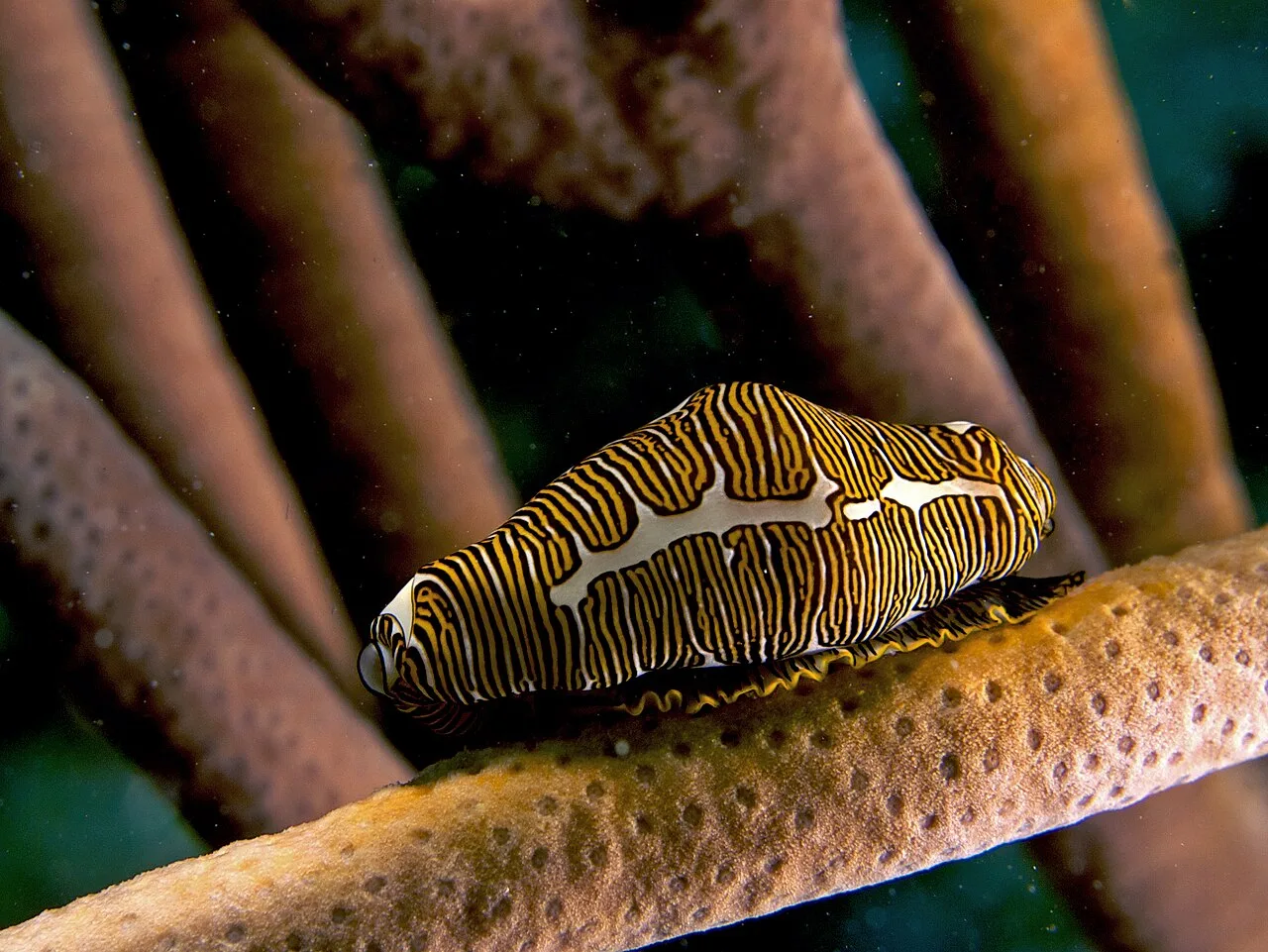
A marine biologist studies ocean life and ecosystems through a mix of fieldwork, laboratory work, and, for most career stages, extensive desk-based analysis and writing. The work can include coral surveys, fisheries science, biological samples, ROV data, statistical models, grant proposals, and peer review. Specialisation and seniority shape the balance, while practical technical skills and rigorous protocols matter alongside time on the water.
Marine biology is one of the most romanticised careers in science. The image - a researcher in a wetsuit surveying coral reefs, or a cetacean biologist spending months at sea with humpback whales - has driven more undergraduate biology enrolments than almost any other field.
The reality is more varied, more desk-bound, and considerably more competitive than that image suggests. Understanding both sides of that gap is the most useful thing an aspiring marine biologist can do before committing years of training to the path.
None of this means marine biology is a bad career. The ocean covers 71% of Earth's surface, represents over 95% of the planet's habitable space, and remains among the least-understood environments on Earth.[11]
The scientific problems are genuinely enormous: multiple stressors including coral bleaching have contributed to the loss of half the Great Barrier Reef's coral cover between 1985 and 2012 (De'ath et al., 2012), industrial fishing has collapsed dozens of commercially important fish populations, ocean acidification is restructuring entire food webs, and the deep sea - covering more than 60% of Earth's surface - remains almost entirely unexplored.
Marine scientists are needed, and their work has real consequences for policy, fisheries management, and conservation outcomes.[9]
What aspiring marine biologists most need is an accurate map of what the career actually looks like across its many forms: the day-to-day reality of field, lab, and desk work; the full spectrum of sectors that employ marine scientists; how salaries actually compare across those sectors; how the academic pipeline really works; and how to build the practical experience that determines who gets opportunities.
"People assume that marine biology means swimming with dolphins. It often means running statistical models on fisheries data at 2am before a grant deadline. Both things are true of the same career." - Dr Sylvia Earle, oceanographer and National Geographic Explorer-in-Residence[7]
Key Definitions
Benthic: Relating to the bottom of a body of water. Benthic ecology studies organisms living on or in the seafloor - an extraordinarily productive and historically understudied environment that includes cold-water coral systems, hydrothermal vent communities, and deep-sea sediment ecosystems.
Pelagic: Relating to the open ocean water column. Pelagic species include most commercially important fish, all large marine mammals, and the vast majority of phytoplankton biomass that drives global oxygen production.
Trophic Level: The position an organism occupies in the food chain. Understanding trophic dynamics - how energy flows through marine ecosystems - is central to fisheries science, ecosystem management, and predicting the cascading effects of species loss.
ROV (Remotely Operated Vehicle): An unmanned underwater vehicle used for deep-sea survey and sampling at depths unreachable by divers. Operating and analysing ROV video data is an increasingly valued technical skill in marine research.
Stock Assessment: A quantitative evaluation of the size, productivity, and health of a fish population, used to set sustainable catch limits.[10] Stock assessment scientists work primarily at NOAA and equivalent agencies; the role blends marine biology with statistics and fisheries science.[2]
Meta-analysis: A statistical approach combining results from multiple independent studies to draw broader conclusions. Marine biologists conducting systematic reviews of climate impacts, biodiversity trends, or ecosystem responses use meta-analysis to synthesise evidence across hundreds of papers.
What a Marine Biologist Actually Does: Field Days, Lab Days, Desk Days
The most important correction to the popular image of marine biology is the proportion of time spent at a desk versus in or on the water.
For the majority of marine biologists in the majority of career stages, desk work - data analysis, writing, grant applications, peer review, supervision - occupies more time than fieldwork. Field days are valued, often intensive, and professionally important, but they are not the whole career.
A typical field day for a coral reef ecologist at a tropical research station might involve an early start for a boat dive to conduct belt transect surveys, recording coral species and percentage cover along standardised plots. A second dive might involve collecting water samples and coral tissue cores for stable isotope analysis.
Afternoons are typically spent entering data, charging equipment, preparing the next day's dive plan, and writing field notes. Weather windows are precious and everything bends to them.
A typical lab day for a fisheries biologist involves processing biological samples - measuring fish otoliths (ear bones used for age determination), preparing tissue extracts for genetic analysis, running water chemistry measurements, or operating flow cytometry equipment to count phytoplankton cells.
Lab work is painstaking and repetitive by nature, and the ability to maintain rigorous protocols under tedious conditions is a genuine professional skill.
A typical desk day - and these are the majority - involves exactly what office-bound researchers do: managing datasets in R or Python, building statistical models, writing sections of papers or grant proposals, reviewing literature, joining video calls with collaborators, responding to emails about data-sharing agreements, and managing the inevitable administrative load of institutional life.
A researcher at the analysis stage of a project may spend weeks entirely at a computer without conducting a single field or lab activity.
The balance shifts by specialisation and career stage. A postdoctoral researcher in an active field-based group may spend 6-10 weeks per year in the field. A senior government scientist doing stock assessments may spend most of their time in an office with periodic survey voyages.
A deep-sea biology team may spend months aboard a research vessel followed by longer periods of sample analysis and writing.
Specialisations: What Marine Biologists Actually Study
The term 'marine biologist' is as broad as 'medical professional'. The following specialisations each represent a distinct research culture, job market, and career trajectory.
| Specialisation | Core Activities | Primary Employers | Relative Job Market | Typical Starting Salary (US) |
|---|---|---|---|---|
| Coral Reef Ecology | Reef surveys, bleaching research, restoration experiments | University labs, NGOs, NOAA | Competitive; strong grant demand | $38,000-$52,000 |
| Fisheries Science | Stock assessment, population modelling, catch data analysis | NOAA, state agencies, FAO | Good; stable government demand | $52,000-$68,000 |
| Marine Mammalogy | Cetacean and pinniped behaviour, acoustics, population monitoring | NOAA, NGOs, universities | Very competitive; few positions | $40,000-$55,000 |
| Deep Sea Biology | ROV surveys, vent community ecology, taxonomic description | MBARI, WHOI, university labs | Small field; highly specialised | $45,000-$60,000 |
| Oceanography | Physical, chemical, or biological ocean processes; climate modelling | WHOI, Scripps, NOAA, universities | Strong; cross-disciplinary demand | $55,000-$75,000 |
| Marine Microbiology | Microbial diversity, biogeochemical cycles, eDNA analysis | Universities, biotechnology sector | Growing; biotech offers good pay | $50,000-$70,000 |
Fisheries science and oceanography offer the most stable employment pipelines, partly because they directly serve regulatory and management functions that governments fund consistently.
Marine mammalogy and coral reef ecology are among the most sought-after but also among the most competitive, with far more PhD graduates than permanent positions.
The Academic Pipeline: How Few Positions There Are
The most important structural reality of marine biology - and academic science generally - is the mismatch between the number of people trained as researchers and the number of permanent research positions available.
In the US, the number of biology PhDs awarded annually grew by approximately 50% between 2000 and 2020 while the number of tenure-track faculty positions at research-intensive institutions remained roughly flat or declined slightly (NSF, Survey of Earned Doctorates, 2023).[3]
The result is a large surplus of qualified researchers competing for very few stable positions.
The pipeline works as follows:
| Stage | Duration | Typical Stipend/Salary | Notes |
|---|---|---|---|
| BSc (Biology/Marine Science) | 3-4 years | N/A (student) | GPA 3.5+ increasingly expected for competitive programmes |
| MSc in Marine Science | 1-2 years | $18,000-$25,000 (funded) or self-funded | Sometimes bypassed via direct-entry PhD |
| PhD | 4-6 years | $28,000-$36,000 (stipend) | NSF GRFP, NDSEG, institutional funding available |
| Postdoctoral Research | 2-8 years | $52,000-$65,000 (NSF standard) | Most academic careers require 2+ postdocs; many never leave this stage |
| Permanent Position | Competitive | $70,000-$95,000 (Asst Prof) | Job searches can take 3-5 application cycles |
The postdoctoral holding pattern is a defining feature of academic marine science. Postdoc positions are temporary (2-3 year contracts, renewable once or twice), pay significantly less than private sector alternatives requiring comparable qualifications, offer few employment benefits, and frequently require geographic relocation.
The adjunct crisis - the use of contingent, per-course academic labour at minimal pay - affects marine science departments as it does all of academia, creating a further layer of insecure employment between postdoc and permanent position.
Despite this, the majority of marine biology PhD graduates do find employment in the broad field: government agencies, conservation organisations, environmental consulting, aquaculture, and the private sector all employ marine scientists.
The issue is not that the degree is useless - it is that the specific outcome of an independent academic research career is far less probable than the training system implies.
Salaries by Sector
Salary data for marine biologists draws primarily from the Bureau of Labor Statistics (BLS), which categorises most marine scientists under Zoologists and Wildlife Biologists (median $67,290 in 2023) or Geoscientists (median $87,480, covering oceanographers).[1]
United States
| Sector | Role | Salary Range (2024) |
|---|---|---|
| Federal Government (NOAA) | GS-7 Entry Scientist | $46,696-$60,703 |
| Federal Government (NOAA) | GS-12 Research Fisheries Biologist | $89,128-$115,866 |
| Federal Government (NOAA) | GS-14 Senior Scientist | $122,198-$158,860 |
| University | Postdoctoral Researcher | $52,000-$68,000 |
| University | Assistant Professor | $70,000-$95,000 |
| University | Full Professor | $100,000-$145,000 |
| Conservation NGO | Programme Scientist | $45,000-$72,000 |
| Environmental Consulting | Marine Scientist | $58,000-$105,000 |
| Aquaculture (Private) | Fish Health/Production Biologist | $55,000-$90,000 |
| Biotechnology | Marine Natural Products Chemist | $70,000-$120,000 |
United Kingdom
| Sector | Role | Salary Range (2024) |
|---|---|---|
| CEFAS (Government) | Band C Marine Scientist | 27,000-34,000 |
| CEFAS (Government) | Band E Senior Scientist | 42,000-55,000 |
| NOC / SAMS | Research Scientist | 30,000-50,000 |
| University | Lecturer | 40,000-55,000 |
| University | Reader/Professor | 60,000-100,000+ |
| Environmental Consulting | Marine Ecologist | 28,000-60,000 |
| Conservation NGO | Marine Programme Officer | 25,000-40,000 |
The general pattern: government agency roles (NOAA, CEFAS, Environment Agency) offer the best balance of salary stability and scientific content.[4]
Private sector roles in consulting and aquaculture tend to pay better at mid-career than either conservation NGOs or universities, at the cost of less freedom to pursue questions of pure scientific interest.
Career Paths: From BSc to Permanent Position
The routes into marine biology employment are numerous, but the critical fork occurs early: whether to pursue an academic research path (PhD-required) or an applied professional path (where an MSc or BSc with strong field experience often suffices).
Academic research path:BSc (marine science, biology, oceanography, or ecology) MSc (increasingly common but not universal) PhD with a strong field-based research project and publications 1-3 postdoctoral positions competitive application for assistant professor or senior scientist position.
The most important currency at every stage is published research. By the time a researcher applies for permanent positions, having 4-8 first-author papers in peer-reviewed journals is standard for competitive candidates.
Applied/government path:BSc with strong field skills and statistical competence entry-level government or NGO position professional development into senior scientist or programme manager roles. A relevant MSc significantly accelerates advancement and salary progression in government agencies.
Private sector path:BSc or MSc environmental consulting, aquaculture, or biotechnology entry roles. These paths value practical certifications (GIS, scientific diving, sampling methods) as much as academic credentials.[5]
Skills That Actually Determine Employability
The gap between a marine biology graduate who lands a position and one who does not is rarely about academic performance alone. The following skills table reflects what hiring managers at NOAA, CEFAS, and major environmental consulting firms consistently emphasise.
| Skill | Why It Matters | How to Build It |
|---|---|---|
| Statistical analysis (R, Python) | Every scientific position requires data analysis; these are the standard tools | Courses, self-teaching, applied project work |
| GIS (ArcGIS, QGIS) | Spatial data is central to fisheries, habitat, and distribution studies | ESRI training, QGIS tutorials, applied projects |
| Scientific SCUBA/AAUS certification | Required for most field reef ecology and intertidal work | PADI Open Water, then AAUS scientific diver programme |
| Grant writing | Research positions live or die on funding; the skill must be developed early | Write sections of supervisor's proposals; attend grant-writing workshops |
| Field data collection protocols | Standardised transect surveys, CTD operation, trawl surveys | REU programmes, field course attendance, lab volunteering |
| Science communication (writing and public) | NGOs, government, and academia all value researchers who can explain their work | Blog, teach, present at public events |
| Laboratory techniques (DNA extraction, stable isotopes, flow cytometry) | Increasingly required even in field-heavy research programmes | Lab rotations, technical courses |
The single highest-return early investment is programming skills. Proficiency in R and Python not only makes a marine biologist more competitive for research positions but also opens the door to data science roles in adjacent fields (environmental finance, climate analytics, fisheries consulting) if the research path does not materialise.
Geographic Hotspots for Marine Biology Employment
Jobs are not distributed evenly. The following locations have concentrations of marine biology employers that justify geographic consideration for early-career scientists.
United States:
- Monterey, California (MBARI, MLML, Hopkins Marine Station)[8]
- Woods Hole, Massachusetts (WHOI, NOAA Northeast Fisheries Science Center, MBL)
- Seattle/Newport, Oregon (NOAA Northwest and Southwest Fisheries, UW College of the Environment)
- Miami/Key Biscayne, Florida (NOAA AOML, Rosenstiel School)
- Honolulu, Hawaii (NOAA Pacific Islands, Hawaii Institute of Marine Biology)
United Kingdom:
- Southampton (National Oceanography Centre, University of Southampton)[6]
- Plymouth (Marine Biological Association, Plymouth Marine Laboratory)
- Lowestoft/Weymouth (CEFAS)
- Aberdeen (Marine Scotland, University of Aberdeen)
- Oban (Scottish Association for Marine Science)
Being geographically flexible - particularly in the early career phase - dramatically expands the number of positions you are competitive for.
How to Maximise Your Chances
Start field experience earlier than you think necessary. Marine biology hiring is driven by demonstrated practical competence.
A CV showing three summers of field work, two relevant REU or ERASMUS placements, a scientific diving certification, and proficiency in R reads as a credible early-career candidate; a CV showing only coursework does not, regardless of grades.
Get specific. 'Marine biologist' is not a marketable identity; 'fisheries scientist with experience in age-structured population modelling using R' or 'reef ecologist with 200+ scientific dives and coral cover survey experience in the Indo-Pacific' are.
Specificity signals genuine expertise rather than general enthusiasm.
Build publications early. Even contributing to a co-authored undergraduate research paper signals scientific productivity. Ask supervisors directly what your contribution to their ongoing work could lead to in terms of co-authorship.
Network at professional meetings. The Society for Conservation Biology, the Western Society of Naturalists, American Fisheries Society, and the European Marine Biological Association meetings are where hiring happens informally.
Presenting a poster at one of these meetings as an undergraduate or MSc student is a valuable networking investment.
Consider dual-training in data science. Marine biologists who can work with large environmental datasets - satellite remote sensing, eDNA metabarcoding data, acoustic monitoring data - have dramatically expanded career options in both research and the growing climate data industry.
Practical Takeaways
Marine biology is a real and rewarding career for those who enter it with accurate expectations. The romantic image is not entirely false - there are divers, research vessels, and meaningful discoveries - but it sits within a broader professional reality of data analysis, grant applications, and competitive hiring.
Prioritise field experience and quantitative skills over grades alone. Build a specific technical identity rather than a general interest profile.
Treat the applied sectors - government, consulting, aquaculture - as genuine career destinations rather than fallbacks. The ocean's problems are enormous, scientifically fascinating, and consequential.
The scientists who work on them need to be technically sophisticated, strategically thinking, and realistic about the pipeline they are entering.
Sources & Further Reading
- Bureau of Labor Statistics. Zoologists and Wildlife Biologists Occupational Outlook (2023). bls.gov
- NOAA. Careers in Oceanography and Marine Science (2024). noaa.gov
- NSF. Survey of Earned Doctorates: Biological and Biomedical Sciences (2023). nsf.gov
- CEFAS. Graduate Careers in Marine Science (2024). cefas.gov.uk
- American Academy of Underwater Sciences. Scientific Diving Standards (2024). aaus.org
- National Oceanography Centre. UK Marine Science Careers (2024). noc.ac.uk
- Earle, Sylvia. The World Is Blue: How Our Fate and the Ocean's Are One. National Geographic, 2009.
- Monterey Bay Aquarium Research Institute. Careers and Internships (2024). mbari.org
- Marine Conservation Society. Careers and Volunteering (2024). mcsuk.org
- ICES (International Council for the Exploration of the Sea). Career Resources (2024). ices.dk
- Roberts, Callum. The Ocean of Life: The Fate of Man and the Sea. Penguin, 2012.
Further Reading
- De'ath, G., Fabricius, K.E., Sweatman, H., & Puotinen, M. 'The 27-year decline of coral cover on the Great Barrier Reef and its causes.' Proceedings of the National Academy of Sciences, 109(44), 17995-17999 (2012).
- Hughes, T.P. et al. 'Global warming and recurrent mass bleaching of corals.' Nature, 543, 373-377 (2017).