
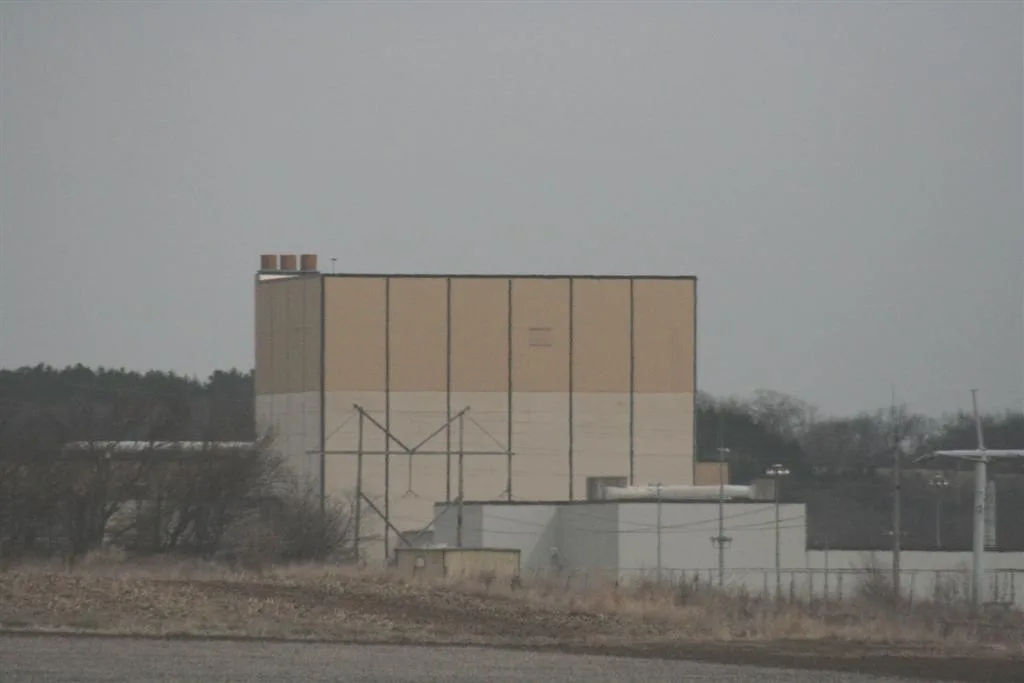
Nuclear energy generates heat through controlled fission, using the extraordinary energy released when heavy nuclei split and drive a turbine. Reactors use fuel, moderators, coolants, control rods, and containment systems to manage chain reactions. Its promise of low-carbon electricity is weighed against accident history, radioactive waste, engineering complexity, cost, and political disagreement over its place in decarbonization.
Nuclear energy is both one of humanity's most powerful technological achievements and one of its most contested.
It releases energy from the nucleus of the atom - an energy source vastly more concentrated than any chemical process - through a mechanism that is elegantly understood in physics yet devilishly difficult to manage in large-scale engineering and politics.
In the span of eighty years, nuclear technology has powered cities and incinerated them, generated low-carbon electricity at scale and produced some of history's most severe industrial accidents, and become simultaneously a symbol of technological promise and technological catastrophe.
As the world confronts the need to decarbonize its energy systems, nuclear power occupies an unusually contested position: championed by some climate scientists as an essential low-carbon baseload technology and opposed by many environmentalists on grounds of safety, waste, and cost.
Understanding the actual physics, engineering, accident history, and economics of nuclear energy is essential to evaluating these arguments - and to forming any informed view about its role in the energy transition.
The Physics of Fission: Where the Energy Comes From
Nuclear energy derives from a principle established by Albert Einstein's 1905 equation E = mc2: mass and energy are interconvertible, and because the speed of light c is very large (approximately 3 x 10^8 meters per second), even a tiny loss of mass corresponds to an enormous release of energy.
The mechanism by which nuclear power plants release energy is fission: the splitting of heavy atomic nuclei into smaller fragments.
Atomic nuclei are composed of protons and neutrons held together by the strong nuclear force. The stability of a nucleus depends on the ratio of neutrons to protons and on the binding energy - the energy required to completely separate all constituent particles.
Iron-56 has the highest binding energy per nucleon, making it the most tightly bound nucleus. Nuclei heavier than iron release energy by fission (splitting into lighter, more tightly bound nuclei); nuclei lighter than iron release energy by fusion (combining into heavier, more tightly bound nuclei).
Uranium-235, with 92 protons and 143 neutrons, is the principal fissile material used in civilian nuclear reactors because it is relatively stable but will split when struck by a slow (thermal) neutron.
When a U-235 nucleus absorbs a neutron, it becomes U-236 in an excited state, which almost immediately splits into two smaller nuclei (typically barium and krypton, though many fragment pairs are possible), releasing 2-3 additional neutrons and approximately 200 million electron-volts of energy per fission event.
For comparison, burning a carbon atom in chemical combustion releases about 4 electron-volts - fifty million times less per reaction.
The additional neutrons released can strike other U-235 nuclei, causing further fissions, potentially creating a self-sustaining chain reaction. If the chain reaction is uncontrolled and instantaneous, it produces a nuclear explosion; controlled in a reactor, it produces sustained heat that drives a turbine to generate electricity.
"The release of atom power has changed everything except our way of thinking, and thus we are being driven unarmed towards a catastrophe," said Albert Einstein in 1946.
Enrico Fermi led the team that produced the first self-sustaining artificial nuclear chain reaction on December 2, 1942, at the Chicago Pile-1 reactor, assembled beneath the bleachers of the University of Chicago's Stagg Field.
The reactor used natural uranium and graphite as a moderator (to slow neutrons), with cadmium-tipped control rods that could absorb neutrons to dampen the reaction. This demonstration was the direct precursor of both the Manhattan Project and all subsequent civilian nuclear power.
How a Pressurized Water Reactor Works
The pressurized water reactor (PWR) is the most common type of commercial nuclear power reactor in the world, accounting for approximately 70 percent of the global commercial reactor fleet.
Its basic design converts the heat from controlled nuclear fission into electricity via a steam turbine, using water under high pressure as both coolant and moderator.
The reactor core contains fuel assemblies: bundles of zirconium alloy tubes filled with small cylindrical pellets of enriched uranium dioxide (UO2). Natural uranium contains only about 0.7 percent uranium-235; PWR fuel is enriched to 3-5 percent U-235 through the process of isotope separation.
A typical large PWR contains about 200 fuel assemblies, each with roughly 200 fuel rods. Control rods, made of neutron-absorbing materials such as boron, hafnium, or cadmium, can be inserted into or withdrawn from the core to adjust the reaction rate.
The reactor core sits in a heavy-walled steel pressure vessel, through which water flows as the primary coolant. In a PWR, the primary circuit water is maintained at approximately 155 atmospheres of pressure, which keeps it liquid even at temperatures exceeding 300 degrees Celsius.
This hot pressurized water flows through a steam generator, where it heats a secondary circuit of water to produce steam without the two circuits mixing. The steam drives a turbine connected to an electrical generator, then is condensed back to water and returned to the steam generator.
The separation of primary and secondary circuits prevents radioactive contamination of the turbine and the rest of the plant outside the reactor building. The reactor building itself is enclosed in a reinforced concrete containment structure designed to prevent the release of radioactive materials even if the reactor vessel fails.
The PWR design has important inherent safety features: it has a negative temperature coefficient of reactivity, meaning that if the core overheats, the reaction naturally slows down (the water expands, absorbing fewer neutrons as moderator), unlike some reactor designs where increasing temperature accelerates the reaction.
However, PWRs require active water circulation to remove decay heat - the heat generated by radioactive decay products in the fuel even after the chain reaction stops - which was the mechanism of the Fukushima meltdowns when cooling pumps lost power.
The Nuclear Fuel Cycle
| Stage | Process | Key Issues |
|---|---|---|
| Mining | Uranium ore extraction | Environmental disturbance, radon exposure |
| Milling | Yellowcake (U3O8) production | Tailings management |
| Conversion | U3O8 to UF6 gas | Chemical hazards |
| Enrichment | Increasing U-235 fraction | Energy-intensive; dual-use proliferation concern |
| Fuel fabrication | UO2 pellets, fuel rods | Quality control |
| Reactor operation | Fission, electricity generation | Safety, routine radiation management |
| Spent fuel storage | Cooling pools, then dry casks | Heat removal, long-term security |
| Reprocessing | Plutonium/uranium extraction | Proliferation risk, cost |
| Disposal | Deep geological repository | Long-term isolation, political siting |
Three Major Accidents: Chernobyl, Three Mile Island, and Fukushima
Chernobyl (1986)
The Chernobyl disaster of April 26, 1986, at the Vladimir Ilyich Lenin Nuclear Power Plant in Soviet Ukraine, was the most severe nuclear accident in history. It resulted from a combination of a fatally flawed reactor design and catastrophic operator decision-making during a safety test.
The RBMK reactor had a design characteristic called a positive void coefficient: if the cooling water boiled into steam (voids), the reaction accelerated rather than slowed. This is the opposite of the behavior in a well-designed PWR.
The RBMK was also designed without a full containment structure, and its graphite moderator posed an additional hazard: in the accident, burning graphite blocks were ejected from the reactor and spread radioactive material across the plant.
These design flaws were known to Soviet nuclear engineers but were not disclosed to operators.
During the early hours of April 26, operators were conducting a safety test at reduced power. They reduced power too far, entering a region where xenon-135 (a fission product that absorbs neutrons) built up rapidly and suppressed the reaction.
To compensate, they withdrew almost all control rods, leaving the reactor in an extremely unstable condition. A sudden power spike triggered a rapid steam explosion that destroyed the reactor core, followed by a second explosion that blew off the 1,000-ton reactor lid and exposed the burning core to open air.
The immediate death toll was 31: two plant workers killed by the explosion and 28 firefighters and emergency workers who died of acute radiation syndrome in the following weeks. The long-term health effects remain contested.
The United Nations Scientific Committee on the Effects of Atomic Radiation (UNSCEAR) estimated approximately 4,000 eventual cancer deaths among the most highly exposed groups. Approximately 350,000 people were evacuated from the exclusion zone.
Three Mile Island (1979)
The Three Mile Island accident of March 28, 1979, at unit 2 of the plant near Harrisburg, Pennsylvania, resulted in a partial meltdown through a combination of equipment malfunction and operator error.
A stuck-open relief valve that indicators showed as closed allowed the reactor to lose coolant while operators believed the situation was under control.
Approximately half the reactor core melted. A small amount of radioactive gas was released, exposing the surrounding population to doses the Nuclear Regulatory Commission estimated as averaging less than 1 millirem - roughly equivalent to a chest X-ray.
No direct deaths or measurable health effects have been attributed to the radiation release. The accident's political consequences, however, were enormous: combined with the coincidental release of the film The China Syndrome twelve days earlier, it effectively ended new reactor construction in the United States for decades.
Fukushima (2011)
The Fukushima Daiichi disaster of March 11, 2011, was triggered by a magnitude 9.0 earthquake and subsequent tsunami. The tsunami, reaching heights of 14-15 meters at the plant, overwhelmed the 10-meter seawall and flooded the basement generators providing backup power for the cooling pumps.
Without cooling, decay heat caused core damage and hydrogen gas production; hydrogen ignited and caused explosions in the reactor buildings. Three reactor cores melted down.
Approximately 154,000 people were evacuated from a 20-kilometer exclusion zone. The direct radiological death toll from the accident is generally estimated at zero - no one has been identified as having died from radiation exposure caused by Fukushima.
However, approximately 2,200 people are estimated to have died from the disruption of the evacuation itself: elderly patients in hospitals and care facilities who died from the stress and disruption of abrupt relocation.
This evacuation-related mortality is a significant and somewhat neglected aspect of the disaster's public health legacy.
The Nuclear Waste Problem
The nuclear fuel cycle produces radioactive waste at several stages, but it is high-level waste - primarily spent nuclear fuel - that poses the most technically and politically intractable challenge.
Spent fuel contains a complex mixture of fission products and actinides, many radioactive with half-lives ranging from decades to hundreds of thousands of years.
The globally accepted technical solution is deep geological disposal: burying high-level waste in stable geological formations several hundred meters underground, where it will remain isolated until natural radioactive decay reduces it to safe levels.
The challenge is demonstrating that a repository will remain intact for tens of thousands of years - longer than any human institution has existed.
The United States invested over $15 billion in the Yucca Mountain site in Nevada before the Obama administration withdrew the license application in 2010, primarily for political rather than technical reasons. The site remains in legal and political limbo.
Finland is the world leader in actually implementing deep geological disposal: the Onkalo repository ("hiding place"), located at Olkiluoto, is currently under construction and expected to begin receiving spent fuel in the 2020s.
Sweden has approved a similar repository at Forsmark. Most other countries continue to store spent fuel in on-site dry cask storage, which is safe over the medium term but does not constitute a permanent solution.
The political difficulty of siting a repository - the "not in my backyard" problem amplified by extraordinary timescales - is arguably the greatest obstacle, not the technical challenge.
Nuclear Energy's Role in Decarbonization
The question of whether nuclear power should play a central role in decarbonizing the electricity system is one of the most polarizing debates in energy policy.
The case for nuclear's central role rests on its dispatchability: it generates large amounts of low-carbon electricity reliably, around the clock, regardless of weather - a property that renewable sources like wind and solar lack without paired storage.
Nuclear's life-cycle carbon emissions, when plant construction is included, are comparable to wind and far lower than natural gas.
The climate scientist James Hansen, along with colleagues including Ken Caldeira, has argued forcefully that reaching net-zero emissions without nuclear power is essentially impossible given the scale of energy demand.
Their 2013 paper in Environmental Science and Technology made the case that nuclear power has already prevented approximately 1.8 million air-pollution-related deaths, given the fossil fuels it has displaced.
The case against nuclear, articulated most prominently by Mark Jacobson of Stanford, holds that a 100 percent renewable energy system combining wind, water, and solar with grid storage and demand management could decarbonize the electricity system at lower cost and without the risks of nuclear proliferation and waste.
A 2017 critique by Christopher Clack and 21 co-authors in the Proceedings of the National Academy of Sciences identified significant errors in Jacobson's modeling.
The economic case for nuclear has been severely undermined by cost overruns at new plants in the United States and Western Europe.
The Vogtle Unit 3 and 4 reactors in Georgia, the first new nuclear construction in the United States in thirty years, entered commercial operation in 2023 and 2024 at a cost that rose from an initial estimate of approximately $14 billion to over $35 billion.
Similar cost overruns plagued the Hinkley Point C project in the United Kingdom.
Small modular reactors (SMRs) - designs in the 50-300 megawatt range that could potentially be factory-manufactured and assembled on site - are the industry's proposed answer to these cost problems.
As of 2024, several SMR designs were in various stages of regulatory approval in the United States, United Kingdom, and Canada, though none had yet been commercially deployed in those markets.
The key question is whether factory manufacturing can actually deliver the cost reductions that proponents project, or whether the complexity of nuclear safety systems will impose costs regardless of manufacturing method.
Nuclear Power by the Numbers (2023)
| Country | Reactor Count | Share of Electricity | Notes |
|---|---|---|---|
| France | 56 | ~70% | Highest nuclear share globally |
| United States | 93 | ~19% | Largest total output |
| China | 55 (+ ~23 under construction) | ~5% | Fastest growing fleet |
| Japan | 12 operational (post-Fukushima) | ~10% | Majority remain offline |
| Germany | 0 | 0% | Final shutdown April 2023 |
| Finland | 5 | ~36% | Includes new Olkiluoto 3 EPR |
Practical Understanding: Key Concepts in Nuclear Safety
Defense in depth is the organizing principle of nuclear safety: multiple independent barriers and safety systems such that no single failure can cause a radiological release.
In a typical light-water reactor, these barriers include the ceramic fuel pellets themselves (which retain most fission products), the metal fuel cladding, the reactor pressure vessel, and the containment building.
Decay heat is a crucial concept for understanding accident scenarios. Even after a reactor is shut down (the chain reaction stopped), the fuel continues to generate substantial heat from the radioactive decay of fission products - initially at about 7% of full operating power, declining over hours and days.
This decay heat must be removed by continued cooling; loss of cooling is the mechanism of all three major accidents.
Criticality refers to the condition in which a chain reaction is self-sustaining. A reactor is designed to operate at or slightly above criticality during power operation and below criticality when shut down. The control rods, water moderator, and fuel geometry together determine the neutron multiplication factor (k).
Nuclear weapons achieve supercriticality - k much greater than 1 - nearly instantaneously; reactors are designed to prevent this.
The linear no-threshold model (LNT) of radiation risk assumes that any dose of radiation carries some proportional risk of cancer, with no threshold below which radiation is safe. This model, adopted as a regulatory standard, drives conservative safety requirements.
It is contested by some radiation biologists who argue the evidence supports a threshold model, but LNT remains the regulatory basis for radiation protection.
Nuclear energy represents, at bottom, a technology that is simultaneously extraordinarily powerful and extraordinarily demanding of competent, sustained management.
Its potential role in a decarbonized energy system is genuine - and the question of whether modern societies can manage it with the required institutional competence over the timescales involved is genuinely open.