Adaptation in complex systems emerges from many interacting agents changing behavior in response to experience, rather than from a central controller. How complex systems adapt depends on nonlinear interactions, feedback loops, distributed control, and emergent patterns. These features can make economies, ecosystems, cities, and immune systems resilient, but they also make outcomes difficult to predict and steer through simple interventions.
The global economy did not have a designer. Nobody sat down and drew up blueprints for the intricate web of supply chains, financial markets, trade agreements, labor flows, and regulatory frameworks that coordinate the activities of billions of people across every continent.
Yet this system manages to allocate resources, transmit information, adjust to disruptions, and evolve new capabilities with a sophistication that surpasses any centrally planned system ever attempted.
The economy is a complex adaptive system, and understanding how such systems work, how they maintain themselves without central control, how they respond to disruptions, how they generate novel solutions to problems, and why they sometimes fail catastrophically, provides some of the most powerful conceptual tools available for making sense of the world.
"The economy is a complex adaptive system, and our thinking about it should reflect that reality."
W. Brian Arthur
Complex adaptive systems are everywhere. Your immune system is one: a vast network of cells and molecules that learns to recognize threats, mounts targeted responses, remembers past encounters, and adapts to entirely novel pathogens, all without any central coordinator telling each cell what to do.
An ant colony is one: thousands of ants following simple local rules produce sophisticated collective behaviors, including organized foraging, climate-controlled nest construction, and coordinated defense, that no individual ant understands or directs.
A city is one: millions of people making independent decisions about where to live, work, eat, and travel produce emergent patterns of land use, transportation, cultural clustering, and economic specialization that were never planned by any authority.
Understanding complex adaptive systems matters because the most important challenges facing humanity, from climate change to pandemic response, from economic inequality to technological governance, are challenges of complex adaptive systems.
They cannot be solved by simple cause-and-effect thinking, top-down command, or optimizing any single variable. They require understanding how the system works as a whole, which means understanding feedback, emergence, self-organization, and adaptation.
What Makes a System "Complex" and "Adaptive"
Not every system qualifies as a complex adaptive system. A watch is complicated but not complex: its parts interact in fixed, predictable ways, and it does not adapt to its environment. A pile of sand is neither complicated nor complex: its parts do not interact meaningfully at all.
Understanding the specific properties that make a system complex and adaptive is essential for understanding how adaptation works.
The Properties of Complex Systems
Multiple interacting agents.Complex systems consist of many autonomous components (called agents) that interact with each other. In an economy, agents are individuals, firms, and institutions. In an ecosystem, agents are organisms. In a brain, agents are neurons.
In a city, agents are residents, businesses, and organizations. The number of agents matters: systems with very few agents tend to be analyzable through simple models, while systems with many agents exhibit behaviors that cannot be predicted from the properties of individual agents alone.
Nonlinear interactions. In complex systems, the effect of an interaction is not proportional to its cause. Small inputs can produce large outputs, and large inputs can produce small outputs.
A single financial trader's bet can trigger a cascade that moves markets by billions of dollars, while a central bank's massive intervention sometimes fails to move markets at all.
A single mutation in a virus can make it dramatically more transmissible, while thousands of other mutations have no detectable effect.
Nonlinearity makes complex systems inherently difficult to predict because small uncertainties in inputs get amplified into large uncertainties in outputs.
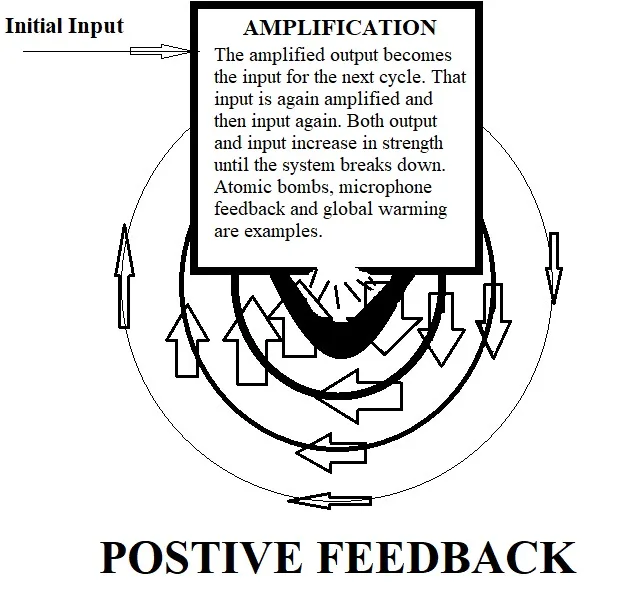
Feedback loops. Complex systems contain feedback loops that either amplify changes (positive feedback) or dampen them (negative feedback). Positive feedback loops create self-reinforcing dynamics: success breeds success, panic breeds panic, growth attracts investment which funds more growth.
Negative feedback loops create self-correcting dynamics: rising prices reduce demand which reduces prices, rising body temperature triggers sweating which reduces body temperature, rising population depletes resources which reduces population.
The interplay between positive and negative feedback loops determines whether a system is stable, oscillating, growing, or collapsing.
Distributed control. Complex systems have no central controller. Behavior emerges from the interactions of many agents, each following their own local rules based on local information. The economy has no central planner; the immune system has no general; the ecosystem has no manager.
This distributed control makes complex systems remarkably robust in some respects (removing any single agent rarely destroys the system) but also makes them difficult to steer intentionally (no single agent can direct the system's overall behavior).
Emergence. Complex systems exhibit emergent properties, behaviors or patterns that arise from the interactions of agents but are not properties of any individual agent. Consciousness emerges from the interactions of neurons, none of which is conscious.
Market prices emerge from the interactions of buyers and sellers, none of whom determines the price. Traffic jams emerge from the interactions of drivers, none of whom intends to create a jam.
Emergence is the signature property of complex systems and the primary reason that such systems cannot be understood by analyzing their components in isolation.
What Makes Complex Systems "Adaptive"
A complex system becomes a complex adaptive system (CAS) when its agents can modify their behavior based on experience and when the system as a whole can change its structure and function in response to environmental pressures. Adaptation requires three capabilities:
Variation: The system must contain diversity, meaning different agents with different strategies, different structures, or different capabilities. Without variation, there is nothing for selection to act on.
An economy with identical firms, or an ecosystem with identical organisms, or an immune system with identical antibodies would have no capacity to adapt because there would be no alternative strategies to switch to when conditions change.
Selection: The system must have mechanisms that reinforce successful strategies and eliminate unsuccessful ones. In markets, selection operates through profit and loss: firms that meet customer needs profitably survive and grow; those that don't go bankrupt.
In ecosystems, selection operates through reproduction and death: organisms that find food and avoid predators reproduce; those that don't die without offspring. In immune systems, selection operates through clonal expansion: immune cells that successfully bind to a pathogen multiply rapidly; those that don't remain dormant.
Retention: The system must have mechanisms for preserving and transmitting successful strategies. In biological systems, retention operates through genes. In economic systems, retention operates through organizational routines, business processes, and institutional structures.
In cultural systems, retention operates through learning, tradition, and documentation. Without retention, the system would constantly reinvent solutions to problems it has already solved.
Self-Organization: Order Without a Director
Self-organization is the process by which local interactions among agents produce global patterns of order without any external direction or central coordination.
Self-organization is perhaps the most counterintuitive property of complex adaptive systems because human experience with designed systems (machines, organizations, buildings) predisposes us to assume that order requires a designer. Complex systems demonstrate that this assumption is wrong.
"The most complex structures in the universe arise without any designer, simply through natural processes."
Stuart Kauffman
Classic Examples of Self-Organization
Ant colonies exhibit remarkably sophisticated self-organization. When ant colonies forage for food, no ant has a map, no ant knows the locations of food sources, and no ant directs other ants where to go.
Instead, individual ants follow simple local rules: leave the nest and walk randomly; if you find food, carry it back to the nest while laying a pheromone trail; if you encounter a pheromone trail, follow it. These simple rules produce emergent behavior that is startlingly efficient.
Pheromone trails to closer food sources are reinforced more frequently (because ants complete the round trip faster), causing the colony to preferentially exploit the nearest food sources. When a food source is depleted, the pheromone trail evaporates and ants redirect to other sources.
When a new, closer food source appears, the colony redirects to it within minutes.
Biologist Deborah Gordon's long-term studies of harvester ant colonies in the Arizona desert have shown that colonies adjust their foraging behavior in response to food availability, humidity, and the presence of competing colonies, all without any individual ant understanding the colony's strategy.
Markets self-organize to allocate resources through the price mechanism. When demand for a product increases, its price rises, which signals producers to increase supply and consumers to seek substitutes, which eventually brings supply and demand back toward equilibrium.
When a new resource is discovered, its price falls, which signals users to adopt it and producers of the old resource to shift to other products. No central planner decides how much wheat to grow, how much steel to produce, or how many programmers to train.
The price system, operating through millions of decentralized transactions, coordinates these decisions with a precision that centrally planned economies consistently failed to match, as the collapse of the Soviet Union dramatically demonstrated.
The brain self-organizes its neural circuits through experience-dependent plasticity. No central controller assigns functions to specific brain regions. Instead, neurons that are repeatedly activated together strengthen their connections (Hebbian learning), while unused connections weaken and are pruned.
The result is a self-organized neural architecture that reflects the individual's specific experiences and environment.
This is why London taxi drivers develop enlarged hippocampi, why musicians develop expanded motor cortex representations of their fingers, and why blind people repurpose their visual cortex for processing touch and sound.
The brain's functional architecture is not genetically pre-specified; it self-organizes in response to experience.
Cities self-organize spatial patterns of land use, commercial activity, and residential settlement.
Jane Jacobs, in her landmark The Death and Life of Great American Cities (1961), described how the vitality of urban neighborhoods emerges from the unplanned interactions of diverse businesses, residents, and activities rather than from top-down planning.
The most successful urban districts, she observed, were those that allowed self-organization to operate: mixed uses, short blocks, buildings of varying age and condition, and sufficient density of people.
Top-down planning that imposed rigid uniformity (single-use zoning, superblocks, highway corridors) consistently destroyed the self-organizing dynamics that made neighborhoods viable.
The Edge of Chaos
Research on complex adaptive systems has identified a zone called the "edge of chaos" where systems are most adaptive. Systems that are too ordered (rigid, hierarchical, tightly controlled) lack the flexibility to respond to changing conditions.
Systems that are too disordered (random, unstructured, anarchic) lack the coherence to maintain functional organization. The most adaptive systems operate between these extremes, maintaining enough structure to be coherent and enough flexibility to be responsive.
Stuart Kauffman, a theoretical biologist at the Santa Fe Institute, formalized this concept through his studies of Boolean networks, abstract models of genetic regulatory systems.
Kauffman showed that networks at the edge of chaos exhibit the most complex and adaptive behavior: they can maintain stable patterns when conditions are stable but also transition to new patterns when conditions change.
Networks that are too ordered get "frozen" into fixed patterns that cannot adapt; networks that are too chaotic never settle into any stable pattern at all.
The edge-of-chaos concept has been applied to organizations by management researchers who argue that the most successful organizations maintain a balance between structure and flexibility. Companies that are too bureaucratic (too much order) cannot adapt to changing markets.
Companies that are too chaotic (too little structure) cannot execute consistently.
The most adaptive organizations maintain what organizational theorist Robert Burgelman called "induced" and "autonomous" strategic processes simultaneously: the induced process provides structured execution of the current strategy, while the autonomous process provides unstructured experimentation with potential new strategies.
Feedback Loops: The Engines of System Behavior
Feedback loops are the mechanisms through which complex systems regulate themselves, amplify changes, and generate the dynamic behaviors (growth, oscillation, collapse, adaptation) that characterize living and social systems. Understanding feedback is essential for understanding both how systems adapt and why they sometimes fail to adapt.
Positive Feedback: Amplification and Growth
Positive feedback occurs when a change in a system triggers further changes in the same direction, amplifying the initial change. Positive feedback creates virtuous cycles (when the amplified outcome is desirable) and vicious cycles (when it is undesirable).
In economic systems, positive feedback drives both booms and busts. During a real estate boom, rising prices attract speculators, whose buying drives prices higher, which attracts more speculators, creating a self-reinforcing bubble.
During a financial panic, falling asset prices force leveraged investors to sell, which drives prices lower, which forces more selling, creating a self-reinforcing crash. The same fundamental mechanism, positive feedback, drives both dynamics; the difference is only in direction.
In biological systems, positive feedback drives rapid responses. When you cut yourself, the initial exposure of blood to tissue factor triggers a clotting cascade in which each step amplifies the next, producing a clot rapidly enough to prevent dangerous blood loss.
When a pathogen invades, the initial recognition triggers an immune cascade in which activated immune cells release signals that activate more immune cells, producing a rapid defensive response.
Positive feedback is inherently unstable. Without some countervailing force, positive feedback loops grow without limit (exponential growth) or collapse without limit (exponential decay). In real systems, positive feedback is always eventually constrained by negative feedback, resource limitations, or system breakdown.
Understanding what constrains positive feedback in any particular system is crucial for predicting the system's long-term behavior.
Negative Feedback: Stability and Homeostasis
Negative feedback occurs when a change in a system triggers an opposing change that tends to counteract the initial change, stabilizing the system around a set point.
Negative feedback is the mechanism behind homeostasis, the maintenance of stable internal conditions in living organisms and the maintenance of stable operation in engineered systems.
Your body temperature is maintained at approximately 37 degrees Celsius through negative feedback. If your temperature rises, sweating and vasodilation dissipate heat. If your temperature falls, shivering and vasoconstriction conserve heat.
The thermostat in your house operates on the same principle: if the temperature exceeds the set point, the cooling system activates; if it falls below the set point, the heating system activates.
In economic systems, negative feedback operates through market mechanisms. If a firm charges too much, customers switch to competitors, reducing the firm's revenue and creating pressure to lower prices. If a firm pays too little, workers leave for better opportunities, creating pressure to raise wages.
If an economy overheats, inflation rises, which reduces purchasing power and eventually slows spending. These negative feedback mechanisms do not prevent all economic instability, but they constrain the range of fluctuation and tend to pull the system back toward equilibrium after disruptions.
Negative feedback can fail when it is too slow (the corrective response takes too long to take effect), too weak (the corrective response is insufficient to counteract the initial change), or disabled (some intervention prevents the corrective mechanism from operating).
Climate change represents a case where negative feedback mechanisms are being overwhelmed: the Earth's natural carbon sinks (oceans, forests, soil) cannot absorb carbon dioxide fast enough to counteract the rate at which human activity adds it to the atmosphere, causing the overall system to drift away from its historical equilibrium.
Feedback Delays and Oscillation
When feedback loops include significant time delays, the system tends to oscillate rather than stabilize smoothly.
This is because the corrective response arrives after the system has already moved past the point where correction was needed, overshooting in the opposite direction and triggering another delayed correction that overshoots again.
The classic example is the beer distribution game, developed by systems dynamicist Jay Forrester at MIT. In this simulation, participants manage a supply chain for beer, ordering from a supplier who delivers with a time delay. When demand increases, participants increase their orders.
But because deliveries take time, the increased inventory arrives after participants have already increased their orders further, creating a massive inventory surplus.
Participants then cut orders to zero, which after a delay creates shortages, which triggers panic ordering, and so on. The oscillations are generated entirely by the feedback delay, not by any change in underlying demand.
Feedback delays are pervasive in real systems and produce real oscillations. Business cycles reflect, in part, the delays between investment decisions and their productive impact. Political cycles reflect the delays between policy implementation and its observable effects.
Ecosystem population cycles (predator-prey oscillations, for example) reflect the delays between population changes and their effects on food availability.
| Feedback Type | Mechanism | System Behavior | Example |
|---|---|---|---|
| Positive (reinforcing) | Change amplifies itself | Exponential growth or collapse | Bank runs, viral spread, network effects |
| Negative (balancing) | Change triggers opposition | Stability around set point | Thermostat, market pricing, homeostasis |
| Delayed negative | Correction arrives late | Oscillation | Business cycles, supply chain bullwhip |
| Competing positive and negative | Multiple loops interact | Complex dynamics | Climate system, economic cycles |
Why Systems Sometimes Fail to Adapt
If complex adaptive systems are so good at self-organizing and adapting, why do they sometimes fail catastrophically? Why do companies go bankrupt, ecosystems collapse, civilizations fall, and financial systems melt down?
Understanding the failure modes of complex adaptive systems is as important as understanding their adaptive capabilities.
Lock-In From Past Success
One of the most common failure modes is lock-in, where past success creates conditions that prevent adaptation to changed circumstances.
When a strategy has been successful for a long period, the system optimizes around that strategy, building infrastructure, routines, relationships, and expectations that assume the strategy will continue to work.
When conditions change and the strategy becomes obsolete, the accumulated optimization makes switching to a new strategy enormously costly.
Kodak is the most frequently cited corporate example. Kodak dominated the photography industry for nearly a century, building an enormously profitable business around film, chemical processing, and paper printing. When digital photography emerged, Kodak's engineers actually invented the first digital camera in 1975.
But Kodak's entire organizational structure, profit model, supply chain, distribution network, and corporate culture were optimized for film.
Transitioning to digital would have required cannibalizing their most profitable business, rebuilding their supply chain, retraining their workforce, and transforming their culture.
By the time the company seriously attempted the transition, digital photography had advanced beyond Kodak's ability to catch up, and the company filed for bankruptcy in 2012.
The biological equivalent is evolutionary trap, where organisms become so well-adapted to specific conditions that they cannot adapt when those conditions change rapidly. Organisms with highly specialized diets, narrow habitat requirements, or limited geographic ranges are most vulnerable.
The giant panda's extreme specialization on bamboo, the koala's extreme specialization on eucalyptus, and many island species' extreme adaptation to predator-free environments represent biological lock-in that threatens survival when conditions change.
Inability to Sense Environmental Change
Adaptation requires information about the environment. Systems that cannot detect changes in their environment cannot adapt to those changes. Sensing failure occurs when the signals of environmental change are too weak, too slow, too noisy, or too complex for the system's sensing mechanisms to detect.
In organizational contexts, sensing failure often occurs because information about environmental changes is filtered, distorted, or suppressed as it travels through hierarchical layers.
Front-line employees may detect market shifts long before senior executives become aware of them, but organizational structures often prevent this information from reaching decision-makers in a timely and undistorted form.
Research by sociologist Diane Vaughan on the Space Shuttle Challenger disaster documented how engineers' warnings about the risk of launching in cold temperatures were systematically filtered and reinterpreted as they moved up the organizational hierarchy, a process Vaughan called the "normalization of deviance."
In biological systems, sensing failure occurs when environmental changes are outside the range that the organism's sensory systems evolved to detect.
Many species cannot detect gradual temperature changes, gradual habitat loss, or gradual contamination of their food or water supply because their sensory systems evolved to detect sudden, acute threats rather than slow, chronic changes.
This is why gradual environmental degradation can push species toward extinction without triggering the adaptive responses that acute threats would elicit.
Over-Optimization and Fragility
The relationship between optimization and adaptation is paradoxical: the more optimized a system is for current conditions, the less adaptable it is to different conditions. Optimization involves eliminating redundancy, tightening connections, and reducing slack, all of which improve efficiency under normal conditions but reduce the system's capacity to absorb and respond to disruptions.
Nassim Nicholas Taleb popularized this concept with the term "antifragility," distinguishing between fragile systems (which break under stress), robust systems (which resist stress), and antifragile systems (which actually improve under stress).
"Wind extinguishes a candle and energizes fire. Likewise with randomness, uncertainty, chaos: you want to use them, not hide from them."
Nassim Nicholas Taleb
Taleb argued that modern financial systems, supply chains, and organizational structures have been optimized for efficiency to the point of fragility: they work beautifully under normal conditions but collapse under stress because all the redundancy and slack that would have provided resilience has been eliminated.
The COVID-19 pandemic provided a dramatic illustration. Global supply chains had been optimized for efficiency through just-in-time manufacturing, single-source suppliers, and minimal inventory buffers.
This optimization produced enormous cost savings under normal conditions but created catastrophic fragility when the pandemic disrupted production and transportation simultaneously.
Companies that had maintained some redundancy (multiple suppliers, safety stock, diversified production locations) weathered the disruption far better than those that had fully optimized.
Too-Rapid Change
Systems can fail to adapt when the environment changes faster than the system's adaptive mechanisms can respond. Biological evolution through genetic mutation and natural selection operates over generations, so a species faced with environmental change that occurs within a single generation (rapid climate change, sudden habitat destruction, introduction of a novel predator) may not have time to adapt genetically.
Cultural adaptation is faster than genetic adaptation, and technological adaptation is faster still, but even these faster mechanisms have limits.
Organizations can adapt their strategies over months to years, but they cannot restructure themselves overnight. Societies can shift cultural norms over decades, but they cannot transform their institutions in weeks.
The concept of "adaptive capacity" captures the idea that different systems have different rates of adaptation, and that a system's survival depends on whether its adaptive rate matches or exceeds the rate of environmental change.
When the environment changes slowly, even slow adaptive mechanisms (biological evolution, cultural transmission, institutional reform) can keep pace.
When the environment changes rapidly, only fast adaptive mechanisms (individual learning, market response, technological innovation) can keep pace, and if the relevant adaptive challenge requires slow mechanisms (such as institutional reform or cultural change), the system may fail.
How to Help Systems Adapt Better
Given the mechanisms of complex adaptive systems, several principles emerge for designing, managing, and supporting systems that need to adapt.
Maintain Diversity
Diversity is the raw material for adaptation. Systems that maintain diverse agents, strategies, capabilities, and perspectives have more variation for selection to act on when conditions change.
Organizations that hire people with diverse backgrounds, encourage diverse perspectives, and maintain diverse product lines are more adaptable than those that optimize for homogeneity. Ecosystems with high biodiversity are more resilient to environmental shocks than those with low biodiversity.
Economies with diverse industrial bases are more resilient to sector-specific downturns than those dependent on a single industry.
Maintaining diversity has costs. Diversity is inherently less efficient than homogeneity in the short term because it means maintaining capabilities and perspectives that are not currently needed.
The tension between efficiency (which favors optimization and homogeneity) and adaptability (which favors redundancy and diversity) is one of the fundamental trade-offs in complex adaptive systems management.
Organizations that resolve this tension entirely in favor of efficiency become fragile; those that resolve it entirely in favor of adaptability become inefficient.
The optimal balance depends on the rate and predictability of environmental change: in stable, predictable environments, efficiency can be prioritized; in volatile, unpredictable environments, adaptability must be prioritized.
Create Good Feedback Loops
Adaptation depends on feedback: information about the consequences of actions that allows agents to adjust their behavior. Systems with fast, accurate, and widely distributed feedback adapt more effectively than systems with slow, distorted, or concentrated feedback.
In organizations, this means creating systems that rapidly surface information about performance, customer needs, competitive developments, and internal problems. It means reducing the hierarchical filtering that distorts information as it moves from front-line employees to senior decision-makers.
It means measuring the right things, because feedback loops that track the wrong metrics can drive the system toward optimization of the wrong objectives, a phenomenon known as Goodhart's Law ("when a measure becomes a target, it ceases to be a good measure").
In policy contexts, this means creating institutions that generate accurate information about the consequences of policies and making that information publicly available.
The most adaptive governance systems are those with robust feedback mechanisms: free press, independent judiciary, competitive elections, transparent data, and strong civil society organizations that can detect and publicize the effects of policy decisions.
Allow Experimentation
Adaptation requires variation, and variation requires experimentation, meaning the ability to try new strategies, fail safely, and learn from both success and failure.
Systems that punish experimentation, that demand certainty before allowing action, or that treat all failure as unacceptable, suppress the variation that adaptation requires.
In organizations, this means creating safe spaces for experimentation where failure does not carry career-ending consequences. It means funding exploratory projects alongside exploitation of existing capabilities. It means tolerating redundancy and apparent waste in the service of generating new options.
Amazon's culture of experimentation, where new ideas are routinely tested through small-scale deployments and killed quickly if they don't work, exemplifies this principle.
Jeff Bezos has described Amazon's approach as accepting that "if you're going to take bold bets, they're going to be experiments, and if they're experiments, you don't know ahead of time if they're going to work."
Avoid Over-Optimization
Over-optimization is the enemy of adaptation. Every buffer eliminated, every redundancy removed, every slack taken up improves efficiency at the cost of resilience. Systems that must adapt to unpredictable changes need reserves, redundancy, and flexibility that over-optimization eliminates.
This principle applies at every scale. Individual humans who optimize every minute of their day for productivity leave no time for rest, reflection, and the serendipitous encounters that generate new ideas. Organizations that optimize every process for current performance leave no resources for exploring new opportunities.
Ecosystems that are managed for maximum yield of a single species lose the biodiversity that provides resilience. Financial systems that maximize leverage for maximum returns in good times create maximum vulnerability in bad times.
The practical challenge is that over-optimization is locally rational and individually rewarding. Each individual decision to eliminate a buffer or remove redundancy improves measurable efficiency. The costs of reduced resilience are invisible until a disruption occurs, at which point they become catastrophically visible.
Managing this tension requires deliberate commitment to maintaining reserves and redundancy even when short-term incentives favor their elimination, a commitment that is difficult to sustain in competitive environments where less resilient competitors may outperform in normal times.
Enable Learning at Multiple Scales
The most adaptive complex systems learn at multiple scales simultaneously. Individual agents learn from their own experience. Groups of agents learn from shared experience and information exchange. The system as a whole learns through selection that reinforces successful strategies and eliminates unsuccessful ones.
Adaptive failures often occur when learning at one scale is blocked or when learning at different scales is not integrated.
Organizations that create mechanisms for learning at multiple scales, individual learning through training and feedback, team learning through retrospectives and knowledge sharing, organizational learning through systematic review and strategic adaptation, are more adaptive than those that rely on any single scale of learning.
Likewise, societies that combine individual learning (education), institutional learning (organizational adaptation), and collective learning (cultural evolution) are more adaptive than those that depend on any single mechanism.
The most powerful form of system adaptation occurs when learning at different scales is coupled: individual learning feeds into organizational learning, which feeds into institutional adaptation, which creates new conditions for individual learning.
This coupling creates a multi-level adaptive system that can respond to changes at multiple timescales simultaneously, from rapid individual adjustments to gradual institutional transformations.
Complex Systems Thinking in Practice
Understanding complex adaptive systems provides a fundamentally different approach to management, policy, and problem-solving than the traditional reductionist, mechanistic approach that dominates most institutions.
The reductionist approach assumes that complex problems can be solved by breaking them into parts, optimizing each part independently, and reassembling the optimized parts.
This works well for complicated but non-complex systems (machines, buildings, supply chains with predictable demand), but it fails for complex adaptive systems because the system's behavior emerges from interactions between parts, not from the parts themselves.
Optimizing each department independently does not optimize the organization; it may actually degrade organizational performance by creating silos, misaligned incentives, and blocked information flows.
The complex systems approach starts from the recognition that you cannot fully control a complex adaptive system, but you can influence its behavior by shaping the conditions in which it operates. Rather than trying to specify the system's behavior in detail (which is impossible for complex systems), you create conditions that favor desired behaviors and discourage undesired ones, and then allow the system to self-organize within those conditions.
This shift in perspective, from controlling to gardening, from engineering to cultivation, from commanding to enabling, is perhaps the most important practical implication of complex systems thinking.
"You can't impose your will on a system. You can listen to what the system tells you, and discover how its properties and your values can work together to bring forth something much better than could ever be produced by your will alone."
Donella Meadows
It does not mean abandoning all structure or direction; gardens still need gardeners, and complex systems still benefit from thoughtful design of their enabling conditions.
But it means recognizing that the gardener's role is to create conditions for growth, not to dictate the precise shape of every plant, and that the most successful outcomes will always involve emergent properties that the gardener did not plan and could not have predicted.
Key Researchers Who Built the Science of Complex Adaptive Systems
The study of complex adaptive systems emerged primarily from the Santa Fe Institute, a transdisciplinary research center founded in New Mexico in 1984, where scientists from economics, biology, physics, and computer science discovered that their fields all exhibited the same underlying dynamics.
John Holland (1929-2015) was a computer scientist at the University of Michigan who created genetic algorithms in the 1970s and formalized the concept of the complex adaptive system in his 1975 book Adaptation in Natural and Artificial Systems.
Holland identified the four core properties that distinguish adaptive from merely complex systems: tagging (agents develop identifiers for recognizing and categorizing each other), internal models (agents develop predictive representations of their environment), building blocks (agents combine and recombine strategies in modular ways), and nonlinearity (small changes produce large effects through feedback).
Holland's framework influenced disciplines from economics to immunology. His work directly inspired the development of agent-based computational models, which are now standard tools in epidemiology, urban planning, military strategy, and financial risk management.
His colleagues John H. Miller and Scott Page extended the framework in Complex Adaptive Systems: An Introduction to Computational Models of Social Life (2007), which became a standard graduate-level text on the subject.
Donella Meadows (1941-2001) was a systems scientist at Dartmouth College and the primary author of The Limits to Growth (1972), the Club of Rome report that used system dynamics modeling to project the consequences of exponential growth in a finite world.
The report sold 30 million copies and is among the most widely read environmental science documents in history. Meadows's subsequent book Thinking in Systems: A Primer, published posthumously in 2008, distilled decades of complex systems thinking into accessible principles.
Her catalog of twelve leverage points for intervening in systems, published in the Whole Earth Catalog in 1999 and later formalized in an academic article, has been applied to problems ranging from climate policy design to organizational restructuring to public health intervention.
Meadows argued consistently that the highest-leverage interventions in complex systems are changes to the goals and paradigms that the system seeks to achieve, not adjustments to the numerical parameters (budgets, quotas, subsidies) that most policymakers focus on.
Stuart Kauffman (born 1939) is a theoretical biologist originally at the University of Pennsylvania and then at the Santa Fe Institute whose work on self-organization and the origins of life helped establish the "edge of chaos" as a technical concept rather than a metaphor.
His 1993 book The Origins of Order presented mathematical evidence, derived from the study of Boolean networks, that biological systems at the edge between order and chaos exhibit maximum adaptive capacity.
Kauffman's NK fitness landscape model, which represents the adaptive possibilities of a system with N components each with K epistatic connections to other components, has been applied in management research by Dan Levinthal at Wharton, who showed in a 1997 paper in Management Science that the complexity of a firm's competitive environment (analogous to K in Kauffman's model) determines whether incremental or radical adaptation is more effective.
High-K environments (where changing any component affects many others) favor radical, revolutionary change over incremental optimization.
Deborah Gordon (born 1955) is a behavioral ecologist at Stanford University who has spent more than thirty years studying harvester ant colonies in the Arizona desert.
Her longitudinal studies, spanning more than 150 individual ant colonies, have produced empirical evidence for how distributed systems maintain coherent collective behavior without central control.
Gordon's 2010 book Ant Encounters: Interaction Networks and Colony Behavior showed that colonies regulate foraging intensity by adjusting the rate at which foragers return to the nest, which then determines how many additional foragers leave.
The colony does not have a "commander" deciding foraging levels; the behavior emerges from local interactions governed by pheromone signals.
Gordon and Balaji Prabhakar's team published research in 2012 in PLOS Computational Biology showing that the algorithm governing ant colony foraging is analogous to the TCP protocol's congestion-control algorithm governing internet packet transmission, with both systems solving the problem of reliable transmission under variable conditions through distributed feedback rather than central coordination.
Case Studies in Complex System Adaptation Across Domains
Abstract principles of complex adaptive systems become concrete and actionable when examined through specific historical examples where the dynamics of adaptation, lock-in, and failure played out with measurable consequences.
The COVID-19 Supply Chain Collapse and Recovery (2020-2022). The global supply chain disruptions during the COVID-19 pandemic provided an unprecedented natural experiment in the fragility of over-optimized complex systems.
Research by economists at the Federal Reserve Bank of New York, published in 2022 in the Federal Reserve Bank of New York Staff Reports, documented that supply chains organized around single-source suppliers and just-in-time inventory showed 34% greater disruption severity than those maintaining supplier diversity and safety stock.
The semiconductor shortage of 2021 illustrated the cascade dynamics of complex systems: reduced demand at the pandemic's onset caused chip manufacturers to cut capacity; when demand recovered and automotive manufacturers tried to order chips, lead times stretched to 52 weeks because the industry had eliminated slack; automakers idled plants, reducing vehicle output by an estimated 7.7 million units worth $210 billion.
In response, the CHIPS and Science Act of 2022 committed $52.7 billion to domestic semiconductor manufacturing, representing a policy response explicitly designed to reintroduce redundancy into a system that had been optimized to fragility.
Intel, TSMC, and Samsung announced new US fabrication facilities, demonstrating how catastrophic disruption of an over-optimized system can shift political will toward resilience investment that stable conditions would not have generated.
New Zealand's Predator-Free 2050 Campaign. New Zealand's attempt to eliminate all invasive mammalian predators from its islands by 2050 is the most ambitious complex system intervention in conservation history.
The program, launched in 2016 with NZ$28 million in initial government funding and NZ$20 million from the private Predator Free New Zealand Trust, targets stoats, rats, and possums across the entire country's 268,000 square kilometers.
The initiative draws directly on complex systems principles: rather than trying to eradicate predators everywhere simultaneously (centralized control), the strategy creates predator-free "mainland islands" (beachheads) that serve as refuges for native birds, then allows those populations to expand into adjacent areas.
By 2023, more than 100 community groups had established local predator control programs.
Researchers at Victoria University of Wellington documented that areas with sustained predator control showed native bird population increases of 30 to 500% depending on species, while also experiencing unexpected positive cascades: reduced predator pressure on lizards increased insect pollination of native plants, demonstrating how removing a top-level stressor produced emergent positive outcomes in lower trophic levels that managers had not specifically targeted.
Nokia's Adaptive Failure and Microsoft's Adaptive Transformation. Nokia's decline from controlling roughly 40% of the global mobile phone market in 2007 to selling its device division to Microsoft in 2013 has been analyzed in detail by INSEAD researchers Yves Doz and Keeley Wilson in their 2018 book Ringtone: Exploring the Rise and Fall of Nokia in Mobile Phones.
The analysis reveals lock-in at multiple levels: Nokia's hardware engineering excellence locked the organization into solutions optimized for button-interface devices; its Finnish corporate culture penalized public failure, causing engineers to withhold negative information from management; and its organizational structure created siloed divisions that could not integrate hardware and software development the way Apple's unified team could.
By contrast, Microsoft's cultural transformation under CEO Satya Nadella, beginning in 2014, represents a documented case of successful complex system adaptation. Microsoft's market capitalization grew from approximately $300 billion when Nadella took over to over $3 trillion by 2024 (and well above that in later years).
Organizational research, including work by Harvard Business School scholars, and Nadella's 2017 book Hit Refresh, documented that the transformation required changing the organization's internal selection environment, not just its stated strategy: performance reviews were redesigned to reward collaboration and learning rather than individual competition, product divisions were required to share technology with other divisions, and acquisition targets were evaluated for cultural compatibility with growth mindset norms, not just financial metrics.
Vaughan, D. (1996). The Challenger Launch Decision: Risky Technology, Culture, and Deviance at NASA. University of Chicago Press. View source
Gell-Mann, M. (1994). The Quark and the Jaguar: Adventures in the Simple and the Complex. W.H. Freeman.
Levin, S. A. (1998). Ecosystems and the biosphere as complex adaptive systems. Ecosystems, 1(5), 431-436. DOI: 10.1007/s100219900037
Page, S. E. (2011). Diversity and Complexity. Princeton University Press. View source
Senge, P. M. (2006). The Fifth Discipline: The Art and Practice of the Learning Organization (Revised ed.). Doubleday. View source
Notes
- Holland, J. H. "Hidden Order: How Adaptation Builds Complexity." Addison-Wesley, 1995.
- Kauffman, S. A. "At Home in the Universe: The Search for Laws of Self-Organization and Complexity." Oxford University Press, 1995.
- Meadows, D. H. "Thinking in Systems: A Primer." Chelsea Green Publishing, 2008.
- Taleb, N. N. "Antifragile: Things That Gain from Disorder." Random House, 2012.
- Arthur, W. B. "Increasing Returns and Path Dependence in the Economy." University of Michigan Press, 1994.
- Jacobs, J. "The Death and Life of Great American Cities." Random House, 1961.
- Sterman, J. D. "Business Dynamics: Systems Thinking and Modeling for a Complex World." McGraw-Hill, 2000.
- Gell-Mann, M. "The Quark and the Jaguar: Adventures in the Simple and the Complex." W.H. Freeman, 1994.
- Levin, S. A. "Ecosystems and the Biosphere as Complex Adaptive Systems." Ecosystems, 1998.
- Vaughan, D. "The Challenger Launch Decision: Risky Technology, Culture, and Deviance at NASA." University of Chicago Press, 1996.
Sources & Further Reading
Holland, J. H. (2014). Complexity: A Very Short Introduction. Oxford University Press. View source
Kauffman, S. A. (1993). The Origins of Order: Self-Organization and Selection in Evolution. Oxford University Press. View source
Mitchell, M. (2009). Complexity: A Guided Tour. Oxford University Press. View source
Meadows, D. H. (2008). Thinking in Systems: A Primer. Chelsea Green Publishing. View source
Taleb, N. N. (2012). Antifragile: Things That Gain from Disorder. Random House. View source
Gordon, D. M. (2010). Ant Encounters: Interaction Networks and Colony Behavior. Princeton University Press. View source
Jacobs, J. (1961). The Death and Life of Great American Cities. Random House. View source
Arthur, W. B. (2015). Complexity and the Economy. Oxford University Press. View source
Sterman, J. D. (2000). Business Dynamics: Systems Thinking and Modeling for a Complex World. McGraw-Hill. View source
Christensen, C. M. (2016). The Innovator's Dilemma: When New Technologies Cause Great Firms to Fail. Harvard Business Review Press. View source