
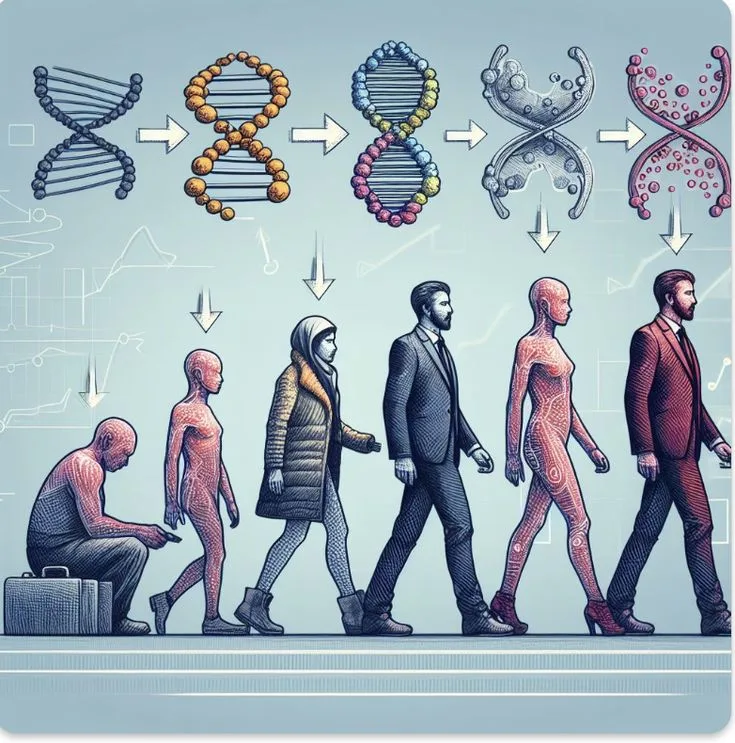
Genetics studies how biological information is encoded, transmitted, expressed, and changed across generations. Understanding genetics connects Mendelian inheritance with genes, DNA, chromosomes, mutation, environment, and epigenetic regulation. Later advances in sequencing and CRISPR expanded the ability to read and alter genomes, reshaping medicine, agriculture, evolutionary biology, and questions about human identity.
Few scientific fields have transformed human self-understanding as profoundly as genetics. To study genetics is to examine the most fundamental question biology can ask: how does life reproduce itself, and how does heritable information pass from one generation to the next?
The answers, assembled across nearly 170 years of experiment and discovery, have reshaped medicine, agriculture, evolutionary theory, and philosophy. They have also placed unprecedented power - the ability to read and rewrite the molecular text of life itself - into human hands.
The story of genetics is in many ways a story of delayed recognition. The foundational experiments were conducted by an obscure friar in a monastery garden. The molecule at the heart of heredity was dismissed for decades as too simple to carry complex information.
The woman who contributed the critical crystallographic image enabling the discovery of DNA's structure died before any Nobel Prize was awarded.
And the technology that may ultimately prove most consequential - CRISPR gene editing - emerged not from a biomedical lab but from the study of how bacteria defend themselves against viruses. Genetics rewards the unexpected.
What follows is an account of the field's major milestones: the Mendelian laws that established heredity as rule-governed, the molecular discoveries that identified DNA as the carrier of those rules, the genomic revolution that catalogued the full text of the human genome, and the editing technologies and epigenetic insights that are redefining what genes mean for human health and identity.
"Genetics is the study of biological information: how it is encoded, how it is transmitted, and how it shapes the living world. Understanding it is inseparable from understanding what we are."
Key Definitions
Gene: A heritable unit of biological information, typically a DNA sequence that encodes a functional product (most commonly a protein, though also various classes of functional RNA). The modern molecular definition has substantially complicated the classical Mendelian concept.
Allele: One of two or more variants of a gene at a given chromosomal location. Dominant alleles produce their phenotype in single copy; recessive alleles require two copies to produce their phenotype.
Genotype: The genetic makeup of an organism at one or more loci. Phenotype: The observable characteristics of an organism, resulting from the interaction of genotype with environment.
Mutation: Any heritable change in the DNA sequence. Mutations may be point mutations (single nucleotide changes), insertions, deletions, or larger chromosomal rearrangements. They may be neutral, deleterious, or, rarely, beneficial.
Epigenetics: Heritable changes in gene expression that do not involve alterations to the underlying DNA sequence, mediated by chemical modifications of DNA and associated histone proteins.
Key Milestones in Genetics
| Year | Discovery | Who | Significance |
|---|---|---|---|
| 1865-66 | Laws of segregation and independent assortment | Gregor Mendel | First quantitative account of heredity; ignored until 1900 |
| 1900 | Rediscovery of Mendelian inheritance | De Vries, Correns, von Tschermak | Launched genetics as a recognized discipline |
| 1910-11 | Genes located on chromosomes; sex linkage demonstrated | Thomas Hunt Morgan (Drosophila) | Physical basis for heredity; foundation of chromosome theory |
| 1928 | Bacterial transformation: heritable material transfers between bacteria | Frederick Griffith | Demonstrated hereditary information is a molecule, not a protein |
| 1944 | Transforming principle identified as DNA, not protein | Avery, MacLeod, McCarty | Established DNA as the molecule of heredity |
| 1953 | Double helix structure of DNA proposed | Watson, Crick (with Franklin's Photo 51) | Explained how DNA is replicated and encodes information |
| 1961-66 | Genetic code cracked: 64 codons mapped to 20 amino acids | Nirenberg, Khorana, Holley | Showed how DNA sequence specifies protein sequence |
| 1977 | DNA sequencing methods developed | Sanger (chain termination); Maxam-Gilbert | Enabled reading the genome base by base |
| 2001-03 | Human genome sequenced (~3 billion base pairs, ~20,000-25,000 genes) | Human Genome Project; Celera | Catalogue of human genetic variation; foundation for genomic medicine |
| 2012-20 | CRISPR-Cas9 developed as a precise gene editing tool | Doudna, Charpentier (Nobel 2020) | Transformed gene editing from specialty skill to routine molecular tool |
Mendel and the Laws of Heredity
The Monastery Garden
Between 1856 and 1863, Gregor Johann Mendel cultivated approximately 29,000 pea plants in the garden of the Augustinian monastery of St. Thomas in Brno. A trained physicist as well as a naturalist, Mendel brought a mathematical sensibility to his experiments that was entirely foreign to the naturalists of his era.
He selected Pisum sativum deliberately: peas reproduce quickly, can be cross-pollinated or self-pollinated at will, and display traits - seed color, seed shape, pod color, pod shape, flower color, flower position, stem height - that come in distinct, non-overlapping variants.
There is no intermediate between round seeds and wrinkled seeds, no continuum between yellow pods and green ones.
The prevailing theory of inheritance held that offspring traits were blends of parental traits, as if paint colors were being mixed. Mendel's data demolished this view. When he crossed pure-breeding round-seeded plants with pure-breeding wrinkled-seeded plants, the first-generation offspring all had round seeds.
The wrinkled trait had not blended away; it had simply disappeared temporarily. When these first-generation plants were allowed to self-pollinate, the wrinkled trait reappeared in the second generation in a ratio of approximately three round to one wrinkled.
Something invisible - a hereditary unit - was being passed intact through generations.
Laws of Segregation and Independent Assortment
From these observations Mendel formulated two principles. The law of segregation holds that each organism carries two copies of each hereditary factor (one from each parent) and that these copies separate during the formation of gametes, so each gamete carries only one copy.
An organism that carries two different alleles - say, one dominant and one recessive - will pass on each allele to half of its offspring.
The law of independent assortment holds that factors for different traits segregate independently of each other in gamete formation, meaning that the inheritance of seed color is statistically independent of the inheritance of seed shape.
(We now know this applies only to genes on different chromosomes or genes far apart on the same chromosome; genes that are close together are linked and violate this law.)
Mendel presented his findings to the Natural History Society of Brno in 1865 and published them in the society's proceedings in 1866 under the title "Versuche uber Pflanzenhybriden" (Experiments on Plant Hybridization).[6] The paper was circulated to scientific libraries across Europe. It was essentially ignored for 34 years.
Rediscovery and the Chromosome Theory
In 1900, three botanists - Hugo de Vries in the Netherlands, Carl Correns in Germany, and Erich von Tschermak in Austria - independently rediscovered Mendelian principles through their own hybridization experiments and, searching the literature, found that Mendel had preceded them by a generation.
The rediscovery was simultaneous, a characteristic sign that the intellectual environment had finally become receptive to the idea.
The physical basis for Mendel's units remained obscure until Thomas Hunt Morgan and his students at Columbia University began experiments with Drosophila melanogaster, the common fruit fly, around 1908. In 1910, Morgan reported a striking anomaly: a white-eye mutation was not inherited independently of sex.[7]
White-eyed males produced white-eyed daughters but not sons when crossed with red-eyed females, revealing that the white-eye gene was located on the X chromosome - the first demonstration of sex linkage.
Morgan's group went on to show that genes are physically located on chromosomes, that genes on the same chromosome are inherited together (linkage), and that the frequency of recombination between linked genes reflects their physical distance apart, allowing the construction of genetic maps.
Morgan received the Nobel Prize in Physiology or Medicine in 1933 for these discoveries.
The Molecular Basis of Heredity
Griffith, Avery, and the Transforming Principle
The chemical identity of the hereditary material was disputed well into the mid-twentieth century. In 1928, Frederick Griffith, a British bacteriologist, was studying Streptococcus pneumoniae, the bacterium that causes pneumonia.
He found that heat-killed virulent (smooth) bacteria could convert living nonvirulent (rough) bacteria into a virulent form - a process he called transformation. Something in the dead bacteria was transmitting heritable virulence to living cells.
In 1944, Oswald Avery, Colin MacLeod, and Maclyn McCarty at the Rockefeller Institute in New York identified the transforming principle as DNA.[1] Their experimental approach was systematic: they purified each class of macromolecule from smooth bacteria and tested which could transform rough bacteria.
Only DNA worked. Treatment with DNase (which degrades DNA) abolished transformation; treatment with protease (which degrades protein) or RNase (which degrades RNA) did not.
The finding was not immediately accepted - the biochemical homogeneity of DNA still made many scientists suspicious - but it was confirmed by Alfred Hershey and Martha Chase in 1952, who used radioisotope labeling to demonstrate that it is the DNA, not the protein coat, of bacteriophages that enters bacterial cells during infection.
Rosalind Franklin, Photo 51, and the Double Helix
By the early 1950s, several groups were racing to determine the three-dimensional structure of DNA. Rosalind Franklin, working at King's College London under John Randall, was producing X-ray crystallographic images of exceptional quality.[4]
In 1952 she produced what became known as Photo 51, a crystallographic image of the B-form of DNA that showed the unmistakable cross-shaped pattern characteristic of a helical structure.
Erwin Chargaff, a biochemist at Columbia, had established by 1950 what are now called Chargaff's rules: in any DNA sample, the proportion of adenine equals the proportion of thymine, and the proportion of guanine equals the proportion of cytosine.
This A=T, G=C pairing, which Chargaff himself did not explain structurally, was a critical clue.
James Watson, a young American biologist, and Francis Crick, a British physicist, working at the Cavendish Laboratory in Cambridge, had access to Photo 51 through Crick's colleague Maurice Wilkins, who showed it to Watson without Franklin's knowledge or consent.
In April 1953, Watson and Crick published a landmark paper in Nature proposing a double helix model for DNA: two antiparallel polynucleotide chains wound around a central axis, with the bases pointing inward and paired specifically - A with T, G with C - through hydrogen bonds.[9]
The model immediately explained both Chargaff's rules and how DNA could be replicated: each strand serves as a template for a complementary new strand.
Watson, Crick, and Wilkins received the Nobel Prize in Physiology or Medicine in 1962. Franklin had died of ovarian cancer in 1958, aged 37; Nobel Prizes are not awarded posthumously.
The question of whether her critical contribution was adequately acknowledged - her crystallographic data was used without her knowledge and her role was minimized in early accounts - remains a continuing point of historical and ethical discussion.
The Central Dogma and the Genetic Code
From DNA to Protein
Francis Crick proposed what he called the central dogma of molecular biology in 1958, formalizing it in a celebrated 1970 Nature paper.[2] The core principle is directional: genetic information flows from DNA to RNA to protein.
DNA is replicated (copied to make new DNA), transcribed (copied into messenger RNA), and the mRNA is translated into protein at ribosomes.
The flow is unidirectional in the sense that information encoded in protein sequence cannot be written back into nucleic acid sequence.
Transcription occurs in the nucleus: RNA polymerase reads a DNA template strand and synthesizes a complementary RNA copy, which is processed and exported to the cytoplasm. Translation occurs at ribosomes, molecular machines that read the mRNA sequence in three-nucleotide units called codons.
The genetic code maps each of the 64 possible codons onto one of 20 amino acids or onto a stop signal. Three codons (UAA, UAG, UGA) are stop codons; AUG serves as both the start codon and the codon for methionine.
The code is degenerate: most amino acids are specified by multiple codons (for example, leucine is encoded by six different codons). This degeneracy means that many mutations at the third position of a codon do not change the amino acid sequence, creating what are called synonymous or silent mutations.
Exceptions to the Central Dogma
The central dogma has well-characterized exceptions that define its boundaries rather than overturn it.
Howard Temin and David Baltimore independently discovered in 1970 that retroviruses such as HIV carry RNA genomes and encode an enzyme, reverse transcriptase, that copies viral RNA into DNA - a RNA-to-DNA information flow that Crick had acknowledged as theoretically possible.
The viral DNA integrates into the host chromosome, where it directs production of new virions.
RNA viruses such as influenza replicate their genomes through RNA intermediates, never requiring DNA at all.
Most strikingly, prions - the infectious agents responsible for bovine spongiform encephalopathy (BSE), scrapie, and Creutzfeldt-Jakob disease - are misfolded proteins that propagate by inducing conformary changes in normal prion proteins.
They transmit heritable information through a protein-to-protein mechanism entirely independent of nucleic acids, a discovery that earned Stanley Prusiner the Nobel Prize in Physiology or Medicine in 1997.
The Human Genome Project and Genomics
Sequencing the Book of Life
The Human Genome Project (HGP), launched in 1990, was one of the largest coordinated scientific endeavors in history.
The public consortium - involving centers in the United States, United Kingdom, France, Germany, Japan, and China, coordinated by Francis Collins at the NIH - employed the laborious but methodical Sanger sequencing approach to map and sequence the entire ~3.2 billion base pair human genome.
In 1998, Craig Venter founded Celera Genomics and announced that his company would complete the genome faster using a whole-genome shotgun approach.
The resulting competition accelerated the public consortium's timeline and culminated in a simultaneous joint announcement at the White House in June 2000. The full reference sequence was declared complete in April 2003, the fiftieth anniversary of Watson and Crick's original paper.
The results confounded expectations. The human genome contains approximately 20,000 to 25,000 protein-coding genes - roughly the same number as the roundworm Caenorhabditis elegans, and far fewer than the 100,000 previously predicted.[12] Protein-coding sequences constitute only about 1.5 percent of the genome.[5]
Approximately 8 percent consists of sequences derived from ancient retroviral integrations - remnants of infections that occurred millions of years ago and are now permanently incorporated into the human germline. The biological function of the vast remainder was initially unclear.
ENCODE and the Debate Over "Junk DNA"
The ENCODE (Encyclopedia of DNA Elements) consortium, tasked with cataloguing functional elements in the genome, published a landmark set of papers in 2012 claiming that approximately 80 percent of the human genome shows some biochemical activity - promoter binding, transcription, chromatin marks.[8]
The headline figure prompted widespread popular claims that "junk DNA" had been vindicated as functional. Subsequent debate among genomicists was sharp: evolutionary biologists including Dan Graur and W.
Ford Doolittle argued that biochemical activity is not equivalent to biological function, and that many transcribed sequences are transcriptional noise.
The true proportion of the genome under purifying selection - implying functional importance - is likely between 8 and 15 percent by evolutionary estimates, though the regulatory landscape is genuinely complex and the debate remains active.
Mutations, Disease, and Genetic Medicine
Types of Mutation
Genetic mutations range from single-nucleotide changes to large chromosomal rearrangements. Point mutations alter a single base pair; they may be synonymous (no amino acid change), missense (wrong amino acid substituted), or nonsense (premature stop codon).
Insertions and deletions, particularly those not in multiples of three nucleotides, cause frameshift mutations that alter all downstream codons. Chromosomal abnormalities - duplications, deletions, inversions, translocations - can involve millions of base pairs.
Mutations occurring in germ cells (germline mutations) are heritable; those occurring in somatic cells are not transmitted to offspring but can cause cancer.
Case Studies in Genetic Disease
Huntington's disease, first described by George Huntington in 1872, results from a trinucleotide repeat expansion in the HTT gene on chromosome 4. Normal alleles contain up to 35 CAG repeats; alleles with more than 36 repeats cause disease, with larger expansions correlating with earlier onset.
The mutation is autosomal dominant - a single copy is sufficient to cause disease. There is no cure; symptoms typically begin between ages 30 and 50, involving progressive motor, cognitive, and psychiatric deterioration.
Sickle cell anemia is caused by a single nucleotide polymorphism in the beta-globin gene (HBB), substituting valine for glutamic acid at position 6 of the beta-globin protein. The resulting abnormal hemoglobin (HbS) polymerizes under low-oxygen conditions, distorting red blood cells into a sickle shape.
This causes vaso-occlusion, hemolytic anemia, and organ damage. The mutation reaches high frequency in populations with historical exposure to malaria because heterozygous carriers - possessing one normal and one HbS allele - have significant protection against severe malaria, a classic example of heterozygote advantage maintaining a deleterious allele at high population frequency.
BRCA1 and BRCA2 are tumor suppressor genes involved in DNA repair. Pathogenic variants substantially elevate lifetime risk for breast and ovarian cancer.
Genetic testing for these variants, popularized in part through the 2013 public disclosure by Angelina Jolie that she carried a BRCA1 mutation and had undergone prophylactic mastectomy, raises questions about genetic privacy, insurance discrimination, and the psychological burden of presymptomatic knowledge.
CRISPR-Cas9 and the Future of Gene Editing
A Bacterial Immune System Becomes a Molecular Scalpel
CRISPR (Clustered Regularly Interspaced Short Palindromic Repeats) sequences were first observed in Escherichia coli in 1987, but their biological function as an adaptive bacterial immune system was not understood until the 2000s. When bacteria survive phage infection, they incorporate short viral DNA sequences into their CRISPR arrays.
These arrays are transcribed into CRISPR RNA (crRNA) that, together with a trans-activating RNA (tracrRNA), guides the Cas9 endonuclease to matching DNA sequences in subsequent infections, where Cas9 makes a double-strand cut that disables the phage genome.
Jennifer Doudna at UC Berkeley and Emmanuelle Charpentier, then at the Helmholtz Centre for Infection Research in Hannover, published a 2012 paper in Science demonstrating that the CRISPR-Cas9 system could be reprogrammed with synthetic guide RNA to cut any target DNA sequence in vitro, and proposing its application as a gene editing tool.[3]
Multiple groups rapidly demonstrated editing in human cells. Doudna and Charpentier received the Nobel Prize in Chemistry in 2020.
The tool functions as a molecular scalpel: the guide RNA is designed to match the target sequence, and Cas9 introduces a double-strand break. Non-homologous end joining (NHEJ) repairs the break imprecisely, often introducing insertions or deletions that disrupt gene function.
Homology-directed repair (HDR), in the presence of a supplied DNA template, can introduce precise sequence changes. The efficiency, precision, and relative simplicity of CRISPR compared to earlier editing technologies (zinc finger nucleases, TALENs) has made it the dominant approach.
From Bench to Clinic
The first FDA-approved CRISPR-based therapy, Casgevy, developed by Vertex Pharmaceuticals and CRISPR Therapeutics, received approval in December 2023 for sickle cell disease and transfusion-dependent beta-thalassemia.
The therapy edits patients' own hematopoietic stem cells ex vivo to reactivate fetal hemoglobin (HbF) production, which compensates for the defective adult hemoglobin.
Clinical trial data showed that the majority of treated sickle cell patients experienced no vaso-occlusive crises for at least 12 months post-treatment.
Active clinical programs also include CRISPR-based cancer immunotherapies (editing T cells to better recognize and destroy tumors) and early in vivo delivery approaches targeting the liver.
The Ethical Frontier: He Jiankui and Germline Editing
In November 2018, Chinese scientist He Jiankui announced at a Hong Kong conference that he had created the first CRISPR-edited human babies - twin girls, referred to as Lulu and Nana, whose CCR5 gene had been edited in embryos with the intention of conferring resistance to HIV infection.
The scientific and bioethics communities reacted with near-universal condemnation.
The experiment was conducted outside normal oversight channels, the consent process was inadequate, CCR5 disruption has uncertain risks (including potentially increased susceptibility to certain other infections), and the modification affected the germline - meaning it is heritable by the girls' future children.
He was tried and convicted in China, sentenced to three years in prison, and the incident accelerated calls for an international moratorium on heritable human genome editing.
A 2020 report by an international commission concluded that heritable human genome editing should not proceed until the science is sufficiently advanced and robust societal governance mechanisms are in place.
Epigenetics and Gene Expression
Beyond the Sequence
Genetics once appeared to promise a straightforward determinism: know the sequence, know the organism. Epigenetics has substantially complicated this picture.
Conrad Waddington coined the term "epigenetics" in 1942 to describe the developmental processes by which genotype gives rise to phenotype - the study of how the same genome can generate radically different cell types.
The molecular mechanisms Waddington intuited were not worked out until decades later.
DNA methylation - the enzymatic addition of a methyl group to the C5 position of cytosine, predominantly at CpG dinucleotides - is one of the best-characterized epigenetic marks. Methylation at gene promoters is generally associated with transcriptional silencing.
Histone modification provides a complementary layer of regulation: histones, the protein spools around which DNA is wound, can be acetylated, methylated, phosphorylated, or ubiquitinated at specific residues, altering chromatin compaction and gene accessibility.
These marks collectively constitute an "epigenome" that is cell-type specific and dynamically regulated.
Environmental Programming and Transgenerational Effects
That the epigenome responds to environmental signals has important implications for the nature-versus-nurture debate.[11]
Studies of the Dutch Hunger Winter cohort - individuals exposed to severe caloric restriction in utero during the Dutch famine of 1944-45, which was imposed by a Nazi food embargo - showed that exposed individuals had altered DNA methylation at the imprinted IGF2 gene six decades later compared to unexposed same-sex siblings, and had elevated rates of cardiovascular disease, diabetes, and obesity.
Similar findings have emerged from studies of maternal stress, early childhood adversity, and nutritional status.[10]
Twin studies have further demonstrated that identical twins, who share essentially the same genome, have increasingly divergent epigenetic profiles as they age, with differences correlating with lifestyle, environment, and life experience.
These findings support the view that genetic determinism - the idea that genes alone fix outcomes - is too simple.
Gene expression is subject to continuous environmental modulation, and the same allele may have different consequences depending on its epigenetic context.
The more controversial claim of transgenerational epigenetic inheritance - that environmentally induced epigenetic marks can persist across multiple generations - has strong evidence in plants and some evidence in model organisms such as Caenorhabditis elegans, but remains contested in mammals.
Epigenetic reprogramming during gametogenesis and embryogenesis normally erases most marks; the extent to which marks escape this erasure in humans is an active area of investigation that bears on fundamental questions about heritability, development, and evolution.
Sources & Further Reading
- Avery, O.T., MacLeod, C.M., & McCarty, M. (1944). Studies on the chemical nature of the substance inducing transformation of pneumococcal types. Journal of Experimental Medicine, 79(2), 137-158.
- Crick, F. (1970). Central dogma of molecular biology. Nature, 227(5258), 561-563.
- Doudna, J.A., & Charpentier, E. (2012). A programmable dual-RNA-guided DNA endonuclease in adaptive bacterial immunity. Science, 337(6096), 816-821.
- Franklin, R.E., & Gosling, R.G. (1953). Molecular configuration in sodium thymonucleate. Nature, 171(4356), 740-741.
- International Human Genome Sequencing Consortium. (2001). Initial sequencing and analysis of the human genome. Nature, 409(6822), 860-921.
- Mendel, G. (1866). Versuche uber Pflanzenhybriden. Verhandlungen des naturforschenden Vereines in Brunn, 4, 3-47.
- Morgan, T.H. (1910). Sex limited inheritance in Drosophila. Science, 32(812), 120-122.
- ENCODE Project Consortium. (2012). An integrated encyclopedia of DNA elements in the human genome. Nature, 489(7414), 57-74.
- Watson, J.D., & Crick, F.H.C. (1953). Molecular structure of nucleic acids: A structure for deoxyribose nucleic acid. Nature, 171(4356), 737-738.
- Waterland, R.A., & Jirtle, R.L. (2003). Transposable elements: Targets for early nutritional effects on epigenetic gene regulation. Molecular and Cellular Biology, 23(15), 5293-5300.
- Heijmans, B.T., Tobi, E.W., Stein, A.D., et al. (2008). Persistent epigenetic differences associated with prenatal exposure to famine in humans. Proceedings of the National Academy of Sciences, 105(44), 17046-17049.
- Lander, E.S., Linton, L.M., Birren, B., et al. (2001). Initial sequencing and analysis of the human genome. Nature, 409, 860-921.