
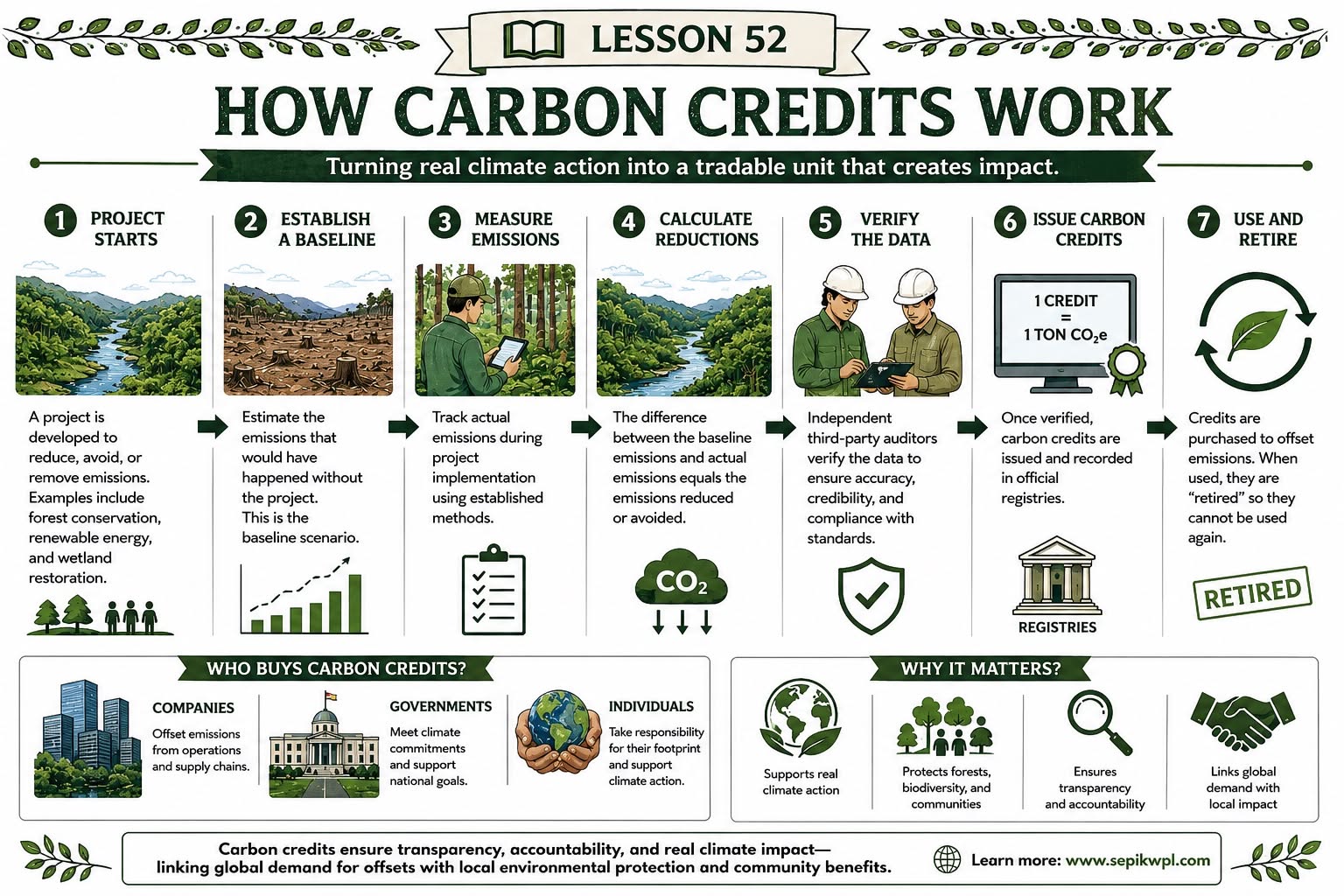
Explaining carbon pricing means treating greenhouse-gas emissions as a negative externality whose costs are not included in ordinary market decisions. A carbon tax sets a government fee per ton emitted, while cap-and-trade fixes an emissions ceiling and lets permits trade.
Revenue recycling can return funds to households, cut other taxes, or support clean energy, affecting both the policy's distributional impact and political durability.
In July 2008, British Columbia became the first jurisdiction in North America to introduce a comprehensive carbon tax.
The price was modest by any climate economist's standard - $10 Canadian per metric ton of CO2, applied to the carbon content of gasoline, heating fuel, and other fossil fuels - but the political logic was ambitious.
The idea: make it more expensive to emit carbon, return all revenue to residents and businesses through tax cuts and rebates, and let market signals do the work of shifting behavior.
The initial tax added roughly 2.4 cents to the price of a liter of gasoline. Critics predicted economic damage. Supporters hoped for demonstrable environmental benefit.
The results that emerged over the following decade became the most clearly legible natural experiment in carbon pricing yet available.
Nicolas Rivers and Brandon Schaufele, in a 2015 study in the Journal of Environmental Economics and Management, estimated that BC's carbon tax reduced gasoline demand by approximately 15% compared to what it would have been absent the policy, relative to the rest of Canada.
The effect grew as the price rose through annual $5 increments.
GDP growth in BC was statistically indistinguishable from the rest of Canada throughout the period.[5]
When Canada eventually expanded a federal carbon price nationwide and redesigned the revenue mechanism as equal per-person Climate Action Incentive rebates mailed directly to households, the distributional effects became measurable.
Canada's Parliamentary Budget Officer found in 2023 that 80% of households in the bottom four income quintiles received more in rebates than they paid in additional fuel costs.
The BC experience did not resolve the debates about carbon pricing. The price remained below what climate models indicate is needed to drive the deep emissions reductions required for Paris Agreement pathways. It covered only a fraction of economy-wide carbon-intensive decisions.
And the political sustainability of carbon pricing - it became a central target of opposition political campaigns in Canada - remained uncertain.
But it demonstrated, more convincingly than any previous policy experiment, that carbon pricing can reduce emissions without wrecking the economy, and can be designed to protect lower-income households. These are not small achievements in a debate where both claims were contested.
"Putting a price on carbon is the single most powerful policy to reduce greenhouse gas emissions. It's also the most politically contested." - William Nordhaus, Nobel Prize Lecture (2018)
Key Definitions
Carbon pricing: Any policy mechanism that attaches a monetary cost to greenhouse gas emissions, creating a financial incentive for emitters to reduce emissions, shift to cleaner alternatives, and invest in low-carbon innovation.
Carbon tax: A fee per metric ton of CO2 (or CO2-equivalent) emitted, set by government. Provides price certainty; the quantity of emissions that results varies with behavioral and investment responses.[2]
Cap-and-trade (Emissions Trading System): A regulatory framework that sets a maximum level (cap) of total emissions from covered sectors, requires emitters to hold permits for each ton emitted, and allows permits to be traded in secondary markets. Provides quantity certainty; the price of permits varies with market dynamics.
Externality: A cost or benefit that falls on parties not directly involved in a transaction. Carbon emissions impose costs on third parties and future generations through climate change - a textbook negative externality.
Pigouvian tax: A tax designed to correct a market failure by setting its rate equal to the social cost of the negative externality. Named after British economist Arthur Cecil Pigou, who developed the concept in The Economics of Welfare (1920).[8]
Social cost of carbon (SCC): The estimated economic value of all damages caused by emitting one additional metric ton of CO2 into the atmosphere - the theoretically correct rate for a Pigouvian carbon tax. The US EPA estimated approximately $190/ton in 2023.
Carbon leakage: The phenomenon by which carbon pricing in one jurisdiction causes carbon-intensive production to relocate to non-pricing jurisdictions, potentially increasing global emissions while reducing local ones.
Revenue recycling: The use of carbon pricing revenues - returned to households as dividends, used to cut other taxes, or invested in clean energy - which determines whether carbon pricing is progressive or regressive in distributional impact.
The Economics of Externalities: Why Markets Underprice Carbon
The economic case for carbon pricing begins with the concept of the externality, developed by Arthur Cecil Pigou in The Economics of Welfare (1920). Markets allocate resources efficiently when prices reflect the true social costs and benefits of transactions.
When they do not - when some costs fall on parties outside the transaction without compensation - markets produce too much of the activity generating the external costs. The market failure cannot be corrected by voluntary negotiation or private contracting when the number of affected parties is enormous; it requires a policy intervention.
Carbon emissions are a textbook negative externality of planetary scale. When an airline burns jet fuel, the CO2 released into the atmosphere contributes to climate change.
This imposes damages on coastal communities facing sea-level rise, farmers in drought-affected regions, people exposed to more intense heat waves, and ecosystems disrupted by shifting climate zones.
None of these costs appear in the ticket price. Airlines and their passengers make decisions as if emissions were free - because, to them, they are. The result is that the global economy emits far more carbon than it would if those costs were correctly priced.
Pigou's solution was conceptually straightforward: tax the externality-generating activity at a rate equal to the social cost it imposes. A correctly set Pigouvian tax makes the private price equal to the social cost, restoring market efficiency.
Applied to carbon, this means setting the carbon tax rate equal to the social cost of carbon - the monetary value of all the damages caused by one additional ton of CO2 in the atmosphere.
At that price, emitters would reduce emissions in all cases where the cost of reduction is less than the damage their emissions cause, and continue emitting where reduction would cost more.
The tax achieves the economically efficient level of emissions without the government needing to know which specific emissions to curtail.
The elegance of this logic has made carbon pricing the preferred instrument of the vast majority of economists working on climate policy. But practical implementation involves complications that the theory elides, and the gap between the theoretical ideal and what has been politically achievable is wide.
Carbon Pricing Mechanisms at a Glance
| Mechanism | Price certainty | Quantity certainty | Administrative complexity | Revenue use | Key example |
|---|---|---|---|---|---|
| Carbon tax | Yes - government sets rate | No - emissions depend on responses | Low - levied upstream on few entities | Flexible: dividends, tax cuts, green investment | British Columbia ($10-$65/ton, 2008-2023) |
| Cap-and-trade | No - permit price fluctuates | Yes - cap guarantees total emissions | High - requires permit registry, market oversight | Auction revenue; free allocation windfall risk | EU ETS (2005-present) |
| Hybrid (price floor/ceiling) | Partial - bounded price range | Partial - bounded quantity range | Moderate | Varies | California cap-and-trade with price collar |
| Border carbon adjustment | External, not primary instrument | No | High - customs integration needed | State revenue | EU CBAM (2023-) |
| Internal carbon pricing | Firm sets shadow price for investment decisions | No | Low - accounting mechanism | Internal capital reallocation | Corporate voluntary schemes |
| Carbon offset / credits | Market-set | No - additionality contested | Moderate-High | Private project finance | CDM, voluntary carbon markets |
Carbon Tax: How It Works in Practice
A carbon tax is typically levied "upstream" - at the point of fossil fuel extraction or importation - making it administratively tractable, since the number of taxable entities (refineries, importers) is small relative to the number of final users.
The tax is then passed through the supply chain into the prices of gasoline, heating oil, natural gas, and goods produced with energy-intensive processes, ultimately reaching households and businesses as higher energy prices.
The price signal propagates through the economy: higher gasoline prices encourage more fuel-efficient vehicles and less discretionary driving; higher heating costs incentivize insulation and efficient equipment; higher industrial energy costs reward efficiency investment and fuel switching.
British Columbia's carbon tax, which began at $10 Canadian per ton in 2008 and rose by $5/ton annually to $30/ton by 2012 (later accelerating to $65/ton by 2023), is the most studied carbon tax experiment.
Rivers and Schaufele's 2015 analysis - comparing BC fuel consumption trends to the rest of Canada as a control group using synthetic control methods - estimated approximately a 5% reduction in gasoline demand per $10/ton increase in the carbon price.
This yielded a cumulative roughly 15% reduction relative to the counterfactual by the mid-2010s.
The study's methodology was robust to several alternative specifications.
Sweden, which introduced a carbon tax in 1991 at the equivalent of roughly $27/ton USD (then), has raised it progressively to approximately $130/ton USD - the highest explicit carbon price in the world.
The Swedish experience demonstrates the structural potential of high carbon pricing: the district heating sector, which historically relied heavily on oil and coal, has largely converted to biomass and waste heat under sustained carbon price pressure.
Swedish emissions from heating have fallen dramatically while the economy has continued to grow.
Canada's federal carbon pricing system, introduced under the Greenhouse Gas Pollution Pricing Act, expanded the BC model nationally from 2019. The Climate Action Incentive (CAI) payment - mailed as equal per-person rebates to all eligible households in fuel charge provinces - was specifically designed to be progressive.
The Parliamentary Budget Officer's 2023 analysis found that households in the bottom quintile received on average more than twice what they paid in direct carbon costs, while top-quintile households, who emit more and receive the same flat rebate, faced net costs.
The design demonstrates that carbon pricing's distributional impact is determined by revenue recycling design, not by the tax itself.
Cap-and-Trade: Environmental Certainty Through Market Mechanisms
Cap-and-trade provides what economists call "environmental certainty" - the total level of emissions from covered sectors is fixed by the cap regardless of what happens to permit prices.
Governments decide how many tons of CO2 may be emitted per year, issue permits equal to that total, and require emitters to hold a permit for every ton they emit.
If they reduce emissions below their permitted allocation, they can sell surplus permits; if they exceed it, they must buy additional permits in the market. The permit price equilibrates supply and demand.
The key advantage over a carbon tax is that the emissions outcome is guaranteed by the cap. If a government wants power sector and heavy industry emissions to fall 40% by 2030, it can set the cap to enforce that outcome. The market finds the lowest-cost way to achieve it.
The key disadvantages are price volatility - permit prices can swing dramatically with economic conditions and energy market developments - and the complexity of cap design, which creates lobbying opportunities that can compromise the system's environmental integrity.
The European Union Emissions Trading System, launched in 2005, is the world's largest carbon market, covering approximately 40% of EU greenhouse gas emissions - primarily power generation, large industrial installations, and intra-EU aviation.
The system's first two phases (2005-2012) were troubled by over-allocation of free allowances, partly because industries successfully lobbied for generous allocations and partly because the 2008-2009 recession reduced emissions more than expected.
The resulting permit price collapse to near zero stripped out the investment signal for low-carbon technology and decarbonization decisions.
Subsequent reforms substantially strengthened the EU ETS. The Market Stability Reserve, introduced in 2019, absorbs surplus allowances when the market is oversupplied, preventing price collapse.
Increasing auctioning relative to free allocation removed the windfall profits that energy companies had earned by passing through the cost of permits they received free of charge.
These reforms drove the EU ETS permit price above 80/ton in 2022 and early 2023, at which level the economics of coal-to-gas switching in power generation become compelling, and investment in offshore wind and industrial decarbonization becomes substantially more attractive.
California's cap-and-trade program, linked with Quebec since 2014 and covering approximately 85% of California's greenhouse gas emissions, has generated over $20 billion in auction revenues through 2023.
The Regional Greenhouse Gas Initiative (RGGI), covering power sector emissions in eleven northeastern US states, has operated since 2009 and has been associated with significant reductions in power sector emissions.
Researchers Harrison Fell and Peter Maniloff (2018) found in their analysis of RGGI that the program produced substantial emissions reductions alongside economic benefits in the covered states.[1]
Does Carbon Pricing Reduce Emissions? The Empirical Evidence
The empirical evidence on whether carbon pricing actually reduces emissions is more positive than either its critics or its most cautious advocates sometimes suggest, though with important caveats about price levels and coverage.
For carbon taxes, Rivers and Schaufele's 2015 BC study remains the clearest evidence: approximately 5% reduction in gasoline demand per $10/ton increase, with the effect growing as the price rose.
Felix Pretis and colleagues (2019), in the Journal of Environmental Economics and Management, used a more sophisticated synthetic control methodology and found results consistent with Rivers and Schaufele: roughly a 5% reduction in gasoline consumption per $10/ton, robust to various methodological specifications.[9]
These are demand-side effects from retail fuel price changes; they capture only a portion of the total emissions impact.
For cap-and-trade, the EU ETS results after 2021 reforms are more encouraging than the first-phase record suggested. The higher permit prices from 2021 onward drove a measurable shift from coal to gas in European power generation, reducing carbon intensity per kilowatt-hour.
The exact causal attribution is complicated by simultaneous growth in renewable energy and the effects of the 2022 energy crisis, but the direction of effect is consistent with theory.
The World Bank's annual State and Trends of Carbon Pricing report, published in 2023, provided the most comprehensive global assessment: approximately 23% of global greenhouse gas emissions were covered by explicit carbon pricing mechanisms.[12]
The emissions-weighted average price across all mechanisms was approximately $5/ton - far below any credible estimate of the social cost of carbon and far below the price levels IPCC scenarios identify as necessary.
The IPCC's Sixth Assessment Report Working Group III chapter on mitigation found that achieving 1.5C pathways would require carbon prices in the range of $100-200/ton or higher by 2030 in most modeled scenarios.[3] Current prices are 5-40 times lower than this range across most jurisdictions.
The World Bank estimate is a global average that masks significant variation. Sweden at $130/ton, Switzerland at around $130/ton, and the EU ETS at 60-80+/ton represent meaningful price signals. India and China's nascent pricing systems, covering large emissions volumes but at very low prices, pull the average down.
The headline finding is that carbon pricing covers roughly the right share of global emissions but at prices that are a small fraction of what the underlying economics indicates is needed.
Is Carbon Pricing Regressive? The Distributional Question
The charge that carbon pricing is regressive - that it falls harder on lower-income households as a percentage of their income - is accurate in isolation but misleading as a guide to policy design. The issue is almost entirely about how revenues are used.
Lower-income households spend a larger share of their budgets on energy - gasoline, heating, electricity - than wealthier households.
A carbon tax that raises energy prices therefore takes a larger percentage of a lower-income household's budget than a higher-income household's, meeting the technical definition of a regressive tax. This arithmetic is not in dispute.
But the carbon tax is only half of the relevant calculation. The other half is what happens to the revenues.
If revenues are returned as equal per-person cash payments - the dividend approach used in Canada's Climate Action Incentive - lower-income households, who paid less in carbon costs (because they consume less energy), receive the same payment as wealthier households who paid more.
The net impact is progressive: lower-income households come out ahead.
If revenues are used to cut income taxes or payroll taxes, the distributional impact depends on how those taxes are structured. If revenues are invested in clean energy infrastructure, the distributional impact depends on where that infrastructure is built and who benefits from it.
Gilbert Metcalf, a Tufts economist who has written extensively on carbon pricing and distributional impacts, and James Boyce at UMass Amherst, have both argued that a well-designed carbon pricing system with per-capita dividends is not merely neutral but actively progressive.[4]
Canada's Parliamentary Budget Officer confirmed in 2023 that 80% of households in the bottom four income quintiles receive more in Climate Action Incentive payments than they pay in direct carbon costs.[7]
The system is progressive in aggregate, with the progressivity coming from the design of the dividend rather than from the tax itself.
The political economy challenge is that costs are visible - they appear in higher fuel prices at the point of sale - while benefits are less salient unless the rebate mechanism is well-publicized and clearly linked to the tax.
The Yellow Vest protests in France in 2018-2019, triggered partly by fuel tax increases motivated by climate goals, illustrated the political risk of carbon pricing that imposes visible costs without equally visible and well-understood benefits.
Australia's 2012 carbon price, repealed by the incoming conservative government in 2014, is the canonical example of the difficulty of maintaining carbon pricing against organized opposition when the distributional benefits are not clearly communicated.
The Social Cost of Carbon: What Is the Right Price?
The social cost of carbon is the pivotal number in climate economics: the theoretically correct carbon price that would fully internalize the damages caused by emissions.
Estimating it requires integrating physical climate science, economic impact modeling, and intertemporal discounting - each step involving substantial uncertainty and contested value judgments.[10]
The calculation proceeds in stages: a climate model translates additional CO2 concentrations into temperature change trajectories; an impact function translates temperature changes into economic damages across agriculture, health, coastal assets, energy systems, and ecosystem services; and future damages are discounted back to present value.
The discount rate is the most contested element. At a 5% annual discount rate, damages occurring 100 years from now are worth only about 0.7% of what they would be worth if they occurred today.
At a 2% discount rate, the same damages are worth approximately 13% of their undiscounted value - nearly twenty times more.
William Nordhaus, Richard Tol, and Martin Weitzman represent three different schools of thought on the appropriate discount rate and damage function, producing substantially different SCC estimates.[6] The Obama administration's interagency working group estimated an SCC of approximately $51/ton in 2016.
The Trump administration revised this to $1-7/ton by using a very high discount rate and counting only domestic US damages rather than global damages.
The Biden administration's EPA published an updated estimate of approximately $190/ton in 2023, using a lower discount rate, updated damage functions that include more impact categories, and global rather than domestic damages.[11]
Academic estimates range from around $50/ton to over $400/ton depending on methodological choices, particularly the discount rate.
Every existing carbon pricing system is priced far below any defensible SCC estimate. At $5/ton average globally, the world is pricing carbon at roughly 3% of the Biden EPA's estimate.
Even the highest current prices - Sweden's $130/ton, the EU ETS at peak prices around 80-90/ton - are below the mid-range of academic SCC estimates.
This gap between current prices and the theoretically correct price represents the market failure that carbon pricing is supposed to address but has not yet adequately done.
Why Carbon Pricing Alone Is Insufficient
Even a well-designed carbon price at the correct level would not be sufficient to drive the required pace of decarbonization. Several market failures that carbon pricing does not address require complementary policies.
Knowledge spillovers from innovation: When one firm invests in clean energy technology and the results become publicly available knowledge, other firms benefit without paying for the research.
This "knowledge spillover" means that private investment in low-carbon R&D is systematically below the socially optimal level - and a carbon price alone, even set at the SCC, does not correct this.
Direct public investment in research, and R&D tax credits for private clean energy investment, are needed to address this separate market failure.
Network externalities: Adoption of electric vehicles is partly constrained by charging infrastructure, which in turn depends on EV adoption - a classic chicken-and-egg network externality. Similarly, the value of rooftop solar depends partly on grid infrastructure that supports two-way power flows.
Carbon prices do not directly address these coordination failures; deployment mandates, infrastructure investment programs, and complementary regulations are needed.
Investment certainty: Carbon pricing can be changed by future governments - and indeed has been eliminated in several jurisdictions (Australia 2014) or substantially weakened. Long-lived capital investments in power generation, industrial equipment, and building stock require multi-decade planning horizons.
If investors believe that a carbon price may be reduced or eliminated, they may not invest in capital-intensive low-carbon alternatives even when the current price makes them appear economic.
Regulatory certainty - through technology standards, performance regulations, or other durable policy instruments - addresses this in ways that politically vulnerable carbon pricing does not.
The IPCC Working Group III assessment concludes that achieving 1.5C pathways requires a portfolio approach: carbon pricing combined with performance standards, public investment in R&D and infrastructure, sector-specific regulations, and international cooperation.
Carbon pricing is a central component of that portfolio, but it is neither sufficient alone nor politically achievable at the required levels without complementary measures that make the energy transition more rapid, less costly, and more clearly beneficial to the people experiencing it.
Cross-link: What Is Climate Justice, How Climate Change Works
Sources & Further Reading
- Fell, W., & Maniloff, P. (2018). Leakage in regional environmental policy: The case of the Regional Greenhouse Gas Initiative. Journal of Environmental Economics and Management, 87, 1-23. doi:10.1016/j.jeem.2017.10.007
- Goulder, L. H., & Schein, A. R. (2013). Carbon taxes versus cap and trade: A critical review. Climate Change Economics, 4(3). doi:10.1142/S2010007813500103
- IPCC. (2022). Climate Change 2022: Mitigation of Climate Change. Contribution of Working Group III to the Sixth Assessment Report. Cambridge University Press. doi:10.1017/9781009157926
- Metcalf, G. E. (2019). Paying for Pollution: Why a Carbon Tax Is Good for America. Oxford University Press.
- Murray, B. C., & Rivers, N. (2015). British Columbia's revenue-neutral carbon tax: A review of its design, impacts, and robustness to change. Energy Policy, 86, 674-683. doi:10.1016/j.enpol.2015.08.011
- Nordhaus, W. D. (2018). Projections and uncertainties about climate change in an era of minimal climate policies. American Economic Journal: Economic Policy, 10(3), 333-360. doi:10.1257/pol.20170046
- Parliamentary Budget Officer of Canada. (2023). Carbon Pricing Analysis: Updated Assessment of the Distributional Impacts of the Federal Carbon Pricing System. Office of the Parliamentary Budget Officer.
- Pigou, A. C. (1920). The Economics of Welfare. Macmillan.
- Rivers, N., & Schaufele, B. (2015). Salience of carbon taxes in the gasoline market. Journal of Environmental Economics and Management, 74, 23-36. doi:10.1016/j.jeem.2015.07.002
- Stern, N. (2006). The Economics of Climate Change: The Stern Review. Cambridge University Press.
- US Environmental Protection Agency. (2023). Report on the Social Cost of Greenhouse Gases: Estimates Incorporating Recent Scientific Advances. EPA.
- World Bank. (2023). State and Trends of Carbon Pricing 2023. World Bank Group. doi:10.1596/978-1-4648-1975-2
Further Reading
- Pretis, F., Schwarz, M., Tang, K., Haustein, K., & Allen, M. R. (2019). Uncertain impacts on economic growth when stabilizing global temperatures at 1.5 degrees C or 2 degrees C warming. Philosophical Transactions of the Royal Society A, 376(2119). doi:10.1098/rsta.2016.0460