
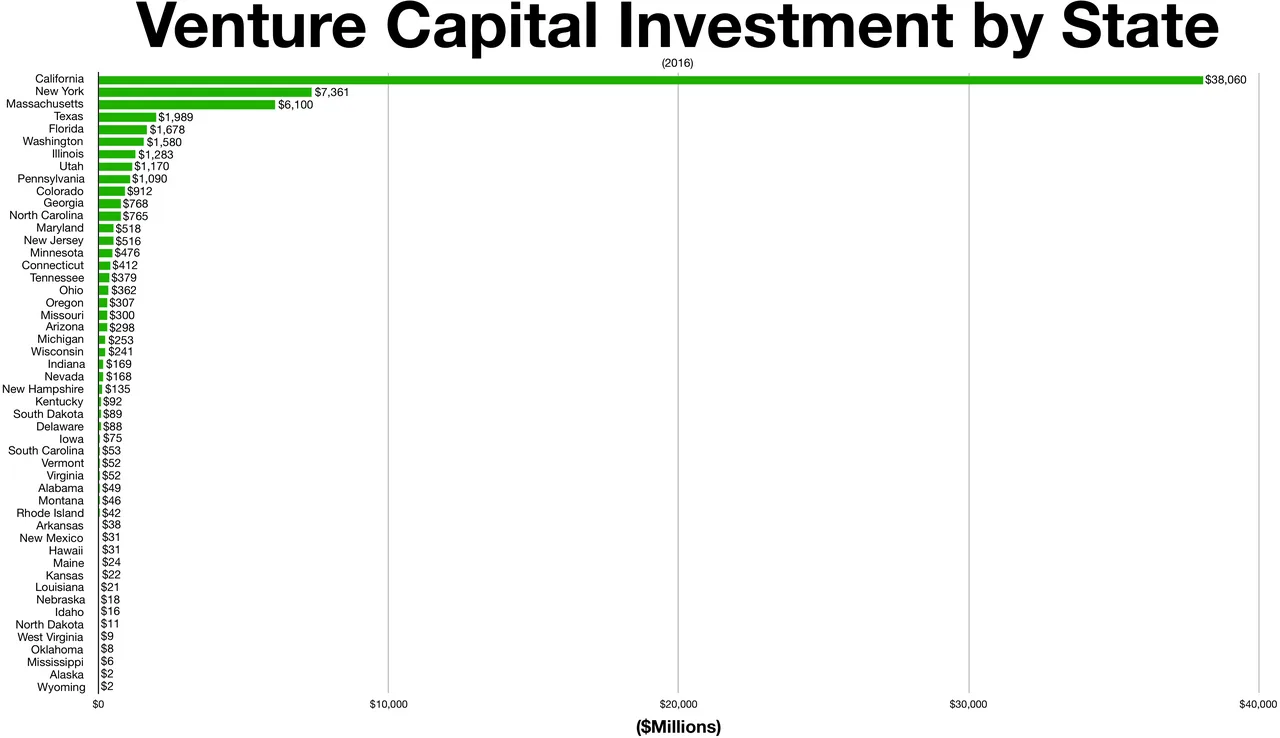
Venture capital supplies equity to early-stage companies with the potential for exceptional growth, accepting that many investments will fail. Its portfolio logic follows a power law, where a small number of outsized winners can generate most returns. Funds managed by general partners invest capital from limited partners over a long lifecycle, favoring scalable companies and large markets rather than simply sound small businesses.
Venture capital is one of those concepts that people encounter constantly - in startup narratives, in business news, in conversations about innovation - but rarely understand precisely. Most people have a rough idea: investors give money to startups and hope to get rich when the startup succeeds.
The reality is more structured, more mathematically specific, and more interesting than that.
Understanding how venture capital actually works - how funds are structured, what investors are really betting on, what founders give up, and when VC is the wrong choice entirely - requires walking through several interconnected ideas. This article does that.
What Venture Capital Is
Venture capital is a form of private equity investment in which institutional investors provide capital to early-stage, high-growth potential companies in exchange for equity (ownership stakes).
VC funds are managed by general partners (GPs) who make investment decisions, and funded by limited partners (LPs) who are the actual sources of the capital: pension funds, university endowments, sovereign wealth funds, family offices, and wealthy individuals.
The core proposition of venture capital is that most startups fail, but the ones that succeed can return enormous multiples on the initial investment - and a portfolio constructed correctly will produce positive returns despite the high failure rate.
This is not a conventional financial logic. Most asset classes are managed to minimize variance. Venture capital is managed to maximize the chance of hitting transformative, category-defining returns, even at the cost of a high overall failure rate.
The Power Law: Why VC Math Is Unusual
The foundational insight of venture capital is the power law distribution of returns. Unlike a normal distribution, where most outcomes cluster around the average, VC returns follow a power law: a small number of investments produce the vast majority of total returns, and the majority of investments produce little or nothing.
The canonical version of this logic: a fund of 20 investments might see 10 fail completely, 6 return 1-2x the investment, 3 return 3-5x, and 1 return 50x or more. That single exceptional outcome - which is unusual even within the exceptional subset - may return more than the rest of the portfolio combined.
This distribution is not a flaw in VC strategy. It is the reason the strategy exists. The expected return on a power law portfolio can be high even when most investments lose money, as long as the occasional winner is a large enough multiple of the original investment.
"The biggest secret in venture capital is that the best investment in a successful fund equals or outperforms the entire rest of the fund combined."
- Peter Thiel, Zero to One (2014)
The practical implication for VCs: they are not trying to find companies that will probably succeed. They are trying to find companies that have a non-trivial chance of becoming extraordinarily large.
A company that will reliably return 3x is less valuable to a VC portfolio than a company that has a 10% chance of returning 100x. The expected values are similar, but only the latter fits the portfolio logic.
This creates a specific selection dynamic. VCs systematically favor large total addressable markets (because large markets are a prerequisite for very large companies), founders with intense ambition and specific advantages, and business models with the potential for rapid scaling.
Companies that are excellent small or medium-sized businesses do not attract VC - not because they are bad businesses, but because they do not fit the distribution that makes VC math work.
How VC Funds Are Structured
Understanding VC requires understanding fund mechanics. VC funds are typically organized as limited partnerships with a 10-year life span (often with extension options).
The Players
General Partners (GPs) are the fund managers. They source deals, conduct due diligence, make investment decisions, manage portfolio companies (often taking board seats), and manage the LP relationships. At a large firm, there may be multiple GPs with different areas of focus; at a small seed fund, there may be one or two.
Limited Partners (LPs) are the investors in the fund. They commit capital at the beginning of the fund and do not participate in day-to-day decisions. Common LP types include:
- University endowments (Harvard, Yale, Stanford have well-known endowment models)
- Pension funds
- Sovereign wealth funds
- Fund-of-funds (entities that invest in multiple VC funds)
- Family offices
- High-net-worth individuals
The Economics: 2 and 20
The standard VC fee structure is called "2 and 20":
- Management fee: 2% of committed capital per year (on a $200M fund, this is $4M per year), used to cover operating expenses - salaries, rent, travel, legal.
- Carried interest (carry): 20% of profits above the fund's return hurdle (typically 8%), split among the GPs. This is where the real money is made.
The carry is the alignment mechanism. GPs only profit significantly from carry when the fund generates substantial returns for LPs. In theory, this aligns interests. In practice, management fees on large funds can be substantial enough to provide comfortable income regardless of fund performance, which has been a source of LP criticism.
Fund Lifecycle
A typical VC fund lifecycle:
- Fundraising (6-18 months): GPs raise capital from LPs by presenting their investment thesis and track record.
- Investment period (years 1-4): Deploying capital into new investments.
- Portfolio management (years 3-7): Working with companies, making follow-on investments, adding value.
- Harvesting (years 5-10): Exits through acquisitions or IPOs, returning capital to LPs.
- Wind-down: Final distributions and fund closure.
Because VC capital is tied up for a decade, LPs accept illiquidity in exchange for the expectation of higher returns than public markets.
Funding Stages: From Pre-Seed to Series C
Startup funding is organized into stages that reflect the company's development and the scale of capital being raised. These are not perfectly standardized - the definitions have inflated significantly over the past decade - but the broad structure is consistent.
| Stage | Typical amount | What it's used for | Typical investors |
|---|---|---|---|
| Pre-seed | $50K - $500K | Prototype, initial validation | Founders, friends/family, angels |
| Seed | $500K - $3M | Product development, early customers | Seed funds, angels, some institutional |
| Series A | $3M - $15M | Scale a proven model | Institutional VCs |
| Series B | $15M - $50M | Market expansion, team growth | Growth-stage VCs |
| Series C+ | $50M+ | Pre-IPO scaling, international | Late-stage VCs, crossover funds |
Pre-Seed and Seed
The earliest stage is typically funded by the founders themselves, friends and family, and angel investors (high-net-worth individuals who invest their personal capital).
Institutional seed funds emerged as a distinct category in the 2000s-2010s; firms like First Round Capital, Forerunner Ventures, and Y Combinator (though YC operates as an accelerator) now participate at the seed stage.
Pre-seed and seed funding is typically used to build a product prototype and find early customers - to demonstrate that there is a real problem worth solving and that people will pay to solve it.
The concept of product-market fit - the point at which a product genuinely resonates with a customer segment - is the milestone most seed-stage companies are racing to demonstrate.
Series A
A Series A round is typically led by an institutional VC firm taking a meaningful ownership stake (15-25%) and often taking a board seat. Series A capital is deployed to scale a model that has demonstrated early product-market fit: hiring the core team, building out the product, expanding the initial customer base.
Series A fundraising is a meaningful inflection point. The bar for a Series A has risen substantially; investors generally want to see evidence of revenue or strong leading metrics, not just a compelling idea.
In 2024, a typical Series A in the US was $8-15M at a pre-money valuation of $20-50M, though these figures vary significantly by sector and market conditions.
Series B and Beyond
Later-stage rounds typically involve larger checks, more complex term sheets, and investors with specific growth-stage expertise. By Series B, the company is generally expected to have a functioning go-to-market motion, revenue growth, and a clear path to unit economics that work at scale.
Series C and beyond are often preparation for an IPO or acquisition.
Term Sheet Basics
A term sheet is the document that describes the proposed terms of an investment. It is generally non-binding (neither party is committed until legal agreements are signed) but sets the framework for everything that follows.
Valuation
The most-discussed term is valuation. Two numbers matter:
- Pre-money valuation: What the company is worth before the new investment. If a company has a $10M pre-money valuation and raises $2M, the post-money valuation is $12M.
- Post-money valuation: Pre-money + the new investment.
The investor's ownership percentage = investment amount / post-money valuation. A $2M investment at a $10M pre-money valuation ($12M post-money) yields 16.7% ownership.
Liquidation Preference
Liquidation preferences determine who gets paid first in a sale or liquidation. A 1x non-participating liquidation preference means the investor gets their money back first in a sale (before common shareholders, which includes founders and employees), then the remaining proceeds are split pro-rata.
Participating preferred stock (sometimes called "double-dipping") means the investor gets their preference back and participates in the remaining proceeds - more favorable to investors than founders.
In a highly successful exit where the company sells for multiples of invested capital, liquidation preferences are irrelevant (all shareholders do well). They matter most in "acqui-hire" or below-expectations exits, where there may not be enough to pay everyone.
Anti-Dilution
Anti-dilution provisions protect investors from future down rounds (fundraising at a lower valuation than the previous round).
The two main types are weighted average anti-dilution (which adjusts the investor's conversion price based on how much dilution occurs) and full ratchet anti-dilution (which fully protects the investor's price, very unfavorable to founders).
Weighted average is standard; full ratchet is investor-hostile and uncommon in competitive markets.
Board and Governance
Many institutional VC investments come with a board seat for the lead investor. Board seats confer real governance power: directors vote on major decisions including hiring/firing executives, approving budgets, and authorizing future financings.
For founders, giving up board seats means giving up control of their company in a legally meaningful sense. Pro-rata rights give investors the right to participate in future rounds to maintain their ownership percentage; information rights require the company to share regular financial updates with investors.
How Dilution Works: A Concrete Example
Dilution is the reduction in any shareholder's ownership percentage that occurs when new shares are issued. A simple example:
At founding: Alice and Bob each own 50% of their company. The company has 1,000,000 shares. Each owns 500,000.
After seed round: Investors purchase 200,000 new shares for $1M. Total shares: 1,200,000. Alice and Bob each own 500,000 / 1,200,000 = 41.7%.
After Series A: Investors purchase 350,000 new shares for $5M. Total shares: 1,550,000. Alice and Bob each own 500,000 / 1,550,000 = 32.3%.
After employee option pool expansion of 10%: New shares issued. Alice and Bob each own ~29%.
By the time the company reaches a $200M acquisition, Alice and Bob each own approximately 25-30% of the company - but 25-30% of $200M is $50-60M each, far more than if they had retained 100% of a company that stayed small.
The mathematics of dilution are not inherently bad. The question is whether the capital being raised enables growth that makes each remaining percentage point more valuable than the percentage points given up.
VC funding is rational for founders who believe the capital will enable outsized growth; it is suboptimal for founders who could build a profitable business without it.
What VCs Look For
VCs evaluating investment opportunities typically assess a small set of factors, weighted differently by stage:
Team: At early stages, team quality is often the primary factor. Do the founders have specific expertise or insight that gives them an edge? Do they have the skills to execute? Are there signs of coachability and resilience alongside conviction?
Market: Is the total addressable market (TAM) large enough for the company to reach the scale that VC math requires? A company that captures 10% of a $100M market will never return a VC fund. The same capture rate in a $10B market might.
Product/insight: Does the company have genuine product differentiation or a proprietary insight about a market? Is there evidence of product-market fit (or a credible path to it)?
Business model: How does the company make money? Do the unit economics work at scale (or is there a credible reason to believe they will)? What are the margins?
Traction: Especially at later stages, metrics matter: revenue growth, user growth, retention, Net Promoter Score, customer acquisition cost relative to lifetime value.
Early-stage VCs weigh team and market heavily; later-stage VCs weight metrics and scalability. The shift reflects the different information available: at pre-seed there may be no metrics, so bet on the people and the market.
Alternatives to Venture Capital
VC is appropriate for a specific kind of company: one pursuing a very large market, with a scalable business model, willing to trade equity and control for rapid growth capital. Many good businesses do not fit this profile, and for them, VC is not the right financing mechanism.
Bootstrapping
Bootstrapping means funding the company from its own revenue, without external investment. Bootstrapped companies grow more slowly but retain full equity and control. Companies in professional services, software with modest markets, and profitable niche businesses often bootstrap successfully.
The SaaS sector has a well-developed bootstrapped community; the Indie Hackers platform documents many examples.
Angel Investment
Angel investors are high-net-worth individuals who invest their personal capital in early-stage companies, often writing smaller checks ($25K-$250K) at pre-seed and seed stages. Angels are often former founders or executives with specific domain expertise.
Unlike VC firms, angels are not accountable to LPs and can invest based on personal conviction, which sometimes makes them better partners at very early stages.
Revenue-Based Financing
Revenue-based financing (RBF) provides capital in exchange for a percentage of monthly revenue until a specified multiple of the original investment has been repaid (typically 1.5-3x). There is no equity dilution.
This is well-suited to companies with predictable recurring revenue that do not want to give up equity but need capital for growth. Pipe, Clearco, and Lighter Capital are examples of RBF providers.
Grants and Non-Dilutive Funding
Government programs (particularly SBIR/STTR grants in the US) provide non-dilutive research and development funding to small businesses, especially in life sciences, cleantech, and defense technology. The NSF I-Corps program and NIH SBIR program have funded many successful deep tech companies.
Foundations and philanthropic organizations fund work in education, health, and social enterprise.
Accelerators
Programs like Y Combinator (the most famous), Techstars, and sector-specific accelerators provide a small amount of capital (typically $100K-$500K), mentorship, community, and access to investor networks in exchange for a small equity stake (6-7%).
The network and signal effects of YC in particular have been documented as providing meaningful access to subsequent funding.
| Option | Capital size | Dilution | Best for |
|---|---|---|---|
| Bootstrapping | Revenue-limited | None | Profitable niche businesses |
| Angels | $25K - $500K | Moderate | Very early stage, sector-specific |
| VC | $1M+ | Significant | Large-market, hypergrowth ambitions |
| Revenue-based | $50K - $5M | None | Recurring revenue businesses |
| Grants | $50K - $2M | None | Research, deep tech, social enterprise |
| Accelerators | $100K - $500K | 6-7% | Validation, network, signal |
The Honest Assessment of Venture Capital
Venture capital has funded transformative companies: Google, Amazon, Apple (early), Facebook, Airbnb, Stripe, Moderna. The model has genuinely worked at an exceptional level for a subset of outcomes.
It has also produced pathological incentives. The hypergrowth imperative - raise more capital, grow faster, maximize valuation - has led many companies to scale before their business models were proven, to prioritize growth metrics over sustainability, and to pursue markets too large to defend.
The 2022-2023 startup funding correction, following a decade of historically high valuations and cheap capital, forced a reckoning with many of these dynamics.
The most useful framing for founders is probably this: venture capital is not a reward for building a good company. It is a specific financial instrument appropriate for a specific kind of ambition.
If your goal is to build a large, fast-growing company in a large market and you are willing to accept dilution and the governance implications of institutional investors, it may be the right tool.
If your goal is to build a profitable, owner-operated business that supports a good life, there is no meaningful reason to seek VC - and plenty of reasons not to.
The best time to understand how venture capital works is before you need to decide whether to pursue it.