
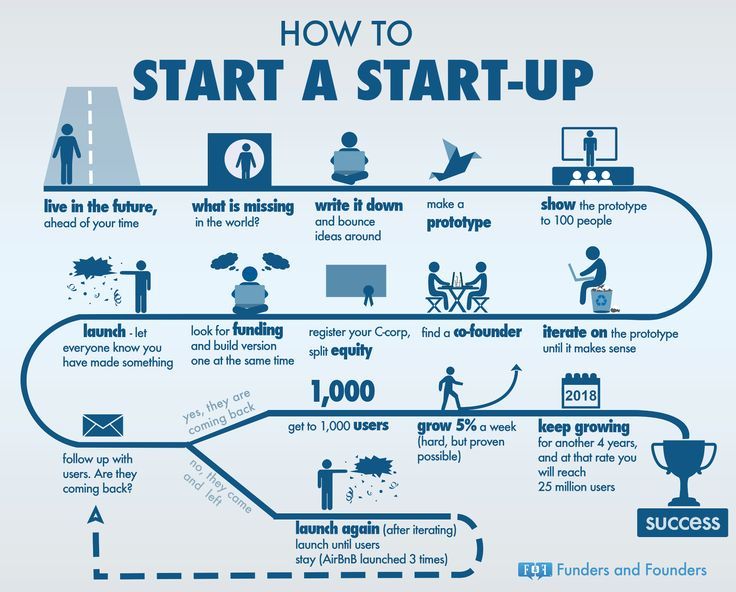
Startup pivoting is a deliberate, evidence-based change in product, market, or business model that preserves relevant learning, people, technology, and relationships. It differs from panic, abandonment, denial, or constant direction changes because it tests a new hypothesis informed by what the previous approach revealed. Customer-segment, problem, and solution pivots alter different parts of the business while retaining a broader vision.
What Is a Startup Pivot?
A startup pivot is a deliberate, structured change in a company's product, target market, or business model - made in response to evidence that the current direction is not working - while retaining the knowledge, team, and relationships built to that point.
The term was popularized by Eric Ries in The Lean Startup as "a change in strategy without a change in vision." Pivoting is one of the defining concepts of modern entrepreneurship, celebrated in success stories and feared in real time, yet frequently confused with failure or aimless flailing.
In 2009, a small team at Tiny Speck-a startup founded by Flickr co-creator Stewart Butterfield-was building an ambitious multiplayer online game called Glitch. The game was creative, visually distinctive, and beloved by its small community of players.
It was also a commercial failure. After four years of development and $17 million in venture capital, Glitch failed to attract enough players to sustain its operating costs. In 2012, Butterfield announced that Glitch was shutting down.
But something interesting had happened during Glitch's development. The team had built an internal communication tool to coordinate their distributed development process-a chat application with channels, search, file sharing, and integrations with their other development tools.
The tool had become indispensable to their daily workflow. When Glitch died, the team looked at their internal tool and realized they had inadvertently built something more valuable than the game they had spent four years creating.
They pivoted. They took the internal communication tool, polished it, and launched it as a standalone product. They called it Slack.
Within two years, Slack was the fastest-growing business application in history, reaching a $1 billion valuation faster than any enterprise software company before it. Stewart Butterfield's pivoted company was eventually acquired by Salesforce for $27.7 billion.
The Slack story is one of the most dramatic examples of a startup pivot-a fundamental change in a company's product, target market, or business model that leverages existing knowledge, resources, and relationships to pursue a more promising opportunity.
Pivoting is one of the most important and most misunderstood concepts in entrepreneurship: celebrated in success stories, feared in real time, and often confused with failure, flailing, or giving up.
What Is a Startup Pivot?
A pivot is a structured course correction designed to test a new fundamental hypothesis about the product, market, or business model. The term was popularized by Eric Ries in The Lean Startup, where he defined a pivot as "a change in strategy without a change in vision."
"A pivot is not about giving up. It's about taking what you've learned and applying it more intelligently." - Eric Ries, The Lean Startup
What a Pivot Is
- A deliberate decision based on evidence that the current direction is not working
- A structured change that leverages what the company has already learned
- A preservation of learning: the pivot changes direction but retains the knowledge, relationships, technology, and team built during the previous direction
- A new hypothesis about what will work, informed by the evidence that the previous hypothesis was wrong
What a Pivot Is Not
- Panic: A reactive change made in crisis without analysis or strategic thinking
- Abandonment: Starting over from scratch with a completely new idea, team, and approach
- Denial: Relabeling failure as a "pivot" to avoid acknowledging that the company's fundamental approach has failed
- Indecisiveness: Constantly changing direction without giving any direction enough time to produce meaningful learning
The distinction between a genuine pivot and relabeled failure is important and often blurry. A genuine pivot takes the specific learning from the previous direction and applies it to a new direction that the learning suggests is more promising.
Relabeled failure simply abandons one failing approach and tries something else, without a clear causal connection between what was learned and why the new direction is chosen.
What Are the Types of Pivots?
Eric Ries and other startup strategists have identified several distinct types of pivots, each involving a change in a different dimension of the business.
Each type represents a different decision under uncertainty-a bet that a different dimension of the business is the source of the mismatch between what the company offers and what the market values.
Customer Segment Pivot
The product remains largely the same, but the company shifts its focus to a different customer segment that finds the product more valuable than the original target:
- Suzuki originally targeted the Japanese agricultural equipment market before discovering that their small, efficient motors were more valuable to the emerging consumer motorcycle market
- YouTube pivoted from a video dating service ("Tune In, Hook Up") to a general video-sharing platform when the founders noticed that users were uploading all kinds of videos, not just dating profiles
- Pinterest initially targeted a broad audience before discovering that women interested in visual design, fashion, food, and home decor were the core user base that drove engagement
Problem Pivot
The company discovers that the problem it identified is real, but there is a more important or more tractable related problem that the same resources can address:
- The team building a project management tool for construction companies discovers that the communication features are more valued than the scheduling features, and pivots to building a construction communication platform
- A company building educational content for students discovers that teachers are the more important customer and pivots to building tools for teachers
Solution Pivot
The problem is confirmed, but the solution needs to change fundamentally:
- Instagram started as Burbn, a location-based social network with many features (check-ins, plans, photo sharing, points). User data showed that the photo-sharing feature was the only thing generating significant engagement. The team stripped away everything else and pivoted to a pure photo-sharing app.
- A company building a hardware device to solve a problem discovers that a software-only solution can solve it more cheaply and scalably
Business Model Pivot
The product and market remain similar, but the revenue model changes fundamentally:
- Moving from a one-time purchase to a subscription model
- Moving from advertising-supported to direct payment
- Moving from selling to consumers to selling to businesses (or vice versa)
- Moving from high-touch sales to self-service
Technology Pivot
The company maintains its product vision and market but changes the underlying technology:
- Netflix's pivot from DVD-by-mail to streaming maintained the same value proposition (convenient home entertainment) while fundamentally changing the delivery technology
- Cloud computing providers that originally sold on-premise software pivoted to delivering the same software as a service
Channel Pivot
The company changes how it reaches its customers:
- Moving from direct sales to online self-service
- Moving from retail distribution to direct-to-consumer
- Moving from app-store distribution to enterprise sales
When Should a Startup Pivot?
"The biggest mistake founders make is pivoting too late, not too early. By the time the data is screaming at you, you've already burned six months of runway you can't get back." - Paul Graham, Y Combinator
Signals That a Pivot May Be Needed
Customer feedback is consistently negative or indifferent. If users consistently do not engage with the product, do not return after initial use, or express enthusiasm for a different aspect of the product than the one you are building, the current direction may be wrong.
Growth has stalled despite adequate execution. If the team is executing well-shipping features, reaching customers, running experiments-but the metrics are not improving, the problem may be strategic rather than executional.
A different opportunity is emerging from the data. Often, the most valuable pivot opportunity comes from observing how customers actually use the product (as opposed to how the company intended them to use it).
The competitive landscape has changed. A well-funded competitor entering the same space, a platform change that eliminates a key advantage, or a regulatory change that constraints the current model may all signal that a pivot is necessary.
The economics do not work. If the unit economics (the cost of acquiring and serving each customer relative to the revenue that customer generates) are structurally unfavorable and cannot be improved through optimization, the business model may need to change.
Signals That You Should Persist
Early results are promising but not yet conclusive. Many successful products experienced slow initial growth before reaching inflection points. Premature pivoting can abandon a direction that would have worked with more time.
The team has not yet tested the core hypothesis adequately. If the product has not been put in front of enough customers in the right way, the data is insufficient to support a pivot decision.
External factors are responsible for poor results. If poor results are attributable to macroeconomic conditions, seasonal effects, or temporary market disruptions rather than fundamental product-market mismatch, persisting through the disruption may be more appropriate than pivoting.
The core team still believes in the direction. While belief alone is not sufficient reason to persist, the judgment of a team that deeply understands the customer and market is worth weighting heavily.
How Do You Know When to Pivot vs. Persist?
The pivot-or-persist decision is one of the hardest judgment calls in entrepreneurship because it requires distinguishing between two very different situations that can look identical in the moment.
Understanding how learning actually accumulates is central to this judgment: teams that have genuinely internalized what the market has taught them are in a position to pivot productively; teams that have been executing without reflecting are not.
- Insufficient execution of a viable strategy (where the solution is to execute better, not to change strategy)
- Excellent execution of a flawed strategy (where the solution is to change strategy, not to try harder)
Decision Framework
Several practices help improve the quality of the pivot-or-persist decision:
Set decision criteria in advance. Before launching a new direction, define the specific metrics and timeframes that will inform the pivot-or-persist decision.
"If we do not reach 1,000 daily active users within six months, we will seriously evaluate pivoting." This pre-commitment reduces the emotional bias that makes it difficult to pivot when results are disappointing.
Gather evidence systematically. The decision should be based on data-customer feedback, usage metrics, retention rates, conversion rates-not on the founder's emotional attachment to the current direction or emotional reaction to recent events.
Separate the hypothesis from the execution. Ask whether poor results are due to a flawed hypothesis (the wrong product, wrong market, wrong model) or flawed execution (the right product executed poorly). This distinction is critical and often difficult to make.
Seek outside perspectives. Founders who are deeply invested in a direction are prone to confirmation bias. Advisors, board members, and honest critics who are not emotionally invested can provide more objective assessment.
Avoid sunk cost thinking. The money, time, and effort already invested in the current direction are irrelevant to the forward-looking decision.
The only question is: Given what we know now, does persisting or pivoting create more future value?First principles thinking is useful here: strip away what has already been spent and ask whether, starting from nothing today, you would choose to build what you are currently building.
What Is the Difference Between a Pivot and Failure?
The boundary between a pivot and a failure is genuinely blurry, and the startup ecosystem's preference for the word "pivot" over the word "failure" sometimes serves as euphemistic reframing.
When a Pivot Is Genuine
A pivot is genuine when:
- The learning from the previous direction directly informs the new direction
- The team, technology, or market knowledge developed in the previous direction is specifically valuable in the new direction
- The new direction addresses a problem or opportunity discovered through the previous work
- The company retains meaningful continuity (same team, same investors, same legal entity, accumulated knowledge)
When "Pivot" Is Relabeled Failure
A "pivot" is actually relabeled failure when:
- The new direction has no meaningful connection to the previous one
- The learning from the previous direction does not inform the new approach
- The company is essentially starting over with a new idea, team, or approach
- The word "pivot" is being used to avoid the stigma of admitting failure
The distinction matters because genuine pivots have significantly higher success rates than fresh starts. A team that has spent two years learning about a market and its customers carries knowledge that reduces uncertainty in the new direction. A team that abandons one market for an unrelated one has no such advantage.
Can You Pivot Too Much?
Yes. Excessive pivoting is a recognized pathology in the startup ecosystem.
Signs of Excessive Pivoting
- Changing direction every few months without giving any direction enough time to produce meaningful results
- Pivoting based on emotional reactions to recent events rather than accumulated evidence
- Each new direction has no connection to the previous one (suggesting that learning is not accumulating)
- The team is demoralized by constant direction changes and cannot maintain enthusiasm
- Investors express concern about strategic instability
Why Excessive Pivoting Happens
- Impatience: The desire for rapid results leads to abandoning directions before they have been adequately tested. The move fast philosophy that pervades startup culture can exacerbate this tendency.
- Loss aversion: The fear of investing further in a failing direction leads to premature pivoting
- Shiny object syndrome: Each new market opportunity or customer request looks more attractive than the difficult work of making the current direction succeed
- Lack of conviction: The founder does not have deep enough understanding of or commitment to any particular direction to persist through the inevitable difficulties
- Missing product-market fit entirely: Some companies pivot repeatedly because none of their directions address a real customer need. The problem is not the direction but the company's inability to identify genuine customer problems. A problem-first approach to building can help avoid this trap from the outset.
The Paradox
There is a genuine paradox in startup strategy: persistence in the wrong direction wastes resources, but pivoting too quickly wastes learning. The optimal strategy-persisting long enough to learn but not so long that learning becomes moot-requires judgment that cannot be reduced to a formula.
Famous Pivot Examples
| Company | Original Direction | Pivot | Outcome |
|---|---|---|---|
| Odeo (podcasting platform) | Microblogging status updates | $44B acquisition by Elon Musk (2022) | |
| Burbn (location social network) | Photo sharing with filters | $1B acquisition by Facebook (2012) | |
| Slack | Glitch (multiplayer online game) | Team communication tool | $27.7B acquisition by Salesforce (2021) |
| YouTube | Video dating site | General video sharing platform | $1.65B acquisition by Google (2006) |
| Shopify | Snowdevil (online snowboard store) | E-commerce platform for others | $100B+ market cap |
| PayPal | Cryptography for handheld devices | Online payment processing | $1.5B acquisition by eBay (2002) |
| Netflix | DVD-by-mail rental | Streaming entertainment | $150B+ market cap |
| Nintendo | Playing card company | Video game company | $60B+ market cap |
These success stories are frequently cited but should be understood with important caveats:
- Survivorship bias: For every famous successful pivot, thousands of pivots led to companies that failed and are not remembered
- Narrative simplification: The "pivot" framing often oversimplifies complex histories that involved multiple direction changes, partial pivots, and gradual evolution rather than clean strategic shifts
- Attribution ambiguity: It is often unclear whether the pivot itself caused the success or whether the team would have succeeded eventually regardless of the specific direction
How Do Pivots Affect Teams and Investors?
Pivots affect teams and investors in distinct ways. Teams often face morale loss, skill mismatches, eroded trust in leadership, and departures from members who joined for the original vision. Investors range from supportive to resistant depending on whether the founder communicates proactively and presents clear evidence, since founders who prepare investors well are far more likely to keep their backing.
Team Impact
Pivots can be deeply disruptive to team dynamics:
- Morale: Abandoning a direction that the team has invested months or years building is demoralizing, especially for team members who were personally committed to the original vision
- Skill mismatch: The new direction may require skills that the current team does not have. A pivot from a consumer social app to an enterprise communication tool requires different engineering, design, and sales capabilities.
- Trust erosion: Repeated pivots can erode the team's trust in leadership's judgment and strategic vision
- Departures: Some team members will leave during a pivot because they joined for the original vision and do not share enthusiasm for the new direction
Effective leaders manage pivot transitions through transparent communication (explaining the evidence behind the decision), emotional acknowledgment (recognizing the loss of the previous direction), and inclusive planning (involving the team in shaping the new direction rather than imposing it from above).
Investor Impact
Investors respond to pivots with a range of reactions:
- Supportive: Investors who understand startup dynamics and have seen successful pivots may support the decision, especially if it is well-reasoned and based on clear evidence
- Concerned: Investors who backed the original vision may question whether the new direction is viable and whether the team has the capabilities to execute it
- Resistant: Investors who made their investment based on specific market or product theses may resist pivots that take the company away from those theses
- Demanding: Some investors may use the pivot as an opportunity to renegotiate terms, increase their control, or push for a different direction than the one the founder proposes
The founder-investor relationship during a pivot is critical: founders who communicate proactively, present clear evidence for the pivot, and demonstrate that the new direction leverages existing learning are much more likely to maintain investor support than founders who announce pivots without adequate preparation.
"We tell ourselves that we pivoted, but what we really did was stop pretending that what wasn't working was working. The pivot is just honesty with momentum." - Stewart Butterfield, Slack
The pivot is one of the most powerful tools in the entrepreneurial toolkit-a structured mechanism for converting learning from failure into a new direction with better prospects. But it is not magic. A pivot does not guarantee success. It does not eliminate the uncertainty that caused the previous direction to fail.
And it does not change the fundamental requirement that the company must eventually find a product that customers want, build it effectively, and sell it profitably.
What a pivot does is allow a company to bring the learning from one failed attempt to bear on the next attempt, reducing uncertainty and increasing the probability of success-but never to certainty, and never without cost.
Research on Pivot Outcomes: What the Data Shows
The academic research on startup pivots provides a more nuanced picture than the celebrated success stories suggest. Several empirical studies have attempted to measure pivot frequency, pivot quality, and the relationship between pivots and ultimate outcomes.
Tom Eisenmann at Harvard Business School and colleagues conducted one of the first systematic empirical studies of pivoting, examining 100 early-stage startups through a multiyear longitudinal study that tracked their strategic direction changes.
Their findings, published in a 2012 Harvard Business School working paper, found that companies that pivoted one to three times (the "Goldilocks zone") raised significantly more subsequent funding and had higher survival rates at 24 months than companies that either never pivoted or pivoted more than three times.
The companies that never pivoted showed a bimodal distribution: some had genuinely found product-market fit quickly and didn't need to pivot; others had not found product-market fit and were persisting with failing strategies.
The companies that pivoted more than three times showed significantly lower performance, consistent with the excessive pivoting pathology described above.
The researchers found that the quality of the pivot - specifically, whether the new direction was informed by specific evidence gathered in the previous direction - was more predictive of subsequent performance than the number of pivots.
Riitta Katila at Stanford and colleagues published research in 2012 in the Academy of Management Journal examining what they called "search depth" versus "search breadth" in startup strategy - roughly analogous to the persist versus pivot decision.
Analyzing 167 medical device startups over an eight-year period, they found that startups that searched broadly (trying many different directions) in early stages had significantly lower performance than startups that searched deeply (committing to specific directions and learning them thoroughly).
The finding complicates the simple pivot-as-adaptation narrative: frequent direction changes do not necessarily produce better learning, because learning often requires sustained engagement with a specific direction to accumulate the depth of knowledge that reveals genuine insight.
Shallow exposure to many directions produces breadth without depth. The practical implication: pivots that happen before the current direction has been adequately explored may be producing new starting points rather than informed redirection.
Henning Piezunka and Linus Dahlander at INSEAD published research in 2019 examining how external feedback influences pivot timing, using data from Kickstarter campaigns and their subsequent company trajectories.
Their finding was that companies received more and better-quality feedback when their product was further from the mainstream - more novel, more distinctive, more differentiated.
Feedback on highly differentiated products was more specific, more actionable, and more predictive of subsequent pivots that improved outcomes.
The practical implication: startups that differentiate aggressively in their early direction collect better data for pivot decisions than startups that offer incremental variations on existing products, even when the differentiated approach is initially less commercially successful.
The most detailed quantitative analysis of famous pivots was conducted by researchers at Startup Genome, who analyzed approximately 3,200 startups in their longitudinal database (published in successive Startup Ecosystem Reports from 2012 onward).
They found that successful pivots shared three characteristics not present in unsuccessful pivots: the new direction emerged from the data generated by the previous direction (not from external trend-chasing); at least two co-founders were aligned on the pivot direction before it was announced to the team; and the pivot retained at least 40% of the core technology or customer relationships from the previous direction.
The Startup Genome analysis also found that companies pivoting from a failed B2C direction to a B2B direction targeting the same problem space had significantly higher success rates than companies pivoting across both problem space and business model simultaneously - consistent with the principle that genuine pivots preserve accumulated knowledge.
Documented Case Studies in Pivot Strategy and Execution
The celebrated pivot examples in startup culture - Slack from Glitch, Instagram from Burbn, Twitter from Odeo - have been extensively documented and reveal specific patterns about how successful pivots are identified and executed.
The Shopify pivot is less widely discussed than Slack or Instagram but is arguably more instructive because it was a deliberate strategic inference rather than an observation of emergent user behavior. Tobias Lutke and Scott Lake founded Snowdevil in 2004 to sell snowboarding equipment online.
They found that existing e-commerce platforms were inadequate for their needs and built their own.
After launching Snowdevil, they had a conversation with venture investor John Phillips that Lutke has described in interviews: Phillips asked whether they thought more value was in selling snowboards or in selling the platform they had built.
Lutke realized the platform was more valuable. They pivoted to offer the Shopify platform to other e-commerce businesses in 2006, and Snowdevil stopped taking new customers. The specific insight was that the constraint they had encountered (inadequate existing platforms) was a constraint that thousands of other merchants faced.
The pivot from selling products to selling infrastructure required dissolving one business model before a viable alternative existed - a level of strategic commitment that most founders would find difficult. Shopify went public in 2015 and reached a market capitalization of over $200 billion at its 2021 peak.
The PayPal pivot sequence illustrates how a company can make multiple pivots, each informed by the previous, without losing coherence. Max Levchin and Peter Thiel founded Confinity in 1998 to build security software for Palm Pilots, specifically a mechanism for Palm Pilot owners to beam money to each other.
The product attracted limited traction. Observing which features users actually used, the team noticed that a demonstration of email-based money transfer - not the Palm Pilot beaming - was attracting the most interest at conferences.
They pivoted to focus on email money transfer, launching PayPal.com in 1999. User data then showed that a disproportionate number of transactions were eBay-related: sellers accepting payment from buyers.
The team pivoted again to optimize explicitly for the eBay use case, integrating PayPal into eBay listings through browser extensions before eBay adopted it officially. Each pivot was a direct inference from observed user behavior, not a creative reimagination.
The total time from Confinity's founding to the eBay-focused PayPal that drove its ultimate acquisition was approximately three years, during which the company made at least five substantive directional changes.
Thiel has subsequently described the process not as visionary strategy but as systematic observation of what users were actually doing.
The Nokia pivot is the most instructive case of a pivot that did not happen in time. Nokia was founded in 1865 as a paper mill in Tampere, Finland.
It subsequently pivoted to rubber goods (including the famous Nokia rubber boots), then to consumer electronics, then to mobile phones, becoming the world's largest mobile phone manufacturer by 2000 with approximately 30% global market share.
When iPhone launched in 2007, Nokia's response was a series of unsuccessful products attempting to add smartphone features to its existing platform - an upgrade strategy rather than a genuine pivot.
Internal research, later documented by Kati Mikkola-Witte and colleagues at Aalto University in a 2017 case study, showed that Nokia engineers had identified the touch-screen smartphone threat in 2004-2005 and proposed a fundamental pivot to a new software platform.
The proposal was rejected because it would have required cannibalizing Nokia's profitable feature phone business. By 2012, Nokia's mobile phone market share had fallen to approximately 3%.
Microsoft acquired Nokia's phone business in 2014 for $7.2 billion and wrote the acquisition down to zero within two years.
The Nokia case is the inverse of the celebrated pivot stories: a company that had successfully pivoted multiple times across 150 years failed to pivot when the evidence was clear, because the structural incentives for preserving the existing business overwhelmed the strategic case for abandoning it.
Sources & Further Reading
Ries, E. (2011). The Lean Startup: How Today's Entrepreneurs Use Continuous Innovation to Create Radically Successful Businesses. Crown Business. View source
Blank, S. (2013). "Why the Lean Start-Up Changes Everything." Harvard Business Review, 91(5), 63-72. View source
Mullins, J. & Komisar, R. (2009). Getting to Plan B: Breaking Through to a Better Business Model. Harvard Business Press. View source
Osterwalder, A. & Pigneur, Y. (2010). Business Model Generation. Wiley. View source
Butterfield, S. (2014). "We Don't Sell Saddles Here." Medium. View source
Eisenmann, T., Ries, E. & Dillard, S. (2012). "Hypothesis-Driven Entrepreneurship: The Lean Startup." Harvard Business School Background Note, 812-095. View source
McGrath, R.G. (2010). "Business Models: A Discovery Driven Approach." Long Range Planning, 43(2-3), 247-261. DOI: 10.1016/j.lrp.2009.07.005
Furr, N. & Dyer, J. (2014). The Innovator's Method: Bringing the Lean Start-Up into Your Organization. Harvard Business Review Press.
Maurya, A. (2012). Running Lean: Iterate from Plan A to a Plan That Works. O'Reilly Media. View source
Thiel, P. (2014). Zero to One. Crown Business. View source
Christensen, C. & Raynor, M. (2003). The Innovator's Solution. Harvard Business School Press.