
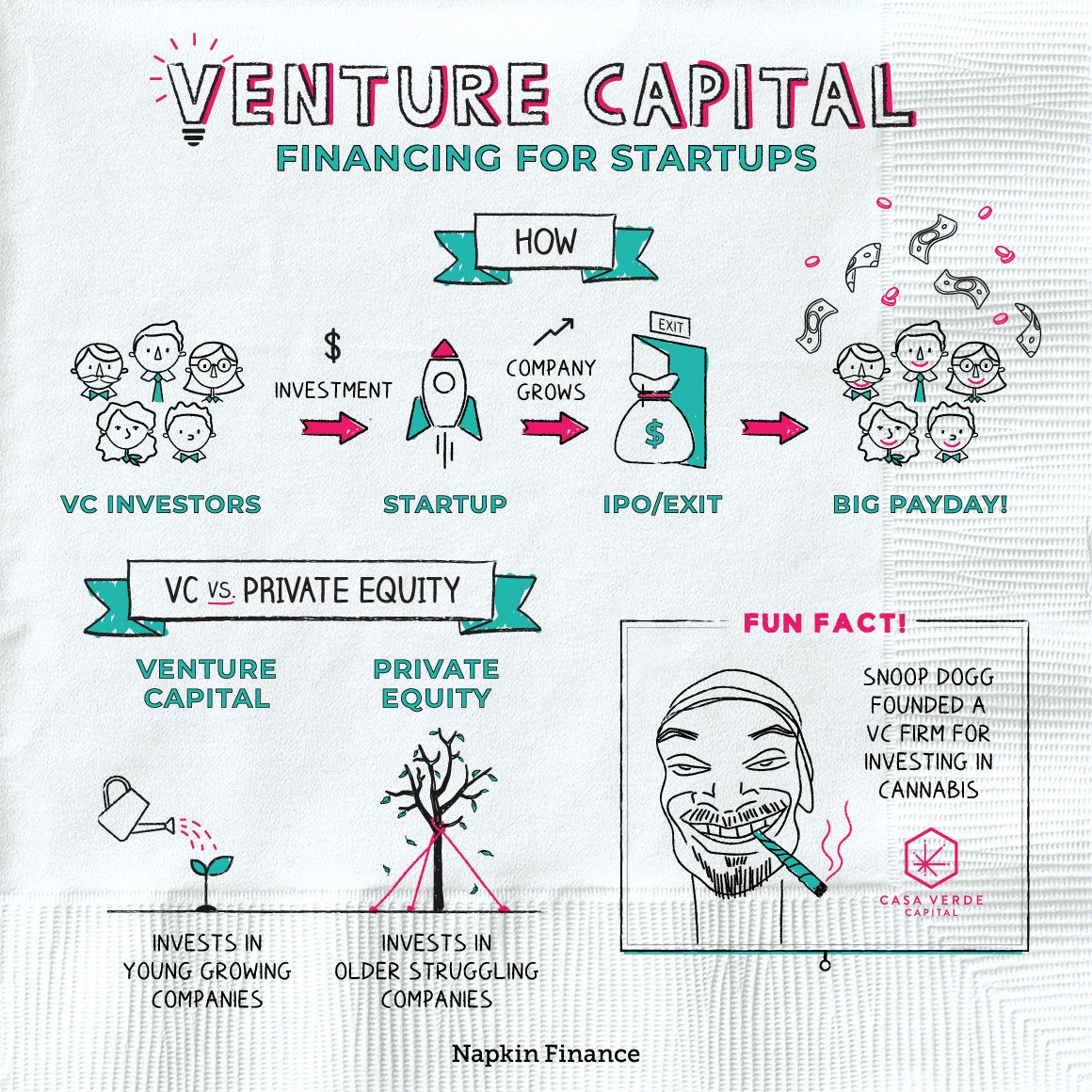
Venture capital influence extends beyond funding: its fund lifecycles and power-law returns push companies toward rapid scale, large markets, and eventual liquidity events. Investor board seats, protective provisions, reporting rights, and valuation practices reshape who controls strategy and how risk is distributed. Those incentives can support ambitious growth, but they may also favor narrative and exit timing over profitability, employee interests, product quality, or long-term resilience.
In 2019, Adam Neumann, the founder and CEO of WeWork, was forced out of his own company in one of the most dramatic corporate governance crises in startup history.
WeWork had raised over $12 billion in venture capital, reached a private valuation of $47 billion, and was preparing for an IPO that would cement its status as one of the most valuable companies in the world.
Then the S-1 filing revealed the details: WeWork was losing $1.9 billion per year, had committed to $47 billion in future lease obligations, was governed by a structure that gave Neumann nearly absolute control, and had been paying Neumann personally for trademarks he owned on the word "We." The IPO was pulled.[10]
Neumann was ousted. The valuation collapsed from $47 billion to approximately $8 billion. SoftBank, WeWork's largest investor, wrote down billions in losses.
The WeWork debacle is often told as a story about a single charismatic founder whose ego outpaced his business. But it is more accurately a story about venture capital influence: how the structures, incentives, and culture of VC funding shaped every decision that led to WeWork's crisis.
VC money fueled WeWork's unsustainable growth. VC incentives encouraged the pursuit of massive scale over profitability. VC governance norms allowed Neumann to accumulate unchecked power.
VC valuation practices created the $47 billion headline number that bore no relationship to the company's actual worth.
WeWork is an extreme case, but it illustrates a dynamic that operates across the entire startup ecosystem: venture capital does not merely fund companies-it fundamentally shapes what companies are built, how they operate, what they optimize for, and who benefits from their success or bears the costs of their failure.
Understanding venture capital influence is essential for anyone participating in the startup ecosystem, whether as a founder, an employee, an investor, or a member of a community affected by VC-backed companies.
How Does VC Funding Change Startups?
VC funding changes startups by imposing a growth imperative, shifting governance toward investors through board seats and protective provisions, reshaping hiring and compensation around equity, and creating exit pressure to produce an IPO or acquisition within the fund's lifecycle. These structural effects push companies to prioritize rapid, exponential growth over profitability, employee welfare, or long-term resilience.
The Growth Imperative
The most immediate and consequential effect of VC funding is the creation of a growth imperative: the requirement to grow rapidly, continuously, and exponentially.
This imperative is not arbitrary. It is a direct consequence of VC fund structure:
- VC funds have fixed lifespans (typically 10 years) during which they must invest capital, grow portfolio companies, and return profits to their limited partners[1]
- VC funds generate returns primarily through a small number of spectacular exits (IPOs or acquisitions at high multiples of invested capital)
- To produce spectacular exits within the fund's lifespan, portfolio companies must grow rapidly enough to achieve high valuations within 5-7 years of initial investment
- Moderate growth (even very profitable moderate growth) does not produce the 10x-100x returns that the VC model requires
The result is that VC-funded companies are structurally pressured to pursue rapid growth above all other objectives, including profitability, employee welfare, product quality, and social responsibility. A company that grows 20% per year and generates healthy profits is a failure by VC standards if it was expected to grow 100% per year.
A company that grows 100% per year while losing money on every transaction is a success by VC standards, as long as the growth continues and the narrative remains intact.
"Venture capital is not about finding good companies. It is about finding companies that can be enormous-companies that can return the entire fund." - Marc Andreessen, co-founder of Andreessen Horowitz
Governance Changes
VC investment typically requires governance changes that shift power from the founder to a structure that includes investor representation:
- Board seats: VCs typically require one or more board seats as a condition of investment, giving them formal authority over major corporate decisions
- Protective provisions: Investment agreements include provisions that require investor approval for major decisions (additional fundraising, acquisitions, changes in business direction, executive compensation)
- Information rights: Investors receive regular financial and operational reporting that gives them detailed visibility into the company's performance
- Anti-dilution protections: Investment terms protect investors against future down rounds (fundraising at lower valuations), shifting dilution risk to founders and employees
These governance changes are justified as protecting investor interests and providing experienced oversight. They also create a dual accountability structure in which founders must satisfy both their customers and their investors, and the interests of these two constituencies do not always align.
Hiring and Compensation
VC funding changes how companies hire and compensate. Large funding rounds enable rapid hiring, often beyond what the company's current revenue or product development justifies. Equity-heavy compensation packages attract risk-tolerant employees while deterring risk-averse ones, shaping the company's cultural composition.
The expectation of future funding and future exits creates a compensation culture built on deferred promises rather than current value.
Senior hires (VPs, C-suite executives) recruited from larger companies bring corporate expectations and processes that may or may not fit the company's stage.
Exit Pressure
VC funding creates exit pressure: the expectation that the company will eventually produce a liquidity event (IPO or acquisition) that returns capital to investors:
- Companies that could operate indefinitely as profitable private businesses are pressured to pursue exits that may not serve the interests of founders, employees, or customers
- The timing of exits is driven by fund lifecycles rather than company readiness
- Exit optimization can distort strategy: companies may make decisions designed to increase short-term valuation (for a favorable exit) rather than long-term value
What Is VC Culture?
VC culture is defined by three dominant mechanisms: pattern matching, where investors favor founders and business models resembling past successes; a portfolio approach, where most companies are expected to fail so a few can produce spectacular returns; and herd behavior, where FOMO and social proof drive VCs to cluster around the same sectors and deals. Together these mechanisms shape who gets funded and what gets built.
Pattern Matching
VCs evaluate potential investments through pattern matching: comparing new opportunities against the characteristics of previous successful investments. This produces systematic biases:
- Founder demographics: VCs disproportionately fund founders who resemble previous successful founders-predominantly young, white, male, educated at elite universities, and based in established tech hubs. This pattern matching perpetuates demographic homogeneity in who receives funding.[9]
- Business model preferences: VCs favor business models that have produced successful outcomes in previous portfolio companies-SaaS, marketplaces, network-effect businesses-while underinvesting in business models that are less familiar but potentially valuable.
- Market preferences: VCs concentrate investment in markets they understand (consumer technology, enterprise software, fintech) while underinvesting in unfamiliar markets (agriculture, construction, manufacturing, healthcare delivery).
Pattern matching is not irrational-it is an attempt to manage the extreme risk and uncertainty of early-stage investing by identifying characteristics associated with previous success.
But it produces a conservative bias that contradicts the VC industry's self-image as a force for radical innovation. VCs fund what looks familiar, not what looks revolutionary.
"The biggest secret in venture capital is that the best investment in a successful fund equals or outperforms the entire rest of the fund combined." - Peter Thiel, co-founder of PayPal and Founders Fund
Portfolio Approach
VCs manage risk through a portfolio approach: investing in many companies with the expectation that most will fail and a few will succeed spectacularly.[7] This approach has important consequences:
- Individual company failures are acceptable: Because the fund's returns depend on a few winners, the failure of individual companies is expected and tolerated. This creates an asymmetry between the VC (who absorbs failures across a diversified portfolio) and the founder and employees (who experience each failure as a singular, devastating event).
- Extreme outcomes are incentivized: Because moderate success does not move the portfolio's overall returns, VCs push each company toward strategies that maximize the probability of extreme outcomes-even when those strategies also maximize the probability of total failure.
- Risk externalization: The portfolio approach allows VCs to take risks with individual companies that they would never take with their own firm, because the consequences of failure fall primarily on the company's employees, customers, and community rather than on the VC.
Herd Behavior
Despite their emphasis on independent thinking, VCs exhibit significant herd behavior:
- FOMO (fear of missing out): VCs invest in companies and sectors that other VCs are investing in, creating self-reinforcing feedback loops and bubbles of investment activity
- Social proof: A company that has received investment from a prestigious VC is more likely to receive investment from other VCs, regardless of the company's fundamental quality
- Thesis convergence: VCs develop investment theses (AI, crypto, climate tech) that converge across the industry, creating concentrated investment in fashionable areas and underinvestment in unfashionable ones
- Exit clustering: VCs push portfolio companies toward exits when the IPO market is favorable, creating waves of IPOs that may not reflect the individual readiness of each company
"There's a saying in the industry: no one ever got fired for investing in a deal that everyone else wanted to do. The herd instinct is very real in venture capital." - Bill Gurley, general partner at Benchmark Capital
Do VCs Add Value Beyond Money?
The VC value proposition extends beyond capital to include strategic support that helps companies succeed:
What Good VCs Provide
- Network access: Introductions to potential customers, partners, executives, and future investors
- Strategic advice: Guidance on business strategy, market positioning, and competitive dynamics from experienced board members
- Recruiting help: Access to talent networks and executive recruiting resources
- Operational support: Shared services (legal, finance, marketing) that portfolio companies can access through the VC firm's platform
- Credibility: The VC firm's brand name provides legitimacy that helps with customer acquisition, recruiting, and media attention
The Value Variation Problem
The actual value that VCs provide varies enormously across firms and individual partners:
- Top-tier VCs (Sequoia, Andreessen Horowitz, Benchmark) provide genuinely differentiated value through their networks, expertise, and brand
- Average VCs provide capital but limited strategic value beyond what the founder could access through other means
- Poor VCs provide capital with counterproductive interference: bad strategic advice, board-level micromanagement, misaligned incentives, and governance structures that impede the founder's ability to execute
Research on VC value-add is mixed. Studies consistently show that having any VC backing is associated with higher growth and higher probability of exit compared to non-VC-backed companies.[3]
However, it is difficult to determine whether this is because VCs add value or because VCs select companies that would have succeeded anyway (the selection effect).
What Are the Downsides of VC Funding?
The main downsides of VC funding are loss of founder control as ownership dilutes and investors gain board seats and veto rights, misaligned incentives between founders, employees, and investors, pressure to pursue unsustainable growth over healthy business fundamentals, and a structural focus on exit events that can conflict with a company's stated mission.
Loss of Control
VC funding progressively transfers control from the founder to investors:
- Each funding round dilutes the founder's ownership percentage
- Board seats give investors formal governance power
- Protective provisions give investors veto authority over major decisions[2]
- Investor expectations constrain strategic options
Founders who start as sole decision-makers with 100% ownership may find themselves as minority shareholders with limited authority over a company they founded.
Misaligned Incentives
Founders, employees, and investors do not always share the same interests:
| Decision | Founder Interest | Employee Interest | VC Interest |
|---|---|---|---|
| Growth vs. Profitability | May prefer sustainable profitability | Prefers job stability | Requires rapid growth for fund returns |
| Exit timing | May prefer to continue building | Prefers equity liquidity | Driven by fund lifecycle |
| Risk tolerance | Variable, personal | Generally risk-averse | High risk acceptable (portfolio diversified) |
| Salary vs. equity | Prefers equity concentration | Prefers adequate salary | Prefers equity-heavy (conserves cash) |
| Company culture | Personal vision | Healthy workplace | Whatever drives growth |
These misalignments are manageable when all parties are transparent about their interests and negotiate in good faith. They become destructive when one party's interests dominate-typically the VC's, because their governance rights give them the structural power to enforce their preferences.
Pressure for Unsustainable Growth
The VC growth imperative can push companies toward growth that is not supported by underlying business fundamentals. This is a classic instance of what researchers call Goodhart's Law: when a measure (growth rate, user count, GMV) becomes a target, it ceases to be a good measure of the underlying health it was meant to represent:
- Spending more on customer acquisition than customers are worth (negative unit economics)
- Expanding into markets the company is not ready to serve
- Hiring faster than the organization can absorb and integrate new employees
- Launching products before they are ready for market
Focus on Exit Over Mission
VC-funded companies are structurally oriented toward exit (IPO or acquisition) rather than ongoing operation. This exit orientation can conflict with the company's stated mission:
- A company whose mission is to serve a specific community may be pressured to pursue scale that takes it away from that community
- A company whose mission is quality craftsmanship may be pressured to compromise quality for growth
- A company whose mission is social impact may be pressured to optimize for financial return rather than impact
"Once you take venture money, the company is no longer yours. You are running it for the investors. The exit is the point. Everything else is just the path to the exit." - Jason Fried, co-founder of Basecamp
What Are the Alternatives to VC Funding?
Alternatives to VC funding include bootstrapping from revenue and personal resources, revenue-based financing that trades a percentage of future revenue for capital without equity dilution, angel investors offering smaller checks with less demanding terms, accelerators providing mentorship alongside modest capital, and traditional bank loans for companies with predictable revenue and collateral. Each option suits different business models and founder priorities better than the VC model.
Bootstrapping
Bootstrapping-funding the company from revenue and personal resources-is the most common alternative to VC funding and offers significant advantages:
- Complete founder control over strategy, culture, and decision-making
- No external pressure for rapid growth or exit
- Equity is not diluted; the founder retains 100% ownership
- The company must be profitable from early stages, which creates financial discipline
Bootstrapping's limitations are also significant: slower growth, limited ability to make large upfront investments, and competitive disadvantage against VC-funded competitors who can invest ahead of revenue.
Revenue-Based Financing
Revenue-based financing provides capital in exchange for a percentage of future revenue rather than equity:
- No equity dilution
- Payments scale with revenue (lower payments during slow periods, higher during growth)
- No board seats or governance changes
- The financing has a fixed total repayment cap
Revenue-based financing is appropriate for companies with predictable revenue but insufficient cash flow for growth investment.
Angel Investors
Angel investors-wealthy individuals who invest personal capital in early-stage companies-provide smaller amounts of capital with typically less demanding terms than institutional VCs:
- Smaller check sizes ($25,000-$500,000 typically)
- Less formal governance requirements
- More patient timelines (no fund lifecycle pressure)
- Variable value-add (some angels are former entrepreneurs with valuable experience; others provide only capital)
Accelerators
Accelerators (Y Combinator, Techstars, 500 Startups) provide small amounts of capital, mentorship, and community in exchange for equity:
- Structured programs (typically 3-6 months)
- Mentorship and education
- Demo day exposure to investors
- Alumni network and community
Traditional Loans
For companies with predictable revenue and tangible assets, traditional bank loans provide capital without equity dilution or governance changes:
- No equity dilution
- Fixed repayment terms
- No board seats or governance requirements
- Requires creditworthiness and often collateral
How Has VC Changed Entrepreneurship?
VC has changed entrepreneurship by funding transformative companies across computing, the internet, mobile, enterprise software, and biotech that traditional finance would not touch, while also distorting what gets built, who builds it, and how success is defined. The "startup playbook" of raising money, growing fast, and pursuing an exit has become the default cultural model for entrepreneurship, even among founders who never seek VC funding.
What VC Has Enabled
Venture capital has funded many of the most transformative companies of the past fifty years:
- Computing: Apple, Intel, Microsoft (early-stage)
- Internet: Google, Amazon, Facebook
- Mobile: Uber, Airbnb, Instagram
- Enterprise: Salesforce, Slack, Snowflake
- Biotech: Genentech, Moderna, BioNTech
These companies would not have existed-or would not have reached their current scale-without venture capital. The VC model's willingness to fund high-risk, high-uncertainty ventures that traditional finance will not touch has been genuinely transformative.
What VC Has Distorted
The dominance of the VC model has also distorted the entrepreneurial ecosystem. The relentless pursuit of unicorn status warps decision-making long before a company comes close to a billion-dollar valuation:[6]
- What gets built: VC preferences determine which types of companies receive funding, creating overinvestment in software and underinvestment in hardware, physical infrastructure, and "boring" industries
- Who builds it: VC pattern matching determines who receives funding, perpetuating demographic and geographic concentration
- How it is built: VC growth imperatives determine how companies operate, favoring rapid scaling over sustainable development
- What counts as success: VC return expectations define success in terms of valuation and exits rather than profitability, customer value, or social impact
The Cultural Legacy
Beyond its financial influence, VC has shaped entrepreneurial culture in ways that extend far beyond funded companies:
- The "startup playbook" (raise money, grow fast, achieve scale, exit) has become the default mental model for entrepreneurship, even among founders who do not seek VC funding
- The language of VC (rounds, valuations, burn rate, runway, cap table) has become the language of entrepreneurship generally
- The values of VC (growth, scale, disruption, exit) have become the values of the broader entrepreneurial ecosystem
- The demographics of VC (predominantly white, male, elite-educated, Bay Area-based) have influenced the demographics of who is perceived as a "real" entrepreneur
The founder mythology that surrounds celebrated VC-backed entrepreneurs often obscures how much of their success depended on the structural advantages that well-timed, well-connected capital provides.
Is VC Funding Right for Every Startup?
VC funding is appropriate for a specific type of company and inappropriate for many others:
Good Fit for VC
- Capital-intensive businesses that require significant upfront investment before revenue (biotech, hardware, marketplace platforms)
- Winner-take-all markets where the first company to reach scale captures the market (network-effect businesses, platform businesses)
- Large addressable markets that can support a billion-dollar-plus outcome
- High-growth-potential businesses with business models that produce exponential rather than linear growth
Poor Fit for VC
- Service businesses that scale linearly with headcount
- Lifestyle businesses where the founder prioritizes autonomy and quality of life over maximum scale
- Niche businesses that serve specific, limited markets well
- Capital-efficient businesses that can achieve profitability without external funding
- Mission-driven businesses whose mission might conflict with VC exit and return expectations
The most important thing any founder can do before seeking VC funding is to honestly assess whether their company is the type of company that the VC model is designed to support. For the right companies, VC provides essential capital, expertise, and networks.
For the wrong companies, VC provides misaligned incentives, inappropriate growth pressure, and governance structures that undermine the company's ability to serve its customers and fulfill its mission.
The difference between these outcomes is not the quality of the VC but the fit between the company's nature and the VC model's structural requirements.
Research on VC's Influence on Innovation and Societal Outcomes
The academic literature on venture capital's effects extends well beyond individual company outcomes to document systematic influences on what types of innovation get funded, which communities benefit, and what social costs accumulate from the VC model's structural requirements.
Josh Lerner at Harvard Business School has produced the most comprehensive body of research on venture capital's economic effects.
His work, summarized in Boulevard of Broken Dreams: Why Public Efforts to Boost Entrepreneurship and Venture Capital Have Failed (2009) and extended in subsequent research, documents that VC-backed companies produce patents at significantly higher rates than non-VC-backed companies of comparable size and age - even after controlling for selection effects.
However, Lerner's research also shows that this patent advantage is concentrated in specific technological domains (semiconductors, biotechnology, internet services) and specific geographic clusters (San Francisco Bay Area, Boston, New York City).[4]
His analysis of 50-year time series data found that VC investment in any given decade is concentrated in the same four or five technology categories, rotating over time through semiconductors, personal computing, internet services, mobile, and artificial intelligence.[8]
The implication: VC funding amplifies innovation within fashionable technological paradigms while systematically neglecting innovation in domains that do not fit the VC pattern-matching model - agricultural technology, construction, manufacturing, water infrastructure, and early childhood education being the most frequently cited underinvestment areas.
Ramana Nanda at Harvard Business School and Matthew Rhodes-Kropf at Harvard Business School published research in 2013 (Financing Risk and Innovation, Management Science, 2017) examining how VC market conditions affect what types of companies get funded.
Their analysis found that during VC boom periods - when capital is abundant and competition for deals is intense - VCs fund significantly more "long-shot" ideas with lower success probabilities but higher potential upside.[5]
During bust periods, they fund significantly more conservative, near-term-revenue opportunities.
The pattern has important implications: the innovative ideas that require the most capital and longest development timelines (deep technology, biotech, climate solutions) are more likely to get funded during boom periods and more likely to be abandoned or underfunded during bust periods.
The cyclical nature of VC funding thus creates boom-bust cycles in the type of innovation receiving investment that are determined by capital market conditions rather than by the intrinsic merit or social importance of the underlying innovation.
The most consequential study on VC's demographic effects was conducted by Paul Gompers and Silpa Kovvali at Harvard Business School, published in the Harvard Business Review in 2018.
Analyzing investment outcomes across VC firms, they found that each 10% increase in the share of female partners was associated with 9.7% more profitable fund returns and 1.5 percentage points more successful investments.
The analysis controlled for fund size, stage, and strategy.
The mechanism they identified: gender-diverse partnerships made investment decisions with lower rates of the homophily bias (funding founders who demographically resemble the investors) and were more likely to fund female founders, who on average received lower initial valuations and thus represented better entry-point investments.
The financial argument against the demographic homogeneity of VC partnerships is, ironically, stronger than the social justice argument in the terms that VC culture finds most persuasive: homophily is not just inequitable, it is economically suboptimal.
Ilya Strebulaev at Stanford Graduate School of Business has studied VC's role in the broader economy through long-run analysis of public companies.
His research found that VC-backed companies, which represent approximately 0.25% of all companies formed in any given year, account for approximately 47% of US initial public offerings since 1974, approximately 41% of US R&D spending among public companies, and approximately 57% of total market capitalization of companies that IPO'd since 1979.
These figures are frequently cited by VC advocates as evidence of the sector's economic impact.
Strebulaev's interpretation is more nuanced: the concentration of economic value in VC-backed companies reflects both genuine value creation (these companies did innovate effectively in many cases) and structural advantages that enabled VC-backed companies to extract rents from incumbents (regulatory advantages, investor-subsidized below-cost pricing, and winner-take-all market dynamics) - a distinction that the simple impact statistics do not capture.
The SoftBank Effect and Late-Stage VC Dynamics
The 2017-2019 period, dominated by SoftBank's $100 billion Vision Fund, represents the most extreme recent case study in how late-stage VC dynamics can distort market structures, corporate behavior, and ultimately consumer welfare.
SoftBank's Vision Fund raised $100 billion in 2017 - larger than all previous VC funds combined - from Saudi Arabia's Public Investment Fund, Abu Dhabi's Mubadala, and other sovereign wealth and institutional investors.
Masayoshi Son's strategy was explicitly based on the thesis that size of capital was itself a competitive advantage: by investing enormous amounts in companies within any given market sector, he could ensure that SoftBank-backed companies had enough capital to destroy competitors through below-cost pricing, out-recruit talent, and build brand recognition that organic revenue could not support.
The strategy was deployed across ride-hailing (Uber, Didi, Grab, Ola - SoftBank invested in multiple competing ride-hailing companies simultaneously), logistics (DoorDash, Rappi), co-working (WeWork), hotels (Oyo), and insurance (Lemonade).
The documented outcome was a period of consumer benefit (cheap rides, subsidized food delivery, discounted hotel rooms) funded by investor capital rather than business economics, followed by a painful normalization when capital became more expensive.
The Federal Reserve's interest rate increases beginning in March 2022 changed the capital market context fundamentally: the cheap money that had allowed SoftBank and VC investors more broadly to fund below-cost pricing was no longer available.
Uber raised prices by 30-40% between 2021 and 2023 as it moved toward profitability. DoorDash delivery fees increased. Oyo closed thousands of hotel rooms and wrote off billions in goodwill from the acquisition prices it had paid during the Vision Fund boom.
Workers who had entered the gig economy during the subsidized period found rates declining. The communities where these services had become infrastructure - urban residents who had given up car ownership based on the availability of cheap rides, restaurant workers who depended on delivery platform income - absorbed the adjustment costs.
Benchmark Capital's Bill Gurley was the most prominent VC to publicly critique the Vision Fund's approach, writing in 2019 that the Fund was "distorting the market in negative ways" by funding below-cost operations that could not be sustained.
Gurley's critique was prescient but also self-interested: Benchmark held large positions in companies competing with SoftBank-backed firms.
The episode illustrates the structural difficulty of regulating VC behavior: the actors most knowledgeable about the distortions are often those with competitive interests in eliminating specific competitors rather than reforming systemic practice.
The regulatory response has been gradual. The SEC's 2023 private fund adviser rules, challenged immediately by the venture industry, would require private fund advisers to disclose fees and conflicts of interest more transparently and to distribute audited financial statements to all investors annually.
The rules represent the first significant extension of investor protection requirements to the VC model since the exemptions were established in the Investment Advisers Act of 1940.
The VC industry's objection - that the rules would burden small funds and reduce capital availability for emerging managers - echoes the disruption rhetoric discussed elsewhere in this article: regulatory requirements are framed as obstacles to innovation rather than as protections for the pension funds, university endowments, and sovereign wealth funds whose capital has funded the VC model.
Sources & Further Reading
Kupor, S. (2019). Secrets of Sand Hill Road: Venture Capital and How to Get It. Portfolio. View source
Feld, B. & Mendelson, J. (2019). Venture Deals. 4th ed. Wiley. View source
Gompers, P. & Lerner, J. (2001). The Money of Invention: How Venture Capital Creates New Wealth. Harvard Business School Press. View source
Lerner, J. & Nanda, R. (2020). "Venture Capital's Role in Financing Innovation." Journal of Economic Perspectives, 34(3), 237-261. DOI: 10.1257/jep.34.3.237
Ewens, M., Nanda, R. & Rhodes-Kropf, M. (2018). "Cost of Experimentation and the Evolution of Venture Capital." Journal of Financial Economics, 128(3), 422-442. DOI: 10.1016/j.jfineco.2018.03.001
Kenney, M. & Zysman, J. (2019). "Unicorns, Cheshire Cats, and the New Dilemmas of Entrepreneurial Finance." Venture Capital, 21(1), 35-50. DOI: 10.1080/13691066.2018.1517430
Thiel, P. (2014). Zero to One. Crown Business. View source
Nicholas, T. (2019). VC: An American History. Harvard University Press.
Ewens, M. & Townsend, R. (2020). "Are Early Stage Investors Biased Against Women?" Journal of Financial Economics, 135(3), 653-677. DOI: 10.1016/j.jfineco.2019.07.002
Wiedeman, R. (2020). Billion Dollar Loser: The Epic Rise and Spectacular Fall of Adam Neumann and WeWork. Little, Brown. View source