
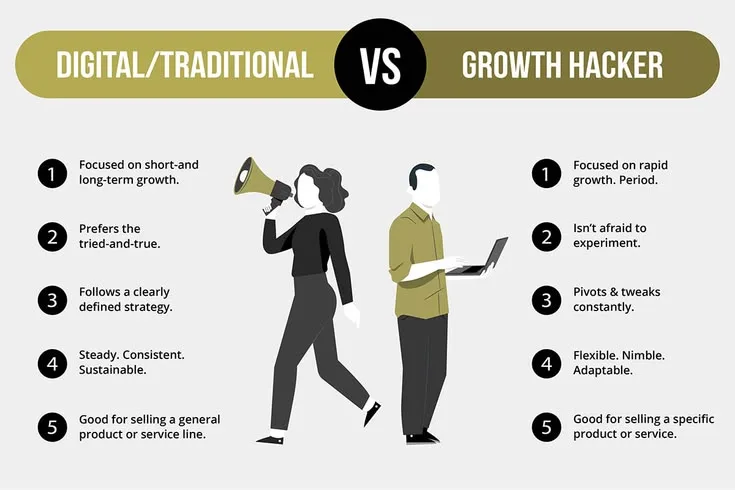
Growth can come from finding overlooked channels and testing practical ways to reach more people, but it can also become a culture of relentless optimisation. Growth hacking culture captures both the experimental drive behind rapid expansion and the risk of treating every interaction as a conversion opportunity.
In 2008, Airbnb was failing. The company had just six weeks of runway, and founders Brian Chesky and Joe Gebbia were selling novelty cereal boxes (Obama O's and Cap'n McCain's, timed to the presidential election) to keep the business alive.
They had posted their listings on Craigslist and noticed that Craigslist hosts reached a far larger audience than their own platform. So they built a tool that allowed Airbnb hosts to cross-post their listings directly to Craigslist with a single click.
This was not a formal partnership. Craigslist had no API for this purpose. The Airbnb engineers reverse-engineered Craigslist's posting system and built an integration that, technically, violated Craigslist's terms of service.
The hack worked: Airbnb hosts suddenly had access to Craigslist's massive user base, and a measurable fraction of those Craigslist users discovered Airbnb through the cross-posted listings.
The Craigslist hack became one of the earliest and most-cited examples of growth hacking-a creative, unconventional, data-driven tactic that produced rapid user growth by solving a specific distribution problem in a way that traditional marketing would never have considered or condoned.
Two years later, photographer visits to Airbnb hosts showed that professional photographs dramatically increased booking rates. Rather than simply recommending that hosts improve their photos, Airbnb hired professional photographers and sent them to hosts' homes for free-manually, one listing at a time.
The program was expensive and did not scale in any traditional sense. But it improved conversion rates dramatically and attracted more hosts, who attracted more guests, who attracted more hosts. Growth hacked, again.
The term "growth hacking" was coined in 2010 by Sean Ellis, then working at Dropbox, to describe a new kind of role: someone whose singular focus was growing the user base, combining marketing intuition with engineering capability and data analysis.[1]
The concept captured something genuinely new about how internet startups grew-not through traditional marketing's advertising campaigns and sales teams, but through product-led tactics, viral mechanics, and relentless experimentation by people who understood both user psychology and technical systems.
"A growth hacker is someone whose true north is growth. Everything they do is scrutinized by its potential impact on scalable growth." - Sean Ellis
But growth hacking evolved from a creative methodology into a cultural obsession-a worldview in which growth is the supreme metric, user acquisition justifies aggressive tactics, and the question "does this grow the user base?" overrides nearly every other consideration.
Understanding growth hacking culture means understanding both its genuine innovations and its significant pathologies.
Why Growth Hacking Emerged When It Did
Growth hacking did not appear in a vacuum. It emerged from specific conditions in the startup ecosystem of the late 2000s and early 2010s that made traditional marketing inadequate for the challenges startups faced.[2]
The Budget Problem
Traditional marketing requires significant capital: advertising budgets, PR agencies, event sponsorships, sales teams. Early-stage startups-particularly in the pre-seed and seed stages-cannot afford these expenditures.
They need to grow their user base with minimal cash outlay, relying instead on creativity, technical leverage, and product mechanics.
Growth hacking emerged as a low-budget alternative to traditional marketing: a methodology for producing rapid growth through creative tactics that required engineering effort rather than marketing spend. The Airbnb Craigslist integration required programmer hours, not advertising dollars.
Dropbox's referral program required product engineering, not a media buy.
The Venture Capital Growth Imperative
The venture capital funding model creates specific growth pressures that traditional marketing cannot satisfy. VC-funded startups need to demonstrate rapid user growth to raise subsequent funding rounds.
The standard VC timeline expects companies to show significant traction within 12-18 months of funding. Revenue growth is often secondary to user growth in early consumer internet metrics.
The "hockey stick" growth curve that VCs seek requires exponential rather than linear growth-and exponential growth requires mechanisms that create self-reinforcing user acquisition, not just steady-state marketing campaigns.[9]
Growth hacking promised exactly this: exponential, self-reinforcing growth using tactics specifically designed for viral, compound user acquisition.
"Startups don't starve; they drown. There's always more ideas, more features, more channels to try. Focus is ruthlessly eliminating everything that isn't driving growth." - Paul Graham
The Product-Distribution Convergence
Internet products have a distinctive property that traditional businesses lack: the product itself can be the primary distribution channel. When a user shares a document via Google Docs, they introduce a new user to the product.
When someone receives a payment via PayPal, they encounter the product as part of a transaction. When a user posts content from Instagram to Facebook, they create awareness among their Facebook friends.
This convergence of product and distribution created opportunities for growth that required engineering capability as much as marketing skill.
Growth hackers emerged to work at this intersection: people who could design product features that generated distribution as a natural byproduct of use, and who could measure, optimize, and iterate on those mechanisms with the rigor that data-driven engineering applies to product development.
The Growth Hacking Toolkit: Methods, Ethics, and Consequences
Growth hacking encompasses a diverse toolkit of tactics ranging from creative and admirable to ethically questionable to outright manipulative.
Organic Viral Loops: Growth Through Value Delivery
The most defensible category of growth hacking creates organic viral loops-mechanisms where users naturally share the product with others as a byproduct of using it in ways they find genuinely valuable.
Dropbox's referral program is the canonical example. Dropbox was growing before the referral program, but growth was slow. The team noticed that many users were referring friends but receiving nothing in return.
Drew Houston and Sean Ellis decided to reward this natural behavior: give users free storage (500MB) for inviting friends, and give the invited friends storage too.
This aligned incentives perfectly: users received genuine value (more storage) for doing something they already wanted to do (share a useful tool).
The result was a 60% permanent increase in signups that the team has cited as among the most impactful single decisions in the company's early growth.
Hotmail's email signature was perhaps the first viral loop in internet history. In 1996, Tim Draper (an investor) suggested adding a tagline to every email sent through Hotmail: "PS: I love you.
Get your free email at Hotmail." The team modified this to "Get your free email at Hotmail" and attached it to every outgoing message.
Every Hotmail email became a marketing message sent to the recipient's attention by someone they already trusted. Hotmail went from zero to 12 million users in 18 months. Microsoft acquired it for $400 million.
Engineered Viral Mechanics: Growth Through Product Design
Beyond organic viral loops, growth hacking includes deliberate engineering of sharing mechanics into product experience:[10]
LinkedIn's address book import allowed new users to import their email contacts, making it easy to find existing connections and prompting the system to send invitation emails to contacts who were not yet members. The mechanics were effective-LinkedIn grew rapidly through this mechanism.
They were also controversial: many users felt that invitations were sent on their behalf without adequate understanding of what they were authorizing.
Facebook's photo tagging created a notification mechanism that drew tagged people (and their friends) back to Facebook to see the content. Every tagged photo became a distribution event that reached non-members and lapsed members.
The mechanics were genuine and useful (people do want to see photos of themselves), and they were also deliberately designed to maximize reach and re-engagement.
Product easter eggs and social sharing prompts: Apps that prompt users to "share your achievement" after completing milestones, or that post completion notifications to social media, are growth mechanics that leverage users' desire to share accomplishments-sometimes with their genuine interest, sometimes by exploiting social pressure.
Freemium: The Free-User Distribution Engine
The freemium model-offering a free basic product to attract users, then converting a percentage to paid plans-is a growth mechanic that uses free users as a distribution channel for the paid product.
Successful freemium products (Spotify, Slack, Zoom, Canva, Dropbox) convert 2-5% of free users to paid plans, generating revenue, while using the remaining 95-98% as a distribution and adoption engine.
Free users create social proof, generate word-of-mouth, establish the product as a category default, and sometimes convert to paid later when their needs grow.
The freemium model works when: the free tier is genuinely useful and delivers real value; the paid tier offers clear additional value that some users need; the free users genuinely spread the product through use; and the conversion economics produce sustainable revenue from a small paying minority.
Dark Patterns: When Growth Hacking Crosses the Line
Some growth hacking tactics are designed not to deliver value but to manipulate users into behaviors they would not freely choose with full information:[7]
Deceptive opt-ins: Pre-checked boxes that subscribe users to marketing emails or services they did not explicitly request. Facebook's 2009 privacy setting changes defaulted users to sharing information with "everyone" rather than "friends," overriding previous settings without clear notification.
Misleading interfaces: Design that makes it easy to share data or invite contacts and deliberately difficult to decline.
LinkedIn's "Add Connections" flow in 2011-2013 prompted users to provide email credentials, imported all contacts, and sent invitation emails to those contacts-a process that many users reported feeling had been done without their genuine understanding.
LinkedIn settled a class-action lawsuit over these practices for $13 million in 2015.
Notification spam: Sending push notifications designed to create FOMO (fear of missing out) and anxiety rather than to inform.
Platforms that send "5 people viewed your profile this week" notifications designed not to inform users of genuine interest but to prompt login and engagement are manipulating users through artificial social anxiety.
Roach motel design: Making sign-up easy and cancellation deliberately difficult. Amazon Prime's cancellation flow, which buried the cancellation option under multiple confirmation steps and warnings, became the subject of Federal Trade Commission investigation.
Artificial social pressure: Showing users "12 of your friends have joined" when the product has no social function, or designing progress bars and achievement systems that create compulsion unrelated to genuine product value.[6]
| Tactic | Ethical Status | Long-Term Effect |
|---|---|---|
| Organic viral loop | Generally ethical | Sustainable growth |
| Incentivized referral (genuine value) | Generally ethical | Sustainable if value is real |
| Contact import (transparent) | Ethically gray | Can damage trust if aggressive |
| Dark patterns | Unethical | Brand damage, regulatory risk |
| Notification spam | Ethically gray to unethical | User fatigue, uninstalls |
| Forced social actions | Unethical | Resentment, low-quality growth |
The Pathologies of Growth Hacking Culture
Growth hacking as a cultural orientation-not just as a set of tactics-produces several systematic pathologies when it becomes dominant in how an organization thinks about itself and its users.
Growth Over Genuine Value: The Leaky Bucket Problem
The most fundamental problem with growth hacking culture is its tendency to prioritize user acquisition over user value. A product that acquires millions of users but provides minimal value has growth metrics but not business health.
Tactics that manipulate users into signing up produce vanity metrics that look like growth but represent no genuine demand.
Critically, the focus on acquisition often comes at the expense of retention. A product that acquires 100,000 new users per month but loses 90,000 per month is not growing-it is churning. The difference between growth and churn is the quality of the value delivered to users.
Growth hacking culture's obsession with acquisition tactics systematically underweights the slow, difficult work of building products that users genuinely want to keep using.
The sustainable growth model is entirely different: products that deliver genuine value naturally generate word-of-mouth, which is both the most powerful and the most sustainable growth mechanism. When a product is genuinely excellent, users recommend it to others because they want others to experience what they have experienced.
This kind of organic growth is slower than aggressive acquisition tactics but produces users with higher retention, higher lifetime value, and genuine attachment to the product.
Manipulation and Eroded Trust
Aggressive growth hacking tactics erode user trust in ways that are self-defeating over time. Short-term growth tactics that damage user trust make long-term growth harder because distrustful users are less likely to engage deeply, less likely to recommend the product, and more likely to switch to alternatives when they emerge.
LinkedIn's aggressive contact import tactics resulted in the $13 million settlement and lasting reputational damage to a platform that depends on users' professional trust.
Facebook's "shadow profiles"-collecting data about non-users from their friends' contact lists without the non-users' knowledge or consent-generated Congressional scrutiny and contributed to a broader erosion of public trust that has accompanied the platform through multiple regulatory investigations.
"We have created tools that are ripping apart the social fabric of how society works." - Chamath Palihapitiya, former Facebook VP of User Growth, 2017
Palihapitiya's comment, made in a Stanford Business School talk, was notable precisely because he was describing the product of growth hacking culture from the inside.
The engagement mechanics that Facebook built to maximize user time-on-platform-variable-ratio reinforcement through likes, algorithmic amplification of emotionally provocative content, social comparison features-were optimized for growth metrics and produced genuine psychological harm at societal scale.
Unsustainable Growth Economics
Many growth hacking tactics produce growth that cannot be sustained economically or operationally. This is the dark side of Goodhart's Law: when user counts become the target, they cease to be a good measure of actual business health.[8]
Paid acquisition at unprofitable unit economics: Spending more to acquire each user than the user will ever generate in revenue produces rapid user growth that is economically catastrophic. During the 2019-2021 venture boom, numerous consumer startups maintained negative unit economics indefinitely, justified by growth rates.
When the venture capital environment changed in 2022, many of these businesses discovered that their growth had been entirely funded by investor subsidies with no path to profitability.
Below-cost pricing to drive adoption: Ride-sharing companies Uber and Lyft subsidized rides below cost for years to drive adoption and competitive moat-building. This produced enormous user growth while accumulating enormous losses.
The unicorn obsession in startup culture rewarded this strategy with billion-dollar valuations that were sustainable only as long as growth capital was cheap and abundant.
Platform exploitation: Early growth hacks that exploited specific platform features (Facebook's open API in 2007-2010, LinkedIn's contact import, app store algorithm manipulation) produced growth that evaporated when the platforms closed the loopholes.
Companies built on platform exploitation face existential risk when the platform changes the rules.
What Changed: The Post-Growth-Hack Era
The growth hacking landscape has changed significantly since Ellis coined the term in 2010:
Platforms closed loopholes: Most of the specific hacks that defined early growth hacking have been blocked. Facebook locked down its API after the Cambridge Analytica scandal. LinkedIn restricted contact import practices under legal pressure.
App stores implemented anti-manipulation policies. The specific tactics are gone even if the growth-at-all-costs orientation persists.
Regulation increased: GDPR in Europe (2018), CCPA in California (2018), and expanding privacy regulations globally have restricted many data-collection and contact-import tactics that were central to early growth hacking.[5] The Federal Trade Commission's scrutiny of dark patterns is increasing.
Growth hacking tactics that were legally unconstrained in 2010 carry significant regulatory risk in 2026.
Users became more skeptical: Consumers who once found viral mechanics charming now often find them manipulative. Platform literacy has increased; users are quicker to recognize and resent dark patterns, notification spam, and manipulative design.
The tactics that worked when users were naive to them are less effective against users who have seen them repeatedly.
Acquisition costs rose: As more companies competed for users through digital channels, the cost of user acquisition rose dramatically across all channels. Facebook advertising CPMs that were $0.25 in 2010 were $10-15 by 2022.
The cheap distribution that defined early growth hacking became expensive, reducing the economics of growth-hacking-style rapid customer acquisition.
What Remains Valuable
Despite the changes, core principles from growth hacking remain genuinely valuable:
Data-driven experimentation: The discipline of forming hypotheses about user behavior, designing tests, measuring outcomes, and iterating based on results remains the most rigorous approach to product improvement and marketing optimization.[3]
Product-led growth: Building distribution mechanics into the product itself-creating genuine reasons for users to share, invite, and refer-remains far more cost-effective than external marketing when done ethically with genuine user value.
Cross-functional integration: Combining product, engineering, data, and marketing perspectives in growth strategy produces better outcomes than siloed approaches.[4]
The Sustainable Alternative: Growth Through Value
The alternative to growth hacking culture is not "no growth" but sustainable growth-growth built on genuine value delivery, user trust, and long-term relationship building.
Basecamp (formerly 37signals) has been profitable since 2004 without raising venture capital. They have explicitly rejected growth-at-all-costs thinking, focusing instead on building products that users genuinely love and charging sustainable prices for them.
Their user count is smaller than their VC-funded competitors. Their profit margins are significantly higher, and their founders have not had to cede control or pursue growth objectives set by outside investors.
Notion grew primarily through word-of-mouth among power users who genuinely loved the product. Their growth was slower than competitors who raised more money and spent more on acquisition.
But their retention was significantly higher, their NPS scores were exceptional, and they built a community of advocates who drove sustained organic growth without aggressive tactics.
"Make something people want. That's the whole thing. Everything else is tactics." - Y Combinator motto
Growth hacking at its best is a creative, rigorous, data-driven approach to solving the genuine distribution problem that every product faces. Growth hacking at its worst is a manipulative, metrics-obsessed, ethically blind pursuit of user numbers that confuses growth with value.
The difference lies in the underlying orientation: whether growth serves users or exploits them, whether it creates value or extracts it, and whether the company's relationship with its users is built on trust or manipulation.
Research on Growth Hacking Effectiveness and Its Limits
The empirical literature on growth hacking produces a more nuanced picture than either its advocates or its critics present. Several studies have attempted to measure the actual outcomes of growth hacking tactics, with findings that are specific to context, user segment, and market maturity.
Sinan Aral at MIT's Sloan School of Management has conducted the most rigorous academic research on viral growth mechanics.
His 2011 Management Science paper, "Creating Social Contagion Through Viral Product Design," examined a controlled experiment with a 1.3-million-person social network in which he randomized which users received viral communications about a product.
His core finding was methodologically important: apparent peer influence in product adoption often reflects homophily (people with similar characteristics naturally adopt similar products at similar times) rather than genuine social contagion.
Disentangling genuine viral spread from correlated adoption required explicit experimental design that most growth hackers do not use. His measured viral effect was positive but substantially smaller than the gross peer-influence correlation would suggest.
The practical implication: many startups interpret correlated adoption as viral spread and invest heavily in viral mechanics that are amplifying naturally occurring adoption patterns rather than genuinely causing new adoption.
Chrysanthos Dellarocas at Boston University and colleagues published research in 2016 examining the long-term performance of companies that relied heavily on viral growth mechanics versus those that grew through more traditional paid and organic channels.
Their analysis of 243 consumer internet startups found that virally-grown companies had significantly higher early growth rates but significantly lower retention rates at 12 and 24 months.
The explanation: viral mechanics often acquire users whose motivation for joining was the incentive (the free storage, the referral reward, the social pressure) rather than genuine product interest.
These users churned at higher rates when the viral incentive was no longer novel. Companies that grew more slowly through word-of-mouth driven by genuine product satisfaction had retention rates 40-60% higher than virally-grown cohorts at the 24-month mark.
The conclusion reinforces the sustainable growth argument: viral growth and retention-based growth are not the same phenomenon, and optimizing for the former can undermine the latter.
The regulatory evidence is the most consequential external constraint on growth hacking's future. The Federal Trade Commission's September 2022 report "Bringing Dark Patterns to Light" documented findings from a sweep of 642 websites and apps that used dark patterns.[11]
The report found that 75% of websites used at least one dark pattern, including obscured cancellation paths (67%), hidden subscription costs (72%), and pre-checked opt-ins (55%).
The FTC has pursued enforcement actions against Amazon (for its Prime cancellation dark patterns, settled in 2024 for $25 million in consumer refunds), Fortnite maker Epic Games ($245 million settlement in 2022 for dark pattern billing practices), and multiple subscription services for obstruction of cancellation.
The trajectory of FTC enforcement makes clear that dark pattern growth tactics that were legally uncontested in 2012 carry substantial regulatory risk in the mid-2020s.
The most granular academic study of growth hacking's dark pattern dimension was conducted by Nataliia Norval and colleagues at the Norwegian University of Science and Technology, published in 2021 in the ACM CHI Conference on Human Factors in Computing Systems.
They conducted user testing with 1,254 participants exposing them to documented dark patterns from live websites and measuring both behavioral responses and attitudinal reactions.
The study found that while dark patterns successfully captured behavioral compliance (users clicked where the designers intended), they generated significant negative emotional responses including frustration (78% of participants), distrust (67%), and reported intention not to recommend the product (54%).
The researchers noted that behavioral compliance and trust are different metrics that growth hacking culture conflates: getting users to take an action is not the same as creating users who will return, recommend, or pay.
Growth Hacking's Global Spread and Cultural Adaptation
Growth hacking originated in Silicon Valley's specific cultural and regulatory context and has been exported globally with uneven results, as different markets have different user expectations, regulatory environments, and competitive dynamics.
China's technology sector developed its own growth hacking playbook that differs substantially from the Silicon Valley original.
WeChat, Alibaba's various apps, and ByteDance's TikTok/Douyin all used growth tactics that depended on China's integrated super-app ecosystem: WeChat Pay integration created lock-in across all apps in the ecosystem, red envelope (hongbao) mechanics created viral sharing through financial incentives with cultural resonance during Chinese New Year, and mini-program integration removed friction between social and commerce contexts.
Alex Lazarow at Cathay Innovation documented in his 2020 book Out-Innovate that Chinese growth hackers operated in a market with lower baseline user expectations for privacy, stronger network effects from WeChat's dominance, and fewer regulatory constraints on data use.
ByteDance's algorithm-driven growth for TikTok which reached 1 billion users in roughly three years, faster than any previous social platform-relied on immediate personalization using behavioral data that would have been constrained by GDPR in European markets.
The European adaptation of growth hacking illustrates how regulatory environment shapes tactics. Following GDPR's implementation in May 2018, EU-based startups and the EU operations of US companies had to rebuild their user acquisition infrastructure around explicit consent.
Matthias Bauer at the European Center for International Political Economy documented in a 2020 paper that the cost of user acquisition for European digital advertising increased by approximately 12-15% in the 18 months following GDPR implementation, as pre-checked opt-ins and behavioral retargeting without explicit consent became unavailable.
However, the companies that invested in consent-based marketing-particularly those that offered genuine value for data sharing rather than obscuring the exchange-saw higher engagement rates from their acquired users, consistent with the retention finding above: users who explicitly chose to participate engaged more deeply than users who were captured through aggressive mechanics.
In India and Southeast Asia, growth hackers adapted the playbook to markets with different infrastructure constraints. Paytm, India's dominant payments app, used its partnership with BSNL (the state telecoms company) to pre-install its app on feature phones and early smartphones, reaching users who had no prior smartphone experience.
GoJek in Indonesia built its initial user base through offline channels-recruiting drivers through mosque networks and neighborhood associations-before layering digital growth mechanics on top of an organically built supply side.
Grab in Singapore adapted Airbnb's referral mechanic but localized the incentive from storage credits to local food vouchers, with significantly higher conversion rates.
These adaptations suggest that the core principle of growth hacking-find the channel and incentive that matches your specific users' motivations-is valid, while the specific tactics require localization.
The most studied failure of growth hacking export is the attempt by several Western startups to apply their viral mechanics in markets where the social graph structure did not support the same dynamics.
Pinterest's invitation-only launch strategy, which created scarcity and social signaling in the US market, failed to translate to markets in Latin America and Southeast Asia where digital social networks were less developed.
Airbnb's host acquisition strategy, which relied on Craigslist cross-posting in the US, found no equivalent platform in most international markets and required market-by-market adaptation that the company's initial growth playbook did not anticipate.
The growth hacking failure mode in international expansion is typically not that the tactics were ethically problematic but that they depended on specific platform ecosystems, user behaviors, and social graph structures that did not transfer.
Sources & Further Reading
- Ellis, Sean and Brown, Morgan. Hacking Growth: How Today's Fastest-Growing Companies Drive Breakout Success. Crown Business, 2017. View source
- Holiday, Ryan. Growth Hacker Marketing: A Primer on the Future of PR, Marketing, and Advertising. Portfolio, 2014. View source
- Ries, Eric. The Lean Startup. Crown Business, 2011. View source
- Chen, Andrew. "Growth Hacker Is the New VP Marketing." Andrew Chen Blog, 2012. View source
- Zuboff, Shoshana. The Age of Surveillance Capitalism: The Fight for a Human Future at the New Frontier of Power. PublicAffairs, 2019. View source
- Eyal, Nir. Hooked: How to Build Habit-Forming Products. Portfolio, 2014. View source
- Brignull, Harry. "Deceptive Design Patterns." deceptive.design, 2010. View source
- Croll, Alistair and Yoskovitz, Benjamin. Lean Analytics: Use Data to Build a Better Startup Faster. O'Reilly Media, 2013. View source
- Weinberg, Gabriel and Mares, Justin. Traction: How Any Startup Can Achieve Explosive Customer Growth. Portfolio, 2015. View source
- Patel, Neil and Taylor, Bronson. The Definitive Guide to Growth Hacking. QuickSprout, 2013. View source
- Federal Trade Commission. "Dark Patterns: Deceptive User Interface Designs That Trick Consumers." FTC Report, 2022. View source