
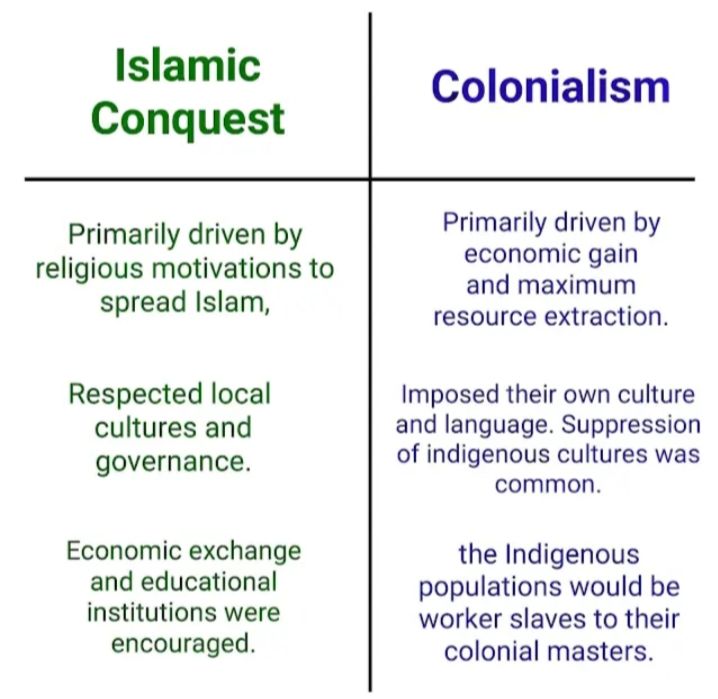
Defining: In 1900, European powers or their former colonies controlled approximately 84 percent of the earth's land surface. Britain alone administered one-quarter of the globe - from the Indian subcontinent to sub-Saharan Africa to the Pacific islands to Canada and Australia.
France controlled West and Central Africa, Indochina, and territories across the Pacific and Indian Oceans. Belgium administered the Congo, an area seventy-seven times its own size.
Portugal, despite being among the weakest European powers, held Angola, Mozambique, and territories in Asia and the Americas it had controlled since the fifteenth century.
In less than a century - primarily between 1945 and 1975 - nearly all of it decolonized. India became independent in 1947. Ghana in 1957. Seventeen African nations in 1960. Algeria in 1962, after a war that killed a million people. Angola and Mozambique in 1975.
The speed of collapse was as remarkable as the scale of the empire that collapsed.
Understanding how the world arrived at the condition of 1900, and how it got from 1900 to today, is not possible without understanding colonialism: what it was, how it was established, what it did to the people living under it, and what it left behind when it ended.
Those legacies - economic, political, psychological, and cultural - are not merely historical. They are structural features of the contemporary world.
"The colonial world is a Manichean world. It is not enough for the settler to delimit physically, that is to say with the help of the army and the police force, the place of the native.
As if to show the totalitarian character of colonial exploitation the settler paints the native as a sort of quintessence of evil." - Frantz Fanon, The Wretched of the Earth (1961)
| Colonial Power | Major Territories | Period of Peak Control |
|---|---|---|
| Britain | India, Africa, Americas, Australia, Middle East | 1600s-1960s |
| France | West/North Africa, Indochina, Caribbean | 1600s-1960s |
| Spain | Latin America, Philippines, Caribbean | 1500s-1800s |
| Portugal | Brazil, Angola, Mozambique, Goa | 1500s-1970s |
| Netherlands | Indonesia, South Africa, Caribbean | 1600s-1940s |
| Belgium | Congo, Rwanda, Burundi | 1880s-1960s |
| Germany | East/West Africa, Pacific | 1880s-1918 |
Key Definitions
Colonialism: The political domination and economic exploitation of a territory and its people by a foreign power, involving direct administrative control, the subordination of indigenous political structures, and the systematic transfer of resources to the colonizing state.
Imperialism: The broader exercise of power by one state over others - economically, militarily, or politically - without necessarily involving direct administration or settlement. All colonialism is imperialism, but not all imperialism is colonialism.
Settler colonialism: A form of colonialism in which the colonizing power sends large numbers of settlers to permanently occupy and claim the land, typically displacing or eliminating indigenous populations. North America, Australia, New Zealand, and southern Africa are primary examples.
Extractive colonialism: A form in which colonizers maintain the existing population as a labor force, extracting resources and agricultural produce for export. Most of tropical Africa, colonial India, and Southeast Asia under European rule were primarily extractive.
Postcolonialism: Both a historical condition (the period after formal colonial rule ends) and a field of academic inquiry examining the cultural, political, and psychological legacies of colonialism.
Subaltern studies: A school of South Asian historiography that sought to recover the experiences and agency of people excluded from elite nationalist historical narratives.
Cultural imperialism: The imposition of colonizing cultures' values, languages, religious practices, and cultural products on colonized populations, often displacing or marginalizing indigenous cultures.
Decolonization: The political process by which colonial territories gained independence from colonial powers, primarily between 1945 and 1975.
Dependency theory: The argument, associated with Andre Gunder Frank and others, that underdevelopment in the global South is not a stage on the way to development but a structural consequence of incorporation into a global economic system organized for the benefit of the developed North.
Fanon's colonial psychology: Frantz Fanon's analysis of the psychological consequences of colonialism for both colonized people (internalized inferiority, fractured identity) and colonizers (dehumanization of the Other as a precondition for violence).
Orientalism (Said): Edward Said's concept, from his 1978 book of the same name, of the systematic Western discursive construction of "the Orient" as irrational, exotic, and backward - a construction that served to justify colonial domination.[3]
Scramble for Africa: The rapid partition of the African continent among European powers between 1881 and 1914, formalized at the Berlin Conference of 1884-85.
Neocolonialism: The continuation of economic and political dependency by formally independent states, through international financial institutions, trade structures, and debt relations.
What Colonialism Is - and What Distinguishes It from Trade
Not every encounter between powerful and less powerful societies is colonialism. Trade, migration, cultural exchange, and military alliance can produce enormous inequality and asymmetry without constituting colonialism in any precise sense.
What distinguishes colonialism is the combination of political domination, economic extraction, and the systematic subordination of indigenous institutions.
When the Portuguese arrived in West Africa in the fifteenth century, they initially established trade relations - exchanging European goods for gold, pepper, and eventually enslaved people.
For several centuries, this was not colonialism in the interior: African political structures remained intact, and European presence was largely coastal.
Colonial control in the interior of Africa came primarily in the final two decades of the nineteenth century and the first decade of the twentieth, when European states moved from trade to conquest, establishing administrative bureaucracies, legal systems, and military forces that directly controlled territory and people.
The distinction between extractive and settler colonialism is analytically important because it predicts different institutional trajectories and different post-colonial legacies.
In settler colonies - the Americas, Australia, New Zealand, southern Africa - colonizers replaced or overwhelmed indigenous populations and built societies organized around the settlers' labor rights, property claims, and political participation (among the settlers).
Inclusive institutions that protected settler property and rights sometimes persisted after independence in ways that supported development - as Acemoglu, Johnson, and Robinson (2001) argued for North America and parts of southern Africa.
In extractive colonies, European powers had no reason to build inclusive institutions because their goal was extraction, not development.
They built what Acemoglu and colleagues call "extractive institutions" - concentrated power, weak property rights for indigenous people, coercive labor arrangements - that were efficient for extraction but destructive for long-run development.
When these territories achieved independence, they inherited these institutions, and the institutions persisted.
The Mechanics of Colonial Control
The Berlin Conference of 1884-85, convened in Otto von Bismarck's chancellery, established the rules by which European powers would recognize each other's African territorial claims.
The principle of "effective occupation" required that a colonial power actually administer territory to claim it - a principle that accelerated the scramble, as powers rushed to establish presence before rivals could.
Within three decades, a continent that was politically complex, culturally diverse, and largely self-governing had been divided among seven European powers.
The partition was not primarily violent in the sense of large set-piece battles. Local resistance was real - the Mahdist war in Sudan, the Zulu resistance in South Africa, the Herero and Nama genocide in German South West Africa (1904-08), the countless smaller battles across the continent - but the military asymmetry was decisive.
Repeating rifles, machine guns, and steamboats confronted armies equipped with older firearms or none. European forces' advantage in firepower was not absolute; they also suffered from disease, supply problems, and the difficulty of fighting in unfamiliar terrain. But it was sufficient.
The mechanics of colonial control varied but followed common patterns. Direct rule, practiced by France and Belgium, involved replacing indigenous political structures with French or Belgian administrators at every level.
Indirect rule, favored by the British, preserved indigenous chiefs and kings as subordinate administrators, using them to collect taxes and maintain order while British officials stood above them.
Both systems destroyed the independence of indigenous political institutions even where they preserved their outward forms.
Economic extraction was organized differently in different colonies. In the Congo under Belgian King Leopold II - administered as his personal property until 1908 - rubber extraction was enforced through a reign of terror: failure to meet rubber quotas was punished by the severing of hands.
Adam Hochschild's "King Leopold's Ghost" (1998) estimated the death toll of this regime at between 1 and 10 million people.[9]
In British India, cotton textile production was deliberately suppressed to create a market for Lancashire cotton; Indian cotton was exported to Britain, manufactured into cloth, and the cloth exported back to India - a systematic destruction of indigenous industry documented in detail by economic historians including Tirthankar Roy.
In British East Africa, land alienation - expropriating fertile highland land for European settlers - created both a settler agricultural economy and a mass of landless African laborers who had no choice but to work on settler farms.
Economic Consequences: Underdevelopment and Its Causes
Whether colonialism caused economic underdevelopment or simply failed to produce development is one of the most debated questions in economic history. The empirical literature is now substantial enough to sustain reasonably confident conclusions, even if the mechanisms remain debated.
Andre Gunder Frank's dependency theory (1967) argued that Latin American underdevelopment was not a starting condition but a product of integration into a global capitalist system - Latin American countries were not failing to develop; they were being actively developed into providers of primary commodities for European and North American manufacturing, a structural position that reproduced dependency rather than convergence.
Walter Rodney's "How Europe Underdeveloped Africa" (1972) made a similar argument more specifically: Europe did not merely fail to develop Africa - it actively destroyed existing development, diverted African resources and labor to European enrichment, and organized African economies around European needs.[5]
The academic literature has largely vindicated the empirical content of these arguments while debating the mechanisms. Acemoglu, Johnson, and Robinson's 2001 paper in the American Economic Review, "The Colonial Origins of Comparative Development," remains the most-cited empirical study.[4]
Using the mortality rates faced by European settlers as an instrumental variable (high settler mortality drove extractive institutions; low settler mortality permitted settler colonialism and inclusive institutions), they estimated that differences in colonial institutions can account for a large fraction of current income differences across former colonies.
The effect is not merely statistical: the institutions established for extraction persist for generations.
Nathan Nunn's 2008 study in the Quarterly Journal of Economics (doi: 10.1093/qje/qjn033) focused on the slave trade as a specific colonial mechanism.
Using data on slave exports from African ports matched to modern national boundaries, Nunn found a strong, robust, negative relationship between slave trade intensity and current income in Africa.[6]
His estimate suggested that differences in slave trade intensity could account for approximately 72 percent of the income gap between African countries with the most and least intense slave trade histories. The mechanisms included the destruction of social trust and political institutions in the most heavily raided regions.
Mike Davis's "Late Victorian Holocausts" (2001) examined the political economy of famines in India, China, Brazil, and elsewhere during the late nineteenth century.
Davis documented how British economic policy - maintaining grain exports from India during famine, enforcing market mechanisms during periods of drought, refusing food relief on ideological grounds - contributed to deaths that may have numbered 12-29 million in India between 1876 and 1902.[7]
Psychological and Cultural Dimensions
Material extraction is only part of what colonialism does. The French called it the "civilizing mission" (mission civilisatrice); the British referred to the "white man's burden" - the obligation to bring civilization to peoples too primitive to develop it themselves.
These were rationalizations for conquest, but they were rationalizations that required the colonized to be defined as inferior, backward, and child-like. That definition was not merely external propaganda - it was internalized.
Frantz Fanon's analysis of colonial psychology remains foundational. In "Black Skin, White Masks" (1952), Fanon described the psychological situation of the Antillean person who grows up identifying with French culture and civilization, learning French, reading French literature, aspiring to French professional status - only to arrive in France and discover that French culture classifies him by his skin color as fundamentally Other.[2]
The experience produces a fractured consciousness: the colonized intellectual who has internalized the colonizer's values and evaluates themselves by those values, only to discover those values define them as inferior. This is a psychological violence as real as physical violence, and its effects persist across generations.
Edward Said's "Orientalism" (1978) approached the same problem from a different angle.
Said argued that Western scholarship, literature, and art had systematically constructed "the Orient" - primarily the Middle East and South Asia - as a coherent, stable, essentially different civilization characterized by irrationality, sensuality, stasis, and the need for Western governance.
This construction was not neutral description; it was knowledge produced in the service of colonial power.
You could not read the great Orientalist scholars of the nineteenth century - Ernest Renan, Silvestre de Sacy, Edward William Lane - without encountering assumptions that encoded European superiority and Oriental inferiority as scientific facts.
Homi Bhabha's concept of mimicry (developed in essays collected in "The Location of Culture," 1994) added a further dimension. Colonial rule required the colonized to become "almost the same, but not quite" - educated in European languages and values but never fully admitted to European status.
This unstable position - the colonized person who speaks perfect English but is read as Other - produces what Bhabha calls colonial ambivalence: a mimicry that is simultaneously compliance and subversion, a performance of colonial identity that inevitably exposes its own constructedness.[10]
Decolonization: How Empires Ended
The decolonization wave that swept the world between 1945 and 1975 was the product of several converging forces. World War II had devastated the European powers economically and ideologically - empires that justified themselves through civilizational superiority had spent six years killing each other and committing genocide.
The Atlantic Charter (1941) had committed the Allies to self-determination, a principle that colonial peoples cited back to their rulers.
The United States and Soviet Union, for their own competing reasons, both opposed traditional European colonialism. And mass nationalist movements, many led by intellectuals educated in European universities, had organized populations that were no longer willing to accept colonial rule.
Indian independence in August 1947 was accompanied by the partition of the subcontinent into India and Pakistan, which produced one of the largest forced migrations in human history - an estimated 10-20 million displaced, and perhaps 200,000-2 million killed in communal violence.
The violence was not primarily anti-colonial but communal: between Hindus, Muslims, and Sikhs who had been organized by colonial policies around religious identity.
The Algerian war of independence (1954-1962) was among the most brutal decolonization conflicts. The Front de Liberation Nationale fought a guerrilla campaign against the French army and the approximately 1 million European settlers (pieds-noirs) who considered Algeria part of France.
France's counterinsurgency involved systematic torture, collective punishment, and the resettlement of millions of rural Algerians in camps. An estimated 1 million Algerians died in the eight-year war.
Fanon, who worked as a psychiatrist treating both French soldiers and Algerian resistance fighters, wrote "The Wretched of the Earth" during the conflict.[1]
The pattern was consistent: where settler populations were large, decolonization was violent. Where they were small or absent, political negotiation was possible.
The 1960s saw most of British West Africa and French sub-Saharan Africa achieve independence with relatively little violence - the violence came after independence, in civil wars and coups that were partly the products of colonial boundary drawing, institution building, and political manipulation.
Long-Run Economic Effects: What Persists
The question of whether colonial legacies explain present-day inequality is no longer merely theoretical. The empirical literature has converged on several findings, though their interpretation remains contested.
Colonial borders drawn at Berlin and in subsequent agreements divided hundreds of African ethnic groups across multiple national jurisdictions.
Michalopoulos and Papaioannou (2016) found that districts near these partitioned ethnic group boundaries showed significantly worse economic development and higher conflict levels than comparable districts where ethnic groups were not split.[8]
The mechanism appears to involve both institutional fragmentation (the same ethnic group living under different legal systems, currencies, and political structures) and the deliberate manipulation of ethnic politics by colonial administrators who used divide-and-conquer strategies.
The inheritance of extractive institutions is documented across multiple studies.
Legal systems matter: former British colonies with common law systems tend to have better property right protections than former French colonies with civil law systems, partly because common law evolves through judicial decisions in ways that can adapt to local conditions.
Educational systems matter: colonial education investments - often concentrated in mission stations - predict current educational and developmental outcomes decades later.
Infrastructure matters: railroads built to extract resources from the interior ran straight to ports rather than connecting African cities to each other, and this hub-and-spoke structure persists in African transport networks.
The slave trade's effects, as documented by Nunn (2008), operate through a specific mechanism: regions most heavily raided for slaves developed cultures of distrust (because raiders could be one's neighbors or kin), fragmented political structures (because centralized states were targets for raiders), and lost the population density needed for economic specialization.
These are not merely statistical associations - they are consistent with the specific historical mechanisms of the slave trade.
Contemporary Debates
The political debates around colonialism's legacies are as live today as they have ever been.
Reparations: Several Caribbean nations, organized through CARICOM, have formally demanded reparations from European colonial powers for slavery and colonialism.
Academic economists including Thomas Craemer (2018) have attempted to quantify the value of enslaved labor and compound it to present value, producing estimates in the trillions of dollars.
The political feasibility of reparations remains low, but the moral and economic arguments have moved from the margins to mainstream public debate in the aftermath of the Black Lives Matter movement.
Land: In Zimbabwe, land reform that began in 2000 expropriated white-owned farms with little compensation. The results - economic collapse, hyperinflation, food insecurity - have been used to argue against land reform; critics respond that the problem was the manner of reform, not the principle.
In South Africa, the post-apartheid government's commitment to land reform through willing-buyer-willing-seller has produced negligible redistribution decades after apartheid's end, while rural inequality and landlessness remain extreme.
Cultural heritage repatriation: Institutions including the British Museum and the Smithsonian hold thousands of artifacts taken from colonized territories, including the Benin Bronzes (removed during the British punitive expedition against the Kingdom of Benin in 1897) and the Elgin Marbles.
The question of whether these objects should be repatriated to their countries of origin is no longer merely academic: several major European museums have begun returning artifacts, and the legal and ethical frameworks for cultural property are shifting.
Chinese investment: As noted in the FAQ section, the question of whether Chinese investment in Africa reproduces colonial economic structures remains empirically contested.[11]
What is clear is that the debate itself - whether the actor is Western or Chinese - reflects ongoing sensitivity to the structures of economic dependency that colonialism established.
Related Articles
Sources & Further Reading
- Fanon, Frantz. The Wretched of the Earth (1961). Trans. Constance Farrington. Grove Press, 1963.
- Fanon, Frantz. "Black Skin, White Masks" (1952). Trans. Charles Lam Markmann. Grove Press, 1967.
- Said, Edward W. "Orientalism". Pantheon Books, 1978.
- Acemoglu, Daron, Simon Johnson, and James A. Robinson. "The Colonial Origins of Comparative Development: An Empirical Investigation." American Economic Review 91(5): 1369-1401, 2001.
- Rodney, Walter. "How Europe Underdeveloped Africa". Bogle-L'Ouverture Publications, 1972.
- Nunn, Nathan. "The Long-Term Effects of Africa's Slave Trades." Quarterly Journal of Economics 123(1): 139-176, 2008. doi: 10.1093/qje/qjn033
- Davis, Mike. Late Victorian Holocausts: El Nino Famines and the Making of the Third World. Verso, 2001.
- Michalopoulos, Stelios, and Elias Papaioannou. "The Long-Run Effects of the Scramble for Africa." American Economic Review 106(7): 1802-1848, 2016.
- Hochschild, Adam. "King Leopold's Ghost: A Story of Greed, Terror, and Heroism in Colonial Africa". Houghton Mifflin, 1998.
- Bhabha, Homi K. "The Location of Culture". Routledge, 1994.
- Brautigam, Deborah. The Dragon's Gift: The Real Story of China in Africa. Oxford University Press, 2009.