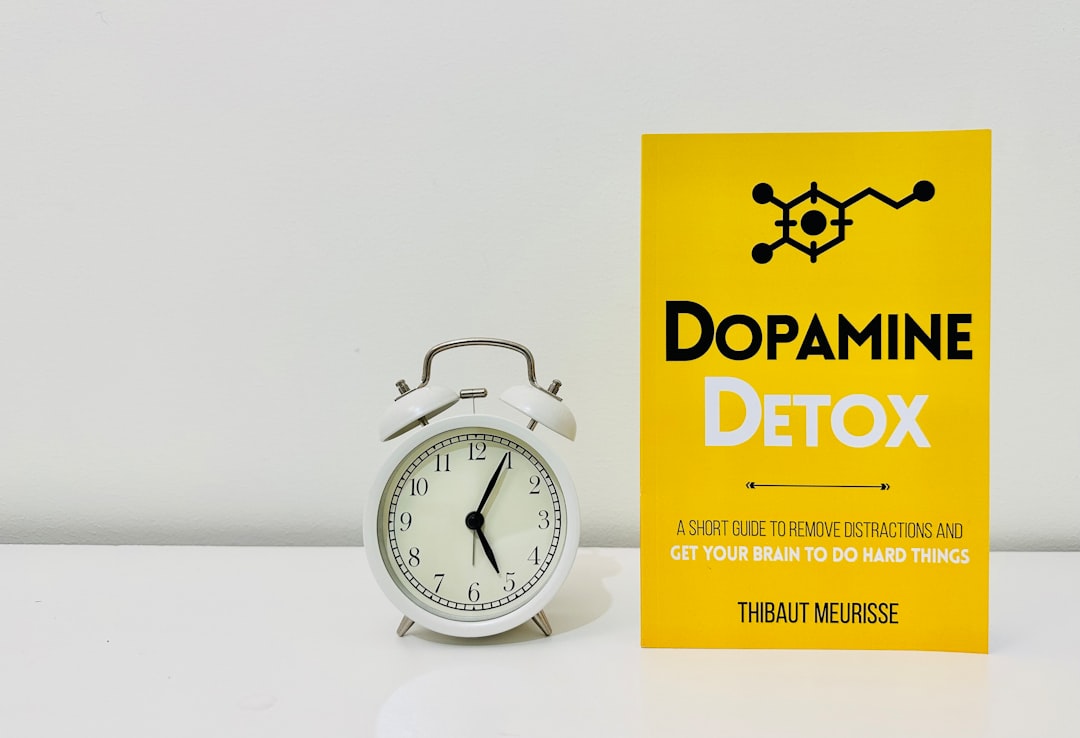
The phrase "dopamine detox" has become one of the most searched self-improvement terms of the last five years. It promises a clean reset of a reward system supposedly hijacked by short-form video, pornography, processed food, gambling apps, and notification spam. The protocol, as it circulates on social platforms, tells you to eliminate pleasurable activities for a period ranging from a single day to ninety days and emerge with restored motivation, sharper focus, and the capacity to enjoy slow pleasures again. The language is the language of addiction medicine, applied to anyone who has felt they cannot put a phone down. It is also, on several technical points, wrong.
Dopamine is not the pleasure chemical. It is not depleted by pleasure and replenished by abstinence. You cannot detox it in the way that you can, say, clear a drug from plasma over a known half-life, because the molecule is synthesized continuously from tyrosine in midbrain neurons and reset on a timescale of milliseconds, not weeks. The actual neuroscience of what dopamine does, what happens to reward circuits under heavy reinforcement schedules, and what behavioral interventions genuinely produce the effects the detox trend promises is more interesting than the viral version and, for people trying to change their habits, more useful.
The honest account is that the underlying concern is real. There is strong evidence that modern reward environments, particularly variable-ratio reinforcement systems in short-form video and social media, produce measurable changes in attention, motivation, and subjective experience. There is also strong evidence that periods of voluntary abstinence from those environments produce measurable improvements. What is wrong is the neurochemical story people tell about why it works. The right story points to different interventions, different timescales, and a more durable outcome than the ninety-day reset culture suggests.
"Dopamine is not about pleasure. It is about the anticipation of a reward and the motivation to pursue it. When we talk about 'dopamine hits' from a phone, we are describing a prediction error signal that tells the brain something unexpected and potentially valuable just happened. That signal was designed to make animals work for food. Now it makes us work for notifications." -- Anna Lembke, Dopamine Nation (2021)
Key Definitions
Dopamine: A neurotransmitter produced mainly in the substantia nigra and ventral tegmental area. Contrary to popular framing, it is not the brain's pleasure chemical. It encodes prediction errors, attaches motivational salience to cues, and drives goal-directed behavior. Pleasure is more closely tied to endogenous opioids and endocannabinoids.
Reward prediction error: The signal dopamine neurons fire when an outcome is better or worse than expected. Wolfram Schultz's landmark primate research in the 1990s established that dopamine neurons fire to unexpected rewards and, once cues reliably predict rewards, to the cues themselves rather than to the outcomes.
| Common Claim | What Research Actually Shows |
|---|---|
| Dopamine is the pleasure chemical | Dopamine encodes motivation and prediction errors; pleasure is mainly mediated by opioids |
| Short-form video depletes dopamine | No measurable depletion occurs; receptor sensitivity and behavioral reinforcement patterns change |
| A 24-hour detox resets the brain | One day has no meaningful impact on D2 receptor density or synaptic structure |
| Abstinence restores baseline in days | Meaningful downregulation reversal in heavy users takes weeks, varies by behavior |
| Avoiding all pleasure is the goal | Research supports selective abstinence from high-variability reinforcement, not pleasure in general |
Variable-ratio reinforcement: The schedule B.F. Skinner identified as producing the most persistent, hardest-to-extinguish behavior. Rewards arrive unpredictably. Slot machines, social feeds, and notification streams use this schedule.
Receptor downregulation: The process by which cells reduce the number of receptors for a neurotransmitter when overstimulated. Chronic high dopamine signaling, observed in stimulant addiction and to a lesser extent in behavioral addictions, is associated with reduced D2 receptor density in striatal regions.
Tolerance: The reduced response to a stimulus after repeated exposure. In behavioral contexts, it manifests as needing more intense or more frequent stimulation to achieve the same subjective effect.
Anhedonia: The reduced capacity to feel pleasure. In clinical populations it is a core symptom of depression. In heavy users of highly stimulating reward environments, a subclinical version is often reported: ordinary pleasures feel muted.
What Dopamine Actually Does
The popular story treats dopamine as a currency the brain spends on pleasure. The correct story is closer to this: dopamine is a teaching signal. When an organism encounters an outcome that is better than expected, dopamine neurons in the ventral tegmental area fire a burst that updates the organism's predictions about the world. Over time, those predictions shift so that the dopamine burst fires to the cues predicting a reward rather than to the reward itself. This is the mechanism by which animals, including humans, learn what to work for.
Wolfram Schultz's recordings from single dopamine neurons in primates, published through the 1990s, established this picture experimentally. A thirsty monkey received juice at random intervals; dopamine neurons fired to the juice. Once a tone reliably predicted the juice, neurons stopped firing to the juice and started firing to the tone. If the tone sounded and the juice did not arrive, neurons showed a brief dip below baseline, a negative prediction error. This temporal difference learning model has become foundational in computational neuroscience and is the mathematical basis of reinforcement learning algorithms in artificial intelligence.
Kent Berridge's work at the University of Michigan complicated the picture further by dissociating wanting from liking. Berridge showed that dopamine manipulations in rats affect how much animals work for rewards (wanting) while leaving largely intact their hedonic reactions to the rewards once obtained (liking). Lesions to dopamine systems produce animals that will not work for food even though their facial reactions indicate they still enjoy food when it is delivered. Pleasure, Berridge argued, is generated mainly by opioid and endocannabinoid systems in specific hedonic hotspots, with dopamine serving the separate function of motivation.
This distinction matters enormously for the detox discussion. When people report that after heavy social media use nothing feels fun anymore, the mechanism is not dopamine depletion. It is more likely that ordinary pleasures fail to generate the magnitude of prediction errors and cue-related signaling that engineered reward environments produce. The phone promises unpredictable novelty at every swipe. A book does not. The contrast shifts the relative motivational pull of activities, which is experienced subjectively as loss of interest in the slower ones.
Where Receptor Changes Come In
Behavioral addictions are on a spectrum with substance addictions, not identical to them. The neuroimaging evidence is mixed but includes several replicated findings worth taking seriously. Nora Volkow and colleagues at the National Institute on Drug Abuse have produced extensive PET imaging evidence that chronic exposure to strong reinforcers, including cocaine and methamphetamine, is associated with reduced striatal D2 dopamine receptor density. Lower D2 density is in turn associated with reduced response to ordinary rewards, a neurobiological correlate of the anhedonia that addicts often report.
Whether comparable receptor changes occur in heavy users of engineered digital reward environments is less clear. Marc Potenza's research at Yale has studied internet gaming disorder and pornography use using functional imaging and found patterns of reward-system activation in these populations that parallel, though at lower magnitudes, the patterns observed in substance addictions. Studies by Kai Yuan and others have reported reduced gray matter density in frontal and striatal regions in populations with diagnosed internet gaming disorder. The evidence supports the framing that behavioral addictions exist as real clinical entities with neural correlates, while remaining more tentative about whether non-clinical heavy use produces the same changes at subclinical magnitudes.
What can be said with more confidence: changes in receptor density, when they occur, are not reversed in twenty-four hours. PET studies of abstinent cocaine users show partial recovery of D2 density over months, not days. Any claim that a weekend of abstinence meaningfully resets receptor populations is not supported by the imaging evidence. What a weekend can do is interrupt a reinforcement pattern, shift attentional habits, and provide contrast that makes ordinary activities more engaging again. This is not detoxification. It is behavioral disinhibition of pursuits that had been crowded out.
Anna Lembke and the Pleasure-Pain Balance
Anna Lembke's Dopamine Nation (2021) popularized a useful framework drawn from research on opponent-process theory and allostasis. The idea, simplified: the brain responds to reward with a compensatory downward adjustment that restores equilibrium. With repeated exposure to strong rewards, the compensation strengthens and becomes the dominant experience when the reward is absent, producing subjective states of dysphoria, restlessness, and craving. Lembke uses the metaphor of a balance with pleasure on one side and pain on the other. After repeated pleasure, the balance tips toward pain in the reward's absence, and ordinary neutral states feel bad until the reward returns.
This framework is not speculative. It is consistent with the opponent-process models developed by Richard Solomon in the 1970s and extended by George Koob and Michel Le Moal in their addiction research. The mechanism involves multiple systems beyond dopamine, including extrahypothalamic CRF and dynorphin signaling that become upregulated in chronic reinforcement and drive the negative affect of withdrawal.
For behavioral patterns like compulsive phone use, the framework predicts that heavy users will experience a worse-than-baseline subjective state when they first stop, before equilibrium restores. This is the well-known first-week difficulty of any abstinence attempt. It also predicts that the restoration of baseline, once it occurs, will produce a return of enjoyment in ordinary activities that had become muted. This is closer to what people actually report from extended abstinence trials than the detox framing suggests.
"The modern world is an unprecedented experiment in dopamine stimulation. We did not evolve to have access to hyper-palatable food, infinite novelty, and variable reward schedules engineered by teams of behavioral scientists. The pain side of the balance has no choice but to grow to match. What people call a reset is really an allowance for that imbalance to return to something closer to neutral." -- Andrew Huberman, Huberman Lab Podcast Episode on Dopamine (2021)
The Screen Time Evidence
The specific question of whether heavy screen use damages well-being has been studied intensively enough to produce a clearer answer than most internet commentary suggests, though the answer is more nuanced than either alarmists or defenders prefer.
Jean Twenge's research has correlated rising smartphone adoption with rising rates of depression, anxiety, and suicide in adolescents, particularly girls, starting around 2012. The correlational evidence is strong for the timing but contested on causation. Critics including Andrew Przybylski at Oxford have argued that the effect sizes, when analyzed in large datasets, are small and comparable to the effects of eating potatoes on adolescent well-being. The Przybylski-Orben analyses find that digital technology use accounts for less than one percent of variance in adolescent well-being measures.
The reconciliation of these positions, supported by more recent work, is that average screen time correlates weakly with outcomes but specific use patterns matter more. Heavy use of social media, particularly image-based platforms, by adolescent girls shows larger effect sizes than general screen time. Passive consumption scales with negative outcomes more strongly than active communication. Use during certain hours, especially late at night, shows larger effects than equivalent use earlier in the day. The heterogeneity of effects across use patterns means that a detox of all screen time may be both unnecessarily restrictive and insufficiently targeted.
Adam Alter's Irresistible (2017) catalogs the design techniques behavioral scientists have contributed to app development: variable rewards, social validation feedback, infinite scroll, autoplay, artificial scarcity, streaks. Each of these patterns exploits well-understood features of human reinforcement learning. The cumulative effect is that typical engagement with modern apps is not a neutral consumption pattern. It is a designed engagement loop.
For someone trying to change their relationship to these environments, the practical implication is that specificity matters more than breadth. Eliminating short-form video, variable-reward apps, and passive scrolling during peak vulnerability windows produces larger changes in subjective experience than generalized screen reduction.
The Cal Newport Digital Declutter
Cal Newport's Digital Minimalism (2019) proposes what is probably the most empirically informed version of the detox protocol, without using that language. Newport advocates a thirty-day digital declutter: complete abstinence from optional technologies, including all social media, most apps, and non-essential internet use. During the declutter, participants deliberately cultivate high-quality leisure activities. At the end of thirty days, they reintroduce technologies one at a time, but only those that serve specific goals they have identified, and only with specific usage rules.
The protocol's success, in Newport's reports from thousands of participants, comes less from the abstinence itself than from what the abstinence forces: the rebuilding of leisure time around activities that do not reinforce on variable-ratio schedules. People who spend a month without scrolling discover they have four hours a day to fill and begin to fill them with reading, physical activity, craft, or conversation. When technology is reintroduced, it competes with genuinely enjoyable alternatives, which reduces its default appeal.
The neuroscience of this account is consistent with the research on reinforcement learning: in the absence of the high-salience stimuli, lower-salience pleasures receive more cognitive allocation and produce stronger prediction errors because they are now the dominant source of variation in reward. The subjective experience is that reading feels absorbing again and a walk without a podcast feels engaging. What has changed is the relative standing of activities in the brain's prediction landscape.
A 30-Day Protocol That Reflects the Research
For readers considering an experiment, the following protocol reflects what the evidence actually supports. It is not a detox. It is a structured reduction in variable-ratio reinforcement combined with deliberate rebuilding of low-stimulation activities.
Week 1: Identify and eliminate variable-reward digital environments entirely. This means short-form video (TikTok, Reels, Shorts, YouTube main feed recommendations), social media feeds, infinite-scroll news, notification-driven communication apps outside work use. Remove apps from phone home screens or delete them. Disable notifications globally except for actual communication from specific people. Expect the first four to seven days to feel uncomfortable, with elevated restlessness and negative affect. This is the allostatic rebalancing predicted by opponent-process theory, not withdrawal from a depleted neurotransmitter.
Week 2: Actively schedule replacement activities. Reading, exercise, time outdoors, cooking, any craft that involves sustained attention. The goal is not to avoid pleasure. It is to replace variable-ratio digital reinforcement with more sustainable, lower-variance activities that still produce engagement. Thirty to sixty minutes of physical activity, especially outdoors, is among the best-supported interventions, producing BDNF release and durable improvements in mood and cognition.
Week 3: Introduce focused single-task work periods. Start with twenty-five-minute blocks of concentrated attention on one task with all distraction sources removed. Increase gradually. The goal is to rebuild the capacity for sustained attention that chronic context switching erodes. Use paper and pen where possible. Use a browser with strict site blocking during work periods.
Week 4: Selectively reintroduce with rules. At the end of thirty days, reintroduce only the digital tools that serve specific purposes you have identified while they were absent. For each one, define the purpose, the time windows, and the maximum duration. A tool without these constraints tends to default back to variable-ratio engagement.
Throughout: Protect sleep. Consistent sleep hours with limited screen exposure in the hour before bed improve the efficacy of every other component. Sleep restriction disrupts reward processing and makes craving resistance measurably harder.
When It Is Not Working and Might Be Something Else
If a month of structured reduction produces no improvement in subjective experience, the framing as habit change is probably wrong and the underlying issue is more likely something clinical. Anhedonia unresponsive to behavioral change is a core symptom of major depression and merits evaluation. ADHD often presents with difficulty sustaining attention that is resistant to environmental reduction alone, though environmental changes still help. Anxiety disorders drive avoidance behaviors that can look like compulsive engagement but require different treatment. The detox framing encourages people to interpret all attentional and motivational difficulties as reward-system dysregulation curable by abstinence. Some of them are not.
The correct response to a failed detox is not more abstinence. It is reconsideration of whether the model fits the problem and, where appropriate, clinical evaluation. Behavioral interventions are powerful but specific; applied to the wrong condition they produce neither benefit nor understanding.
The Studying Angle
For people using abstinence protocols specifically to improve focus for study or work, the most robust finding is that the phone itself is the problem, even when not in use. Adrian Ward and colleagues at the University of Texas, Austin, published the widely cited brain drain study in 2017 showing that the mere presence of a smartphone on a desk, face down and silenced, reduced working memory performance compared to conditions where the phone was in another room. The suppression of the impulse to check consumes cognitive resources.
For study sessions, the intervention that dominates all others is physical separation from the phone, not phone management software or willpower. Students preparing for certifications, bar exams, or other high-stakes tests can lose significant productive capacity to a device they are not even using. See our coverage at pass4-sure.us on study habits and certification exam preparation, and our related coverage at whats-your-iq.com on cognitive recovery and attention training.
What the Evidence Actually Tells Us
The strongest claims of the detox trend, taken literally, are wrong. Dopamine is not depleted. Receptors do not reset in a weekend. You cannot detoxify a neurotransmitter that your brain manufactures continuously. But the underlying intuition, that something has gone wrong in the relationship between engineered reward environments and human cognition, is supported by substantial research across neuroscience, clinical psychology, and human-computer interaction. The interventions that work target reinforcement patterns, not neurochemistry. The effects accrue over weeks and are measurable. The animal research on addiction and reward is relevant context; Berridge's rats, Volkow's imaging, and Schultz's recordings all translate to the human case with appropriate caution. Our sibling piece at strangeanimals.info discusses comparative reward systems and animal models of addiction research.
The people who report benefit from dopamine detox protocols are reporting a real phenomenon, mislabeled. They are experiencing the return of motivation and enjoyment in ordinary activities that had been displaced by high-intensity alternatives. The right way to produce that outcome durably is not a ninety-day reset followed by a return to old patterns. It is structural change in the design of daily reward exposure.
Practical Implications
For individual use: Treat this as reinforcement schedule change, not detox. Specificity matters more than total abstinence. Remove variable-ratio reinforcement sources. Replace with sustained-attention activities. Expect two to four weeks for subjective improvement to stabilize.
For parents: The evidence does not support catastrophizing all screen time. It does support specific concern about variable-reward short-form video and social media use by adolescents, particularly girls, particularly at night. Structural household rules work better than moment-by-moment negotiation.
For people in recovery from substance use: Behavioral reinforcement patterns, including digital ones, interact with substance craving through shared reward circuitry. The abstinence framework applies more cleanly here and is worth discussing with a treating clinician.
See also: Are Human Attention Spans Really Shrinking? | Why Social Comparison Makes Us Miserable | Behavioral Economics Explained
For tools that support focused work, the timestamp converter at file-converter-free.com is useful for scheduling device-free work blocks across time zones.
References
- Schultz, W., Dayan, P., & Montague, P. R. (1997). "A Neural Substrate of Prediction and Reward." Science, 275(5306), 1593-1599. https://doi.org/10.1126/science.275.5306.1593
- Berridge, K. C., & Robinson, T. E. (1998). "What Is the Role of Dopamine in Reward: Hedonic Impact, Reward Learning, or Incentive Salience?" Brain Research Reviews, 28(3), 309-369. https://doi.org/10.1016/S0165-0173(98)00019-8
- Volkow, N. D., Wang, G. J., Fowler, J. S., & Tomasi, D. (2012). "Addiction Circuitry in the Human Brain." Annual Review of Pharmacology and Toxicology, 52, 321-336. https://doi.org/10.1146/annurev-pharmtox-010611-134625
- Koob, G. F., & Le Moal, M. (2001). "Drug Addiction, Dysregulation of Reward, and Allostasis." Neuropsychopharmacology, 24(2), 97-129. https://doi.org/10.1016/S0893-133X(00)00195-0
- Lembke, A. (2021). Dopamine Nation: Finding Balance in the Age of Indulgence. Dutton.
- Ward, A. F., Duke, K., Gneezy, A., & Bos, M. W. (2017). "Brain Drain: The Mere Presence of One's Own Smartphone Reduces Available Cognitive Capacity." Journal of the Association for Consumer Research, 2(2), 140-154. https://doi.org/10.1086/691462
- Orben, A., & Przybylski, A. K. (2019). "The Association Between Adolescent Well-Being and Digital Technology Use." Nature Human Behaviour, 3(2), 173-182. https://doi.org/10.1038/s41562-018-0506-1
- Newport, C. (2019). Digital Minimalism: Choosing a Focused Life in a Noisy World. Portfolio.
- Twenge, J. M., & Campbell, W. K. (2018). "Associations Between Screen Time and Lower Psychological Well-Being." Preventive Medicine Reports, 12, 271-283. https://doi.org/10.1016/j.pmedr.2018.10.003
- Potenza, M. N. (2014). "Non-Substance Addictive Behaviors in the Context of DSM-5." Addictive Behaviors, 39(1), 1-2. https://doi.org/10.1016/j.addbeh.2013.09.004