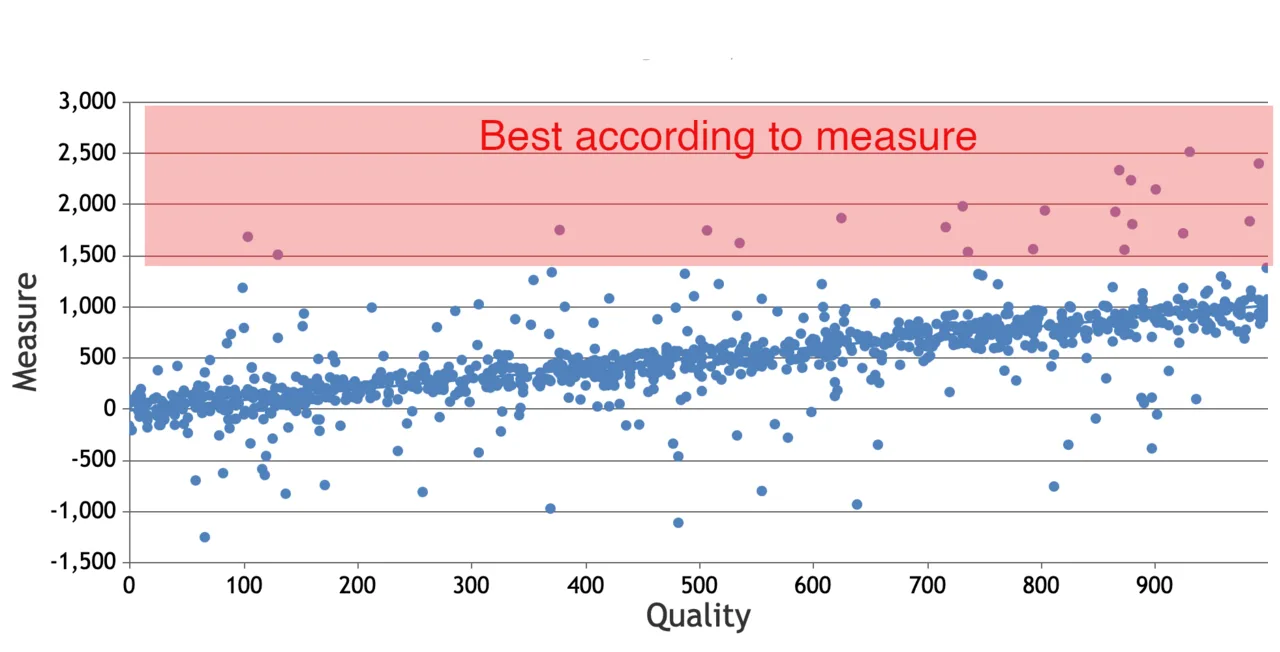
principles-laws
Goodhart's Law: When a Measure Becomes a Target
Goodhart's Law explained through its origin in monetary policy, Strathern's famous phrasing, the four flavors of Goodhart, surrogation, reward hacking, and how to defend against it.
Explore fundamental concepts, mental models, and frameworks for clear thinking. From first principles to systems thinking, learn the ideas that shape how we understand the world.
Concepts are the building blocks of clear thinking. They're the fundamental ideas, frameworks, and principles that help us make sense of complexity, recognize patterns across domains, and make better decisions. From mental models to cognitive biases, from first principles thinking to systems theory—each concept offers a lens for understanding reality more accurately.
This collection explores core concepts from multiple disciplines: psychology, economics, philosophy, cognitive science, and decision theory. The goal isn't memorization—it's internalization. When you truly understand a concept, it changes how you see everything.
What you'll find: Deepdive explanations of thinking frameworks, practical applications for realworld problems, connections between related concepts, and insights from research and expert practitioners.
How ideas spread, how language shapes thought, and how to communicate clearly
15 guidesFrameworks, mental models, and principles for making better choices under uncertainty and pressure
74 guidesClear, precise definitions of key terms, concepts, and frameworks used across knowledge domains
12 guidesMoral reasoning, institutional accountability, and the principles of responsible decision-making
34 guidesMental models, thinking frameworks, and structured approaches to problems
27 guidesHow people learn, retain information, and develop deep expertise over time — the science of knowledge
26 guidesFrameworks and ways of thinking that help structure understanding
4 guidesWhat to measure, how to design measurement systems, and how to interpret data without misleading yourself
10 guidesPhilosophical questions, ethical reasoning, and moral frameworks
0 guidesFundamental truths and rules that recur across science, business, and life — from Pareto to Goodhart and beyond
28 guidesMind, behavior, and the underlying science of how people think and feel
0 guidesHow minds work, why people behave as they do, cognitive biases, and the science of human behavior
278 guidesUnderstanding interconnected systems, feedback loops, and emergent behavior
26 guidesGoodhart's Law explained through its origin in monetary policy, Strathern's famous phrasing, the four flavors of Goodhart, surrogation, reward hacking, and how to defend against it.

The spacing effect explained through Ebbinghaus's original work, the Cepeda meta-analysis, and Bjork's desirable difficulties, with a practical guide to spaced study.

An evidence map of well-known cognitive biases rated by how well they replicate - separating robust findings (anchoring, framing, confirmation bias) from contested ones (ego depletion, social priming).

A sourced evidence map of core learning-science findings: each technique rated by evidence strength and effect type, with every claim linked to a named peer-reviewed study.

A practical guide to decision-making under uncertainty: the core cognitive biases, probabilistic thinking, premortems, a decision journal template, and a bias checklist you can apply immediately.

Imposter syndrome explained through Pauline Clance's original research, Valerie Young's five archetypes, and neuroscience of the Dunning-Kruger...
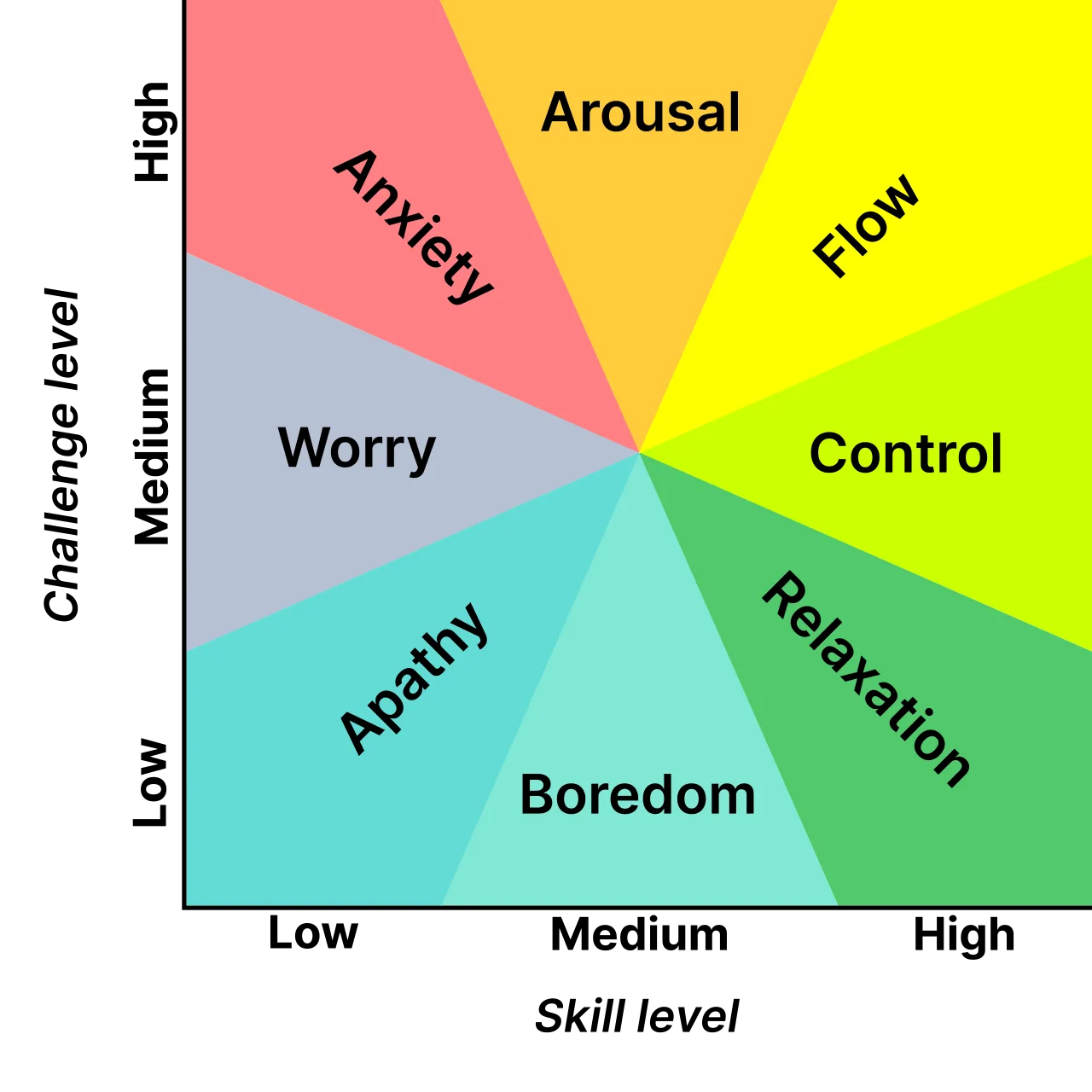
Flow state explained through Mihaly Csikszentmihalyi's research, the nine conditions that produce it, and what Arne Dietrich and Steven Kotler...

A thorough guide to utilitarianism: Bentham's hedonic calculus, Mill's higher pleasures, act vs rule utilitarianism, Singer's preference...

Measurement bias: Systematic error in data collection distorting results consistently (not random noise—predictable direction).
The testing effect is one of the most robust findings in learning science: retrieval practice produces better long-term retention than repeated...
Mental models are frameworks for understanding how things work in the world. They're simplified representations of reality that help you predict outcomes, make decisions, and solve problems. Charlie Munger's 'latticework of mental models' approach suggests that learning fundamental concepts from multiple disciplines—physics, biology, psychology, economics—gives you a toolkit for better thinking across all domains.
First principles thinking is the practice of breaking down complex problems into their most basic, foundational truths, then reasoning up from there. Instead of reasoning by analogy (doing things because that's how they've always been done), you question every assumption and rebuild from fundamental facts. Elon Musk popularized this approach in business, but it originates with Aristotle's philosophical method.
Systems thinking is the ability to see interconnections, feedback loops, delays, and leverage points in complex systems rather than isolated events and linear causeeffect relationships. It's important because most realworld problems exist within systems where changing one part affects the whole. Systems thinking helps you avoid unintended consequences and identify highleverage interventions.
Secondorder thinking means considering the consequences of consequences—thinking beyond the immediate effects of a decision to what happens next, and after that. Firstorder thinking asks 'What happens if I do this?' Secondorder thinking asks 'And then what? And what happens after that?' This deeper analysis reveals unintended consequences that firstorder thinkers miss.
Probabilistic thinking is reasoning with likelihoods and distributions rather than absolutes and certainties. Instead of asking 'Will this happen?' you ask 'How likely is this? What are the odds?' This approach acknowledges uncertainty and helps you make better decisions under conditions where perfect information doesn't exist. It's essential for risk assessment, forecasting, and strategic planning.
Apply mental models by: 1) Deeply understanding the core principle behind each model, 2) Recognizing patterns in real situations where the model applies, 3) Practicing deliberate application across different contexts, 4) Seeking feedback to refine your understanding, and 5) Building connections between related models. The goal is internalization—making the models second nature rather than memorized frameworks.
Inversion thinking (or inversion) means approaching problems backward—instead of asking 'How do I succeed?' ask 'How would I guarantee failure?' Then avoid those failure modes. This mental model, favored by Charlie Munger, helps you spot risks and obstacles you'd otherwise miss. It's especially useful for risk management, strategy, and avoiding common mistakes.
Ready to apply what you've learned? Challenge yourself with interactive questions covering all concepts sub-topics. Choose between practice mode (10 questions with instant feedback) or test mode (20 questions with comprehensive results).