
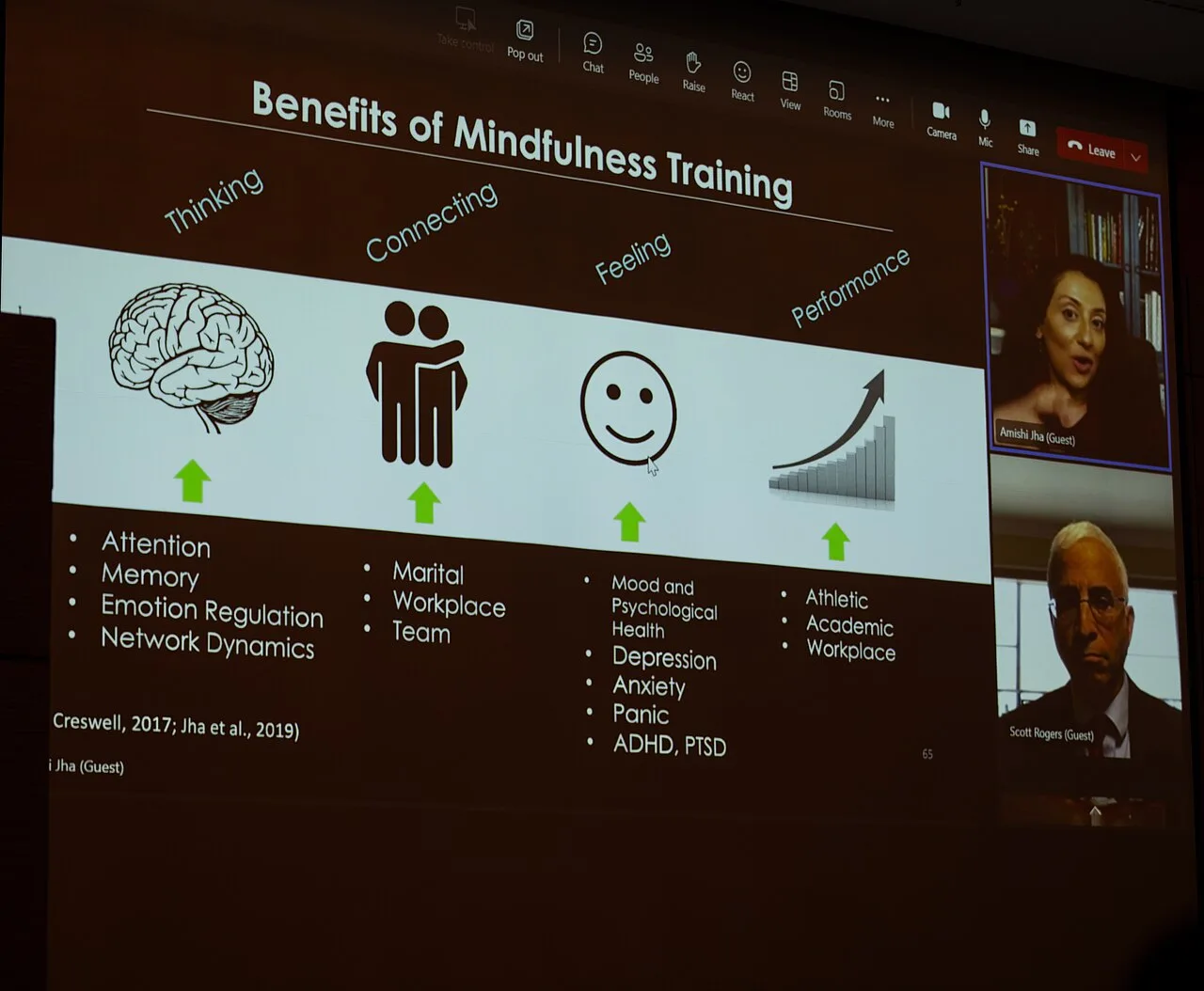
Mindfulness has traveled a remarkable distance in the past four decades. From Buddhist meditation practices that date back 2,500 years, it was adapted into a secular clinical intervention in 1979, adopted by medical centers and corporate wellness programs throughout the 1990s and 2000s, and by the 2010s was appearing in hospitals, schools, prisons, sports teams, military units, and the offices of major technology companies.
The global mindfulness market - apps, courses, corporate programs, retreats - was estimated at over $2 billion annually by the early 2020s.
With that level of cultural saturation and commercial investment came inevitable complications: overstated claims, inadequate research, and a gap between what the evidence shows and what the wellness industry promises.
This guide examines what mindfulness actually is, what the research has found with appropriate qualification, what the evidence does not support, and what a practical starting point looks like.
What Mindfulness Actually Is
Mindfulness has both a practice component and a quality of mind it cultivates. As a quality, mindfulness is intentional, present-moment awareness - paying attention to what is happening right now (internally and externally) with a non-judgmental, accepting attitude rather than automatically reacting to, evaluating, or suppressing experience.
The opposite of mindful awareness is the mind's default state: mind-wandering, or automatic pilot.
Research by Killingsworth and Gilbert (2010), using an experience-sampling method with a smartphone app that randomly prompted 2,250 adults during daily activities, found that the human mind wanders from what it is doing approximately 47% of waking hours.
Moreover, mind-wandering predicted reduced happiness independent of the activity being performed - people were less happy when their minds wandered than when they were present, regardless of whether the activity itself was pleasant.
Killingsworth and Gilbert's headline finding - "a wandering mind is an unhappy mind" - should be interpreted carefully. The correlation between mind-wandering and unhappiness does not establish direction of causation; unhappy people may wander more, rather than wandering causing unhappiness.
But the magnitude of the effect was striking: the authors estimated that mind-wandering accounted for more variance in momentary happiness than the activity itself.
The type of activity (working vs. resting vs. socializing) mattered less to happiness than whether the mind was present during it.
Mindfulness practice is the deliberate exercise of directing attention to the present moment, and when attention wanders (which it always will), noticing the wandering and returning attention without self-criticism.
The act of noticing the wandering and returning attention is itself the practice - the number of times attention is redirected is not a failure but the actual training mechanism.
Jon Kabat-Zinn and the Secularization of Mindfulness
The person most responsible for bringing mindfulness to Western clinical and scientific attention is Jon Kabat-Zinn, a molecular biologist and long-term meditator who in 1979 founded the Stress Reduction Clinic at the University of Massachusetts Medical School.
His innovation was stripping mindfulness of its Buddhist religious context and presenting it as a clinical intervention for patients with chronic pain and stress-related conditions.
His program, Mindfulness-Based Stress Reduction (MBSR), runs over eight weeks in a group format. Participants learn several formal meditation practices:
- Body scan meditation: Systematically moving attention through different regions of the body, observing sensations without trying to change them
- Mindful movement: Gentle yoga and walking meditation that applies present-moment attention to physical experience
- Sitting meditation: Focusing sustained attention on the breath, sounds, thoughts, and body sensations
- Informal practice: Bringing mindful attention to routine daily activities - eating, walking, conversations
MBSR was initially designed for patients dealing with chronic pain, stress, and illness. Kabat-Zinn's early published results were promising, and the program spread to medical centers, corporate wellness programs, and general population applications.
"Mindfulness means paying attention in a particular way: on purpose, in the present moment, and nonjudgmentally. This kind of attention nurtures greater awareness, clarity, and acceptance of present-moment reality." - Jon Kabat-Zinn
Kabat-Zinn's 1990 book Full Catastrophe Living brought MBSR to a general audience, and its title - drawn from Zorba the Greek's embrace of life's full complexity - captured something important about the orientation mindfulness cultivates: not the elimination of difficulty, but a different relationship to it.
The Roots in Buddhist Practice
Understanding where mindfulness came from matters for evaluating the secular version. The Pali word typically translated as "mindfulness" is sati, which in its Buddhist context carries meanings of awareness, attention, and memory of what has been learned.
It is one component of the Noble Eightfold Path, embedded in an ethical framework that includes right action, right livelihood, and right intention.
In the Theravada tradition, mindfulness is practiced as part of vipassana (insight meditation) aimed ultimately at perceiving the three characteristics of existence - impermanence, unsatisfactoriness, and non-self - and thereby reducing suffering.
In the Zen tradition, meditation (zazen) is practiced as an end in itself, not as a technique toward psychological health outcomes.
Kabat-Zinn deliberately extracted the attentional training component of these practices while leaving aside the soteriological framework. This extraction has been criticized by Buddhist scholars - most notably by Ronald Purser in McMindfulness - as distorting the original purpose.
The defenders of secular mindfulness argue that the attentional training is genuinely separable from the religious framework, and that cross-cultural evidence (secular versions of mindfulness showing measurable effects in randomized trials) validates the extraction.
Both positions have merit, and the debate has produced genuinely useful distinctions between mindfulness-as-technique and mindfulness-as-ethical-orientation.
What the Research Shows: Reading Meta-Analyses Carefully
The research literature on mindfulness is extensive - thousands of published studies - but must be read carefully because study quality varies enormously and effect sizes matter as much as statistical significance.
The Goyal et al. (2014) Meta-Analysis
The most comprehensive and rigorously conducted review is a 2014 meta-analysis in JAMA Internal Medicine by Madhav Goyal and colleagues, which analyzed 47 randomized controlled trials covering 3,515 participants. This review is considered the most credible summary of mindfulness evidence to date.
Key findings:
- Moderate evidence for improvement in anxiety, depression, and pain in clinical populations
- Low evidence for improvement in stress and mental health quality of life
- No evidence found for benefit in attention, positive mood, substance use, eating habits, sleep, or weight
- Effect sizes were comparable to those found for antidepressants in treating mild to moderate depression - clinically meaningful but not dramatic
The authors emphasized: "We found no evidence that meditation programs were better than any active treatment... Active treatments such as exercise, CBT, or antidepressants generally produced similar improvement."
This last point is critical for calibrating expectations. Mindfulness is not more effective than other treatments for anxiety and depression; it is approximately comparable. This is meaningful given that it is non-pharmacological, relatively low-cost, and free of medication side effects.
But it does not support the cultural narrative that mindfulness is uniquely or supremely effective.
Mindfulness-Based Cognitive Therapy (MBCT)
The most robust clinical application is Mindfulness-Based Cognitive Therapy, which combines MBSR with elements of cognitive-behavioral therapy and was specifically developed to prevent relapse in recurrent depression.
Three large randomized controlled trials have found that MBCT reduces the risk of depression relapse by roughly 43-50% in patients with three or more previous depressive episodes.
The UK's National Institute for Health and Care Excellence (NICE) recommends MBCT as a treatment for recurrent depression, one of the few mindfulness interventions with this level of clinical endorsement.
Kuyken et al. (2015) published a particularly significant trial in The Lancet, comparing MBCT plus support to maintenance antidepressants alone in 424 patients with recurrent depression.
The two conditions produced equivalent outcomes over a 24-month period - MBCT was non-inferior to continued antidepressant treatment for preventing relapse.
Crucially, both were superior to no treatment. The finding supports MBCT as a legitimate treatment option rather than merely an adjunct, and is particularly important for patients who prefer not to take medication long-term.
The mechanisms by which MBCT prevents relapse have been studied by Segal, Williams, and Teasdale, the program's developers. Their theoretical model holds that recurrent depression is maintained by a pattern called depressive rumination - repetitive, negative, self-focused thinking that activates in response to mild negative mood.
MBCT teaches patients to recognize this pattern as a mental event (a thought, not a fact) and to disengage from it rather than being absorbed.
This specific mechanism - changing the relationship to negative thoughts rather than changing the content of thoughts - distinguishes MBCT from traditional CBT.
Neuroimaging Research: Interesting but Preliminary
Structural MRI studies comparing long-term meditators to non-meditators have found differences in brain regions associated with attention, interoception, and emotional regulation.
Sara Lazar's research at Harvard found that experienced meditators had greater cortical thickness in the insula and prefrontal cortex, with thickness correlating with years of practice.
Functional MRI studies have found that mindfulness training reduces activity in the default mode network - the brain network active during mind-wandering and self-referential thinking - and strengthens connections between the prefrontal cortex (associated with executive control) and the amygdala (associated with emotional reactivity).
Hölzel et al. (2011) published a widely cited study in Psychiatry Research examining brain changes after MBSR in 16 participants compared to 17 waitlist controls.
After eight weeks of MBSR, participants showed increased grey matter density in the left hippocampus, posterior cingulate cortex, and cerebellum - regions involved in learning, self-referential processing, and behavioral regulation.
The amygdala showed decreased grey matter density, consistent with reduced reactivity.
However, these findings carry important caveats:
- Most neuroimaging studies use small samples (often 20-40 participants)
- Most lack randomized designs, meaning they compare pre-existing meditators to non-meditators rather than randomly assigning people to meditate
- Selection effects are substantial: people drawn to long-term meditation practice may have brain characteristics that predate their practice
- Publication bias means positive findings are more likely to appear in journals
The neuroimaging literature is suggestive and scientifically interesting, but it does not yet establish that mindfulness meditation causes the brain changes observed in long-term practitioners.
Types of Meditation: Not All Practice Is the Same
The term "mindfulness" encompasses a variety of distinct practices with potentially different mechanisms and effects.
| Practice Type | Focus | Primary Mechanism |
|---|---|---|
| Focused attention (FA) | Sustained focus on single object (breath) | Trains attentional stability and noticing mind-wandering |
| Open monitoring (OM) | Open, non-reactive awareness of all experience | Trains metacognitive awareness and equanimity |
| Loving-kindness (Metta) | Cultivating compassion for self and others | Associated with positive affect and prosocial behavior |
| Body scan | Sequential attention to bodily sensations | Develops interoceptive awareness |
| Mindful movement | Present-moment attention during yoga/walking | Integrates awareness with physical practice |
Research by Antoine Lutz and colleagues has found that focused attention and open monitoring practices produce different EEG signatures in experienced practitioners, suggesting they engage different neural mechanisms.
The clinical research is primarily on MBSR, which incorporates multiple practice types - it is therefore difficult to attribute effects to specific components.
How Much Practice Is Needed?
One of the most practically relevant questions the research has attempted to answer is the dose-response relationship: how much mindfulness practice produces how much benefit?
The evidence on this is mixed and context-dependent. Some studies find benefits from as little as four days of brief practice (10 minutes per day), particularly for acute stress and attentional tasks. Others find that more practice produces more stable and durable changes, particularly for clinical outcomes like depression and anxiety.
A meta-analysis by Visted et al. (2014) examined the relationship between practice amount and outcomes in 27 studies and found a modest but statistically significant correlation (r = 0.26) between total hours of formal practice and improvements in well-being.
The relationship was stronger for experienced practitioners than novices, suggesting that benefits compound with sustained engagement rather than following a simple linear dose-response curve.
The practical implication: five minutes per day consistently is better than one hour per week intermittently. Regularity appears to matter more than session length, at least during initial practice development.
Limitations, Criticisms, and Adverse Effects
The McMindfulness Critique
Cultural critics, most prominently Buddhist scholar Ronald Purser in his book McMindfulness (2019), argue that Western corporate mindfulness has been extracted from its ethical and social context.
Buddhist mindfulness practice was embedded in ethical commitments to non-harm, generosity, and social justice - conditions designed to change how one lives, not just how one copes.
Corporate mindfulness, critics argue, individualizes what are structural problems: offering stressed workers meditation apps while leaving the organizational conditions causing the stress unchanged.
It can function as what Purser calls "a social anesthetic" - making people more tolerant of conditions that should be changed.
This critique has empirical grounding. A 2019 study by Malinowski and Lim found that brief mindfulness exercises in a work context sometimes reduced motivation for social action by increasing acceptance of current circumstances.
Whether this is a design flaw (practitioners not being taught the ethical orientation that originally accompanied mindfulness) or an inevitable consequence of extracting the technique from its context is an open question.
The critique does not argue that mindfulness is harmful or that individual practice is worthless.
It argues that the cultural framing - "stress is a personal problem requiring a personal solution" - is ideologically convenient for organizations that would prefer employees manage their stress individually rather than collectively address workload, autonomy, and structural inequality.
Adverse Effects
Perhaps the most underreported aspect of mindfulness research is evidence of adverse effects in a minority of practitioners. Willoughby Britton, a neuroscientist at Brown University, has documented a range of challenging experiences that can arise during intensive practice:
- Increased anxiety or panic
- Depersonalization and derealization (feeling detached from oneself or one's environment)
- Emotional instability and resurfacing of traumatic memories
- Disruptions to sleep and appetite
- In rare cases, psychosis-like experiences
Britton's project, called Cheetah House and centered at Brown University, has collected detailed accounts from hundreds of practitioners who experienced adverse effects serious enough to impair daily functioning.
Her 2020 paper in Psychological Medicine, with co-authors including over 30 researchers from multiple countries, identified 59 distinct types of practice-related adverse events in a systematic review, affecting a minority but non-negligible proportion of meditators.
A systematic review by Goldberg et al. found adverse event rates in clinical mindfulness trials were underreported and inconsistently measured, making the true incidence difficult to establish.
Adverse effects appear more common in intensive retreat contexts (silent multi-day retreats) than in short daily practice programs, and are more likely in people with trauma histories or psychosis vulnerability.
This does not mean mindfulness is dangerous for most people. It does mean that the "mindfulness is always beneficial" framing is inaccurate, that people with mental health vulnerabilities should approach intensive practice with appropriate guidance, and that teachers of mindfulness should be trained to recognize and respond to adverse experiences.
Replication Issues
Some specific claims in the mindfulness research literature have not replicated. Studies claiming that brief mindfulness training improves attention, reduces implicit bias, or enhances decision-making under uncertainty have been difficult to replicate when conducted with larger, pre-registered designs.
The field has benefited from the broader open science movement pushing for pre-registration, larger samples, and more rigorous methodology, but many earlier published studies used small samples and flexible analysis.
Van Dam et al. (2018), in a comprehensive critical review titled "Mind the Hype" published in Perspectives on Psychological Science, identified numerous methodological limitations in the mindfulness research literature, including inadequate controls, non-blind outcome assessment, publication bias, weak operationalization of "mindfulness" as both a practice and a measured trait, and conflation of different meditation practices under a single umbrella term.
They called for substantially more rigorous research before conclusions are drawn about specific benefits in non-clinical populations.
Their critique was not a rejection of mindfulness as a clinical tool - the MBCT evidence for depression relapse prevention survived their scrutiny - but a warning against extrapolating from specific, well-studied clinical applications to sweeping general wellness claims.
The Workplace Mindfulness Industry
Between 2012 and 2019, workplace mindfulness programs grew from a niche offering to a mainstream employee benefit at Fortune 500 companies. Google's "Search Inside Yourself" program, Aetna's mindfulness initiative, and programs at General Mills, Procter & Gamble, and Intel became widely publicized case studies.
Aetna's program, which offered mindfulness classes to its 50,000 employees, received particular attention when then-CEO Mark Bertolini reported in 2015 that participants showed productivity gains of approximately $2,000 per employee per year and annual healthcare cost savings of $2,000 per employee per year.
These figures were widely cited in business media.
The methodological quality of these corporate case studies is generally low. Most lack control groups, have high self-selection bias (employees who choose to participate in mindfulness programs likely differ systematically from those who do not), and rely on self-reported outcomes.
The Aetna estimates, for instance, were based on models extrapolating from self-reported stress reduction and absenteeism changes, not direct experimental evidence.
More rigorous studies of workplace mindfulness produce more modest findings. A 2018 meta-analysis by Lomas et al. examining 35 studies of mindfulness in the workplace found small to moderate improvements in stress, burnout, and psychological well-being.
The effects were real but considerably smaller than corporate case studies implied, and the review noted high heterogeneity across studies - meaning results varied substantially by context, program length, and population.
What the Evidence Supports: A Calibrated Summary
| Application | Evidence Quality | Notes |
|---|---|---|
| Reducing anxiety symptoms (clinical) | Moderate-strong | Consistent across multiple meta-analyses |
| Reducing depression symptoms (clinical) | Moderate | Comparable to other active treatments |
| MBCT for depression relapse prevention | Strong | NICE-endorsed, three large RCTs |
| Chronic pain management | Moderate | Targets pain experience, not underlying pathology |
| Stress reduction in general populations | Moderate | Effect sizes modest in non-clinical groups |
| Cognitive performance enhancement | Weak-inconclusive | Replication failures in controlled studies |
| General wellness and happiness | Inconclusive | Positive findings but poor-quality studies |
| Performance in sports/business | Largely anecdotal | Limited rigorous evidence despite widespread claims |
| PTSD treatment | Emerging | Preliminary evidence, needs more controlled trials |
| Addiction and substance use | Mixed | Some promising findings in smoking cessation |
A Practical Starting Point
For someone with no background in meditation, the most evidence-supported approach is a consistent daily practice of modest duration rather than occasional long sessions.
For a beginner (weeks 1-4):
- Choose a consistent time: typically morning before daily demands intrude
- Start with 5-10 minutes of breath-focused attention
- Sit comfortably with back relatively upright; close your eyes or soften your gaze
- Direct attention to the physical sensations of breathing - the rise and fall of the chest or abdomen, the sensation of air at the nostrils
- When attention wanders (it will, repeatedly, from the first breath), simply notice that it has wandered and return attention to the breath - without judgment, without frustration, as many times as necessary
- End after the set time
The noticing and returning is the practice. A session with many mind-wanderings and many returns is not a failed session - it is a session with many repetitions of the core exercise.
Building to weeks 5-8: Gradually extend to 15-20 minutes. Begin experimenting with open monitoring: rather than focusing exclusively on the breath, allow attention to rest lightly on whatever arises - sounds, sensations, thoughts, emotions - observing without being captured by any single object.
When absorbed in a thought or sensation, return to a broader, open awareness.
Structured programs: The MBSR program, available through the Center for Mindfulness at UMass Medical School and many hospitals worldwide, offers the most rigorously studied structured introduction. Secular versions are available online. Apps including Headspace, Calm, and Waking Up provide guided programs for beginners.
Signs that professional guidance may be needed: If practice consistently increases anxiety, produces feelings of depersonalization, or surfaces overwhelming emotional material, working with a trauma-informed mindfulness teacher or therapist is advisable.
Matching Practice to Need
Research findings suggest that different applications of mindfulness work better for different goals:
For depression relapse prevention, the evidence supports MBCT specifically - the combination of mindfulness with cognitive elements targeting rumination - rather than mindfulness-only approaches.
For chronic pain, the body scan and mindful movement components of MBSR appear particularly relevant, as they develop a different, less reactive relationship to physical sensation.
For generalized anxiety, focused attention practice (breath-focused sitting) shows the most consistent evidence for reducing arousal and increasing equanimity.
For workplace stress and burnout, brief daily practice (10-15 minutes) appears more sustainable than intensive programs, and the evidence for benefit in these populations, while moderate, is more consistent than for performance enhancement claims.
Mindfulness is neither the panacea that its most enthusiastic proponents claim nor the fad its critics dismiss.
It is a set of practices with genuine clinical applications, meaningful effects for people dealing with anxiety, depression, and stress, and an honest evidence base that, when read carefully, shows moderate benefits in some contexts and limited or unclear benefits in others.
That honest picture is sufficient justification for trying a daily practice - while remaining skeptical of any claim that it will transform everything.
The practice asks for something genuinely countercultural: sustained, non-instrumental attention to what is happening right now, without trying to make it different.
In a world structured around distraction, productivity, and constant optimization, that simple orientation - sitting still, noticing, returning - is both harder and more valuable than the wellness industry makes it sound.