
What Is Impostor Syndrome?
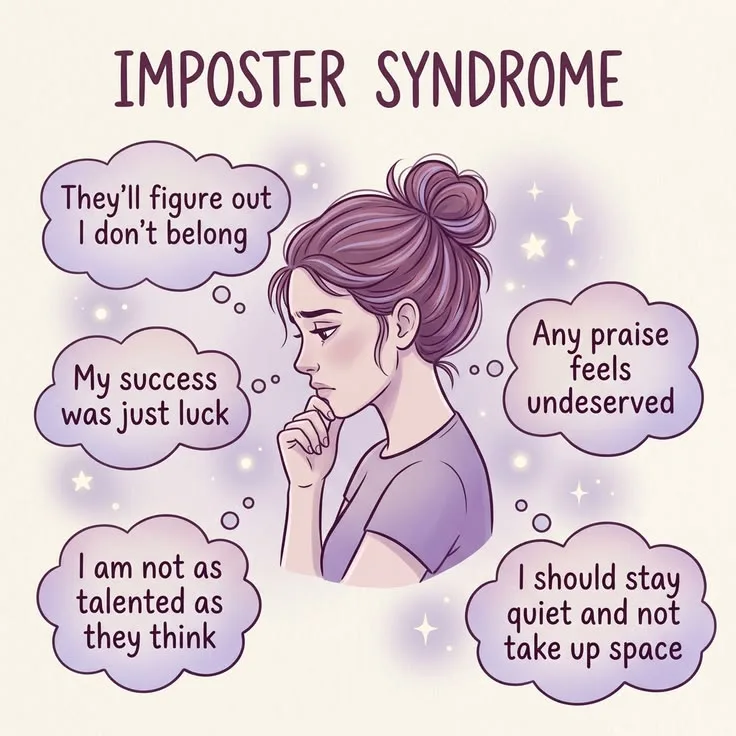
Impostor syndrome - originally termed the "impostor phenomenon" by psychologists Pauline Clance and Suzanne Imes in 1978 - is a persistent internal experience in which high-achieving individuals believe their success is undeserved and fear being exposed as fraudulent, despite objective evidence of their competence.
It is not a clinical disorder but a recognizable pattern of attribution and self-evaluation in which success is credited to luck, timing, or deception rather than ability.
Researchers estimate that roughly 70 percent of the general population experiences impostor feelings at some point in their lives, making it one of the most widespread psychological phenomena in achievement contexts.
In 1978, psychologists Pauline Clance and Suzanne Imes at Georgia State University published a paper that named something millions of people had been living with in silence.
Based on clinical observations of 150 high-achieving women - graduate students, faculty, and professionals who had accumulated substantial evidence of their own competence - Clance and Imes described a pattern they called the "impostor phenomenon": a persistent internal experience of intellectual fraudulence in people whose external achievements were objectively impressive.[1]
The women they studied were not failing. They were succeeding by every measurable standard. But internally, they were waiting to be found out.
The term migrated quickly from the psychological literature into public discourse, and for good reason. It named something real.
The author Neil Gaiman described it precisely in a widely circulated account: attending a gathering of accomplished people and feeling out of place, then speaking with Neil Armstrong, who admitted to the same feeling.
"I was just going to tell him that he had made it to the moon," Gaiman wrote, "and I looked up and he was talking to Buzz Aldrin." The impostor phenomenon is not the exclusive property of the insecure or the genuinely incompetent. It is, research consistently finds, most common among the highly competent.
By 2011, researchers Jaruwan Sakulku and James Alexander, reviewing the accumulated literature, estimated that approximately 70% of the general population experiences impostor feelings at some point in their lives.[4]
The phenomenon has been documented across domains - academia, medicine, law, creative work, technology, athletics - and across cultures. Yet despite its prevalence and psychological significance, impostor syndrome does not appear in the DSM-5.
It is not a mental disorder. It is an experience: a specific pattern of attribution, self-evaluation, and emotional response that can be understood, examined, and changed.
"The first problem for all of us, men and women, is not to learn, but to unlearn. The tendency to attribute our successes to luck and our failures to ourselves is the great cognitive trap of achievement."
- Gloria Steinem
Key Definitions
Impostor phenomenon: The original term coined by Clance and Imes (1978) for the experience of believing one's success is undeserved and fearing eventual exposure as incompetent, despite objective evidence of achievement.
Clance Impostor Phenomenon Scale (CIPS): A 20-item self-report measure developed by Pauline Clance in 1985 to assess the intensity of impostor experiences.[2] It remains one of the most widely used research instruments in this area.
| Impostor Syndrome Pattern | Behavior | Cognitive Distortion |
|---|---|---|
| The Perfectionist | Sets impossibly high standards; feels fraudulent when falling short | Success is only valid if perfect |
| The Superhero | Works harder than others to compensate for perceived inadequacy | Must outwork everyone to prove worth |
| The Expert | Avoids applying for roles unless they meet 100% of criteria | Real experts know everything |
| The Natural Genius | Struggles when mastery does not come quickly | Ability means no effort required |
| The Soloist | Refuses help to avoid exposing weakness | Asking for help confirms incompetence |
Attribution theory: The study of how people explain the causes of events and behaviors. Impostor syndrome is fundamentally an attribution problem: sufferers systematically attribute their successes to external factors (luck, timing, others' mistakes, deceiving people) and their failures to internal factors (lack of ability).
Self-handicapping: A strategy, identified by Steven Berglas and Edward Jones (1978) in the same year as the Clance-Imes paper, in which people create obstacles for themselves before performance situations.
It protects self-image by providing an excuse for failure, but it also limits performance and reinforces the belief that success without the handicap would not be possible.
Dunning-Kruger effect: The finding by David Dunning and Justin Kruger (1999) that people with limited competence in a domain tend to overestimate their ability, while highly competent people tend to underestimate theirs.[7]
This is the cognitive mechanism most directly inverse to impostor syndrome - which may in part explain why it concentrates among the genuinely capable.
Origins: The 1978 Paper and What It Actually Said
Clance and Imes were not the first to observe the phenomenon, but they were the first to name and systematically describe it.
Their original 1978 paper in Psychotherapy: Theory, Research and Practice identified specific behavioral and cognitive features: a strong conviction that one has fooled others, the attribution of success to luck or charm rather than ability, fear that success cannot be repeated, and what they called the "impostor cycle" - the pattern in which either over-preparation or procrastination is used to manage impostor anxiety before a performance, followed by a successful outcome, followed not by confidence-building but by the conclusion that the preparation was excessive or the task was too easy, and therefore the success tells us nothing.
The original paper focused on women, and Clance and Imes initially theorized that women were uniquely susceptible due to socialization patterns that discouraged identification with achievement.[12] Later research revised this substantially. Harvey (1981) found impostor feelings in men at similar rates.[3]
Subsequent studies across genders, cultures, and career stages have consistently found that the phenomenon is not gender-specific in prevalence, though the triggers and expressions may differ.
The gender focus of the original paper, while methodologically narrow, had one important consequence: it drew attention to structural factors that made the experience more likely for people in certain social positions, a thread that would be taken up with much greater sophistication forty years later.
The Structural Argument: Tulshyan and Burey (2021)
The most significant recent intervention in impostor syndrome discourse came from Ruchika Tulshyan and Jodi-Ann Burey's 2021 Harvard Business Review article, "Stop Telling Women They Have Impostor Syndrome." Their argument was pointed: by framing impostor syndrome as an individual psychological problem requiring individual psychological solutions, researchers and organizations had pathologized a rational response to genuinely hostile or exclusionary environments.
For people from underrepresented groups entering majority-dominated institutions - women of color in corporate leadership, first-generation students in elite universities, LGBTQ professionals in traditional industries - the feeling that they do not belong is not a cognitive distortion.
It may be an accurate reading of environmental signals. Microaggressions, exclusion from informal networks, differential standards of evaluation, and the absence of visible role models are real.
When the environment communicates, through hundreds of small signals, that people who look like you do not belong here, responding with self-doubt is not irrational. It is appropriate pattern recognition.
Tulshyan and Burey argue that the individual-level framing of impostor syndrome locates the problem in the person who experiences exclusion rather than in the systems that produce it.[8]
The solution, they contend, is not primarily to teach affected individuals to reframe their thinking but to change organizational cultures so that the belonging signals are genuine rather than hostile.
This structural critique is important and has generated substantial discussion. It does not, however, entirely supplant the individual psychology.
Impostor syndrome is also common among people from majority groups in majority-dominated fields, among people whose environments are genuinely supportive, and among people who acknowledge intellectually that their environment is welcoming while still experiencing the feelings.
Both levels of analysis - structural and individual - capture something real.
The Cognitive Mechanisms
Attribution Patterns
At the cognitive core of impostor syndrome is a systematic distortion in causal attribution. Bernard Weiner's attribution theory (1972, 1985) identified two key dimensions along which people attribute outcomes: internal vs.[5]
external causes (did the outcome result from something about me, or from something in the situation?), and stable vs. unstable causes (will the same factors produce the same outcome next time?).
Adaptive achievement attribution allocates successes to internal, stable factors (I did well because I have relevant ability and skills) and failures to a mix of internal and external factors.
Impostor attribution reverses this for successes: success is attributed to external, unstable factors (I got lucky; the task was easy; they misjudged me), while failures are attributed to internal, stable factors (I failed because I am not as capable as people think).
This pattern guarantees that success cannot update self-assessment upward while failure confirms self-assessment downward. The accumulation of evidence of competence produces no confidence.
The Impostor Cycle
Clance (1985) described the cognitive-behavioral loop in detail. Before a high-stakes performance (an exam, a presentation, a creative deadline), two pathways emerge. Some people over-prepare: they study intensively, rehearse obsessively, prepare for every possible contingency.
Others procrastinate: the fear of performing and being found wanting is so great that delay becomes preferable. Both strategies, paradoxically, produce the same outcome.
The over-preparer succeeds and concludes: "I only succeeded because I worked so hard - if I hadn't, my incompetence would have been obvious." The procrastinator succeeds (or succeeds anyway) and concludes: "I only got away with it this time." Neither outcome builds genuine confidence.
The cycle resets.
Self-Handicapping as Protective Strategy
The self-handicapping identified by Berglas and Jones operates similarly.[6] If you tell people you were up all night before a presentation, or that you are not really familiar with the topic, or that you are not at your best today, then failure is explained away and success is impressive.
But self-handicapping is also a prediction: it suggests that the person believes, at some level, that unimpeded performance would reveal inadequacy. The strategy protects self-image at the cost of confirming the belief it is designed to protect against.
Domain Patterns: Where Impostor Syndrome Concentrates
Academia
Impostor syndrome was first documented in academic contexts and remains heavily studied there.
The academic environment has structural features that amplify impostor dynamics: evaluation is constant and often public, expertise is explicitly ranked and credentialed, the gap between what is known and what remains unknown is vast and perpetually visible, and career advancement requires not just competence but others' judgments of competence.
A 2020 study by Cokley and colleagues found impostor feelings particularly intense among doctoral students, for whom the transition from learning to producing original knowledge involves confronting genuine uncertainty about competence.[9]
Medicine and Healthcare
Doctors, nurses, and other healthcare professionals report high rates of impostor feelings, particularly in the transition from training to practice. The stakes are high and failure is visible.
A 2020 survey in the Journal of General Internal Medicine found that more than 30% of medical students and residents reported significant impostor feelings, with impacts on help-seeking behavior: people experiencing impostor feelings were less likely to ask questions when uncertain, potentially creating patient safety implications.
Creative and Technology Fields
Writer and illustrator syndrome (the conviction that one's work is secretly bad despite external validation) is so common in creative fields as to be almost expected.
In technology, the rapid pace of change means that the gap between what is known and what is currently required is perpetually large, creating fertile ground for impostor dynamics even among experienced practitioners.
Competence and the Dunning-Kruger Relationship
One of the most striking aspects of the impostor phenomenon is its relationship to actual competence. The Dunning-Kruger effect (1999) documents that people with limited competence in a domain tend to overestimate their ability, because they lack the metacognitive skills to recognize the quality of their own performance.
Highly competent people, by contrast, are better calibrated - but the calibration sometimes overshoots into underestimation.
This creates an ironic pattern: the people who worry most about being found out are often the people least likely to be. In one study, Dunning found that the highest-performing students were systematically more likely to underestimate their ranking relative to peers than lower-performing students.
Competence, paradoxically, comes with enough self-awareness to see one's own limitations - which, in the absence of equivalent self-awareness of one's strengths, feels like evidence of inadequacy.
Interventions: What Actually Helps
Cognitive-Behavioral Approaches
CBT-informed approaches to impostor syndrome focus primarily on attribution retraining: identifying the systematic distortion in how successes and failures are explained, gathering evidence that contradicts the fraud belief, and developing more accurate causal models.
Behavioral experiments - deliberately taking credit for a success and observing that the feared exposure does not materialize - can be particularly powerful.
Key cognitive targets include:
- The fundamental attribution error applied to the self: attributing others' success to ability while attributing one's own to circumstance
- Discounting positive feedback: treating compliments as either politeness or deception while treating criticism as fact
- Mind reading: assuming others can see the inadequacy that feels so obvious internally
- Catastrophizing about exposure: imagining that being found to have a gap in knowledge would be career-ending rather than normal
Normalization and Peer Disclosure
Simply learning that 70% of people experience impostor feelings reduces their intensity for many people. The experience of sitting in a room of successful colleagues and believing oneself to be the only one who feels uncertain is a powerful amplifier.
Group settings where peers share impostor experiences - graduate student cohorts, professional mentorship programs, peer support groups - consistently reduce the sense of uniqueness and shame.
Reframing as Growth Signal
One productive reframe: impostor feelings are most intense in domains where one has raised the stakes by entering genuinely challenging territory. The absence of impostor feelings in a domain may indicate that one is operating well within the comfort zone of established competence.
Carol Dweck's growth mindset framework is relevant here: the discomfort of feeling out of one's depth is precisely the feeling that accompanies growth and learning.[10]
Reframing impostor feelings as evidence that one is operating at the edge of current competence - where growth occurs - transforms the experience from a threat signal into an orientation signal.
Structural Interventions
At the organizational level, interventions shown to reduce impostor dynamics include: transparent criteria for advancement (reducing the sense that success is arbitrary); explicit, behavioral feedback rather than global praise; mentorship programs that create relationships with senior people who share vulnerability about their own uncertainties; and visible representation of successful people from underrepresented groups in senior positions.
Practical Takeaways
Understanding impostor syndrome at the cognitive level suggests several specific, evidence-based actions:
Keep an achievement record. Because impostor syndrome involves systematic discounting of positive evidence, an external record of specific accomplishments provides the kind of concrete reference that the internal narrative suppresses. Not a list of compliments, but a record of what you actually did and what resulted.
Distinguish between feelings and facts. The feeling that you are a fraud is a feeling, not a diagnosis. The question is not whether the feeling is real - it is - but whether it is accurate. These are different questions, and treating the feeling as evidence is the cognitive error at the core of the syndrome.
Attribute specifically. When something goes well, practice articulating what you actually did that contributed to the outcome. This is not self-congratulation; it is calibration.
Seek feedback on behavior, not character. "How did that presentation land?" yields more useful calibration data than "Do you think I'm good at this?"
Share appropriately. The sense of uniqueness is a major amplifier. Discovering that a respected colleague also experiences self-doubt is typically both normalizing and trust-building.
The Gender Question Revisited
The original framing of impostor syndrome as a women's issue has been substantially revised by subsequent research, but gender remains a relevant dimension in ways that are more nuanced than either "it only affects women" or "it affects everyone equally."
Research consistently finds that the prevalence of impostor feelings across genders is similar in large samples. But the triggers, context, and structural amplifiers differ meaningfully.
Women in male-dominated fields - STEM, finance, senior leadership, certain creative fields - face environmental signals that can activate and sustain impostor dynamics in ways that their male counterparts do not.
Claude Steele's stereotype threat research (1997) is directly relevant: when a performance domain is associated with a negative stereotype about one's group, awareness of that stereotype produces cognitive load and anxious self-monitoring that impairs the very performance it is feared will confirm the stereotype.
For women in STEM or leadership contexts, stereotype threat and impostor dynamics can amplify each other.
Valerie Young's typology (2011) of impostor syndrome patterns identified five specific profiles: the Perfectionist (whose high standards ensure perpetual self-judgment), the Expert (who believes they should know everything before starting), the Natural Genius (who believes intelligence means instant mastery), the Soloist (who believes needing help reveals inadequacy), and the Superhuman (who believes they must outperform others on all dimensions to compensate for perceived inadequacy).[11]
These profiles are not gender-specific, but research suggests the Superhuman pattern is particularly common among women in competitive fields and among members of other marginalized groups who experience the structural pressure to perform at a higher standard to receive equal recognition.
The Relationship Between Impostor Syndrome and Achievement
One of the most consistent and counterintuitive findings in the impostor syndrome literature is that it correlates positively with objective achievement in cross-sectional studies. People who have accomplished more tend to report stronger impostor feelings. This seems paradoxical until the mechanisms are examined.
First, impostor feelings require a performance context: they emerge most powerfully in situations where achievement is valued and evaluated.
People who have raised the stakes by entering competitive or prestigious environments are therefore more likely to encounter the conditions that activate impostor dynamics. Someone who has never entered a high-stakes performance context does not have the raw material for impostor syndrome.
Second, the attribution pattern that defines impostor syndrome - attributing success to luck and failure to self - is most available to people who have in fact achieved things that could theoretically be attributed to luck or context. A person who has never succeeded at anything significant has less material to reattribute.
Third, the high standards that partially drive impostor syndrome are also associated with genuine quality of work.
The perfectionist preparation that impostor syndrome motivates sometimes produces genuinely excellent output, which raises the stakes and confirms the performance context, which intensifies the syndrome.
This can be a virtuous cycle in terms of output while remaining painful in terms of experience.
The practical implication: experiencing impostor syndrome does not mean you are inadequate. In populations that have been studied, it tends to correlate with the opposite.
Sources & Further Reading
- Clance, P. R., & Imes, S. A. (1978). The impostor phenomenon in high achieving women: Dynamics and therapeutic intervention. Psychotherapy: Theory, Research and Practice, 15(3), 241-247.
- Clance, P. R. (1985). The Impostor Phenomenon: When Success Makes You Feel Like a Fake. Peachtree Publishers.
- Harvey, J. C. (1981). The impostor phenomenon and achievement: A failure to internalize success. Unpublished doctoral dissertation, Temple University.
- Sakulku, J., & Alexander, J. (2011). The impostor phenomenon. International Journal of Behavioral Science, 6(1), 75-97.
- Weiner, B. (1985). An attributional theory of achievement motivation and emotion. Psychological Review, 92(4), 548-573.
- Berglas, S., & Jones, E. E. (1978). Drug choice as a self-handicapping strategy in response to noncontingent success. Journal of Personality and Social Psychology, 36(4), 405-417.
- Dunning, D., & Kruger, J. (1999). Unskilled and unaware of it: How difficulties in recognizing one's own incompetence lead to inflated self-assessments. Journal of Personality and Social Psychology, 77(6), 1121-1134.
- Tulshyan, R., & Burey, J. A. (2021). Stop telling women they have impostor syndrome. Harvard Business Review, February 11.
- Cokley, K., Stone, S., Krueger, N., Bailey, M., Garba, R., & Hurst, A. (2018). The stress of being shut out: The role of perceived racial/ethnic discrimination, academic belonging, and campus climate in impostor feelings. Journal of Advanced Academics, 29(2), 88-110.
- Dweck, C. S. (2006). Mindset: The New Psychology of Success. Random House.
- Young, V. (2011). The Secret Thoughts of Successful Women: Why Capable People Suffer from the Impostor Syndrome and How to Thrive in Spite of It. Crown Business.
- Langford, J., & Clance, P. R. (1993). The impostor phenomenon: Recent research findings regarding dynamics, personality and family patterns and their implications for treatment. Psychotherapy: Theory, Research and Practice, 30(3), 495-501.
Related reading: What Is Perfectionism - the relationship between impossibly high standards and chronic self-doubt. Dunning-Kruger Effect Explained - the research on how competence shapes self-assessment. Growth Mindset Explained - how believing ability can develop changes the experience of challenge.