
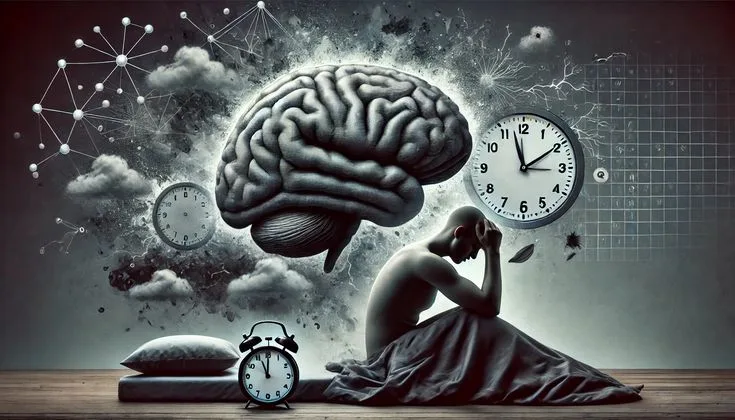
Chronic short sleep can degrade reaction time, working memory, decision-making, emotional regulation, and bodily systems even when people no longer feel increasingly tired. The science of sleep deprivation describes accumulating sleep debt, disrupted brain waste clearance, and altered prefrontal and amygdala function. Caffeine can mask sleep pressure, but it does not remove the underlying need for sleep.
There is a silent experiment running across the modern world, and almost everyone is enrolled in it. Over the past century, average sleep duration in industrialised nations has declined by approximately one to two hours per night.
The causes are familiar - artificial light, round-the-clock digital access, shift work, the cultural glorification of busyness - and the consequences are increasingly well-documented.
We have built a civilisation that is chronically, voluntarily, and often cheerfully sleep-deprived, and we are only beginning to reckon with what that costs.
The scale of the problem is masked by a paradox that sleep researchers find endlessly frustrating. Sleep deprivation impairs the very cognitive functions needed to perceive that impairment. People who are severely under-slept do not feel as impaired as they are.
Their subjective sense of capability diverges sharply from their objective performance on tests of reaction time, working memory, and decision-making. This disconnect is not a minor quirk.
It is part of the mechanism by which sleep debt accumulates invisibly, and it is one reason why Matthew Walker, a neuroscientist and sleep researcher at the University of California Berkeley, describes sleep deprivation as one of the most underappreciated public health crises of our time.[1]
The physiology of sleep deprivation touches nearly every system in the body. The brain is its most obvious target, but the heart, immune system, endocrine system, and gut microbiome are all measurably affected.
Understanding the mechanisms - the specific pathways through which sleeplessness translates into dysfunction - is not merely academic. It changes how you think about every hour you trade for screens, work, or entertainment in the night.
"The shorter your sleep, the shorter your life." - Matthew Walker, 'Why We Sleep' (2017)
Key Definitions
Glymphatic System: A waste-clearance system in the brain, discovered by Maiken Nedergaard in 2013, that uses cerebrospinal fluid to flush metabolic byproducts (including amyloid-beta) from brain tissue. Most active during non-REM slow-wave sleep.
Sleep Debt: The cumulative deficit between sleep obtained and sleep needed. Unlike financial debt, sleep debt cannot be fully repaid; many of its consequences persist even after recovery sleep.
| Hours of Sleep | Cognitive Impairment | Comparable To |
|---|---|---|
| 8 hours (recommended) | Baseline performance | Rested, unimpaired |
| 6 hours for 14 days | Equivalent to 24h sleep deprivation | Legal intoxication in many contexts |
| 4-5 hours | Severe impairment in working memory and reaction time | ~1.5-2x legal BAC impairment |
| Total deprivation (24h) | Significant impairment across all domains | BAC ~0.10% (above legal limit) |
| Total deprivation (48h) | Hallucinations, severe cognitive failure | Clinical impairment level |
Adenosine: A neurochemical that accumulates in the brain during wakefulness and drives the sensation of sleepiness. Cleared during sleep. Caffeine works by blocking adenosine receptors, temporarily masking sleep pressure without removing it.
Circadian Rhythm: The approximately 24-hour internal biological clock governing sleep-wake cycles, hormone release, body temperature, and metabolism. Regulated by the suprachiasmatic nucleus in the hypothalamus.
REM Sleep: Rapid Eye Movement sleep, the sleep stage associated with vivid dreaming, emotional memory processing, and the integration of new information with existing knowledge. Disproportionately concentrated in the final hours of a full night's sleep.
What Sleep Deprivation Does to the Brain
The most immediate and dramatic effects of sleep deprivation are cognitive. In 1997, Drew Dawson and Kathryn Reid published research in Nature directly comparing the effects of sleep deprivation and alcohol on psychomotor performance.[2]
They found that 17 hours of sustained wakefulness produced impairment equivalent to a blood alcohol concentration of 0.05 percent, and 24 hours of wakefulness produced impairment equivalent to 0.10 percent - above the legal limit for driving in most jurisdictions.
These findings reframed sleep deprivation not as a personal inconvenience but as a safety issue of the same magnitude as drunk driving.
Yet the Dawson and Reid study measured a single episode of total deprivation. The more insidious problem, argued Hans Van Dongen and David Dinges at the University of Pennsylvania, is the chronic partial deprivation that characterises most people's lives.
In a landmark 2003 study published in Sleep, Van Dongen and colleagues assigned participants to one of three conditions: eight hours in bed, six hours in bed, or four hours in bed, sustained for 14 days.[3]
The six-hour group progressively deteriorated on cognitive tests across the two weeks, reaching a level of impairment by day ten that was statistically equivalent to two complete nights without sleep.
Crucially, their subjective sleepiness ratings levelled off after a few days - they stopped feeling progressively worse, even as their objective performance continued to decline. They had, in Walker's phrase, lost their ability to accurately perceive how sleep-deprived they were.
At the neural level, sleep deprivation produces a complex pattern of changes. The prefrontal cortex - which governs rational deliberation, impulse control, and ethical reasoning - shows reduced metabolic activity and impaired connectivity.
The amygdala, the brain's threat-detection centre, becomes hyperreactive and less regulated by prefrontal input.
A study by Matthew Walker and Seung-Schik Yoo published in 2007 found that sleep-deprived subjects showed 60 percent greater amygdala reactivity to negative images than rested controls, with a near-complete breakdown in the functional connection between the amygdala and the medial prefrontal cortex.[7]
This pattern - heightened emotional reactivity combined with impaired regulation - helps explain why sleep-deprived people are more irritable, more prone to poor decisions, and more likely to misinterpret social cues.
The Glymphatic System and Alzheimer's Risk
Perhaps the most significant sleep discovery of the past decade concerns what happens in the brain during sleep at a cellular level. In 2013, Maiken Nedergaard and colleagues at the University of Rochester published a paper in Science describing a previously unknown waste-clearance system they called the glymphatic system.[4]
Cerebrospinal fluid, driven by the pulsation of arterial blood vessels, flows through channels surrounding arteries in the brain, flushing through the interstitial space and carrying metabolic waste to the venous system for disposal.
The key finding was that this process operates primarily during sleep, and is dramatically more efficient during sleep than wakefulness.
Nedergaard's team measured the interstitial space in sleeping versus awake mice and found that it expanded by approximately 60 percent during sleep, allowing cerebrospinal fluid to penetrate more deeply and clear waste more thoroughly.
Among the waste products the glymphatic system removes are amyloid-beta peptides and tau proteins - the same molecules that accumulate into the plaques and tangles pathognomonic of Alzheimer's disease.
Subsequent human research supported the relevance of this finding. A study by Ju and colleagues at Washington University in 2017 found that even a single night of sleep disruption increased amyloid-beta levels in the cerebrospinal fluid of healthy adults.
Longitudinal epidemiological data has consistently found associations between chronic poor sleep and elevated Alzheimer's risk. The relationship may be bidirectional: early Alzheimer's pathology disrupts sleep, but sleep disruption also accelerates amyloid accumulation.
Walker has described this as a 'vicious cycle' that may help explain why Alzheimer's prevalence has been rising in parallel with declining sleep duration across populations.
Memory Consolidation: Building the Library of the Mind
Sleep plays an active role in memory, not merely a permissive one. The view that sleep is simply a passive rest state during which memories fade less quickly has been replaced over the past two decades by a far more dynamic picture.
During non-REM slow-wave sleep, the hippocampus - which serves as a temporary repository for new memories encoded during waking experience - 'replays' the day's experiences, transferring them to the neocortex for long-term storage.
Jan Born at the University of Tubingen has documented this hippocampal-neocortical dialogue in detail, showing that slow oscillations in the neocortex, sleep spindles, and hippocampal sharp-wave ripples occur in coordinated sequences that appear to mediate memory transfer.
Students who sleep after studying show far better retention than those who stay awake, and the benefit is not merely from elapsed time.
REM sleep serves a different but equally important function. Walker's research, along with work by Robert Stickgold at Harvard, has shown that REM sleep is particularly important for the consolidation of emotional memories, the extraction of abstract rules and patterns from specific experiences, and creative insight.
The dreaming brain appears to free-associate across loosely related memory networks, making novel connections that are less accessible during the constrained, goal-directed processing of wakefulness.
A striking demonstration by Ullrich Wagner in 2004 found that a night of sleep tripled the likelihood that subjects would discover a hidden mathematical shortcut, compared to those who had been awake between training and test.[10]
The implication for students, professionals, and anyone engaged in effortful learning is direct: sleep is not time away from learning. It is where much of the learning actually happens.
Hormonal Disruption: Hunger, Growth, and Stress
Sleep deprivation's hormonal consequences extend well beyond cortisol. Two of the most consequential involve the hormones that regulate hunger.
Leptin, produced by fat cells, signals satiety to the hypothalamus. When leptin levels are high, the brain interprets the body as adequately fuelled. Ghrelin, produced in the stomach lining, signals hunger.
Chronic sleep deprivation reduces leptin and increases ghrelin, a combination that creates a hormonal environment of apparent starvation regardless of actual caloric intake.
Karine Spiegel, Eve Van Cauter, and Esra Tasali at the University of Chicago conducted a series of carefully controlled studies in the early 2000s quantifying these effects.[5]
Restricting healthy young men to four hours of sleep per night for two nights reduced leptin by 18 percent, increased ghrelin by 28 percent, and produced a 24 percent increase in subjective hunger.
The food preferences of sleep-deprived subjects shifted specifically toward calorie-dense, carbohydrate-rich foods - cookies, crisps, bread - rather than fruit or vegetables.
This pattern aligns with the endocannabinoid system's increased activity under sleep deprivation, which amplifies the hedonic value of energy-dense foods.
Testosterone, which is critically important for muscle development, bone density, libido, and mood in men, is predominantly secreted during sleep.
Studies by Rachel Leproult and Eve Van Cauter found that one week of sleep restriction to five hours per night reduced testosterone levels in young healthy men by 10 to 15 percent - equivalent to the decline associated with 10 to 15 years of ageing.[11]
Growth hormone, similarly, is released primarily in the first few hours of slow-wave sleep, meaning that chronic sleep disruption impairs tissue repair and recovery.
Cardiovascular and Immune Consequences
The association between short sleep and cardiovascular disease is among the most robust in epidemiological sleep research.
A meta-analysis by Francesco Cappuccio and colleagues published in the European Heart Journal in 2011, synthesising data from 15 prospective studies involving over 470,000 participants, found that sleeping six hours or fewer per night was associated with a 48 percent elevated risk of developing or dying from coronary heart disease and a 15 percent elevated risk of stroke, compared to sleeping seven to eight hours.[8]
The mechanisms are multiple. Sleep deprivation elevates sympathetic nervous system activity, raising heart rate and blood pressure. It increases inflammatory markers including C-reactive protein and interleukin-6. It impairs endothelial function, reducing the flexibility of blood vessels.
And it promotes the kind of cortisol elevation discussed in the literature on chronic stress, adding metabolic and cardiovascular load.
Immune function is acutely sensitive to sleep. Aric Prather at the University of California San Francisco conducted a study, published in Sleep in 2015, in which 164 healthy adults were exposed to the cold virus via nasal drops after a week of monitored sleep.[9]
Those who slept fewer than six hours were 4.2 times more likely to develop a cold than those who slept seven or more hours. The dose-response relationship was clear and robust, with sleep duration being the single strongest predictor of infection risk - more powerful than stress levels, smoking status, or race.
Sleep restriction also reduces vaccine efficacy. Spiegel, Sheridan, and Van Cauter found that individuals who slept fewer than six hours per night in the week before influenza vaccination produced significantly lower antibody titres than those sleeping seven or more hours.[6]
Similar findings have been replicated for hepatitis B vaccination. The mechanism involves reduced natural killer cell activity and impaired cytokine production, both of which are necessary for an optimal immune response.
Social Jet Lag and Circadian Disruption
Beyond total sleep duration, when you sleep matters. Till Roenneberg at Ludwig Maximilian University of Munich introduced the concept of 'social jet lag' to describe the mismatch between the body's internal circadian clock and socially imposed sleep and work schedules.
For the roughly 40 percent of the population with evening chronotypes - biological night owls - the requirement to wake early for work or school creates a state of chronic circadian disruption functionally similar to repeatedly crossing time zones.
Roenneberg's epidemiological research found that each hour of social jet lag was associated with a 33 percent increase in the odds of obesity, after controlling for other factors.[14] Circadian misalignment also independently increases metabolic dysfunction, depression risk, and cardiovascular risk.
The widely maligned practice of weekend 'lie-ins' is, for many people, an attempt to catch up with their biological clock, though as noted above, the recovery is incomplete and the oscillation creates its own disruption.
Napping: A Legitimate Intervention
Not all lost nighttime sleep can be recovered, but napping has a credible evidence base as a partial mitigation strategy. Sara Mednick at UC San Diego, author of 'Take a Nap! Change Your Life' (2006), has conducted systematic research on nap architecture.
Her work found that a 90-minute nap containing both non-REM and REM sleep produced comparable performance benefits on perceptual learning tasks to a full night of sleep.[12]
Shorter naps of 10 to 20 minutes produce reliable improvements in alertness and working memory without post-nap grogginess ('sleep inertia'), which tends to occur when a nap extends into deeper non-REM stages.
NASA research on commercial airline pilots found that strategic 40-minute naps improved performance by 34 percent and alertness by 54 percent.[13] Several major organisations - including Google, Nike, and the British National Health Service - have experimented with designated nap facilities for employees.
The evidence supports this as a pragmatic, effective intervention for workers in safety-critical roles who are operating under unavoidable sleep pressure.
Practical Takeaways
The evidence from sleep science converges on a message that is both simple and difficult to act on in contemporary life: most adults need seven to nine hours of sleep per night, most are getting less, and the consequences compound over time in ways that are largely invisible until they become catastrophic.
Consistency of sleep timing matters as much as duration; waking at the same time each day, including weekends, stabilises circadian rhythms more effectively than variable schedules.
Temperature is the most powerful environmental regulator of sleep onset; the bedroom should be cooler than typical daytime temperature, around 18 degrees Celsius, to facilitate the drop in core body temperature that initiates sleep.
Caffeine's half-life is five to six hours, meaning an afternoon coffee at 3pm still has half its alertness-promoting effect at 9pm.
Alcohol, commonly used as a sleep aid, disrupts sleep architecture, suppressing REM sleep and causing rebound arousal in the second half of the night.
The investment case for sleep is straightforward: no other single intervention produces comparable improvements across cognitive performance, emotional regulation, immune function, cardiovascular health, metabolic health, and longevity. Sleep is not a luxury or a sign of insufficient ambition.
It is the non-negotiable biological maintenance system for everything else you do.
Sources & Further Reading
- Walker, M. (2017). Why We Sleep: Unlocking the Power of Sleep and Dreams. Scribner.
- Dawson, D., & Reid, K. (1997). Fatigue, alcohol and performance impairment. Nature, 388(6639), 235.
- Van Dongen, H. P. A., Maislin, G., Mullington, J. M., & Dinges, D. F. (2003). The cumulative cost of additional wakefulness. Sleep, 26(2), 117-126.
- Nedergaard, M. (2013). Garbage truck of the brain. Science, 340(6140), 1529-1530.
- Spiegel, K., Tasali, E., Penev, P., & Van Cauter, E. (2004). Brief communication: Sleep curtailment in healthy young men is associated with decreased leptin levels, elevated ghrelin levels, and increased hunger and appetite. Annals of Internal Medicine, 141(11), 846-850.
- Spiegel, K., Sheridan, J. F., & Van Cauter, E. (2002). Effect of sleep deprivation on response to immunization. JAMA, 288(12), 1471-1472.
- Yoo, S. S., Gujar, N., Hu, P., Jolesz, F. A., & Walker, M. P. (2007). The human emotional brain without sleep - a prefrontal amygdala disconnect. Current Biology, 17(20), R877-R878.
- Cappuccio, F. P., Cooper, D., D'Elia, L., Strazzullo, P., & Miller, M. A. (2011). Sleep duration predicts cardiovascular outcomes. European Heart Journal, 32(12), 1484-1492.
- Prather, A. A., Janicki-Deverts, D., Hall, M. H., & Cohen, S. (2015). Behaviorally assessed sleep and susceptibility to the common cold. Sleep, 38(9), 1353-1359.
- Wagner, U., Gais, S., Haider, H., Verleger, R., & Born, J. (2004). Sleep inspires insight. Nature, 427(6972), 352-355.
- Leproult, R., & Van Cauter, E. (2011). Effect of 1 week of sleep restriction on testosterone levels in young healthy men. JAMA, 305(21), 2173-2174.
- Mednick, S. C., Nakayama, K., & Stickgold, R. (2003). Sleep-dependent learning: A nap is as good as a night. Nature Neuroscience, 6(7), 697-698.
- Rosekind, M. R., Graeber, R. C., Dinges, D. F., Connell, L. J., Rountree, M. S., Spinweber, C. L., & Gillen, K. A. (1994). Crew factors in flight operations IX: Effects of planned cockpit rest on crew performance and alertness in long-haul operations. NASA Technical Memorandum 108839.
- Roenneberg, T., Allebrandt, K. V., Merrow, M., & Vetter, C. (2012). Social jetlag and obesity. Current Biology, 22(10), 939-943.
Health note: This article is general educational information about how a topic works, not medical, psychological, or mental-health advice, diagnosis, or treatment. Everyone's situation is different, and research findings describe groups, not individuals.
If you are struggling or have concerns about your health, please talk to a qualified professional such as a doctor or licensed therapist.
If you are in crisis or thinking about harming yourself, contact your local emergency services or a crisis line right away, in the US you can call or text 988 (Suicide & Crisis Lifeline); elsewhere, find local lines at findahelpline.com.