
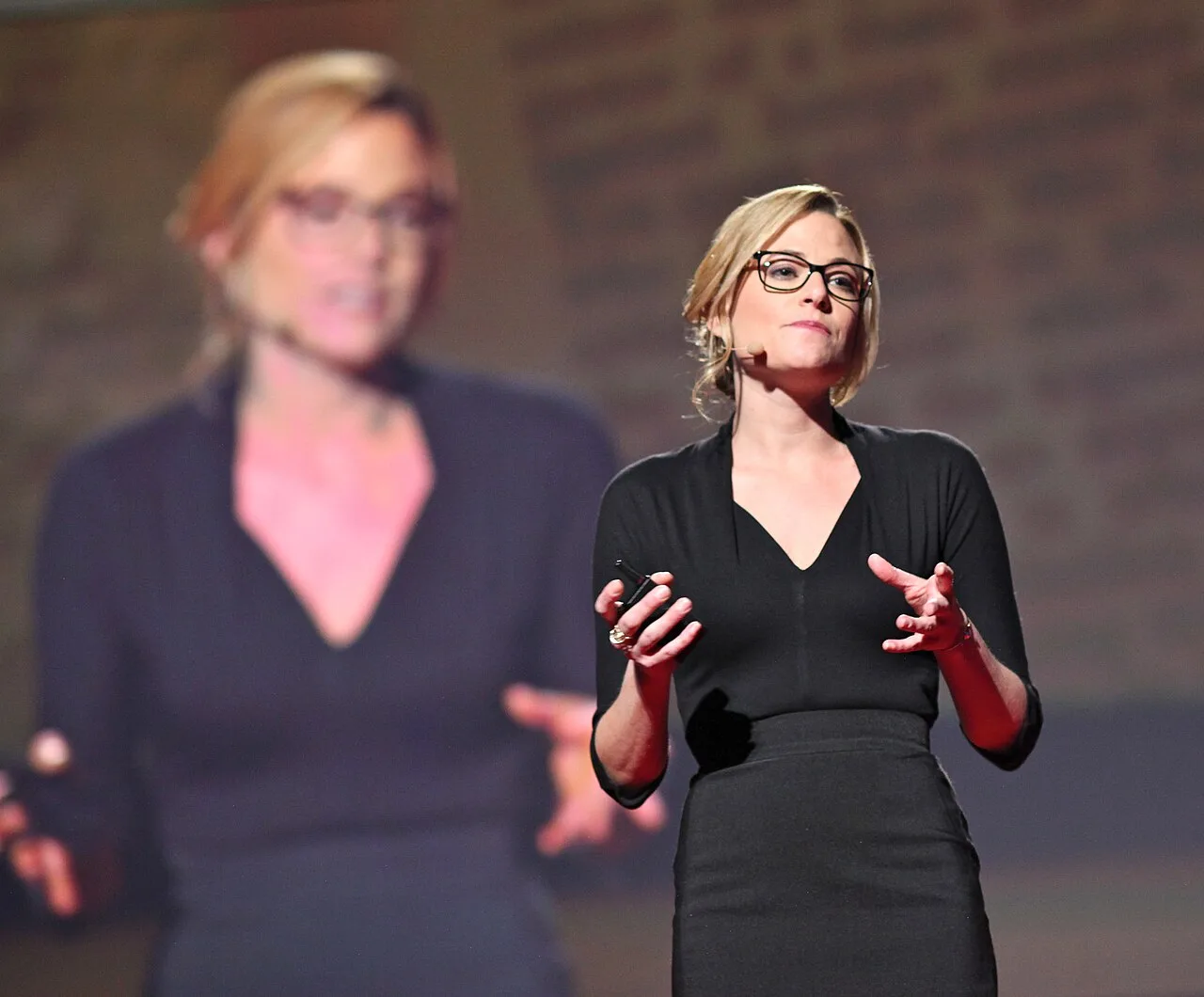
People tend to overestimate their chances of positive outcomes and underestimate personal exposure to negative ones, even when comparison with others makes those judgments impossible for everyone to hold. Optimism bias is sustained in part by uneven belief updating, with favorable information receiving more weight than bad news. It can influence health, financial, relationship, career, and strategic decisions.
In the spring of 1978, Neil Weinstein sat down with a survey and a deceptively simple question.
He wanted to know whether college students thought they were more or less likely than their peers to experience forty-two significant life events - things like developing cancer, getting divorced, being the victim of a crime, or having a drinking problem, alongside positive events like owning a home, living past eighty, or having a gifted child.
He already suspected the answer, but the magnitude of what he found when he published his results two years later in the Journal of Personality and Social Psychology gave even Weinstein pause.
Across all thirty-eight negative life events in his sample of 258 undergraduates, participants rated their own risk as below average; across all positive events, they rated their likelihood as above average. Not most events - every single one.
And crucially, these were not merely emotional responses or vague gut feelings. Participants were making explicit, comparative, numerical judgments. They knew, in the abstract, that not everyone could be below average.
They made the estimates anyway. Weinstein called what he had found "unrealistic optimism about future life events" - and with that 1980 paper, he gave a name to one of the most consequential and pervasive features of human cognition.[1]
The formal study of unrealistic optimism had to wait thirty more years for its neuroscientific chapter, and when it arrived it was definitive. In 2007, Tali Sharot, then a doctoral researcher at New York University, published a paper in Nature documenting what happened in the brain when people imagined future positive events.
Using fMRI, Sharot and colleagues found that imagining positive future events - a vacation, a professional success, a personal milestone - produced significantly greater activity in the amygdala and the rostral anterior cingulate cortex than imagining equivalent past events, even when the events were matched for vividness and emotional intensity.[3]
These are regions associated with emotional salience and the encoding of motivationally significant information. The future, for the human brain, was not a neutral probabilistic space; it was a preferentially lit room where positive possibilities glowed more brightly than negative ones.
Sharot followed this in 2011 with a second Nature Neuroscience paper, "How Unrealistic Optimism Is Maintained in the Face of Reality," that revealed the mechanism sustaining the bias over time: when people receive information about actual risk probabilities, their brains update much more strongly in response to good news than bad.[4]
The optimism bias, Sharot demonstrated, is not merely a starting position - it is a self-regenerating system.
Together, Weinstein's behavioral architecture and Sharot's neuroscience define the problem that this article examines.
The optimism bias is systematic, measurable, cross-cultural (though not uniform across cultures), present in healthy brains and attenuated in depressed ones, rooted in the structure of belief-updating circuits, and consequential across domains from personal health to corporate strategy to public infrastructure.
Understanding it requires moving through its intellectual genealogy, its empirical record, its neural substrate, its real-world costs, and the genuine limits of what it means to call optimism "biased" at all.
"Most of us believe that we are above average in health, intelligence, and driving ability - a statistical impossibility that reflects the ubiquity of optimistic bias." - Tali Sharot, 2011
The Optimism Gap: Perceived vs. Realistic Probabilities Across Domains
The table below synthesizes findings from the empirical literature on domain-specific optimism bias, illustrating the typical gap between perceived personal probability and realistic base-rate probability across four major life domains.
| Domain | Specific Event | Realistic Base Rate | Typical Perceived Personal Probability | Gap | Key Source |
|---|---|---|---|---|---|
| Health | Developing heart disease (lifetime) | ~50% (US adults) | ~20% estimated personal risk | -30 pp | Weinstein 1980, Shepperd et al. 2002 |
| Health | Lung cancer risk (smokers) | ~15-20% lifetime | Significantly below base rate self-estimated | Substantially lower | Weinstein 1987 |
| Financial | New business surviving 5 years | ~50% (US SBA data) | ~80% or higher (most founders) | +30 pp | Cooper, Woo & Dunkelberg 1988 |
| Financial | Corporate acquisition adding value | ~50-60% destroy shareholder value | CEOs overconfident; overestimate synergies | Significant overestimate | Malmendier & Tate 2005 |
| Relationship | Marriage ending in divorce | ~40-50% (Western populations) | Newlyweds typically estimate near 0% for themselves | ~40-50 pp | Sharot 2011 review |
| Career | Graduating in top quartile of class | 25% by definition | Most students expect above-average outcomes | +25 pp excess | Weinstein 1980 |
| Driving | Being an above-average safe driver | 50% by definition | ~88-93% of drivers claim above-average safety | +38-43 pp | Svenson 1981 |
| General negative events | Any of 38 adverse life events | Varies by event | Consistently below base rate | Systematic negative gap | Weinstein 1980 |
The figures above are not anomalies or artifacts of specific measurement instruments. They replicate across decades, across populations, and across methodologies.
The direction of the distortion - overestimating positive outcomes, underestimating negative ones, relative to accurate base-rate probabilities - is the defining signature of unrealistic optimism.
Intellectual Lineage: Who Influenced Whom
The intellectual genealogy of optimism bias research runs through several distinct traditions that converged in the 1980s and produced a synthesis by the 2000s.
The first line runs from social comparison theory through the work of Leon Festinger. Festinger's 1954 framework in Human Relations established that people evaluate their abilities and opinions partly by comparing themselves to others.
This created the groundwork for understanding comparative optimism - the specific form Weinstein documented, in which people assess their own future outcomes relative to a social referent.
The "better than average" literature that followed - sometimes called the Lake Wobegon effect after Garrison Keillor's fictional town "where all the children are above average" - produced its canonical demonstration in Mark Alicke's 1985 study in the Journal of Personality and Social Psychology, where participants consistently rated themselves above average on positive traits.[6]
Alicke showed that the comparative distortion extended not merely to vague self-assessments but to specific, testable judgments.
The second line runs through the heuristics-and-biases program of Daniel Kahneman and Amos Tversky.
Their 1979 account of the planning fallacy - published the same year as their Econometrica paper introducing Prospect Theory - framed the systematic underestimation of project costs and timelines as a failure of base-rate reasoning driven by inside-view thinking.
Planners focus on the specific, vivid features of their own projects; they construct detailed optimistic scenarios; and they ignore the statistical record of how similar projects have actually performed.
Kahneman and Daniel Lovallo extended this in a 1993 paper in Management Science, "Timid Choices and Bold Forecasts," arguing that inside-view optimism was a systematic property of managerial decision-making, producing a characteristic combination of overly bold plans with overly timid adjustments when things began to go wrong.[5]
This line of work influenced everything from public policy (UK Treasury adoption of reference class forecasting) to behavioral economics (Thaler's work on the endowment effect and planning errors).
The third line runs through health psychology and the positive illusions literature.
Shelley Taylor and Jonathon Brown published "Illusion and Well-Being: A Social Psychological Perspective on Mental Health" in Psychological Bulletin in 1988, arguing that unrealistic optimism, self-serving attribution, and an inflated sense of personal control were not pathological features of unhealthy minds but characteristic features of healthy ones.
They conferred measurable benefits in the form of psychological well-being, motivation, and coping efficacy.
Taylor and Brown's paper was a direct challenge to the traditional assumption that mental health requires accurate self-assessment.[8] It positioned optimism bias not as a cognitive error to be corrected but as an adaptive feature of normal functioning.
David Armor and Shelley Taylor extended this analysis in 1998 in "Situated Optimism: Specific Outcome Expectations and Self-Regulation," published in Advances in Experimental Social Psychology, arguing that situational optimism - positive expectations that are calibrated to the specific features of a situation - serves regulatory functions that purely accurate probability estimates would not.[9]
The fourth line, running parallel to the others, is the neuroscientific tradition that begins in earnest with Sharot's 2007 Nature paper and reaches its theoretical peak with her 2011 belief-updating study.
This line connects the behavioral patterns documented by Weinstein, Alicke, Svenson, and Taylor to a specific neural architecture - the asymmetric updating circuits of the frontoparietal network - that provides a mechanistic explanation for why the bias is so resistant to informational correction.
These four traditions - social comparison, heuristics-and-biases, positive illusions, and cognitive neuroscience - converged by the 2010s into the account of optimism bias that now occupies central chapters of behavioral science textbooks.
Cognitive Science: Named Researchers, Journals, Years, Findings
Neil Weinstein, 1980: The Founding Empirical Study
Weinstein's 1980 paper in the Journal of Personality and Social Psychology ("Unrealistic Optimism About Future Life Events") is the methodological template for the field.
His central design - ask participants to compare their own probability of a life event to that of "an average person of your age and sex" - created a measurement approach that made the comparative distortion visible and quantifiable.
His sample of 258 college students showed systematic positive distortion for all 38 negative events and all 4 positive events tested.
He also identified the moderating conditions: the bias was stronger for events perceived as controllable (where participants believed their own superior behavior protected them), for events not yet experienced, and for events perceived as less common.
A 1987 follow-up study published in Health Psychology examined the specific case of smokers and cancer risk, finding that smokers correctly estimated the population-level lung cancer risk associated with smoking but consistently underestimated their own personal risk relative to that base rate - one of the most consequential applications of unrealistic optimism.
Ola Svenson, 1981: The Driving Study
Ola Svenson of the University of Stockholm published "Are We All Less Risky and More Skillful Than Our Fellow Drivers?" in Acta Psychologica in 1981.[7] He surveyed samples of American and Swedish drivers, asking them to rate their driving skill and safety relative to other drivers in the same sample.
In the American sample, 88 percent of drivers rated themselves as more skillful than the median; 77 percent rated themselves as safer than the median.
In the Swedish sample, the figures were similarly elevated. The study became the iconic demonstration of the "better than average" effect applied to a concrete behavioral domain, and it revealed a particularly troubling feature of optimism bias in high-stakes contexts: those who drive most dangerously have the least accurate sense of their own danger.
Taylor and Brown, 1988: The Positive Illusions Argument
Shelley Taylor and Jonathon Brown's paper in Psychological Bulletin - "Illusion and Well-Being: A Social Psychological Perspective on Mental Health" - assembled evidence from diverse sources arguing that three cognitive biases characterize mentally healthy adults: unrealistically positive self-evaluation, exaggerated perception of personal control, and unrealistic optimism about the future.
Their claim - that these biases are adaptive, not pathological - generated substantial controversy and a sustained empirical debate about whether optimism bias genuinely improves outcomes or merely produces pleasant feelings that coexist with, rather than cause, better functioning.
Tali Sharot, 2007 and 2011: The Neural Mechanism
Sharot's 2007 paper in Nature ("Neural Mechanisms Mediating Optimism Bias") used event-related fMRI to compare brain activity during imagined future positive and negative events.
The key finding was differential amygdala activation: imagining positive future events produced greater bilateral amygdala activity than imagining negative future events matched for emotional intensity.
The amygdala's role in motivational salience suggests that the brain is literally more engaged when processing positive future possibilities than negative ones - a perceptual asymmetry that would naturally produce differential memory and planning attention to those possibilities.
The 2011 paper in Nature Neuroscience ("How Unrealistic Optimism Is Maintained in the Face of Reality") moved from brain imaging to behavioral mechanism. Sharot, Korn, and Dolan presented 19 participants with 80 adverse life events and measured belief updating after participants received actual base-rate probabilities.
The key finding was the asymmetry: when base rates were better than participants had estimated (good news), participants updated their beliefs substantially toward the new information.
When base rates were worse than participants had estimated (bad news), updating was significantly attenuated.
The frontoparietal network - specifically the left inferior frontal gyrus and right superior temporal sulcus - showed differential activation consistent with selective processing of positive relative to negative probability information.
This asymmetry is not a post-hoc rationalization; it operates at the level of initial belief updating, which means it cannot be overcome simply by ensuring people receive accurate information.
Malmendier and Tate, 2005: CEO Overconfidence in Corporate Finance
Ulrike Malmendier of the University of California Berkeley and Geoffrey Tate, publishing "CEO Overconfidence and Corporate Investment" in the Journal of Finance in 2005, examined the consequences of optimism bias in high-stakes financial decision-making.[11]
Using a clever measure of CEO overconfidence - whether CEOs held stock options past their rational exercise date, revealing personal conviction that the stock would continue to rise - they found that overconfident CEOs made substantially more acquisitions than their peers, overpaid for targets, and destroyed shareholder value at higher rates.
The overconfident CEOs, believing their own ability to generate synergies exceeded the base rate, systematically overestimated the value of their own deal-making.
This study connected the cognitive psychology literature to corporate finance and produced one of the most-cited empirical demonstrations that optimism bias has measurable, costly consequences at the organizational level.
Four Named Case Studies
Case Study 1: Weinstein and Lachendro, 1982 - Why Information Fails to Correct the Bias
In a 1982 paper in Personality and Social Psychology Bulletin, Neil Weinstein and Elizabeth Lachendro explored whether making the logical impossibility of comparative optimism explicit - reminding participants that not everyone can be below average - would attenuate the bias.
It did not, meaningfully. Participants who were explicitly told that their estimates would be compared to those of other participants in the same sample, and who knew that the aggregate would have to average to the mean, continued to produce optimistic comparative estimates.
This finding was early evidence for what Sharot's later neuroscience would confirm: the bias is not corrected by logical argumentation because it does not operate primarily at the level of explicit logical reasoning.
Knowing that comparative optimism is statistically impossible does not interrupt the process by which optimistic estimates are generated.
Case Study 2: Svenson, 1981 - The Driving Paradox
Svenson's driving study deserves its own case analysis because it illustrates the relationship between expertise and optimism bias in a particularly clean form. Drivers were not merely estimating abstract probabilities; they had direct, extensive personal experience with the domain in question.
They had been driving for years. They had received feedback in the form of accidents, near-misses, and the observable behavior of other drivers. And yet 88 percent of American drivers in the sample rated themselves as more skillful than the median.
This is not mere ignorance of base rates - it is the persistence of comparative optimism in the face of extensive personal domain experience. The driving paradox is important because it rules out inexperience as the primary explanation for unrealistic optimism.
The bias does not simply correct itself when people acquire domain knowledge; in some cases it may intensify, as domain expertise enables more elaborate construction of reasons why one is personally superior.
Case Study 3: Shepperd, Carroll, Grace, and Terry, 2002 - Optimism and Health Risk Processing
James Shepperd and colleagues published "Abandoning Unrealistic Optimism: Performance Estimates and the Temporal Proximity of Self-Relevant Feedback" in the Journal of Personality and Social Psychology in 2002, examining what happened to optimism bias when participants faced imminent feedback about their actual risk status.[10]
They found that participants who were about to receive a test result - learning, for example, their actual cholesterol level or genetic risk factor - showed reduced optimism bias in their expectations about the result compared to participants facing more distant feedback.
This finding is important because it suggests that the bias is partially strategic: people maintain unrealistic optimism when consequences are remote but revise toward accuracy when consequences are imminent.
The implication for health communication is that proximity to a health event matters enormously for whether optimism bias attenuates - which helps explain why people who have just received a diagnosis show more accurate subsequent risk processing than those who have not yet had a health scare.
Case Study 4: Heine and Lehman, 1995 - Cross-Cultural Variation
Steven Heine and Darrin Lehman, publishing "The Cultural Construction of Self-Enhancement: An Examination of Group-Serving Biases" in the Journal of Personality and Social Psychology in 1995, examined whether unrealistic optimism was a universal feature of human cognition or a culturally specific artifact.
Their results revealed significant cross-cultural variation: Japanese participants showed substantially less unrealistic optimism than North American participants.
Rather than consistently rating their personal risk as below average and their personal likelihood of positive events as above average, Japanese participants gave estimates closer to base rates and in some domains showed a slight pessimistic lean - overestimating their risk of negative events.
Heine and Lehman argued that this reflected cultural differences in self-enhancement motivation: individualistic cultures (North America) support and reward self-enhancing beliefs, while collectivistic cultures (Japan) place greater value on accurate self-assessment and group harmony.[12]
The implication is significant: optimism bias is not a fixed constant of human cognition but a variable whose magnitude is shaped by cultural context. Any account of the phenomenon that presents it as universally uniform is overstating the neuroscience.
Empirical Research: What the Studies Show
The empirical foundation of optimism bias research is now broad enough to support clear conclusions about its prevalence, magnitude, and moderators.
Weinstein's original 1980 study established the basic phenomenon across 42 life events in a college sample.
Subsequent replications across community samples, professional populations, clinical populations, and multiple national contexts confirmed that the bias is not an artifact of college student samples or the specific events chosen by Weinstein.[2]
Studies examining health risk optimism consistently find that people estimate their own probability of developing conditions including heart disease, cancer, sexually transmitted infections, and alcohol-related disorders as substantially below population base rates, even when those base rates are accurately provided.
In the financial domain, the entrepreneurship literature documents that most founders enter business with probability estimates of success substantially exceeding the base rate.
Cooper, Woo, and Dunkelberg's 1988 study in the Journal of Business Venturing surveyed 2,994 business founders, finding that 81 percent rated their personal odds of success at 70 percent or higher - against a base rate closer to 50 percent for five-year survival.[15]
Thirty-three percent of founders rated their personal odds at 100 percent.
Thomas Astebro's 2003 analysis in the Economic Journal of inventions submitted to the Canadian Inventors Assistance Program found that inventors continued investing in commercially non-viable projects at high rates even after receiving expert evaluations - a direct behavioral consequence of unrealistic optimism, not merely an attitude.
At the organizational level, Malmendier and Tate's 2005 corporate finance study produced one of the rare demonstrations of optimism bias consequences measurable in hard financial outcomes.
Overconfident CEOs - those who held options past rational exercise dates and repeatedly referred to their own companies as undervalued - made 65 percent more acquisitions than their non-overconfident peers and generated significantly negative announcement-period returns on those acquisitions.
The gap in acquisition rates was driven primarily by deals financed with internal cash rather than debt or equity - consistent with overconfident managers believing their projects are superior and worth financing from existing resources rather than subjecting to market scrutiny through external financing.
Bent Flyvbjerg's infrastructure analysis, covering 258 transportation projects across 20 nations and 70 years, showed that cost overruns and schedule delays in major infrastructure are not random errors but systematic biases: 86 percent of rail projects exceeded budgeted costs, 9 in 10 road projects exceeded cost estimates, and the average cost overrun on rail projects was 44.7 percent.
The stability of this pattern across seven decades is particularly damning - it demonstrates that the optimism bias is not being corrected over time by learning, accumulated experience, or improved project management methods.
Optimism Bias vs. Self-Serving Bias
The two are frequently confused because both flatter the person holding them, but they operate on different targets and at different times.
Optimism bias is forward-looking and concerns events. It is the expectation that your own future holds more good outcomes and fewer bad ones than the base rate for people like you: that your marriage is less likely to end, your business more likely to survive, your diagnosis less likely to be the serious one.
Self-serving bias is backward-looking and concerns causes. It is the tendency to attribute your successes to your own ability and effort while attributing your failures to circumstance, other people, or bad luck. The success was skill, the failure was the market.
The practical difference matters when you try to correct for them. Optimism bias responds to base rates and reference-class forecasting: you counter it by asking how often this has gone well for everyone else who tried it. Self-serving bias responds to accountability and record-keeping: you counter it by writing down your reasoning before the outcome is known, so the explanation cannot be rewritten after the fact.
They also compound. If you consistently expect above-average outcomes and consistently credit good results to your own judgment, each failure is explained away as an exception rather than absorbed as information, and the forecast for the next attempt never gets corrected.
Limits, Critiques, and Nuances
Colvin and Block, 1994: Is Positive Illusion Actually Adaptive?
The most sustained critique of the Taylor and Brown positive illusions framework came from C. Randall Colvin and Jack Block's 1994 paper in Psychological Bulletin, "Do Positive Illusions Foster Mental Health?
An Examination of the Taylor and Brown Formulation." Colvin and Block argued that Taylor and Brown had conflated genuine optimism with motivated self-deception, and that the evidence for adaptive consequences of biased self-assessment was less robust than claimed.[13]
They pointed to studies showing that individuals who rated themselves more accurately tended to be rated as better-adjusted by close acquaintances than those with more inflated self-assessments - suggesting that the perceived benefits of positive illusions may reflect pleasant self-feeling rather than actual functional advantage.
The debate this paper opened has not been fully resolved; subsequent meta-analyses have found effects in both directions depending on the outcome measured and the population studied.
When Is Optimism Biased vs. Realistic?
A persistent conceptual problem in the literature is distinguishing unrealistic optimism from justified confidence.
Weinstein himself acknowledged that not all optimistic expectations are biased - some people are genuinely healthier, more skillful, or better positioned than average, and their positive expectations accurately reflect their situation.
The bias is defined by the aggregate impossibility: not everyone can be below average on risk, but in Weinstein's samples, most people are.
At the individual level, however, any given person's optimism may be calibrated, making it difficult to label individual cases of optimistic expectation as biased without access to objective ground truth.
This creates particular difficulty in clinical and applied contexts. A cancer patient who maintains optimistic beliefs about treatment outcomes may be exhibiting adaptive optimism bias that sustains treatment adherence and immune function, or may be unrealistically discounting valid medical information.
Both look the same from the outside. The resolution requires knowing the actual probability distribution - and in medical contexts, that distribution is often genuinely uncertain.
Norem's Defensive Pessimism: An Adaptive Alternative
Julie Norem of Wellesley College developed the concept of defensive pessimism as a direct challenge to the universality of optimism's adaptive benefits.
In research beginning in the late 1980s and summarized in her 2001 book The Positive Power of Negative Thinking, Norem documented individuals who set deliberately low expectations before performance situations - not because they expected to fail, but as a strategy for managing anxiety and motivating preparation.
Defensive pessimists worry, plan for failure scenarios, and use their anxiety as fuel for thorough preparation. Norem and colleagues found that defensive pessimists performed at levels comparable to strategic optimists in academic and professional settings.
Crucially, interventions designed to induce optimism in defensive pessimists actually degraded their performance - the optimism disrupted the anxiety-driven preparation that was their adaptive strategy.
This finding directly challenges any account of optimism bias as uniformly beneficial and suggests that optimal probability estimation style depends on individual regulatory systems, not a universal prescription.
Cross-Cultural Variation: Heine and Lehman, 1995
As documented in the case studies above, Heine and Lehman's cross-cultural work establishes that optimism bias magnitude varies substantially across cultural contexts.
Japanese participants in their studies showed significantly less comparative optimism than North American participants, with some domains showing near-accurate estimation or slight pessimistic lean.
This is inconsistent with accounts of optimism bias as a simple consequence of neural architecture - if the frontoparietal updating asymmetry Sharot identified were fully invariant, cross-cultural variation in optimism bias magnitude would be difficult to explain.
The most plausible integration is that the neural architecture creates a default tendency toward optimistic updating, but that cultural values, social norms, and motivated cognition modulate the expression of that tendency.
Cultures that emphasize accurate self-assessment and discourage self-enhancement may dampen the expression of the underlying neural bias through top-down regulatory processes.
The Depressive Realism Problem
The finding that depressed individuals show reduced optimism bias - sometimes more accurate probability estimation than non-depressed controls - creates a genuine interpretive puzzle.
Lauren Alloy and Lyn Abramson's 1979 study in the Journal of Experimental Psychology: General documented that depressed subjects had substantially more accurate estimates of their personal control over outcomes than non-depressed subjects, who inflated their sense of control.[14]
If accurate probability estimation is associated with depression, and optimism bias is associated with healthy functioning, then correcting the bias by moving toward accuracy risks something.
The obvious response is that the correlation runs in the other direction - depression is not caused by accurate estimation but by negative mood that happens to reduce motivated self-enhancement - and the evidence broadly supports this interpretation.
But the finding complicates any simple equation of accuracy with wellbeing, and it provides at least some basis for the argument that mild optimism bias may serve genuine protective functions.
Sources & Further Reading
Weinstein, N. D. (1980). Unrealistic optimism about future life events. Journal of Personality and Social Psychology, 39(5), 806-820.
Weinstein, N. D. (1987). Unrealistic optimism about susceptibility to health problems: Conclusions from a community-wide sample. Journal of Behavioral Medicine, 10(5), 481-500.
Sharot, T., Riccardi, A. M., Raio, C. M., & Phelps, E. A. (2007). Neural mechanisms mediating optimism bias. Nature, 450(7166), 102-105.
Sharot, T., Korn, C. W., & Dolan, R. J. (2011). How unrealistic optimism is maintained in the face of reality. Nature Neuroscience, 14(11), 1475-1479.
Kahneman, D., & Lovallo, D. (1993). Timid choices and bold forecasts: A cognitive perspective on risk taking. Management Science, 39(1), 17-31.
Alicke, M. D. (1985). Global self-evaluation as determined by the desirability and controllability of trait adjectives. Journal of Personality and Social Psychology, 49(6), 1621-1630.
Svenson, O. (1981). Are we all less risky and more skillful than our fellow drivers? Acta Psychologica, 47(2), 143-148.
Taylor, S. E., & Brown, J. D. (1988). Illusion and well-being: A social psychological perspective on mental health. Psychological Bulletin, 103(2), 193-210.
Armor, D. A., & Taylor, S. E. (1998). Situated optimism: Specific outcome expectancies and self-regulation. In M. P. Zanna (Ed.), Advances in Experimental Social Psychology, Vol. 30 (pp. 309-379). Academic Press.
Shepperd, J. A., Carroll, P., Grace, J., & Terry, M. (2002). Exploring the causes of comparative optimism. Psychologica Belgica, 42(1-2), 65-98.
Malmendier, U., & Tate, G. (2005). CEO overconfidence and corporate investment. Journal of Finance, 60(6), 2661-2700.
Heine, S. J., & Lehman, D. R. (1995). Cultural variation in unrealistic optimism: Does the West feel more invulnerable than the East? Journal of Personality and Social Psychology, 68(4), 595-607.
Colvin, C. R., & Block, J. (1994). Do positive illusions foster mental health? An examination of the Taylor and Brown formulation. Psychological Bulletin, 116(1), 3-20.
Alloy, L. B., & Abramson, L. Y. (1979). Judgment of contingency in depressed and nondepressed students: Sadder but wiser? Journal of Experimental Psychology: General, 108(4), 441-485.
Cooper, A. C., Woo, C. Y., & Dunkelberg, W. C. (1988). Entrepreneurs' perceived chances for success. Journal of Business Venturing, 3(2), 97-108.