
Value investing treats a share as an ownership claim on a business, then compares its market price with an estimate of the business's intrinsic value. It seeks a margin of safety to protect against error, deterioration, and market swings, and views sentiment-driven price moves as opportunities rather than instructions. The approach remains debated, but its core discipline emphasizes fundamentals, downside risk, and patience.
Most investment strategies reduce to a single question: what are you paying, and what are you getting? Value investing is the discipline that takes this question seriously enough to build a systematic framework around it.
At its core, value investing means buying assets for less than they are worth, while having both the analytical tools to estimate worth and the patience to wait for the market to close the gap.
The strategy traces its formal origins to a Columbia University professor named Benjamin Graham, was popularized by his most famous student Warren Buffett, and has generated more academic controversy than almost any other approach to markets.
Whether it still works is genuinely debated. Why it works when it does, however, is a story about human psychology as much as finance.
Benjamin Graham and the Origins of Value Investing
Before Graham, stock picking was closer to educated gambling than disciplined analysis. Investors relied on tips, momentum, and sentiment. Graham, who had lost nearly everything in the 1929 crash, set out to put stock selection on a rigorous analytical footing.
Security Analysis and The Intelligent Investor
Graham, with co-author David Dodd, published Security Analysis in 1934, a dense, 700-page treatise that introduced the idea of analyzing companies as businesses rather than as pieces of paper that go up and down.
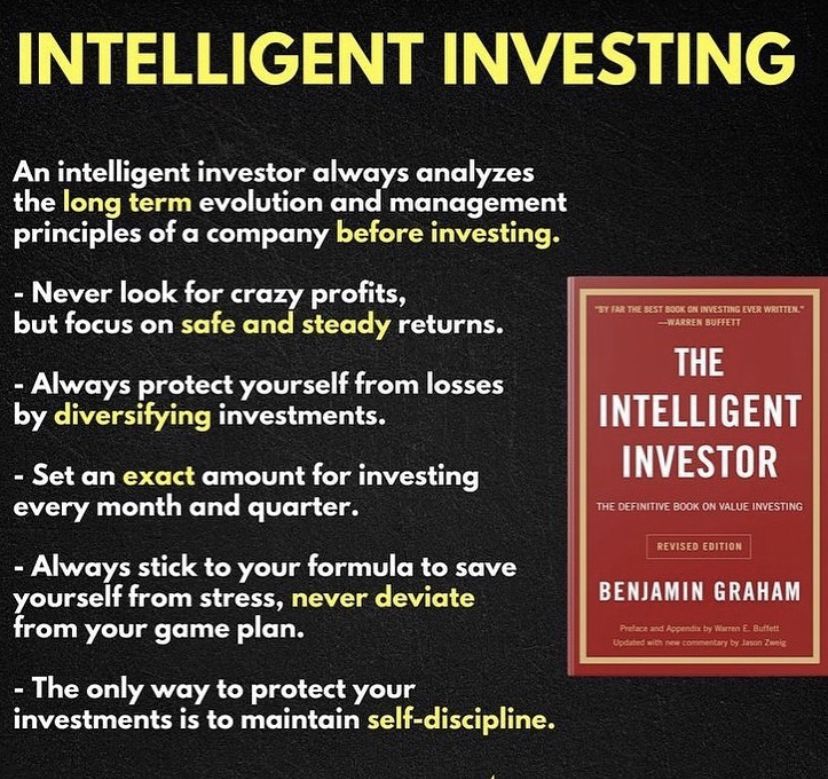
He followed it in 1949 with The Intelligent Investor, a more accessible treatment aimed at individual investors. Warren Buffett called the latter "by far the best book about investing ever written."
Graham's central contribution was the concept of intrinsic value: the true economic worth of a business based on its assets, earnings, dividends, and future prospects, completely independent of whatever the stock market happened to be pricing it at today.
The market, Graham argued, was not a weighing machine that always reflected true value. It was a voting machine that reflected sentiment, fear, and greed.
This distinction was not merely theoretical. Graham had watched the stock market in 1929 price companies at extraordinary multiples of their earnings and book values, prices that reflected collective euphoria rather than business fundamentals.
Then he watched those same stocks fall 80-90% in value, not because the underlying businesses had changed that drastically, but because sentiment had reversed. The market's pricing of stocks was, in Graham's view, often wildly disconnected from business reality in both directions.
The Margin of Safety
If intrinsic value is an estimate, it carries uncertainty. Graham's response was the margin of safety: the principle that you should only buy when the market price is substantially below your estimate of intrinsic value: not just a little below, but meaningfully below.
This gap serves as a buffer against estimation errors, unforeseen business deterioration, and unpredictable market behavior.
"The margin of safety is always dependent on the price paid. It will be large at some prices, small at other prices, nonexistent at still other prices." Benjamin Graham, The Intelligent Investor (1949)
A conservative Graham-style investor might require a 30% to 50% discount to intrinsic value before buying. This approach explicitly sacrifices some upside (you may miss good companies that are fairly priced) in exchange for downside protection.
Graham's emphasis on the margin of safety stemmed from his experience of financial catastrophe.
In an era before portfolio theory formalized risk measurement, Graham arrived at the same practical conclusion through business analysis: the risk of permanent capital loss, not short-term volatility, was the most important risk to manage.
Buying cheap relative to fundamental value was the primary mechanism for doing so.
The Mr. Market Metaphor
Graham introduced one of the most enduring metaphors in investing: the imaginary business partner he called Mr. Market.
Every day, Mr. Market appears at your door and offers to buy your share of the business or sell you his share at a stated price. The offer fluctuates wildly: sometimes Mr. Market is euphoric and offers prices far above business value; sometimes he is depressed and offers prices far below it.
You are under no obligation to transact. You can simply ignore Mr. Market on any given day and wait for a price you find attractive.
The key insight is that the market's daily price fluctuations are not information about a business's value: they are information about Mr. Market's emotional state.
The intelligent investor uses market prices opportunistically rather than letting them determine how to feel about investments. When prices are far below intrinsic value, buy. When prices are far above, sell or hold. In between, do nothing.
How Value Investors Measure Value
Value investing relies on financial ratios that compare what you pay for a company (its market price) to what you are getting (its underlying fundamentals). The most widely used are:
| Ratio | Formula | What It Measures | Graham's Threshold |
|---|---|---|---|
| Price-to-Earnings (P/E) | Market price / Earnings per share | How many years of current earnings you are paying | Below 15 for stock, ideally below 10 |
| Price-to-Book (P/B) | Market price / Book value per share | Discount to net asset value | Below 1.5, ideally near or below 1 |
| Earnings Yield | Earnings per share / Market price | Inverse P/E; comparison to bond yields | Above 2x the AAA bond yield |
| Debt-to-Equity | Total debt / Shareholders' equity | Financial risk and leverage | Conservative: below 0.5 |
| Current Ratio | Current assets / Current liabilities | Short-term financial health | Above 2 for manufacturing; above 1.5 for others |
Graham also required demonstrated earnings over multiple years (typically 10) and a track record of dividend payments. His approach was deliberately conservative: he was looking for businesses so obviously cheap that the analysis was nearly inescapable.
The Net-Net Strategy
Graham's most aggressive quantitative approach was the "net-net" stock: companies trading below their net current asset value (current assets minus all liabilities).
The logic was simple: if you could buy a company for less than you would receive winding it up today, ignoring all future earnings, the downside was theoretically limited.
Graham found that portfolios of such stocks, held for one to three years, returned far above market averages in his era.
Ben Graham's track record with this approach was remarkable. His investment partnership delivered approximately 20% annualized returns from 1936 to 1956, compared to an average market return of approximately 12.2% over the same period (Greenwald et al., Value Investing: From Graham to Buffett and Beyond, 2001).
Net-net stocks are almost entirely absent from US and European markets today: the strategy's success attracted enough capital to eliminate the opportunity. They occasionally appear in smaller Asian markets.
Research by Oppenheimer (1986, Financial Analysts Journal) confirmed that net-net portfolios selected using Graham's criteria would have earned 29.4% annually over 1970-1983 in US markets, compared to 11.5% for the broader market, extraordinary outperformance during a period when the US market still harbored statistically cheap securities.
The Shiller CAPE as a Value Indicator
Robert Shiller's cyclically adjusted price-to-earnings ratio (CAPE or Shiller P/E) represents an important modernization of Graham's valuation thinking.
Rather than using a single year's earnings (which can be distorted by cyclical highs or lows), CAPE divides the current stock price by the average of the last 10 years of real (inflation-adjusted) earnings.
Shiller's research, for which he shared the 2013 Nobel Prize in Economics, found that CAPE has significant predictive power for long-run stock market returns over 10-year horizons.
When CAPE is high (above 25-30), subsequent 10-year returns tend to be below average; when CAPE is low (below 15), subsequent returns tend to be above average.
The predictive power is weak for 1-year returns (markets can stay expensive or cheap for years) but strong for 10-year returns.
The CAPE reached 44 in early 2000 (its historic peak at that time), and the subsequent decade produced negative real returns for US equities. It reached approximately 32-38 in the early 2020s, well above its long-run average of approximately 17, implying below-average long-run return expectations from current levels.
Warren Buffett's Adaptations
Buffett studied under Graham at Columbia, worked briefly at Graham's partnership, and then managed his own partnerships before taking control of Berkshire Hathaway. He began as a strict Graham disciple.
Under the influence of Charlie Munger and his reading of Philip Fisher's Common Stocks and Uncommon Profits (1958), his approach evolved significantly.
From Cheap Assets to Durable Quality
The crucial shift in Buffett's thinking was captured in a famous line: "It is far better to buy a wonderful company at a fair price than a fair company at a wonderful price." This inverts the pure Graham approach.
Instead of focusing primarily on statistical cheapness, Buffett began emphasizing the quality and durability of the underlying business.
What makes a business "wonderful" in Buffett's framework?
The economic moat: Buffett popularized the term "moat" (drawn from the moats that protected medieval castles) to describe the competitive advantages that protect a company's profits from erosion by competitors.
Moats can come from brand power (Coca-Cola), network effects (Visa), switching costs (Oracle enterprise software), cost advantages (GEICO's low-cost insurance model), or regulatory barriers.
Buffett wrote in his 1999 letter to Berkshire Hathaway shareholders: "The key to investing is not assessing how much an industry is going to affect society, or how much it will grow, but rather determining the competitive advantage of any given company and, above all, the durability of that advantage."
Return on equity: Buffett favors businesses that generate high returns on the equity capital deployed in them, consistently over time. A business that earns 20% on equity every year, reinvesting those earnings, compounds wealth extraordinarily well. A business that earns 5% on equity, even if extremely cheap, does not.
The mathematical intuition is clear. A business with 20% ROE that retains all earnings doubles book value every 3.6 years (Rule of 72). At consistent valuations, the stock price tends to follow. A business with 5% ROE doubles book value every 14.4 years.
Over 30 years, the 20% ROE business has increased book value approximately 237-fold; the 5% ROE business approximately 4-fold.
Owner earnings: Buffett developed his own cash flow metric, owner earnings, calculated as net income plus depreciation and amortization, minus the capital expenditures required to maintain the business.
This figure better captures the cash actually available to shareholders than accounting earnings, particularly for capital-intensive businesses where accounting depreciation understates replacement capital requirements.
The "Circle of Competence"
Buffett and Munger introduced the concept of the circle of competence: the domain of industries and businesses where an investor has genuine understanding deep enough to estimate intrinsic value with reasonable accuracy.
They argue that investors should confine their investments to their circle of competence and resist venturing outside it simply because opportunities appear to exist there.
This concept explains why Buffett famously avoided technology stocks during the 1990s boom: he acknowledged he did not have the ability to predict which technology companies would sustain competitive advantages, so he declined to invest even in what appeared to be obviously successful companies.
His admission of uncertainty was not a failure of analysis; it was disciplined adherence to the principle of only buying what he could confidently value.
The Value Premium: Does It Still Exist?
The empirical question of whether value investing systematically outperforms the market has been one of the most studied and debated topics in financial economics for 50 years.
The Fama-French Three-Factor Model
In a landmark 1992 paper published in the Journal of Finance, Eugene Fama and Kenneth French documented that stocks with low price-to-book ratios (value stocks) had historically outperformed stocks with high price-to-book ratios (growth stocks) by approximately 4 to 5 percentage points per year in US markets since 1963.
The "value premium" was large, consistent across countries, and robust across time periods examined.
Fama and French incorporated the value premium into their three-factor model (alongside the market premium and a small-cap premium), treating it as a systematic risk factor: an excess return that compensates investors for bearing a specific form of risk (perhaps distress risk, or the risk that these companies are cheap for good reason).
Subsequent research by Fama and French (1998, Journal of Finance) confirmed the value premium across 13 major international markets from 1975 to 1995, finding that value stocks outperformed growth stocks in 12 of the 13 countries examined. The international evidence was considered strong support for the robustness of the premium.
The Value Premium's Disappearance
Since roughly 2007, and dramatically so between 2017 and 2020, value stocks have dramatically underperformed growth stocks in US markets. The MSCI US Value Index underperformed the MSCI US Growth Index by more than 50 percentage points over the decade ending 2020.
The S&P 500 Pure Value Index declined 17% in 2020 while the S&P 500 Pure Growth Index rose 40%, a gap of 57 percentage points in a single year.
Researchers and practitioners have offered several explanations:
- The premium was arbitraged away after publication of Fama-French's research; too much capital chased value stocks and eliminated the mispricing
- Intangible assets are systematically undervalued in book value calculations: the book value measure does not capture the value of software, data, brand, or human capital, making modern growth companies look expensive on P/B when they may not be
- Interest rate suppression during 2009-2022 systematically favored long-duration assets (growth stocks whose cash flows lie far in the future), benefiting growth at value's expense
- The premium is cyclical, not dead, and will reassert during economic recoveries and periods of rising interest rates
Value stocks performed dramatically better in 2022 as interest rates rose sharply, suggesting the cyclical explanation has merit. The MSCI Value index outperformed MSCI Growth by approximately 22 percentage points in 2022 as rising rates compressed growth stock valuations.
The intangible asset argument has received serious academic attention. Researchers including Baruch Lev and Feng Gu (The End of Accounting, 2016) argue that GAAP accounting standards systematically undervalue firms that invest heavily in intangibles, because research and development, brand building, and software development are expensed immediately rather than capitalized as assets.
A pharmaceutical company that has spent $5 billion developing a blockbuster drug holds a far more valuable asset than its book value reflects, because that spending was expensed as incurred.
Common Value Traps
One of the most dangerous phenomena in value investing is the value trap: a stock that looks cheap but continues to decline or stagnate indefinitely because the apparent cheapness reflects genuine deterioration.
Classic value traps share common characteristics:
Structurally declining industries: A newspaper company trading at a low P/E might look cheap, until you realize that earnings will likely be lower next year, and the year after that, as print advertising continues to decline. The cheapness is warranted.
US newspaper advertising revenue fell from approximately $49 billion in 2005 to under $9 billion by 2020 (Pew Research Center, 2021), a collapse that made every valuation multiple based on peak earnings misleadingly optimistic.
Deteriorating competitive position: A retailer with a low P/E and strong historical earnings may be losing market share to e-commerce competitors. The historical earnings are not predictive of future earnings.
Sears Holdings, which traded at seemingly cheap valuations on historical earnings for years before its 2018 bankruptcy, exemplifies how backward-looking valuation metrics can mislead when the competitive environment is deteriorating rapidly.
Accounting distortions: Reported earnings may overstate economic reality. Aggressive revenue recognition, understated depreciation on rapidly aging assets, or off-balance-sheet liabilities can make a business look cheaper than it is.
Commodity businesses with no moat: A steel company or airline trading at a low P/B may be genuinely cheap during a trough, but without a competitive advantage, competitor entry or overcapacity will prevent sustained high returns on capital.
The antidote to value traps is exactly the quality analysis Buffett emphasized: understanding whether the business has durable earnings power, not just current or historical earnings. A cheap stock is only a bargain if the thing you are buying cheaply is genuinely valuable.
Behavioral Foundations of Value Investing
Why should buying cheap stocks outperform at all? The behavioral finance perspective offers a compelling explanation: human beings are systematically and predictably bad at forecasting the future performance of companies with recent negative news or poor recent returns.
When a stock has fallen significantly and carries bad news, investors extrapolate the negativity forward, assuming continued deterioration. They also exhibit loss aversion (the pain of holding a loser is acute) and are reluctant to buy something others are evidently selling.
This produces systematic overreaction to bad news and underpricing of companies experiencing temporary (not permanent) difficulties.
Werner De Bondt and Richard Thaler documented this pattern empirically in a landmark 1985 paper in the Journal of Finance titled "Does the Stock Market Overreact?" They found that stocks that had performed worst over the prior 3-5 years (extreme losers) significantly outperformed stocks that had performed best (extreme winners) over the subsequent 3-5 year period.
The reversal was substantial: losing portfolios outperformed winning portfolios by approximately 25 percentage points over 3 years.
The authors attributed the reversal to investor overreaction, the same behavioral pattern that creates value investing opportunities.
Conversely, companies with recent strong performance attract excessive optimism. Investors extrapolate growth that cannot be sustained, bid prices above intrinsic value, and subsequently experience disappointment as reality reverts toward the mean.
Josef Lakonishok, Andrei Shleifer, and Robert Vishny (1994, Journal of Finance) found that value stocks outperformed glamour (growth) stocks by 10.5 percentage points per year over 1968-1990 in US markets, a gap they attributed primarily to investor overreaction and extrapolation of past performance.
"The stock market is a device for transferring money from the impatient to the patient." Warren Buffett
Value investing, on this view, profits from taking the opposite side of systematic psychological errors: errors that are predictable, persistent, and widely documented, yet remain profitable to exploit because the behavioral biases that generate them are deeply embedded in human psychology and do not disappear merely because they are identified.
Practical Considerations for Modern Value Investors
Applying value investing principles in practice requires more than screening for low P/E ratios:
Understand the business first: Numbers without business understanding lead to value traps. Before analyzing ratios, investors must understand the industry structure, the competitive position of the company, and the durability of its earnings.
Charlie Munger describes this as developing "worldly wisdom": a broad understanding of how businesses, industries, and human psychology work that allows correct interpretation of financial data.
Think in terms of normalized earnings: A single year's earnings may reflect cyclical highs or lows. Experienced value investors often average earnings over a full economic cycle (7 to 10 years) to estimate normal earning power. This is the approach underlying Shiller's CAPE ratio, applied at the individual company level.
Account for balance sheet risk: Cheap stocks at distressed companies can be genuine bargains, or they can go to zero as debt covenants are breached. Balance sheet conservatism reduces the risk of permanent capital loss.
Graham's requirement for low debt ratios reflected his understanding that financial leverage amplifies both gains and losses, and that losing the entire investment (permanent capital loss) is far worse than missing some upside.
Be patient and contrarian: By definition, value opportunities exist when other investors are avoiding or selling a sector or stock. This requires psychological comfort with going against the crowd and tolerating potentially long periods of underperformance before the thesis plays out.
Buffett has written that the ability to remain rational while others are panicking, and panicking while others are rational, is the most important temperamental quality in investing.
Diversify within value: No individual value judgment is certain. Spreading capital across multiple undervalued positions reduces the damage from any single value trap.
Graham recommended holding at least 10-15 securities in a net-net portfolio; Buffett eventually became more concentrated as his analytical confidence and position sizing grew, but concentration requires commensurately deep analysis.
Value Investing Performance: A Historical Summary
The most comprehensive study of value investing performance across markets and time periods remains Fama and French's 1998 international evidence. Supplementary research has extended and refined the picture:
| Market / Study | Period Studied | Value Outperformance (Annual) |
|---|---|---|
| US (Fama-French, 1992) | 1963-1991 | ~4.5% per year |
| 13 international markets (Fama-French, 1998) | 1975-1995 | ~7.7% per year |
| US net-net stocks (Oppenheimer, 1986) | 1970-1983 | ~17.9% per year vs. market |
| US value vs. growth (Lakonishok et al., 1994) | 1968-1990 | ~10.5% per year |
| US (post-2007, approximate) | 2007-2021 | Value underperformed significantly |
| US (2022) | 2022 | Value outperformed by ~22% |
The pattern is clear: value investing produced large and consistent outperformance in the decades studied through the 1990s, entered a prolonged period of underperformance as interest rates fell and technology growth companies dominated, and showed signs of reversal as interest rates normalized in 2022.
Conclusion
Value investing is not a formula. It is a discipline that combines financial analysis, business judgment, temperamental patience, and the willingness to disagree with the market when evidence warrants. Graham built its foundations on rigorous quantitative analysis and the margin of safety concept.
Buffett extended it by insisting that the quality and durability of the underlying business mattered as much as the statistical price.
Whether the historical value premium persists in current markets is genuinely uncertain. The academic evidence is contested; the empirical record since 2007 has been mixed; and the rise of passive index investing has changed the market's structure in ways that may affect factor premiums going forward.
Cliff Asness of AQR Capital Management, one of the most rigorous quantitative investors in the value tradition, has argued that value was "never dead, just really painful," pointing to the statistical evidence that the premium remains detectable in the data even during its underperformance periods.
But the underlying logic, that buying assets for less than they are intrinsically worth with adequate margin of safety is a rational approach to risk management, remains as sound as it was when Graham first articulated it after surviving the Great Depression.
The specific application of that logic must evolve as markets, technology, and the nature of business value change.
What does not change is the central discipline: understand what you own, pay less than it is worth, and be honest with yourself when you have made an error.