
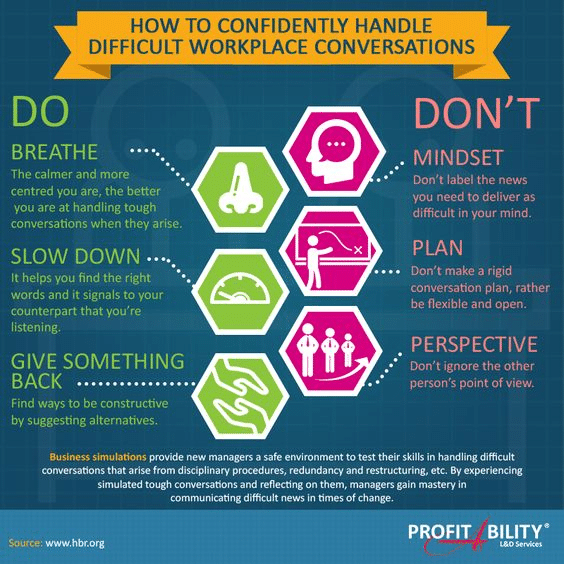
Strategies: Almost everyone who has worked with others has encountered someone who made the environment significantly harder. The colleague who agrees to things they have no intention of doing. The manager who takes credit for your work. The constant complainer who never contributes solutions.
The person who turns every meeting into a territorial conflict.
Difficult people at work are not a minor inconvenience. They consume time, generate stress, damage team performance, and drive capable people out of organizations.
Understanding the patterns behind difficult behavior, what the research says about effective responses, and how to protect your own wellbeing in the process can transform an exhausting situation into a manageable one.
Why People Are Difficult: The Underlying Patterns
Labeling someone as "difficult" is a description of the impact they have on you, not an explanation of their behavior. Understanding the patterns beneath difficult behavior is both more accurate and more useful.
Most difficult workplace behavior serves a psychological function - it meets a need, even if destructively. Understanding that function doesn't mean excusing the behavior, but it does make your response more effective.
Passive-Aggressive Behavior
Passive-aggression is the indirect expression of hostility or resistance. Instead of saying "I disagree with this decision," a passive-aggressive person might agree in the meeting and then miss the deadlines that would implement it.
Instead of addressing a conflict directly, they might make cutting remarks in meetings and then deny meaning anything by them.
The function of passive-aggression is conflict avoidance combined with hostility expression. The person gets to express their resistance or displeasure without the risk of direct confrontation. It often develops in environments - families, organizations - where direct disagreement felt or was genuinely dangerous.
Passive-aggressive behavior is particularly maddening because it targets the implicit, making it hard to address. You can't confront someone about what they "didn't mean."
The Chronic Complainer
The chronic complainer processes experiences primarily through complaint - persistent, repeated negativity about colleagues, leadership, policies, and processes. Critically, the complaining is never accompanied by genuine problem-solving effort or constructive alternative proposals.
Chronic complainers often receive sympathy initially, which reinforces the pattern. They can be genuinely skilled at articulating problems - the issues they raise are sometimes real - but the complaining serves a social function (attention, solidarity, identity as the perceptive outsider) rather than a problem-solving one.
The chronic complainer is corrosive to team morale because negativity is genuinely contagious. Research on emotional contagion by Elaine Hatfield and colleagues demonstrates that emotions spread through groups through unconscious mimicry.[1] A persistent complainer pulls the emotional tone of a team downward.
Hatfield's work, later extended by Nicholas Christakis and James Fowler in their social network research, showed that negative emotional states spread not just to immediate contacts but up to three degrees of social separation - meaning one chronic complainer can affect the mood of people who have never spoken to them directly.[2]
Narcissistic Behavior Patterns
Narcissistic behavior in the workplace - distinct from the clinical personality disorder - involves a cluster of traits: an inflated sense of entitlement, constant need for recognition and admiration, lack of empathy for others' needs, tendency to take credit and assign blame, and reactions of rage or cold dismissal when frustrated.
Narcissistic colleagues are disproportionately found in certain industries and roles - those that reward self-promotion, visible performance, and competitive status-seeking. Research consistently finds elevated narcissism among senior executives, though the correlation is complicated by selection effects.
A 2013 study by Westerlaken and Woods found that narcissistic leaders receive initially high performance ratings that consistently decline over time as the costs of their management style accumulate.[7]
The key characteristic to understand: narcissistic behavior is driven by profound fragility, not genuine confidence. The rage responses, the credit-taking, the dismissiveness of others - these are defensive maneuvers protecting an ego that cannot tolerate threat.
This doesn't make the behavior acceptable, but it does explain why direct challenges typically escalate rather than resolve.
Aggressive and Bullying Behavior
Workplace aggression ranges from verbal hostility and interrupting to overt bullying - targeting, humiliating, and undermining a specific individual. The Workplace Bullying Institute estimates that 30% of American workers have experienced workplace bullying, with approximately 19% experiencing it currently.[5]
Aggression in the workplace persists when it is tolerated or rewarded. Managers who are aggressive are often also perceived as "tough" or "demanding" - descriptions that can be neutral or positive in organizational cultures that conflate aggression with high standards.
Lutgen-Sandvik, Tracy, and Alberts (2007) found that organizational culture was a stronger predictor of bullying prevalence than individual perpetrator characteristics - in cultures that tolerated aggression at the top, it cascaded throughout.[6]
Conflict Avoidance: The Silent Difficult Person
Not all difficult people are loud. Some are difficult through what they won't do: address conflict directly, give honest feedback, make decisions under uncertainty, acknowledge problems. Conflict avoidance in a colleague or manager creates dysfunction just as reliably as aggression - it just looks different.
The conflict avoider creates problems by omission: allowing misunderstandings to fester, failing to give feedback that would improve performance, making inconsistent decisions to avoid saying no, and building resentment through accumulated unaddressed grievances.
The Credit-Taker and the Underminer
Two additional patterns deserve naming because they are common and particularly damaging to careers.
The credit-taker takes visible ownership of team accomplishments while attributing failures and shortcomings to others. In environments where visibility drives advancement, credit-taking is a rational if destructive strategy.
Research by Eden King and colleagues on organizational politics found that credit-claiming behavior is strongly correlated with advancement in cultures that lack structured attribution systems, creating incentive structures that reward taking credit over generating it.[9]
The underminer quietly degrades colleagues' reputations, visibility, and confidence through small, deniable acts: failing to copy someone on a relevant email, mentioning a colleague's past mistake in an unrelated context, damning with faint praise when asked about a colleague's capabilities.
Undermining is difficult to address because it is designed to be deniable and often operates below the threshold of what feels reportable.
What Workplace Conflict Costs
The financial and organizational costs of workplace conflict are substantial and well-documented.
A 2008 study commissioned by CPP Inc. (publisher of the Myers-Briggs assessment) found that:
- U.S. employees spend an average of 2.8 hours per week dealing with conflict.[3]
- This translates to approximately $359 billion in paid hours annually.
- 85% of employees experience conflict at work to some degree.
These direct costs understate the indirect impact. Talented employees leave organizations - and especially managers - they find intolerable. Gallup's research linking manager quality to engagement suggests that a significant portion of voluntary turnover is conflict-related.[4]
The cost of replacing a single employee at mid-level complexity is conservatively $15,000-$30,000; at senior levels, multiples higher.
Team performance suffers in conflict-heavy environments through reduced information sharing (people protect information in adversarial environments), lower quality decision-making (dissent gets suppressed), and the coordination costs of navigating political dynamics rather than solving problems.
| Cost Category | Impact |
|---|---|
| Direct time in conflict | ~2.8 hrs/week per employee (CPP, 2008) |
| Annual U.S. productivity cost | ~$359 billion in paid hours (CPP, 2008) |
| Voluntary turnover linked to conflict | Substantial - industry estimates: 1-3x annual salary per departure |
| Productivity impact of poor relationships | Gallup: significant reduction in engagement metrics |
| Absenteeism | Conflict-related stress is a major driver |
| Management time | Typically 20-40% of manager time in conflict-heavy environments |
| Health costs | Elevated cortisol, immune suppression, cardiovascular effects (Kivimaki, 2006) |
A Finnish longitudinal study by Kivimaki and colleagues (2006), published in the Archives of Internal Medicine, tracked over 6,000 employees across 10 years and found that employees in high-conflict workplace relationships had a 25% higher risk of serious coronary events than those in low-conflict relationships.[8]
Difficult people are, in a literal clinical sense, a health risk.
Evidence-Based Strategies for Specific Behaviors
Different difficult behaviors call for different responses. Generic advice to "have a conversation" or "ignore it" fails because the right approach depends on the specific pattern.
Responding to Passive-Aggression
The most effective response to passive-aggression is making the implicit explicit - in behavioral, not character terms.
Instead of: "You keep doing this on purpose." Try: "I've noticed the last three times we agreed on a deadline, the deliverable came in late. That pattern is affecting the project. I need to understand what's getting in the way and agree on a process that works."
This approach:
- Describes behavior (not character)
- Describes impact (not accusation)
- Focuses on future solution (not past blame)
- Makes avoidance harder by naming the pattern
Resist the pull to accept indirect communication in return - if the person responds indirectly or denies the pattern, acknowledge what they said and return to the concrete behavioral description.
A common tactical error when dealing with passive-aggression is matching indirectness with indirectness: hinting at your frustration, becoming avoidant yourself, or making loaded comments in group settings. This escalates the passive-aggressive dynamic rather than interrupting it.
The counterintuitive move is radical clarity about behavior and impact, delivered without aggression.
Responding to Chronic Complaining
The key intervention with a chronic complainer is refusing to validate the complaint without requiring a move toward solution.
- "That sounds frustrating. What do you think would help?"
- "I hear that's a problem. Are you looking for input or just to vent?"
- "I agree that's an issue. Have you raised it with [relevant person]?"
These responses acknowledge the complaint without reinforcing the pattern of unproductive negativity. They also gently test whether the complainer actually wants change or just wants to complain - which tells you how to invest your attention.
If you're in a position of authority, chronic complainers sometimes need a direct conversation: "I notice you often raise concerns in our team meetings. I appreciate critical thinking, but I want us to pair it with proposals. In the future, can you bring a suggested solution when you raise a problem?"
"The chronic complainer is often intelligent enough to identify real problems. The intervention isn't to silence the insight - it's to redirect the energy from description to problem-solving."
Another effective boundary with chronic complainers is time-limiting your engagement.
If a colleague reliably uses every available interaction as an opportunity to complain, you can manage the total volume without cutting them off entirely: "I have about five minutes - what's the most important thing you want to talk about?" This signals that complaining has a cost (your limited attention) without being hostile.
Navigating Narcissistic Behavior
Responding effectively to narcissistic behavior patterns requires a few key adjustments:
Don't challenge their self-image directly. Direct challenges to a narcissist's view of themselves typically produce rage or cold withdrawal, not reflection. Work around the ego rather than attacking it.
Frame everything in terms of their interests. "This approach will make you look great with the client" lands very differently than "This is the right thing to do." You are not manipulating - you are communicating in the person's native language.
Document your own contributions. Narcissistic colleagues take credit and assign blame. The practical counter is maintaining a clear written record of your work, contributions, and communications. You shouldn't have to defend yourself against false attribution, but having the evidence reduces your exposure.
Set firm behavioral limits. You cannot change someone's character, but you can be clear about what behavior you will and won't accept in interactions with you. "I won't continue this conversation if you speak to me that way" is a behavioral limit, not an attack on identity.
Manage your expectations. Research on narcissistic personality structure consistently finds that the behaviors - credit-taking, empathy failures, entitlement - are stable features of personality organization, not correctable lapses in judgment. You are not going to change this person's character. You can only manage the interface.
Addressing Aggression and Bullying
Aggression is different from the other patterns because it may involve serious organizational misconduct and personal harm.
In the moment: Stay calm. An aggressive person often escalates when they see emotional impact. A flat, calm, quiet response is often more disruptive to the aggressor than a defensive or emotional one.
Research on crisis intervention (Levin and colleagues, 2009) found that matching an aggressor's emotional intensity reliably escalates the confrontation; lowering vocal pitch, slowing speech, and reducing physical tension has a measurable de-escalating effect.[12]
Documentation: Record specific incidents - date, time, location, what was said, any witnesses. Vague reports of someone being "mean" are difficult to act on. Specific, documented incidents are actionable.
Reporting: Aggression that rises to bullying or harassment must be reported to management or HR. You have a right to a workplace free from harassment, and organizations have legal and practical obligations to address it.
If your organization's management or HR is complicit in the behavior - which happens - external resources including employment lawyers and regulatory agencies exist.
Dealing With the Credit-Taker
The most effective long-term counter to credit-taking is proactive visibility - creating a record of your contributions before anyone else can claim them. This is not political gaming; it is basic self-protection in environments where attribution matters.
Practical methods include: following up on verbal contributions with brief written summaries ("Following up on our discussion - as I outlined, the key recommendation is..."), copying relevant stakeholders on significant decisions you have contributed to, presenting your own analysis directly rather than routing it through the credit-taker, and building relationships with decision-makers who can observe your work firsthand rather than hearing about it secondhand.
In one-on-one conversations with the credit-taker, naming the pattern directly can be effective: "I noticed the client attribution in yesterday's meeting.
I want to make sure my contribution to that analysis is visible - can we make sure I'm included in the acknowledgment going forward?" This is uncomfortable but establishes a clear expectation.
When and How to Escalate
Escalation - involving a manager, HR, or higher authority - is appropriate in specific circumstances:
Escalate immediately: Any behavior involving threats, physical intimidation, sexual harassment, or discrimination. These are not situations for "trying to work it out first."
Escalate after attempted resolution: When you've had a direct conversation about the behavior, documented the problem, and nothing has changed.
Escalate when it's affecting you: If the behavior is materially affecting your performance, health, career development, or psychological safety, you have standing to escalate regardless of whether you've "tried everything."
Prepare before escalating: Bring documentation (dates, specific incidents, any witnesses), a clear description of what you've done to address it, and a specific request for what you need the organization to do.
One of the most common escalation failures is presenting a complaint without a request. "I want you to know this is happening" invites a sympathetic response but no action.
"I am asking for X - a mediated conversation, a formal warning, reassignment, documentation in the file" gives the organization something specific to act on and you something specific to hold them to.
Escalation Decision Framework
| Situation | Recommended Action |
|---|---|
| Threats, physical intimidation, sexual harassment | Escalate immediately to HR and, if necessary, legal authorities |
| Discrimination (race, gender, disability, etc.) | Escalate immediately; document everything |
| Bullying with witnesses | Escalate after initial direct conversation if behavior continues |
| Passive-aggression, chronic complaining | Address directly first; escalate if pattern continues and affects performance |
| Credit-taking | Address directly; document contributions proactively; escalate if persistent |
| Conflict avoidance by a manager | Escalate to HR or their manager if your development is materially impaired |
Protecting Your Own Wellbeing
This is often the most neglected dimension of dealing with difficult people. The research on interpersonal conflict and stress is clear: sustained exposure to hostile or demeaning relationships has measurable effects on cortisol levels, immune function, sleep quality, and cardiovascular health.
This is not metaphorical - it is physiological.
Several evidence-supported strategies protect wellbeing in difficult interpersonal environments:
Limit unnecessary exposure. Reduce interactions with a difficult person to what the work genuinely requires. This is not avoidance - it is triage of your limited attention and energy.
Cognitive reframing. Research on cognitive appraisal (Lazarus & Folkman, 1984) finds that how you interpret a stressor matters as much as the stressor itself.[10]
Reframing a difficult colleague's behavior as a reflection of their psychology rather than your worth is not toxic positivity - it is an accurate and protective interpretation. Their behavior would exist regardless of which target was in your position.
Maintain external perspective. Close colleagues, mentors, or friends outside the situation provide a reality check when you're too close to it. Isolation in a difficult work situation is a warning sign - it allows the difficult person's framing to become your only reference point.
Set behavioral limits and honor them. Clear, consistent limits on what behavior you will accept - applied calmly and without drama - reduce your exposure to harmful behavior and signal to the difficult person that certain behaviors produce cost for them.
Physical recovery practices. The physiological effects of sustained interpersonal stress are real and require active countermeasures. Research by Epel and colleagues on telomere length and chronic stress found that sustained workplace stress can measurably accelerate cellular aging.[11]
Exercise, adequate sleep, and social support outside work are not soft recommendations - they are the primary biological mechanisms through which the body recovers from the cortisol load of ongoing conflict.
Know when the situation is unsolvable. Some difficult people, in some organizational contexts, cannot be managed into reasonable behavior.
When the behavior is structural, organizationally protected, or the product of a character pattern that is not going to change, the honest assessment is that your time and energy are better spent finding an environment that doesn't require constant management of someone else's dysfunction.
"If you can change the situation, change it. If you can't, change how you relate to it. If you can't do that either, change the situation you're in." - paraphrase of Viktor Frankl's core insight, applied to organizational contexts
This is not an argument for giving up quickly. The sequence matters: first, attempt to address the behavior directly. Second, escalate appropriately. Third, protect yourself while doing the above. Fourth, honestly assess whether the environment is one you can tolerate long-term without significant personal cost.
The goal in dealing with difficult people is not to become a better reactor to bad behavior - it is to manage the situation with enough clarity and skill that it costs you the minimum possible while you pursue work that actually matters.
Sources & Further Reading
- Hatfield, E., Cacioppo, J.T., & Rapson, R.L. (1993). Emotional contagion. Current Directions in Psychological Science 2(3), 96-99.
- Christakis, N.A., & Fowler, J.H. (2009). Connected: The Surprising Power of Our Social Networks. Little, Brown.
- CPP Inc. (2008). Workplace Conflict and How Businesses Can Harness It to Thrive. CPP Global Human Capital Report.
- Gallup. (2020). State of the American Workplace. Gallup Press.
- Workplace Bullying Institute. (2021). 2021 WBI U.S. Workplace Bullying Survey. workplacebullying.org.
- Lutgen-Sandvik, P., Tracy, S.J., & Alberts, J.K. (2007). Burned by bullying in the American workplace. Journal of Management Studies 44(6), 837-862.
- Westerlaken, K.M., & Woods, P.R. (2013). The relationship between psychopathy and the Full Range Leadership Model. Personality and Individual Differences 54(1), 41-46.
- Kivimaki, M., Ferrie, J.E., Brunner, E., Head, J., Shipley, M.J., Vahtera, J., & Marmot, M.G. (2006). Justice at work and reduced risk of coronary heart disease among employees. Archives of Internal Medicine 165(19), 2245-2251.
- King, E.B., George, J.M., & Hebl, M.R. (2005). Linking organizational resources to workplace strategy and back again. Journal of Vocational Behavior 66(3), 391-411.
- Lazarus, R.S., & Folkman, S. (1984). Stress, Appraisal, and Coping. Springer.
- Epel, E., Daubenmier, J., Moskowitz, J.T., Folkman, S., & Blackburn, E. (2009). Can meditation slow rate of cellular aging? Annals of the New York Academy of Sciences 1172(1), 34-53.
- Levin, P., Beauchamp, M.J., & Murhula, M.M. (2009). De-escalation training in clinical settings: Evidence-based approaches. Journal of Nursing Administration 39(5), 226-231.