
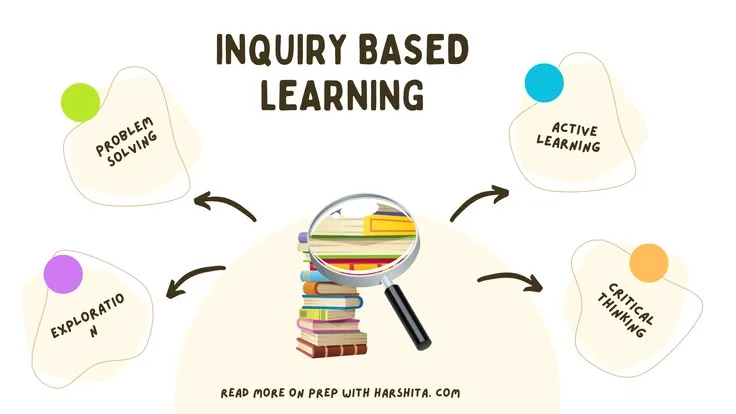
What Makes a Question "Better"?
A better question is one that generates more useful information, surfaces hidden assumptions, or advances shared understanding more efficiently than a less-considered alternative - as opposed to questions that are vague, leading, closed when open is needed, or simply the first formulation that comes to mind.
The study of skilled inquiry draws on cognitive science, communication research, and organizational behavior, all of which converge on the same finding: the quality of questions people ask is a learnable skill, not a fixed trait, and deliberately improving it produces measurable improvements in decision-making, relationship quality, and professional effectiveness.
Most people ask questions habitually and unreflectively; skilled questioners design their inquiries with awareness of purpose, framing, and timing.
In 1997, psychologist Arthur Aron set up a simple experiment.[1] He had pairs of strangers meet and take turns asking each other questions from a list he had provided. Some pairs were given a list that escalated gradually in personal depth - starting with easy questions and moving toward more vulnerable ones.
Other pairs got random questions of varying intimacy levels. The results were striking. Pairs who asked progressively deeper questions reported liking each other significantly more after just 45 minutes than pairs who conversed freely. Some subsequently became close friends.
The most famous item on Aron's list is now known as "the 36 questions that lead to love" - but the study's actual finding was more fundamental: asking good questions is one of the most powerful social technologies humans possess.
It creates trust, builds knowledge, reveals assumptions, generates insight, and fosters connection. It is also a skill that most people never consciously develop.
This article draws on cognitive science, communication research, philosophy, journalism, and organizational behavior to map the territory of skilled inquiry - what distinguishes great questions from poor ones, and how anyone can become more deliberate and effective in the questions they choose to ask.
"The quality of your life is determined by the quality of your questions." - Tony Robbins (popularizing an insight from NLP research)
The Business Case for Better Questions
Before mapping the territory of skilled inquiry, it is worth establishing why questions matter in professional contexts beyond their obvious conversational function.
A 2017 study by Alison Wood Brooks and Leslie John, published in the Journal of Personality and Social Psychology, found that people who ask more questions - particularly more follow-up questions - are rated as significantly more likable and better listeners by their conversation partners.[2]
More strikingly, people consistently underestimate how much asking questions, rather than sharing information about themselves, increases liking.
The researchers ran one experiment across online negotiations and found that high-question negotiators achieved better joint outcomes than low-question negotiators - not because questions were strategically deployed, but because they generated more shared information about both parties' needs.[9]
A separate study by Spencer Harrison and colleagues (2011) at INSEAD found that organizational cultures with higher rates of asking questions - specifically, cultures where employees routinely asked "why" and "what if" - showed higher rates of innovation, faster product development cycles, and better capacity to adapt to market changes.[3]
Curiosity, operationalized as questioning behavior, was a competitive advantage.
In management specifically, a 2013 study by Marilee Adams found that leaders who used what she termed "learner questions" (oriented toward curiosity and understanding) rather than "judger questions" (oriented toward assigning blame and confirming existing beliefs) had teams with significantly higher engagement scores and lower turnover.[8]
The questions a leader habitually asks set the cognitive and emotional tone for the entire team.
What Makes a Question Good?
Not all questions are equal. Research on expert questioners - therapists, investigative journalists, skilled interviewers, great teachers - reveals several consistent qualities of questions that produce genuine insight.
Genuine curiosity. Questions asked to test, trap, or display knowledge are fundamentally different from questions asked to actually learn something. People can detect the difference.
Defensiveness and hostility in conversations often trace back to questions that were really arguments or judgments in disguise. "Don't you think it would have been better to do it this way?" is not a question - it is a critique.
Precision and focus. Vague questions produce vague answers. "How did that go?" invites a superficial response. "What was the hardest part of that project?" forces genuine reflection. The more specifically a question targets what you actually want to know, the more useful the answer will be.
Appropriate openness. A question can be too closed (limiting the response to yes/no or a narrow factual answer when more is needed) or too open (so broad that the respondent does not know where to begin). "Tell me about yourself" is so open it is often unhelpful.
"What brought you to this field?" opens a specific thread. Skilled questioners calibrate openness to purpose.
Timing and sequencing. In therapy, coaching, and investigative interviewing, the order of questions matters substantially. Building to a sensitive question too quickly breaks trust. Asking for conclusions before context means the answer lacks the frame needed to make sense of it.
Psychological safety for the respondent. Questions asked in environments where admitting uncertainty or expressing dissent feels dangerous produce defensive, rehearsed answers rather than honest ones.
The same question asked by a psychologically safe leader and a punitive one will produce dramatically different responses. The quality of the answer is always partly a function of the environment in which the question is asked.
Open vs. Closed Questions: The Fundamental Distinction
The most frequently cited distinction in questioning research is between open questions and closed questions.
A closed question has a bounded answer space - usually yes/no, a choice from a limited set, or a short specific fact:
- "Did the meeting go well?"
- "Which option did you choose?"
- "Is the report done?"
A closed question is efficient for gathering specific data when you know exactly what you need. In surveys, legal cross-examination (designed to limit testimony), and diagnostic checklists, closed questions are appropriate.
Their limitation is that they constrain the respondent to your frame - you get answers to the questions you knew to ask, but you do not discover what you did not know to ask about.
An open question invites elaboration and requires the respondent to construct an answer rather than select one:
- "How did the meeting go?"
- "What factors went into that decision?"
- "What's still unresolved about the project?"
Research on therapeutic conversations, police interviews, job interviews, and sales conversations consistently shows that open questions produce more information, more trust, and deeper understanding than closed questions.
They also distribute authority - open questions implicitly acknowledge that the respondent knows things you do not, which creates the psychological safety necessary for honest answers.
The practical implication: most people ask too many closed questions by default, because closed questions feel more controlled and less vulnerable. Deliberately replacing closed questions with open ones in important conversations typically produces dramatically better conversations.
| Question Type | Example | Best Used When |
|---|---|---|
| Closed | "Was it on time?" | Verifying a specific fact |
| Open | "How did the delivery go?" | Building understanding |
| Leading | "You think the plan works, right?" | Almost never in genuine inquiry |
| Probing | "What do you mean by 'complicated'?" | Pursuing vagueness or ambiguity |
| Reflective | "So what I'm hearing is... does that sound right?" | Checking understanding |
| Hypothetical | "What would you do if the timeline changed?" | Exploring thinking and values |
| Devil's Advocate | "What's the strongest argument against this view?" | Testing robustness of a position |
| Scaling | "On a scale of 1-10, how confident are you?" | Calibrating intensity or certainty |
The Socratic Method: Questioning as a Tool for Thinking
Socrates, as portrayed in Plato's dialogues, did not teach by asserting truths. He asked questions - often simple, apparently naive questions - that exposed the hidden assumptions in his interlocutors' confident positions.
The Socratic method is a form of dialectical inquiry: a series of questions that progressively examine a claim, forcing the respondent to either defend it with evidence and reasoning or acknowledge its limitations. It operates by:
- Seeking clarification: "What do you mean by justice?"
- Probing assumptions: "What are you assuming when you say that?"
- Probing evidence: "How do you know that? What is the basis for this claim?"
- Exploring implications: "What would follow if that were true?"
- Questioning perspectives: "What would someone who disagreed with you say?"
- Questioning the question: "Why did you ask that? Why does this matter?"
In contemporary use, Socratic questioning is employed in philosophy and law education, cognitive behavioral therapy (examining the evidence for distorted beliefs), and critical thinking training. It is notably uncomfortable - genuinely Socratic dialogue tends to reveal that people hold beliefs they cannot coherently defend.
This discomfort is productive, but it requires a questioner who is genuinely curious rather than adversarial, and a culture where not-knowing is safe.
Socratic Questioning in Practice
Applying Socratic inquiry does not require a seminar setting. The practical toolkit for any conversation:
- When someone makes a claim, ask "What do you mean by that?" before agreeing or disagreeing
- When someone proposes a plan, ask "What assumptions does this depend on?"
- When someone predicts an outcome, ask "What would have to be true for that prediction to be wrong?"
- When you find yourself confident about something, ask yourself "How do I actually know this?"
In cognitive behavioral therapy, a specific version of Socratic questioning called guided discovery has been extensively validated.[10]
Therapists use a sequence of questions to help patients examine the evidence for distorted beliefs, consider alternative interpretations, and reach their own revised conclusions rather than simply accepting the therapist's perspective.
The research consistently shows that insight reached through guided questioning produces more durable change than insight delivered as instruction - because people are more persuaded by conclusions they reached than by conclusions they were told.
The SPIN Framework: Questions in High-Stakes Conversations
Neil Rackham spent 12 years analyzing 35,000 sales calls across 23 countries, publishing his findings in SPIN Selling (1988).[4]
His research upended conventional sales wisdom by showing that the techniques taught in traditional sales training - opening with strong statements, handling objections aggressively, closing hard - were counterproductive in complex, high-value sales.
What actually worked was a specific sequence of questions.
SPIN stands for four question types used in sequence:
Situation questions gather context: "How many people are in your team?" "What systems do you currently use for this?" Situation questions establish the background.
Research found that effective salespeople asked fewer situation questions than ineffective ones - too many context questions feel like form-filling and build no rapport.
Problem questions identify pain: "How often does that cause a problem?" "What are the consequences when that happens?" "How difficult is it when X occurs?" Problem questions move the conversation from neutral description to acknowledged pain - they help prospects articulate what is not working.
This is where average salespeople end, but highly effective ones continue.
Implication questions amplify the problem by exploring its consequences: "When that system fails, what impact does it have on your team's deadlines?" "If this issue persists for another year, what does that mean for your customers?" Implication questions make the problem feel bigger, more consequential, and more urgent.
They are the most powerful question type in complex sales - but they require genuine understanding of the problem to ask well.
Need-payoff questions invite the prospect to describe the value of a solution: "If you could solve that, how would it change things?" "How valuable would it be to have that problem resolved?" Need-payoff questions shift the conversation from problem to solution, but they let the prospect articulate the value rather than having the seller assert it.
The insight is that people are more persuaded by their own arguments than by others'.
The SPIN framework applies beyond sales. The same structure is effective in coaching (helping someone identify and commit to solving their own problems), management conversations (building motivation for change), and any situation where you want someone to reach their own conclusions rather than having them thrust upon them.
Questions in Research and Investigation: The Journalist's Toolkit
Investigative journalism developed rigorous questioning methodology because the stakes are high - legal liability, reputational damage to subjects, accuracy obligations. The basic framework that journalists learn is a set of question types derived from the five Ws and one H.
Who, What, Where, When establish the facts of a situation - the basic reportable elements. These are mostly closed questions, aiming at specific verifiable data.
Why questions seek motivation, causation, and reasoning. They are harder to answer and harder to verify, but they drive narrative and meaning. "Why did this decision get made?" is often the most important question in an investigation, and it is the hardest to answer honestly.
How questions uncover mechanisms and processes: "How exactly did this happen?" "How was this funded?" "How did no one notice?" How questions often reveal structural explanations for events that appear to be individual choices.
The experienced journalist adds several meta-questions to this list:
- "What am I missing?" - actively searching for the information that would contradict the emerging narrative
- "Who would know more about this?" - identifying sources of better information
- "What would this look like if I'm wrong?" - imagining alternative explanations
This adversarial stance toward one's own conclusions is one of the most powerful epistemic tools available, and it is available to anyone in any domain.
The Silence After the Answer
One technique that experienced interviewers use and that most people dramatically underutilize is strategic silence.
Research by journalist practice and psychological study consistently shows that pausing after a respondent answers - instead of immediately asking the next question - typically causes the respondent to continue speaking, often adding information they were deciding whether to include.
The interviewer's silence creates a social pressure to fill it; the respondent fills it with more content.
In a study of employment interviews by Stevens and colleagues (1998), interviewers who paused 3-5 seconds after receiving an answer before asking the next question received answers that were on average 40% longer and contained significantly more unsolicited, relevant detail than interviewers who jumped in immediately.
The implication: the question you ask next may matter less than how long you wait after the answer.
Curiosity as a Learnable Skill
There is a prevalent assumption that some people are naturally curious and others are not. Research suggests this is partly wrong - curiosity, like other character strengths, has both dispositional and situational components.
Information gap theory, developed by George Loewenstein at Carnegie Mellon in 1994, proposes that curiosity is triggered by a perceived gap between what you know and what you could know.[5] The implication: curiosity can be engineered.
If you remind yourself of what you do not know about a topic before engaging with it - what questions you cannot yet answer - you activate curiosity more reliably than if you approach the topic with assumed competence.
Expertise and curiosity have a complicated relationship. Beginners in a field are often intensely curious because they are aware of their ignorance. As expertise grows, people ask fewer questions - partly because they actually know more, but also because acknowledging ignorance risks status.
Expert cultures where questions are seen as weakness actively suppress curiosity. Expert cultures where questions are seen as competence - as in science, good journalism, and the best academic departments - sustain curiosity longer.
Francesca Gino's research at Harvard Business School found that curiosity reduces confirmation bias (curious people more actively seek out information that contradicts their views) and improves group decision-making (curious team members share information more freely and explore disagreements more productively).
She also found that organizations inadvertently suppress curiosity through cultures that reward certainty, punish ambiguity, and treat not-knowing as a deficiency to be hidden.
In a 2018 article in Harvard Business Review, Gino estimated that fewer than 24% of employees feel curious at work on a regular basis - a statistic that represents both an enormous waste and a significant competitive vulnerability.[6]
The Neurological Case for Curiosity
Research by Gruber, Gelman, and Ranganath (2014) at the University of California Davis found that states of high curiosity - triggered by questions with uncertain answers - produced measurable increases in activity in the dopaminergic midbrain, including the hippocampus.[7]
This neural signature is associated with enhanced learning and memory consolidation. Participants in states of high curiosity remembered incidental information (information unrelated to the original question) significantly better than participants in low-curiosity states.
The practical implication: approaching work conversations with genuine curiosity - with open questions about what you do not yet know - does not just improve the quality of those conversations. It literally improves how much you learn and retain from them.
Questions That Undermine vs. Questions That Advance
Not all question habits are equally productive. Some questioning patterns, while common, reliably damage conversations and relationships.
Leading questions embed an assumption that biases the answer: "Don't you think we should have moved faster on this?" invites agreement rather than genuine reflection.
Leading questions are appropriate in some legal contexts (direct examination of your own witness) and almost nowhere else in professional life. They produce socially pressured agreement rather than actual information.
Multiple simultaneous questions give the respondent no way to answer well: "What happened, and who was responsible, and what should we do next?" The respondent picks one question and answers it, or gives a superficial answer to all three, or becomes paralyzed.[12] One question at a time is almost always better than several.
Questions that are actually statements ("Isn't it true that...") erode trust by using inquiry's form while abandoning its function. People recognize that they are being managed rather than understood, and they respond accordingly.
Why questions directed at people can trigger defensiveness because they implicitly demand justification: "Why did you do it that way?" is often received as "You should not have done it that way." Replacing "why" with "what" often defuses this: "What was behind that decision?" invites explanation rather than defense.
Practical Applications: Building a Better Question Practice
Recognizing good questions theoretically is different from asking them habitually. A few evidence-based practices for developing questioning skills:
Keep a question journal. Write down questions you encounter - in reading, conversations, and your own work - that you find genuinely illuminating. Review them periodically. Studying good questions builds a model for what you are aiming at.
Prepare questions before important conversations. Executives, therapists, and experienced interviewers typically prepare their most important questions in advance rather than improvising entirely.[13] Preparation ensures the conversation addresses what actually matters.
Pause before answering, and question instead. When someone brings you a problem, resist the reflex to provide a solution. Ask what they have already tried. Ask what they think the cause is. Ask what outcome they need. Often people know the answer; they need a question that surfaces it.
Practice the "five whys." Originally developed by Sakichi Toyoda and used in Toyota's manufacturing system, the five whys is a root cause analysis method: ask "why?" in response to a problem, then ask "why?" again in response to each answer, for at least five iterations.
It often reveals systemic causes that are far removed from the presenting symptom.
Develop comfort with silence. Research on interview technique shows that interviewers who wait 3-5 seconds after an answer before asking the next question receive substantially more complete responses than those who jump in immediately. Silence signals that the answer was heard and more is welcome.
Most people are uncomfortable enough with silence that they fill it - often with the most important thing they were deciding whether to say.
Audit your question ratio. In your next important conversation, notice the ratio of questions to statements you produce. Most people, when they count carefully, produce far fewer questions than they believe.
Recording and reviewing a conversation (with consent) is a highly effective way to discover your actual patterns rather than your assumed ones.
Replace "any questions?" with something specific. The question "any questions?" at the end of a presentation or meeting typically produces silence not because the audience has no questions but because the form creates social pressure against being the first to speak.
Replacing it with "what questions do you have?" (assumes questions exist) or directing at a specific person ("James, what's your reaction to the second point?") produces dramatically more engagement.
The goal is not a toolkit of question types deployed mechanically. It is a genuine orientation toward inquiry - treating conversations as opportunities to learn rather than opportunities to perform knowledge, treating other people's experience as a valuable data source, and treating your own assumptions as hypotheses rather than facts.[11]
That orientation, more than any specific technique, is what distinguishes the most effective questioners from the rest.
Sources & Further Reading
- Aron, A., Melinat, E., Aron, E.N., Vallone, R.D., & Bator, R.J. (1997). The experimental generation of interpersonal closeness. Personality and Social Psychology Bulletin 23(4), 363-377.
- Brooks, A.W., & John, L.K. (2018). The surprising power of questions. Harvard Business Review, May-June 2018.
- Harrison, S.H., Sluss, D.M., & Ashforth, B.E. (2011). Curiosity adapted the cat: The role of trait curiosity in newcomer adaptation. Journal of Applied Psychology 96(1), 211-220.
- Rackham, N. (1988). SPIN Selling. McGraw-Hill.
- Loewenstein, G. (1994). The psychology of curiosity: A review and reinterpretation. Psychological Bulletin 116(1), 75-98.
- Gino, F. (2018). The business case for curiosity. Harvard Business Review, September-October 2018.
- Gruber, M.J., Gelman, B.D., & Ranganath, C. (2014). States of curiosity modulate hippocampus-dependent learning via the dopaminergic circuit. Neuron 84(2), 486-496.
- Adams, M. (2004). Change Your Questions, Change Your Life: 7 Powerful Tools for Life and Work. Berrett-Koehler.
- Fisher, R., Ury, W., & Patton, B. (1991). Getting to Yes: Negotiating Agreement Without Giving In. Penguin.
- Socratic Method in CBT: Padesky, C.A. (1993). Socratic questioning: Changing minds or guiding discovery? Keynote address, European Congress of Behavioural and Cognitive Therapies.
- Langer, E.J. (1989). Mindfulness. Addison-Wesley.
- Dillon, J.T. (1988). Questioning and Teaching: A Manual of Practice. Teachers College Press.
- Watts, L., & Maccow, G. (2019). Strategic questioning in organizational settings: A practitioner framework. Consulting Psychology Journal 71(3), 156-170.
Further Reading
- Stevens, C.K., Bavetta, A.G., & Gist, M.E. (1993). Gender differences in the acquisition of salary negotiation skills. Journal of Applied Psychology 78(5), 723-735.