
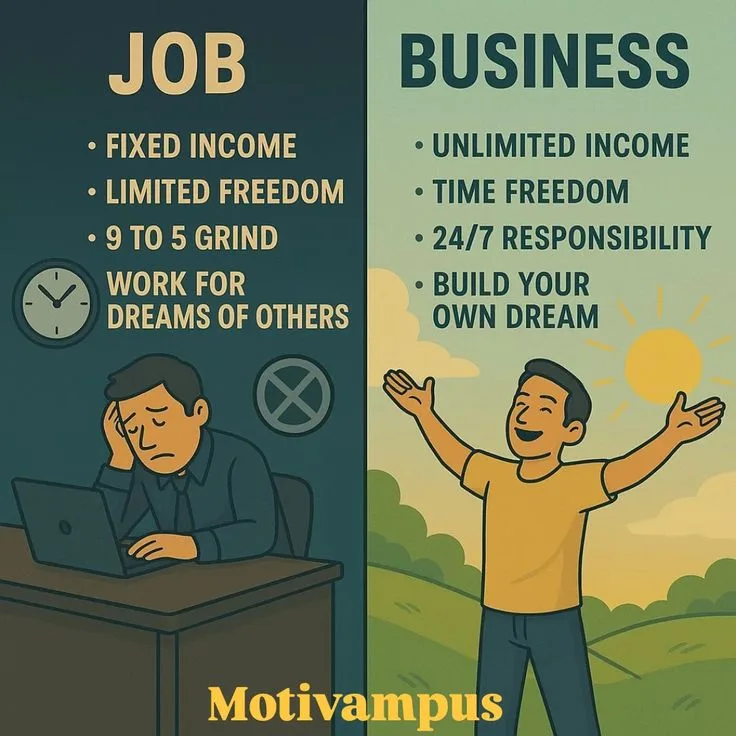
The startup mythology is pervasive: join early, get equity, work fast and hard, exit rich. The vision of the garage-to-IPO story has pulled generations of talented people toward early-stage companies with below-market salaries and equity grants they accepted without fully understanding.
Sometimes this works brilliantly. More often, the startup fails quietly, the equity is worth nothing, and the ex-employee surfaces two years later at a larger company, writing off the experience as 'learning' that cost them $40,000 in forgone salary and a few hundred thousand in paper losses they were briefly excited about on a cap table.
The big company mythology is equally distorted in the other direction: comfortable, slow, political, uninspiring. It is true that large organizations have bureaucratic friction and political complexity that startups lack.
It is also true that Google, Microsoft, and other mature technology companies pay among the highest total compensation packages in the industry, provide genuinely deep expertise in their domains, and offer career stability and professional development infrastructure that most startups cannot match.
The large company as dead-end is as much a myth as the startup as guaranteed rocket ship.
The honest analysis is that both models have real, distinct advantages and disadvantages, and the rational choice depends heavily on your career stage, financial situation, risk tolerance, specific role, and what you are trying to learn.
This article builds a framework for making that choice clearly, with an honest account of the equity mathematics that too often goes unexamined.
The startup vs big company question is really three separate questions: What do I want to learn? What financial risk can I absorb? And what does the specific opportunity in front of me actually offer - not the promise, the specifics?
Key Definitions
Total compensation: The complete value of your employment package - base salary, annual bonus, equity (stock grants or options), benefits, and any other forms of pay. Big tech companies are frequently among the highest total compensation employers for technical roles.
Equity vesting: The schedule by which employee stock or options become earned and owned. Standard vesting is four years with a one-year cliff - no shares vest in the first year, 25% vest at the one-year mark, and the remaining 75% vest monthly over three years.
Liquidation preference: A term in venture funding that determines who gets paid first when a company is acquired or goes public. Investors with 1x liquidation preference receive their investment back before common shareholders (employees) receive anything.
In a modest exit, this can mean employees receive nothing even as investors are made whole.
Option strike price: The price at which an employee can purchase the shares their stock options represent. If your option strike price is $10 per share and the company's current share price is $8, your options are 'underwater.'
Runway: The number of months a startup can continue operating at its current burn rate before running out of funding. A startup with 8 months of runway and no active fundraising round is at meaningful risk of failure.
Side-by-Side Comparison
| Factor | Early-Stage Startup (Pre-Series B) | Growth Startup (Series B-D) | Large Tech Company |
|---|---|---|---|
| Base salary | 20-40% below market | At or near market | At or above market |
| Equity upside | High (but unlikely to materialize) | Moderate | RSU refreshes, stable |
| Job security | Low (existential risk) | Moderate | High (layoffs vs shutdown) |
| Learning speed | Fast (breadth) | Fast-moderate | Deep (specialization) |
| Career progression speed | Can be very fast | Moderate-fast | Structured but slower |
| Mentorship quality | Variable | Moderate | Strong at top companies |
| Credential value | Dependent on company outcome | Good if company grows | High (FAANG especially) |
| Work-life balance | Often poor | Moderate | Variable |
The Compensation Reality Check
Big Company Total Compensation
For software engineers, the gap between startup and big tech company cash compensation is well-documented.
At large technology companies - Google (Alphabet), Meta, Amazon, Apple, Microsoft - total annual compensation for mid-level engineers typically runs $200,000-$400,000, incorporating base salary, cash bonus, and stock refreshes.
For senior engineers and above, total compensation routinely exceeds $500,000.
These numbers are documented on platforms like levels.fyi with granular, role-specific data. Big tech companies compete intensely for talent and have bid up compensation accordingly over the past decade.
Early-Stage Startup Compensation
A Series A or B startup typically pays software engineers 15-30% below market cash rates and offers equity to compensate. The equity package might be 0.1-0.5% of the company for an early engineering hire, with vesting over four years.
The expected value of that equity depends on: the current valuation (your option strike price), the likely exit valuation, how much dilution will occur through future funding rounds, the liquidation preference structure, and the probability of a successful exit. Each of these is uncertain, and the errors compound.
A simple illustration: you hold 0.2% equity in a company, fully vested, with a $10M liquidation preference stack above you. If the company exits at $80M, investors collect $10M first, leaving $70M for common shareholders. Your 0.2% of $70M is $140,000.
That sounds reasonable - until you consider you may have accepted a $30,000 per year salary reduction for four years to get there, totaling $120,000 in forgone cash. Your net equity gain is $20,000 over four years.
The Equity Distribution Reality
The probability distribution of startup exits is heavily skewed. Most startups fail or produce below-threshold exits where common shareholders receive little. A small percentage produce significant wins.
For employees (as opposed to founders and investors), even successful exits are often more modest than they appear from the outside, due to dilution and liquidation preferences.
This does not mean equity is worthless - at genuinely successful startups with clean cap tables, early employees can build life-changing wealth. It means equity should be evaluated skeptically and with specific information, not taken on faith based on a slide deck projection.
Compensation Benchmarks by Role and Stage (2024)
The following table draws on Levels.fyi, Glassdoor, and Blind community data to illustrate representative total compensation ranges for software engineers across company types in the United States:[3]
| Company Type | Mid-Level SWE Total Comp | Senior SWE Total Comp | Notes |
|---|---|---|---|
| FAANG / top-tier tech | $250,000-$400,000 | $350,000-$600,000+ | Equity-heavy; highly variable |
| High-growth startup (Series C-D) | $180,000-$280,000 | $220,000-$380,000 | Approaching market; equity still speculative |
| Series A-B startup | $130,000-$200,000 | $160,000-$250,000 | Cash below market; high equity risk |
| Enterprise / non-tech | $120,000-$180,000 | $150,000-$220,000 | Low equity; high stability |
| Pre-seed / seed startup | $80,000-$150,000 | $100,000-$180,000 | Significant cash discount; high failure risk |
These figures are US-centric and skewed toward software engineering, where compensation data is most transparent. Design, marketing, and operations roles show similar relative patterns but lower absolute figures.
The Learning Speed Question
Why Startups Can Accelerate Learning
Early-stage startups often give employees unusual levels of responsibility quickly. A junior engineer at a Series A might own an entire backend system. A recent marketing graduate might own all of content strategy.
This responsibility is accelerating - you encounter problems, make decisions, see outcomes, and iterate faster than you would in a large organization where roles are more defined and processes more established.
The feedback loop is genuinely faster at startups. You can try something on Monday and see measurable results by Friday. In a large organization, a project might take months to move from proposal to implementation to measurement.
Why Big Companies Can Be Better for Learning
The limitation of early startup learning is quality control. Startups often have no established playbook - founders and early team members are figuring out what they are doing as they go, sometimes excellently and sometimes poorly.
You can learn fast and learn wrong: pick up informal practices, shortcuts, and framings that work at a 30-person company and do not scale or transfer.
Large companies that are excellent at their craft - in engineering, in operations, in product management - provide access to deep specialists who are among the best practitioners in the world at their specific discipline.
Learning to write production code at Google, to structure deals at Goldman Sachs, or to manage supply chain at Amazon gives you exposure to processes and standards that are simply not available anywhere else at that level.
The ideal early career learning path for many people is structured excellence first (large company or well-run growth stage), then startup for applying it with autonomy and scope.
Breadth vs. Depth: The Real Trade-Off
The learning speed question is better framed as a breadth-versus-depth trade-off than a fast-versus-slow one.
At an early-stage startup, you will almost certainly develop breadth - exposure to multiple functional areas, multiple stages of a problem, and multiple types of stakeholders. You will likely become comfortable with ambiguity and resourcefulness.
These are genuinely valuable skills, particularly for people who want to eventually found their own companies or move into general management roles.
At a large company, you will develop depth - mastery of a specific discipline, exposure to best-in-class processes, and the professional credibility that comes from being trained within a recognized institution. This depth compounds over time and is difficult to replicate later by self-study or brief startup stints.
Neither is universally superior. The question is which type of learning matters more for the specific direction you want your career to go.
Job Security: Different Failure Modes
Startup Risk
The startup failure rate varies by how it is measured. Using the common definition of a startup that ceases operations within five years, roughly 50% of VC-backed startups fit this category.
For companies that make it to Series B and beyond, the survival odds improve considerably, but they do not reach the reliability of an established large company.
The specific risk to employees is abrupt: when a startup runs out of funding, it may have weeks to wind down. Severance packages are typically minimal or absent - the company simply does not have the cash. Health insurance coverage ends immediately.
Monitoring signals: watch runway, growth trajectory, and the broader VC funding environment. A startup that raised at a peak valuation, has declining growth metrics, and faces a funding environment where multiples have compressed is at elevated existential risk even if the team is talented.
Big Company Risk
Large company layoffs happen - Google, Meta, Amazon, and Microsoft all conducted substantial layoffs in 2022-2023. The failure mode is different: you typically receive advance notice, meaningful severance (2-6 months is common at large tech companies), extended healthcare coverage, and time to job search while employed.
The individual employment risk in any given year at a stable large company is low; when it happens, the terms are far more favorable.
Reading the Warning Signs
Whether you are at a startup or a large company, certain signals are worth monitoring regularly:
Startup warning signs:
- Runway falling below 12 months with no active fundraising conversation
- Key executives departing, especially without public announcement
- Growth metrics that have stalled or reversed despite continued investment
- Pivot announcements that represent a significant departure from the original thesis
- Delayed payroll or equity grant processing (a serious signal at any stage)
Large company warning signs:
- Division-level headcount freezes
- Hiring manager roles going unfilled for extended periods
- Declining revenue in the business unit employing you
- Public statements about "efficiency" and cost reduction
- Peer companies conducting layoffs in the same sector
Neither list is exhaustive, but maintaining awareness of these signals allows you to respond proactively rather than reactively.
Career Trajectory Differences
Big Company Career Paths
Large organizations offer structured career ladders with well-defined promotion criteria - particularly in engineering at major tech companies, where levels, compensation bands, and promotion processes are explicit.
The credential of a Google or McKinsey tenure on a resume carries real signaling value that opens doors for subsequent roles.
The downside of big company career trajectory is the narrower scope of individual impact. A product manager at a 5,000-person company is responsible for a fraction of one product. Their decisions are consequential but constrained. The path to leadership is long.
Startup Career Paths
The compressed timeline is the appeal. An early engineering hire at a startup that grows to 200 people might be VP of Engineering at 30. This happens regularly and represents genuinely accelerated career development for the people it works out for.
The caveat is that the startup needs to succeed and grow for this trajectory to materialize - and most do not.
For people who want to found their own companies eventually, startup experience provides direct exposure to how early companies operate, how to navigate ambiguity, and how to build something without infrastructure - all of which are hard to learn in large organizations.
The Credential Economy
Titles and credentials matter more in some fields than others, and the credential gap between startup and large company experience is narrowing in some areas.
In software engineering, a portfolio of shipped products - regardless of company size - is increasingly what matters to interviewers. The GitHub contributions, the technical decisions made, the scale of problems solved are what differentiate candidates.
A strong startup engineering portfolio at a well-known company (Stripe, Figma, Notion) is as compelling as a large company credential.
In finance, consulting, and law, large company credentials remain dominant. A Goldman Sachs or McKinsey two-year stint still opens doors that most startup experience does not, because the credential is doing institutional signaling work that the startup cannot replicate.
Know which economy you are in before weighting credentials too heavily in your decision.
Choosing at Different Career Stages
Early career (0-3 years): Prioritize learning infrastructure over equity. Big company experience at an excellent organization - or a well-run growth-stage company with structured mentorship - compounds over a career in ways that are hard to recover from if you miss them.
The skills you form early become your defaults. Taking a below-market startup role for equity you do not understand, in a role with limited mentorship, is a poor trade at this stage in most cases.
If startup: choose one with Series B or later funding (reduced existential risk), at least 50+ employees (some organizational infrastructure), in a role with a clear mentor, and an experienced founder/management team.
Mid-career (4-10 years): The calculus shifts significantly. You have marketable skills, a professional network, likely a financial buffer, and enough experience to evaluate equity offers critically.
You can ask hard questions about cap tables, liquidation preferences, and exit scenarios and understand the answers. The risk-adjusted case for a startup role improves substantially.
Late career (10+ years): Senior leadership at large companies, founding your own company, or advising early-stage companies are all rational late-career paths. Founding a company is best done with deep domain expertise, an existing professional network, and genuine financial cushion - none of which are reliably available early career.
A Framework for Evaluating Any Specific Offer
Before making a decision, answer these five questions honestly:
- What will I learn here that I cannot learn elsewhere? If you cannot answer this specifically, the opportunity is weaker than it appears.
- What is my financial runway if this company fails or lays off my role? Six months of living expenses is a minimum; twelve months is comfortable.
- Who will I learn from? Identify specific people at the company who will be your mentors, not a general sense that "the team is smart."
- What does the equity actually mean in numbers? Model the exit math yourself with real figures.
- What is the market for my skills after this role? Will this experience make you more employable, or does it narrow your options?
Practical Recommendations
Before joining any startup: ask for the cap table, total shares outstanding, option strike price, current preferred share price, liquidation preference stack, and the last 12 months of growth metrics. Founders who refuse to share this information or deflect the questions are not treating you as a genuine stakeholder.
Evaluate startup quality ruthlessly: team quality, growth trajectory, market size, and capital efficiency matter more than the idea. Most startup ideas are decent; most startups fail due to execution and market timing, not concept.
Do not take a large cash discount for speculative equity early in your career: the expected value of startup equity is negative for most employees, and the opportunity cost of below-market salary early in your career compounds. If equity does not have strong quantifiable upside, push for market rate cash.
Track your total compensation clearly: use platforms like levels.fyi to benchmark what comparable roles pay at different types of companies. Your negotiating position and decision-making improve dramatically with accurate market data.
Sources & Further Reading
- Eisenmann, T. (2021). Why Startups Fail. Currency.
- Mallaby, S. (2022). The Power Law. Penguin Press.
- Levels.fyi. (2024). Compensation data by company, role, and level. levels.fyi
- Gompers, P., Gornall, W., Kaplan, S. N., & Strebulaev, I. A. (2020). How do venture capitalists make decisions? Journal of Financial Economics, 135(1), 169-190.
- Kaplan, S. N., & Lerner, J. (2010). It ain't broke. Journal of Applied Corporate Finance, 22(2), 36-47.
- Bureau of Labor Statistics. (2024). Business employment dynamics: Survival rates. US Department of Labor.
- Wasserman, N. (2012). The Founder's Dilemmas. Princeton University Press.
- Horowitz, B. (2014). The Hard Thing About Hard Things. Harper Business.
- National Venture Capital Association. (2024). NVCA yearbook 2024. NVCA.
- Kerr, W. R., Nanda, R., & Rhodes-Kropf, M. (2014). Entrepreneurship as experimentation. Journal of Economic Perspectives, 28(3), 25-48.
- Hathaway, I., & Litan, R. E. (2014). Declining business dynamism in the United States. Brookings Institution.
- Feld, B., & Mendelson, J. (2019). Venture Deals (4th ed.). Wiley.