
Responsibilities: The Chief Information Security Officer (CISO) is the senior executive responsible for an organization's entire information security program - its strategy, risk management, compliance, incident response, and the translation of technical threats into business language that boards and C-suite peers can act on.
The CISO sits at one of the most unusual intersections in modern organizational life: a role that requires deep technical credibility to earn authority, but where actual authority depends almost entirely on non-technical skills - communication, political navigation, risk translation, and business acumen.
A CISO who cannot read a network diagram has no credibility with their security team. A CISO who cannot explain a ransomware risk to a non-technical board in terms of revenue impact, regulatory exposure, and reputational cost will never get the budget needed to address it.
Professionals who can genuinely deliver both are rare - which is the primary reason CISO compensation at large organizations reaches levels that few other non-CEO executive roles achieve.
The CISO title has existed in some form since the early 1990s, when Citicorp created the first formal version of the role in 1995 in response to a significant cyber fraud incident orchestrated by Russian hackers who exploited vulnerabilities in the bank's cash management system.
The role remained relatively obscure until the mid-2000s, when high-profile breaches at major retailers and financial institutions forced boards to treat information security as a genuine strategic risk rather than an IT maintenance function.
The decade from 2014 to 2024 saw CISO roles become standard at virtually every public company, financial institution, healthcare organization, and large government agency, driven by GDPR (2018), SEC cybersecurity disclosure rules (2023), HIPAA enforcement actions, and increasingly sophisticated threat actors including nation-state groups and organized ransomware operations.
"The CISO who understands technology but not the business will get the technology right and the job wrong. The CISO who understands the business but not the technology will get manipulated by their own team. You need both, and developing both takes years." - Richard Thieme, cybersecurity strategist, speaking at Black Hat 2023
Key Definitions
Information security program: The complete set of policies, procedures, controls, technologies, and personnel that an organization deploys to protect information assets. The CISO owns the program - its design, implementation, measurement, and improvement.
Risk appetite: A board-level or executive-level decision about how much information security risk an organization is willing to accept in pursuit of its business objectives. The CISO's primary role is to make this decision explicit, measurable, and informed.
Security posture: An assessment of how effectively an organization's defenses would withstand real-world attack. Posture is measured through control audits, penetration testing results, vulnerability metrics, and incident data.
Material cybersecurity incident: In the context of the SEC's 2023 cybersecurity disclosure rules (adopted July 2023, effective December 2023), a security incident significant enough to require public disclosure within four business days of determination of materiality.
This rule fundamentally changed the CISO's role by making incident assessment a formal legal and financial reporting obligation.
vCISO (Virtual CISO): A fractional or consulting CISO arrangement where an experienced security executive provides part-time strategic leadership to organizations that cannot justify a full-time CISO hire. Common at companies with 50-500 employees, with the vCISO market growing at approximately 15% annually according to Gartner (2024).
CISO Compensation by Company Size and Sector
| Segment | US Total Compensation (2024) | Key Drivers |
|---|---|---|
| Small companies (<500 employees) | $150,000-$230,000 | Often vCISO or security director hybrid |
| Mid-size (500-2,000 employees) | $220,000-$340,000 | Growing regulatory requirements |
| Large enterprise (2,000-10,000 employees) | $310,000-$500,000 | Full security program ownership |
| Very large enterprise (10,000+ employees) | $400,000-$700,000+ | Complex global operations |
| Financial services (tier-one banks) | $700,000-$1,000,000+ | Highest regulatory burden |
| Technology companies | $350,000-$600,000 | Significant equity component |
| Healthcare | $200,000-$350,000 | HIPAA-driven demand |
| Federal government (SES-level) | $170,000-$195,000 | Pay caps but high-impact scope |
IANS Research's 2024 CISO Compensation and Budget Study, conducted with Artico Search across 663 CISOs, found the US median CISO base salary at $223,000, median bonus at $60,000, and median equity value at $115,000 annually - for a median total compensation of approximately $398,000 at companies of 1,000+ employees.
The top quartile exceeded $550,000 in total compensation.
Notably, CISO compensation has grown faster than most comparable executive roles. IANS reported a 12% year-over-year increase in median total compensation from 2023 to 2024, driven by rising demand, regulatory pressure from the SEC disclosure rules, and the persistent talent shortage in senior cybersecurity leadership.
What a CISO Does: The Five Core Responsibilities
1. Security Strategy and Program Ownership
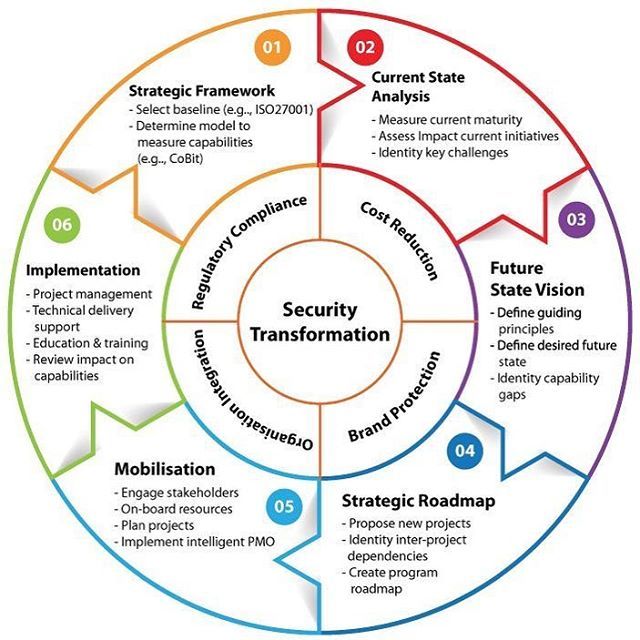
The CISO is responsible for defining where the organization's security program needs to be, assessing where it currently is, and building the roadmap to close that gap. This is fundamentally a planning and prioritization function.
It requires understanding the organization's business model, risk appetite, regulatory obligations, and threat landscape well enough to make defensible investment decisions.
Strategic planning produces a security roadmap with multi-year investment projections, capability maturity assessments against frameworks like NIST Cybersecurity Framework (CSF) 2.0 or CIS Controls v8, and measurable outcomes that can be reported to the board and executive team.
The 2024 update to NIST CSF added "Govern" as a sixth core function alongside Identify, Protect, Detect, Respond, and Recover - reflecting the growing importance of organizational governance in cybersecurity strategy.
A typical enterprise security budget ranges from 2-6% of IT spending, according to Gartner's 2024 IT spending benchmarks, though this varies dramatically by industry. Financial services and healthcare organizations consistently spend at the higher end due to regulatory requirements.
2. Risk Management and Board Communication
The most distinctly executive aspect of the CISO role is translating technical security risks into business language that boards, audit committees, and C-suite peers can act on. A vulnerability summary that says "347 critical CVEs remain unpatched" is operationally accurate but strategically useless.
A risk brief that says "unpatched vulnerabilities in our payment processing systems create a 60% probability of a breach event in the next 12 months, with an estimated financial impact of $8-45M based on industry breach cost data" enables informed resource allocation decisions.
The SEC's 2023 cybersecurity disclosure rules require public companies to disclose material cybersecurity incidents within four business days of materiality determination and to describe cybersecurity risk management, strategy, and governance in annual 10-K reports.
This has made board-level cybersecurity oversight a formal governance requirement, elevating the CISO's communication function from an internal management concern to a formal risk governance obligation with legal consequences for inaccuracy.
The practical impact has been significant. A 2024 Spencer Stuart survey found that 76% of S&P 500 boards now receive cybersecurity briefings at least quarterly, up from 52% in 2021. CISOs who can present credibly and concisely to non-technical directors are in higher demand than ever.
3. Security Architecture and Technology Portfolio
CISOs own the security technology stack decision-making: which security platforms the organization buys, how they integrate, and whether the portfolio is delivering value relative to its cost.
A mid-size enterprise security technology portfolio might include endpoint detection and response (EDR), SIEM (security information and event management), identity and access management (IAM), email security, web application firewall, DLP (data loss prevention), cloud security posture management (CSPM), and vulnerability management - easily $3-15M annually in licensing.
The technology landscape is consolidating: platform vendors like CrowdStrike, Palo Alto Networks, and Microsoft are acquiring and integrating point solutions, pushing CISOs toward platform consolidation decisions that trade best-of-breed capability for operational simplicity.
A 2024 survey by Panaseer found that the average enterprise security team managed 76 security tools, up from 64 in 2022 - creating tool sprawl that itself becomes a security risk through integration gaps and alert fatigue.
4. Compliance and Regulatory Management
Most industries that handle significant amounts of personal or financial data operate under one or more security-related regulatory frameworks.
The CISO is responsible for ensuring the organization meets its compliance obligations, managing relationships with regulators and auditors, and making strategic decisions about which certifications (SOC 2, ISO 27001, PCI-DSS, HITRUST) to pursue and maintain.
Compliance and security are related but not identical. A compliant organization is not necessarily secure (compliance is a minimum bar, not a security outcome), and a secure organization might not be formally compliant with every applicable framework.
Effective CISOs understand this distinction and use compliance frameworks as a floor, not a ceiling.
The regulatory landscape has grown significantly more complex since 2020. Beyond the SEC rules, the EU Digital Operational Resilience Act (DORA), effective January 2025, imposes cyber resilience requirements on financial entities operating in Europe.
The NIS2 Directive, also effective in 2024, expands cybersecurity obligations across critical infrastructure sectors in the EU. For CISOs at multinational organizations, tracking and complying with divergent regulatory requirements across jurisdictions is now a substantial part of the role.
5. Incident Response and Crisis Leadership
When a significant security incident occurs - a ransomware deployment, a data breach, a supply chain compromise - the CISO is the executive responsible for leading the response.
This means activating and directing the incident response team, communicating with the CEO and board in real time, managing external relationships (law enforcement, legal counsel, breach notification services, public relations), and making critical decisions about containment that may require taking systems offline and disrupting business operations.
Decisions made in the first 24-72 hours of a major incident can determine whether the organization recovers cleanly, faces regulatory action, or suffers lasting reputational damage.
The pressure is extreme: CISOs must make consequential decisions with incomplete information, under time pressure, with significant legal and financial implications.
IANS Research's 2023 CISO Effectiveness Study found that CISOs who had participated in regular tabletop exercises and simulated incident drills performed measurably better during real incidents than those who had not.
Reporting Structure: Why It Matters
The question of who a CISO reports to is not an organizational chart technicality - it fundamentally shapes what the CISO can accomplish.
Reports to CEO: The CISO has independence from both the technology function and the business unit leaders whose activities are subject to security oversight. Most likely to result in adequate security investment and genuine board-level attention. Recommended by most governance frameworks including NACD guidance.
Reports to CTO or CIO: Common in technology-first organizations. Creates a tension: the CISO may find their recommendations filtered through a technology leader who has competing priorities (development velocity, infrastructure cost, user experience) that conflict with security recommendations.
Reports to General Counsel or CFO: Common in heavily regulated industries. Emphasizes compliance and legal risk management dimensions of the role.
ISACA's 2024 State of Cybersecurity survey found that 43% of CISOs report to the CIO and 27% report directly to the CEO.
Among organizations that had experienced significant security incidents in the prior 12 months, the CIO-reporting structure was disproportionately represented - suggesting that CIO-reporting may create conflicts of interest that weaken security investment.
The Hidden Dimensions of the CISO Role
Beyond the five formal responsibilities, experienced CISOs consistently identify a set of challenges that job descriptions rarely capture but that determine actual effectiveness.
Building Security Culture Without Authority
A CISO cannot mandate that 40,000 employees adopt good security habits. They can deploy security awareness training, enforce password policies, and require MFA - but the gap between policy compliance and genuine security culture requires sustained influence work.
Employees who understand why security practices matter are meaningfully more vigilant than those who follow rules they find burdensome.
Proofpoint's 2024 State of the Phish report found that 68% of organizations experienced at least one successful phishing attack in the prior year, with email the initial vector in the majority of significant breaches.
Security awareness programs that reduced phishing click rates by 50-70% in controlled studies consistently rely on repeated reinforcement, simulated attacks, and clear communication of consequences - not one-time training modules.
The behavioral science behind effective security culture has more in common with how people make decisions under uncertainty than with traditional compliance training.
Vendor and Supply Chain Risk
Modern organizations do not just secure their own systems; they must manage risk from hundreds of third-party vendors with access to their data and systems.
The 2020 SolarWinds compromise, in which Russian-linked threat actors embedded malicious code in a software update trusted by 18,000 organizations including US government agencies, made supply chain risk a board-level concern.
The 2023 MOVEit Transfer vulnerability exploitation by the Clop ransomware group affected over 2,600 organizations and exposed data of more than 77 million individuals, further underscoring the scale of third-party risk.
Third-party risk management - evaluating vendor security postures, requiring contractual security obligations, monitoring for vendor incidents, and maintaining software bills of materials (SBOMs) - has become a major component of the CISO remit.
Gartner predicted in 2024 that by 2026, 60% of organizations will use cybersecurity risk as a primary determinant in third-party transactions.
The Talent Problem
Cybersecurity faces a structural talent shortage. ISC2's 2023 Cybersecurity Workforce Study estimated a global shortage of 4 million cybersecurity professionals, with the gap widening despite growing interest in the field.
CISOs spend significant effort recruiting, retaining, and developing talent in a market where senior engineers routinely receive competing offers 20-30% above their current compensation.
Retention strategies including career development paths, training budgets, genuine technical challenge, and flexible work arrangements are as important to the CISO function as technical controls.
The ISC2 study also found that 67% of cybersecurity professionals reported staffing shortages at their organizations, with incident response and cloud security the most difficult positions to fill.
For those considering entering the field, cybersecurity career paths offer multiple entry points from both technical and non-technical backgrounds.
CISO Burnout and Tenure
The intensity of the role takes a measurable toll. A 2024 Heidrick & Struggles survey found that the average CISO tenure is 2.5 years, significantly shorter than other C-suite positions.
Nominet's 2024 CISO Stress Report found that 88% of CISOs reported high stress levels and that the majority worked more than 10 hours of unplanned overtime per week.
The combination of always-on incident readiness, board-level accountability, and the asymmetry of the role (CISOs are blamed for breaches but rarely credited for prevention) contributes to burnout rates that are among the highest of any executive position.
A Real-World Case Study: The Marriott Breach and Its CISO Implications
In 2018, Marriott International disclosed that the reservation database of its Starwood subsidiary had been compromised since 2014 - a four-year period in which attackers accessed up to 500 million guest records including passport numbers, payment card data, and travel histories.
The breach originated in the Starwood acquisition: Marriott had acquired the company in 2016 without adequately assessing or remediating the security posture of the acquired infrastructure.
The regulatory consequences were significant: the UK Information Commissioner's Office initially proposed a fine of GBP 99 million under GDPR, later reduced to GBP 18.4 million. The US Federal Trade Commission required Marriott to implement a comprehensive security program and undergo biennial third-party assessments for 20 years.
The case illustrates several CISO-critical lessons:
M&A security due diligence is now a standard CISO responsibility. Acquiring an organization means acquiring its security debt. CISOs who do not participate in pre-acquisition security assessment are accepting risk they have not been given the opportunity to price.
Incident dwell time - the time between initial compromise and detection - averaged 197 days globally according to IBM's 2023 Cost of a Data Breach Report (down from 287 days in 2021, but still representing more than six months of undetected access). At Marriott, four years elapsed undetected.
Post-breach costs are routinely underestimated. IBM's 2023 research placed the average total cost of a data breach at $4.45 million, with healthcare the most expensive sector at $10.93 million average.
These figures include investigation, notification, regulatory response, legal fees, and reputational impact - but not the long-term customer trust erosion that is harder to quantify.
How to Become a CISO: The Realistic Path
There is no single CISO career path, but patterns exist. The IANS/Artico 2024 CISO survey found:
- Median years of experience: 18 years in IT/security roles before first CISO title
- Most common prior roles: Security Director (40%), VP of Security (29%), Senior Security Manager (18%), Security Architect or Engineer (13%)
- Certifications held: 68% hold CISSP; 42% hold CISM; 31% hold both
- Education: 72% hold a bachelor's degree, 38% hold a master's degree (MBA or MS in cybersecurity/information systems)
Technical depth is a prerequisite, but the CISO transition requires explicit investment in management, communication, and business skills:
Financial literacy: CISOs build and defend multi-million dollar budgets. Understanding P&L impact, ROI calculation for security investments, and cyber insurance procurement is essential. The average enterprise security budget reached $18.5 million in 2024 according to IANS data.
Board-level communication: The ability to present to a board of directors - concisely, without jargon, in business risk language - is a practiced skill that most technical professionals have never developed.
Carnegie Mellon's CISO Executive Education program and MIT Sloan's Cybersecurity Leadership program both focus specifically on this capability gap.
Legal and regulatory knowledge: CISOs are frequently in rooms with legal counsel, regulators, and auditors. Understanding the SEC disclosure rules, GDPR obligations, and sector-specific regulations (HIPAA, PCI-DSS, GLBA) at a working level is now essential.
Team leadership at scale: Managing 20-200 person security organizations requires HR acumen, performance management skills, and the ability to retain talent in a market where your best people are constantly receiving competitive offers.
The typical path: technical security role (5-8 years) -> technical team lead or manager (2-3 years) -> Security Director or VP (3-5 years) -> CISO.
The vCISO Path
The vCISO path - serving as a fractional CISO for multiple smaller organizations - provides valuable breadth of exposure that can accelerate development. A vCISO who has built security programs at four different companies across different industries accumulates strategic experience faster than a security director at a single organization.
The vCISO market has grown significantly, with organizations spending an estimated $1.2 billion annually on fractional CISO services in 2024 according to Gartner estimates.
What Separates Effective CISOs from Ineffective Ones
Research from the IANS CISO Effectiveness Study (2023), based on peer assessments and organizational outcome data across 400+ CISOs, identified consistent differentiators:
Effective CISOs translate risk into business impact language fluently, earn trust from both technical staff and executive peers, make pragmatic risk acceptance decisions rather than pursuing unachievable zero-risk positions, build security cultures through influence rather than mandates, and understand that the goal is risk management, not perfect security.
Ineffective CISOs over-index on compliance checkboxes as a substitute for genuine risk management, alienate business leaders by treating security as an obstacle function rather than an enabler, fail to develop successors, communicate in technical language to non-technical audiences, and pursue perfection in some areas while leaving critical gaps in others.
The career ceiling for strong CISOs is not the CISO role itself - it is increasingly a stepping stone to broader executive roles including CTO, COO, and board-level director appointments.
IANS Research found that 12% of former CISOs in their 2024 dataset had transitioned to board director or advisory roles, reflecting growing demand for cybersecurity expertise in corporate governance.
Sources & Further Reading
- ISACA. (2024). State of Cybersecurity 2024. isaca.org/resources/reports
- IANS Research and Artico Search. (2024). CISO Compensation and Budget Study 2024. iansresearch.com
- Spencer Stuart. (2023). Security Leadership in Transition. spencerstuart.com
- SEC. (2023). Cybersecurity Risk Management, Strategy, Governance, and Incident Disclosure Rules. sec.gov/rules/final/2023/33-11216.pdf
- NIST. (2024). Cybersecurity Framework 2.0. nist.gov/cyberframework
- CIS. (2021). CIS Controls v8. cisecurity.org/controls
- ISC2. (2023). Cybersecurity Workforce Study 2023. isc2.org/research
- IANS Research. (2023). CISO Effectiveness Study 2023. iansresearch.com
- Heidrick & Struggles. (2024). CISO Talent and Tenure Study. heidrick.com
- IBM Security. (2023). Cost of a Data Breach Report 2023. ibm.com/security/data-breach
- Proofpoint. (2024). State of the Phish 2024. proofpoint.com/us/resources/threat-reports
- Gartner. (2024). Market Guide for Security Awareness Training and vCISO Services. gartner.com
- UK Information Commissioner's Office. (2020). Marriott International Inc: ICO Investigation Report. ico.org.uk
- Nominet. (2024). CISO Stress Report 2024. nominet.uk
- Panaseer. (2024). Security Leaders Peer Report. panaseer.com