You find a posting labelled "entry-level", read down to the requirements, and there it is: three years of experience. You need a job to get experience, and you need experience to get the job. Almost everyone hits this wall at least once, whether fresh out of school, changing careers, or coming back after time away.
It feels like a trap built on purpose. It isn't, but it is real, it is measurable, and it has a structure. Once you see the structure, you can work around it.
How common is the experience requirement?
Common enough that it is not your imagination. When the job-matching firm TalentWorks analysed more than 95,000 job postings, it found that 61 percent of full-time jobs seeking entry-level employees asked for three or more years of experience, as reported by SHRM in 2018.[1] The same SHRM report noted that when Burning Glass Technologies analysed 25 million entry-level postings from 2010 to 2016, the number of hard and soft skills employers asked for went up.[1]
In other words, the label "entry-level" often describes the pay band or the seniority of the role, not the starting point of the person employers picture filling it.
Why employers ask for experience they could teach
From the outside the requirement looks irrational. From inside a hiring team it looks like risk control. Four forces push in the same direction.
Experience is a cheap signal. Economist Michael Spence described this in his 1973 paper on job market signalling: when an employer cannot observe how good a candidate will be, it leans on visible signals that correlate with ability. Years in a similar role is one of the easiest signals to read on a resume, so it gets used as a shortcut for "will this person be productive quickly?"[2]
Training moved off the employer's books. Wharton professor Peter Cappelli argues in Why Good People Can't Get Jobs (2012) that many companies stopped developing people internally and now expect candidates to arrive ready to perform on day one. If nobody trains, someone else has to have trained you, which means experience.[3]
Job descriptions accumulate requirements. The Harvard Business School and Accenture report Hidden Workers: Untapped Talent (2021) found that most companies add new skill and experience preferences to existing job descriptions instead of rewriting them from scratch. The result, in the report's words, is a candidate profile "larded with legacy requirements and nice to have attributes" rather than the short list of must-haves that actually predict performance.[4]
Software applies the filter literally. The same report describes applicant tracking systems that rely on "negative" logic, excluding people for things like a missing degree or a gap in employment history, regardless of their other qualifications.
A large majority of employers surveyed, 88 percent, agreed that qualified high-skills candidates are vetted out because they do not match the exact criteria in the job description. For middle-skills workers the figure was 94 percent.[4]
The report also names the paradox directly: "developing the capabilities employers seek increasingly requires the candidate to be employed."[4]
Why the first job matters so much
The loop would be a minor annoyance if a slow start were easy to make up later. The evidence says it often is not.
The Permanent Detour (2018), a study by Burning Glass Technologies and the Strada Institute for the Future of Work that drew on more than four million resumes, found that 43 percent of college graduates were underemployed in their first job, meaning they worked in a role that did not require a degree.
Two-thirds of them were still underemployed five years later, and of those underemployed at both year one and year five, 74 percent were still underemployed ten years after their first job. By contrast, 87 percent of graduates who started in a college-level job were still in one five years later.[5]
Timing plays a part too. Economist Lisa Kahn's study of graduates who finished college between 1979 and 1989, published in Labour Economics in 2010, found that graduating into a weaker economy carried large, negative and persistent effects on wages.[6] When fewer employers are hiring juniors, the experience gap is harder to close, and the effects can follow a cohort for years.
The lesson is not that a weak start is permanent. It is that the first rung is worth extra effort, because it shapes what the next rungs look like.
Why "skills-based hiring" has not fixed it yet
Many large employers have announced that they are dropping degree requirements and hiring for skills. That should loosen the loop. So far, it mostly has not.
A 2024 study by the Burning Glass Institute and Harvard Business School, Skills-Based Hiring: The Long Road from Pronouncements to Practice, tracked a sample of 11,300 roles at large firms. It found that the change in hiring had borne out in fewer than 1 in 700 hires in the previous year.
About 45 percent of firms changed their postings "in name only", with no real change in who they hired. A smaller group of firms did follow through. At those firms, non-degreed workers had a retention rate 10 percentage points higher than their degree-holding colleagues, and workers hired without a degree into roles that used to require one saw a 25 percent salary increase on average.[7]
So the policy shift is real at some companies, and those are worth seeking out. But you cannot assume a posting means what it says in either direction: a requirement may be softer than written, and a "skills-first" promise may be harder than it sounds.
How to break the loop: what actually works
The useful reframe is this: employers ask for experience because they want evidence that you can do the work. Experience is only one form of that evidence. Your job is to supply it in other forms.
1. Count all of your experience, not just job titles
Projects, coursework, volunteering, freelance work, a club you ran, a family business you helped with: if it involved doing the tasks in the posting, it is experience. Describe it the way you would describe a job, with what you did and what changed because you did it.
"Built and maintained the volunteer rota for 40 people across three sites" reads as experience. "Volunteer" does not. Our guide to writing a resume that gets interviews shows how to turn these into strong bullet points.
2. Make the evidence visible
A portfolio, a GitHub profile, a writing sample, a case study of a problem you solved: these let an employer judge your work directly instead of inferring it from years. They also give a human reviewer something to point to when software would otherwise screen you out.
A recognised certification does the same job in fields that use them, especially IT, cloud and project management, because it is third-party proof of a specific skill. Check which certifications appear in the postings you are targeting before you invest in one. For a worked example of building evidence from zero, see getting into cybersecurity with no experience.
3. Apply when you are close, not only when you match
Requirements are often a wish list built up over time, as the Hidden Workers report describes. If you meet the core of a role and fall short on the years, apply and make the case for the core. The worst outcome is the one you get by not applying.
4. Go around the filter with people
Applicant tracking systems filter applications, not introductions. A referral from someone inside the company, a conversation at an industry event, or a direct, specific message to the hiring manager puts you in front of a person who can weigh your evidence. Ask for advice and information before you ask for a job; it is an easier request to say yes to. Our guide to networking professionally covers how to start those conversations.
5. Take the stepping-stone roles seriously
Internships, apprenticeships, contract work, temp roles and junior positions at smaller companies are where many employers do the training that larger firms no longer do. Given what The Permanent Detour found about first jobs, pick stepping stones that build the skills of the role you actually want, not just any paid position.
6. Target employers who hire on skills in practice
Look for companies that describe their assessment process (work samples, practical tasks, structured interviews) rather than only their requirements. Those are the firms most likely to be in the minority that changed how they hire, not just how they write postings.
Tools that take the grind out of applying
Breaking the loop takes many applications, and most of the effort is repetitive. A few free tools cut that work down so your time goes into the parts that need judgment.
CV builders
- Reactive Resume is a free, open-source resume builder with PDF and Word downloads, no ads and no paywall.[8] It is a good default if you want a clean, ATS-friendly layout without a subscription.
- Simplify includes a basic resume builder that the company commits to keeping free, alongside its autofill extension below.[9]
- Unless a posting asks for a Word file, send your CV as a PDF so the layout survives every system it passes through.
Whatever builder you use, keep the layout simple: one column, standard section headings, no text inside images. Applicant tracking systems read plain structure best.
Autofill extensions
Retyping your work history into every company's application portal is where most of the time goes. Simplify Copilot is a free browser extension that autofills applications from your saved profile on more than 100 job boards and application portals, including Workday, Greenhouse, iCIMS, Taleo, Lever and SmartRecruiters, with no limit on the number of applications. It also tracks what you have applied to.[9]
Autofill saves the typing, not the thinking. Always read the filled form before you submit, and write the free-text answers yourself.
Auto-apply services: speed is not the same as results
Some services go further and submit applications for you in bulk. They are tempting when you are applying for months, but volume has a cost.
LinkedIn reported an average of 11,000 applications submitted per minute on its platform in 2025, a 45 percent increase in a year, according to The New York Times as reported by eWeek, and recruiters told the Times that AI-assisted applications were producing nearly identical resumes that are harder to tell apart.[10] Employers are responding with more filtering, not less.
The practical approach is to use tools for speed and keep the targeting human: autofill the forms, but choose the roles and tailor the case for each one yourself.
What about hidden AI tools in interviews?
A newer shortcut has spread fast: apps that listen to the interview and show AI-generated answers on the candidate's screen while staying invisible to screen sharing.
The best known include Cluely, which began as Interview Coder and was rebranded in April 2025; Final Round AI's Interview Copilot, whose "Stealth Mode" keeps the assistant off screen shares and recordings; and LockedIn AI, which advertises real-time answers during the interview that stay off your shared screen.[15] It looks like the ultimate way past the experience wall. It is a risky bet, and employers are moving against it.
- The best-known case backfired. In 2025 a Columbia University student, Chungin "Roy" Lee, built Interview Coder, a desktop app designed to discreetly solve coding questions during interviews, and said he used it to get offers from Amazon, Capital One, Meta and TikTok. He told NBC News that several of those companies rescinded their offers after he posted about it publicly, and Columbia put him through a disciplinary process that ended in a yearlong suspension.[11]
- Employers now say so in writing. According to guidelines reported by Business Insider and ITPro, Amazon tells candidates: "please do not use GenAI tools during your interview unless explicitly permitted", and warns that failure to comply "may result in disqualification from the recruitment process". Its interviewers were given signs to watch for, such as candidates typing while being asked a question.[12]
- Interviews are moving back into the room. Google CEO Sundar Pichai said on the Lex Fridman podcast in 2025 that Google will "introduce at least one round of in-person interviews for people just to make sure the fundamentals are there".[13]
- Screening is getting tighter overall. Gartner predicts that by 2028, 1 in 4 candidate profiles worldwide could be fake, and in its survey of 3,000 job candidates, 6 percent said they had taken part in interview fraud.[14]
There is also the problem that outlasts the interview: if a tool answered for you, you start a job you were hired to do without help. That is a fast way to turn an offer into a short tenure.
Using AI the right way
AI is genuinely useful for interview preparation, as long as it happens before the interview, not during it:
- Run mock interviews. Ask an AI assistant to play the interviewer for the specific role, answer out loud, and ask it to critique your answers for clarity and evidence.
- Build your stories. Use it to turn your projects and volunteer work into short, structured examples (situation, task, action, result) that you can tell in your own words.
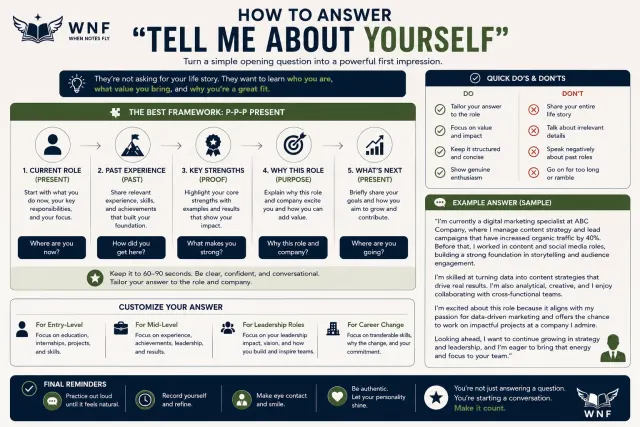
- Study the format. Technical, product and design roles each have their own question types, so practise the kind of questions your target role actually uses. Our job interview preparation guide covers the general format.
- Ask what is allowed. Some employers permit AI tools for certain tasks, as Amazon's "unless explicitly permitted" wording shows. If you are unsure, ask the recruiter before the interview.
What employers can do on their side
The loop is also a recruiting problem for companies: it shrinks the applicant pool and screens out people who could do the job. The Hidden Workers report recommends three practical changes:
- Rewrite job descriptions from scratch around the few must-have skills that predict performance, instead of adding to old ones.
- Switch filters from negative to affirmative, so systems look for evidence of the required skills rather than excluding people for gaps or missing credentials.[4]
- Treat hiring overlooked candidates as a business case, not charity, and invest in the training that lets them become productive.
The bottom line
The experience paradox is not a myth and not a conspiracy. It comes from employers using experience as a shortcut for risk, from job descriptions that grow by accretion, and from software that applies those descriptions literally. You cannot change those forces on your own, but you can change the evidence you bring. Show the work, reach a person, and treat the first rung as the important step it is.
Sources
- Maurer, R. (2018, July 12). Entry-Level-Experience Requirements Could Be Hurting Your Hiring. SHRM. shrm.org
- Spence, M. (1973). Job Market Signaling. The Quarterly Journal of Economics, 87(3), 355-374.
- Cappelli, P. (2012). Why Good People Can't Get Jobs: The Skills Gap and What Companies Can Do About It. Wharton Digital Press.
- Fuller, J. B., Raman, M., Sage-Gavin, E., & Hines, K. (2021). Hidden Workers: Untapped Talent. Harvard Business School Project on Managing the Future of Work and Accenture. hbs.edu
- Burning Glass Technologies and Strada Institute for the Future of Work. (2018). The Permanent Detour: Underemployment's Long-Term Effects on the Careers of College Grads. strada.org
- Kahn, L. B. (2010). The long-term labor market consequences of graduating from college in a bad economy. Labour Economics, 17(2), 303-316. econpapers.repec.org
- Sigelman, M., Fuller, J., & Martin, A. (2024). Skills-Based Hiring: The Long Road from Pronouncements to Practice. Burning Glass Institute and Harvard Business School. burningglassinstitute.org
- Reactive Resume, product page: free, open-source resume builder.
- Simplify, Copilot product page: autofill extension, supported application portals and free features.
- eWeek. (2025, June 25). Job Seekers, Some Using AI, Flood LinkedIn With 11,000 Applications a Minute. eweek.com
- NBC News. (2025). Kicked out of Columbia, this student doesn't plan to stop trolling big tech with AI. nbcnews.com
- ITPro. (2025). Amazon bans AI tools during job interviews. itpro.com
- Fridman, L. (2025). Sundar Pichai: CEO of Google and Alphabet, podcast transcript. lexfridman.com
- Crist, C. (2025, August 8). By 2028, 1 in 4 candidate profiles will be fake, Gartner predicts. HR Dive. hrdive.com
- Cluely, Final Round AI (Interview Copilot) and LockedIn AI, product pages: real-time interview assistance and screen-share hiding features.