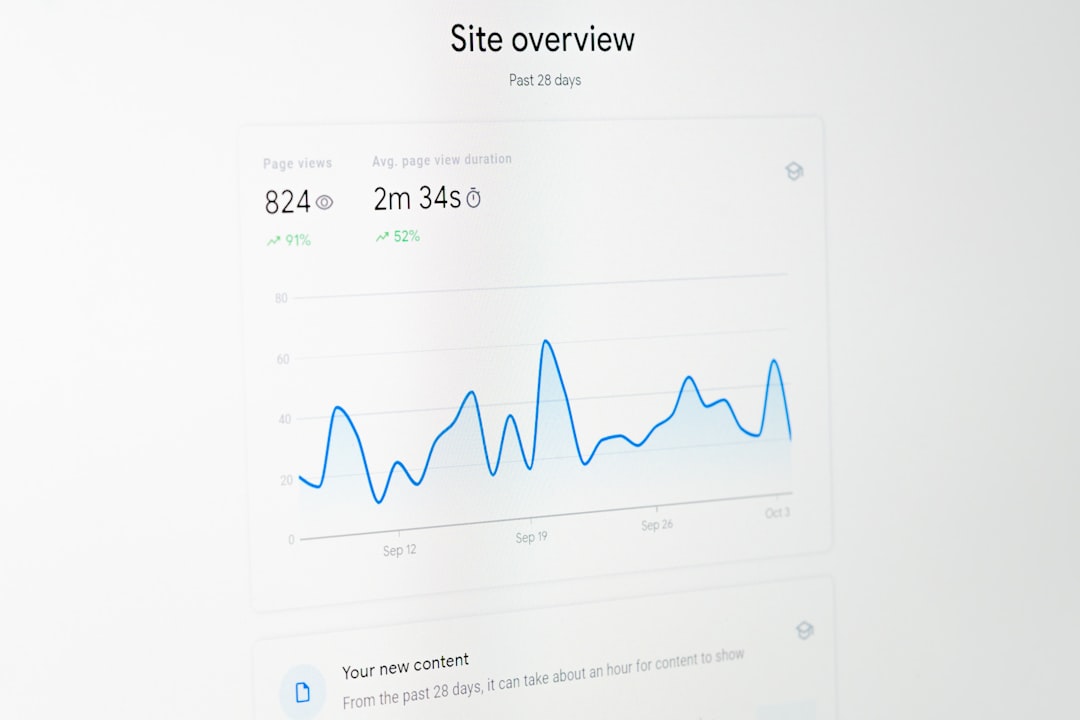
Digital marketing has become one of the most searched terms in business education, yet definitions vary widely depending on who is asked. At its core, digital marketing is the practice of promoting products or services through internet-connected channels with the goal of reaching, engaging, and converting customers. It encompasses search engines, social media platforms, email, content publishing, and paid advertising networks.
What sets digital marketing apart from traditional marketing is measurability. Every click, impression, and conversion can be tracked, attributed, and analyzed. This makes it possible to optimize spending in near real-time and tie marketing activity directly to revenue. That said, measurement is also one of digital marketing's greatest ongoing challenges, because customers rarely follow a straight path from awareness to purchase.
The scale of the digital marketing industry makes the stakes clear. eMarketer (2023) estimated global digital ad spending at $626 billion, projected to exceed $835 billion by 2026. Google and Meta together capture roughly 50 percent of global digital ad revenue. Yet for individual businesses, the relevant question is rarely about industry scale. It is about which channels, at which investment levels, produce returns for a specific product sold to a specific audience. That question is more complex than the technology vendors' marketing tends to suggest, and answering it requires a working understanding of how each channel functions.
This article covers the major channels, how they differ, how to think about strategy, and how businesses measure what is working.
The Major Digital Marketing Channels
Search Engine Optimization (SEO)
SEO is the practice of improving a website's visibility in unpaid (organic) search engine results. When someone types a question into Google, the results that appear without a paid label are organic results. SEO work focuses on making a website more relevant and authoritative so it ranks higher for searches that matter to the business.
SEO divides into three main areas:
- On-page SEO: content quality, keyword relevance, title tags, headings, and internal linking
- Technical SEO: site speed, crawlability, indexation, structured data, and mobile usability
- Off-page SEO: earning backlinks from other reputable websites, which signals authority to search engines
The primary strength of SEO is compounding value. A well-optimized piece of content can attract traffic for years without ongoing spend. The primary weakness is time: results typically take three to twelve months to materialize, making SEO unsuitable as the sole short-term channel for a new business.
Research published by Ahrefs (2022) found that approximately 90.6 percent of all web pages receive zero organic traffic from Google. The primary reason is that these pages have no backlinks. This single statistic illustrates both the challenge and the opportunity in SEO: most published content competes unsuccessfully, but the pages that succeed often do so for years at near-zero marginal cost. Brightedge (2023) estimated that organic search drives 53 percent of all website traffic across industries, versus 27 percent from paid search. The long-term ROI case for SEO investment is strong for businesses with the patience to build it.
Search Engine Marketing (SEM) and Pay-Per-Click Advertising
SEM refers to paid ads that appear in search engine results. The dominant platform is Google Ads, though Microsoft Advertising (Bing Ads) holds a meaningful share of desktop search in certain markets. Advertisers bid on keywords, and ads appear when users search those terms. Cost is incurred per click (PPC) or per thousand impressions (CPM), depending on the campaign type.
SEM is fast and highly targetable. A campaign can be live within hours and can reach users with very specific purchase intent. The trade-off is that results stop the moment spending stops. SEM also requires ongoing bid management and copy testing to remain efficient as competition shifts.
Average CPCs vary dramatically by industry. Wordstream's 2023 industry benchmark data found the highest average CPCs in legal ($9.21), financial services ($6.75), and insurance ($5.58) industries — sectors where a single converted lead can generate thousands of dollars in revenue. Consumer goods and retail face more moderate average CPCs in the $1-3 range. Understanding these benchmarks helps set realistic expectations for SEM economics before launching campaigns.
"Half the money I spend on advertising is wasted; the trouble is I don't know which half." — John Wanamaker, merchant (1838-1922). Digital marketing exists in large part to answer this question.
Social Media Marketing
Social media marketing uses platforms such as Facebook, Instagram, LinkedIn, TikTok, X (formerly Twitter), and YouTube to build brand awareness, engage audiences, and drive traffic or conversions. It splits into two modes:
- Organic social: posting content, responding to comments, building community, and growing followers without paid placement
- Paid social: running ads targeted by demographics, interests, behaviors, or custom audience lists
Organic social reach has declined significantly on most platforms as algorithmic feeds favor paid content and personal posts. Hootsuite's 2023 Social Media Trends report found average organic reach for Facebook business pages had declined to approximately 5 percent of followers, down from over 16 percent in 2012. Paid social, however, remains one of the most effective channels for reaching new audiences with detailed targeting — particularly for consumer products, direct-to-consumer brands, and B2C services.
LinkedIn holds a distinct place in social media marketing because its targeting by job title, company size, and industry makes it the most effective platform for many B2B campaigns, despite higher CPCs compared to other platforms. LinkedIn reports that 4 in 5 of its members drive business decisions, and its audience earns twice the average household income of US adults overall — a demographic profile that justifies its premium pricing for the right categories of advertiser.
TikTok's rise as an advertising platform deserves specific attention. eMarketer (2023) reported TikTok surpassed YouTube in US time-spent-per-day among adults under 35, and its ad products — particularly in-feed video and TopView placements — have shown strong results for consumer brands willing to invest in native-format creative that matches the platform's informal, high-energy aesthetic. Brands that repurpose television-style ads onto TikTok tend to underperform relative to brands that create content in the platform's native idiom.
Email Marketing
Email marketing involves sending commercial messages to a list of subscribers who have opted in to receive communications. It consistently ranks among the highest ROI channels in marketing surveys. A 2023 Litmus report estimated an average return of $36 for every $1 spent on email marketing, with some verticals (retail, e-commerce, consumer goods) reporting returns as high as $45 per dollar.
Email excels in three areas:
- Nurturing: moving prospects through the consideration phase with educational content
- Retention: keeping existing customers engaged and encouraging repeat purchases
- Reactivation: re-engaging dormant customers with targeted offers
The channel depends entirely on list quality. A small, engaged list outperforms a large, disengaged one. Key metrics include open rate, click-through rate, and conversion rate. Deliverability — ensuring emails reach the inbox rather than spam — requires technical setup (SPF, DKIM, DMARC records) and disciplined list hygiene.
Mailchimp's 2023 benchmark data across industry segments provides useful reference points: average open rates range from 19 percent (e-commerce) to 41 percent (government) depending on the sector, while click-through rates range from 2 to 5 percent in most industries. These benchmarks are not targets so much as diagnostic tools: a consistently lower open rate than the industry average suggests subject line or sender reputation problems; a lower-than-average click rate suggests content relevance or design issues.
The technical infrastructure of email has become increasingly sophisticated. Apple's Mail Privacy Protection (MPP), launched in 2021, prevents marketers from tracking open rates for Apple Mail users, who represent roughly 55 percent of email opens as of 2023. This has significantly degraded open rate as a reliable engagement metric and pushed marketers toward click-through rate, conversion rate, and revenue-per-email as more reliable performance indicators.
Content Marketing
Content marketing is the creation and distribution of valuable, relevant content designed to attract and retain an audience, ultimately driving profitable customer action. Content takes many forms: blog posts, long-form guides, videos, podcasts, infographics, case studies, and newsletters.
Content marketing and SEO are closely linked, since high-quality written content is the primary vehicle through which websites earn organic search visibility. However, content marketing extends beyond SEO. A podcast builds brand authority without directly affecting search rankings. A detailed white paper generates leads without a keyword in sight.
The Content Marketing Institute's 2023 B2B Content Marketing report found that 73 percent of B2B marketers used content marketing as part of their strategy. Of those with a documented content strategy, 80 percent rated their overall content marketing approach as effective, compared to 37 percent of those without a documented strategy. The gap is instructive: content marketing without a strategy produces content. Content marketing with a strategy produces business outcomes.
The most durable content strategies focus on evergreen content — material that answers consistent, long-term questions rather than chasing news cycles. Evergreen articles require less ongoing maintenance and accumulate authority over time. HubSpot's research on their own blog found that 76 percent of monthly blog views came from posts published more than a month earlier — demonstrating the compounding nature of content investment for organisations with sufficient publishing history.
Affiliate and Influencer Marketing
Affiliate marketing is a performance-based model where third-party publishers (affiliates) promote a business's products and earn a commission on resulting sales. Influencer marketing is the use of individuals with established audiences — on social media, YouTube, podcasts, or blogs — to promote products to their followers.
Both channels shift promotional work to external parties and tie compensation to outcomes, reducing upfront risk. The challenge with both is quality control: brand reputation is in the hands of third parties, and measurement can be complicated by attribution overlap with other channels.
The influencer marketing industry has expanded substantially. Influencer Marketing Hub's 2023 report estimated the influencer marketing industry at $21.1 billion globally. A notable trend is the shift from macro-influencers (over one million followers) toward micro-influencers (10,000-100,000 followers), who typically demonstrate 60 percent higher engagement rates according to research by Markerly (2016), and whose audiences tend to have higher trust in their recommendations precisely because of their smaller, more personally connected following.
Understanding the Conversion Funnel
Digital marketing strategy is organized around the conversion funnel — the journey a prospective customer takes from first becoming aware of a brand to completing a purchase and becoming a loyal repeat buyer. The traditional funnel has four stages:
| Stage | Goal | Typical Channels |
|---|---|---|
| Awareness | Reach new audiences | SEO, paid social, display ads, content, influencer |
| Consideration | Educate and engage | Email, retargeting, long-form content, webinars |
| Conversion | Drive purchase or sign-up | Landing pages, PPC, email offers, retargeting |
| Retention | Build loyalty and repeat purchase | Email, loyalty programs, community, organic social |
A common mistake is over-investing in conversion-stage tactics (e.g., discount-heavy paid ads) while neglecting awareness and consideration. Brands that only fish at the bottom of the funnel face rising CAC over time as they exhaust their warm audience and compete harder for a shrinking pool of high-intent prospects.
The McKinsey Consumer Decision Journey research (2009, updated 2022) challenged the traditional linear funnel model with evidence that modern consumers move through a non-linear "loyalty loop," repeatedly cycling through consideration and evaluation rather than progressing steadily from awareness to purchase. This has practical implications: touchpoints across the full journey matter not only for initial acquisition but for influencing customers who are already in market and considering competitive alternatives.
SEO vs. SEM: Which Should You Prioritize?
The SEO vs. SEM question is one of the most common strategic decisions in digital marketing. Neither is universally superior. The right balance depends on timeline, budget, and competitive context.
| Factor | SEO | SEM |
|---|---|---|
| Speed to results | 3-12 months | Days to weeks |
| Ongoing cost | Low (labor/content creation) | Continuous ad spend |
| Scalability ceiling | High (compounds over time) | Budget-dependent |
| Control | Low (algorithm-dependent) | High (targeting, timing, copy) |
| Best for | Long-term brand building | Rapid testing, product launches |
The most effective digital marketing programs combine both. SEM generates immediate traffic and revenue while SEO is being built. As SEO matures, organic traffic reduces dependence on paid channels and improves overall unit economics.
A useful framework for thinking about the combination comes from research by Seer Interactive (2022), which found that for most industries, every 10 percent improvement in organic click share in the search results reduces total paid search cost by approximately 7-12 percent — because organic visibility lowers the threshold at which PPC investment generates positive incremental return. Businesses that invest in both channels simultaneously rather than treating them as alternatives consistently achieve better blended cost-per-acquisition than those relying on either channel exclusively.
Marketing Attribution Models
Attribution is the process of assigning credit to the touchpoints that contributed to a conversion. Because customers interact with multiple channels before converting, attribution is inherently imperfect — but the model chosen has real consequences for how budget is allocated.
Common Attribution Models
Last-click attribution gives 100% of credit to the final touchpoint before conversion. It is the simplest model and the historical default in many analytics platforms. Its weakness: it ignores all earlier touchpoints that built awareness and consideration, causing underinvestment in upper-funnel channels.
First-click attribution gives all credit to the first touchpoint. This favors awareness channels but ignores the channels that closed the sale.
Linear attribution distributes credit equally across all touchpoints in the customer journey. It is more balanced but still arbitrary.
Time-decay attribution gives more credit to touchpoints closer in time to the conversion. It reflects the intuition that recent interactions matter more.
Data-driven attribution uses statistical models to assign credit based on actual conversion patterns in your data. It is the most accurate but requires sufficient conversion volume to be reliable, typically at least a few hundred conversions per month.
The rise of iOS privacy changes, cookie deprecation, and cross-device journeys has made attribution increasingly difficult. Many marketers now use media mix modeling (MMM) — a statistical approach that measures channel contribution at aggregate rather than individual level — to complement click-based attribution.
Google's transition to Google Analytics 4 (GA4) in 2023, with its machine learning-driven attribution approach and event-based measurement model, reflects a broader shift in the industry toward probabilistic rather than deterministic attribution. GA4's default attribution model is data-driven where sufficient data exists, and last-click otherwise — a more sophisticated default than the Universal Analytics approach but still an imperfect proxy for true multi-touch value.
Measuring What Matters: CAC, LTV, and the Key Metrics
Customer Acquisition Cost (CAC)
CAC is calculated by dividing total sales and marketing spend by the number of new customers acquired in the same period:
CAC = Total Marketing + Sales Spend / Number of New Customers
CAC must always be interpreted in context. A CAC of $200 is excellent for a product with a $5,000 lifetime value and catastrophic for a product with a $150 average order value and no repeat purchase.
Customer Lifetime Value (LTV)
LTV (also written CLV or CLTV) estimates the total revenue a customer is expected to generate over their entire relationship with the business. A simplified formula:
LTV = Average Order Value x Purchase Frequency x Customer Lifespan
For subscription businesses, LTV can be estimated as Average Revenue Per User (ARPU) divided by monthly churn rate.
The LTV:CAC Ratio
The LTV:CAC ratio is a foundational health metric for digital marketing programs. Most frameworks suggest:
| LTV:CAC Ratio | Interpretation |
|---|---|
| Below 1:1 | Losing money on every customer |
| 1:1 to 2:1 | Marginal — leaves little room for overhead |
| 3:1 | Healthy — generally considered the benchmark |
| 5:1 or higher | Strong — may indicate underinvestment in growth |
A ratio that is too high can be a warning sign that the business is not spending enough to accelerate growth.
Other Key Metrics
- Conversion rate: the percentage of visitors who complete a desired action (purchase, sign-up, form fill)
- Click-through rate (CTR): percentage of users who click an ad or link after seeing it
- Cost per click (CPC): average amount paid per ad click
- Return on ad spend (ROAS): revenue generated per dollar of ad spend
- Bounce rate: percentage of visitors who leave after viewing only one page
- Email open rate and click rate: engagement indicators for email campaigns
Industry conversion rate benchmarks matter for contextualizing performance. WordStream's 2023 data found average landing page conversion rates of 2.35 percent across industries, but the top 25 percent of advertisers achieved 5.31 percent or higher, and the top 10 percent exceeded 11 percent. These distributions highlight that the gap between average and excellent performance is substantial — and achievable through systematic testing.
Which Channels Work for Which Businesses
Not all digital marketing channels are equally suited to every business type. Context matters enormously.
E-commerce and Direct-to-Consumer (DTC) Brands
E-commerce businesses typically benefit most from a combination of paid social for customer acquisition, email marketing for retention, and SEO for long-term organic growth. Google Shopping ads are particularly effective for product-level targeting. Retargeting campaigns that reach visitors who viewed a product but did not purchase are among the highest-ROI tactics available.
DTC brands have faced significant headwinds since Apple's iOS 14.5 privacy update in 2021, which required user opt-in for cross-app tracking. Meta's own advertising revenue dropped approximately $10 billion in 2022 as a result, and many DTC brands that had been reliant on Facebook's precise targeting saw their CAC rise 20-40 percent in the following twelve months. The brands that have adapted most successfully have invested in first-party data collection — email and SMS lists, loyalty programs, post-purchase surveys — and shifted toward customer retention economics over pure acquisition growth.
B2B Companies and Professional Services
B2B buyers have longer decision cycles and require more education before purchasing. Content marketing and SEO are highly effective because they match the research behavior of B2B buyers who search for answers to specific business problems. LinkedIn advertising offers unmatched targeting by job function and company attributes. Email nurture sequences play a critical role in moving leads through extended consideration periods.
Gartner's B2B Buyer Survey (2022) found that B2B buyers spend only 17 percent of their total purchase journey meeting with potential suppliers. The remaining 83 percent is spent researching independently, typically online. For marketing teams, this means that the content and digital experiences available to buyers during their self-guided research phase have become more important than the sales call itself for shaping purchase decisions.
Local Service Businesses
Local businesses (restaurants, contractors, medical practices, legal services) depend heavily on local SEO, Google Business Profile optimization, and online reviews. Paid local search ads can supplement organic visibility. Social media can build community awareness but rarely drives direct leads as effectively as search.
BrightLocal's 2023 Local Consumer Review Survey found that 98 percent of consumers used the internet to find information about local businesses in the past year. Of those, 77 percent always or regularly read online reviews when searching for local businesses. The Google Business Profile has become one of the highest-leverage marketing assets a local business can maintain, and yet BrightLocal found that 56 percent of local businesses had not claimed their Google Business Profile as of 2022 — representing a substantial unrealized opportunity.
SaaS and Subscription Products
SaaS companies often rely on a combination of SEO for organic acquisition, free trial or freemium models as conversion mechanisms, and email-driven onboarding to convert free users to paid. Paid search targeting competitor brand names and high-intent keywords is common. Product-led growth (PLG) strategies — where the product itself drives acquisition through virality or sharing — can reduce dependence on paid channels.
OpenView Partners' 2023 SaaS Benchmarks Report found that PLG companies grew revenue 25 percent faster and had 120 percent higher net revenue retention than non-PLG counterparts — largely because products that users adopt virally already have demonstrated value before any sales conversation occurs.
Building a Digital Marketing Strategy
An effective digital marketing strategy is not a list of tactics. It is a coherent plan that connects business objectives to audience understanding, channel selection, content, and measurement.
Step 1: Define Clear Business Objectives
Every marketing activity should connect to a business outcome — revenue, leads, customer retention, or brand awareness. Vague goals ("get more traffic") make it impossible to measure success. The OKR (Objectives and Key Results) framework, popularized by Google and widely adopted in technology companies, provides a useful structure: a qualitative objective ("become the go-to resource for small business accounting software buyers") paired with specific, quantitative key results ("achieve 10,000 monthly organic visitors to bottom-funnel comparison content by Q4").
Step 2: Understand the Audience
Audience research shapes everything: which channels they use, what questions they ask, what content formats they prefer, and what objections they have before buying. Sources include customer interviews, sales team feedback, search query data, and analytics.
A useful technique is the jobs-to-be-done framework developed by Clayton Christensen, which frames customer research not around demographic profiles but around the functional, social, and emotional "jobs" that customers hire a product to do. Marketing messages and content built around jobs-to-be-done tend to resonate more precisely with buying intent than those built around broad demographic personas.
Step 3: Select Channels Based on Fit and Resources
No business should try to excel on every channel simultaneously. It is better to dominate two or three channels than to spread effort thin across seven. Channel selection should consider audience presence, competitive intensity, and the organization's capacity to produce quality content or manage campaigns.
Step 4: Build Content Around the Customer Journey
Content should serve different needs at different funnel stages. Awareness-stage content answers broad questions and introduces the brand. Consideration-stage content compares options and addresses objections. Conversion-stage content removes final friction — pricing pages, testimonials, demo requests, and guarantees.
Step 5: Measure, Test, and Iterate
Digital marketing is empirical. Run structured tests (A/B tests on landing pages, email subject lines, ad copy), measure against defined KPIs, and systematically cut what does not work. The willingness to kill underperforming channels and double down on what works separates effective digital marketing programs from expensive ones.
Booking.com, one of the most tested digital properties in existence, reports running over 1,000 simultaneous A/B tests at any given time. While most companies cannot operate at this scale, the underlying principle — that structured experimentation generates compounding improvements — applies at any scale. Even monthly A/B tests on a single key page, run systematically over a year, generate substantial improvements that are impossible to achieve through intuition alone.
Common Mistakes in Digital Marketing
Ignoring the full funnel: investing only in bottom-funnel conversion tactics while neglecting brand building leads to rising acquisition costs and audience exhaustion over time. Binet and Field's research in "The Long and Short of It" (2013), commissioned by the IPA and covering hundreds of effectiveness studies, found that the optimal split of marketing investment for long-term brand growth is approximately 60 percent brand-building (awareness) and 40 percent activation (direct response). Most digital-native companies significantly underspend on brand relative to this benchmark.
Misattributing success to the wrong channel: last-click attribution systematically overstates the value of retargeting and undervalues SEO and content. Recognize the limitations of your measurement approach.
Chasing channel novelty: new platforms attract attention, but reach and targeting maturity take time to develop. Established channels with proven ROI often outperform shiny new entrants for most businesses.
Optimizing for vanity metrics: page views, follower counts, and impressions feel like progress but rarely connect to revenue. Focus measurement on metrics tied to business outcomes.
Treating digital marketing as a department rather than a capability: the most effective digital marketing requires close integration between marketing, product, sales, and customer success. Siloed teams produce fragmented customer experiences.
Under-investing in creative quality: a 2019 Nielsen study found that creative quality is responsible for approximately 49 percent of sales lift from advertising, more than reach, targeting, or brand alone. Many digital marketing teams invest heavily in optimization and targeting while producing creative that is, at best, adequate. The return on investment in genuinely compelling creative — in copy, design, and video production — frequently exceeds the return on technical optimization of the delivery mechanism.
The Future of Digital Marketing
Several forces are reshaping digital marketing at a structural level. The deprecation of third-party cookies is disrupting the tracking infrastructure that programmatic advertising and cross-site retargeting depend on. Google's Privacy Sandbox initiative, which replaces individual cookie-based tracking with cohort-based and on-device processing approaches, represents a fundamental architectural shift in how digital advertising targeting and measurement will function. The full implications will not be clear for several years, but businesses with strong first-party data assets are unambiguously better positioned.
AI-generated search summaries (Google's AI Overviews, Perplexity, ChatGPT) are changing how users get answers, reducing click-through rates for informational queries. Early data from 2024 found AI Overview inclusion reduced organic CTR for informational queries by 20-60 percent in affected categories. For publishers heavily dependent on informational SEO traffic, this represents a structural threat to traffic volume even as rankings remain stable.
First-party data — email lists, CRM data, logged-in user behavior — is becoming an increasingly critical asset as third-party tracking erodes. Brands that have invested in direct relationships with their audiences: strong email lists, owned communities, and content properties that attract visitors through genuine value rather than paid placement, are substantially better positioned.
Generative AI in marketing workflows is already transforming content production economics. Tools like GPT-4, Claude, and Gemini can produce first drafts of marketing copy, email sequences, and ad variations at scale. The strategic implication is that the bottleneck in content marketing is shifting from production volume toward editorial judgment — the ability to identify which topics are worth covering, at what depth, and with what authentic perspective. Brands with genuine subject matter expertise and strong editorial standards will increasingly differentiate on quality, not quantity.
The fundamentals of digital marketing — understanding customers, creating relevant content, and measuring outcomes — remain stable even as the tactics evolve.
Summary
Digital marketing is the set of practices through which businesses use internet-connected channels to attract, engage, and convert customers. It spans SEO, SEM, social media, email, content marketing, and affiliate programs. Each channel serves different stages of the customer journey and suits different business types and budgets.
Effective digital marketing requires selecting channels that match the audience and business model, building content that serves the full funnel, and measuring performance through metrics that connect to business outcomes — not just traffic or impressions. CAC and LTV provide the financial framework; attribution models help understand which channels deserve investment; and structured testing drives continuous improvement.
The organizations that succeed in digital marketing long-term are not those that spend the most, but those that understand their customers most deeply and maintain the discipline to act on what the data reveals.
References
- eMarketer. (2023). Global Digital Advertising Forecast. emarketer.com
- Ahrefs. (2022). How Much of the Web is Dark? Content Exploration Study. ahrefs.com
- Brightedge. (2023). Organic vs Paid Traffic: Channel Share Report. brightedge.com
- Wordstream. (2023). Google Ads Industry Benchmarks. wordstream.com/google-adwords
- Litmus. (2023). State of Email: 2023 Annual Report. litmus.com
- Mailchimp. (2023). Email Marketing Benchmarks by Industry. mailchimp.com/resources/email-marketing-benchmarks
- Content Marketing Institute. (2023). B2B Content Marketing: Benchmarks, Budgets, and Trends. contentmarketinginstitute.com
- Hootsuite. (2023). Digital 2023: Global Overview Report. hootsuite.com/resources/digital-trends
- McKinsey & Company. (2022). The Consumer Decision Journey Updated. mckinsey.com
- Gartner. (2022). B2B Buyer Survey Report. gartner.com
- BrightLocal. (2023). Local Consumer Review Survey. brightlocal.com/research/local-consumer-review-survey
- OpenView Partners. (2023). SaaS Benchmarks Report. openviewpartners.com
- Binet, L., & Field, P. (2013). The Long and Short of It. Institute of Practitioners in Advertising.
- Nielsen. (2019). Creative Impact on Sales Lift: Meta-Analysis. nielsen.com
- Markerly. (2016). Instagram Marketing: Does Influencer Size Matter? markerly.com
- Howard, P. N., & Bradshaw, S. (2017). Troops, trolls and troublemakers: A global inventory of organized social media manipulation. Oxford Internet Institute.
- Influencer Marketing Hub. (2023). The State of Influencer Marketing. influencermarketinghub.com
Frequently Asked Questions
What is digital marketing?
Digital marketing is the use of internet-connected channels and platforms to promote products or services, attract customers, and drive measurable business outcomes. It includes SEO, paid search, social media, email, content marketing, and affiliate programs, each serving different stages of the customer journey.
What is the difference between SEO and SEM?
SEO (search engine optimization) earns unpaid organic traffic by improving a site's relevance and authority in search results. SEM (search engine marketing) refers to paid ads that appear in search results, primarily through platforms like Google Ads. Both target search intent but differ in cost structure, speed of results, and long-term scalability.
What is a marketing attribution model?
A marketing attribution model is a framework for assigning credit to the channels and touchpoints that contributed to a conversion. Common models include last-click, first-click, linear, time-decay, and data-driven attribution. The model you choose affects budget allocation and can significantly change your understanding of which channels perform best.
What is CAC and LTV in digital marketing?
CAC (customer acquisition cost) is the total marketing and sales spend divided by the number of new customers acquired in a given period. LTV (lifetime value) is the projected revenue a customer generates over their relationship with a business. A healthy business typically targets an LTV-to-CAC ratio of 3:1 or better.
Which digital marketing channel works best for small businesses?
The best channel depends on the business type, audience, and budget. Local service businesses often benefit most from Google Business Profile and local SEO. E-commerce brands often see strong returns from email marketing and retargeted paid ads. Content-driven businesses tend to build the most durable growth through SEO and organic social.