
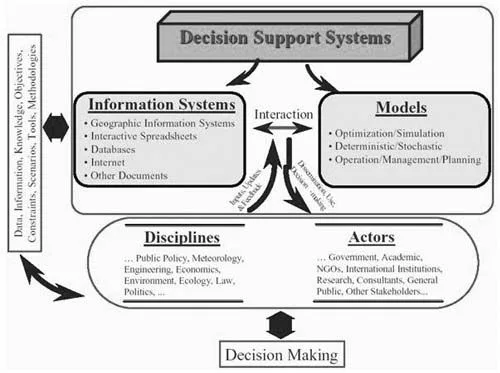
Good decisions require more than information: they need structures that organise evidence, counter predictable biases, and make reasoning accountable. Decision support system ideas include frameworks and practices that help people interpret a situation before acting, particularly when pressure and uncertainty are high.
A decision support system is any structured framework, tool, or practice designed to improve the quality of decisions by counteracting cognitive biases, organizing relevant information, and creating accountability for reasoning. In 1988, a U.S. Navy cruiser named the USS Vincennes shot down Iran Air Flight 655, killing all 290 people on board.
The crew had mistaken a civilian Airbus A300 for a hostile military aircraft. Post-incident analyses by the U.S. Department of Defense pointed to a phenomenon called "scenario fulfillment" - under stress, the crew sought information that confirmed their existing belief rather than information that might challenge it.
The decision support systems aboard the Vincennes provided overwhelming data but without the structured frameworks to prevent cognitive bias from dominating life-or-death conclusions.
The incident is studied not because military decision-making is representative of everyday organizational decisions, but because it illustrates with unusual clarity a failure mode that appears in far less consequential contexts: the decision-making process that felt systematic and defensible in the moment was actually driven by the decision-makers' prior beliefs, with the data serving as confirmation rather than genuine evidence.
A 2016 study by McKinsey & Company found that organizations using structured decision processes achieved returns 6.9 percentage points higher than those relying on ad hoc approaches, yet fewer than one in four companies reported consistently using such processes.
Decision support systems - whether formal tools, structured processes, or personal practices - exist to counteract this tendency. They impose structure on the decision-making process in ways that make bias visible, ensure relevant information is gathered and weighed, and create accountability for the decision's eventual outcome.
"The first principle is that you must not fool yourself - and you are the easiest person to fool." - Richard Feynman, Caltech commencement address, 1974
Understanding How Decisions Go Wrong
Before examining specific decision support approaches, it helps to understand the cognitive landscape within which decisions occur. Daniel Kahneman's research on cognitive biases, summarized in his 2011 book Thinking, Fast and Slow, identifies dozens of systematic errors in human judgment.
His work with Amos Tversky, beginning in the early 1970s at the Hebrew University of Jerusalem, established that these are not random failures but predictable patterns embedded in how the human mind processes information. Several biases are particularly relevant to organizational decision-making.
Confirmation bias is the tendency to search for, interpret, and recall information in a way that confirms prior beliefs. Decision-makers with a strong view on the right course of action unconsciously weight supporting evidence more heavily and discount contradicting evidence.
The USS Vincennes crew exhibited this: once they believed the aircraft was hostile, every ambiguous signal was interpreted as threatening.
A 2012 meta-analysis by Raymond Nickerson published in Review of General Psychology found confirmation bias to be among the most pervasive and resistant cognitive biases, appearing across domains from medical diagnosis to legal reasoning.
Availability heuristic refers to judging the likelihood of events by how easily examples come to mind. Decisions made after a dramatic success or failure are heavily influenced by that recent experience, even when it is not statistically representative.
After the September 11, 2001 attacks, for instance, Americans dramatically overestimated the risk of flying while underestimating the far greater statistical risk of driving - a pattern Gerd Gigerenzer at the Max Planck Institute documented in his research on "dread risks" (2004).
Anchoring is the tendency to rely too heavily on the first piece of information encountered. In salary negotiation, price setting, and project estimation, the initial anchor number has disproportionate influence on the eventual outcome.
Tversky and Kahneman's original anchoring experiments (1974) showed that even random numbers - generated by spinning a wheel - significantly influenced participants' subsequent numerical estimates.
Sunk cost fallacy means continuing a course of action because of past investment rather than future value. Organizations continue failing projects because they have already spent resources, not because continued investment is expected to produce positive returns.
The Concorde supersonic jet is the textbook example: Britain and France continued funding it for decades despite clear evidence it would never be commercially viable, because abandoning the project meant admitting past investment was wasted.
Economists Hal Arkes and Catherine Blumer demonstrated the sunk cost effect experimentally in 1985.
Overconfidence plagues decision-makers at all levels. Most people rate their performance and judgment above average, which is statistically impossible. In a landmark 1981 study, Swedish psychologist Ola Svenson found that 93% of American drivers rated themselves above the median in driving skill.
In decision-making, overconfidence leads to insufficient scenario planning, underestimation of uncertainty, and excessive willingness to make irreversible decisions.
Philip Tetlock's research on forecasting, published in Expert Political Judgment (2005), found that expert predictions were only slightly better than chance - and the most confident experts were often the least accurate.
Group dynamics effects compound individual biases in organizational settings. Group decisions are additionally distorted by groupthink (conforming to perceived group consensus, famously described by Irving Janis in 1972), authority bias (deferring to the most senior person present), and shared information bias (discussing information that all members already know rather than information that only some members have).
Garold Stasser and William Titus demonstrated this shared information effect in 1985, showing that groups consistently failed to surface unique information held by individual members.
Common Decision Biases and Their Antidotes
| Bias | Description | Antidote | Key Researcher |
|---|---|---|---|
| Confirmation bias | Seeking only confirming evidence | Pre-mortem; devil's advocate assignment | Nickerson (2012) |
| Anchoring | Over-weighting first numbers seen | Consider multiple anchors; work from first principles | Tversky & Kahneman (1974) |
| Sunk cost fallacy | Continuing bad bets due to past investment | Zero-base: "Would I start this today?" | Arkes & Blumer (1985) |
| Availability heuristic | Weighting recent/vivid examples too heavily | Base rate data; statistical reference class | Gigerenzer (2004) |
| Overconfidence | Underestimating uncertainty | Calibration training; confidence intervals | Tetlock (2005) |
| Groupthink | Conforming to perceived consensus | Anonymous input; structured devil's advocate | Janis (1972) |
| Authority bias | Deferring to most senior person | Reverse input order: junior staff speak first | Milgram (1963) |
| Planning fallacy | Systematic underestimation of time/cost | Reference class forecasting; pre-mortem | Buehler et al. (1994) |
Personal Decision Support Tools
The Decision Journal
A decision journal is a systematic record of important decisions: the context in which the decision was made, the options considered, the information available, the reasoning applied, and the predicted outcome.
The journal's value comes not from the documentation itself but from the retrospective review that reveals whether the reasoning process was sound - independent of whether the outcome was good.
Why outcome review is insufficient: Outcome review without process review creates attribution errors. A good decision with a bad outcome (lost a poker hand with a strong hand played well) looks like a bad decision. A bad decision with a good outcome (bet heavily without looking at cards, won by luck) looks like a good decision.
Nassim Nicholas Taleb explores this distinction extensively in Fooled by Randomness (2001), arguing that confusing luck with skill is one of the most dangerous errors in both investing and organizational management.
Learning from outcomes without examining the underlying reasoning process leads to reinforcing lucky decisions and abandoning sound but unlucky ones.
What a decision journal entry should contain:
- Date and decision being made
- The alternatives considered
- The information available at the time
- The reasoning that led to the chosen option
- What the decision-maker expects to happen and on what timeline
- The level of confidence in the decision (0-100%)
- A review date set for revisiting the decision
Review practice: Periodically reviewing past journal entries (quarterly or annually) reveals patterns - recurring biases, systematic over- or under-confidence, common reasoning errors - that can be deliberately addressed.
Studies of professional athletes, gamblers, and investors who use similar journaling practices show improved calibration over time.
Research by psychologist Robin Hogarth at Pompeu Fabra University (2001) found that decision quality improved most in "kind" learning environments where feedback was clear and timely - a decision journal creates that environment artificially even in domains where natural feedback is delayed or ambiguous.
Example: Annie Duke, a professional poker player turned decision scientist, describes using decision journaling practices throughout her poker career to separate decision quality from outcome quality.
In her book Thinking in Bets (2018), she describes how systematic review of past decisions (both good and bad outcomes) produced insights about her own cognitive patterns that intuitive review could not have revealed.
Duke now consults with organizations including the World Series of Poker and several Fortune 500 companies on implementing structured decision-making processes.
The 10-10-10 Framework
Suzy Welch's 10-10-10 framework, introduced in her 2009 book of the same name, asks three questions about any significant decision:
- How will I feel about this decision in 10 minutes?
- How will I feel about this decision in 10 months?
- How will I feel about this decision in 10 years?
The framework is not prescriptive - it does not dictate what the answers should be. It functions as a perspective expansion tool: forcing consideration of both immediate emotional reactions and long-term consequences, which are systematically underweighted in the heat of difficult decisions.
This aligns with research by psychologist Walter Mischel, whose famous Stanford marshmallow experiments (1972) demonstrated that the ability to delay gratification - to weigh future outcomes against present impulses - is one of the strongest predictors of long-term success.
Applications: The 10-10-10 framework is most useful for emotionally charged decisions where immediate feelings are likely to dominate - difficult personnel decisions, responses to criticism or conflict, and decisions involving personal relationships.
It is less useful for purely analytical decisions with clear data. Welch reports that organizations including Procter & Gamble have adopted variations of the framework for leadership development programs.
The Pre-Mortem Analysis
The pre-mortem, developed by psychologist Gary Klein around 1998 and popularized by Daniel Kahneman, is a structured imagination exercise conducted before a decision or project launch.
Participants are asked to imagine that one year has passed since the project launched and that it has failed spectacularly. They then work backward to identify what caused the failure.
Why pre-mortems outperform standard risk analysis: Standard risk analysis asks "what could go wrong?" in an optimistic context where everyone is motivated to support the plan.
The pre-mortem shifts the frame to "assume it went wrong - explain why." Research by Deborah Mitchell, Jay Russo, and Nancy Pennington published in the Journal of Applied Psychology (1989) found that prospective hindsight - imagining a future event has already occurred - increased the ability to correctly identify reasons for future outcomes by 30% compared to standard future-focused analysis.
This reframe makes it socially acceptable to voice concerns and identify risks that group dynamics would otherwise suppress.
Pre-mortem mechanics:
- Define the decision or plan clearly
- Ask participants to silently generate failure scenarios for 5-10 minutes, writing them down
- Have each participant share one failure scenario, going around the room until all scenarios have been named
- Discuss the most important failure scenarios and what could be done to prevent them
- Revise the plan or decision based on the most actionable identified risks
- Assign owners and deadlines for mitigation actions
Example: Pixar's production process includes a version of pre-mortem thinking in their "Braintrust" meetings - regular reviews where the creative team examines what is not working in a film. Ed Catmull, Pixar's co-founder, describes these meetings in Creativity Inc. (2014).
The meetings are specifically designed to surface problems early, when they are less expensive to fix. Director notes from these meetings are not orders but rather diagnosis of problems, with the creative team determining how to address them.
This structure prevents the groupthink that tends to occur in hierarchical creative feedback systems.
Criteria-Based Decision Making
Criteria-based decision making structures the decision by explicitly defining the criteria that matter, weighting them by importance, and scoring each option against each criterion before calculating a composite score.
This approach is rooted in multi-attribute utility theory (MAUT), formalized by Ralph Keeney and Howard Raiffa in Decisions with Multiple Objectives (1976).
The process:
- Define the decision to be made
- List all relevant criteria (price, quality, speed, risk, strategic alignment)
- Weight the criteria by importance (10 criteria can each be weighted 1-10; the weights should sum to a fixed total)
- Generate all serious options
- Score each option against each criterion (1-10)
- Calculate weighted composite scores for each option
- Use the scores as input to the decision (not necessarily as the final decision, but as a structured foundation for discussion)
The limitations of criteria matrices: Criteria matrices can produce false precision - the appearance of analytical rigor while concealing subjective weighting decisions. The weighting step is where most of the judgment resides, and different weighting assumptions can produce dramatically different scores for the same options.
The matrix is most useful as a tool for making the reasoning explicit and debatable, not as a mechanical decision generator. As Keeney himself noted, the value of the process lies in forcing explicit articulation of values, not in the numerical output.
Organizational Decision Support Systems
The RAPID Framework
Bain & Company's RAPID framework is one of the most widely deployed organizational decision frameworks, designed to clarify who plays which role in any significant decision.
Paul Rogers and Marcia Blenko described the framework in a 2006 Harvard Business Review article, reporting that companies with clear decision accountability outperformed peers by 95% in revenue growth and 71% in profitability.
RAPID roles:
- Recommend: Proposes the decision and is responsible for gathering input
- Agree: Has veto power over the recommendation (reserved for specific types of decisions)
- Perform: Executes the decision once made
- Input: Provides information and perspective, but does not have veto power
- Decide: Makes the final decision
The framework's key insight is that "agree" (veto power) should be reserved for decisions that genuinely require consensus - not used as a default that requires everyone to sign off on everything.
Most organizational decisions that become slow and contested are slow because the "agree" role has been assigned too broadly.
Applying RAPID in practice: Organizations using RAPID typically build a decision register - a document or database of recurring decision types (budget approvals at different thresholds, vendor selections, hiring decisions, product feature decisions) with the RAPID roles pre-assigned.
This pre-assignment eliminates the ambiguity that causes decisions to stall. Companies including Dell, British American Tobacco, and Wyeth have reported significant improvements in decision speed after implementing RAPID.
Example: Amazon's use of a similar framework in their "one-way door vs. two-way door" distinction reflects the same underlying principle. Jeff Bezos articulated this in his 2015 shareholder letter: two-way door decisions (reversible, lower-stakes) can be made quickly by whoever is closest to the information.
One-way door decisions (irreversible, higher-stakes) require appropriate deliberation with senior involvement. Applying the same deliberation to both types wastes decision-making resources and creates the organizational sluggishness that Bezos called "Day 2" thinking.
Reversibility-Based Decision Routing
Not all decisions are equally consequential, and treating them equally - with the same deliberation, stakeholder involvement, and documentation - creates unnecessary overhead for low-stakes decisions while providing insufficient scrutiny for high-stakes ones.
The reversibility spectrum:
- Easily reversible decisions: Can be undone or adjusted quickly and cheaply. Decide fast, delegate broadly. Examples: A/B test variations, meeting formats, tool selections with free trials.
- Somewhat reversible decisions: Can be changed, but with some cost or delay. Appropriate deliberation proportional to stakes. Examples: hiring a contractor, choosing a project management tool for the team, setting quarterly goals.
- Largely irreversible decisions: Difficult or impossible to undo. Require thorough analysis, appropriate stakeholder involvement, and documentation. Examples: signing a multi-year lease, choosing a core technology platform, entering a new market.
The discipline is routing decisions to the appropriate level of deliberation based on reversibility, rather than applying uniform process to all decisions.
Research by Chip Heath and Dan Heath, described in Decisive (2013), found that the single most common decision-making error in organizations is not making bad choices but failing to consider the full range of options - and that this error is most damaging for irreversible decisions where the cost of narrowed thinking is permanent.
Digital Decision Support Tools
Decision Management Software
Enterprise decision management software - used primarily in financial services, insurance, and healthcare - encodes business rules and decision logic into systems that make or recommend decisions automatically based on defined criteria.
Use cases:
- Loan approval systems that score applications against credit criteria (FICO scores, used by 90% of U.S. lenders, are a form of automated decision support)
- Insurance underwriting systems that price policies based on risk factors
- Fraud detection systems that flag transactions matching suspicious patterns - Visa's real-time fraud detection system processes over 65,000 transactions per second
- Medical diagnostic support systems that suggest diagnoses based on symptom and test data, such as IBM Watson Health and newer AI-powered tools from companies like Tempus
These systems are not decision-making replacements for human judgment in complex situations; they are tools for systematically applying well-defined rules at scale and speed that humans cannot match.
The key design principle, as noted by decision scientist James Reason in his "Swiss cheese model" of error (1990), is that automated systems should complement rather than replace human judgment, with each layer catching errors that others miss.
Analytics and Data Visualization for Decision Support
Dashboards, analytics platforms, and visualization tools support decisions by making relevant data accessible and comprehensible to decision-makers who would otherwise lack visibility into the state of the system they are deciding about.
The global business intelligence market was valued at approximately $27 billion in 2023, according to Grand View Research, reflecting how central data visualization has become to organizational process optimization.
The key design principle: Decision support dashboards should surface the specific metrics relevant to the specific decisions that users need to make, not all available data.
A sales dashboard for a sales manager deciding which accounts to prioritize should show pipeline stage, deal size, close probability, and last activity date - not every piece of data in the CRM.
Edward Tufte's principles of data visualization, articulated in The Visual Display of Quantitative Information (1983), remain the gold standard: maximize the data-ink ratio, eliminate chartjunk, and let the data tell the story.
Common failure modes: Dashboards that show too much data overwhelm decision-makers - a phenomenon known as "information overload," studied extensively by Sheena Iyengar at Columbia University. Dashboards with insufficient real-time data lead to decisions based on stale information.
Dashboards that measure outputs rather than leading indicators arrive too late to support the decisions they are meant to inform.
Example: Tableau's success as a business intelligence platform has been driven significantly by its ability to enable non-technical business users to build and interpret their own dashboards. Before Tableau (and competitors like Looker, Metabase, and Power BI), data access was gated through data teams.
Tableau democratized data access in ways that enabled faster, better-informed decision-making at more levels of the organization, growing from a Stanford research project in 2003 to a Salesforce acquisition for $15.7 billion in 2019.
Measuring Decision Quality Over Time
The ultimate test of any decision support system is whether it produces better decisions over time. Measuring decision quality requires addressing the outcome-vs-process distinction described earlier. Philip Tetlock's Good Judgment Project (2011-2015), funded by the U.S. Intelligence Advanced Research Projects Activity (IARPA), demonstrated that structured forecasting processes could produce predictions that beat even intelligence analysts with access to classified information.
The key was not raw intelligence but calibration and structured reasoning.
Calibration measurement: For decisions with numerical forecasts (revenue projections, project timelines, market size estimates), track whether actual outcomes fall within the confidence intervals the decision-maker assigned.
Decision-makers with well-calibrated uncertainty should see approximately 80% of their "80% confident" predictions correct, 95% of their "95% confident" predictions correct, and so on.
Tetlock found that "superforecasters" - the top performers in his study - were distinguished primarily by their calibration discipline, not by domain expertise.
Process adherence measurement: Track whether the defined decision process was followed - whether alternatives were genuinely considered, whether criteria were defined before options were evaluated, whether the right stakeholders were involved.
A 2019 study by the Bridgespan Group found that nonprofit organizations using structured decision processes were 2.5 times more likely to report achieving their strategic objectives.
Outcome measurement: Track decision outcomes over multiple time horizons (6 months, 1 year, 3 years) to build a database of actual consequences from different types of decisions made under different processes.
This is the approach used by Bridgewater Associates, where Ray Dalio's "principles-based" management system tracks every significant decision and its outcome, creating what Dalio describes in Principles (2017) as an "idea meritocracy" where the best reasoning - not the loudest voice - prevails.
The combination of calibration, process, and outcome measurement creates a feedback loop that improves decision quality over time - not through individual decisions alone, but through systematic learning from the pattern of many decisions.
This is the essence of building a personal knowledge system around decision-making: not seeking a single framework that solves all problems, but developing the discipline to learn from every decision you make.
See also: Feedback System Design, Process Optimization Strategies, Lightweight System Design Principles, and Productivity Systems That Scale.
Sources & Further Reading
- Kahneman, Daniel. Thinking, Fast and Slow. Farrar, Straus and Giroux, 2011. View source
- Klein, Gary. Sources of Power: How People Make Decisions. MIT Press, 1998. View source
- Duke, Annie. Thinking in Bets: Making Smarter Decisions When You Don't Have All the Facts. Portfolio, 2018. View source
- Tetlock, Philip. Superforecasting: The Art and Science of Prediction. Crown, 2015. View source
- Welch, Suzy. 10-10-10: 10 Minutes, 10 Months, 10 Years. Scribner, 2009. View source
- Heath, Chip and Dan Heath. Decisive: How to Make Better Choices in Life and Work. Crown Business, 2013. View source
- Bain and Company. "RAPID Decision Making." Bain Insights. View source
- Catmull, Ed. Creativity Inc.: Overcoming the Unseen Forces That Stand in the Way of True Inspiration. Random House, 2014. View source
- Dalio, Ray. Principles: Life and Work. Simon & Schuster, 2017. View source
- Keeney, Ralph and Howard Raiffa. Decisions with Multiple Objectives. Cambridge University Press, 1976. View source
- Tufte, Edward. The Visual Display of Quantitative Information. Graphics Press, 1983. View source
- Russo, J. Edward and Paul Schoemaker. Winning Decisions: Getting It Right the First Time. Currency, 2001. View source