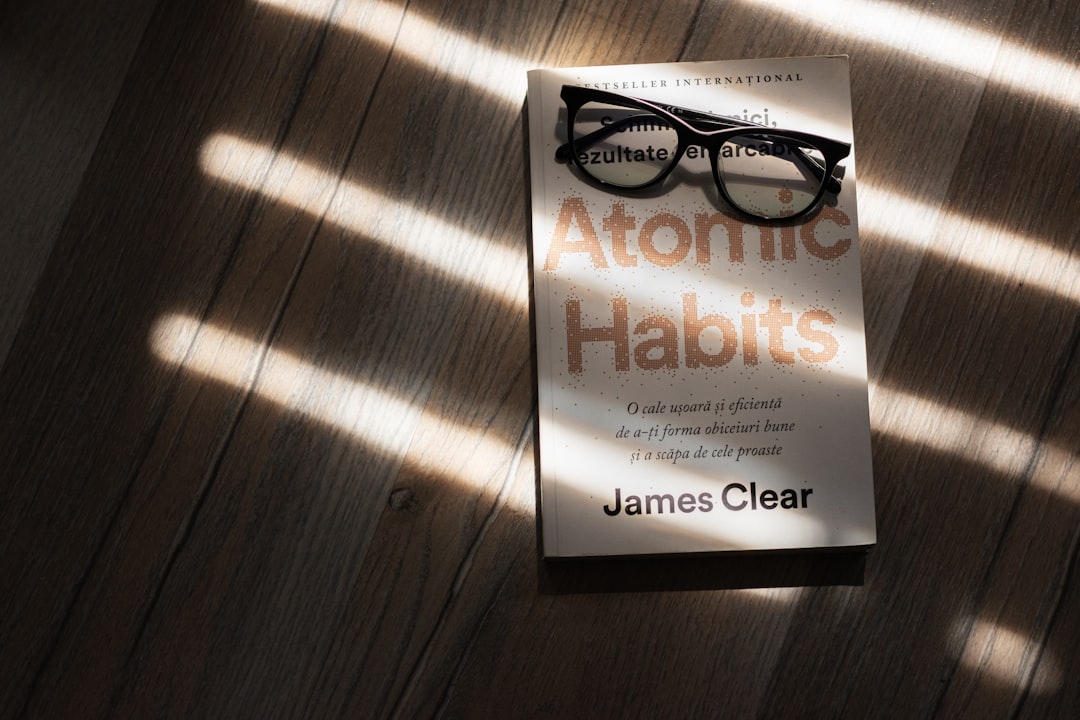
# Atomic Habits vs Deep Work: Which Framework to Start
**Meta Description:** Expert-written comparison of James Clear's Atomic Habits and Cal Newport's Deep Work, with a decision framework for which system to install first based on career stage and goals.
**Keywords:** atomic habits vs deep work, james clear vs cal newport, deep work book summary, atomic habits summary, habit formation framework, focused work framework, productivity frameworks compared, which productivity book first, cal newport deep work, james clear atomic habits
**Tags:** #productivity #atomic-habits #deep-work #habits #focus #frameworks
---
## Why the Choice Between These Two Books Matters
Atomic Habits by James Clear (2018) and Deep Work by Cal Newport (2016) are the two best-selling non-fiction productivity titles of the last decade. Clear's book has sold more than 15 million copies, according to Penguin Random House sales data. Newport's has sold over 3 million. Readers routinely read both, usually in the wrong order for their current situation.
The two frameworks are complementary, not competing. They answer different questions. Clear answers how to make behavior automatic when motivation is low. Newport answers how to produce work of depth and quality when the world is full of shallow-work demands. Starting with the wrong one for your stage wastes months.
This guide is written for people who have limited reading time and want to pick the framework that will produce the most compounding benefit for their current context.
> "You do not rise to the level of your goals. You fall to the level of your systems."
> -- James Clear, Atomic Habits, 2018
> "To produce at your peak level you need to work for extended periods with full concentration on a single task free from distraction."
> -- Cal Newport, Deep Work, 2016
---
## What Each Book Actually Claims
### Atomic Habits: The Core Argument
Clear's thesis is that small, automated behaviors compound into outsized life outcomes over time. He presents a four-law framework derived from the cue-craving-response-reward loop popularized by Charles Duhigg and rooted in operant conditioning research.
The four laws of behavior change:
- Make it obvious (cue)
- Make it attractive (craving)
- Make it easy (response)
- Make it satisfying (reward)
For breaking bad habits, each law is inverted: make it invisible, unattractive, difficult, and unsatisfying. The book's empirical spine is habit-loop research by Ann Graybiel at MIT, behavior-design work by BJ Fogg at Stanford, and practical field data from Clear's own newsletter readers.
The actionable contribution is habit stacking. You attach a new behavior to an existing automatic cue. The formula is: "After I [current habit], I will [new habit]." After I pour my morning coffee, I will read for ten minutes. After I sit down at my desk, I will write one sentence in my journal.
### Deep Work: The Core Argument
Newport's thesis is that the ability to focus without distraction on cognitively demanding tasks is both rare and valuable in the modern economy, and that it can be trained deliberately. He frames the argument in economic terms: knowledge workers who can produce deep work outcompete those trapped in the shallow-work loop of email, Slack, and reactive attention.
The book's four rules:
- Work deeply (schedule it, defend it)
- Embrace boredom (train your attention by not reaching for distraction)
- Quit social media (or drastically reduce it)
- Drain the shallows (minimize non-deep time)
Newport draws from Anders Ericsson's deliberate practice research, Mihaly Csikszentmihalyi's flow research, and Nicholas Carr's writing on attention fragmentation. The actionable contribution is scheduled deep work blocks (the monastic, bimodal, rhythmic, and journalistic philosophies), with protection strategies for each.
---
## Side-by-Side Comparison
| Dimension | Atomic Habits | Deep Work |
|---|---|---|
| Primary focus | Automation of behavior | Concentration on cognitive work |
| Time horizon | Months to years | Days to weeks |
| Main unit | The habit loop | The deep work block |
| Best for | Building consistency, breaking addictions | Producing creative or complex output |
| Required baseline | Low motivation, no existing routine | Already have time, need to use it better |
| Career stage | Early career, life transitions | Mid-career, creative work, research |
| Measurable outcome | Behaviors executed per week | Hours of focused work per week |
| Main failure mode | Stacking too many habits at once | Scheduling deep work you cannot protect |
The table makes the central choice clear: if your problem is that you cannot get yourself to start, read Clear. If your problem is that you start but cannot sustain attention, read Newport.
---
## The Decision Framework: Which to Start With
Use the following five questions to pick the first framework. Answering three or more in favor of one book strongly suggests starting there.
### Question 1: Do you have a consistent daily work routine already?
If no: Atomic Habits first. You need to automate the baseline before you can deepen anything.
If yes: Deep Work first. You already have structure. You need to use it better.
### Question 2: Is your main frustration lack of output or lack of quality?
Lack of output, missed deadlines, unfinished projects: Atomic Habits. The underlying issue is usually irregular starts, not insufficient focus during the sessions that happen.
Lack of quality, shallow thinking, work that feels superficial: Deep Work. The underlying issue is fragmented attention during the sessions that do happen.
### Question 3: How distracted do you feel during focused work?
If you have not attempted sustained focused work recently, you do not yet know. Try a 90-minute block with phone in another room. If you finish and feel satisfied, your attention is fine. Start with Atomic Habits to expand the quantity of such blocks. If you check your phone ten times during the block, start with Deep Work to retrain attention.
### Question 4: What is your current career stage?
Early career (0 to 3 years in a field): Atomic Habits. Build the consistency that compounds into career capital.
Mid-career (3 to 10 years): Deep Work. You have the baseline routines. The next level comes from producing better work, not more work.
Senior or creative work: Deep Work, with periodic returns to Atomic Habits during life transitions.
### Question 5: What is your relationship with social media and email?
If you open Instagram or check email more than 20 times per day, you cannot do deep work. Newport's rules about attention training and social media quitting apply first. But the behavior pattern itself is the problem, which suggests starting with Clear's framework on making the habit invisible and difficult.
Honest answer: if this question is where you are, read both. Read Atomic Habits first to remove the compulsive checking. Then read Deep Work to build the replacement.
---
## The Research Behind Each Framework
### Habit Formation Research
Phillippa Lally's 2010 study at University College London tracked 96 participants across 84 days of habit formation. Median time to automaticity was 66 days, with a range from 18 to 254 days. The range matters. Simple habits stick in weeks. Complex habits take months. Clear's framework works because it lowers the friction of the starting sequence, which is where most habit attempts fail.
Wendy Wood's 2019 book Good Habits, Bad Habits synthesizes 30 years of her research at USC into habit persistence. The central finding is that approximately 43 percent of daily behavior is habitual in the sense of being cued by context rather than deliberated. The implication is that the environment does more work than the will, which is a direct support for Clear's "make it obvious" and "make it easy" laws.
### Deep Work Research
K. Anders Ericsson's deliberate practice research, across the arc from his 1993 paper in Psychological Review to his 2016 book Peak with Robert Pool, established that elite performance in cognitive and skill domains is produced by deliberate practice: focused, feedback-driven, effortful work at the edge of current ability. Newport's deep work concept is the knowledge-worker application of the same principle.
Gloria Mark's research at UC Irvine, published across multiple papers from 2005 to 2023, measured attention spans in knowledge workers. In her 2004 studies, average sustained focus on a single task before interruption was 3 minutes. By 2012, it had dropped to 75 seconds. By 2021, to 47 seconds. The downward trend supports Newport's argument that attention itself is degrading as a cultural skill, and that training deliberate focus has become more valuable as it has become more rare.
> "The ability to perform deep work is becoming increasingly rare at exactly the same time it is becoming increasingly valuable in our economy."
> -- Cal Newport, Deep Work, 2016
---
## A Combined Protocol for Readers Who Want Both
If you want to install both frameworks and you have 90 days, here is a sequencing plan that gets the benefits of each without the common failure modes.
### Days 1 to 30: Atomic Habits Foundation
- Pick three habits, not ten. One physical (exercise or sleep), one cognitive (reading or writing), one relational (conversation or family).
- Use habit stacking. Each new habit attaches to an existing cue.
- Track daily with a simple paper calendar or a minimal app. Do not optimize the tracking.
- Expect imperfection. Clear's "never miss twice" rule is more important than a perfect streak.
### Days 31 to 60: Attention Training
- Add a daily 30 to 45 minute deep work block to your cognitive habit.
- No phone in the room. No browser tabs other than the work.
- Expect discomfort for the first two weeks. Attention is a muscle with disuse atrophy.
- Measure output, not hours. Words written, code committed, chapters read.
### Days 61 to 90: Deep Work Expansion
- Extend the block to 60 to 90 minutes where your schedule allows.
- Add a second block where possible.
- Apply Newport's "shutdown ritual" at the end of each workday to protect evening recovery.
- Reassess habits. Remove any that feel performative rather than useful.
After 90 days, readers typically have both an automated baseline and a trained attention. The combination compounds faster than either framework alone.
---
## Who Should Skip Each Book
Atomic Habits is redundant for readers who already have a stable daily routine they have maintained for more than two years. The book's contribution is the initial automation. If the automation exists, the book largely confirms what the reader knows.
Deep Work is premature for readers who are struggling with life chaos, frequent emergencies, or a job that structurally prevents uninterrupted blocks (emergency room physicians, parents of newborns, customer support in fast-response environments). The framework assumes you control enough of your calendar to carve out blocks. If you do not, fix the calendar problem first.
Neither book adequately addresses the social dimension of work. Clear touches on environment design, Newport touches on email culture, but teams that operate with constant interruption as the norm will not get the deep work benefits from an individual's reading.
---
## Common Misunderstandings
**Atomic Habits is not about willpower.** Readers sometimes come away thinking the book argues for more discipline. It argues the opposite. The four laws are explicitly about reducing the need for willpower by designing the environment and the sequence so that the behavior is the path of least resistance.
**Deep Work is not about working more hours.** Newport is explicit that deep work is a capacity, not a quantity. He cites research suggesting that even elite performers cap out at 4 to 5 hours of true deep work per day. The book is about concentrating those hours, not adding hours.
**Neither framework is a complete productivity system.** Both authors acknowledge this. Clear focuses on behavior automation. Newport focuses on attention quality. Neither addresses prioritization, goal selection, or task management in depth. David Allen's Getting Things Done and Stephen Covey's Seven Habits sit in those gaps.
> "The ability to focus is the most undervalued skill in our economy."
> -- Cal Newport, interview with Tim Ferriss, 2020
---
## How the Frameworks Apply to Specific Work
### For Students and Certification Candidates
Students preparing for competitive exams benefit more from Deep Work in the short term. The bottleneck is concentrated study, not habit building, since the exam deadline provides external motivation. Spaced repetition protocols align well with Newport's scheduled deep work blocks. The certification study plans documented at [pass4-sure.us](https://pass4-sure.us) apply deep work principles explicitly to IT exam preparation.
### For Knowledge Workers
Knowledge workers in mid-career roles should read Deep Work first. The baseline routines are usually already in place. The bottleneck is output quality. For readers assessing their cognitive capacity before starting, the reaction time and working memory batteries at [whats-your-iq.com](https://whats-your-iq.com) provide a baseline against which to measure post-training gains.
### For Writers and Creatives
Writers benefit from both frameworks in sequence. Atomic Habits builds the daily writing habit. Deep Work protects the sessions for the kind of sustained concentration that produces work beyond competent. The templates and grammar references at [evolang.info](https://evolang.info) complement the habit of daily writing by reducing the cognitive load of sentence-level decisions.
### For Entrepreneurs
Entrepreneurs usually need Atomic Habits first. Founder life is chaotic, and the habit framework provides the baseline consistency that compounds into sustained execution. Founders building businesses with international customers often use [corpy.xyz](https://corpy.xyz) for country-by-country formation guidance, and the discipline of habit-tracked weekly reviews scales naturally to those multi-jurisdiction workflows.
### For Professionals Working Remotely
Remote workers face the specific challenge of designing their own environment, which makes Atomic Habits more immediately useful. Environment design is the book's strongest practical contribution. Newport's deep work principles apply once the environment is stable.
---
## Frequently Asked Questions
**Can I read both books at the same time?**
You can, but the combined reading load tends to produce more reflection than action. Most readers benefit from reading one book, installing the framework for 30 to 60 days, then reading the second. The installation matters more than the reading.
**Which book has better research citations?**
Deep Work cites more primary research, particularly in the psychology of attention and deliberate practice. Atomic Habits cites fewer primary papers but draws on practical behavior-design work at Stanford's Behavior Design Lab and MIT's habit loop research. Both are well-grounded. Clear's book is more accessible; Newport's is more academically rigorous.
**What if neither book matches my situation?**
Charles Duhigg's The Power of Habit (2012) is the intellectual precursor to Atomic Habits and may resonate more for readers interested in case studies. Deep Work's alternative is Mihaly Csikszentmihalyi's Flow (1990), which approaches the same question from a psychological rather than economic angle. For readers whose main problem is overwhelm from task volume, David Allen's Getting Things Done is the higher-leverage starting point.
**How do I avoid the trap of reading more productivity books instead of acting?**
Read one book, then stop reading productivity material for 90 days. The diminishing returns on reading are steep after the first two or three books in the category. The returns on practice are non-diminishing for months.
**Do these frameworks work for people with ADHD?**
Atomic Habits' environment design is particularly useful for ADHD because it reduces reliance on working memory and impulse control, which are the two weakest executive function domains in ADHD. Deep Work is harder to install without medication or substantial scaffolding, but not impossible. Readers with ADHD should consult clinical resources alongside these books.
**What is the biggest mistake readers make with Atomic Habits?**
Starting with five to ten habits simultaneously. Clear recommends one to three. Most readers pick ten, fail at seven, and conclude the framework does not work. The framework works. The starting parameters were wrong.
**What is the biggest mistake readers make with Deep Work?**
Scheduling deep work blocks that are not actually defensible. If your calendar shows a deep work block and your boss can drop a meeting into it, it is not a deep work block. Newport is explicit that the schedule must be defensible against reactive demands.
---
## References
1. Clear, J. (2018). Atomic Habits: An Easy and Proven Way to Build Good Habits and Break Bad Ones. Avery. https://jamesclear.com/atomic-habits
2. Newport, C. (2016). Deep Work: Rules for Focused Success in a Distracted World. Grand Central Publishing. https://www.calnewport.com/books/deep-work/
3. Lally, P., van Jaarsveld, C. H. M., Potts, H. W. W., & Wardle, J. (2010). How are habits formed: Modelling habit formation in the real world. European Journal of Social Psychology, 40(6), 998-1009. https://doi.org/10.1002/ejsp.674
4. Ericsson, K. A., Krampe, R. T., & Tesch-Romer, C. (1993). The role of deliberate practice in the acquisition of expert performance. Psychological Review, 100(3), 363-406. https://doi.org/10.1037/0033-295X.100.3.363
5. Wood, W., & Runger, D. (2016). Psychology of habit. Annual Review of Psychology, 67, 289-314. https://doi.org/10.1146/annurev-psych-122414-033417
6. Mark, G., Iqbal, S. T., Czerwinski, M., & Johns, P. (2015). Focused, aroused, but so distractible: Temporal perspectives on multitasking and communications. Proceedings of the 18th ACM Conference on Computer Supported Cooperative Work. https://doi.org/10.1145/2675133.2675221
7. Duhigg, C. (2012). The Power of Habit: Why We Do What We Do in Life and Business. Random House.
8. Farnam Street. (2023). Deep Work and the Cost of Distraction. https://fs.blog/deep-work/
Frequently Asked Questions
Should I read Atomic Habits or Deep Work first?
If you do not yet have a consistent daily routine, read Atomic Habits first. The book's contribution is installing an automated baseline through habit stacking and environment design. If you already have a consistent routine but your focused output feels shallow or fragmented, read Deep Work first. Newport's framework assumes you control enough of your calendar to protect uninterrupted blocks. Early-career professionals (zero to three years) generally benefit more from Clear's framework because consistency is the compounding asset at that stage. Mid-career professionals (three to ten years) already have the routines and need Newport's deeper work capacity to advance. Reading both in 90 days works if you install one for 30 to 60 days before starting the second. Parallel reading tends to produce reflection without action.
Are Atomic Habits and Deep Work contradictory?
They are complementary, not contradictory. Clear's framework is about making behavior automatic when motivation is low. Newport's framework is about concentrating attention when cognitive demands are high. The two operate at different levels. Atomic Habits works below the conscious threshold, reducing reliance on willpower by designing cues, environments, and rewards. Deep Work operates during the sessions that habits create, ensuring that the time spent produces meaningful output. A reader who installs both will have an automated baseline (Clear) and trained attention during the baseline sessions (Newport). The frameworks address adjacent problems. Clear answers 'how do I start consistently?' Newport answers 'how do I produce something valuable once I have started?' The most common mistake is treating them as alternatives rather than layers of the same productivity stack.
How long does it take to see results from each framework?
Atomic Habits produces visible automation in 30 to 90 days for simple habits, based on Phillippa Lally's 2010 University College London study showing a median time-to-automaticity of 66 days across a range of 18 to 254 days. Complex multi-step routines take 2 to 6 months. Deep Work's results are more variable. Attention retraining produces discomfort for the first 10 to 14 days as the brain adjusts to the absence of continual stimulation. Output quality improvements typically appear in weeks three and four, as longer focus windows become sustainable without fatigue. Full deep work capacity, defined as four to five consecutive hours of sustained focus, takes three to six months of consistent practice. Newport cites examples from academics and writers who built the capacity over years, but the initial productivity gains appear much sooner. The combination compounds: habits make the blocks happen, deep work makes the blocks produce.
Do these frameworks work for people with ADHD?
Atomic Habits is particularly effective for ADHD because its core mechanism reduces reliance on working memory and impulse control, which are the two weakest executive function domains in ADHD. Environment design (removing the phone from the room, laying out workout clothes the night before, placing the book on the pillow) externalizes the cue so that the brain does not have to generate the intention internally. Deep Work is harder to install for ADHD without scaffolding. The unmedicated ADHD brain struggles to sustain attention on low-stimulation tasks even when the environment is perfect. Readers with ADHD benefit from combining Newport's protection strategies (phone elsewhere, notifications off, defined block duration) with ADHD-specific tools such as body doubling, timer-based Pomodoro structure, and medication consultation with a clinician. Neither book addresses ADHD specifically, but the underlying principles are compatible with ADHD-aware productivity strategies documented in clinical ADHD research.
What if my job does not allow deep work blocks?
Many jobs structurally prevent long uninterrupted blocks: emergency medicine, customer support, front-line retail, parents of very young children, and reactive-role positions where response time is the job. For these contexts, Newport's Deep Work is less immediately applicable, and Clear's Atomic Habits is the higher-leverage starting point. The habit framework works in 5 to 15 minute windows, which are available in almost any job. A second option is to redesign the job itself. Newport's book Slow Productivity (2024) addresses this, arguing for fewer commitments held longer rather than more commitments held shorter. Job redesign is often necessary for knowledge workers whose employers have defaulted to calendar tetris as the operating norm. For workers who cannot restructure their role, the evening and early morning become the deep work windows by default, with the habit framework protecting those windows against reactive drift.
Can these frameworks replace therapy or medication for focus problems?
No. Both books are productivity frameworks, not clinical interventions. If your focus problems are severe enough to interfere with work, relationships, or daily function, the underlying issue may be ADHD, depression, anxiety, sleep apnea, or thyroid dysfunction. Productivity books cannot treat any of those. The frameworks add capacity when the baseline is healthy. They do not substitute for clinical assessment when the baseline is compromised. A reasonable sequence for readers uncertain about their baseline: consult a physician or psychiatrist for a screening, then install the frameworks alongside any treatment plan. Many readers discover mid-installation that their attention problems are clinical rather than behavioral. Both authors have acknowledged this limitation in interviews. Clear has stated that environment design and habit stacking are most effective when the brain's underlying regulation is intact.
Which book is better for building a writing or creative practice?
The two books solve different creative-practice problems. Atomic Habits is better for establishing the daily writing habit, which is the single largest predictor of creative output across writers, composers, and visual artists studied in K. Anders Ericsson's deliberate practice research. Deep Work is better for improving the quality of the writing sessions that the habit creates. A writer with zero daily practice should read Clear first, establish a 30 to 60 minute daily writing block, and only then read Newport to deepen the sessions. A writer with a daily practice that feels shallow or fragmented should read Newport first. The combination is particularly powerful for long-form work: a novel, a dissertation, a book of essays. Tiago Forte's Building a Second Brain complements both books by addressing the capture, organize, distill, and express pipeline that turns habitual deep work into finished output over months and years.