
Walk into any pharmacy and you will find dozens of products claiming to "boost," "support," "strengthen," or "supercharge" your immune system. Echinacea capsules. Zinc lozenges. Elderberry syrup. Vitamin C megadoses.
Proprietary blends of herbs with names derived from Eastern medicine traditions, repurposed for supplement marketing with minimal regulatory scrutiny. The global immune health supplement market exceeded $22 billion in 2022 and is projected to grow to $45 billion by 2030.
Almost none of these products have robust evidence behind their most dramatic claims. Not because the immune system cannot be supported - it absolutely can.
But because the things that most powerfully support immune function are mostly free, require no purchase, and are not compelling marketing stories: sleep more, exercise regularly, manage stress, don't smoke, eat adequate protein, and get your vitamin D.
This gap - between the things that genuinely work and the things that are sold - is partly a regulatory problem (the US supplement industry operates under minimal pre-market evidence requirements), partly a psychology problem (we want actionable solutions, not lifestyle recommendations), and partly a science communication problem.
The evidence does not support most supplement claims; it very clearly supports behaviors that are inconvenient to commodify.
"There's no supplement that will do for the immune system what sleep does. But nobody can sell you sleep in a capsule." - Matthew Walker, Why We Sleep (2017)
Key Definitions
Immune modulation - Influencing the activity level of immune system components, either upward (stimulating) or downward (suppressing). The goal of immune health is not maximum activation but appropriate calibration - responsive to pathogens, tolerant of self, not chronically inflamed.
Natural Killer (NK) cell activity - A measurable marker of innate immune function. NK cells kill virus-infected cells and tumor cells without prior sensitization.
NK cell activity (measured by their ability to lyse target cells in vitro) is a common research endpoint for immune function studies - sensitive to sleep, stress, exercise, and various interventions.
Secretory IgA (sIgA) - Antibodies present in mucosal secretions (saliva, nasal mucus, gut lining). SIgA is the first immunological defense against respiratory pathogens - it catches viruses before they can infect cells. Stress, sleep deprivation, and chronic illness reduce sIgA levels, increasing mucosal vulnerability.
Cytokines - Signaling proteins released by immune cells to coordinate immune responses. Pro-inflammatory cytokines (IL-6, TNF-alpha, IL-1beta) activate defense responses; anti-inflammatory cytokines (IL-10, TGF-beta) suppress excess inflammation.
Chronic elevation of pro-inflammatory cytokines ("inflammaging") is a feature of aging and chronic disease. Interventions that reduce chronic inflammation support immune regulation.
Vaccine response - A precisely measurable proxy for adaptive immune function: blood antibody titers following a vaccine directly measure the immune system's capacity to mount and remember an adaptive response.
Vaccine studies are among the best tools for studying immune function interventions because they provide an objective, standardized immune challenge with measurable output.
Gut microbiome - The community of trillions of bacteria, fungi, and other microorganisms inhabiting the intestine. Approximately 70% of the immune system is located in the gut-associated lymphoid tissue (GALT), and the microbiome plays a major role in immune development, regulation, and function.
Microbiome diversity is associated with more robust immune regulation; reduced diversity (from antibiotics, poor diet, or stress) is associated with increased infection susceptibility and inflammatory conditions.
Inflammaging - The chronic low-grade inflammation characteristic of biological aging, associated with increased circulating inflammatory markers (C-reactive protein, IL-6), reduced vaccine responses, increased infection severity, and higher risk of age-related diseases.
Lifestyle factors (exercise, sleep, diet) modulate inflammaging rates significantly.
What the Evidence Actually Shows
Sleep: The Most Powerful Immune Tool Available
The relationship between sleep and immunity is among the most robustly documented in all of immunology. Sleep is not a passive rest period for the immune system - it is a period of intense immunological activity.[6]
The Cohen rhinovirus study (Prather et al., 2015): Researchers objectively monitored sleep duration using actigraphy in 164 healthy adults for one week, then administered rhinovirus nasal drops to each participant.[1]
Controlling for all confounders, those who slept fewer than 6 hours per night were 4.2 times more likely to develop a clinical cold compared to those who slept 7 or more hours. The effect was linear - each additional hour of sleep reduced cold incidence.
Vaccine response studies: Multiple trials show sleep in the 24 hours before or after vaccination significantly affects antibody response:
- Lange et al. (2003) found hepatitis A vaccine produced only half the expected antibody titers in sleep-deprived subjects 4 weeks post-vaccination
- Besedovsky et al. (2012) found influenza vaccine responses were significantly impaired after 6 vs. 8 hours of sleep
- Clinical evidence is now strong enough that sleep is considered when interpreting vaccine trial results
NK cell activity: One night of partial sleep deprivation (4-6 hours) reduces NK cell activity by up to 70% in some studies - an acute, measurable, and clinically meaningful immune impairment from a single night of poor sleep.
The mechanism: During slow-wave sleep, HPA axis activity falls and sympathetic tone decreases - the suppressive effect of cortisol and norepinephrine on immune cells is relieved. Pro-inflammatory cytokines (IL-1, IL-6, TNF) peak during sleep, coordinating immune activation.
T cell adhesion molecules are upregulated during sleep, improving their ability to bind to infected cells. Growth hormone, released in sleep, supports tissue repair.
Practical implication: Sleeping 7-9 hours per night does more for your immune health than any supplement combination available. This is not a lifestyle suggestion - it is a direct evidence-based intervention.
Chronic Stress: The Strongest Immune Suppressor
Janice Kiecolt-Glaser and Ronald Glaser at Ohio State University have spent four decades documenting the immunological consequences of psychological stress.[2] Their findings are unambiguous.
Wound healing studies: Caregivers for Alzheimer's patients (under chronic stress) showed wound healing 40% slower than age-matched controls. Dental students showed slower wound healing during examination periods than during vacation.
The mechanism: stress hormones reduce pro-inflammatory cytokine production at wound sites, impairing the inflammatory phase of healing.
Viral latency reactivation: Herpesviruses (EBV, CMV, herpes simplex) remain latent in the body after initial infection, controlled by cellular immunity. Chronic stress impairs this control, allowing latent viruses to reactivate - measurable in blood as increased viral antibody titers.
Medical students show CMV reactivation during exam periods; recently bereaved individuals show increased herpesvirus reactivation.
The cortisol mechanism: Cortisol, the primary stress hormone, acts on glucocorticoid receptors present on virtually every immune cell.
At physiological concentrations, cortisol is immunosuppressive: it reduces lymphocyte proliferation, reduces NK cell activity, reduces antibody production, and impairs the ability of macrophages to kill intracellular pathogens.
Chronic stress maintains chronically elevated cortisol, chronically suppressing immunity.
The inflammation paradox: Chronic stress simultaneously suppresses specific immune functions while increasing systemic inflammation - producing a pro-inflammatory state (elevated IL-6, C-reactive protein) alongside impaired cell-mediated immunity.
This combination - suppressed antiviral defense plus chronic inflammation - characterizes many chronic disease states.
Interventions: Mind-body practices (mindfulness-based stress reduction, yoga, tai chi) have controlled trial evidence for reducing cortisol reactivity, improving NK cell activity, and improving vaccine responses. The effect sizes are moderate but real.
Exercise: Calibrating the Immune System
The relationship between exercise and immunity follows a J-curve: moderate regular exercise enhances immunity; extreme endurance exercise temporarily suppresses it.[5]
Moderate exercise benefits:
- Increases NK cell number and activity
- Improves vaccine antibody responses (elderly who exercise regularly show better flu vaccine responses than sedentary peers)
- Reduces systemic inflammation (lower CRP, IL-6 at baseline)
- Improves microbiome diversity
- Increases anti-inflammatory cytokines (IL-10, IL-1ra)
- Reduces sIgA decline with aging
The open window hypothesis: After very intense exercise (marathon, triathlon), there is a 3-72 hour "open window" of immune suppression during which infection risk temporarily increases.
Elite endurance athletes have higher rates of upper respiratory infections than moderately active people. This is why marathon runners are instructed not to shake hands at finish lines.
Practical implication: 150 minutes per week of moderate-intensity aerobic exercise is a well-established immune-supporting dose. More intense training can be beneficial overall but requires attention to recovery, sleep, and nutrition to avoid immune suppression.
Nutrition: What Actually Matters
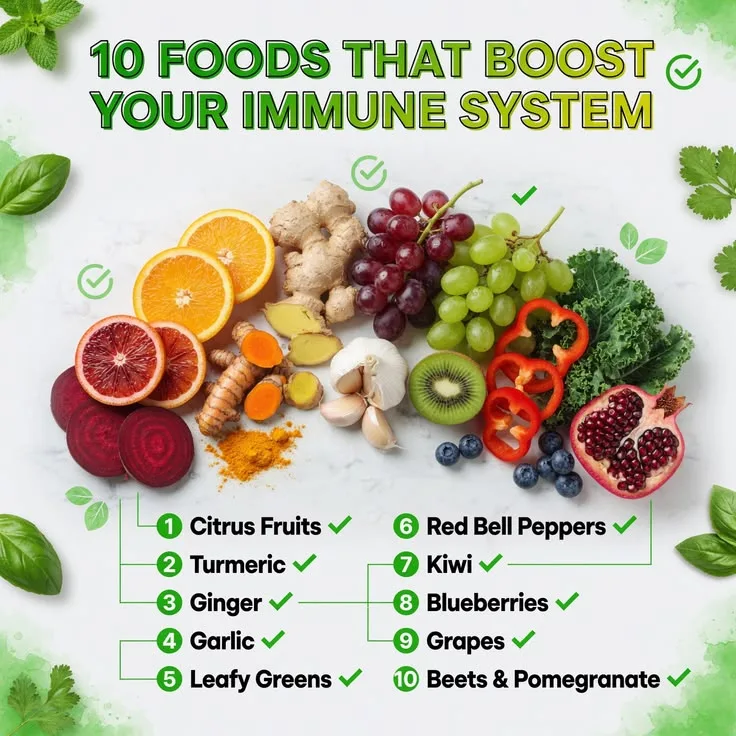
No single food "boosts" immunity in a meaningful clinical sense. The immune system requires adequate nutrition to function - specific deficiencies produce specific immune impairments.[8]
Protein: Antibodies are proteins. Cytokines are proteins. Immune cells are built from proteins. Inadequate dietary protein directly impairs antibody production, lymphocyte proliferation, and tissue repair. Protein deficiency is the most common nutritional cause of immune impairment globally.
Requirements increase during illness (the body is building an immune response). Aim for 0.8-1.2 g protein per kg body weight daily; increase during active illness.
Vitamin D: More than 200 genes have vitamin D response elements; vitamin D receptors are present on virtually all immune cells. Vitamin D is required for the production of antimicrobial peptides (cathelicidin, defensins) in macrophages.
Deficiency is common (approximately 40% of Americans, higher in winter, northern latitudes, and in people with darker skin).
Population studies show strong associations between low vitamin D and increased infection severity; RCTs of vitamin D supplementation show modest reductions in respiratory infection incidence, with larger effects in deficient populations. Testing and correcting deficiency is evidence-supported; megadosing above sufficiency is not.
Zinc: Required for lymphocyte development, NK cell function, and macrophage activity. Zinc deficiency reduces T cell function, increases infection susceptibility, and impairs wound healing. Food sources: oysters (richest), red meat, poultry, beans, nuts, whole grains.
Supplementation in the deficient restores function; supplementation in those with adequate zinc adds minimal benefit.
Vitamin C: Essential for immune function - severe deficiency produces dramatic immune impairment. However, supplementation in adequately nourished populations produces minimal additional benefit. The Cochrane review (Hemil & Chalker, 2013) found vitamin C does not prevent colds but modestly reduces duration in the general population.[3]
For people under heavy physical stress (marathon runners, soldiers in Arctic conditions), supplementation may reduce incidence.
Dietary adequacy (citrus fruits, bell peppers, broccoli) is sufficient; 1000mg+ megadosing shows diminishing and eventually negative returns.
Gut microbiome and fiber: Dietary fiber feeds commensal gut bacteria that produce short-chain fatty acids (SCFAs) - particularly butyrate - which are directly immunomodulatory: they reduce intestinal inflammation, support gut barrier integrity, and signal regulatory T cell production.
A diverse, fiber-rich diet (variety of vegetables, fruits, legumes, whole grains) supports microbiome diversity, which is increasingly associated with robust immune regulation. Fermented foods (yogurt, kefir, sauerkraut, kimchi) add live microorganisms.
Evidence Summary: Immune Support Interventions Compared
| Intervention | Evidence Level | Effect Size | Cost | Practicality |
|---|---|---|---|---|
| 7-9 hours sleep nightly | Very strong (multiple RCTs) | Large | Free | Moderate |
| Regular moderate exercise | Very strong (multiple RCTs) | Large | Low | Moderate |
| Not smoking | Very strong | Large | Free | Difficult for smokers |
| Stress management | Strong (RCTs) | Moderate | Low-free | Moderate |
| Adequate dietary protein | Strong | Moderate-Large | Low | Easy |
| Vitamin D (if deficient) | Moderate-Strong | Moderate | Very low | Easy |
| Zinc (if deficient) | Moderate | Moderate | Very low | Easy |
| Vitamin C (general population) | Weak-Moderate | Small | Very low | Easy |
| Echinacea | Weak (inconsistent RCTs) | Small-None | Low | Easy |
| Elderberry | Weak (small trials) | Small | Low | Easy |
| Probiotic supplements | Emerging | Small-Moderate | Moderate | Easy |
What Doesn't Work (or Works Far Less Than Claimed)
Vitamin C Megadosing
The belief that high-dose vitamin C prevents or treats infections originates primarily with Linus Pauling's advocacy in the 1970s.
Pauling won two Nobel Prizes but was wrong about vitamin C and colds; he continued to advocate it despite accumulating negative evidence, an example of Nobel Disease (the tendency of laureates to make confident pronouncements outside their expertise).
Meta-analyses: Cochrane review of 29 randomized trials involving over 11,000 participants found no reduction in cold incidence with regular vitamin C supplementation. Modest reduction in cold duration (~8% in adults, ~14% in children). No evidence for high-dose supplementation beyond these modest effects.
Echinacea
Cochrane review (Karsch-Vlk et al., 2015) of 24 trials: "Some Echinacea products may have a weak effect on the incidence of colds.[4] Echinacea products showed no clear benefit for the treatment of colds." Effect sizes were small and inconsistent.
Different Echinacea preparations (species, plant part, extraction method) are not interchangeable; trials studying one product cannot be generalized to others.
Elderberry
Small trials suggest modest reductions in influenza duration (Zakay-Rones et al.). Larger, more rigorous trials are lacking. The mechanisms are partially understood (flavonoid inhibition of viral attachment, cytokine stimulation). Probably not harmful; probably modestly beneficial in some contexts; vastly overhyped.
"Immune Boosting" Supplements in General
The FDA does not require pre-market efficacy testing for supplements in the US (unlike drugs). The category "immune support" can be applied to almost any product. The marketing language is chosen to avoid the specific efficacy claims that would trigger drug regulation while implying benefits the evidence does not support.
The honest summary: if you are well-nourished, adequately slept, moderately active, and not under chronic stress, your immune system is already performing near its potential. Supplements will not meaningfully improve on this.
If you are nutrient-deficient, sleep-deprived, chronically stressed, or sedentary, no supplement will compensate for these impairments - but addressing them directly will.
The Immune System Across the Lifespan
Childhood
The immune system learns throughout childhood. Exposure to diverse microorganisms - commensal bacteria, parasites, pet dander, farm animals - trains regulatory mechanisms that prevent overreactive immunity.
The "hygiene hypothesis" (later refined to the "old friends" hypothesis, Rook 2003) proposes that reduced exposure to microbial diversity in modern environments - due to antibiotics, sanitation, and urban living - contributes to rising rates of allergies and autoimmune diseases.[7]
The implication: children benefit from outdoor exposure, contact with animals, and avoiding unnecessary antibiotic courses (which devastate gut microbiome diversity).
Aging and Immunosenescence
The immune system ages (immunosenescence): thymic involution reduces new T cell production; immune cell repertoire narrows; inflammatory background rises (inflammaging); vaccine responses weaken. These changes are modifiable: exercise, adequate sleep, and caloric restriction (in animal models) slow immunosenescence.
Influenza and shingles vaccines formulated for older adults use adjuvants (immune-stimulating additives) to compensate for reduced baseline immune responsiveness.
Key Nutrients by Life Stage
| Life Stage | Priority Nutrients | Common Deficiencies | Key Considerations |
|---|---|---|---|
| Infancy | Vitamin D, iron, zinc | Vitamin D (especially in breastfed infants) | Breast milk is immunologically active |
| Childhood | Vitamin D, zinc, iron | Varies by diet | Microbiome training critical |
| Adults (18-60) | Vitamin D, zinc, protein | Vitamin D in northern latitudes | Sleep and exercise are primary levers |
| Older adults (60+) | Vitamin D, zinc, B12, protein | Multiple deficiencies common | Immunosenescence accelerates with poor lifestyle |
| Pregnancy | Folate, iron, vitamin D, omega-3 | Iron, vitamin D | Immune tolerance of fetus requires careful regulation |
Lifestyle Factors vs. Supplements: An Honest Accounting
The marketing environment for immune supplements is deliberately designed to make behavioral interventions seem insufficient and products seem essential. This framing is almost exactly backwards.
The physiological reality:
- Sleep deprivation for one night reduces NK cell activity by up to 70%. No supplement produces an effect remotely comparable.
- Chronic stress halves vaccine antibody responses. Echinacea has no effect on vaccine response.
- Regular exercise reduces inflammatory markers and improves vaccine responses by amounts comparable to what the best supplements can achieve.
- Smoking damages mucosal barriers, impairs ciliary clearance (the physical removal of pathogens), and reduces lymphocyte function. No supplement can compensate for this.
The hierarchy of immune support, ordered by evidence and effect size: (1) adequate sleep, (2) regular moderate exercise, (3) not smoking, (4) stress management, (5) adequate nutrition with no specific deficiencies.
Supplements occupy a distant sixth position, with benefits only where deficiency exists or under specific high-stress conditions.
"The immune system is not a muscle you can train with supplements. It is a complex calibrated system whose performance is most powerfully determined by whether you are treating your body with basic respect: sleep, movement, food, and not poisoning it with chronic stress or tobacco." - Rob Dunn, A Natural History of the Future (2021, paraphrase)
Practical Recommendations
For most adults seeking to support immune health:
Prioritize sleep first. Set a consistent bedtime, keep the bedroom dark and cool, and protect 7-9 hours as non-negotiable. This is the single highest-impact intervention.
Exercise regularly. 150+ minutes of moderate aerobic activity per week is the evidence-supported dose for immune benefit.
Get your vitamin D tested. If deficient (below 20 ng/mL), supplement with 1,000-2,000 IU/day and retest in 3 months. This is one of the few supplements where evidence strongly supports correcting deficiency.
Eat adequate protein. Especially important during illness, intense exercise, or aging. Animal proteins and legumes are efficient sources.
Manage stress proactively. This may be the hardest recommendation, but evidence supports mindfulness, exercise, social connection, and sleep as the most effective stress mitigation strategies - all of which also benefit immunity through other mechanisms.
Avoid unnecessary antibiotics. Gut microbiome diversity is immune-critical. Reserve antibiotics for genuine bacterial infections.
Skip most immune supplements. Unless you have a specific diagnosed deficiency, their benefit is minimal to nonexistent. Save the money for better food.
For related concepts, see how the human immune system works, how vaccines work, and how sleep works.
Sources & Further Reading
- Prather, A. A., Janicki-Deverts, D., Hall, M. H., & Cohen, S. (2015). Behaviorally Assessed Sleep and Susceptibility to the Common Cold. Sleep, 38(9), 1353-1359. DOI: 10.5665/sleep.4968
- Kiecolt-Glaser, J. K., Marucha, P. T., Malarkey, W. B., Mercado, A. M., & Glaser, R. (1995). Slowing of Wound Healing by Psychological Stress. Lancet, 346(8984), 1194-1196. DOI: 10.1016/S0140-6736(95)92899-5
- Hemil, H., & Chalker, E. (2013). Vitamin C for Preventing and Treating the Common Cold. Cochrane Database of Systematic Reviews, 1, CD000980. DOI: 10.1002/14651858.CD000980.pub4
- Karsch-Vlk, M., et al. (2015). Echinacea for Preventing and Treating the Common Cold. Cochrane Database of Systematic Reviews, 2, CD000530. DOI: 10.1002/14651858.CD000530.pub3
- Simpson, R. J., et al. (2012). Exercise and the Regulation of Immune Functions. Progress in Molecular Biology and Translational Science, 135, 355-380. DOI: 10.1016/bs.pmbts.2015.08.001
- Besedovsky, L., Lange, T., & Born, J. (2012). Sleep and Immune Function. Pflgers Archiv, 463(1), 121-137. DOI: 10.1007/s00424-011-1044-0
- Rook, G. A. W. (2003). Give Us This Day Our Daily Germs. Biologist (London), 50(4), 145-148.
- Maggini, S., Pierre, A., & Calder, P. C. (2018). Immune Function and Micronutrient Requirements Change over the Life Course. Nutrients, 10(10), 1531. DOI: 10.3390/nu10101531