
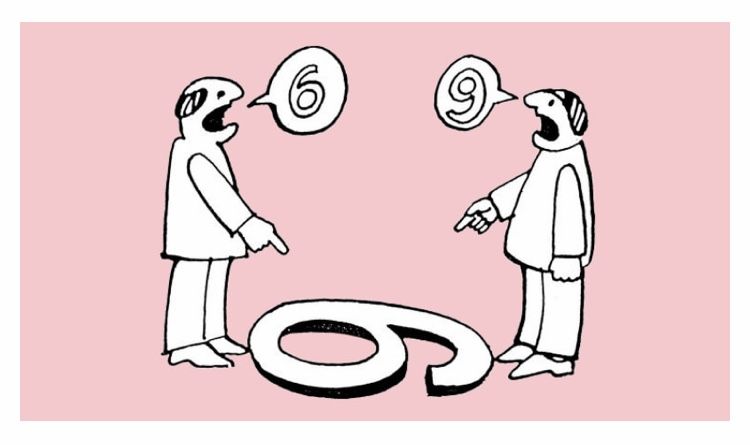
Communication: You carefully explain a project deadline to your team. Everyone nods. A week later, half the team thought the deadline was Friday, the other half thought it was end-of-month.
You said "end of the week", some interpreted that as Friday, others as Sunday, others as "whenever we finish the current sprint." Same words, completely different understanding. How did this happen?
Or consider this: You text a friend "We need to talk." You mean "I have exciting news to share." They interpret it as "Something's wrong in our relationship." Panic ensues.
The exact same phrase carries completely different meaning depending on context, relationship, and emotional state. What you said and what they heard are entirely different.
These moments reveal something fundamental: communication breakdown is normal, not exceptional. We treat failed communication as aberration: "Why didn't they understand? I was clear!" But the surprise should be reversed: given how communication actually works, the miracle is that we ever understand each other at all.
This guide explains how communication breaks down for people new to communication theory. We'll explore the communication process, where breakdown occurs, why it's inevitable, common failure modes, and how to communicate more effectively despite these challenges.
The goal isn't to eliminate breakdown (impossible), it's to understand why communication fails so you can design better communication that fails less often.
How Communication Actually Works
The Basic Model
Communication seems simple: I say something, you understand it. But the actual process is complex:
"The single biggest problem in communication is the illusion that it has taken place." - George Bernard Shaw
1. Intention/Thought
- What you want to communicate (idea, feeling, information, request)
2. Encoding
- Converting thought into symbols (words, gestures, images, tone)
- Choosing which aspects to express and which to leave implicit
3. Transmission
- Sending the encoded message through some medium (speech, text, email, presentation)
- Medium has constraints and affordances
4. Reception
- Receiver perceives the signal (hears words, reads text, sees gestures)
- But perception is already interpretation: what they notice vs. what they miss
5. Decoding
- Receiver interprets symbols back into meaning
- Uses their context, knowledge, assumptions to construct meaning
6. Understanding (hopefully)
- Receiver constructs mental representation of what you meant
- But their mental representation ≠ your original thought
7. Feedback
- Receiver responds, indicating understanding (or misunderstanding)
- Sender can clarify, adjust, confirm
The Central Problem
Communication breakdown can occur at every single stage:
- Intention unclear: You don't know what you want to say
- Encoding fails: You can't express what you mean in words
- Transmission corrupted: Medium loses or distorts information
- Reception partial: They don't hear/see everything
- Decoding wrong: They interpret symbols differently than you intended
- Understanding incomplete: Their mental model differs from yours
- Feedback absent: No way to detect or correct misunderstanding
And here's the kicker: you usually don't know breakdown occurred until much later when consequences appear.
Why Perfect Communication is Impossible
Fundamental barriers:
1. Symbols are ambiguous
- Words don't have fixed meanings; meanings depend on context
- The word "bank" could mean financial institution or river edge, context disambiguates
- But context itself can be ambiguous
2. Context is personal
- You encode based on your knowledge, assumptions, experiences
- They decode based on their knowledge, assumptions, experiences
- These are never identical
3. Transmission loses information
- Most communication mediums can't capture full richness of thought
- Tone is lost in text; nuance is lost in summaries; complexity is lost in simplification
4. Attention is limited
- You can't say everything; you must select what matters
- They can't process everything; they must select what to attend to
- Selection introduces distortion
5. Feedback loops are imperfect
- People often indicate understanding when they don't ("yeah, makes sense")
- You often assume understanding without checking
- By the time misunderstanding surfaces, it's far from original communication
The implication: All communication is lossy, interpretive, and probabilistic. The question isn't "How do we achieve perfect communication?" but "How do we communicate well enough given inherent limitations?" Understanding the relationship between signal and noise is central to answering that question.
Where Communication Breaks Down
Communication breaks down at seven predictable points: unclear intention, where the sender has not fully worked out what they mean; poor encoding, where the message is put into the wrong words; medium constraints; reception failures; decoding mismatches, where the receiver interprets symbols differently than intended; context mismatches; and missing feedback, which prevents anyone from catching the error before it causes problems.
Breakdown 1: Unclear Intention
What happens: You don't know what you're trying to communicate.
Why it matters: If you don't know what you mean, you can't encode it clearly, and receivers certainly can't decode it.
Example:
- You feel vaguely dissatisfied with team dynamics but haven't articulated what specifically bothers you or what you want to change
- You speak vaguely: "We need to collaborate better"
- Team has no idea what this means: More meetings? Different tools? Different people? Different processes?
Common causes:
- Unclear thinking (haven't processed your own thoughts)
- Multiple simultaneous intentions (trying to say too many things at once)
- Hidden agendas (saying one thing, meaning another)
- Emotional confusion (feeling something but not understanding what)
How to address:
- Before communicating, ask: "What exactly am I trying to say? What do I want the receiver to understand/believe/do?"
- Write it down first to clarify thinking
- Distinguish feelings from facts from requests
Breakdown 2: Poor Encoding
What happens: You know what you mean but can't express it in words/symbols.
Why it matters: The gap between thought and expression is where meaning gets lost.
Example:
- You understand a complex technical concept intuitively
- Try to explain to non-technical person using technical jargon
- They're lost because jargon means nothing to them
- What's clear to you (encoded using specialized vocabulary) is incomprehensible to them (lacking that vocabulary)
Common causes:
- Jargon: Using specialized language receiver doesn't know
- Abstractness: Speaking in generalities when specifics are needed
- Implicitness: Leaving crucial information unstated (assuming they know)
- Poor structure: Ideas presented in confusing order
- Wrong level: Too detailed or too high-level for audience
How to address:
- Match encoding to receiver's knowledge and context
- Use concrete examples, not just abstractions
- Make implicit assumptions explicit
- Structure ideas logically (context → main point → support → conclusion)
- Test understanding before moving on
Breakdown 3: Medium Constraints
What happens: The transmission medium loses or distorts information.
Why it matters: Different mediums have different affordances and constraints.
Medium comparison:
| Medium | Richness | Feedback Speed | Key Limitation | Best Used For |
|---|---|---|---|---|
| In-person conversation | Highest | Immediate | Time-limited, not recorded | Complex, sensitive topics |
| Phone call | High (tone preserved) | Immediate | No visual cues | Quick decisions, emotional topics |
| Video call | High | Near-immediate | Technical friction | Remote collaboration |
| Low | Delayed | Tone easily misread | Detailed, documented communication | |
| Text/chat | Low | Variable | Very easily misread | Short, clear exchanges |
In-person conversation:
- Rich: Tone, facial expressions, body language, real-time feedback
- Synchronous: Immediate clarification
- Constraints: Time-limited, not recorded, only works when together
Phone call:
- Tone preserved but body language lost
- Synchronous: Real-time feedback
- Constraints: Can't share visual information easily
Email/text:
- Asynchronous: Think before responding, permanent record
- Constraints: Tone ambiguous, delayed feedback, easy to ignore
- Risk: Sarcasm/humor misinterpreted, emotional content amplified
Documentation:
- Permanent, detailed: Can reference later
- Constraints: One-way (no feedback), must be complete (can't ask questions)
Example of medium breakdown:
- You text "Fine." after a disagreement
- Your intention: "I'm not angry, let's move on"
- Their interpretation: "I'm definitely angry, this is passive-aggressive"
- Text medium loses tone that would disambiguate, and they interpret ambiguity negatively
How to address:
- Match medium to message complexity and emotional content
- Complex/sensitive topics: Richer mediums (in-person, video)
- Simple updates: Lighter mediums (text, email)
- Don't rely on tone in text, make emotional content explicit
Breakdown 4: Reception Failures
What happens: Receiver doesn't perceive the full message.
Why it matters: Can't decode what they didn't receive.
Common causes:
- Distraction: Multitasking, checking phone, thinking about other things
- Noise: Literal (environmental sounds) or figurative (too much information)
- Selective attention: Hearing what they expect, missing what contradicts expectations
- Fatigue: Too tired/stressed to focus
- Time pressure: Rushing through, not fully attending
Example:
- You explain project details in 30-minute meeting at end of exhausting day
- Team is mentally checked out, catching maybe 40% of what you said
- They nod along (social expectation) but didn't actually process information
- Later, they don't remember details, not because they're incompetent, but because they never fully received the message
How to address:
- Get attention before communicating important things
- Minimize noise and distractions
- Keep important messages concise (attention span is limited)
- Communicate when people can actually focus (not end of day, not when stressed)
- Use multiple channels (say it, write it down, send summary)
Breakdown 5: Decoding Mismatches
What happens: Receiver interprets symbols differently than you intended.
Why it matters: Same words, different meanings.
This is the most common and insidious breakdown: both parties think communication succeeded but they have completely different understanding. This is the essence of misinterpretation: the same signal carries entirely different meaning for sender and receiver.
Example 1: Different definitions
- Boss: "Get this done ASAP"
- Employee interprets: Drop everything, do this immediately
- Boss meant: Prioritize this over other routine tasks, finish in next few days
- Employee burns out on something boss considered moderately urgent
Example 2: Cultural differences
- American: "That's an interesting idea" (polite rejection)
- German: Hears literal meaning (thinks you're genuinely interested)
- Miscommunication: German expects follow-up, American has moved on
Cultural miscommunication is one of the most underappreciated drivers of decoding failures because both parties assume their own interpretation is the natural, universal one.
Example 3: Professional context
- Lawyer: "Reasonable doubt" (specific legal standard)
- Layperson: "Reasonable doubt" (any doubt that seems reasonable)
- Same phrase, radically different meanings based on specialized knowledge
Common causes:
- Different contexts: Professional, cultural, personal experiences shape interpretation
- Ambiguous language: Words with multiple meanings
- Implicit assumptions: You assume they interpret like you do
- Emotional state: Anxiety interprets ambiguity negatively; confidence interprets it positively
- Relationship history: Past conflicts color interpretation of current communication
How to address:
- Don't assume shared interpretation, verify understanding
- Define ambiguous terms explicitly
- Ask "What did you hear me say?" (not "Did you understand?")
- Pay attention to their context, not just yours
- Adjust interpretation based on receiver's likely frame
"How well we communicate is determined not by how well we say things but by how well we are understood." - Andrew Grove, High Output Management
Breakdown 6: Context Mismatches
What happens: Sender and receiver operate in different contexts, leading to different interpretations even with accurate transmission.
Why it matters: Context determines meaning, not just words.
Types of context:
Physical context:
- In-person at office vs. remote video call vs. text message
- Formal meeting vs. casual hallway conversation
- Different physical contexts signal different social rules
Social context:
- Boss to employee (power dynamic)
- Peer to peer (equality)
- Expert to novice (knowledge gap)
- Context shapes how messages are interpreted
Cultural context:
- Directness vs. indirectness (American vs. Japanese communication norms)
- Individualism vs. collectivism (how conflict is framed)
- Different cultures have different communication rules
Relational context:
- New relationship (trust not established)
- Close relationship (shared history, shorthand)
- Conflict (defensiveness, negative interpretation)
- History shapes how current messages are received
Temporal context:
- During crisis (urgency, stress)
- In planning (relaxed, exploratory)
- After failure (sensitivity, defensiveness)
- Timing affects interpretation
Example:
- You send quick "Can you help with X?" message to colleague
- Context you're in: Collaborative, asking favor among equals
- Context they're in: Overloaded with work, your request feels like one more demand
- Same message, completely different experience based on context
How to address:
- Acknowledge context explicitly when it matters ("I know you're busy, but...")
- Adjust message to receiver's context, not just yours
- Build shared context before making requests or delivering difficult news
- Recognize when context mismatches are creating friction
Breakdown 7: Missing Feedback
What happens: No mechanism to detect or correct misunderstanding.
Why it matters: Misunderstanding compounds over time if uncorrected.
Example:
- You send long email with instructions
- Recipient skims it, misses crucial detail
- No follow-up, no confirmation of understanding
- Weeks later, project is wrong, and both sides blame the other
Why feedback often fails:
- False understanding: People say "yes, I understand" when they don't (to avoid looking incompetent)
- No opportunity: One-way communication with no chance to ask questions
- Delayed: Misunderstanding only surfaces when action is taken, far from original communication
- Weak signals: Confusion is hinted at but not explicitly stated
- Ignored: Sender doesn't create space for questions or check understanding
How to address:
- Build feedback loops into communication (ask questions, request summaries)
- Make it safe to say "I don't understand"
- Don't ask "Does this make sense?" (social pressure to say yes)
- Ask "What's your understanding of what I just said?" (forces articulation)
- Follow up after initial communication to catch misunderstandings early
Common Communication Breakdown Patterns
Pattern 1: The Curse of Knowledge
What it is: Once you know something, you can't imagine not knowing it, and you communicate as if others share your knowledge. This connects to a broader class of cognitive biases that systematically distort how we encode and decode messages.
Why it happens: Your expertise makes certain things obvious to you, but they're not obvious to others lacking that expertise.
Example:
- Engineer explains feature to customer using technical architecture details
- Customer has no idea what these terms mean
- Engineer thinks they're being clear (these concepts are basic to them)
- Customer feels lost and stupid
How to address:
- Assume zero knowledge unless you know otherwise
- Use analogies from common experience
- Build up from basics rather than starting with advanced concepts
- Test understanding frequently
Pattern 2: High-Context vs. Low-Context Communication
What it is: High-context communication relies heavily on shared background and implicit understanding. Low-context communication makes everything explicit.
Mismatch:
- High-context communicator (assumes shared context): "You know what I mean"
- Low-context receiver (needs explicit information): "No, actually, I don't"
Example:
- Long-time colleagues develop shorthand: "Do the usual thing"
- New team member has no idea what "usual thing" means
- Veterans assume it's obvious (high-context); newbie needs explicit explanation (low-context)
How to address:
- Adjust context level to audience
- With new relationships: Be more explicit
- With established relationships: Can use shorthand (but watch for assumption creep)
- When in doubt, over-explain rather than under-explain
Pattern 3: Emotional Flooding
What it is: Strong emotions overwhelm cognitive processing, making clear communication impossible.
Why it happens: Emotional arousal narrows attention, impairs interpretation, and triggers defensive reactions.
Example:
- During heated argument, you try to explain your perspective rationally
- Other person literally can't hear you: their emotional state prevents processing
- The content doesn't matter; emotional state blocks reception
How to address:
- Recognize when emotions are too high for productive communication
- Take break, cool down, resume when calmer
- Don't try to resolve complex issues during emotional peaks
- Address emotional state first, content second
Pattern 4: Differing Goals
What it is: Sender and receiver have different goals for the communication, causing talking past each other.
Example:
- Manager's goal: Give developmental feedback to help employee improve
- Employee's goal: Defend themselves and avoid criticism
- Manager keeps trying to help; employee keeps getting defensive
- Neither goal is satisfied because they're not aligned
How to address:
- Align on purpose of communication before diving in
- Make goals explicit: "My goal here is X; does that work for you?"
- If goals conflict, acknowledge and negotiate
Pattern 5: The Clarity Illusion
What it is: Believing you've communicated clearly when you haven't. The way a message is framed shapes what the receiver thinks you mean, often independently of the words themselves.
Why it happens: What's clear in your head seems clear when you say it, but it's not clear to receiver.
Example:
- "Move forward on the project"
- What you mean: Continue current work
- What they hear: Start the next phase
- You think you were clear (the phrase is simple), but it's actually ambiguous
How to address:
- Don't confuse simple language with clear meaning
- Test understanding: "What are you going to do based on what I just said?"
- Watch for signs of confusion (facial expressions, hesitation, clarifying questions)
Pattern 6: Medium-Message Mismatch
What it is: Using wrong medium for the type of message.
Examples of mismatch:
- Text message to fire someone: Needs richer medium (in-person, video)
- 10-page email for simple update: Too heavy for simple message
- Important deadline via casual Slack: Gets lost in noise
- Complex technical explanation via voice call: Needs visual aid
How to address:
- Match medium to message complexity and emotional weight
- Sensitive/complex/important: Richer mediums
- Simple/routine/low-stakes: Lighter mediums
"The most important thing in communication is hearing what isn't said." - Peter Drucker
How to Communicate More Effectively
Communicating more effectively starts with encoding for your audience, not yourself: adjust jargon, depth, and framing to what they already know and care about. From there, build in redundancy by saying important things multiple times in multiple ways, and create feedback loops like teach-back or paraphrasing so you can catch misunderstanding before it compounds.
Strategy 1: Encode for Your Audience
Don't encode for yourself, encode for them:
- What do they already know?
- What context do they have?
- What language/jargon do they understand?
- What do they care about?
Adjust:
- To experts: Can use jargon, go deeper, skip basics
- To novices: Avoid jargon, use analogies, build from foundations
- To skeptics: Address objections, provide evidence
- To supporters: Can be more direct, less persuasive
Strategy 2: Create Redundancy
Say important things multiple times in multiple ways:
- Say it verbally
- Write it down
- Summarize at end
- Send follow-up
- Use different examples of same concept
Why redundancy helps:
- Different people process different mediums better
- Repetition aids retention
- Multiple framings increase chance one resonates
- Provides multiple opportunities to catch misunderstanding
Strategy 3: Build Feedback Loops
Make verification of understanding part of process:
Techniques:
- Teach-back: "Can you explain back to me what you're going to do?"
- Paraphrasing: "Let me make sure I understand: you're saying X?"
- Questions: Create space for clarifying questions
- Check-ins: Follow up later to see how understanding held up
Don't ask:
- "Does this make sense?" (Too easy to say yes)
- "Any questions?" (Social pressure to say no)
Do ask:
- "What questions do you have?" (Assumes questions exist)
- "What's your understanding of what we just discussed?"
Strategy 4: Make Implicit Explicit
Don't assume they know what you know:
- State obvious background
- Explain reasoning, not just conclusions
- Make assumptions explicit
- Define ambiguous terms
Example:
- Implicit: "We need this Thursday"
- Explicit: "We need this by end of business day this Thursday, which for us is 5pm EST"
The second feels redundant, but that redundancy prevents misunderstanding.
Strategy 5: Match Medium to Message
Simple/routine/positive: Text, chat, brief email
Complex/important/neutral: Email with clear structure, video call with shared screen
Sensitive/negative/conflict: In-person or video (need tone and facial expressions)
Permanent record needed: Written documentation
Urgent: Synchronous (call, in-person, live chat)
Non-urgent: Asynchronous (email, documentation)
Strategy 6: Acknowledge and Adapt to Context
Pay attention to:
- Receiver's current state: Stressed? Distracted? Open?
- Relationship status: Good? Tense? New?
- Environmental factors: Private? Public? Noisy? Rushed?
Adapt:
- If they're stressed: Keep it brief, empathetic, solution-focused
- If relationship is tense: Address relationship before content
- If environment is poor: Move to better context or reschedule
Strategy 7: Separate Content from Relationship
Two layers in every communication:
- Content: The information/idea/request being transmitted
- Relationship: What this communication says about our relationship (respect, trust, power, care)
Breakdown often happens at relationship level, not content level:
- Words are accurate (content clear)
- But receiver feels disrespected, dismissed, or attacked (relationship damaged)
- They reject content because relationship layer is broken
Example:
- Bad: "That won't work." (Dismissive relationship signal)
- Better: "I see where you're going. Here's a concern I have..." (Respectful relationship signal)
How to address:
- Attend to relationship layer explicitly
- Show respect, acknowledge their perspective, maintain face
- Don't sacrifice relationship for sake of being "direct"
Practical Exercises
Exercise 1: Communication Autopsy
Goal: Learn from breakdown by analyzing what went wrong
Practice:
- Think of recent miscommunication
- Map the communication process: What was your intention? How did you encode? What medium? How did they decode? What did they understand?
- Identify breakdown point: Where did it fail?
- Generate alternative: How could you have communicated to prevent this breakdown?
Why it works: Most people blame the other person ("They didn't listen"). Analyzing the process reveals systemic causes, not personal fault.
Exercise 2: Encoding Practice
Goal: Match encoding to different audiences
Practice:
- Pick one idea you understand well
- Explain it five different ways for five different audiences:
- Expert in your field
- Intelligent layperson
- Child
- Skeptic
- Decision-maker who's busy
- Notice what changes: Vocabulary? Examples? Structure? Length?
Why it works: Reveals that "clear explanation" depends entirely on audience, there's no single "clear" version.
Exercise 3: Feedback Loop Building
Goal: Get better at verifying understanding
Practice:
- For one week, after every important conversation, use teach-back: "Just to make sure we're aligned, what's your understanding of what we just discussed?"
- Notice: How often does their understanding differ from your intention?
- Adjust: Clarify immediately rather than letting misunderstanding persist
Why it works: Surfaces misunderstandings immediately while you can still correct them.
Exercise 4: Context Awareness
Goal: Recognize how context shapes interpretation
Practice:
- Draft message (email, text, etc.)
- Before sending, consider receiver's context:
- What mood are they likely in?
- What pressures are they under?
- What's our relationship status?
- What will they prioritize in this message?
- Revise message based on their context, not just your intention
Why it works: Forces you outside your own perspective into receiver's experience.
Exercise 5: Medium-Message Matching
Goal: Choose appropriate medium for message type
Practice:
- Review your communications from past week
- For each, ask: Was this the right medium?
- Identify mismatches (complex info via text, simple update via long email, sensitive topic via chat)
- Establish personal guidelines: "For X type of message, I use Y medium"
Why it works: Develops conscious competence about medium choice rather than defaulting to whatever's convenient.
Key Takeaways
How communication works:
- Intention → Encoding → Transmission → Reception → Decoding → Understanding → Feedback
- Breakdown can occur at any stage
- Perfect communication is impossible (symbols ambiguous, context personal, transmission lossy)
Where breakdown occurs:
- Unclear intention - Don't know what you mean
- Poor encoding - Can't express what you mean
- Medium constraints - Information lost in transmission
- Reception failures - Receiver doesn't perceive full message
- Decoding mismatches - Receiver interprets differently than intended
- Context mismatches - Different contexts create different meanings
- Missing feedback - No way to detect/correct misunderstanding
Common patterns:
- Curse of knowledge (can't imagine not knowing what you know)
- High-context vs. low-context mismatches
- Emotional flooding (emotions overwhelm cognition)
- Differing goals (talking past each other)
- Clarity illusion (think you're clear when you're not)
- Medium-message mismatch (wrong channel for message type)
How to communicate better:
- Encode for audience (their context, not yours)
- Create redundancy (say important things multiple times/ways)
- Build feedback loops (verify understanding)
- Make implicit explicit (don't assume they know)
- Match medium to message (complexity and sensitivity determine channel)
- Acknowledge context (adapt to receiver's situation)
- Attend to relationship (content AND relationship layers matter)
Why Communication Research Still Underestimates the Problem
The most commonly taught model of communication, the Shannon-Weaver transmission model, was developed in 1948 by mathematician Claude Shannon and engineer Warren Weaver to describe information transmission in telephone and telegraph systems.
Their model depicted communication as a sender encoding a message, transmitting it through a channel, and a receiver decoding it, with "noise" as the primary source of degradation.
This engineering model was enormously influential, but it has a fundamental limitation when applied to human communication: it treats meaning as a property of the signal rather than something constructed by the receiver. In Shannon-Weaver, if the signal arrives intact, communication succeeds.
In human communication, the signal can arrive perfectly and communication can still fail completely, because the receiver constructs meaning from the signal using their own context, knowledge, and expectations, not the sender's.
What the Shannon-Weaver Model Misses
Meaning is constructed, not transmitted. When you say "I need this soon," you're not transmitting the meaning "I need this within two hours." You're transmitting a sequence of words that the receiver will interpret using their own understanding of your relationship, your typical urgency level, what "soon" means in your organizational context, and what they believe you know about their current workload.
Two people could receive identical signals and construct entirely different meanings, neither of which matches your intention.
Communication anthropologist Edward Hall deepened this critique with his concepts of high-context and low-context communication cultures.
In high-context cultures (Japan, China, many Middle Eastern countries), much of the meaning in communication is carried by context (relationship history, social role, physical setting, timing) rather than by explicit verbal content.
In low-context cultures (Germany, the United States, Scandinavian countries), meaning is expected to be carried explicitly in the words themselves.
When a high-context communicator and a low-context communicator interact, each is following internally consistent communication logic that makes the other's behavior seem baffling or even rude.
Hall's research explains why simply "being clearer" fails as communication advice in cross-cultural contexts: what counts as clear is itself culturally defined.
The American manager who gives explicit, detailed instructions may be perceived by their Japanese colleague as patronizing and suggesting distrust; the Japanese colleague's indirect communication about a concern may be interpreted by the American as endorsement of a plan the colleague privately views as unworkable.
The Inference Layer
Philosopher H.P. Grice's work on conversational implicature identified another dimension that transmission models ignore: communication depends heavily on what is not said.
Grice argued that people follow conversational maxims (be truthful, be relevant, be clear, don't say more than necessary) and that listeners use violations of these maxims to infer unstated meaning.
When a professor asked "Are you enjoying the class?" and a student responds "The textbook is really well-organized," the professor understands this as "No, but I don't want to say so directly", even though nothing negative was said.
This inferential layer means that communication can break down not through what is said but through what is not said, through the gap between explicit content and implied meaning that both parties are constructing simultaneously and asymmetrically.
The practical implication: when communication fails, the failure often isn't in the words that were exchanged but in the inferences each party drew from those words.
Debugging communication breakdowns requires asking not just "what was said?" but "what did each party infer from what was said, and what evidence were they using to draw those inferences?"
Final Thoughts
Communication breakdown isn't failure, it's the default state. Given the complexity of encoding thoughts into symbols, transmitting through imperfect mediums, and decoding based on different contexts, the surprise is that communication ever succeeds.
"Electric communication will never be a substitute for the face of someone who with their soul encourages another person to be brave and true." - Charles Dickens
This perspective shift matters: Instead of asking "Why did communication break down?" ask "How can I design communication that breaks down less often?"
The answer isn't "be clearer" (unhelpfully vague). It's:
- Understand the communication process and where it typically fails
- Encode for your receiver's context, not your own
- Build redundancy and feedback loops
- Match medium to message type
- Verify understanding rather than assuming it
Communication is a skill that improves with:
- Awareness (recognizing breakdown patterns)
- Practice (deliberately building better communication habits)
- Feedback (learning from what worked and what didn't)
- Humility (accepting that your encoding is never perfectly clear)
Start small:
- Choose one breakdown pattern you recognize in yourself
- Pick one strategy to address it
- Practice deliberately for a week
- Notice what changes
Over time, you'll develop intuition for when communication is likely to break down and how to design around it. You won't eliminate breakdown, but you'll reduce it substantially, and when it happens, you'll catch and correct it faster.
That's the goal: not perfect communication (impossible), but good enough communication (achievable).
What Research Shows About Communication Breakdown
The academic study of communication failure has produced findings that are often counterintuitive and consistently more pessimistic about human communication than everyday assumptions suggest. Several landmark studies establish the empirical baseline.
Adrianne Kunkel and Brant Burleson, communication scholars who collaborated on the study of what they called "comforting communication" - situations where people attempt to help others experiencing emotional distress - found across their published research that people systematically overestimate how well they communicate emotional support.
Providers of support tend to rate their own messages as more helpful than recipients rate them, and recipients often interpret ambiguous supportive messages more negatively than senders predict.
Kunkel and Burleson concluded that the "person-centered" approach to supportive communication - explicitly acknowledging and legitimizing the other person's feelings before offering advice or information - produced measurable improvements in recipient evaluations, reducing the sender-receiver perception gap by approximately 40%.
Phillip Clampitt and Cal Downs published a 1993 study in the Journal of Business Communication, "Employee Perceptions of the Relationship between Communication and Productivity: A Field Study," surveying employees on communication quality.
The study found that employees who reported unclear communication from management also reported more work errors they attributed to ambiguous or insufficient information, while managers at the same organizations tended to rate their own communication as clearer than employees experienced it - a gap Clampitt and Downs called the "clarity illusion."
Erina MacGeorge, in a 2004 study published in Human Communication Research, examined advice-giving as a specific communication failure mode.
Her research found that technically accurate advice - advice that correctly identified the problem and offered viable solutions - was often rejected by recipients when the advice-giver failed to first demonstrate understanding of the recipient's emotional experience, and that acceptance improved substantially when advice-givers explicitly acknowledged the difficulty of the situation before offering advice. The research demonstrates that communication breakdown often occurs not at the informational level but at the relational level: people reject accurate messages delivered without appropriate relational framing.
Justin Kruger, Nicolas Epley, and colleagues, in a study published in the Journal of Personality and Social Psychology (2005), examined the "egocentrism" problem in written communication, showing that writers assumed their tone and intent in email messages would be correctly interpreted by readers at rates higher than readers actually achieved.
The gap was attributed to what the researchers called "egocentrism in communication" - the sender's inability to detach from their own perspective when predicting the receiver's interpretation.
A follow-up study found that people who read their own messages aloud were significantly better at predicting how those messages would be interpreted, because hearing the message from outside their own head disrupted the egocentric perspective.
Real-World Case Studies in Communication Breakdown
Documented organizational failures provide measurable evidence of what communication breakdown costs in concrete terms, and what communication improvement produces.
The NASA Columbia Space Shuttle disaster (February 1, 2003) is one of the most extensively analyzed organizational communication failures in history.
The Columbia Accident Investigation Board's 2003 report documented that engineers at NASA and contractor Boeing had identified foam strike damage to the shuttle's thermal protection system during the mission and had requested satellite imagery to assess the damage.
Middle managers declined the request, communicating upward that the foam strike was not a safety-of-flight issue - a conclusion that was not supported by the engineers' own analysis but reflected the organizational culture's pressure to frame problems as manageable.
The CAIB report identified "the normalization of deviance" as a systemic communication failure: over multiple missions, small problems had been communicated upward as resolved even when they were merely tolerated, so that decision-makers at higher levels had a distorted picture of actual risk levels.
All seven crew members died. The CAIB recommended 15 safety changes, all of which involved communication process redesign to prevent the filtering of safety concerns through management layers.
Aviation's Crew Resource Management programs, implemented widely following a series of crashes in the 1970s and 1980s in which technically capable crews failed to communicate safety concerns to captains, provide quantified evidence of what communication training produces.
A review by Eduardo Salas and colleagues at the University of Central Florida, published in Human Factors, examined dozens of evaluations of CRM training programs across major airlines.
Programs with structured communication training - specifically training subordinates to challenge authority using assertive communication protocols and captains to actively solicit input - were associated with fewer communication-related incidents, with the strongest effects at airlines that implemented CRM most comprehensively (training all crew members, conducting periodic refreshers, including communication in line checks).
Virginia Mason Medical Center in Seattle implemented a Toyota Production System-based communication protocol called the Patient Safety Alert system starting in 2002. The system required any staff member who observed a safety risk to stop work and immediately communicate the concern using a defined protocol, regardless of hierarchy.
Before implementation, adverse event reporting at Virginia Mason averaged 7 events per year per 100 beds - typical for comparable hospitals.
After implementation, reporting rose to 400 events per year per 100 beds, while actual patient harm rates fell by 74% over five years, according to internal data published by Virginia Mason Institute researchers and cited in the Annals of Internal Medicine in 2010.
The apparent paradox - more reports, less harm - reflects that the communication system made problems visible before they caused harm rather than allowing them to be silently tolerated. Malpractice costs fell from $7.5 million annually to $2.4 million in the same period.
Atul Gawande's surgical safety checklist research, published in the New England Journal of Medicine in January 2009, documented what happens when structured communication protocols are introduced into high-stakes environments.
Gawande, a surgeon at Brigham and Women's Hospital and researcher at Harvard School of Public Health, implemented a 19-item communication checklist at 8 hospitals across 8 countries with varying income levels.
The checklist required surgical teams to verbally confirm patient identity, procedure, and equipment status, and to introduce themselves by name before operating.
In the 3,955 procedures studied post-checklist, complication rates fell from 11.0% to 7.0% - a 36% reduction - and death rates fell from 1.5% to 0.8% - a 47% reduction. (The study covered 7,688 patients: 3,733 at baseline and 3,955 after checklist introduction.)
Gawande attributed the improvement primarily not to the checklist catching forgotten steps but to the communication norms the checklist established: teams that had introduced themselves by name were significantly more likely to speak up about safety concerns than anonymous teams.
What Communication Research Reveals About Breakdown Frequency and Cost
The intuition that communication breakdown is the exception rather than the rule turns out to be deeply wrong. Research across organizational, medical, and interpersonal settings documents that miscommunication is relentless, costly, and largely invisible to the people experiencing it.
The Frequency of Miscommunication in Organizational Settings
Joint Commission data on sentinel events - unexpected occurrences resulting in serious patient harm or death - has repeatedly found communication breakdowns implicated in roughly two-thirds of reported cases.
These were not failures caused by insufficient medical knowledge or technical error; they were failures of information transfer between people who all possessed the necessary knowledge but failed to share, receive, or correctly interpret it.
A 2016 report from CRICO Strategies, a patient safety organization affiliated with the Harvard medical system, analyzed 23,658 medical malpractice cases closed between 2009 and 2013. The analysis found that communication failures contributed to 30% of all malpractice suits, resulting in $1.7 billion in settlements.
Breakdowns occurred across all the categories described in this guide: physician-to-physician handoffs (where responsibility transferred but information did not), physician-to-patient explanations (where jargon replaced accessible language), and patient-to-provider communication (where symptoms were described but not decoded into clinical significance).
The Workplace Cost of Miscommunication
David Grossman's 2011 survey of 400 large companies with an average of 100,000 employees found that each company lost an average of $62.4 million per year due to inadequate communication.
A follow-up analysis by the Holmes Report in 2016, examining companies across multiple industries, estimated that poor communication costs businesses $37 billion annually in the United States and United Kingdom combined.
These figures capture only measurable direct costs-delayed projects, redundant work, customer service failures, and legal disputes.
They do not capture indirect costs: employee turnover driven by communication-related frustration, innovation lost because ideas were not effectively transmitted, or market opportunities missed because organizations could not coordinate rapidly enough to respond.
The specific mechanisms tracked by researchers aligned with this guide's framework: research by Elizabeth Tenney and colleagues on overconfidence found that people systematically overestimate their own clarity what this guide calls the Clarity Illusion-and that this overestimation can persist even when people are warned about the phenomenon before communicating.
Albert Mehrabian's Research and Its Misuse
No communication research is more frequently cited, and more frequently misrepresented, than Albert Mehrabian's 1967 studies on nonverbal communication.
Mehrabian found that in specific conditions involving the communication of feelings and attitudes, only 7% of emotional meaning was conveyed through words, while 38% came from tone of voice and 55% from facial expressions.
This finding has been transformed in popular culture into the claim that "93% of all communication is nonverbal"-a distortion Mehrabian himself has spent decades trying to correct.
His original research applied specifically to communication about emotional states, specifically when verbal and nonverbal cues contradicted each other.
It says nothing about how technical instructions are conveyed, how meeting agendas are understood, or how emails are interpreted.
The misuse of Mehrabian's research is itself a case study in communication breakdown: a finding from a narrow context (emotional communication with contradictory cues) was over-generalized into a universal claim about all communication, stripping away the conditions that made it valid.
This is an example of the encoding failure described in this guide-meaning was lost in transmission from research paper to popular presentation.
What Mehrabian's research does support is the medium-message matching principle: for communication involving emotional content or relationships, text-based media stripped of tonal and facial cues create systematic risk of decoding error.
The 2020 shift to remote work, which forced emotional and relational communication through video calls and asynchronous text, created natural experiments confirming that medium matters-organizations reported increased miscommunication and decreased sense of team cohesion in direct proportion to their dependence on low-richness communication channels.
Communication Breakdown in High-Stakes Environments: What Disasters Teach Us
Aviation, medicine, and military operations provide uniquely informative case studies in communication breakdown because failures are documented thoroughly, investigations are systematic, and the consequences make the costs of breakdown impossible to ignore.
The Tenerife Airport Disaster (1977)
On March 27, 1977, two Boeing 747 aircraft collided on the runway at Los Rodeos Airport in Tenerife, Canary Islands, killing 583 people-the deadliest accident in aviation history. No mechanical failure occurred. The crash was caused entirely by communication breakdown.
The chain of failures is instructive. A bomb threat at a nearby airport had diverted multiple flights to Los Rodeos, creating congestion. Fog reduced visibility to near zero.
Radio communications between aircraft and the control tower suffered from simultaneous transmissions that partially masked each other-the "noise" problem from the Shannon-Weaver transmission model.
The KLM captain, one of the most experienced pilots in the Netherlands, believed he had received takeoff clearance when in fact the control tower's message was an ATC route clearance ("cleared to the Papa Beacon..."), which did not include takeoff clearance, and the tower later said "stand by for takeoff." The phrase "we are now at takeoff" used by the KLM crew to indicate they were beginning their takeoff roll was ambiguous-it could mean "we are beginning takeoff" (what they meant) or "we are at the takeoff position" (what the tower understood).
The crash investigation identified the root cause as a combination of authority gradient (the KLM captain was senior and did not wait for explicit confirmation), communication ambiguity (non-standard phraseology with multiple interpretations), and feedback failure (no mechanism existed to detect the critical misunderstanding before it became catastrophic).
In direct response to Tenerife and similar accidents, aviation developed Crew Resource Management (CRM) training, introduced following a 1979 NASA workshop and championed by NASA researcher John Lauber and implemented by major airlines following research by Robert Helmreich at the University of Texas.
CRM training addressed communication patterns specifically: it taught crews to use standardized, unambiguous phraseology; to challenge authority figures when something seemed wrong (the "assertiveness" module); and to close the feedback loop by requiring read-backs of critical instructions.
Research published in the International Journal of Aviation Psychology documented that cockpit communication errors declined following the widespread adoption of CRM training, and that the pattern of accidents shifted away from communication-based causes toward technical failures-the one category of failure that better communication could not prevent.
The Columbia Space Shuttle Disaster (2003)
On February 1, 2003, the Space Shuttle Columbia disintegrated during re-entry, killing all seven crew members. A piece of foam insulation had struck the leading edge of the left wing during launch, creating damage that allowed superheated gases to penetrate the wing structure.
The Columbia Accident Investigation Board Report (2003) identified organizational communication failures as contributing factors as important as the physical cause. Engineers at NASA had observed the foam strike and raised concerns about potential damage.
Several engineers requested satellite imagery to assess the extent of damage to the heat shield. These requests were downgraded, discouraged, and eventually dropped-not through explicit rejection but through a series of organizational communication patterns that suppressed concerns without formally overruling them.
The CAIB found that NASA had developed a communication culture in which concerns traveled upward through a hierarchy with systematic information loss at each level.
A concern expressed with alarm by a working engineer was summarized more optimistically by a mid-level manager, more optimistically still by a senior manager, until it reached decision-makers as something closer to "engineers looked at this and are comfortable." The mechanism was not dishonesty but the encoding failures and context mismatches described in this guide: each communicator was encoding information accurately from their own perspective, but the organizational context filtered and transformed the message as it moved.
Linda Ham, the NASA manager responsible for the mission management team, testified that she had not understood how seriously the engineers viewed the situation. The engineers believed they had communicated their concerns. Both were telling the truth.
The communication had failed in precisely the way this guide describes: sender and receiver believed communication had occurred, but the mental models they had each constructed were profoundly different.
The CAIB recommended specific communication structure changes, including independent technical authority channels that bypassed management hierarchies and explicit mechanisms for engineers to escalate safety concerns directly.
These recommendations address the structural causes of breakdown rather than simply exhorting people to communicate better-consistent with the evidence that telling people to be clearer is insufficient guidance without systemic changes to the communication environment.
Sources & Further Reading
Shannon, C. E., & Weaver, W. (1949). "The Mathematical Theory of Communication". University of Illinois Press.
Grice, H. P. (1975). "Logic and Conversation." In Syntax and Semantics 3: Speech Acts (pp. 41-58). Academic Press.
Hall, E. T. (1976). "Beyond Culture". Anchor Books.
Tannen, D. (1990). "You Just Don't Understand: Women and Men in Conversation". William Morrow.
Stone, D., Patton, B., & Heen, S. (2010). Difficult Conversations: How to Discuss What Matters Most (2nd ed.). Penguin Books.
Schramm, W. (1954). "How Communication Works." In The Process and Effects of Communication (pp. 3-26). University of Illinois Press.
Pinker, S. (2014). The Sense of Style: The Thinking Person's Guide to Writing in the 21st Century. Viking.
Heath, C., & Heath, D. (2007). "Made to Stick: Why Some Ideas Survive and Others Die". Random House.
Ury, W. (1991). Getting Past No: Negotiating in Difficult Situations. Bantam Books.
Watzlawick, P., Beavin, J. H., & Jackson, D. D. (1967). Pragmatics of Human Communication: A Study of Interactional Patterns, Pathologies, and Paradoxes. W. W. Norton.