Understanding: In the spring of 1847, the physician Ignaz Semmelweis discovered that deaths from childbed fever in Vienna's First Obstetrical Clinic were two to three times higher than in the Second Clinic, and the only difference he could identify was that the First Clinic was staffed by doctors and medical students who moved directly from autopsies to deliveries, while the Second was staffed by midwives who did not.
After a colleague died of an identical infection following a scalpel wound from a student during an autopsy, Semmelweis concluded that "cadaverous particles" transmitted on the hands of physicians were killing the mothers. He introduced mandatory handwashing with chlorinated lime solution and mortality plummeted.
He then tried to communicate this finding to the medical establishment. He failed. He wrote letters, gave talks, published a book in 1861. The medical community largely rejected his finding. Semmelweis died in 1865, institutionalized, his discovery still not widely accepted.
It was not until Pasteur's germ theory provided the mechanism for why handwashing worked that the discovery was integrated into medical practice.
The Semmelweis case illustrates what a theory of communication must account for: the gap between what a sender knows and intends to transmit, and what receivers actually receive and accept, is often vast.
And the size of that gap is not primarily determined by the accuracy of the sender's information or the intelligence of the receivers.
It is determined by the structural features of the communication process itself: the encoding choices made by the sender, the interpretive frameworks available to receivers, the channel through which the message travels, and the feedback mechanisms (or their absence) that allow sender and receiver to discover and correct misalignments.
A useful framework for understanding communication must account for all of these factors. What follows is a six-stage model that integrates the classical insights of Shannon, Weaver, and Schramm with contemporary cognitive science on meaning construction, mental models, and communication failure.
What Is a Communication Framework?
A communication framework is a model that breaks the process of transmitting meaning into distinct stages so that failures can be traced to a specific cause rather than blamed vaguely on "poor communication." The six-stage model presented here covers internal representation, encoding, transmission, decoding, reconstructed meaning, and feedback, integrating Shannon and Weaver's original transmission model with Schramm's feedback loop and later cognitive research on how meaning is actually constructed.
"The fundamental problem of communication is that of reproducing at one point either exactly or approximately a message selected at another point."
Claude Shannon, A Mathematical Theory of Communication (1948)
The Six-Stage Communication Model
| Stage | What Happens | Key Failure Mode | Consequence |
|---|---|---|---|
| 1. Internal representation | Sender holds the full, contextual idea | Selection error: what to transmit is not what receiver needs | Incomplete or irrelevant transmission |
| 2. Encoding | Idea translated into words, images, or signals | Jargon, wrong abstraction level, assumed context | Receiver cannot reconstruct intended meaning |
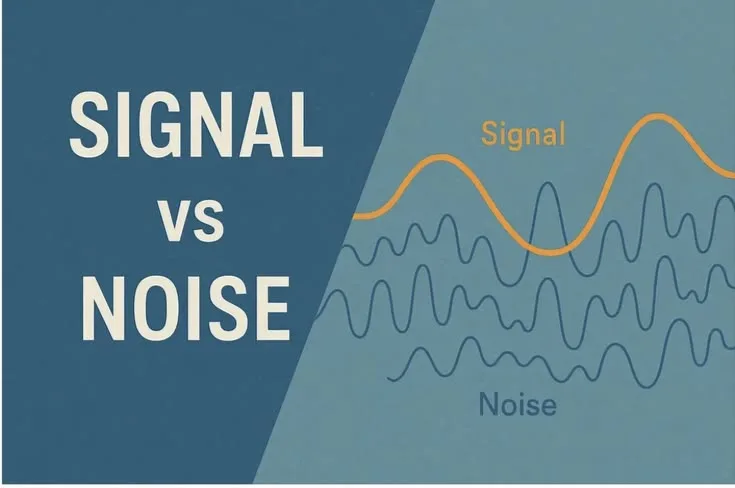
| 3. Transmission | Signal travels through a channel | Noise, bandwidth limits, delay | Signal degraded or lost |
| 4. Decoding | Receiver reconstructs meaning from signal | Applies own frames, assumptions, background knowledge | Different meaning constructed than intended |
| 5. Interpretation | Receiver integrates decoded message with prior knowledge | Confirmation bias; context mismatch | Message filtered or distorted |
| 6. Feedback | Receiver signals comprehension back to sender | No feedback; sycophantic feedback | Misalignment persists undetected |
Stage 1: The Idea (Internal Representation)
Communication begins with something the sender wants to transmit: a concept, a fact, an instruction, an emotional state, a perspective, a plan.
This content exists initially as an internal representation - a structure in the sender's mind that includes the information itself, the relationships between its elements, the context in which it should be interpreted, and the conclusions the sender draws from it.
The sender's internal representation is almost always richer and more contextually situated than anything that can be transmitted.
A speaker who has spent years thinking about a topic has an internal representation that includes the mistakes they considered and rejected, the counterarguments they found unpersuasive, the evidence they weighed and found compelling, and the qualifications they believe are important.
That entire background is part of the sender's representation of the idea - but most of it is invisible to receivers, who receive only what the sender chooses to transmit.
This creates the first source of communication failure: selection error. The sender must choose what to transmit from their full representation, and they systematically choose based on what seems important to them, given their knowledge.
What is most important to transmit for the receiver may be different - and the sender, cursed by their own knowledge, often cannot reliably identify the gap.
Stage 2: Encoding (Translating Thought to Signal)
Encoding is the process of translating an internal representation into a transmittable form: words, gestures, images, numbers, facial expressions, written symbols.
The encoder must select among the representational resources available (language, visual elements, formal notation, example-based illustration) and make choices about how to use them.
Every encoding choice involves trade-offs:
- Precision vs. accessibility: Technical language can encode precise distinctions that ordinary language cannot, but at the cost of requiring that the receiver share the technical vocabulary
- Completeness vs. processability: More complete encoding captures more of the sender's representation, but dense encoding exceeds receiver processing capacity
- Explicitness vs. implicitness: Explicit encoding states everything; implicit encoding relies on shared context to fill gaps (efficient when context is shared; catastrophically ambiguous when it is not)
Encoding failure occurs when the sender's choices produce a signal that cannot accurately reconstruct the intended representation on the receiver's end. This includes:
- Jargon without translation: Using technical terms that the intended receiver does not possess
- Assumed context: Relying on context that the receiver does not have
- Inappropriate abstraction level: Encoding at a level of abstraction different from what the receiver needs
- Structure mismatch: Organizing the encoding in a way that does not help the receiver reconstruct the sender's organization
*Example*: In 1999, NASA lost the Mars Climate Orbiter - a $327 million spacecraft - because one team encoded trajectory data in imperial units (pound-force seconds) and another team's software decoded it assuming metric units (newton-seconds).
The encoding was accurate; the signal was transmitted without error. The failure was an encoding/decoding mismatch: the same signal carried different meaning for sender and receiver. The result was a trajectory error that destroyed the spacecraft.
Why Does Communication Break Down Most Often?
Most communication failures are not failures of transmission, where a signal is lost or garbled in transit. They are failures of encoding or decoding: the sender chooses words, abstraction levels, or assumed context that the receiver cannot correctly translate back into the intended meaning. The Mars Climate Orbiter and Semmelweis cases both illustrate this: the signal arrived intact, but sender and receiver reconstructed different meanings from it.
Stage 3: Transmission (Moving the Signal Through a Channel)
The encoded signal travels through a channel from sender to receiver. The channel determines:
- Bandwidth: How much information can be transmitted simultaneously (face-to-face conversation carries words, tone, facial expression, body language simultaneously; email carries text only)
- Fidelity: How accurately the signal is preserved during transmission
- Delay: The time between encoding and receipt (affecting the possibility of real-time feedback)
- Noise characteristics: What kinds of interference distort the signal in this particular channel
Shannon and Weaver's original model identified this transmission stage as the primary location of communication problems. In electrical systems, this is largely correct: the primary failure is signal degradation during transmission.
In human communication, transmission failure is real but less frequently the primary problem than encoding/decoding failures.
Most organizational and interpersonal communication failures are not failures of transmission; they are failures of encoding, decoding, or feedback.
The choice of channel is itself an encoding decision with significant consequences. An instruction that should be unambiguous ("turn off the oven at 6pm") requires a different channel than a nuanced conversation about organizational strategy.
Matching channel to content - choosing channels with sufficient bandwidth and appropriate noise characteristics for the content being transmitted - is an often-underappreciated communication skill.
*Example*: Research by Albert Mehrabian (1967, often misquoted but real in its core finding) found that the emotional component of communication between people is heavily carried through nonverbal channels - tone, facial expression, posture - that are absent in written text.[4]
This has practical implications for channel selection: communicating emotionally significant content through text removes the channels through which emotional meaning is primarily transmitted, creating high potential for misinterpretation.
The choice to deliver a performance review in writing versus in person is a channel choice with substantial implications for what actually gets transmitted.
Stage 4: Decoding (Reconstructing Meaning from Signal)
Decoding is not the reverse of encoding. Encoding goes from internal representation to signal; decoding goes from signal to internal representation.
But the receiver's internal representation is built from different materials than the sender's: it is built from the signal received, the receiver's existing knowledge and interpretive frameworks, the receiver's contextual assumptions, and the receiver's expectations about what senders like this sender typically mean by signals like this signal.
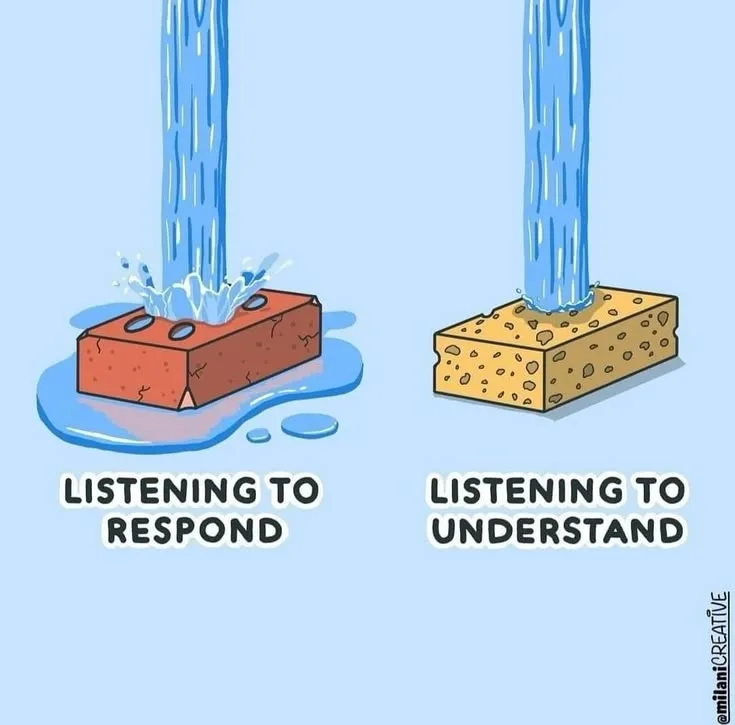
Meaning is constructed, not extracted. The receiver does not simply unpack a pre-existing meaning from the signal; they construct a meaning that they infer is consistent with the signal.[5]
This is why the same signal can produce different meanings for different receivers - they are constructing from different knowledge bases and interpretive frameworks.
The reconstruction process is largely automatic and unconscious. Receivers typically experience comprehension as immediate and transparent - they feel they understand what was said, not that they constructed a plausible interpretation.
The automaticity of decoding conceals its inferential character and prevents receivers from noticing when their inference diverges from the sender's intended meaning.
Decoding failure occurs when the receiver's reconstruction does not correspond to the sender's intended representation. This happens when:
- Vocabulary mismatch: The receiver does not know the meaning the sender attached to a term
- Contextual mismatch: The receiver fills implicit gaps with incorrect contextual assumptions
- Schema mismatch: The receiver interprets the signal through a different organizational framework than the sender intended
- Inference error: The receiver draws incorrect inferences from explicit content using their background knowledge[6]
*Example*: In organizational communication, the instruction "make this a priority" is decoded differently by different receivers because "priority" is contextually defined differently in different organizational cultures.[8]
For one receiver, "priority" means "work on this today, deprioritizing other tasks if necessary." For another, it means "keep it on your task list and address it within the week." The sender may not know that these decoding differences exist, and receivers may not know they are decoding differently from each other or from the sender's intent.
The misalignment becomes visible only when behaviors diverge from expectations.
Stage 5: Reconstructed Meaning (What Was Actually Received)
At the end of the decoding stage, the receiver holds a reconstructed meaning: their best inference about what the sender intended to transmit.
This reconstructed meaning is what actually influences the receiver's beliefs, decisions, and actions - not the sender's intended meaning, and not the signal. The signal is only an intermediate.
The most important characteristic of reconstructed meaning is that the receiver typically cannot distinguish it from the sender's intended meaning.
The receiver who has decoded a message holds a belief about what the message meant; they experience that belief as understanding of the sender's intention, not as a reconstruction that might diverge from it.
Revealing the gap between reconstructed meaning and intended meaning requires external intervention - feedback, testing, or explicit comparison.
This stage also reveals why "I said it clearly" is not a defense against miscommunication: the sender's assessment of encoding quality is irrelevant to the receiver's actual reconstructed meaning. What matters is what the receiver received, which the sender typically does not know without feedback.
Stage 6: Feedback (Completing the Loop)
Feedback is information that flows from receiver back to sender about how the message was received, understood, and interpreted. Feedback is what transforms communication from a one-way transmission into a two-way process capable of self-correction.
The feedback loops in communication that actually improve understanding require two components: (1) the receiver must send information back to the sender about their reconstructed meaning, and (2) the sender must use that information to adjust subsequent transmission.
Either component alone is insufficient. Receivers who send feedback that senders ignore have no functional feedback loop. Senders who want feedback but never receive it because organizational norms suppress it also have no functional feedback loop.
Feedback operates at two levels:
Signal-level feedback: Confirmation that the message was received ("I got your email," "I heard what you said"). Signal-level feedback tells the sender that transmission occurred but provides no information about whether decoding was accurate.
Meaning-level feedback: Information about how the receiver decoded the message ("I understood you to mean X" or "I'm not sure what you meant by Y"). Meaning-level feedback enables the sender to identify decoding errors and correct them, which is the actual communication-improvement function of feedback.
Most organizational feedback is signal-level only. Acknowledgment of receipt is routine; demonstration of accurate decoding is rare.
This is one reason that communication breakdowns are so common in organizations even when everyone believes they are communicating clearly: all the signal acknowledgments were there, but the meaning feedback that would have revealed decoding errors was absent.
How Do You Know If Communication Actually Worked?
You know communication worked only when meaning-level feedback confirms it, not when a signal was simply acknowledged. Receiving "I got your email" tells the sender a message arrived, but not whether it was understood correctly. Only feedback like "I understood you to mean X" reveals whether the receiver's reconstructed meaning actually matches what the sender intended.
The Full Model: What Makes Communication Succeed
Integrated across all six stages, communication succeeds when:
- The sender's encoding accurately represents the intended idea in transmittable form
- The encoding is matched to the receiver's vocabulary, contextual knowledge, and interpretive frameworks
- The channel carries the encoded signal with sufficient fidelity and bandwidth
- The receiver's decoding produces a reconstructed meaning that corresponds to the sender's intended meaning
- Feedback reveals any misalignment between intended and reconstructed meaning
- The sender adjusts subsequent encoding based on that feedback
Failure at any stage produces communication failure, and the stages are not independent: encoding choices constrain what decoding can recover; channel choice constrains what encoding can be used; feedback quality constrains how quickly and accurately encoding adjustments can be made.
The model reveals why the intuition "I said it, so they should understand it" is wrong: transmission is not understanding. The sender's encoding is the beginning of a process, not its end.
What matters is what arrives in the receiver's reconstruction - and that is determined by factors only partly within the sender's control.
Why This Model Is Useful
The six-stage model is practically useful because it localizes failure. When communication does not produce the desired result, the model suggests specific diagnostic questions:
- Was the idea clearly formed in the sender's mind? (Stage 1 - can the sender accurately describe their own representation?)
- Did the encoding choices match the receiver's resources? (Stage 2 - did the receiver have the vocabulary, context, and background to decode correctly?)
- Did the channel carry the signal accurately? (Stage 3 - was there information lost in transmission?)
- Did the receiver decode accurately? (Stage 4 - what did the receiver actually understand?)
- What was the reconstructed meaning? (Stage 5 - what belief did the receiver end up with?)
- Was there feedback? (Stage 6 - did the sender have any information about the accuracy of reception?)
Miscommunication that is attributed to receiver failure ("they didn't understand") can often be more accurately attributed to encoding failure (the encoding did not support accurate decoding) or feedback failure (nobody knew a mismatch had occurred until it was too late to correct).
This reframing has significant implications for how organizations approach communication improvement: rather than training receivers to comprehend better (which addresses the symptom), the model suggests investing in encoding quality and feedback mechanisms (which addresses the causes).
Implications for Semmelweis
Returning to the opening example: Semmelweis's communication failure was not a failure of transmission. He sent the signals; they were received. It was primarily a decoding failure created by an encoding-context mismatch.
His receivers - contemporary physicians - decoded his claim through a framework (miasma theory, the dominant medical paradigm) that made "handwashing prevents death" incoherent. His encoding assumed a germ-theory framework that his receivers did not have.
The tragedy is that Semmelweis's evidence was compelling; the mortality data was not in question. But compelling evidence transmitted through a framework the receiver cannot access produces reconstructed meaning that does not correspond to the intended meaning.
Pasteur later provided the missing framework - germ theory - that enabled accurate decoding of the same evidence Semmelweis had presented years earlier.
This suggests the communication lesson that extends far beyond medicine: accurate evidence, clearly stated, is often not enough. The receiver's decoding framework must also be in place.
Providing evidence without establishing the interpretive framework the evidence requires produces miscommunication regardless of the evidence quality. The framework is not noise - it is the prerequisite for correct decoding of the signal.
What Research Shows About Communication Frameworks
Claude Shannon and Warren Weaver's 1949 model was the first to treat communication as a quantifiable system with measurable properties.[1]
Shannon's key insight - that information could be defined independently of meaning as the reduction of uncertainty - gave researchers a formal language for studying communication.
But researchers quickly recognized that the model was incomplete for human communication, where meaning is the point.
Wilbur Schramm, who founded the first mass communication research institutes in the United States in the 1940s and 1950s, added two critical modifications to the Shannon-Weaver model.
First, Schramm emphasized overlapping "fields of experience" between sender and receiver - communication succeeds to the degree that sender and receiver share a common context within which the message makes sense.
Second, Schramm added a feedback loop, transforming the one-way pipeline into a circular model.[2]
These modifications are now standard in introductory communication curricula, but their practical implication - that the sender's message is only the beginning of communication, not the end - remains poorly internalized in professional practice.
Gregory Bateson, working at the Macy Conferences on cybernetics in the late 1940s alongside Norbert Wiener and Shannon, introduced the concept of "metacommunication" - communication about communication.
Bateson observed that every message carries two levels: the content level (what is being said) and the relationship level (how the sender and receiver are relating to each other while saying it).
His 1972 essay collection Steps to an Ecology of Mind argues that these levels frequently conflict, and that most communication pathology occurs when the relationship level contradicts the content level: a sarcastic "sure, whatever you say" carries a relationship-level message that directly negates the content-level meaning.
Paul Watzlawick, Janet Bavelas, and Don Jackson formalized Bateson's insights in their 1967 book Pragmatics of Human Communication, proposing five axioms of human communication. The first axiom - "one cannot not communicate" - has the most practical implications.
It means that silence, inaction, and absence are all communicative acts. A manager who does not respond to an employee's proposal is communicating; the employee receives some message from the non-response, even if the manager intended to communicate nothing.
This axiom places a much larger communicative burden on senders than the Shannon-Weaver model suggests.
Real-World Case Studies in Communication Framework Application
The Semmelweis case, described in this article's opening, is a communication failure at the framework level: the encoding-context mismatch between Semmelweis and his medical audience. But the same framework illuminates modern organizational cases.
In 2011, Netflix CEO Reed Hastings attempted to communicate a major strategic shift - separating Netflix's DVD and streaming businesses into two distinct companies - through a blog post and email.
The encoding was technically clear: the new streaming service would be called Netflix, the DVD service would be called Qwikster, pricing would change.
But Hastings failed at Stage 1 of the framework: the idea was not clearly formed. He could not articulate why the separation served customers.
Receivers decoded the message without a supplied framework and supplied their own: Netflix was abandoning its DVD customers. The stock fell roughly 75 percent over the following months; Hastings reversed the Qwikster decision within weeks.
Post-mortems by business analysts consistently identify the encoding failure: insufficient work at Stage 1 (forming the idea) before proceeding to Stage 2 (encoding it).
The British government's communication of COVID-19 risk during the early pandemic (2020) illustrates Stage 4 decoding failure at scale.
Official messaging used the phrase "stay alert" to encourage reduced contact, a phrase that receivers decoded through their existing frameworks (alertness implies vigilance, scanning for threats, being ready to act) in ways that led many people to interpret the guidance as encouraging more activity, not less.
Commentators and public-health researchers criticized the phrase as ambiguous compared with the clearer "stay home" it replaced.
Tsedal Neeley's research at Harvard Business School has examined how the adoption of English as a corporate lingua franca affected communication in multinational firms.
Their key finding: non-native English speakers systematically altered their communication behavior, reducing the frequency and assertiveness of their contributions due to uncertainty about encoding quality.
This Stage 2 vulnerability - uncertainty about whether encoding choices would produce accurate decoding - had measurable effects on decision quality, as fewer perspectives reached decision-makers.
The study, published in the Harvard Business Review, documented the organizational cost of Stage 2 failures that are invisible to native English speakers who cannot perceive the encoding difficulty.
The Science Behind Encoding and Decoding Gaps
Philip Johnson-Laird, a cognitive psychologist at Princeton, developed mental model theory to explain why decoding fails even when encoding appears precise.[3]
His 1983 book Mental Models argues that receivers do not decode messages by analyzing their logical structure; they construct spatial or diagrammatic models of the described situation and reason with those models.
This means the same sentence can generate radically different mental models in different receivers, depending on their prior knowledge and the ease with which different model structures spring to mind.
Nicholas Epley and Thomas Gilovich's research at the University of Chicago and Cornell on "anchoring and adjustment" revealed a systematic decoding bias: when receivers must interpret ambiguous messages, they anchor on the first plausible interpretation and adjust insufficiently from it.[9]
This means first impressions of a message's meaning disproportionately determine its decoded meaning, even when subsequent sentences provide clarifying information.
Practical implication: the first sentence of any message does not merely introduce the topic - it sets the interpretive frame that will govern decoding of everything that follows.[10]
Robin Dunbar at Oxford has studied communication through an evolutionary lens, arguing that the complexity of human social groups drove the evolution of language precisely because managing social relationships required a communication system far more flexible than those other primates use.[7]
His "social brain hypothesis," developed through the 1990s and 2000s, predicts that cognitive limits on social group size (roughly 150 stable relationships, now called "Dunbar's number") are also limits on communication network size - a point with direct implications for how organizations should think about information propagation and the degradation that occurs when messages travel across many nodes.
Sources & Further Reading
- Shannon, C.E. & Weaver, W. The Mathematical Theory of Communication. University of Illinois Press, 1949. View source
- Schramm, W. "How Communication Works." In W. Schramm (Ed.), The Process and Effects of Mass Communication. University of Illinois Press, 1954.
- Johnson-Laird, P. Mental Models. Harvard University Press, 1983.
- Mehrabian, A. "Decoding of Inconsistent Communications." Journal of Personality and Social Psychology, 6(1), 109-114, 1967. DOI: 10.1037/h0024532
- Sperber, D. & Wilson, D. Relevance: Communication and Cognition. Blackwell, 1986. View source
- Grice, H.P. "Logic and Conversation." In P. Cole & J. Morgan (Eds.), Syntax and Semantics, Vol. 3. Academic Press, 1975. View source
- Dunbar, R. Grooming, Gossip, and the Evolution of Language. Harvard University Press, 1996.
- Weick, K. Sensemaking in Organizations. Sage, 1995. View source
- Ariely, D. Predictably Irrational: The Hidden Forces That Shape Our Decisions. Harper Collins, 2008.
- Pinker, S. The Stuff of Thought: Language as a Window into Human Nature. Viking, 2007.