
Philosophy of language investigates meaning, reference, truth, communication, and the actions performed through words. Its core debates contrast sense with reference, descriptions with names, causal chains with private meanings, and literal content with implicature. Philosophy of language also emphasizes that meaning depends on shared practices and context, since speakers routinely communicate more than their words explicitly state.
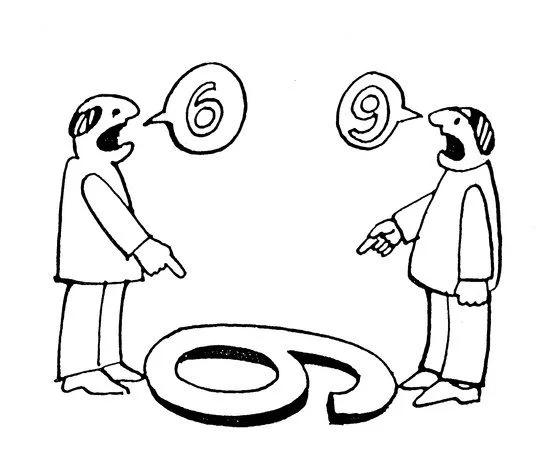
Imagine everyone carries a box, and in each box there is something that each person calls a "beetle." No one can look inside anyone else's box - only you can see what is in yours. Now suppose someone asks: what does "beetle" mean?
You might say it means whatever is in the box. But if what is in the box can vary from person to person, and no one can compare what is in their box with what is in another's, then the word "beetle" cannot be getting its meaning from the object in the box.
Whatever is in the box, the word "drops out of the language game entirely." It cannot be playing the role we thought it was.
Ludwig Wittgenstein introduced this thought experiment in "Philosophical Investigations," the posthumously published collection of his later philosophy, completed around 1949.
The beetle-in-a-box is an argument about the impossibility of private language - the idea that words for inner experiences (sensations, feelings, mental states) cannot get their meaning from the private objects they supposedly name, because private objects, inaccessible to public observation, cannot anchor public meaning.
If the word "pain" means whatever private sensation I am having when I use it, then we have no guarantee that my "pain" and your "pain" refer to the same thing. But if they might not refer to the same thing, how can we be communicating at all?
The thought experiment is disorienting because it targets something that seems completely obvious: surely I know what I mean by my words because I can look inward and see what I am referring to. Wittgenstein's argument is that this picture - meaning as private pointing - is philosophically incoherent.
Meaning is not something inside the head; it is something that happens between people in shared practices and forms of life.
The question of what philosophy of language asks - and what makes it one of the central disciplines of twentieth-century analytic philosophy - begins with puzzles this deep and proceeds outward to questions about reference, truth, communication, and the exercise of power through language.
"If a lion could speak, we could not understand him." - Ludwig Wittgenstein, Philosophical Investigations (1953)
This piece focuses on how philosophy of language plays out in communication and the exercise of power, from Orwell's political euphemisms to Lakoff's cognitive frames to Foucault's discourse analysis.
For the fuller historical and technical survey of the field's analytic canon, including Strawson's rebuttal to Russell, Searle's work on intentionality, and the empirical Sapir-Whorf research, see What Is Philosophy of Language? From Frege to Wittgenstein.
Key Definitions
Reference - The relationship between a linguistic expression and the entity it picks out in the world. The reference of the name "Paris" is the city of Paris. Reference is sometimes called extension or denotation.
Sense - In Frege's terminology, the mode of presentation or descriptive content associated with a linguistic expression - the way in which the expression presents its referent. Different expressions can share a reference (both "the morning star" and "the evening star" refer to Venus) while having different senses.
Rigid designator - A term introduced by Saul Kripke for an expression that refers to the same object in all possible worlds in which that object exists.
Proper names like "Aristotle" are rigid designators; definite descriptions like "the teacher of Alexander" are not, because they might pick out different people in different possible worlds.
Speech act - An utterance that performs an action rather than (or in addition to) describing a state of affairs. Promising, asserting, commanding, warning, apologizing, and declaring are all speech acts. J.L.
Austin's theory of speech acts distinguishes locutionary acts (what is said), illocutionary acts (what is done by saying it), and perlocutionary acts (the effects produced).
Implicature - What a speaker communicates by saying something, beyond the literal meaning of the words. Paul Grice showed that communication carries an enormous amount of implied content that goes beyond literal meaning, governed by cooperative conversational maxims.
Language game - Wittgenstein's term for a particular context of language use, with its own rules and purposes. Wittgenstein argued that the meaning of words is determined by their use within specific language games rather than by correspondence to inner mental states or external objects.[4]
Indeterminacy of translation - Willard Van Orman Quine's argument that there is no fact of the matter about whether one translation between languages is correct and another incorrect, because all translations are underdetermined by the observable behavioral evidence available to a translator.[9]
Causal-historical theory of reference - The view, associated with Kripke and Hilary Putnam, that names refer via a causal chain connecting current uses of the name to an initial naming event (a baptism), rather than through descriptions associated with the name by speakers.
| Philosopher | Key Contribution | Central Question | Core Claim |
|---|---|---|---|
| Frege | Sense vs. reference distinction | How can two expressions refer to the same thing but convey different information? | Expressions have sense (mode of presentation) and reference (the object itself) |
| Russell | Theory of definite descriptions | What do phrases like "the present king of France" mean when nothing satisfies them? | Descriptions are quantifiers, not names; analyzed as existential claims |
| Wittgenstein (early) | Picture theory of meaning | How can language represent reality? | Propositions picture facts through structural correspondence |
| Wittgenstein (late) | Language games and use theory | What determines meaning? | Meaning is use in shared practices, not correspondence to inner states |
| Kripke | Rigid designation and causal theory | How do proper names refer? | Names refer via causal chains from initial baptism, not via descriptions |
| Austin/Searle | Speech act theory | What do utterances do besides describe? | Language performs actions (promise, command, declare) with social consequences |
| Grice | Implicature and conversational maxims | How does communication convey more than literal meaning? | Cooperative maxims generate implied content beyond what is said |
Frege and the Foundations of Analytic Philosophy of Language
Gottlob Frege, a German mathematician and logician, set the agenda for the philosophy of language as it has been practiced in the analytic tradition.
His 1892 essay "Uber Sinn und Bedeutung" (On Sense and Reference) distinguished an expression's sense (its mode of presentation) from its reference (the object it picks out), explaining how identity statements like "the morning star is the evening star" can be informative even though both expressions refer to the same planet, Venus.[1]
Bertrand Russell extended this analysis in "On Denoting" (1905), arguing that definite descriptions like "the present king of France" are not genuine referring expressions but disguised existential claims, so a sentence about a nonexistent king comes out false rather than meaningless.[2]
This methodology, treating grammatical form as potentially misleading about logical form, became the defining approach of the analytic tradition, and it sets up the questions of reference and meaning that run through everything below.
Wittgenstein: Picture Theory to Language Games
No philosopher changed their mind more dramatically or more influentially than Ludwig Wittgenstein.
His early "Tractatus Logico-Philosophicus" (1921) held that meaningful propositions picture facts by mirroring the structure of possible states of affairs; what could not be pictured, including ethics and the nature of meaning itself, could not be meaningfully said.[3] Wittgenstein believed this had solved philosophy and retired from academic life, then returned a decade later to dismantle his own earlier work.
The "Philosophical Investigations" (published posthumously in 1953) replaced the picture theory with the idea that meaning is use: language is not one thing but many activities, related by family resemblance rather than a shared essence, and each context of use is a "language game" with its own rules.[4] This reconception makes meaning essentially public.
The private language argument, of which the beetle-in-a-box above is one expression, shows that a purely private language, governed by purely private criteria of correctness, is incoherent: meaning requires a practice, and practices require a community.
Austin and Speech Act Theory
J.L. Austin observed that not all declarative sentences make claims that can be true or false: some sentences, like "I promise to repay you by Friday," do not describe an existing state of affairs but perform an action.
Austin called these performatives and developed a broader framework distinguishing the locutionary act (what is said), the illocutionary act (what is done by saying it, such as promising or warning), and the perlocutionary act (the effect produced in the hearer).[5]
Austin's student John Searle extended speech act theory with the concept of institutional facts, facts that exist only because of shared human acceptance of constitutive rules.[10] Money is money, and marriages and corporations are what they are, because we collectively accept and act on the rules that constitute them through language. This link between speech and social power is a direct line to the framing and discourse questions below.
Grice, Kripke, and Quine
Paul Grice's William James Lectures at Harvard in 1967 (published as "Logic and Conversation" in 1975) identified a systematic gap between what sentences literally say and what speakers communicate by saying them, a gap governed by a Cooperative Principle and its maxims of quantity, quality, relation, and manner.[6]
If someone asks "Can you pass the salt?" and hears "I'm next to you," the literal answer is about physical capability, but the implicature, that the salt is coming, is what actually gets communicated.
Saul Kripke's "Naming and Necessity" (lectures 1970, published 1980) challenged the Fregean descriptive theory of names with the insight of rigid designation: proper names refer to the same individual across all possible worlds in which that individual exists, while descriptions like "the teacher of Alexander" do not.[7]
Kripke proposed instead that names refer via causal chains traced back to an initial baptism, with reference fixed by the world rather than by descriptions in speakers' heads.[13]
W.V.O. Quine, in "Two Dogmas of Empiricism" (1951) and "Word and Object" (1960), pushed further still, arguing that meaning itself resists precise definition: no sharp line separates truths of meaning from truths of fact, and translation between languages is radically underdetermined by the observable evidence available to a translator.[8]
Quine's indeterminacy thesis remains controversial, but it forced a reckoning with what kind of thing meaning is and how it constrains communication, a question that becomes concrete once language is used, as the next section shows, to shape what a community believes.
Language, Framing, and Power
Philosophy of language connects to the exercise of power through language in ways that George Orwell documented with journalistic vividness in "Politics and the English Language" (1946).
Orwell argued that political language in his era was designed to defend the indefensible - to make mass killing sound respectable, to give vagueness and evasion the sound of profundity.[11] The euphemism and the dead metaphor were not stylistic failures but political tools.
Cognitive linguist George Lakoff's theory of conceptual framing, developed across several books from the 1980s onward, showed how political language choices activate cognitive frames - mental structures that shape interpretation.[12]
Calling a government program a "tax relief" frames taxation as a burden from which relief is needed, presupposing that the normal state is no taxation.
Calling the same program a "tax cut" is descriptively equivalent but frames it as reduction of something, not relief from something.
The frame that becomes dominant in public discourse shapes which policy responses seem natural and which seem perverse.
Lakoff's analysis extends Grice's insights about implicature into the realm of political persuasion: political language communicates not just through what it literally says but through the conceptual structures it activates.
Orwell was right that controlling language is an exercise of power; Lakoff provided a cognitive mechanism explaining how.
Foucault's broader analysis of discourse - the structured systems of language and practice that define what can be said in a given domain at a given time - connects philosophy of language to the social theory of power.
Medical discourse, legal discourse, educational discourse: each creates its objects (the patient, the criminal, the student) and its expert knowledge-holders, and in doing so exercises power over those who are constituted as its objects.
For how language shapes thought at the cognitive level, see How Language Shapes Thought. For framing and political language in practice, see Framing Through Language.
For the existentialist tradition that intersects with some of these questions about meaning and language, see What Is Power? Sociology and Philosophy Insights.
Sources & Further Reading
- Frege, Gottlob. "Uber Sinn und Bedeutung." Zeitschrift fur Philosophie und philosophische Kritik 100 (1892): 25-50. English translation: "On Sense and Reference." In Translations from the Philosophical Writings of Gottlob Frege, ed. Peter Geach and Max Black. Blackwell, 1952.
- Russell, Bertrand. "On Denoting." Mind 14, no. 56 (1905): 479-493. DOI: 10.1093/mind/XIV.4.479
- Wittgenstein, Ludwig. Tractatus Logico-Philosophicus. Kegan Paul, 1921.
- Wittgenstein, Ludwig. Philosophical Investigations. Blackwell, 1953.
- Austin, J.L. How to Do Things with Words. Oxford University Press, 1962.
- Grice, H.P. "Logic and Conversation." In Studies in the Way of Words. Harvard University Press, 1989 [lectures 1967].
- Kripke, Saul A. Naming and Necessity. Harvard University Press, 1980.
- Quine, W.V.O. "Two Dogmas of Empiricism." The Philosophical Review 60, no. 1 (1951): 20-43. DOI: 10.2307/2181906
- Quine, W.V.O. Word and Object. MIT Press, 1960.
- Searle, John R. Speech Acts: An Essay in the Philosophy of Language. Cambridge University Press, 1969.
- Orwell, George. "Politics and the English Language." Horizon 13, no. 76 (1946): 252-265.
- Lakoff, George. Don't Think of an Elephant! Know Your Values and Frame the Debate. Chelsea Green Publishing, 2004.
- Putnam, Hilary. "The Meaning of 'Meaning'." Minnesota Studies in the Philosophy of Science 7 (1975): 131-193.
Part of This Series
Frequently Asked Questions
What is the philosophy of language?
The philosophy of language is the branch of philosophy that investigates the fundamental nature of language: what it means for words to have meaning, how language refers to the world, what makes sentences true or false, and how communication succeeds when we say more than our words literally convey. It asks questions that seem simple until you try to answer them rigorously: What is the relationship between a word and the thing it names?
How can fictional names like ‘Hamlet’ mean anything if there is no person they refer to? When you say ‘The cat is on the mat, ’ what makes that sentence true? Philosophy of language is one of the central disciplines in the analytic philosophical tradition that dominated Anglophone philosophy through the twentieth century. Gottlob Frege’s work on the logic of language in the 1890s established many of the foundational questions. Bertrand Russell, Ludwig Wittgenstein, J.L.
Austin, W.V.O. Quine, Saul Kripke, Paul Grice, and Noam Chomsky all made major contributions that shaped both philosophy and, through philosophy, linguistics, cognitive science, and the study of communication. The field divides into several interconnected questions. The theory of meaning asks what it is for words and sentences to have meaning, whether meaning is a matter of mental states, social conventions, causal relations to the world, or something else.
The theory of reference asks how linguistic expressions pick out objects and properties in the world. The theory of speech acts asks how we perform actions, promising, warning, marrying, declaring war, with words. Pragmatics asks how we communicate more than we literally say, through context, inference, and social convention.
Beyond technical philosophy, philosophy of language connects to questions about how language shapes thought, how power operates through control of language, and how propaganda, framing, and euphemism function.
What is the difference between meaning and reference?
The distinction between meaning and reference was introduced by the German logician Gottlob Frege in his 1892 essay ‘Uber Sinn und Bedeutung’ (On Sense and Reference) and remains one of the most fundamental in philosophy of language. Reference (Bedeutung) is the object or entity that a linguistic expression picks out in the world. The reference of the name ‘Barack Obama’ is a particular person. The reference of the expression ‘the morning star’ is the planet Venus.
The reference of the expression ‘the evening star’ is also the planet Venus, they pick out the same celestial object. Meaning or sense (Sinn) is the mode of presentation, the way in which the expression presents or describes its referent. ‘The morning star’ presents Venus as the bright object visible in the morning sky just before dawn. ‘The evening star’ presents Venus as the bright object visible in the evening sky after sunset.
The two expressions have the same reference but different senses. Why does the distinction matter? Consider the sentences: ‘The morning star is the morning star’ and ‘The morning star is the evening star.’ Both are true. But the first is trivially true: anyone who understands the sentence already knows it without looking at the sky. The second is an astronomical discovery that required observation to establish.
If meaning were just reference, these sentences would mean the same thing, since both expressions refer to Venus. But they clearly convey different information. Frege used this distinction to solve puzzles in logic and to explain how we can have informative identity statements.
The framework also explains failures of substitution in certain contexts: you can know that Superman can fly without knowing that Clark Kent can fly, even though ‘Superman’ and ‘Clark Kent’ refer to the same person, because they present that person under different descriptions. Kripke’s later work on names complicated and challenged Frege’s descriptive theory of sense, but the sense/reference distinction remains foundational.
What did Wittgenstein mean that meaning is use?
The slogan ‘meaning is use’ is the compressed summary of Wittgenstein’s later philosophy, developed in ‘Philosophical Investigations’ (published posthumously in 1953), and it represents a fundamental rejection of the picture theory of meaning he had advanced in his earlier ‘Tractatus Logico-Philosophicus’ (1921).
The early Wittgenstein held a referentialist picture theory: meaningful propositions picture facts about the world by establishing structural correspondences between their elements and elements of reality. Words name objects; sentences show how those objects stand in relation to one another. Language works by mirroring the logical structure of the facts it describes. The later Wittgenstein found this picture deeply unsatisfying.
Language does too many different things, we give orders, ask questions, tell stories, sing, curse, pray, describe, joke, to be explained by a single representational model. What unifies all of these activities under the concept of ‘language’ is not that they all picture facts but that they are all human practices embedded in forms of life.
Meaning, on this view, is not a mental image or a Platonic entity or a structural correspondence to reality: it is the role a word plays in the activities and practices of a linguistic community. To understand the meaning of ‘game’ is not to grasp a definition or a mental representation but to know how to use the word correctly: in what contexts to apply it, what moves in language games using it are legitimate, how to respond when others use it.
Understanding is a practical capacity, not a theoretical insight. This has profound implications. It means meaning is essentially social and public: there is no such thing as a private language (the argument Wittgenstein pursues through the beetle-in-a-box thought experiment). It means meaning is not fixed and timeless but evolves with practices.
And it means philosophical puzzles about language often arise from taking words out of their ordinary use contexts and generating confusion by asking them to do work they were not designed for.
What are speech acts?
Speech act theory is the philosophical analysis of how language is used not merely to describe the world but to perform actions. The central insight, developed by the Oxford philosopher J.L. Austin in lectures published posthumously as ‘How to Do Things with Words’ (1962) and elaborated by his student John Searle, is that many utterances are not descriptions that can be true or false but performances of social actions.
Austin began with what he called performatives: utterances that do what they say in the saying. When a judge says ‘I sentence you to five years, ’ they do not describe a sentencing, they perform it. When a couple’s officiant says ‘I now pronounce you married, ’ the marriage does not exist before the words and merely get described; the words constitute the marriage. When you say ‘I promise to pay you back, ’ you create an obligation that did not previously exist.
These utterances perform actions rather than stating facts. Austin then developed a more comprehensive framework. Every speech act has three dimensions: the locutionary act (what words are said and what they literally mean), the illocutionary act (what action is being performed: asserting, questioning, commanding, promising, warning, apologizing), and the perlocutionary act (the effect the speech act produces in the hearer: being persuaded, alarmed, informed).
Most philosophical and practical attention falls on illocutionary acts: what are you doing with this utterance? Searle extended Austin’s framework by analyzing the constitutive rules of different illocutionary acts, the conditions that must be satisfied for a promise to be a genuine promise, a sincere assertion, a valid command.
His concept of institutional facts, facts that exist only because humans collectively accept certain rules (money, marriage, property, law), has become important in social ontology and the philosophy of social science. Speech act theory has influenced linguistics, law (the theory of legal speech acts), feminist philosophy (analyzing how certain utterances silence or subordinate), and communication studies.
How do names refer to things?
How names refer to objects is one of the central problems in philosophy of language, and it received its most important modern treatment in Saul Kripke’s ‘Naming and Necessity, ’ based on lectures delivered in 1970 and published in 1980. The classical view, associated with Frege and elaborated by Bertrand Russell, held that names are disguised descriptions.
The name ‘Aristotle’ means something like ‘the philosopher who taught Alexander the Great and wrote the Nicomachean Ethics.’ On this descriptive theory, names refer to whoever uniquely satisfies the associated description. The name picks out its referent through the description. Kripke subjected the descriptive theory to devastating criticism. First, the descriptions we associate with names are often wrong or incomplete without this changing the reference.
Even if Aristotle had never taught Alexander, had not written the works attributed to him, or had been a different kind of philosopher entirely, we would still be talking about Aristotle when we use his name, not whoever satisfied our description. Second, names are rigid designators: they refer to the same individual in all possible worlds, whereas descriptions can pick out different individuals in different possible worlds.
The name ‘Aristotle’ refers to Aristotle in every possible world in which Aristotle exists, even worlds where he never tutored Alexander. The description ‘the tutor of Alexander’ could pick out a different person in a world where someone else tutored Alexander. Kripke proposed an alternative causal-historical theory of reference: names refer via a causal chain that traces back to an initial baptism, a naming event, and is passed from speaker to speaker.
When I use the name ‘Aristotle, ’ my use inherits its reference from the chain of uses stretching back to the original context in which the name was first applied to that particular person. This analysis extends to natural kind terms like ‘water, ’ ‘gold, ’ and ‘tiger.’ These terms, Kripke and Hilary Putnam argued, refer to the underlying natural kind, the chemical or biological structure, not to the superficial properties speakers associate with the word.
‘Water’ means H2O, not ‘the clear drinkable liquid.’ This has implications for the relationship between language and scientific discovery.
How does language shape thought and power?
The relationship between language and thought is one of philosophy’s deepest questions, with implications ranging from cognitive science to political theory. In its strongest form, the Sapir-Whorf hypothesis, language determines thought: speakers of different languages literally think differently because their languages carve up reality differently. The evidence for strong linguistic determinism is thin.
People can think about things their language lacks words for, and translation between languages is imperfect but possible. A weaker and more defensible thesis is that language influences thought: having or lacking words for a concept affects how readily and fluently speakers think with it, and how attention is distributed.
Cross-cultural research has shown, for example, that speakers of languages with elaborate color vocabularies are faster at certain color discrimination tasks, and that speakers of languages with different spatial reference systems (absolute versus relative) think differently about spatial problems. The relationship between language and power is more concretely demonstrable.
George Orwell’s 1946 essay ‘Politics and the English Language’ argued that political language is designed to make lies sound truthful and to give an appearance of solidity to pure wind.
Euphemism, ‘collateral damage’ for civilian deaths, ‘enhanced interrogation’ for torture, ‘ethnic cleansing’ for mass murder, functions to make atrocities harder to perceive and easier to accept by describing them in bloodless administrative language that suppresses the reality of what is being described.
The linguist George Lakoff’s theory of framing argues that political concepts are organized around conceptual frames, mental structures that shape how we interpret information. Political language choices activate particular frames and make certain conclusions seem natural.
Calling the estate tax the ‘death tax’ activates a different frame than calling it the ‘inheritance tax.’ Those who control the framing of political debate have significant advantages in shaping public opinion and policy outcomes.
Foucault’s analysis of discourse, the structured systems of language and practice that define what can be said, thought, and known within a domain, pushes further: power operates not just through coercion but through the production of truth claims and the definition of legitimate knowledge. To control the language of medicine, law, or education is to exercise power over those who are subjected to medical, legal, or educational institutions.