
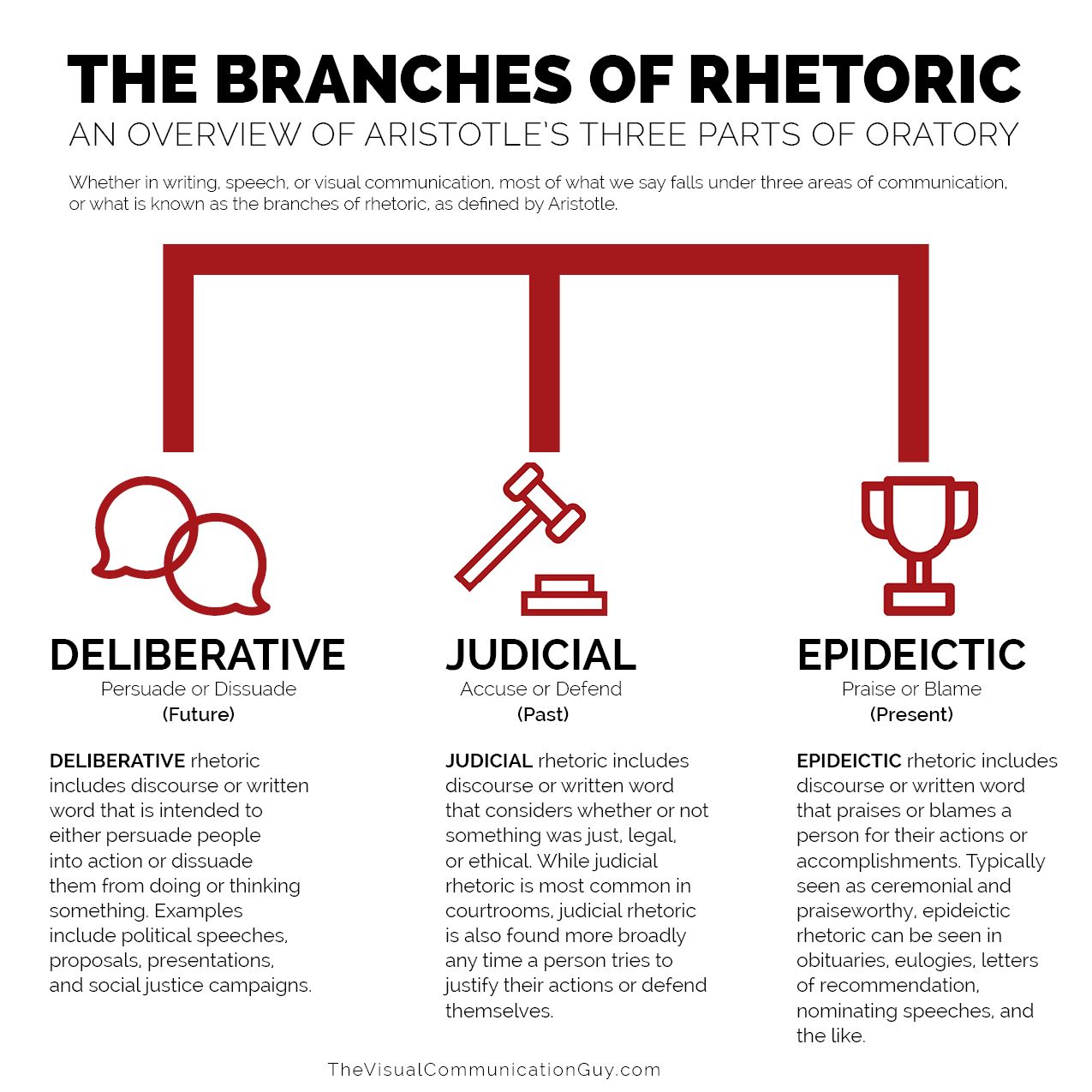
Rhetoric: In 44 BCE, after Julius Caesar was assassinated on the floor of the Roman Senate, two men gave speeches over his body.
The first was Brutus, one of the conspirators, who delivered a carefully reasoned argument explaining why Caesar's death was necessary for the preservation of the Roman Republic. The crowd was persuaded. They accepted Caesar's death as a necessary sacrifice for liberty.
Then Mark Antony spoke. He did not argue. He did not reason. He held up Caesar's bloody toga, pointed to each wound, and said: "If you have tears, prepare to shed them now." He read Caesar's will, revealing that Caesar had left his gardens to the people and money to every citizen.
He repeated, with devastating irony, that "Brutus is an honorable man" until the phrase reversed its own meaning and became an accusation.
By the time Antony finished, the same crowd that had accepted Brutus's arguments was rioting in the streets, hunting the conspirators. The facts had not changed. The arguments had not been refuted.
But Antony's rhetoric-his masterful use of emotion, irony, timing, and theatrical display-had completely overwhelmed Brutus's logic.
This ancient scene illustrates why rhetoric-the art of effective and persuasive communication-has been studied, taught, practiced, and debated for over 2,500 years. It is not a historical curiosity.
It is the operating system of public life, running silently beneath every political speech, every advertisement, every courtroom argument, every corporate presentation, every social media post, and every conversation in which someone tries to influence someone else's beliefs or behavior.
What Is Rhetoric?
In its simplest definition, rhetoric is the art of persuasive communication-the use of language strategically to influence, inform, or persuade audiences. But this simple definition barely scratches the surface.
Rhetoric encompasses:
- The study of how communication persuades (rhetorical analysis)
- The practice of creating persuasive communication (rhetorical production)
- The theory of what makes communication effective (rhetorical theory)
- The ethics of persuasion (when is persuasion legitimate? when is it manipulation?)
The Classical Definition
Aristotle, the most influential theorist of rhetoric in Western history, defined rhetoric as "the faculty of observing in any given case the available means of persuasion." This definition emphasizes that rhetoric is not about tricking people.
It is about understanding what makes communication work and applying that understanding strategically.
"The duty of rhetoric is to deal with such matters as we deliberate upon without arts or systems to guide us, in the hearing of persons who cannot take in at a glance a complicated argument or follow a long chain of reasoning." - Aristotle
Aristotle's definition implies several important things:
- Rhetoric is a capacity (faculty) that can be developed through study and practice
- It is situational (in any given case)-what works in one context may fail in another
- It is about observation and analysis as much as production-understanding persuasion is the prerequisite for practicing it
- It concerns all available means-not just words but also delivery, timing, context, and audience
Rhetoric vs. Mere Persuasion
Not all persuasion is rhetoric. Threatening someone with a gun is persuasive but not rhetorical. Offering a bribe is persuasive but not rhetorical. Rhetoric specifically concerns persuasion through communication-through the strategic use of language, argument, emotion, and self-presentation.
The Roman educator Quintilian captured this ethical dimension in his influential definition:
"Rhetoric is the art of the good man speaking well." - Quintilian
The Three Rhetorical Appeals: Ethos, Pathos, Logos
Aristotle identified three fundamental modes of persuasion, which remain the most widely used framework for understanding rhetoric 2,400 years later.
Ethos: The Appeal to Credibility
Ethos is persuasion through the character, credibility, and trustworthiness of the speaker. People are more persuaded by speakers they perceive as knowledgeable, honest, and well-intentioned.
How ethos works:
- Demonstrated expertise: Showing knowledge of the subject through command of evidence, appropriate vocabulary, and nuanced understanding
- Moral character: Presenting oneself as honest, principled, and acting in the audience's interest rather than one's own
- Goodwill: Showing genuine care for the audience's wellbeing and concerns
- Identification: Establishing common ground with the audience ("I grew up in a town like this")
Ethos in practice:
- A doctor's medical advice is more persuasive than a stranger's because of demonstrated expertise
- A whistleblower's testimony is persuasive partly because the personal cost of speaking out signals honesty
- A politician who begins a speech with "As a veteran..." is establishing ethos through shared identity and sacrifice
How ethos is undermined:
- Demonstrated ignorance or error destroys competence credibility
- Hypocrisy (saying one thing and doing another) destroys moral credibility
- Self-interest (clearly benefiting from the advocated position) undermines goodwill credibility
Pathos: The Appeal to Emotion
Pathos is persuasion through the emotional response that the speaker evokes in the audience. Emotions powerfully influence judgment, and a speaker who can make the audience feel the right emotions at the right time has an enormous persuasive advantage.
How pathos works:
- Vivid storytelling: Specific, detailed narratives activate emotional imagination more powerfully than abstract arguments
- Emotional language: Words with strong affective associations ("devastation," "triumph," "innocent") trigger emotional responses-a reminder that language shapes thought in profound ways
- Identification with suffering or joy: Connecting the audience emotionally to the people affected by the issue
- Appeals to values: Connecting the issue to deeply held values (freedom, fairness, family, security) that carry emotional weight
Pathos in practice:
- Charity advertisements show individual children rather than statistics because individual stories generate more emotional response (the "identifiable victim effect")
- Trial lawyers tell stories about their clients' lives to make jurors feel compassion
- Political speeches evoke fear about threats or hope about possibilities to motivate action
The power and danger of pathos:Pathos is the most immediately powerful of the three appeals because emotional responses are faster and more motivating than analytical responses.
This makes pathos both the most effective tool for legitimate persuasion (when emotions are appropriate to the situation) and the most dangerous tool for manipulation (when emotions are manufactured to bypass rational evaluation).
Logos: The Appeal to Logic and Reason
Logos is persuasion through logical argument-the use of evidence, reasoning, and logical structure to demonstrate that a conclusion follows from premises.
How logos works:
- Evidence: Facts, statistics, expert testimony, examples, and data that support the claim
- Deductive reasoning: Moving from general principles to specific conclusions ("All citizens deserve equal protection; you are a citizen; therefore, you deserve equal protection")
- Inductive reasoning: Moving from specific examples to general conclusions ("Every company that adopted this practice saw revenue growth; therefore, this practice likely drives revenue growth")
- Causal reasoning: Establishing that one thing causes another through evidence of mechanism, correlation, and controlled comparison
Logos in practice:
- Scientific papers present methodology, data, and logical analysis to persuade through evidence
- Legal arguments present precedent, statute, and logical application to persuade judges
- Business cases present market data, financial projections, and competitive analysis to persuade investors
The limitations of logos:Pure logical argument is often less persuasive than it "should" be because:
- People have limited capacity and motivation for analytical processing
- Emotional responses often override logical conclusions
- Logical arguments can be technically valid while missing the point (winning the argument while losing the audience)
- The same evidence can support different conclusions depending on which logical framework is applied, and logical fallacies can make flawed reasoning appear sound
How the Three Appeals Work Together
The most effective rhetoric combines all three appeals:
| Appeal | Function | When Strongest | When Weakest |
|---|---|---|---|
| Ethos | Establishes trust; makes audience receptive | When speaker is unknown; on topics requiring expertise | When trust is already established or irrelevant |
| Pathos | Motivates action; creates urgency | When audience is complacent; when action is needed | When audience is suspicious of emotional manipulation |
| Logos | Justifies conclusions; provides substance | When audience is analytical; when evidence is strong | When audience is emotional; when evidence is weak |
A speech that is all ethos (trust me) without substance feels empty. A speech that is all pathos (feel this) without reason feels manipulative. A speech that is all logos (here are the facts) without emotion or credibility feels cold and unpersuasive.
The art of rhetoric lies in calibrating the mix to the audience, the context, and the purpose. As the Roman statesman Cicero recognized:
"The man of eloquence whom we seek will be one who is able to speak in court or in deliberation so as to prove, to please, and to sway or persuade." - Cicero
Common Rhetorical Devices
Beyond the three appeals, rhetoric employs a vast toolkit of specific devices-linguistic techniques that enhance persuasive impact.
Devices of Repetition
- Anaphora: Repetition at the beginning of successive clauses. "We shall fight on the beaches, we shall fight on the landing grounds, we shall fight in the fields" (Churchill)
- Epistrophe: Repetition at the end of successive clauses. "Government of the people, by the people, for the people" (Lincoln)
- Anadiplosis: Repetition of the last word of one clause at the beginning of the next. "Fear leads to anger. Anger leads to hate. Hate leads to suffering." (Yoda, but the technique is ancient)
Devices of Contrast
- Antithesis: Juxtaposition of contrasting ideas. "It was the best of times, it was the worst of times" (Dickens)
- Oxymoron: Combination of contradictory terms. "Deafening silence," "living death," "cruel kindness"
- Irony: Saying one thing while meaning the opposite. "Brutus is an honorable man" (Antony, meaning the opposite)
Devices of Sound
- Alliteration: Repetition of initial consonant sounds. "Peter Piper picked a peck of pickled peppers"
- Assonance: Repetition of vowel sounds. "I feel the need, the need for speed"
- Consonance: Repetition of consonant sounds within words. "Pitter-patter of little feet"
Devices of Thought
- Rhetorical question: A question asked for effect rather than information. "Are we going to let this injustice stand?"
- Metaphor: Describing one thing in terms of another. "All the world's a stage"
- Analogy: Extended comparison between two things. "The human brain is like a computer" (useful for communicating complex ideas; potentially misleading if pushed too far)
- Hyperbole: Deliberate exaggeration for emphasis. "I've told you a million times"
- Litotes: Understatement through double negation. "That was no small achievement" (meaning it was a very large achievement)
How Is Rhetoric Used Today?
Rhetoric is not confined to ancient Greece or formal speechmaking. It operates in every domain of contemporary communication.
In Politics
Political rhetoric is the most visible and most studied form of contemporary rhetoric:
- Campaign speeches combine ethos (candidate credibility), pathos (emotional appeals to values and fears), and logos (policy arguments)
- Political advertising uses compressed rhetorical techniques: 30 seconds demands extreme efficiency in combining emotional appeal, credibility signals, and simplified arguments
- Debate is structured rhetorical performance, where candidates compete not just on policy positions but on rhetorical skill
- Framing is the most pervasive form of political rhetoric: the choice of how to describe issues determines how they are understood
In Advertising
Advertising is applied rhetoric:
- Ethos: Celebrity endorsements, expert recommendations, brand reputation
- Pathos: Emotional narratives, aspirational imagery, fear and desire appeals
- Logos: Product comparisons, statistical claims, demonstrations of effectiveness
- Advertising has refined rhetorical techniques to extraordinary precision through decades of A/B testing, focus groups, and behavioral research
In Law
Legal practice is inherently rhetorical:
- Opening and closing statements are pure rhetorical performance
- Witness examination uses rhetorical questioning techniques
- Legal briefs employ logical argument structured for maximum persuasive impact
- Jury selection is the practice of identifying which audiences will be most receptive to which rhetorical strategies
In Business
Business communication increasingly relies on explicit rhetorical skills:
- Pitches and presentations combine all three appeals to persuade investors, clients, and colleagues
- Marketing applies rhetorical analysis to audience psychology
- Negotiation uses rhetorical strategies for positioning, concession, and agreement
- Leadership communication employs rhetoric to inspire, direct, and motivate
In Social Media
Social media has democratized rhetoric while compressing it:
- Tweets are micro-rhetoric: the constraints of the form demand extreme rhetorical efficiency
- Viral content succeeds through rhetorical effectiveness-emotional resonance, memorable phrasing, shareability
- Hashtag activism is rhetorical framing at scale
- Influencer culture is ethos-based persuasion adapted for digital platforms
Is Rhetoric Manipulative?
This question has been debated since Plato criticized the Sophists for teaching persuasion without concern for truth. Plato drew a sharp line between genuine knowledge and mere rhetorical skill:
"Rhetoric is the art of ruling the minds of men." - Plato
The answer is that rhetoric is a tool, and like all tools, it can be used ethically or unethically.
The Case That Rhetoric Is Neutral
Rhetoric is the study and practice of effective communication. A hammer can build a house or break a window. The tool is not responsible for its use. Rhetoric can be used to:
- Communicate truth more effectively
- Make important ideas accessible to wider audiences
- Inspire people to positive action
- Defend the innocent and advocate for justice
- Educate and enlighten
The Case That Rhetoric Is Dangerous
Even as a neutral tool, rhetoric has properties that create risks:
- It can make weak arguments feel strong by wrapping them in emotional appeal and credible presentation
- It can make false claims seem true by presenting them with confidence, specificity, and repetition
- It advantages the skilled communicator regardless of whether their position has merit, creating asymmetries of social influence
- It can manipulate without the audience's awareness, undermining autonomous decision-making
The Ethical Framework
The most productive framework is to treat rhetoric like any powerful capability:
- Learning rhetoric is ethically positive because it enables both effective communication and critical reception
- Using rhetoric honestly to communicate genuine beliefs with appropriate evidence is ethical
- Using rhetoric to deceive or to manipulate people against their own interests is unethical
- Understanding rhetoric as a citizen is essential for democratic participation, because those who cannot recognize rhetorical techniques are vulnerable to those who can deploy them. As the 20th-century rhetorician Kenneth Burke argued:
"Wherever there is persuasion, there is rhetoric. And wherever there is meaning, there is persuasion." - Kenneth Burke
Can You Learn Rhetorical Skills?
Rhetoric is learnable. This was one of its original defining claims: the ancient Greeks taught rhetoric as a skill that could be developed through study, practice, and analysis. The curriculum has evolved, but the fundamental approach remains sound.
How to Develop Rhetorical Skill
Study examples: Read and listen to great speeches, arguments, and persuasive writing. Analyze what makes them effective. Identify the appeals, devices, and strategies used.
Practice production: Write persuasive texts. Give speeches. Make arguments. The only way to develop rhetorical skill is through practice with feedback.
Study audience psychology: Understanding how people process information, make decisions, and respond to different persuasive strategies is the foundation of effective rhetoric.
Analyze failures: Study persuasive attempts that failed. Understanding why rhetoric fails is as instructive as understanding why it succeeds.
Develop critical reception: Practice analyzing the rhetoric you encounter daily-in advertising, news, politics, social media, and conversation. The ability to identify rhetorical strategies in others' communication develops the skill to deploy them in your own.
Why Study Rhetoric?
Studying rhetoric is valuable for four distinct reasons:
1. To Communicate Effectively
Understanding rhetoric makes you a better communicator in every context-professional, personal, public, and private. The principles of audience awareness, strategic organization, emotional calibration, and credibility management apply to everything from job interviews to first dates to board presentations.
2. To Recognize Persuasion Attempts
Understanding rhetoric makes you a more critical consumer of communication. When you can identify the ethos appeal in a celebrity endorsement, the pathos manipulation in a political ad, and the logos gaps in a business proposal, you can evaluate persuasive messages on their merits rather than being swept along by their technique.
3. To Think More Clearly
Rhetoric requires understanding your own arguments deeply enough to present them effectively. The process of preparing a rhetorical presentation-identifying your strongest evidence, anticipating counterarguments, choosing the most effective structure-is itself a powerful thinking process that clarifies your own understanding.
4. To Participate in Democratic Life
Democratic governance requires that citizens be able to evaluate the rhetoric directed at them by politicians, media, advertisers, and advocacy groups. A population that cannot recognize rhetorical techniques is a population that can be manipulated by them. Rhetorical literacy is, in this sense, a civic responsibility.
Rhetoric began 2,500 years ago as the practical art of speaking persuasively in the assemblies and courts of ancient Greece.
It has survived every subsequent revolution in communication-the invention of writing, the printing press, mass media, the internet, social media because the fundamental challenge it addresses has never changed: how to use language to move minds.
As long as humans communicate with words, rhetoric will remain the art that determines which words succeed and which fail, which ideas spread and which die, and which speakers are heard and which are ignored.
What Research Shows About Rhetoric's Effectiveness
The scientific study of rhetoric has moved from classical theory to empirical measurement, producing findings that both validate ancient insights and reveal their limits.
Aristotle's Rhetoric (c. 350 BCE) remained the foundational text for over 2,000 years, but its claims were not systematically tested empirically until the 20th century. When they were, many held up remarkably well.
Aristotle's emphasis on the persuasive importance of ethos (credibility) is echoed by a large body of source credibility research beginning with Carl Hovland and Walter Weiss's 1951 study (Public Opinion Quarterly) showing that identical messages were significantly more persuasive when attributed to high-credibility sources.
Aristotle's claim that the best rhetoric calibrates to audience and situation has been confirmed by the Elaboration Likelihood Model (Petty and Cacioppo, 1986), which found that the optimal persuasion strategy depends on audience motivation and processing capacity.
What Aristotle could not have known is the neural and cognitive architecture that makes his prescriptions work.
Kenneth Burke (1897-1993), the 20th century's most influential rhetorical theorist, extended Aristotle's framework with the concept of "identification" - the idea that effective persuasion is not primarily about argument but about creating a sense of shared substance, shared values, and shared identity between speaker and audience.
Burke's central claim, in A Rhetoric of Motives (1950), was that wherever there is division between human beings, rhetoric arises to bridge it through symbolic action.
His concept of "terministic screens" - that the terms we use to describe reality function as screens that select and deflect attention - anticipated later cognitive linguistic research on framing by decades.
Burke's analysis of Hitler's Mein Kampf as a rhetoric of victimage and scapegoating remains one of the most chilling demonstrations of how rhetorical analysis can illuminate how demagogic persuasion works.
George Orwell's 1946 essay "Politics and the English Language" is arguably the most widely cited piece of rhetorical criticism in the English language.
Orwell identified specific rhetorical vices - dying metaphors, pretentious diction, meaningless words ("democracy," "freedom," "patriotic" used without defined content), verbal false limbs (using "render inoperative" instead of "break"), and the passive voice as evasion of responsibility - and argued that these were not merely aesthetic failures but political and moral ones.
His prescription was radical simplicity: "Never use a long word where a short one will do. Never use the passive where you can use the active.
If it is possible to cut a word out, always cut it out." Subsequent research in communication science has largely confirmed Orwell's prescriptions: simpler, more concrete language consistently produces higher comprehension, recall, and attitude change than complex, abstract language, even for highly educated audiences.
Chaim Perelman and Lucie Olbrechts-Tyteca's The New Rhetoric (1958, translated 1969) revived classical rhetoric by connecting it to modern argumentation theory. Their central contribution was the concept of the "universal audience" - the ideal, reasonable audience against which the strength of any argument can be measured.
Arguments that would persuade a well-informed, rational audience on a topic are genuinely strong arguments; arguments that only persuade through emotional manipulation or logical fallacy would not persuade this universal audience.
This framework has been widely used in legal rhetoric, political theory, and debate pedagogy, and has influenced practical training in how to distinguish genuinely persuasive arguments from manipulative rhetoric.
Real-World Case Studies in Rhetorical Practice
Mark Antony's forum speech (44 BCE): Shakespeare's dramatization in Julius Caesar (based on Plutarch's account) preserves what historians consider a relatively accurate account of the rhetorical strategies deployed.
Antony's speech deploys ethos destruction ("I come to bury Caesar, not to praise him" - establishing false modesty while proceeding to praise), epideictic rhetoric (funeral oratory focused on praise and blame), the repeated irony of "Brutus is an honorable man" (which becomes increasingly bitter with each repetition until the crowd hears it as accusation), and the material prop of Caesar's will and toga - a brilliant deployment of what Aristotle called "non-artistic proofs," material evidence rather than argument.
Rhetoricians study this speech as the classic example of pathos overwhelming logos: Antony never refuted Brutus's argument; he made the audience feel differently about it.
Winston Churchill and the rhetoric of national survival: Historian David Cannadine's analysis of Churchill's wartime speeches documented that Churchill followed classical rhetorical principles with unusual deliberateness.
Churchill's famous June 18, 1940 speech ("This was their finest hour") was delivered to the House of Commons at the moment of Britain's greatest danger, when France had just fallen and invasion seemed likely.
The speech deploys all three appeals: logos (detailed military assessment of Britain's defensive position), ethos (Churchill's own war record and refusal to consider negotiated peace), and pathos (the culminating vision of future generations looking back on this moment).
Churchill's systematic use of anaphora, tricolon, and what he called "the short Anglo-Saxon word" - preferring "fight" to "combat," "blood" to "casualties" - was entirely conscious and documented in his manuscripts.
The speeches are studied in rhetoric courses worldwide as examples of deliberate classical technique deployed in a modern context.
The 1960 Kennedy-Nixon debate and the television revolution in rhetoric: The first televised presidential debate on September 26, 1960 is the canonical case study in how medium shapes rhetoric. Radio listeners who heard the debate rated Nixon as winning or tying; television viewers rated Kennedy as winning decisively.
The difference was primarily visual: Kennedy appeared rested, tanned, and confident; Nixon appeared pale, underweight, and sweating (he had refused television makeup).
Kennedy's rhetorical technique was also better calibrated to television's intimate medium: he spoke to a notional viewer at home rather than to the studio audience, using the direct gaze and understated affect that works on camera but not in a hall.
Political communication scholar Kathleen Hall Jamieson (Eloquence in an Electronic Age, 1988) documents how television has systematically shifted political rhetoric toward personal narrative, visual performance, and emotional authenticity rather than extended logical argument - a transformation of the rhetorical context with significant implications for democratic deliberation.
The "Malboro Man" and corporate rhetoric: Leo Burnett's creation of the Marlboro Man advertising campaign in 1954 is studied in communication schools as a masterpiece of ethos-based brand rhetoric.
Philip Morris had originally marketed Marlboro as a women's cigarette with the tagline "Mild as May." The rebrand, which substituted the ethos of rugged American masculinity (the cowboy) for the previous ethos of refinement, drove a dramatic rise in sales over the following years.
The campaign had no explicit logical argument - it communicated entirely through ethos transfer, associating the brand with a cultural identity.
Communication researcher James Twitchell (Twenty Ads That Shook the World, 2000) documents the campaign as evidence that brand rhetoric operates primarily through ethos and pathos, with logos largely irrelevant - buyers were not evaluating cigarette quality but purchasing an identity affiliation.
The Science Behind Rhetorical Effects on the Brain
Cognitive linguist Raymond Mar (York University) has used fMRI to study how narrative rhetoric activates brain regions differently than expository argument.
His 2011 paper in Annual Review of Psychology synthesized research showing that narrative comprehension activates a "default mode network" associated with social cognition and perspective-taking, while analytical argument activates executive control networks in the prefrontal cortex.
The practical implication: narrative rhetoric creates empathic resonance and identity involvement that analytical argument cannot - which is why Aristotle was right that pathos is not merely decorative but is integral to genuine persuasion.
Psychologist Melanie Green (University at Buffalo) developed "transportation theory" - the systematic account of how narrative persuasion works through absorption into the story world.
Her research (Green and Brock, 2000, Journal of Personality and Social Psychology) demonstrated that the degree to which readers are "transported" into a narrative predicts attitude change more strongly than the strength of the arguments contained in the narrative.
Transportation reduces counterarguing (readers cannot simultaneously be absorbed in a story and critically evaluate its premises), creates emotional responses that become associated with the narrative's conclusions, and produces identification with characters whose beliefs and values the reader temporarily adopts.
This research provides the scientific foundation for why storytelling is rhetorically more powerful than argument in most contexts.
Neuroscientist Zoe Kourtzi (Cambridge University) and colleagues have studied how repeated exposure to persuasive framing literally changes the neural representations associated with concepts.
In a 2018 study (Nature Human Behaviour), they found that framing a political issue consistently in terms of one conceptual metaphor altered the strength of neural associations between the concept and the metaphorical domain in predictable ways - providing neural evidence that Lakoff's frame theory is not merely metaphorical but describes actual cognitive architecture.
The research suggests that sustained exposure to consistently framed political discourse - through news media, advertising, or social networks - gradually restructures the cognitive associations that determine which rhetorical appeals feel compelling and which feel foreign.
Sources & Further Reading
Aristotle. Rhetoric. Multiple editions and translations. View source
Corbett, E.P.J. & Connors, R.J. (1999). Classical Rhetoric for the Modern Student. 4th ed. Oxford University Press. View source
Lanham, R.A. (2006). The Economics of Attention: Style and Substance in the Age of Information. University of Chicago Press. View source
Herrick, J.A. (2017). The History and Theory of Rhetoric: An Introduction. 6th ed. Routledge.
Kennedy, G.A. (1994). A New History of Classical Rhetoric. Princeton University Press. View source
Leith, S. (2011). Words Like Loaded Pistols: Rhetoric from Aristotle to Obama. Basic Books. View source
Heinrichs, J. (2017). Thank You for Arguing: What Aristotle, Lincoln, and Homer Simpson Can Teach Us About the Art of Persuasion. 3rd ed. Three Rivers Press.
Booth, W.C. (2004). The Rhetoric of Rhetoric: The Quest for Effective Communication. Blackwell. View source
Burke, K. (1969). A Rhetoric of Motives. University of California Press. View source
Perelman, C. & Olbrechts-Tyteca, L. (1969). The New Rhetoric: A Treatise on Argumentation. University of Notre Dame Press. View source