
Language: In the year 1000, an English speaker said something that sounded roughly like "Faeder ure, thu the eart on heofonum"-the Lord's Prayer in Old English. By 1400, that had become "Oure fadir that art in heuenes" in Middle English.
By 1600, Shakespeare was writing in Early Modern English that is recognizable but distinctly archaic to modern ears. By 2025, English speakers are saying "ngl that's lowkey fire" in a register that would be incomprehensible to anyone from those earlier periods.
A single language, a single unbroken chain of speakers passing language from parent to child across a thousand years, and yet the language at each end of that chain is mutually unintelligible with the language at the other end. Nobody decided to change English.
No committee redesigned its grammar. No revolution overthrew the old vocabulary and installed new words.
The changes happened gradually, imperceptibly, through the cumulative effect of millions of individual speakers making tiny modifications to the language they inherited-modifications so small that no single generation noticed the change, but so persistent that the cumulative effect over centuries was total transformation.
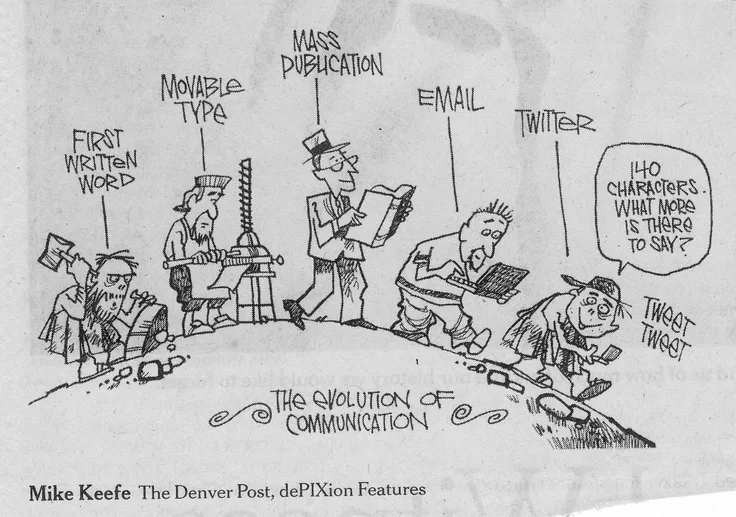
This is language evolution-the continuous, inevitable process through which all living languages change in their sounds, grammar, vocabulary, and usage over time. Language evolution is not decay, corruption, or progress. It is the natural condition of every language that has living speakers.
Understanding how and why languages evolve illuminates not only the history of human communication but the dynamics of culture, identity, and social change that drive linguistic transformation.
"Language is not an abstract construction of the learned, or of dictionary makers, but is something arising out of the work, needs, ties, joys, affections, tastes, of long generations of humanity, and has its bases broad and low, close to the ground." - Walt Whitman
How Do Languages Evolve? The Mechanisms of Change
Language change occurs through several distinct but interacting mechanisms, each operating at a different level of linguistic structure. These mechanisms form feedback loops that reinforce one another, making language an endlessly dynamic system.
Sound Change (Phonological Evolution)
The sounds of a language change systematically over time, following patterns that historical linguists have documented across thousands of languages.
The Great Vowel Shift is one of the most dramatic documented examples. Between roughly 1400 and 1700, the long vowels of English underwent a systematic transformation:
- The word "bite" was once pronounced with the vowel sound of modern "beet"
- "House" was once pronounced like "hoose"
- "Name" was once pronounced like "nahm-uh"
- "Meat" and "meet," which were once pronounced differently, merged into the same vowel sound
This shift was not random. It was a chain reaction: when one vowel moved to a new position in the mouth, it pushed neighboring vowels to move as well, creating a systematic reorganization of the entire vowel system over several centuries.
Common patterns of sound change include:
Lenition (weakening): Consonants become "weaker" over time. The Latin "p" in ripa (riverbank) became the "v" in Spanish riba and the silent letter in French rive. Hard stops soften into fricatives, fricatives soften into approximants, and approximants disappear entirely.
Assimilation: Sounds become more similar to their neighbors. The Latin prefix in- becomes im- before p and b (impossible, imbecile) because the mouth prepares for the upcoming lip consonant.
Vowel reduction: Unstressed vowels tend to reduce toward a neutral "schwa" sound. The distinct vowels in the suffixes of "photograph," "photography," and "photographic" demonstrate how stress position affects vowel quality.
Final consonant deletion: Languages frequently lose consonants at the ends of words. The final -s in French (which still appears in spelling but is usually silent) was once pronounced.
Grammar Change (Morphosyntactic Evolution)
The grammatical structure of languages transforms over time through processes that are slower but more profound than sound changes.
From synthetic to analytic: Many languages show a long-term trend from synthetic structure (meaning expressed through word-internal changes like inflections) to analytic structure (meaning expressed through word order and separate function words).
- Old English had extensive case marking: se cyning (the king, nominative), thone cyning (the king, accusative), thaes cyninges (the king's, genitive)
- Modern English has almost entirely abandoned case marking in favor of word order: "The king saw the bishop" vs. "The bishop saw the king"
Grammaticalization: Content words gradually become function words and then grammatical markers:
- The verb "go" in "I'm going to eat" has been grammaticalized into a future tense marker
- The noun "body" in "nobody" and "everybody" has been grammaticalized into an indefinite pronoun element
- The verb "have" in "I have eaten" has been grammaticalized from a possession verb into a perfect aspect marker
Reanalysis: Speakers reinterpret the structure of existing expressions, creating new grammatical patterns:
- "A napron" was reanalyzed as "an apron" (the n moved from the noun to the article)
- "An ewt" became "a newt" (the n moved from the article to the noun)
- "Hamburger" (from Hamburg + -er) was reanalyzed as ham + burger, producing "cheeseburger," "veggie burger," and other compounds
Vocabulary Change (Lexical Evolution)
Vocabulary is the most rapidly changing level of language. New words are constantly being created, existing words are changing meaning, and old words are falling out of use.
Sources of new vocabulary:
- Borrowing: English has borrowed words from over 350 languages. "Tsunami" (Japanese), "algebra" (Arabic), "piano" (Italian), "kindergarten" (German), "yoga" (Sanskrit)
- Compounding: Combining existing words to create new ones: "smartphone," "livestream," "doomscrolling"
- Derivation: Adding prefixes and suffixes: "unfriend," "retweet," "de-platforming"
- Blending: Merging parts of two words: "brunch" (breakfast + lunch), "smog" (smoke + fog), "podcast" (iPod + broadcast)
- Acronymy: Creating words from initial letters: "radar" (radio detection and ranging), "laser," "scuba"
- Semantic extension: Existing words acquire new meanings: "mouse" (computer device), "tweet" (social media post), "cloud" (data storage). The process by which words change meaning is one of the most visible signs of language evolution in everyday life
Why Do Languages Change?
The mechanisms of change describe how languages evolve. The causes describe why.
1. Imperfect Transmission Between Generations
The single most fundamental cause of language change is that children do not learn language perfectly from their parents. Language acquisition involves the child constructing a grammar from the input they receive, and that construction is never identical to the grammar in the parents' heads.
The slight differences between the grammar a child hears and the grammar they construct accumulate across generations, producing gradual change.
This process is analogous to genetic mutation in biological evolution: small, random variations introduced at each generational transfer accumulate over time into significant structural changes. In this sense, language change is a form of emergence-complex, large-scale transformation arising from countless small, local interactions.
"Language moves down time in a current of its own making. It has a drift." - Edward Sapir
2. Language Contact
When speakers of different languages interact-through trade, migration, conquest, colonization, or proximity-their languages influence each other:
- Lexical borrowing: Languages acquire words from other languages (the most common form of contact influence)
- Structural borrowing: Languages may adopt grammatical patterns from other languages
- Pidginization: Intense contact can produce simplified hybrid languages (pidgins) used for communication between groups
- Creolization: When pidgins become the native language of a community, they rapidly develop full grammatical complexity (creoles)
English is one of the most dramatically contact-influenced languages in history, having been shaped by Celtic, Latin, Old Norse, Norman French, and dozens of other languages through successive waves of invasion, colonization, and cultural exchange. The forces of globalization continue to intensify language contact in the modern era.
3. Social Differentiation
Language change is driven by the social functions of language variation. People use language not just to communicate content but to signal social identity-their age, region, class, education, ethnicity, and group membership. The way language shapes thought and social perception gives variation its power as an identity marker.
"Language is the road map of a culture. It tells you where its people come from and where they are going." - Rita Mae Brown
Prestige-driven change: When a particular linguistic variant is associated with a prestigious social group, other speakers may adopt it to signal alignment with that group. The spread of certain pronunciations, vocabulary items, and grammatical constructions often follows social prestige hierarchies.
Identity-driven change: Conversely, groups may deliberately differentiate their speech from other groups to maintain distinct identity. Adolescents develop slang partly to signal generational identity and distinction from adults. Regional dialects persist partly because they signal local belonging.
Covert prestige: Some linguistic variants carry covert prestige-they are not valued by mainstream society but are valued within specific communities. Non-standard dialect features, slang, and vernacular forms persist and spread through communities where they signal authenticity, toughness, or in-group solidarity.
This gradual shifting of what counts as acceptable speech is a form of norm drift, where standards evolve without any deliberate decision.
4. Efficiency Pressures
Languages tend to evolve toward communicative efficiency, balancing the needs of speakers (who prefer less effort) and listeners (who need clarity):
- Frequently used words tend to become shorter over time ("automobile" to "auto" to "car")
- Redundant grammatical features tend to be lost (English lost most of its case endings because word order already conveyed the information)
- Ambiguous structures tend to be resolved through new distinctions or additional markers
5. Random Variation (Drift)
Some language change is essentially random-the linguistic equivalent of genetic drift. Small variations in pronunciation, word choice, or grammar spread through a community not because they are more efficient or more prestigious but simply because they happened to be produced by speakers who were heard and imitated by others.
The role of randomness in language echoes broader patterns of linguistic relativity, where arbitrary differences between languages correspond to real differences in how speakers perceive the world.
| Cause | Mechanism | Speed | Example |
|---|---|---|---|
| Imperfect transmission | Children's grammar slightly differs from parents' | Slow, constant | Gradual loss of English case endings |
| Language contact | Borrowing from other languages | Variable | English borrowing "sushi," "wifi" |
| Social differentiation | Speakers marking identity through language | Fast for slang, slow for grammar | Spread of "like" as discourse marker |
| Efficiency | Simplification of redundant features | Slow | Contraction of "going to" to "gonna" |
| Random drift | Variation without social motivation | Unpredictable | Regional pronunciation variants |
How Fast Do Languages Evolve?
The speed of language change varies enormously depending on which feature is changing and what social forces are at play.
Rapid Change (Years to Decades)
- Slang and informal vocabulary: New slang terms emerge and disappear within years. "Groovy" (1960s), "radical" (1980s), "phat" (1990s), "based" (2010s-2020s) each had relatively brief periods of widespread use.
- Technology vocabulary: Technology creates new words rapidly: "google" as a verb, "tweet," "zoom" (as a verb for video conferencing)
- Social media-accelerated change: Social media has dramatically accelerated certain types of vocabulary change by enabling new terms to reach millions of speakers within days
Moderate Change (Decades to Centuries)
- Pronunciation: Vowel shifts, consonant changes, and stress patterns typically change over decades to centuries
- Grammatical features: New grammatical constructions (like the progressive "I'm going to" as future tense) typically take centuries to fully establish
Slow Change (Centuries to Millennia)
- Core vocabulary: Basic words for body parts, numbers, family relationships, and natural phenomena change slowly across most languages
- Fundamental word order: The basic word order of a language (Subject-Verb-Object vs. Subject-Object-Verb, etc.) changes extremely rarely
Factors That Accelerate Change
- Language contact: Intense contact with other languages accelerates borrowing and structural change
- Social disruption: Wars, migrations, pandemics, and revolutions can accelerate language change by disrupting transmission patterns
- Urbanization: Cities concentrate diverse speakers, increasing contact-driven change
- Technology: New communication technologies create new contexts that demand new language
Factors That Slow Change
- Literacy and standardization: Written language changes more slowly than spoken language because texts preserve earlier forms
- Formal education: Schools teach standard forms that resist change
- Isolation: Geographically or socially isolated communities tend to preserve older forms
- Prestige conservation: Features associated with prestigious varieties are maintained longer
Can Language Evolution Be Stopped?
No. This is one of the most consistent findings in linguistics. Living languages always change. Attempts to prevent or reverse language change have never succeeded.
"Do you know what a foreign accent is? It's a sign of bravery." - Amy Chua
The History of Prescriptivism
Language purists (prescriptivists) have been lamenting language change for as long as recorded language has existed:
- In the 1st century CE, Roman grammarians complained about the "corruption" of classical Latin
- In 17th-century France, the Academie Francaise was founded to "fix" French and prevent it from changing-French has continued to change for four centuries despite their efforts
- In 18th-century England, Jonathan Swift proposed an academy to prevent English from deteriorating-English has changed dramatically since
- Today, commentators complain about "literally" being used for emphasis, about "they" as a singular pronoun, about text-speak and emoji replacing "proper" English
In every case, the language has changed regardless of objections. Prescriptivist efforts can slow certain visible changes (by stigmatizing non-standard forms in formal contexts) but cannot prevent the underlying evolution of the language.
Why Stopping Change Is Impossible
- Language exists in the minds of its speakers, not in dictionaries or grammar books. As long as new generations acquire language from their environment (rather than from prescriptive texts), slight variations will be introduced at every generational transfer.
- Language serves social functions (identity signaling, in-group marking, creativity) that require variation and change. A language that could not change could not adapt to new social realities.
- Only dead languages stop evolving. Latin stopped changing when it stopped having native speakers. Its living descendants (French, Spanish, Italian, Portuguese, Romanian) have never stopped changing.
Is Language Evolution Decay or Progress?
Neither. This is one of the most important and counterintuitive insights of modern linguistics.
The Decay Myth
The belief that language change represents decline is ancient and persistent but linguistically unfounded:
- English did not "lose" its case system; it replaced case marking with word order, a system that is equally expressive
- Languages that simplify in one area typically complexify in another: English lost case endings but developed a more rigid and information-carrying word order
- Every historical period's speakers have believed their language was deteriorating; yet every subsequent generation has communicated as effectively as its predecessors
The Progress Myth
The opposite belief-that languages are becoming more sophisticated or efficient-is equally unfounded:
- There is no evidence that modern languages are more expressive or more efficient than ancient ones
- Languages that appear "simpler" in grammar (like English) compensate with complexity in other areas (vocabulary, idiom, word order rules)
- All languages, at every point in their history, are fully adequate for the communicative needs of their speakers
The Neutral Change View
Modern linguistics treats language change as neutral adaptive evolution. Languages change because their speakers and their social environments change. Each stage of a language is a fully functional communication system adapted to the needs of its speakers at that time.
Judging one stage as better or worse than another is like judging whether a fish is better than a lizard-they are adapted to different environments, not arranged on a scale of quality.
How Do New Languages Form?
New languages emerge through two primary processes.
Divergence
When a speech community is divided-by geography, politics, or social separation-the two resulting communities evolve independently. Over time, the accumulated differences make the two varieties mutually unintelligible, at which point they are classified as separate languages.
This is how Latin became French, Spanish, Italian, Portuguese, and Romanian. It is how Proto-Germanic became English, German, Dutch, Swedish, Norwegian, Danish, and Icelandic. The process is gradual: at no point did a parent stop speaking Latin and a child start speaking French.
The change accumulated over centuries until the cumulative differences crossed the threshold of mutual intelligibility.
Contact Languages
New languages can also emerge from contact situations where speakers of different languages need to communicate:
Pidgins: Simplified languages developed for communication between groups that share no common language. Pidgins have reduced grammar, limited vocabulary, and are nobody's native language.
Creoles: When a pidgin becomes the primary language of a community (typically when children grow up speaking it as their first language), it rapidly develops full grammatical complexity. Haitian Creole, Tok Pisin, and many other creole languages emerged through this process.
Mixed languages: In some cases, languages merge more evenly, combining the grammar of one language with the vocabulary of another (Michif, a mixture of Cree and French, is a well-documented example).
Can We Predict Language Evolution?
Partially. Historical linguistics has identified patterns and tendencies in language change that allow general predictions, though specific changes remain unpredictable.
Predictable Tendencies
- Languages with complex inflectional morphology tend to simplify it over time (but may develop new complexity elsewhere)
- Languages in heavy contact situations tend to borrow vocabulary first, then grammatical features
- Frequently used words tend to become shorter and less formally articulated
- Sound changes tend to follow certain common pathways (certain consonant shifts are far more common than their reverse)
- Grammaticalization tends to proceed in consistent directions (verbs become auxiliaries become grammatical markers)
Unpredictable Specifics
- Which specific words will enter or leave the language
- The exact timing and rate of specific changes
- Which of several possible changes will actually occur in a given language
- How social factors will interact with structural tendencies
The Internet's Effect on Language Evolution
The internet is accelerating certain types of language change while potentially slowing others:
Accelerating factors:
- Rapid spread of new vocabulary through social media, where internet culture generates novel expressions at unprecedented speed
- Increased contact between speakers of different languages and dialects
- New communication contexts (texting, messaging, social media) that generate new linguistic forms, including meme culture as a vehicle for linguistic innovation
- Reduced gatekeeping by prescriptive authorities
Potentially slowing factors:
- Increased exposure to written standard language
- Global communication that may level regional differences
- Spell-checkers and autocorrect that enforce standard forms
Whether the internet will produce net acceleration or deceleration of language change is an open empirical question that linguists are actively studying.
Language evolution is not something that happens to language from the outside. It is what language is-a living, changing, adaptive system shaped by every speaker who uses it.
The English you speak today is the product of thousands of years of continuous evolution, and the English your grandchildren will speak will be different again. The only constant in the history of human language is change itself.
"Language is a city to the building of which every human being brought a stone." - Ralph Waldo Emerson
What Research Shows About Language Evolution
The scientific study of language change has been transformed over the past 50 years by computational methods, neurolinguistics, and large-scale corpus analysis.
William Labov (University of Pennsylvania), widely regarded as the founder of sociolinguistics, revolutionized the study of language change through his fieldwork on Martha's Vineyard (1963) and in New York City (1966).
His Martha's Vineyard study found that younger islanders were actually increasing the distinctiveness of their local dialect features - specifically the centralization of diphthongs in words like "house" and "right" - as a social response to the tourist industry's encroachment on island identity.
Speakers who identified most strongly as Vineyarders and who had chosen to remain on the island rather than pursue opportunities on the mainland showed the strongest centralization.
Labov demonstrated that language change is not random phonological drift but is socially motivated: people use language variation to perform social identity and respond to perceived threats to group belonging.
His New York City study extended this to show that language variation correlates systematically with social class, style, and prestige orientation.
Steven Pinker (Harvard), in The Language Instinct (1994) and Words and Rules (1999), synthesized the case that human language capacity is partly innate - the product of natural selection on the human lineage over hundreds of thousands of years.
Pinker's most influential contribution to language evolution research is his analysis of the English past tense system, which distinguishes regular verbs (add -ed) from irregular verbs (learned through memorization).
He showed that irregular verbs are the oldest and most frequently used verbs in English - exactly the pattern expected if frequency of use slows the regularization process.
High-frequency irregular forms like "went" (irregular past of "go") survive because they are encountered too often for speakers to fail to learn them; low-frequency irregulars steadily regularize over generations.
This research connected the timescales of individual language learning to the timescales of language change.
Noam Chomsky's theory of Universal Grammar, developed from the late 1950s onward, proposed that all human languages share a common underlying structural architecture - a "language acquisition device" that allows children to acquire any human language from limited input.
While highly controversial and significantly revised over decades, Chomsky's framework generated a productive research program in cross-linguistic typology: identifying structural features that appear in all or nearly all human languages (subject prominence, recursion, noun-verb distinctions) and features that vary systematically.
The typological work of Joseph Greenberg (1963), identifying 45 cross-linguistic "universals," established that language variation is not random but is constrained by universal cognitive and processing pressures.
Understanding what is universal about language helps clarify what changes when languages evolve: the surface features are highly variable; the underlying computational constraints are remarkably stable.
Joan Bybee (University of New Mexico), in Language Change (2015) and earlier work, established the "usage-based" model of language change that has become dominant in contemporary linguistics.
Bybee demonstrated that language change is driven by frequency of use: frequently used forms are processed holistically (as chunks) and become phonologically reduced and grammatically simplified; infrequently used forms are processed analytically and maintain greater complexity.
This explains why function words (the, is, have) undergo dramatic phonological reduction ("gonna," "wanna," "'s gonna") while content words change more slowly.
Bybee's model makes language evolution predictable: the changes that are most likely to occur are those affecting the most frequently used elements of the language.
Real-World Case Studies in Language Evolution
The Great Vowel Shift and social stratification: The Great Vowel Shift, which reshaped English pronunciation between approximately 1400 and 1700, was not a uniform process.
Historical linguists including David Crystal have documented that the shift spread from middle-class speakers in London outward - both geographically (to other regions of England) and socially (upward to the aristocracy and downward to the working class).
The mechanism was prestige-based imitation: middle-class speakers adopted pronunciation features that distinguished them from lower-class speech; upper-class speakers eventually adopted these features; lower-class speakers later adopted them as the prestigious forms.
This layered adoption pattern is preserved in the dialects of areas that were relatively isolated during the shift - parts of northern England, Scotland, and Appalachia - which retain older vowel patterns that predated the shift.
Tok Pisin and the birth of a new language: Tok Pisin (from "talk pidgin") began as a pidgin contact language in Papua New Guinea in the late 19th century, emerging from the need for communication between Melanesian workers from different language groups and English-speaking colonial administrators.
By the mid-20th century, children in mixed-language communities were growing up speaking Tok Pisin as their first language.
The process of creolization that followed is one of the most studied examples of rapid language evolution: within a generation, the simplified pidgin acquired full grammatical complexity - tense marking, aspect distinctions, relative clauses, evidential markers - that the pidgin had lacked.
Tok Pisin is now one of Papua New Guinea's three official languages, spoken by an estimated 4-5 million people.
The speed of grammaticalization in Tok Pisin - features that took centuries to develop in older languages appearing within decades - confirmed linguist Derek Bickerton's "language bioprogram" hypothesis: that children's language acquisition mechanisms impose a universal grammatical structure even on impoverished input.
Hebrew revival as deliberate language evolution: The revival of Hebrew as a spoken vernacular language in late 19th and early 20th century Palestine is the only documented case of a language with no living native speakers being successfully revived as a full daily language.
The effort was driven primarily by Eliezer Ben-Yehuda (1858-1922), who moved to Palestine in 1881 committed to speaking only Hebrew and raising the first native Hebrew-speaking child in modern times.
Ben-Yehuda systematically coined thousands of new words for modern concepts - newspaper, dictionary, dictionary entry, towel, pronunciation - by applying classical Hebrew morphological patterns to new roots.
The Hebrew Language Academy (founded 1953) continues this work, coining terms for technologies and cultural concepts that did not exist in ancient Hebrew.
Hebrew's evolution from a liturgical language to a full modern vernacular within 50 years demonstrates that deliberate human agency can accelerate language change dramatically - but only under conditions of strong social motivation and community-wide coordination.
Internet slang and accelerated lexical evolution: The period from 2005 to 2025 has produced the most rapid documented vocabulary expansion in English history, driven by social media platforms creating new linguistic communities with intense feedback loops.
Linguist John McWhorter (Columbia University), in Nine Nasty Words (2021) and Talking Back, Talking Black (2017), has documented how African American Vernacular English (AAVE) has served as the primary source for mainstream English slang adoption through social media - words like "woke," "lit," "flex," "shade," "slay," and "lowkey" originating in Black communities and spreading to mainstream usage within months rather than the decades such diffusion previously required.
McWhorter argues this represents both evidence of AAVE's linguistic vitality and a case study in cultural appropriation through language: the communities who create linguistic innovations rarely receive cultural or economic credit when those innovations are adopted by dominant groups.
The Science Behind Language Change Mechanisms
Computational linguistics has transformed the scientific study of language change by enabling analysis at scales that were previously impossible. The Google Books Ngram Viewer, built on a corpus of over 5 million digitized books spanning 1500-2019, allows tracking of word and phrase frequencies across centuries.
Research using this corpus (Michel et al., Science, 2011) established "culturomics" - the quantitative study of cultural change through text analysis.
Key findings: words enter and leave the language at measurable rates; famous people's names reach peak cultural visibility faster now than in previous centuries but also fade faster; and the linguistic traces of historical events (wars, famines, technological changes) are visible in corpus data with remarkable precision.
Neurolinguist Angela Friederici (Max Planck Institute for Human Cognitive and Brain Sciences) has used fMRI and EEG to study how the brain processes syntactic structure - the rules governing word order and grammatical relationships.
Her research established that two brain areas are particularly important: Broca's area (in the left frontal lobe) for syntactic processing, and the posterior superior temporal sulcus for integrating syntactic and semantic information.
The findings are relevant to language evolution because they suggest that the neural architecture supporting language has specific computational properties - particular types of syntactic complexity are harder to process and more likely to undergo simplification over time - which partially explains why certain grammatical changes are more common than others across languages.
Evolutionary linguist Simon Kirby (University of Edinburgh) has run a series of "iterated learning" experiments that simulate language evolution in the laboratory.
In these experiments, participants learn an artificial language, then teach it to a new participant, who teaches it to another, and so on through multiple "generations." The artificial languages consistently evolve toward greater systematicity (regular mappings between form and meaning) and greater compressibility (shorter, more economical expression) even when participants are not consciously trying to improve the language.
Kirby's experiments provide the clearest experimental evidence that cultural transmission - the process of language being learned and re-learned by successive generations - is itself a powerful force for language evolution, driving languages toward properties that make them more learnable and more expressive without any deliberate design.
Sources & Further Reading
Aitchison, J. (2013). Language Change: Progress or Decay? 4th ed. Cambridge University Press. View source
Campbell, L. (2013). Historical Linguistics: An Introduction. 3rd ed. MIT Press. View source
Labov, W. (1994). Principles of Linguistic Change, Vol. 1: Internal Factors. Blackwell. View source
Thomason, S.G. & Kaufman, T. (1988). Language Contact, Creolization, and Genetic Linguistics. University of California Press. View source
Trask, R.L. (2010). Why Do Languages Change? Cambridge University Press. DOI: 10.1017/CBO9780511841538
Bybee, J. (2015). Language Change. Cambridge University Press. DOI: 10.1017/CBO9781139096768
McWhorter, J. (2001). The Power of Babel: A Natural History of Language. Times Books. View source
Crystal, D. (2011). Internet Linguistics: A Student Guide. Routledge. View source
Pinker, S. (1994). The Language Instinct: How the Mind Creates Language. William Morrow. View source
Mufwene, S. (2001). The Ecology of Language Evolution. Cambridge University Press. DOI: 10.1017/CBO9780511612862