
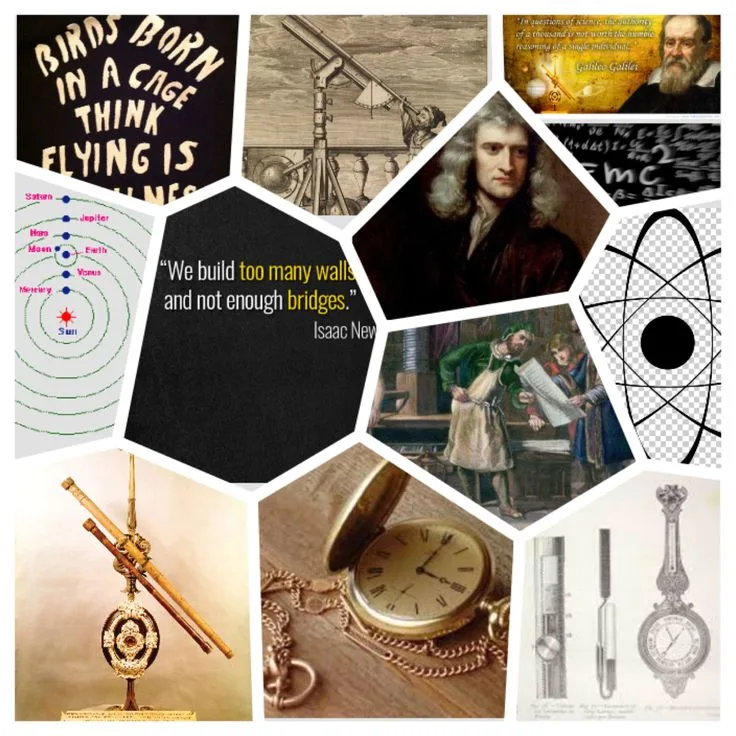
Events: In 1543, a Polish church administrator published a book arguing that the Earth moved around the Sun. In 1687, an English mathematician published a book demonstrating that the same equation governing a falling apple governed the orbit of the Moon.
Between these two dates, the European framework for understanding nature was dismantled and rebuilt.
Aristotelian natural philosophy - the system that had organized European thought for fourteen centuries - was replaced by a new combination of systematic observation, controlled experiment, and mathematical description that we now call science.
The term "Scientific Revolution" is both useful and contested. It implies a sudden rupture, a before and after, a single identifiable event.
The historian Steven Shapin, in The Scientific Revolution (1996), opened his book with a sentence that captures the ambiguity: "There was no such thing as the Scientific Revolution, and this is a book about it." Shapin's irony is deliberate.
The developments between 1543 and 1687 were not sudden; they built on centuries of Islamic scholarship, recovered Greek texts, Renaissance humanism, and medieval natural philosophy.
The boundaries - who counts as a revolutionary, which discoveries were genuinely novel, what was continuous and what was rupture - are all contested.[10] And yet something did happen in this period that changed the intellectual world permanently, and historians continue to debate what that something was.[9]
Thomas Kuhn, in The Structure of Scientific Revolutions (1962), provided the most influential theoretical framework for understanding it: paradigm shifts, in which anomalies accumulate within an established framework until a crisis triggers a revolutionary transition to a new one.[8]
Copernican heliocentrism, Newtonian mechanics, and Lavoisier's chemistry were his canonical cases. Kuhn's book, itself a kind of revolution in the history and philosophy of science, shaped how we think about scientific change - and has itself been extensively criticized, refined, and extended.
"And yet it moves." - Attributed to Galileo Galilei after his abjuration before the Inquisition, 1633. Likely apocryphal, but it captures the intellectual drama of an era in which observation was beginning to take precedence over authority.
| Figure | Period | Key Contribution |
|---|---|---|
| Copernicus | 1543 | Heliocentric model of the solar system |
| Tycho Brahe | 1570s-1600 | Precise astronomical observations; supernova discovery |
| Galileo | 1609-1632 | Telescope; support for heliocentrism; laws of motion |
| Kepler | 1609-1619 | Three laws of planetary motion |
| Harvey | 1628 | Discovered circulation of blood |
| Descartes | 1630s-1640s | Mechanical philosophy; analytic geometry |
| Newton | 1687 | Laws of motion and universal gravitation |
| Bacon | 1620 | Inductive scientific method; empiricism |
| Vesalius | 1543 | De Humani Corporis Fabrica; human anatomy from dissection |
| Boyle | 1660s | Experimental chemistry; Boyle's Law; Royal Society |
Key Definitions
Paradigm shift: Thomas Kuhn's term for a revolutionary transformation in the foundational assumptions and methods of a scientific field, as distinct from the normal cumulative growth of knowledge within an established framework.
Inductive method: The approach to knowledge championed by Francis Bacon, in which general principles are derived from systematic accumulation of observations, as opposed to the deductive Scholastic method of deriving conclusions from established authorities.
Heliocentrism: The cosmological model, revived and mathematized by Copernicus, placing the Sun at the center of the solar system, with the Earth and other planets orbiting it.[1]
Natural philosophy: The early modern predecessor of what we now call natural science - the systematic inquiry into the nature of the physical world. The term "scientist" was not coined until 1833 (by William Whewell).
Mechanical philosophy: The view, associated with Descartes and others, that nature is fundamentally a machine - a system of material bodies interacting through contact and motion, explicable in purely mechanical terms, without final causes or vital spirits.
Empiricism: The epistemological position that knowledge is derived primarily from sensory experience and observation rather than reason alone, underpinning the experimental orientation of the new science.
The Copernican Revolution
Before Copernicus: The Ptolemaic World
The cosmological system that Copernicus overturned had been formalized by the Greek mathematician Claudius Ptolemy in the second century CE, in his Almagest - the great astronomical synthesis of antiquity.
Ptolemy's geocentric model placed the Earth at the center of the cosmos, with the Sun, Moon, planets, and fixed stars moving around it in combinations of circular orbits (deferents and epicycles).
The model was not merely a philosophical proposition; it was a highly developed mathematical system capable of predicting planetary positions with reasonable accuracy, and it had been integrated into Aristotelian physics and Christian theology in a synthesis elaborated by Thomas Aquinas in the thirteenth century.
The heavens were the realm of perfect, unchanging circular motion; the Earth was the corrupt sublunar world. This synthesis was intellectually powerful and institutionally entrenched.
It was also increasingly unsatisfactory. Ptolemy's system required numerous adjustments - equants, epicycles, deferents of varying sizes - to match observations, and by the sixteenth century the accumulated discrepancies had become embarrassing.
The reform of the calendar, urgently needed by the Catholic Church, required improved astronomical predictions, creating practical pressure for better models.
Copernicus and Heliocentric Astronomy
Nicolaus Copernicus (1473-1543), a Polish church canon educated in Italian universities, spent decades developing a heliocentric alternative to Ptolemy. His De Revolutionibus Orbium Coelestium (On the Revolutions of the Celestial Spheres) was published in Nuremberg in 1543, reportedly reaching Copernicus's hands as he lay dying.
The book placed the Sun at the center, made the Earth rotate daily on its axis and orbit the Sun annually, and explained the apparent retrograde motion of planets as a perspective effect of the Earth's own orbital motion - rather than requiring the elaborate epicycles Ptolemy had needed.
Copernicus dedicated the book to Pope Paul III and framed his argument carefully, presenting heliocentric calculations as an improvement in astronomical prediction. An unsigned preface - added by the Lutheran theologian Andreas Osiander without Copernicus's explicit consent - suggested the model was merely a computational device.
Whether Copernicus intended the heliocentric arrangement as a physical reality or a mathematical convenience has been debated, but his text suggests genuine belief in its physical truth.
The book was not placed on the Index of Prohibited Books until 1616, when Galileo's aggressive advocacy forced the Church's hand.
Brahe and Kepler
Tycho Brahe (1546-1601), working at his observatory Uraniborg on the Danish island of Hven, was the greatest naked-eye astronomer of the pre-telescope era.
His observations of a new star in 1572 - what we now recognize as a supernova - demonstrated that the heavens were not immutable, directly contradicting the Aristotelian distinction between the perfect heavens and the changing Earth.
Despite accepting Copernican planetary order in many respects, Brahe rejected heliocentrism and proposed the Tychonic system: the planets orbit the Sun, but the Sun orbits a stationary Earth.
Johannes Kepler (1571-1630), who served briefly as Brahe's assistant in Prague and gained access to Brahe's peerless observational data after the latter's death in 1601, used those data to derive his three laws of planetary motion.
The first law (published in Astronomia Nova, 1609): planets move in ellipses, with the Sun at one focus - a decisive break with the perfect circle that had constrained all previous astronomy, Copernican included.
The second law: a line drawn from the Sun to a planet sweeps equal areas in equal times, meaning planets move faster when closer to the Sun. The third law (published in Harmonices Mundi, 1619): the square of a planet's orbital period is proportional to the cube of its mean distance from the Sun.
These laws accurately described planetary motion but offered no physical explanation. That explanation waited for Newton.
Galileo and Experimental Physics
Telescopic Discoveries
Galileo Galilei (1564-1642) made his first major contributions to the Scientific Revolution not through astronomy but through mechanics and methodology. His work at Padua on falling bodies and accelerated motion, using inclined planes to slow acceleration to measurable rates, challenged Aristotelian physics on empirical grounds.
His famous demonstration - possibly apocryphal as a single Pisa tower event but certainly reflected in his published experiments - that heavy and light objects fall at the same rate directly contradicted the Aristotelian teaching that heavier objects fall proportionally faster.
In 1609, Galileo learned of the invention of the spyglass in the Netherlands and rapidly constructed his own instrument, achieving magnifications of up to 30x. Turning it to the sky beginning in late 1609 and through 1610, he made observations that shook the prevailing cosmology.
The Moon, rather than being a perfect smooth sphere, was covered with mountains, craters, and plains - the heavens were not perfectly smooth. Jupiter was orbited by four moons (now called Io, Europa, Ganymede, and Callisto), demonstrating that not all celestial bodies circled the Earth.
Venus showed a complete cycle of phases, like the Moon, which was inexplicable if Venus orbited the Earth but was perfectly consistent with Venus orbiting the Sun. Galileo published these findings in Sidereus Nuncius (Starry Messenger) in 1610, which created a sensation across Europe.[2]
The Trial
Galileo became the most prominent and aggressive advocate of Copernican heliocentrism in Europe.
In a series of letters on sunspots (1613) and on the relationship between scripture and natural philosophy (the "Letter to the Grand Duchess Christina," 1615), he argued that the Bible was not a guide to natural philosophy and that heliocentrism should be accepted as physical truth.
The Inquisition issued an injunction in 1616 requiring him not to hold or defend heliocentric doctrine.
Galileo's Dialogo sopra i due massimi sistemi del mondo (Dialogue Concerning the Two Chief World Systems), published in 1632 with explicit Church approval that was later judged to have been improperly obtained, presented the debate between Ptolemaic and Copernican systems as a dialogue among three characters.
The geocentrist character, Simplicio, was given arguments that resembled those of Pope Urban VIII - who had been Galileo's patron and friend - creating a perception of personal mockery that proved catastrophic.
Galileo was summoned to Rome, tried by the Inquisition in 1633, required to recant, and placed under house arrest at his villa in Arcetri near Florence, where he remained until his death in 1642.
During his house arrest he wrote Discorsi e dimostrazioni matematiche intorno a due nuove scienze (Two New Sciences, 1638), which laid the mathematical foundations for mechanics and the study of strength of materials.
The Body as a Machine: Vesalius and Harvey
The revolution in natural knowledge was not confined to the heavens. In the same year as Copernicus's De Revolutionibus, the Flemish anatomist Andreas Vesalius (1514-1564) published De Humani Corporis Fabrica (On the Fabric of the Human Body), a landmark in the history of medicine.[7]
By conducting systematic human dissections - which Galen, the authoritative ancient physician, had been unable to do in his era - Vesalius corrected over 200 anatomical errors Galen had committed by working only on animals.
The Fabrica was illustrated with extraordinary woodcuts by artists from Titian's studio, making the interior of the human body visually available to readers for the first time with precision and accuracy. Vesalius modeled a new epistemic standard: observation of nature itself, not deference to ancient authority.
William Harvey (1578-1657) extended this approach to physiology. In Exercitatio Anatomica de Motu Cordis et Sanguinis (1628), Harvey demonstrated through systematic quantitative argument that blood circulates continuously through the body - pumped by the heart, flowing out through arteries and returning through veins - rather than being continuously generated by the liver and consumed by the organs as Galen had taught.[6]
His calculation was elegant: the amount of blood the heart pumps per hour far exceeds the total blood in the body, so the blood must be recirculated rather than newly produced. This quantitative reasoning applied to a biological problem marked a decisive methodological advance.
Bacon, Descartes, and the New Method
Bacon's Inductive Program
Francis Bacon (1561-1626) did not contribute to the major scientific discoveries of the Scientific Revolution; his science was largely programmatic rather than practical. His significance lies in his articulation of a new vision for natural inquiry.
In Novum Organum (1620), he attacked the two main alternatives he saw: slavish deference to classical authorities (Aristotle above all) and mere collection of curiosities without systematic method.
Bacon proposed induction - the careful, systematic accumulation of observations, organized through a method of elimination and comparison, progressively yielding reliable generalizations.[3] The method was designed to identify the "forms" or causes underlying natural phenomena.
Bacon was equally significant as a theorist of the social organization of science. In New Atlantis (1627), a utopian fiction, he imagined Solomon's House - a research institution with specialized roles for experimenters, theorists, and those who apply knowledge to practical ends.
The vision anticipated the research university and the government science agency. Most importantly, Bacon insisted that natural knowledge had a purpose: the "relief of man's estate," the practical improvement of human life.
This utilitarian vision - in which knowledge was instrumentalized for human benefit - was a decisive break with the classical understanding of natural philosophy as contemplation.
Descartes and Rationalism
Rene Descartes (1596-1650) offered a radically different epistemological foundation.
In Discours de la methode (Discourse on Method, 1637) and Meditations on First Philosophy (1641), Descartes argued that certain knowledge could only be grounded in reason, starting from the irreducible certainty of one's own existence as a thinking thing (cogito ergo sum).[4]
His method of clear and distinct ideas - accepting only what is self-evidently true - led him to a mechanistic philosophy of nature: the physical world consists of matter in motion, operating by purely mechanical principles, entirely devoid of purposes, spirits, or vital forces.
This mind-body dualism - res cogitans (thinking substance) and res extensa (extended material substance) - created philosophical problems (how do mind and body interact?) that still reverberate, but the mechanistic vision of nature was enormously influential.
The Royal Society and Scientific Institutions
The institutional dimension of the Scientific Revolution is often underemphasized but was crucial to its success. Individual discoveries could be - and before the seventeenth century, often were - isolated and lost.
What sustained the new knowledge and enabled its cumulative growth was the creation of institutions for its production and transmission.
The Royal Society, founded in London in 1660 with Charles II as patron and including figures such as Robert Boyle, Christopher Wren, and Robert Hooke, institutionalized the empiricist program. Its motto, Nullius in verba (take nobody's word for it), declared the priority of experiment and observation over authority.
The Society's Philosophical Transactions, established in 1665 and still published today, was an early vehicle for what would become the system of peer review and scientific publication.
In France, Louis XIV's government established the Academie des Sciences in 1666, providing state support for scientific investigation and publication.
Robert Boyle (1627-1691) exemplified the new experimental ethos. His work with the air pump - conducted with the assistance of Robert Hooke - established what became known as Boyle's Law: at constant temperature, the pressure and volume of a gas are inversely proportional.
Boyle was also the author of The Sceptical Chymist (1661), which attacked the Aristotelian four-element theory and the Paracelsian three-principle theory and argued that chemistry should be grounded in experiment and hypothesis.
His methodological rigor and public experimental demonstrations - designed to be witnessed by credible observers - helped establish the social norms of experimental science.
"The book of nature is written in the language of mathematics." - Galileo Galilei, Il Saggiatore (The Assayer), 1623. This claim - that mathematical description is the proper language for natural inquiry - was among the most consequential methodological assertions of the Scientific Revolution.
Newton and the Completion of the Revolution
The Principia
Isaac Newton (1643-1727) spent a remarkable year and a half - from approximately late 1684 to early 1686 - writing Philosophiae Naturalis Principia Mathematica (Mathematical Principles of Natural Philosophy), though he had been working on the underlying problems for years.
The book was published in 1687, with Edmond Halley subsidizing publication after the Royal Society declined to fund it. It presented Newton's three laws of motion and his law of universal gravitation in a rigorous axiomatic format modeled on Euclidean geometry.[5]
The achievement was the unification of two realms of mechanics that had been treated separately since antiquity: terrestrial mechanics (the motion of objects on Earth) and celestial mechanics (the motion of planets and stars).
Newton demonstrated that the same inverse-square gravitational force that caused objects to fall toward Earth also caused the Moon to maintain its orbit, the planets to follow Keplerian ellipses, and the tides to follow a predictable cycle.
Edmond Halley applied Newton's theory to predict the return date of what became known as Halley's Comet, whose reappearance in 1758 was one of the most spectacular confirmations of the theory.
He explained the small deviations of the planets from perfect Keplerian orbits as perturbations caused by their mutual gravitational attractions.
Newton published Opticks in 1704, reporting experiments with prisms that showed white light was composed of a spectrum of colors. He proposed the corpuscular (particle) theory of light.
His independent development of calculus - simultaneously arrived at by Gottfried Wilhelm Leibniz, leading to a bitter and prolonged priority dispute - provided the mathematical language for the new physics.
Newton's Hidden Dimensions
The public face of Newton - the rational genius who "discovered" gravity, the model of Enlightenment reason - conceals a more complex figure. Newton spent years on alchemical experiments, writing more words on alchemy than on physics.
He devoted enormous effort to biblical chronology and prophecy, seeking to decode the Book of Revelation as a timeline of history. He believed himself to have been specially chosen to understand both the book of God's Word and the book of God's Works.
John Maynard Keynes, who purchased Newton's alchemical and theological manuscripts in 1936, concluded that Newton was "not the first of the age of reason" but "the last of the magicians." This complex picture is important: the Scientific Revolution was not a sudden, clean transition to secular rational inquiry, but a messy, overlapping process in which new methods coexisted with older forms of knowledge and belief.
Westfall's monumental biography Never at Rest (1980) deepened this picture.[15] Newton's private correspondence and manuscripts reveal a man consumed by religious heterodoxy - he was secretly an Antitrinitarian, which would have cost him his Cambridge fellowship had it been known - and obsessed with the idea that he had been granted unique access to the divine plan embedded in both scripture and nature.
The calculus and the Principia were, for Newton, not exercises in secular rationalism but the reading of God's mathematical mind.
Context, Debate, and Legacy
The Broader Context
Several factors are typically invoked to explain why the Scientific Revolution occurred in Europe and when it did.
The printing press, developed by Johannes Gutenberg around 1440, transformed the dissemination of knowledge: Copernicus benefited from printed astronomical tables; Galileo's discoveries spread across Europe within weeks; errors could be corrected publicly.
The Protestant Reformation, by fracturing the religious monopoly of Rome, created intellectual space that was sometimes - though not always - more hospitable to natural inquiry.
The Renaissance recovery of Greek texts, including ancient natural philosophers little known in the medieval West, provided fresh starting points. The Italian patronage system, which attached natural philosophers to courts as sources of spectacle and prestige, provided financial support outside the universities.
The sociologist Edgar Zilsel proposed in the 1940s that a crucial contribution came from artisans, craftsmen, and engineers - those whose knowledge was practical and quantitative - who came into contact with humanist scholars in Renaissance Italy.[13]
This "Zilsel thesis" has been debated and refined by historians including Paolo Rossi, William Eamon, and Pamela Smith, who have examined the intersection of learned and practical traditions in early modern Europe.
Smith's The Body of the Artisan (2004) demonstrated that practical knowledge of materials and craft processes contributed directly to the emerging experimental program, challenging the assumption that the Scientific Revolution was purely an intellectual affair of university scholars.[16]
Non-Eurocentric Perspectives
The assumption that the Scientific Revolution was exclusively a European phenomenon has been increasingly challenged.
The Islamic Golden Age - roughly the eighth through thirteenth centuries - produced substantial advances in mathematics, astronomy, optics, medicine, and natural philosophy, building on Greek foundations and extending them considerably.[11]
Ibn al-Haytham's Book of Optics (c. 1015) is a foundational text in experimental physics, predating the European tradition by centuries.
His method - proposing hypotheses, testing them experimentally, and revising theory in light of results - anticipates the Baconian program by six hundred years.
George Saliba and F. Jamil Ragep have argued that Islamic astronomical models directly influenced Copernicus, who would have had access to them through Latin translations.[12]
Ragep (2001) identified specific mathematical devices developed by Islamic astronomers at the Maragha observatory in the thirteenth century that appear in Copernicus's work without attribution - suggesting a more direct transmission of ideas than the traditional account acknowledges.
Parallel traditions of mathematical astronomy existed in India and China. The question of why an experimental tradition capable of self-sustaining cumulative growth did not emerge elsewhere in the way it did in Europe between 1550 and 1700 has generated extensive debate, with answers ranging from institutional (European universities, the printing press, patronage) to philosophical (the Baconian emphasis on utility, the Cartesian mechanistic program) to contingent historical circumstances.
What Changed - A Balance Sheet
The scope of the intellectual transformation is worth making concrete. H. Floris Cohen's The Scientific Revolution: A Historiographical Inquiry (1994) surveyed the historiography and identified several distinct dimensions of change: the development of a new empirical method; the mathematization of natural inquiry; the mechanization of the natural world; the institutionalization of knowledge-making; and the secularization of authority in natural knowledge.
Not all of these occurred simultaneously or uniformly.
The mathematization was perhaps the most decisive long-run transformation. Ancient Greek natural philosophy was largely qualitative; Aristotle's physics explained why bodies fell (to reach their natural place) but did not describe mathematically how fast they fell.
Galileo's work on free fall, Kepler's planetary laws, and Newton's mechanics all expressed regularities in mathematical equations - a practice that proved extraordinarily productive because it enabled prediction, comparison with observation, and the derivation of further consequences.[14]
The equation became the fundamental unit of scientific knowledge.
| Intellectual Tradition | View of Nature | Method | Authority |
|---|---|---|---|
| Aristotelian | Purposive, qualitative | Deductive logic | Classical texts |
| Renaissance Humanism | Classical revival | Philological | Recovered ancient texts |
| New Science (post-1600) | Mechanical, mathematical | Inductive experiment | Observation and mathematics |
| Later Enlightenment | Lawful, predictable | Mathematical modeling | Empirical validation |
Legacy: Disenchantment and Power
The Scientific Revolution's most immediate legacy was intellectual: it established a method that has proven extraordinarily productive. But Max Weber identified a more troubling dimension: the disenchantment of the world (Entzauberung der Welt).[17]
As nature was increasingly understood as a mechanical system operating by impersonal laws, the categories that had given it human meaning - purposes, spirits, qualities - were progressively expelled. The world became explicable but also, in Weber's analysis, a less hospitable place for meaning.
This process was not completed by the Scientific Revolution alone, but the mechanical philosophy and its mathematical successors laid crucial groundwork.
The Enlightenment drew on Newtonian mechanics as a model for the application of reason to human affairs, producing both the rational optimism of the philosophes and the social sciences that sought to find Newtonian laws governing society.
Voltaire's popularization of Newton in Elements de la Philosophie de Newton (1738) made Newtonian mechanics the prestige model for all subsequent rational inquiry - including the ambition, expressed by Locke, Montesquieu, and the American Founders, to construct political systems as rationally as Newton had constructed celestial mechanics.
The practical consequences were equally transformative. Peter Dear argues in The Intelligibility of Nature (2006) that the Scientific Revolution created a new relationship between natural knowledge and practical application that laid the foundation for the Industrial Revolution and, ultimately, for the technological civilization of the modern world.
The specific technologies of the eighteenth and nineteenth centuries were not direct applications of Newtonian mechanics, but the demonstrated power of systematic empirical inquiry created the cultural authority and institutional infrastructure for science-based technology that would transform every dimension of material life.
Whether science's extraordinary success at predicting and manipulating the natural world extends to human affairs, and at what cost, remains one of the most important questions the Scientific Revolution's legacy raises.
The aspiration to a science of society - visible in Condorcet, in Comte's sociology, in social Darwinism, in twentieth-century social engineering projects of all political varieties - has produced both genuine insight and catastrophic misapplication.
The revolution in method was real; the question of its proper domain remains open.
Sources & Further Reading
- Copernicus, N. (1543). De Revolutionibus Orbium Coelestium. Johann Petreius.
- Galilei, G. (1610). Sidereus Nuncius. Thomas Baglioni.
- Bacon, F. (1620). Novum Organum. John Bill.
- Descartes, R. (1637). Discours de la methode. Jan Maire.
- Newton, I. (1687). Philosophiae Naturalis Principia Mathematica. Royal Society.
- Harvey, W. (1628). Exercitatio Anatomica de Motu Cordis et Sanguinis. Fitzer.
- Vesalius, A. (1543). De Humani Corporis Fabrica. Johannes Oporinus.
- Kuhn, T.S. (1962). The Structure of Scientific Revolutions. University of Chicago Press.
- Shapin, S. (1996). The Scientific Revolution. University of Chicago Press.
- Cohen, H.F. (1994). The Scientific Revolution: A Historiographical Inquiry. University of Chicago Press.
- Saliba, G. (2007). Islamic Science and the Making of the European Renaissance. MIT Press.
- Ragep, F.J. (2001). Tusi and Copernicus: The Earth's motion in context. Science in Context, 14(1-2), 145-163.
- Zilsel, E. (2000). The Social Origins of Modern Science. Kluwer Academic Publishers.
- Dear, P. (2006). The Intelligibility of Nature: How Science Makes Sense of the World. University of Chicago Press.
- Westfall, R.S. (1980). Never at Rest: A Biography of Isaac Newton. Cambridge University Press.
- Smith, P.H. (2004). The Body of the Artisan: Art and Experience in the Scientific Revolution. University of Chicago Press.
- Weber, M. (1919). Wissenschaft als Beruf (Science as a Vocation). Duncker and Humblot.