
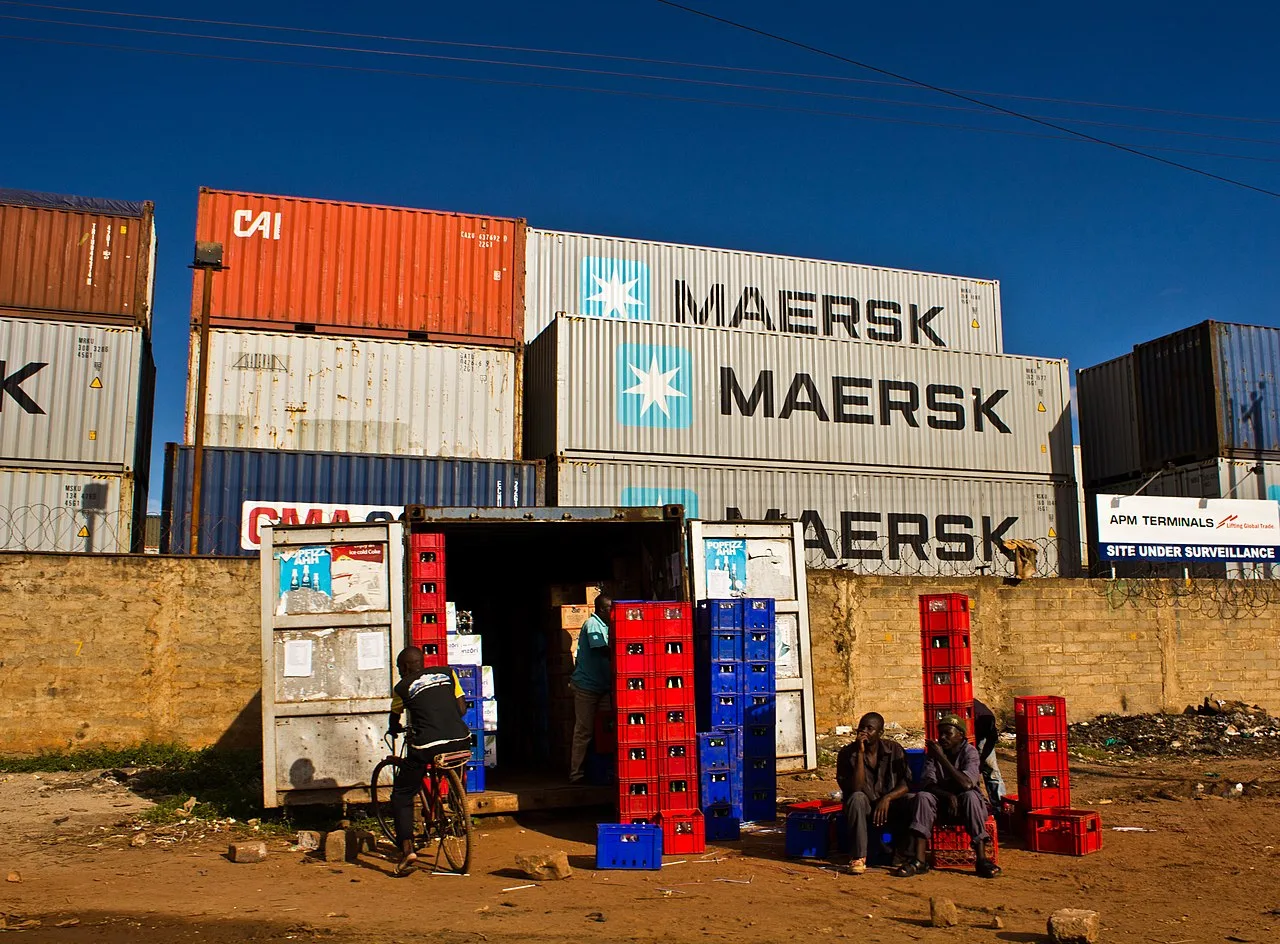
What is globalization? It is the growing integration of economies, societies, and cultures through cross-border flows of goods, services, capital, labor, and information. Trade and global supply chains helped lift hundreds of millions from extreme poverty, yet their gains and losses were uneven. The resulting damage to some manufacturing communities helped fuel a continuing political backlash against the system.
In 1990, a worker in China earned roughly $400 per year in current dollar terms. By 2019, that figure had risen to approximately $10,000.
Over roughly the same period, the World Bank estimates that 800 million Chinese people were lifted out of extreme poverty - defined as living on less than $1.90 per day - representing the fastest large-scale poverty reduction in recorded history.
Vietnam, Bangladesh, South Korea, and Taiwan followed trajectories that, while less dramatic, still transformed living standards in a generation.
Global life expectancy rose. Infant mortality fell. The material condition of hundreds of millions of people who had been born into destitution improved beyond what any previous economic era had achieved.
In the same period, median wages for American manufacturing workers stagnated in real terms. Communities built around steel mills in Pennsylvania and textile factories in North Carolina hollowed out. The Midwest's manufacturing belt became the Rust Belt.
Economists pointed to aggregate gains from trade and noted that consumers benefited from cheaper goods.[4] Workers who had lost their jobs and found nothing comparable afterward were not comforted by this.
By 2016, the politics of the countries that had designed and championed the global trading system - the United States, the United Kingdom, France, Germany - had turned sharply against it.
Globalization had delivered the most extraordinary poverty reduction in history and, simultaneously, had distributed its costs in ways that generated a political backlash that is still reshaping the global order.
Understanding how this happened requires tracing the arc from Ricardo's 1817 principle of comparative advantage through the Bretton Woods institutions of 1944, through the WTO and China's accession in 2001, through David Autor's landmark 2013 paper on the China shock, through the elephant curve that Branko Milanovic drew to show who won and who lost, and through Dani Rodrik's trilemma, which frames the choice that hyperglobalization ultimately forced.
The question is not whether globalization happened but whether it was managed well, and what the political economy of a next phase of economic integration should look like.
"The real trouble with the world economy is not that it has been globalized too much. It is that it has been globalized in the wrong way."
- Dani Rodrik, The Globalization Paradox (2011)
Key Definitions
Globalization: The increasing integration of economies, societies, and cultures through cross-border flows of goods, services, capital, labor, and information.
Comparative advantage: Ricardo's 1817 principle that even if one country can produce all goods more efficiently than another, both benefit from specializing in what they are relatively better at and trading.
Free trade: A trade policy regime with minimal tariffs, quotas, and other barriers to international exchange of goods and services.
WTO (World Trade Organization): Established in 1995, the successor to GATT; the international organization that sets rules for international trade and adjudicates trade disputes among 164 member countries.
GATT (General Agreement on Tariffs and Trade): The 1947 multilateral framework for reducing trade barriers; replaced by the WTO in 1995 after eight rounds of negotiations progressively reduced tariffs.
Bretton Woods institutions: The IMF and World Bank, established at the 1944 Bretton Woods conference to manage international monetary stability and development finance.
Foreign direct investment (FDI): Investment in productive assets in another country - building factories, acquiring companies - as distinct from portfolio investment in stocks and bonds.
Supply chain: The network of firms involved in producing a good, from raw materials through components to final assembly and distribution; modern supply chains typically span multiple countries.
China shock: The disruption to US manufacturing employment caused by the surge in Chinese imports following China's WTO accession in 2001; quantified by Autor, Dorn, and Hanson (2013).
Washington Consensus: The set of economic policy prescriptions advocated by international institutions for developing countries in the 1980s-90s: fiscal discipline, privatization, deregulation, and trade liberalization.
Hyper-globalization: The period roughly 1990-2008 during which trade-to-GDP ratios rose rapidly, financial flows accelerated, and global value chains became dominant features of manufacturing.
Elephant curve: Branko Milanovic's visualization of global income growth by percentile from 1988-2008, showing that gains were highest for Asia's emerging middle class and the global top 1%, with near-zero gains for the lower-middle class in rich countries.
Who Won and Who Lost: The Elephant Curve in Numbers
| Income percentile (globally, 1988-2008) | Cumulative real income growth | Who they are | Political implication |
|---|---|---|---|
| 1st-10th (poorest) | ~10-20% | Sub-Saharan Africa; rural South Asia | Gains real but small; still in extreme poverty |
| 40th-65th ("hump") | ~70-80% | China's urban workers; Southeast Asia; India's emerging middle class | Greatest beneficiaries of globalization; hundreds of millions lifted from poverty |
| 75th-85th (the "valley") | ~0-2% | Lower-middle class in rich countries; US/European manufacturing workers | Near-zero gains; factory jobs lost to imports; wages stagnant; source of political backlash |
| 90th-99th | ~50-60% | Upper-middle and professional class globally | Moderate to strong gains from financial and service trade |
| Top 1% | ~60-65% | Global capital owners; senior executives; financial sector | Strong gains from capital returns and globalized labor markets |
Source: Branko Milanovic, "Global Inequality" (2016); figures approximate across studies
What Globalization Means: Multiple Dimensions and Waves
Globalization is not a single phenomenon. It encompasses at least four distinct processes that can move at different speeds and in different directions simultaneously.
Trade globalization involves the international exchange of goods and services. The ratio of global trade to world GDP rose from approximately 27% in 1970 to about 60% at its peak around 2008.
A pair of running shoes contains rubber from Malaysia, synthetic fibers from China, foam components from Vietnam, design from Oregon, and logistics from multiple international providers.
This fragmentation of production into global value chains - where each stage of production is located wherever it is most efficient - is the distinctive feature of modern trade, different from earlier trade in final goods.
Financial globalization involves capital flowing across borders - from pension funds in New York buying Brazilian government bonds, to Chinese investors purchasing US Treasury securities, to multinational corporations routing profits through Irish subsidiaries.
The volume of cross-border financial flows grew far faster than trade during the hyper-globalization era. This financial integration transmitted the 2008 US financial crisis to every integrated economy in the world within months.
Migration involves people crossing borders. International migrants today number approximately 280 million - about 3.6% of the world population. Remittances from migrants to their countries of origin now total over $700 billion annually, exceeding official foreign aid by a factor of three.
Migration's political salience in wealthy countries has made it perhaps the most contested dimension of globalization.
Information flows - accelerated massively by the internet and digital platforms - transmit ideas, culture, news, and prices almost instantaneously. A protest in one country can inspire movements on another continent within days.
The Historical Waves
Globalization is not new. Economic historians distinguish several distinct waves. The first great wave of globalization, roughly 1870-1914, was driven by steamships, telegraphs, and the gold standard. World trade volumes relative to GDP in 1914 were comparable to the 1970s.
The interwar period (1914-1945) saw deglobalization: the destruction of World War I, the protectionist spiral of the 1930s, and World War II reduced trade, financial flows, and migration dramatically.
The post-WWII Bretton Woods era (1945-1973) saw managed globalization - trade expanding but capital flows restricted, exchange rates fixed, governments maintaining room to pursue full employment.
The hyper-globalization era from roughly 1980 to 2008 removed most remaining capital controls, extended trade liberalization to services and intellectual property, and integrated developing economies - particularly China - into global value chains.
Since 2008, trade-to-GDP ratios have stagnated, financial flows have partly reversed, and political forces are reshaping the geography of production.
The Theory of Gains From Trade
The intellectual foundation for the post-WWII trade liberalization project is David Ricardo's 1817 principle of comparative advantage - one of the most powerful and counterintuitive ideas in economics.[5]
Ricardo's insight can be illustrated with his original example. Suppose Portugal can produce both wine and cloth more efficiently than England - fewer hours of labor per unit. Does this mean England has nothing to offer Portugal? Ricardo showed it does not.
The key is relative efficiency: if Portugal is much more efficient at wine and only slightly more efficient at cloth, both countries gain by Portugal specializing entirely in wine, England in cloth, and trading.
Portugal frees up resources from cloth-making (where its advantage is smaller) and concentrates them in wine (where its advantage is larger). England gets cloth at a lower cost than it could produce itself, and Portugal gets more wine per unit of traded cloth than it could produce domestically.
The Heckscher-Ohlin trade model extended comparative advantage to factor endowments. Countries export goods that use their relatively abundant factors intensively. China, with an abundant supply of relatively low-wage labor, exports labor-intensive manufactured goods.
The United States, with abundant capital and skilled labor, exports capital-intensive goods and services. This model makes specific predictions about the pattern of trade that are broadly confirmed by data.
The Stolper-Samuelson theorem, a mathematical result derived from the Heckscher-Ohlin framework, has the most important distributional implications. It proves that trade raises the real return to the factor that is used intensively in a country's exports and lowers the real return to the factor used intensively in imports.
Applied to US-China trade: if the US exports capital-intensive goods and imports labor-intensive goods, trade should raise returns to US capital and reduce wages for US unskilled workers.
This theoretical prediction of distributional tension within rich countries proved, in hindsight, prescient - though standard models significantly underestimated the size and persistence of the adjustment costs.
The Institutions of Globalization
The post-World War II trading system was a deliberate construction, designed at Bretton Woods in July 1944 by 44 nations who understood that the protectionist beggar-thy-neighbor policies of the 1930s had deepened the Great Depression and contributed to the conditions for World War II.
The IMF was created to provide balance of payments financing and maintain exchange rate stability. The World Bank to fund reconstruction and development. The GATT, negotiated in 1947, established a multilateral framework for reducing trade barriers through successive negotiating rounds.
Eight GATT rounds, from the Geneva Round of 1947 to the Uruguay Round completed in 1994, progressively reduced average tariffs from over 40% to under 5% among developed economies.[10]
The WTO, which replaced GATT in January 1995, introduced several important innovations: a binding dispute settlement mechanism that allows countries to challenge other countries' trade policies before panels whose rulings are enforceable; coverage of trade in services under the General Agreement on Trade in Services; and coverage of intellectual property rights under TRIPS.
The WTO currently has 164 members representing over 98% of global trade.
China's WTO accession in December 2001, after 15 years of negotiations, was the single most consequential event in trade since Bretton Woods.
It committed China to a set of trade rules and tariff schedules, opened Chinese markets to foreign goods and investment, and in turn opened the US and European markets to Chinese exports with no special restrictions.
Its consequences for manufacturing employment in the United States were the subject of what became the most influential paper in economics of its era.
The Washington Consensus
John Williamson coined the term "Washington Consensus" in 1989 to describe ten policy recommendations that had reached consensus among the IMF, World Bank, and US Treasury for developing countries.[7]
The ten recommendations were: fiscal discipline, reordering of public expenditure priorities, tax reform, interest rate liberalization, competitive exchange rates, trade liberalization, liberalization of inflows of FDI, privatization, deregulation, and secure property rights.
The Washington Consensus became both a policy guide and, after the 1997 Asian financial crisis and 1998 Russian default, a term of abuse for ideological market fundamentalism that ignored institutional context and caused preventable suffering.
The China Shock: What the Research Found
The most influential paper in international economics in the first two decades of the twenty-first century is David Autor, David Dorn, and Gordon Hanson's "The China Syndrome: Local Labor Market Effects of Import Competition in the United States," published in the American Economic Review in 2013 (doi: 10.1257/aer.103.6.2121).[1]
The paper's methodological innovation was to use variation in Chinese import exposure across different US commuting zones - local labor market areas - to identify the causal effect of trade competition on employment and wages.
The key identifying variation was that different regions of the United States had historically specialized in different industries, so the surge in Chinese exports affected them differently.
By comparing how regions with high exposure to Chinese import competition fared relative to less-exposed regions - after controlling for other factors - Autor and colleagues could estimate the causal impact.
The headline finding: Chinese import competition was responsible for the loss of approximately 2.4 million US manufacturing jobs between 1999 and 2011. This was not offset by employment gains in other sectors in the same regions.
Workers displaced from manufacturing in high-exposure regions did not, as standard trade theory predicted, relatively quickly find comparable employment elsewhere.
Instead, they showed persistent earnings losses, higher rates of disability claim uptake, lower labor force participation, and reduced geographic mobility.
Ten years after initial exposure, many workers in heavily affected areas were still worse off than comparable workers in less-affected areas.
A parallel paper by Acemoglu, Autor, Dorn, Hanson, and Price (2016) extended the analysis to find that the net employment effect of the China trade shock on the broader US economy was approximately minus 2-2.4 million jobs between 1999 and 2011 - larger than initially estimated, because Chinese competition also affected upstream and downstream industries beyond direct manufacturing.[6]
The political implications of this research were recognized immediately. It provided rigorous quantification of what displaced manufacturing workers had been saying for decades: that trade adjustment was not working as advertised, that communities did not adjust smoothly, and that the aggregate gains from trade were being distributed very unequally.
The Global Poverty Record
While the China shock was disrupting US manufacturing communities, the same forces were producing extraordinary poverty reduction in the developing world.
The World Bank tracks the share of the world population living on less than $1.90 per day (2011 purchasing power parity) - its threshold for extreme poverty. In 1990, approximately 1.9 billion people, representing 36% of the world population, lived below this line.[9]
By 2015, that figure had fallen to approximately 700 million, representing 10%. By 2019, it had reached 648 million before the COVID-19 pandemic reversed some progress.
The primary driver of this reduction was China. China's economic reforms - beginning with agricultural decollectivization under Deng Xiaoping in the early 1980s and extending through manufacturing export growth and WTO accession - lifted an estimated 800 million people out of extreme poverty over four decades.
Vietnam, pursuing similar export-led industrialization, reduced its extreme poverty headcount from very high levels in the mid-1980s to under 5% today. Bangladesh, growing as a garment manufacturer, saw similar dramatic improvements.
The pattern is visualized most powerfully by Branko Milanovic in his 2016 book Global Inequality, where his "elephant curve" shows the cumulative income growth by global income percentile from 1988 to 2008.[3]
The curve shows enormous gains - 60-80% real income growth - for the global income percentiles between roughly the 10th and 70th: the emerging middle class of Asia, primarily China and India.
It shows gains for the global top 1%. And it shows near-zero growth for the percentiles between roughly the 75th and 90th globally - which correspond to the lower-middle class and working class in rich countries.
The elephant's body rises, the tail curves up at the top, and there is a pronounced trough in between: the distributional picture of hyper-globalization in one image.
The regions where poverty reduction lagged most were those less integrated into global value chains.
Sub-Saharan Africa's poverty headcount fell more slowly, remaining above 40% even in 2019, partly because its participation in global manufacturing supply chains was limited, and partly because its economic growth was more dependent on commodity exports whose prices are volatile.
The Political Backlash: What Happened and Why
The political backlash against globalization that erupted in 2016 - Brexit, the election of Donald Trump, the rise of nationalist parties across Europe - had been building for years. Understanding what drove it requires distinguishing several threads that are often conflated.
Economic anxiety was real, not invented. The Autor et al. research demonstrated that manufacturing workers in trade-exposed communities experienced genuine, persistent economic harm that adjustment mechanisms failed to address.
The political economist Dani Rodrik documented in The Globalization Paradox (2011) that the institutions governing hyper-globalization - the WTO, investment treaties, the EU's single market rules - constrained the policy space available to democratic governments in ways that voters increasingly resented.[2]
The Washington Consensus approach of pushing trade liberalization and capital account opening without complementary domestic redistribution and labor market support produced losers who had no compensating gains.
Rodrik's political trilemma frames the underlying tension. He argues that in the global economy you can simultaneously have at most two of three things: national sovereignty (democratic governments setting their own economic and social policies), deep economic integration (markets fully integrated across borders with harmonized rules), and democracy (genuine popular control over economic policy).
Hyper-globalization pursued deep economic integration while constraining what sovereign democracies could do - limiting capital taxes, constraining labor regulations, ruling out industrial policy.
The backlash represented electorates reasserting the democracy and sovereignty legs at the expense of the integration leg.
But economic anxiety does not fully explain the backlash. Research by political scientists including Pippa Norris and Ronald Inglehart found that cultural anxiety - the sense among less-educated, older, majority-ethnic voters that their cultural status was diminishing, that their values were being displaced - was a stronger predictor of populist voting than economic hardship per se.[8]
The most economically distressed communities were not always the most strongly anti-globalization. Identity, belonging, and status loss were operating alongside, and sometimes instead of, material deprivation.
Future Trajectories: Restructuring, Not Reversal
The period since 2016, and particularly since the COVID-19 pandemic in 2020 and the Russian invasion of Ukraine in 2022, has seen significant restructuring of global supply chains and trade relationships.
The US-China relationship has moved from one of deepening economic integration to one of strategic competition. The trade wars begun under Trump and continued under Biden involved tariffs on hundreds of billions of dollars of goods.
More consequentially, both countries have moved to restrict the other's access to sensitive technologies - particularly semiconductors, advanced computing, and artificial intelligence hardware.
The US CHIPS and Science Act of 2022 committed $52 billion to domestic semiconductor manufacturing, explicitly designed to reduce dependence on Taiwan (which produces most of the world's most advanced chips) and to exclude China from leading-edge fabrication capability.
Post-COVID reshoring and nearshoring conversations accelerated when supply chain disruptions - of semiconductors, personal protective equipment, pharmaceuticals - revealed vulnerabilities in globally optimized but geographically concentrated supply chains.
Whether this reflects a durable trend or a temporary reaction remains debated. The economics of manufacturing most consumer goods still strongly favor low-cost production in Asia; relocating it to the United States or Europe involves significant cost increases.
Climate considerations add another dimension. Carbon border adjustment mechanisms - tariffs on imports from countries with weaker carbon pricing - are being implemented or debated in the EU and elsewhere.
If climate policy drives energy costs significantly higher in countries with aggressive carbon pricing, comparative advantage calculations in energy-intensive industries will shift accordingly.
Digital trade and services globalization are growing even as goods trade flattens. Accounting, legal work, software development, radiological imaging reading, customer service, and many other activities can now be traded internationally via digital platforms.
This creates new distributional pressures in service sectors that had previously been sheltered from international competition.
The picture is not deglobalization but reorganization: a shift from globally optimized supply chains toward more resilient, geographically diversified ones; a shift in the center of gravity from US-China integration toward regional and allied-country networks; and a growing tension between the logic of economic efficiency and the logic of strategic security that is unlikely to be resolved in the near term.
Cross-References
Sources & Further Reading
Autor, D. H., Dorn, D., & Hanson, G. H. (2013). The China syndrome: Local labor market effects of import competition in the United States. American Economic Review, 103(6), 2121-2168. doi:10.1257/aer.103.6.2121
Rodrik, D. (2011). The Globalization Paradox: Democracy and the Future of the World Economy. W. W. Norton.
Milanovic, B. (2016). Global Inequality: A New Approach for the Age of Globalization. Harvard University Press.
Bhagwati, J. (2004). In Defense of Globalization. Oxford University Press.
Ricardo, D. (1817). On the Principles of Political Economy and Taxation. John Murray.
Acemoglu, D., Autor, D., Dorn, D., Hanson, G. H., & Price, B. (2016). Import competition and the great US employment sag of the 2000s. Journal of Labor Economics, 34(S1), S141-S198. doi:10.1086/682384
Williamson, J. (1990). What Washington means by policy reform. In J. Williamson (Ed.), Latin American Adjustment: How Much Has Happened? Institute for International Economics.
Norris, P., & Inglehart, R. (2019). Cultural Backlash: Trump, Brexit, and Authoritarian Populism. Cambridge University Press.
World Bank. (2022). Poverty and Shared Prosperity 2022: Correcting Course. World Bank Group.
Irwin, D. A. (2020). Free Trade Under Fire (5th ed.). Princeton University Press.