
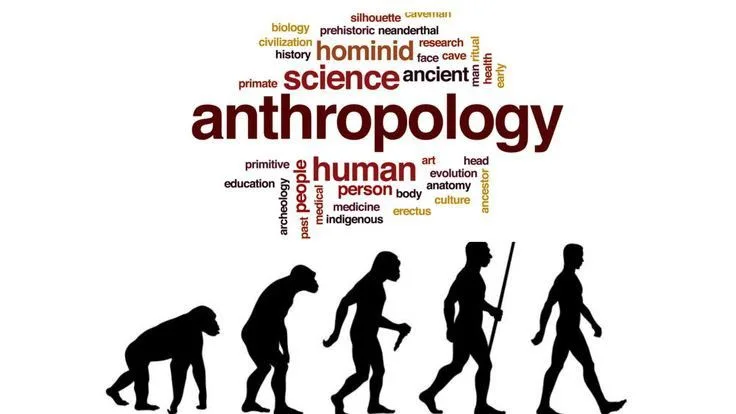
Overview: In November 1974, in a remote dry riverbed in the Afar region of Ethiopia, paleoanthropologist Donald Johanson unearthed fragments of a skeleton that would permanently alter human self-understanding.
The skeleton - nicknamed Lucy after the Beatles song playing in the expedition camp that night - belonged to a creature that had walked upright on two legs but had a brain no larger than a chimpanzee's.
The discovery of Australopithecus afarensis established that bipedalism preceded the brain expansion long assumed to drive the emergence of the human lineage.
Lucy forced a rewriting of the story of where we came from, compressing tens of millions of years of evolutionary history into a muddy streambed in the Horn of Africa.
Almost simultaneously, on the other side of the world, scholars were working to reconstruct the grammar of a language - American Sign Language - that a generation of educators had refused to recognize as a genuine language at all.
William Stokoe's research at Gallaudet University demonstrated that ASL possesses all the structural properties of a natural human language: phonology realized in handshape and movement rather than sound, complex grammatical morphology, and recursive syntactic structures.[12]
Deaf communities had maintained and transmitted a full human language under conditions of systematic institutional suppression, and no one in the hearing academic world had taken notice.
These two research programs - one excavating fossil remains millions of years old, the other analyzing the spatial grammar of a living language - both belong to anthropology.
The discipline's scope is extraordinary: it encompasses human evolution from the earliest hominins, the diversity of social organization across all known cultures, the structure and social embedding of all human languages, and the material traces of past societies from prehistoric cave sites to last century's factories.
What unifies this vast range is a commitment to comparative, holistic inquiry - to understanding human beings by studying them in the full breadth of their biological, cultural, linguistic, and historical variety, and by insisting that no single vantage point or method can capture that variety alone.
"Anthropology is the most humanistic of the sciences and the most scientific of the humanities." - Alfred Kroeber, cited in Eric Wolf, Anthropology, 1964
| Subfield | Focus | Primary Methods |
|---|---|---|
| Cultural anthropology | Human societies, beliefs, and practices | Ethnography, participant observation |
| Biological anthropology | Human evolution, genetics, primatology | Skeletal analysis, DNA, field primatology |
| Archaeology | Past societies via material remains | Excavation, dating techniques, artifact analysis |
| Linguistic anthropology | Language in social and cultural context | Discourse analysis, field documentation |
| Applied anthropology | Using knowledge to address real-world problems | Consulting, policy research, community work |
Key Definitions
Anthropology: The comparative, holistic study of human beings in all their biological, cultural, linguistic, and historical diversity, across time and across the full range of human societies.
Cultural relativism: The methodological principle, associated with Franz Boas, that cultural practices must be understood and evaluated within their own cultural context rather than by the standards of an outside culture.
Participant observation: The core fieldwork method of cultural anthropology, involving extended immersion in a community with the aim of understanding social practices from the inside, through both observation and participation.
Thick description: Clifford Geertz's term for the interpretive ethnographic account that grasps the layered meanings of cultural actions rather than merely recording their surface occurrence.
Introgression: In ancient genomics, the transfer of genetic material from one population to another through interbreeding, now established to have occurred between anatomically modern humans and archaic populations including Neanderthals and Denisovans.
Structural violence: Paul Farmer's concept designating the harm inflicted on people by social structures - poverty, racism, gender inequality - that constrain life chances and health as surely as direct physical violence.[9]
The Four-Field Approach
Building a Holistic Science of Humanity
American anthropology's distinctive four-field structure - cultural/social anthropology, biological/physical anthropology, linguistic anthropology, and archaeology - was consolidated by Franz Boas and his students at Columbia University in the early decades of the twentieth century.
The four-field model reflects a theoretical commitment: human beings are simultaneously biological organisms with evolutionary histories, cultural actors constructing meanings and institutions, language-using creatures whose cognition is shaped by symbolic systems, and historical beings whose present is inseparable from their material and social past.
A discipline adequate to human complexity must integrate all four dimensions rather than parceling them out to separate specialisms that never speak to each other.
British social anthropology, shaped by Malinowski and Radcliffe-Brown, developed along a different institutional trajectory - focusing primarily on comparative social structure and leaving biological and archaeological questions to separate disciplines.
French anthropology, shaped by Marcel Mauss and later Claude Levi-Strauss, developed structural approaches to myth, kinship, and exchange that sought to identify universal patterns of the human mind beneath the surface diversity of cultural forms.
The four-field American model has been the most influential globally, though the disciplinary boundary between cultural anthropology and sociology remains contested and varies by national tradition.
Franz Boas and the Rejection of Scientific Racism
Franz Boas transformed anthropology both scientifically and politically. Where his evolutionist predecessors - Lewis Henry Morgan in America, Edward Tylor in Britain - had arranged all known societies on a single developmental ladder from "savagery" through "barbarism" to "civilization," Boas insisted on historical particularism.
Each cultural configuration must be understood as the outcome of its specific historical development, involving diffusion of traits from neighboring cultures, responses to particular environmental conditions, and contingent historical events.
There is no single developmental sequence; there are only particular histories. The comparative ranking of cultures on a universal scale of progress was not science; it was projection.
Boas's empirical challenge to scientific racism was equally important. His 1912 study of immigrants to the United States, "Changes in Bodily Form of Descendants of Immigrants," showed that cranial measurements - skull shape and size taken by racial anthropologists as fixed biological markers of racial type - changed significantly within a single generation, as the children of southern European and eastern European immigrants grew up in American conditions.
Head form, regarded as one of the most stable racial characteristics, shifted demonstrably under environmental influence.[1] This directly contradicted the assumption that racial physical types were stable biological essences.
Boas published his findings in the context of congressional debates over immigration restriction, and his work was explicitly marshaled against the racial hierarchies used to justify those restrictions.
Boas trained an extraordinary cohort of students who shaped twentieth-century anthropology: Ruth Benedict, Margaret Mead, Edward Sapir, Zora Neale Hurston, and Alfred Kroeber among them.
Benedict's Patterns of Culture (1934) argued that each culture has a distinctive integrating character - she famously contrasted the "Apollonian" restraint of Pueblo cultures with the "Dionysian" intensity of Plains cultures - and challenged the equation of cultural difference with cultural inferiority.
The Boasian legacy was a discipline committed, at its best, to the recognition of human diversity without hierarchy.
Cultural Anthropology and Fieldwork
Malinowski and the Trobriand Islands
Bronislaw Malinowski's fieldwork in the Trobriand Islands during World War I - he was stranded in British New Guinea as an Austro-Hungarian national when war broke out and made the most of his enforced residence - established the template for modern ethnographic fieldwork.
His methodological manifesto in the introduction to Argonauts of the Western Pacific (1922) insists that the ethnographer must live in the village, not on the verandah of the colonial administrator's house; must learn the language, not rely on interpreters; must observe the full range of daily life, not only ceremonial occasions; and must seek to grasp "the native's point of view" - the meaning of practices from the perspective of those who perform them.
This demand for genuine immersion - what Malinowski called participant observation - transformed ethnography from travelers' reports into a systematic discipline.
The substantive contribution of Argonauts was the analysis of the Kula ring: an inter-island exchange system in which white armshells and red necklaces circulate in opposite directions among dozens of islands in the Massim archipelago, traveling thousands of miles by outrigger canoe.
Kula objects have no utility - they are not food, tools, or currency - yet men undertook dangerous ocean voyages to acquire and pass them on. Malinowski's analysis showed that economic exchange in non-market societies is embedded in social relationships, obligations of reciprocity, prestige competition, and ritual meaning.[2]
Marcel Mauss extended this insight in The Gift (1925) into a general theory: gift exchange in all societies creates obligation, and failure to reciprocate carries serious social consequences.[3] The gift is a "total social phenomenon" engaging economic, legal, moral, and religious dimensions simultaneously.
Geertz and Interpretive Anthropology
Clifford Geertz's The Interpretation of Cultures (1973) proposed a fundamental reconceptualization of what culture is and how it should be studied.[4]
Against functionalist accounts (culture as the system of practices meeting social needs) and structuralist accounts (culture as the surface expression of deep cognitive structures), Geertz proposed that culture is "webs of significance" spun by humans themselves - a system of symbols and meanings that must be interpreted rather than explained by reduction to prior causes.
The anthropologist's task, on this view, is hermeneutic rather than nomological: to produce "thick descriptions" that capture the layered meanings of cultural acts, analogous to the close reading a literary critic brings to a complex text.
Thin description records the surface event: a man rapidly closes one eyelid. Thick description grasps what is actually happening - a wink, embedded in a context of irony, complicity, and shared social knowledge that distinguishes it from a twitch, a parody of a wink, a rehearsal of a wink for later use, and so on through potentially indefinite layers of meta-communication.
Geertz's essay "Deep Play: Notes on the Balinese Cockfight" demonstrated the method in practice. The cockfight is not merely a gambling event to be explained by its economic functions or its release of social tension.
It is a text in which Balinese culture thinks about itself - about fate, status, the relationship between animal nature and human civilization, what it means to be a Balinese man of standing.
Understanding it requires grasping the entire symbolic context within which it takes place, including the layered meanings of the Balinese concept of takut (fear/shame) and the social logic of prestige betting.
Geertz influenced interpretive methods in history, literary studies, and sociology, and his framework remains a touchstone even for anthropologists who have moved beyond or against it. See also /culture/global-cross-cultural/cultural-dimensions-explained for further discussion of how cultural frameworks shape perception and behavior.
Biological Anthropology and Human Evolution
The Fossil Record
The fossil record of human evolution has been transformed by discoveries over the past half-century.
Lucy (AL 288-1), discovered by Donald Johanson in the Afar Triangle in 1974 and dated to approximately 3.2 million years ago, provided the first partial skeleton of Australopithecus afarensis and established the temporal priority of bipedalism over large brain size.
Footprints at Laetoli, Tanzania, preserved in volcanic ash and first analyzed by Mary Leakey in 1978, confirmed bipedalism at 3.7 million years ago.
The genus Homo appears around 2.8 million years ago; anatomically modern humans appear in the African fossil record by approximately 300,000 years ago, at sites like Jebel Irhoud in Morocco (redated by Jean-Jacques Hublin and colleagues in 2017).[6]
The discovery of Homo floresiensis - a small-bodied hominin that survived on the Indonesian island of Flores until perhaps 50,000 years ago - demonstrated the evolutionary diversity of the Homo genus well into the recent past.
The Ancient DNA Revolution: Svante Paabo and Human Prehistory
Svante Paabo's research program at the Max Planck Institute for Evolutionary Anthropology applied ancient DNA extraction and sequencing to hominin fossil remains with consequences that no one fully anticipated.
DNA degrades rapidly after death and is prone to contamination; Paabo's team over decades developed increasingly rigorous methods for extracting, sequencing, and authenticating ancient genetic material.
The field his laboratory effectively created - paleogenomics - has since transformed the study of human prehistory more comprehensively than any other methodological innovation since radiocarbon dating.
The 2010 publication in Science of a draft Neanderthal genome - based on specimens from Vindija Cave, Croatia, dated to approximately 38,000-44,000 years ago - demonstrated that between one and four percent of the DNA of present-day non-African humans derives from Neanderthals.[5]
This was evidence of interbreeding as early modern humans spread out of Africa into regions already occupied by Neanderthal populations approximately 50,000-70,000 years ago.
The finding overturned the strict "Out of Africa" replacement model's assumption of no interbreeding and established that modern humans carry a genetic legacy of archaic populations now extinct as independent lineages.
From tiny fragments - a finger bone and two molar teeth - recovered from Denisova Cave in the Altai Mountains of Siberia, Paabo's team in 2010 identified an entirely unknown hominin group, the Denisovans, solely through ancient DNA.
No Denisovan skull has yet been found, but their genetic contribution is detectable in present-day populations in South Asia and Oceania, with Melanesians carrying the highest Denisovan ancestry at up to five percent.
The identification of an entire branch of the human family tree from a fragment of bone demonstrates the extraordinary power of the genomic approach. Svante Paabo was awarded the Nobel Prize in Physiology or Medicine in 2022 in recognition of these discoveries.
Population genetic research consistently confirms that "race" as a biological category does not carve human genetic variation at its joints. Genetic variation among populations follows a clinal, gradient pattern corresponding to historical migration and geographic isolation.
More genetic variation exists within conventionally defined racial groups than between them - a finding documented by Richard Lewontin in 1972 and confirmed by subsequent population genomics, wholly consistent with Boas's early empirical challenge to scientific racism.
Linguistic Anthropology
Language, Culture, and the Sapir-Whorf Hypothesis
Linguistic anthropology examines the relationship between language, culture, and cognition - how language shapes and is shaped by social life, and what the diversity of human languages reveals about the possibilities and limits of human cognition.
Edward Sapir, one of Boas's most distinguished students, argued in Language (1921) and subsequent essays that language is not merely a tool for expressing pre-formed thoughts; it is a system that structures experience and directs perception.
His student Benjamin Lee Whorf extended these ideas into what became known as the Sapir-Whorf hypothesis, or linguistic relativity.
Whorf's analyses of Hopi and other Native American languages led him to the strong claim that Hopi speakers, lacking grammatical tenses corresponding to English past, present, and future, conceptualize time fundamentally differently from English speakers - in terms of "manifesting" and "manifested" rather than a linear timeline.
This strong version (linguistic determinism: language determines thought) has found little empirical support and has been criticized on ethnographic grounds; Hopi does encode temporal relationships, differently from English but without eliminating temporal conceptualization altogether.
The weak version - linguistic relativity, the claim that language influences but does not determine cognition - has received substantial empirical support from more controlled research.
Lera Boroditsky and colleagues have produced experimental evidence across multiple domains. Speakers of languages using absolute spatial reference frames (north/south/east/west rather than left/right) show systematically different spatial memory patterns and orientation abilities.
Speakers of languages with more grammatical gender show different patterns of object conceptualization consistent with grammatical gender assignment. Speakers of languages distinguishing more basic color terms show faster discrimination of colors when colors fall into different named categories.[10]
These findings support weak Whorfianism - language shapes the salience and habitual coding of experience - without endorsing the strong claim that it constrains what can be thought.
Daniel Everett's fieldwork with the Pirah people of the Amazon, reported in Don't Sleep, There Are Snakes (2008), claimed that Pirah lacks recursion - the structural property of embedding clauses within clauses that Noam Chomsky had argued is a universal of human language.
If confirmed, this would challenge the most influential contemporary theory of universal grammar. Everett's claims remain hotly disputed; the disagreement involves technical grammatical analysis as well as broader theoretical commitments about what kind of evidence can settle questions about syntactic universals.
Archaeology
Reconstructing the Past from Material Culture
Archaeology investigates past human societies through the material traces they have left: tools, structures, pottery, food remains, human burials, and landscape modifications.
Its chronological methods were transformed by Willard Libby's development of radiocarbon dating, for which he received the Nobel Prize in Chemistry in 1960 (awarded for work published in 1949).
Carbon-14, produced in the atmosphere by cosmic ray bombardment and taken up by living organisms, decays at a known rate after death; measuring the ratio of C-14 to stable C-12 in organic material yields an age estimate.
Calibrated against tree-ring chronologies (dendrochronology), radiocarbon dating can establish dates for organic specimens up to approximately 50,000 years old with precision measured in decades to centuries. The method provided, for the first time, absolute rather than merely relative dates for prehistoric societies.
The origins of agriculture remain among archaeology's central questions. The traditional view, influenced by V. Gordon Childe's concept of the Neolithic Revolution, treated the transition to farming as a transformative innovation originating in the Fertile Crescent around 10,000 BCE.
Subsequent research has established multiple independent origins: rice cultivation in the Yangtze River Valley by approximately 7000 BCE, maize domesticated from teosinte in highland Mexico by 7000 BCE, sorghum in sub-Saharan Africa, potato in the Andes.
The site of Gobekli Tepe in southeastern Turkey, excavated from 1994 by Klaus Schmidt, overturned the assumption that monumental architecture required settled agricultural societies: its massive stone enclosures, dated to approximately 9600 BCE, were built by hunter-gatherer communities, suggesting that ritual and symbolic motivations could drive large-scale social cooperation independent of agricultural surplus.
Applied and Contemporary Anthropology
Decolonizing the Discipline
Anthropology developed within colonial structures and often helped to legitimate them.
Early ethnographers frequently worked in colonial contexts with financial support and practical assistance from colonial administrations, and their representations of non-Western peoples were sometimes mobilized to justify colonial domination as the mission civilisatrice.
Talal Asad's edited volume Anthropology and the Colonial Encounter (1973) was among the first systematic examinations of the discipline's complicity with colonialism, arguing that anthropology's relationship to colonial power was not merely contextual but constitutive: the questions it asked, the categories it deployed, and the frameworks it offered had been shaped by the conditions of colonial rule.[7]
Edward Said's "Orientalism" (1978) demonstrated how systematic misrepresentation of non-Western peoples - constructing them as exotic, irrational, timeless, and fundamentally Other - reproduced and justified imperial hierarchies.
The post-colonial turn in anthropology prompted critical examination of who conducts research on whom, who benefits from its results, and whose conceptual frameworks define what counts as knowledge.
The "studying up" imperative, articulated by Laura Nader in her 1972 essay "Up the Anthropologist," challenged the discipline's traditional concentration on the poor, the marginal, and the colonized.[8]
If anthropology is genuinely committed to understanding power relations, Nader argued, it must direct ethnographic scrutiny at the powerful - at corporations, government agencies, and institutions that make consequential decisions affecting millions.
This reorientation has since produced significant ethnographic work on financial markets, pharmaceutical companies, and international organizations.
The Native American Graves Protection and Repatriation Act (1990) established the legal framework for returning human remains and sacred objects held by museums and universities to descendant communities.
The dispute over the Kennewick Man - a 9,000-year-old skeleton found in Washington State in 1996 - exemplified the tensions between scientific research interests and Native American ancestral claims; the remains were repatriated in 2017 to a coalition of Columbia Plateau tribes.
Structural Violence and Medical Anthropology
Paul Farmer's Partners in Health, established in rural Haiti in the 1980s, developed community-based approaches to treating tuberculosis and HIV among some of the Western Hemisphere's poorest populations.
Farmer's concept of structural violence, elaborated in Pathologies of Power (2003), argued that medicine addressing individual pathology while ignoring the social conditions producing it is systematically inadequate: the highest rates of disease follow the contours of inequality structured by race, class, and the historical legacies of colonialism.
Forensic anthropology applies biological and archaeological methods to medicolegal investigation.
The Argentine Forensic Anthropology Team, established in 1984, identified victims of the military dictatorship's forced disappearances (1976-1983) through skeletal analysis, dental records, and ancient DNA - providing evidence for judicial proceedings and closure for families.
Similar work has followed in Guatemala, the former Yugoslavia, and Iraq.
What Anthropology Contributes
No other discipline combines all four of anthropology's dimensions into a single integrated inquiry.
Biology examines organisms without systematic attention to culture or meaning; sociology examines social structures while largely bracketing evolutionary and linguistic dimensions; history examines the past without the cross-cultural comparative scope that distinguishes anthropology.
Psychology studies human mental processes but typically in WEIRD (Western, Educated, Industrialized, Rich, Democratic) subject populations - a limitation documented by Joseph Henrich, Steven Heine, and Ara Norenzayan in a 2010 paper in Behavioral and Brain Sciences showing that American undergraduates diverge dramatically from other human populations on a range of psychological measures, calling into question the universality of findings based on them.[11]
Anthropology insists on the full range of human variation as the necessary dataset for any claim about human nature - documenting what counts as universal by establishing what actually varies.
It has consistently punctured premature claims to universality about gender roles, market exchange, the nuclear family, and individualist personhood.
And it has documented what does appear to hold across the species: language, music, ritual, kinship reckoning, the prohibition on parent-child incest, the recognition of death as significant.
The discipline's central methodological commitment - fieldwork as extended immersive engagement with human communities in their own terms - remains irreplaceable. See /culture/global-cross-cultural/why-cultures-think-differently for related discussion of cognitive diversity across cultural contexts.
Sources & Further Reading
- Boas, Franz. "Changes in Bodily Form of Descendants of Immigrants." American Anthropologist, vol. 14, no. 3, 1912, pp. 530-562.
- Malinowski, Bronislaw. Argonauts of the Western Pacific. Routledge, 1922.
- Mauss, Marcel. The Gift: The Form and Reason for Exchange in Archaic Societies. Trans. W.D. Halls. Routledge, 1990. (Original 1925.)
- Geertz, Clifford. The Interpretation of Cultures. Basic Books, 1973.
- Green, Richard E. et al. "A Draft Sequence of the Neandertal Genome." Science, vol. 328, no. 5979, 2010, pp. 710-722.
- Hublin, Jean-Jacques et al. "New Fossils from Jebel Irhoud, Morocco and the Pan-African Origin of Homo sapiens." Nature, vol. 546, 2017, pp. 289-292.
- Asad, Talal, ed. Anthropology and the Colonial Encounter. Ithaca Press, 1973.
- Nader, Laura. "Up the Anthropologist: Perspectives Gained from Studying Up." In Reinventing Anthropology, edited by Dell Hymes. Pantheon, 1972.
- Farmer, Paul. Pathologies of Power: Health, Human Rights, and the New War on the Poor. University of California Press, 2003.
- Boroditsky, Lera. "How Language Shapes Thought." Scientific American, vol. 304, no. 2, 2011, pp. 62-65.
- Henrich, Joseph, Steven J. Heine, and Ara Norenzayan. "The Weirdest People in the World." Behavioral and Brain Sciences, vol. 33, no. 2-3, 2010, pp. 61-83.
- Stokoe, William C. Sign Language Structure: An Outline of the Visual Communication Systems of the American Deaf. Studies in Linguistics, Occasional Papers 8. University of Buffalo, 1960.