
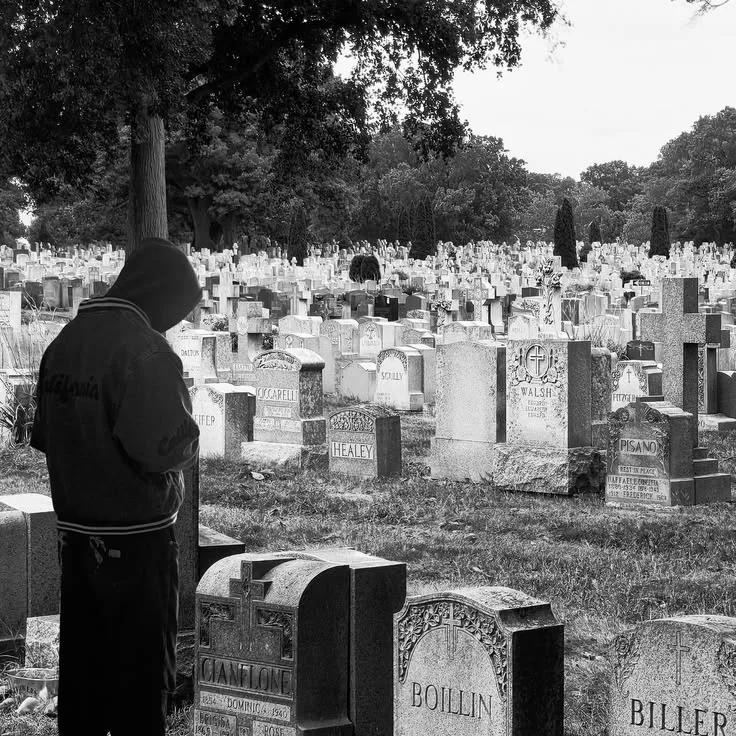
Death rituals express cultural assumptions about family, the body, mourning, time, and continuing relationships with the dead. Perspectives on death range from professionalized Western practices to communal, ancestor-centered, or spiritually transitional traditions. Research on continuing bonds and grief challenges the idea that healthy mourning always requires detachment, showing that culturally different ways of maintaining connection can be normal adaptations.
In 2015, Caitlin Doughty - a mortician and author - published Smoke Gets in Your Eyes, a memoir about her work in a California crematorium.[2]
Near its end, she described visiting Japan, where she watched a family use chopsticks to pass their grandmother's charred bones from person to person - a ritual called kotsuage - before placing them in an urn.
It was intimate, participatory, and direct in a way that American death rituals, which contract out every physical encounter with the dead to professionals, emphatically are not.
Doughty's observation pointed at something that anthropologists, psychologists, and historians of death have documented extensively: the way a culture approaches death is one of the most revealing things about it.
The rituals surrounding death - who touches the body, how long mourning lasts, whether the dead remain present in daily life, what happens after death - encode a culture's deepest assumptions about selfhood, family, time, and what matters.
These assumptions vary enormously. The contemporary Western tendency to medicalize and professionalize death - to remove it from home and family, to minimize visible grief, and to treat efficient resumption of normal life as a sign of healthy coping - is culturally specific and historically recent.
For most of human history, in most of the world, death was a communal event woven into the fabric of ordinary social life.
"Of all human experiences, death is the one for which we have created the greatest variety of rituals." - Philippe Ariès, The Hour of Our Death (1981)
| Culture/Tradition | Approach to Body | Mourning Duration | Afterlife Belief | Ongoing Bond with Dead |
|---|---|---|---|---|
| Contemporary Western | Professionalized; minimal family contact | Weeks; extended grief pathologized | Variable | Discouraged therapeutically |
| Mexican (Dia de los Muertos) | Family-centered; home preparation common | Communal annual reunion | Continued relationship | Central to practice |
| Japanese (Shinto/Buddhist) | Ritual cremation; family participation | 49-day mourning period | Spiritual transition; ancestor realm | Regular household altar offerings |
| Tibetan Buddhist | Sky burial (vultures); body as vessel | Ritual assistance for 49 days | Reincarnation; bardo state | Lama guides consciousness |
| West African traditions | Community vigil; family preparation | Weeks; elaborate funeral | Ancestors remain in community | Foundational; ancestor consultation |
| Hindu | Open cremation; Ganges immersion | 13-day shraddha rituals | Reincarnation; karma | Periodic ritual offerings |
| Torajan (Sulawesi) | Body kept at home; treated as ill | Months to years before funeral | Social death requires communal completion | Ma'nene exhumation ceremony |
| Indigenous Australian | Country and ceremony; returning to land | Varies; "sorry business" protocols | Spirit returns to ancestral country | Relationship with country persists |
Key Definitions
Mortuary ritual - The culturally prescribed behaviors surrounding death: preparation of the body, treatment of the deceased during a transitional period, burial or other disposal, mourning practices, and commemoration. Varies across and within cultures in duration, participants, emotional expression, and symbolic meaning.
Continuing bonds theory - The finding by Klass, Silverman, and Nickman (1996) that many bereaved people worldwide maintain an ongoing inner relationship with the deceased as a normal healthy adaptation, rather than "letting go" as the older stage-model of grief implied.[3]
Challenges the Western therapeutic assumption that healthy grief ends with emotional separation from the deceased.
Terror management theory (TMT) - The psychological theory developed by Greenberg, Solomon, and Pyszczynski (based on Becker's The Denial of Death) proposing that awareness of mortality produces existential terror, which humans manage through cultural worldviews providing symbolic or literal immortality.[7]
Death rituals and afterlife beliefs function partly as terror management systems.
Ancestor veneration - The practice of maintaining ritual relationships with deceased family members - through offerings, prayers, communication, and commemoration - treating them as ongoing participants in family and community life. Common across East Asia, much of Africa, and indigenous cultures globally.
The good death - A culturally variable ideal of how death should occur: in what setting, with what preparations, with what emotional expression, and with what final experiences.
Western medical culture's "good death" involves pain management and informed consent; Tibetan Buddhist culture's involves a conscious, spiritually prepared mind at the moment of death; indigenous traditions may prioritize presence of family and ritual continuity.
Liminality - Victor Turner's concept of the transitional state between social identities, applied to death rituals: the newly dead are often treated as in-between states - neither fully of the living nor fully of the dead - requiring ritual processing to complete the transition to ancestral status.
Grief work - Freud's concept that mourning requires psychological labor - reviewing memories, gradually withdrawing emotional investment from the deceased, and reinvesting in new relationships. Influenced Western therapeutic models of grief.
Now considered overly prescriptive; different cultural and individual mourning styles show evidence of healthy adaptation.
Death acceptance - A spectrum of attitudes toward mortality ranging from death avoidance through neutral acceptance to approach acceptance (welcoming death as passage to an afterlife) and escape acceptance (welcoming death as release from suffering).
Research by Paul Wong and associates suggests cultural context significantly shapes which attitudes predominate.
The Western Death: A Recent Invention
The current Western relationship to death is not how most Westerners have historically related to it. Philippe Ariès' monumental history, The Hour of Our Death (1981), traced the transformation of Western death practices over a thousand years.[1]
In medieval Europe, death was "tame" - familiar, expected, and communal. The dying person was at the center of the death scene: they directed proceedings, offered final instructions and reconciliations, distributed bequests, and received ritual blessings.
Death happened at home, surrounded by family, neighbors, and even children. The community participated in the dying process as a matter of course.
This began to change gradually from the seventeenth century and accelerated dramatically in the twentieth.
Death moved from home to hospital; the dying were progressively excluded from managing their own death; professional specialists (doctors, then funeral directors) assumed control; family members were increasingly removed from direct contact with the body.
Geoffrey Gorer's 1955 essay "The Pornography of Death" identified the emerging taboo: as public sexual discussion became socially acceptable through the twentieth century, death became the new unspeakable subject.[8]
The transition was rapid by historical standards. In 1900, most Americans died at home and were prepared for burial by family members. By 1950, the majority died in hospitals or institutional settings. By 1980, the figure exceeded 75 percent.
The funeral industry, growing through the twentieth century, effectively separated families from both the dying and the dead.
Jessica Mitford'sThe American Way of Death (1963) documented this commercialization: the funeral industry, she argued, exploited grief to sell expensive and unnecessary services - elaborate caskets, embalming (not legally required in most jurisdictions), elaborate viewings - while removing families from meaningful participation in death.[14]
Her critique sparked a consumer death movement that has grown significantly since the 1990s.
The implications:
- Most contemporary Americans have never seen a dead body, touched a dead body, or participated in preparing one for burial
- Most Americans have never witnessed a death (outside of medical settings)
- Most American funeral practices minimize visible physical contact between the living and the dead
- The emotional expression of grief is time-limited; extended mourning is increasingly pathologized
- The dominant model of "healthy grief" is oriented toward "closure" - a concept with no analogue in most of the world's death traditions
This is historically and cross-culturally anomalous. It reflects anxiety about death rather than successful management of it.
The Death Positive Movement
Since the 2010s, a growing "death positive" movement - associated with figures like Caitlin Doughty and organizations like the Order of the Good Death - has pushed back against Western death avoidance.
The movement advocates for direct engagement with death and dying: home funeral practices, natural burial (without embalming or vaults), death cafes (community conversations about death), and doula support for dying people.
Its core argument is that the professionalization and institutionalization of death has impoverished how Americans and Britons experience both dying and grief.
Kathryn Mannix'sWith the End in Mind (2017), written by a British palliative care physician, documented the pervasive lack of familiarity with dying in contemporary patients and families - people who had never seen someone die, who did not know what it looked like, and who therefore experienced the process with unnecessary fear.[15]
Mannix argued that restoring familiarity with dying - as most of the world's cultures have maintained - would significantly reduce the terror surrounding death.
Día de los Muertos: Death as Relationship
The Mexican Día de los Muertos - observed on November 1-2 - is one of the most recognizable non-Western death practices in the popular imagination: sugar skulls, marigolds, skeletal figures, colorful altars. It is also routinely misunderstood as a Latin American equivalent of Halloween.
It is not. Día de los Muertos is a ceremony of reunion.
The holiday's roots are in Aztec practices (particularly the festival of the goddess Mictecacihuatl, Lady of the Dead, which occurred in the summer and was shifted to November during the colonial period to align with Catholic All Saints' and All Souls' Days) combined with Catholic traditions of commemorating the dead on those dates.
The resulting synthesis is distinctively Mexican.
The core structure: deceased family members return to visit the living during this period. Families build ofrendas - altars - decorated with photographs, favorite foods and drinks, marigolds (whose scent is said to guide the dead), candles to light their way, and objects meaningful to the deceased.
Families visit cemeteries, clean and decorate graves, bring picnic meals, and spend time in the presence of the dead. The atmosphere is typically festive - music, conversation, celebration - not somber.
Stanley Brandes, a Berkeley anthropologist who has studied Día de los Muertos extensively (Skulls to the Living, Bread to the Dead, 2006), documented the holiday's expansion from regional practice in Oaxaca and Michoacan to a national and increasingly transnational phenomenon.[12]
He also documented its transformation in California's Chicano communities, where it became a vehicle for ethnic identity assertion rather than solely ancestral commemoration.
The holiday's international spread - observed now in communities across the United States, Europe, and Asia - reflects both the appeal of its aesthetics and genuine crosscultural resonance with the idea of maintaining relationships with the dead.
The ontological assumption underlying these practices is that death does not end relationship. The dead are still family members who retain preferences (hence the food), require care (hence the candles and cleaning), and appreciate attention (hence the photographs and mementos).
The relationship continues across death; it has changed in form but not in fundamental character.
This stands in notable contrast to the dominant contemporary Western frame, in which death ends the social relationship and grief is oriented toward acceptance of that ending.
Japan: The Dead Come Home
Japanese death practices represent one of the most elaborate systems for maintaining ongoing relationship with the dead in any industrialized society.
The butsudan: in millions of Japanese homes, a household Buddhist altar - the butsudan - occupies a designated space and is tended daily. Family members offer incense, food, water, and prayers to photographs and memorial tablets (ihai) of deceased ancestors.
Conversations with the dead are commonplace; the dead are consulted about important decisions; significant family events are reported to them. The dead are not absent - they occupy a particular location (the butsudan) and a particular social role (ancestors who require continued care) within the living family.
A 2019 survey by the Japanese government found that approximately 70 percent of Japanese households maintain a butsudan, though rates vary significantly by age and urbanization.
The same survey found that 57 percent of respondents reported regularly talking to deceased family members at the butsudan - treating the conversation as genuine communication, not mere ritual.
Obon: the summer ancestor festival, one of Japan's most important traditional observances, is organized around the premise that ancestral spirits return home to visit their families. Families prepare welcoming fires (mukaebi), tidy the butsudan, and prepare offerings.
The Bon Odori (Bon dance) is performed communally. At the end of the festival, families light lanterns on rivers and seas (toro nagashi) to guide the spirits back to the other world.
The mortuary progression: Japanese death rituals involve an elaborate, multi-year progression that slowly transforms the newly dead into settled ancestors.
A death generates an initial intense ritual period (funeral, cremation, placement of remains); this is followed by memorial services at 7 days, 49 days, 1 year, 3 years, 7 years, and additional years thereafter, each progressively acknowledging the deceased's transition from recently dead to ancestor.
The 49 days are particularly significant - the transitional period during which the spirit completes its journey and the family completes its initial acute mourning.
The kotsuage: the direct handling of bones by family members using chopsticks during the cremation ceremony is one of the most distinctive Japanese death practices.
After cremation, family members use special chopsticks to transfer the bones from the cremation tray into the funeral urn, passing bones between chopstick sets (in ordinary life, passing food from chopsticks to chopsticks is forbidden precisely because of this funerary association).
The practice keeps family members in direct, unmediated physical relationship with the dead - touching the bones of their loved ones.
Sociologist Dennis Klass, whose continuing bonds research drew heavily on interviews with Japanese bereaved families, found that Japanese patterns of maintaining ongoing relationship with the dead were consistent with positive bereavement outcomes - challenging the Western therapeutic assumption that emotional detachment was the appropriate goal.
Japanese bereaved people who reported regularly communicating with deceased family members showed lower rates of prolonged grief disorder than comparative Western samples (Klass & Goss, 1999).[4]
The Toraja: Death as Feast
The Toraja people of Sulawesi, Indonesia practice some of the most elaborate death rituals in the world - and some of the most counterintuitive to outside observers.
A Torajan funeral is a major social event requiring months or years of preparation, involving the slaughter of dozens to hundreds of water buffalo and pigs, the hosting of hundreds or thousands of guests over multiple days, the performance of elaborate ceremonies, and the expenditure of substantial family wealth.
The cost is so high that families often cannot afford funerals immediately after a death - and in the interim, the deceased is not considered dead.
The body of a deceased person remains in the family home, treated as ill (the word is ma'kula - "to be sick") rather than dead. Family members continue to speak to the deceased, bring food, and treat them as present.
This may continue for weeks, months, or in some cases years until the family can afford the funeral. The physical decomposition during this period is managed with embalming or drying herbs.
The concept underlying this practice is that death is a process, not an event. Social death - the full transition from living family member to ancestor - requires communal acknowledgment, ritual completion, and social consensus. Until the funeral is performed, the transformation is incomplete.
The Torajan dead wait in their social role, not yet departed.
Kathleen M. Adams, an anthropologist at Loyola University Chicago who has studied Toraja culture extensively, documented in Art as Politics: Re-Crafting Identities, Tourism, and Power in Tana Toraja, Indonesia (2006) how Torajan death rituals have become a major attraction for international tourists - creating complex dynamics in which the rituals are simultaneously preserved by outside interest and potentially transformed by it.[19]
The massive funerals, which can involve thousands of visitors, have become both authentic cultural expression and performed spectacle.
After burial in cliff-face or tree graves, the dead may be periodically visited and cared for. The ceremony of Ma'nene - typically held every three years in some Torajan communities - involves exhuming the bodies of ancestors, cleaning and redressing them, and walking them through the village before reburial.
The practice maintains ongoing physical relationship with the dead and reinforces family bonds across generations. For outside observers, the ceremony often appears shocking; for Torajan families, it is an act of care and love that expresses the ongoing reality of the ancestral relationship.
The Tibetan Tradition: Dying as Practice
In Tibetan Buddhism, death is not a failure or an ending but a transitional state requiring specific preparation and, ideally, skilled navigation. The Bardo Thodol - commonly translated as "The Tibetan Book of the Dead" - is a guide to the intermediate state (bardo) between death and rebirth.
The Tibetan "good death" is very different from the Western medical "good death." The ideal Tibetan death involves:
- A practitioner who remains conscious and aware at the moment of death, navigating the bardo with recognition of its visionary contents
- Guidance from lamas who read aloud from the Bardo Thodol, reminding the dying person of the nature of the visions they will encounter
- A body that is left undisturbed for three days after breathing ceases, allowing the consciousness to complete its departure
- Sky burial (jhator) - the body is offered to vultures on a mountaintop - reflecting the belief that the body is an empty shell after the consciousness has departed and can be returned to the cycle of life
The extensive Tibetan literature on death and dying treats dying as a practice that can be prepared for, trained for, and navigated skillfully. Death is not a problem but a test - an opportunity to achieve liberation or to secure a favorable rebirth based on the state of mind at the critical moment.
Sogyal Rinpoche'sThe Tibetan Book of Living and Dying (1992), which translated Tibetan death traditions for a Western audience, became one of the most influential works in the modern Western death awareness movement.[17]
Sogyal argued that the Western avoidance of death - treating it as a medical failure rather than a natural and spiritually significant transition - impoverished not only death but life, cutting people off from the reflection on mortality that, in the Tibetan view, is essential for living meaningfully.
The neurological research on near-death experiences (NDEs) has been examined in relation to Tibetan bardo teachings by several researchers, including Raymond Moody (Life After Life, 1975) and later Pim van Lommel's prospective Dutch NDE study (2001, published in The Lancet).
Van Lommel's study of 344 cardiac arrest patients found that approximately 18 percent reported NDE phenomena - out-of-body experiences, tunnels of light, encounters with deceased relatives.[18]
The Tibetan bardo framework provides a cultural template for interpreting such experiences; Western secular culture largely lacks one, which may explain the difficulty NDE experiencers often report in finding language for their experiences.
West African and African Diaspora Traditions
Across West Africa, death is understood not as the end of community membership but as a transition to a different mode of social participation.
Ancestor veneration - the maintenance of ongoing relationship with deceased family members through ritual, offering, and consultation - is central to the social and spiritual life of many West African communities.
Among the Akan people of Ghana, the dead are understood to join the company of the ancestors (the "nsamanfo") and continue to influence the affairs of the living.
Funerals are major social events organized according to the deceased's social status and can last several days, involving drumming, dancing, procession, and celebration as well as grief.
The coffin-making tradition of Ghana's fantasy coffin makers - who create elaborate custom coffins shaped like the occupation or passion of the deceased (a fisherman's fish-shaped coffin, a teacher's pencil-shaped coffin) - reflects the idea that even the physical container for the dead should honor who they were as individuals with full social identities.
The New Orleans jazz funeral tradition - a distinctly American synthesis of West African, French Catholic, and African American cultural streams - brings together the communal mourning procession and celebratory music characteristic of West African funerals.
The procession begins with a somber march to the burial, playing hymns; after burial, it transforms into a celebratory second line, with upbeat music, dancing, and communal celebration of the deceased's life.
The tradition expresses the idea that mourning and celebration are not opposites but complementary responses to the fullness of a life.
Robert Farris Thompson, in Flash of the Spirit: African and Afro-American Art and Philosophy (1983), documented how West African ritual concepts - including the ongoing presence and agency of ancestors - survived the Middle Passage and the trauma of slavery to persist in African American cultural practices, from Vodou in Haiti and Candomble in Brazil to specific mourning traditions in the American South.[16]
Hindu Death: Return and Release
Hindu approaches to death center on the doctrines of karma and samsara - the cycle of birth, death, and rebirth determined by the moral quality of action. Death is not an ending but a transition between incarnations; the specific rebirth is shaped by the karma accumulated across the lifetime.
The shraddha rituals - performed over 13 days following a Hindu death - involve daily ritual offerings (pinda - rice balls representing the deceased) that are understood to help constitute a new subtle body for the departed soul and facilitate its transition.
The eldest son traditionally performs these rituals, reinforcing both the family obligation and the patrilineal structure of Hindu kinship.
Cremation is the normative disposal method for Hindus (excepting children under 2, ascetics, and some other categories), ideally performed within 24 hours of death.
Varanasi (Benares) on the Ganges River is the most sacred site for Hindu cremation: to die in Varanasi and have one's ashes immersed in the Ganges is believed to ensure liberation (moksha) from the cycle of rebirth.
The Manikarnika Ghat in Varanasi - where fires have burned continuously for an estimated 3,500 years - receives thousands of bodies annually.
Journalists and scholars have extensively documented the ghat as a site where death is entirely visible and communal, presided over by the Dom caste (the traditional keepers of the cremation fires) who manage the process for families.
Jonathan Parry's anthropological study Death in Banaras (1994) documented the complex ritual economy of Hindu death at Varanasi, including the role of various priestly specialists, the ritual significance of the chief mourner's actions, and the theology of death that makes Varanasi's significance intelligible.[13]
Parry found that while the theological framework emphasized liberation from rebirth, popular practice was equally concerned with ensuring the deceased's comfort, proper passage, and ongoing ancestral status.
Indigenous Australian Traditions: Country and Return
For many Aboriginal Australian peoples, death is understood as a return to Country - the specific land, with its spiritual associations, ancestral beings, and ceremonial sites, from which a person originates. Death is not primarily a rupture with the social world but a completion of the relationship with Country that defines identity.
"Sorry business" - the term used across many Aboriginal communities for the mourning practices surrounding death - involves complex protocols that vary significantly across the hundreds of distinct language groups in Australia.
Common elements include: specific mourning periods during which certain activities are suspended; avoidance of the deceased's name (with variants - in some communities, the name is avoided entirely for a period; in others, a substitute name or title is used); communal gathering and support for the bereaved; and ceremonies that help the deceased's spirit complete its return to Country.
Diane Austin-Broos's research on Western Aranda bereavement practices documented the social importance of sorry business as a mechanism for maintaining community cohesion under the stresses of contemporary life - loss through illness, accident, violence, and the health disparities that affect Aboriginal communities at severe rates.
Sorry business provides both social support for the bereaved and a communal framework for processing collective grief.
The policy implications of these traditions have become legally significant in Australia.
The Coronial Information Statement on Aboriginal and Torres Strait Islander Communities developed by state coroners' offices acknowledges cultural protocols around the treatment of the dead, the naming of deceased persons, and the community's role in death management - recognizing that standard medicolegal death investigation procedures can cause serious cultural harm if not adapted to Indigenous practices.
Terror Management Theory: Why Death Cultures Look the Way They Do
Terror management theory provides a framework for understanding why cultures develop elaborate death practices.
Ernest Becker argued in The Denial of Death (1973) that human consciousness - uniquely - includes awareness of one's own mortality, and that this awareness creates existential terror.[5]
The symbolic world of culture is largely constructed to manage this terror: cultural worldviews provide meaning frameworks that transcend individual death (one's nation, religion, or family will outlive one); self-esteem provides a sense of being a valued member of a meaningful group; afterlife beliefs provide literal immortality; and death rituals provide structure, community, and meaning around the otherwise devastating fact of ending.
Experimental research by Greenberg, Solomon, and Pyszczynski supports this framework: reminding people of their mortality (mortality salience) consistently intensifies worldview defense, in-group preference, and rejection of worldview-threatening others.[6]
The effects are cross-culturally consistent. The anxiety management function of cultural worldviews and self-esteem is a genuine psychological mechanism.
Sheldon Solomon, Jeff Greenberg, and Tom Pyszczynski's summary of over 500 experiments testing terror management theory (The Worm at the Core: On the Role of Death in Life, 2015) found that mortality salience effects appear across cultures with very different death beliefs - though the specific worldviews that are defended vary across cultures.
The theory does not predict that all cultures will develop the same death practices; it predicts that all cultures will develop death practices capable of managing mortality terror.
Death rituals, from this perspective, do multiple things simultaneously:
- They provide community support for the bereaved
- They mark the social transition of the deceased
- They manage the emotional experience of loss through structure and shared practice
- They reinforce the cultural worldview that makes the loss bearable - the afterlife beliefs, the importance of the community that mourns together, the meaning frameworks that contextualize the death
Jeff Greenberg and colleagues (1990) demonstrated in a landmark study that judges primed with mortality thoughts imposed harsher fines on alleged prostitutes - defending the moral framework that gives them symbolic immortality more vigorously when reminded of death.
Hundreds of subsequent replications have extended the finding across domains: mortality salience increases nationalistic sentiment, prejudice against worldview-different others, and conformity to cultural norms. The cultural functions of death ritual are, in part, the management of this cognitive anxiety.
What Cross-Cultural Evidence Shows About Grief
The Western model of grief - derived primarily from Freud and elaborated in Kübler-Ross's stage model - assumed a universal process: grief required "grief work," progressive emotional detachment from the deceased, and eventual reinvestment of emotional energy in new relationships.
The "stages" (denial, anger, bargaining, depression, acceptance) provided a map for this process.
This model has been substantially challenged by cross-cultural evidence:
Continuing bonds: Klass, Silverman, and Nickman's 1996 research documented that bereaved people worldwide typically maintain an ongoing inner relationship with the deceased - talking to them, feeling their presence, incorporating their values into one's own identity - and that this continuation is associated with healthy adaptation, not pathological attachment.
The finding was inconsistent with the detachment model and consistent with what most of the world's death practices assume.
Cultural variation in grief expression: the premise that grief expression follows a universal pattern is not supported by cross-cultural evidence. Visible emotional expression, its duration, the role of community support, and the acceptable forms of commemoration vary dramatically.[9]
What constitutes healthy grief is substantially culturally constructed.[10]
George Bonanno's longitudinal research on bereavement trajectories (The Other Side of Sadness, 2009) challenged the Kübler-Ross stage model directly.[11]
Bonanno's prospective studies found that the most common bereavement trajectory was resilience - stable psychological functioning that does not require a period of clinical-level grief - rather than the stage sequence the model predicted.
Prolonged grief disorder affects approximately 10-15 percent of bereaved individuals; the majority adapt without requiring therapeutic intervention for the grief itself.
The question of grief universality: while the specific forms of grief vary, cross-cultural research does support some universal features - separation distress, searching behaviors, and intrusive images of the deceased appear across cultures.
The variation is in how these universal experiences are channeled, expressed, and managed through culturally specific ritual and social practices.
The Biology of Loss
Grief is not only a cultural and psychological phenomenon; it has biological dimensions that transcend cultural variation.
John Cacioppo's research on the physiology of social connection demonstrated that bereavement is one of the most significant stressors the human nervous system experiences: it activates inflammatory pathways, suppresses immune function, disrupts sleep architecture, and increases cardiovascular risk.[20]
Epidemiological studies consistently find that recently bereaved people - particularly recently widowed older adults - show elevated mortality rates in the weeks and months following a partner's death.
The "widowhood effect" - the increased probability of dying shortly after a spouse's death - has been documented across cultures and time periods.
One British study (Carey, 2021, BMJ) found a 66 percent increase in mortality risk in the first year of widowhood. The biology of attachment means that its dissolution through death is physically as well as psychologically painful.
This biological reality is managed differently across cultures. The communal mourning structures of most of the world's death traditions - which keep the bereaved embedded in social relationships throughout the mourning period - may provide biological as well as psychological protection.
The isolation and privatization of grief in contemporary Western culture could be, from this perspective, genuinely health-damaging.
The Good Death: A Cross-Cultural Comparison
Every culture has an implicit or explicit concept of the good death - the ideal circumstances and manner of dying. These ideals diverge dramatically:
Western medical good death: pain managed, patient informed and consenting, family present but not distressed, medical interventions proportionate to prognosis, death occurring at a natural pace. The emphasis is on patient autonomy, physical comfort, and rational decision-making.
Tibetan Buddhist good death: consciousness clear and awareness maintained at the moment of death; spiritual preparation completed through years of practice; lamas present to guide the dying; no medical interventions that might cloud consciousness at the critical moment. Physical comfort is secondary to spiritual orientation.
Hindu good death: ideally occurring at Varanasi on the banks of the Ganges; dying while contemplating God; ritual preparations complete; family gathered; proper disposal ensuring liberation from rebirth. Context of devotional preparation more important than pain management.
Traditional Chinese good death: dying in one's own home rather than a hospital; surrounded by family; dying at an advanced age having seen children and grandchildren established; completing one's obligations and transmitting wisdom to the next generation.
Traditional West African good death: complete ritual preparation allowing proper transition to ancestral status; surrounded by community; funeral appropriately elaborate to reflect social standing; leaving living relatives with clear obligations and social roles.
These ideals encode entire worldviews: what matters in life, what we owe each other, what death is for.
The tension between the Western medical good death - which emphasizes individual patient autonomy and technical pain control - and the good death ideals of other cultures creates significant friction in multicultural healthcare settings, where dying patients from traditional cultures may refuse treatments, request different settings, or require ritual accommodations that medical providers are not trained to understand.
Sources & Further Reading
- Ariès, P. (1981). The Hour of Our Death. Alfred A. Knopf.
- Doughty, C. (2014). Smoke Gets in Your Eyes: And Other Lessons from the Crematory. W. W. Norton.
- Klass, D., Silverman, P. R., & Nickman, S. L. (Eds.). (1996). Continuing Bonds: New Understandings of Grief. Taylor & Francis.
- Klass, D., & Goss, R. (1999). Spiritual bonds to the dead in cross-cultural and historical perspective. Death Studies, 23(6), 547-567.
- Becker, E. (1973). The Denial of Death. Free Press.
- Greenberg, J., Solomon, S., & Pyszczynski, T. (1997). Terror Management Theory of Self-Esteem and Cultural Worldviews. Advances in Experimental Social Psychology, 29, 61-139.
- Solomon, S., Greenberg, J., & Pyszczynski, T. (2015). The Worm at the Core: On the Role of Death in Life. Random House.
- Gorer, G. (1955). The Pornography of Death. Encounter, 5(4), 49-52.
- Parkes, C. M., Laungani, P., & Young, B. (Eds.). (1997). Death and Bereavement Across Cultures. Routledge.
- Walter, T. (1999). On Bereavement: The Culture of Grief. Open University Press.
- Bonanno, G. A. (2009). The Other Side of Sadness: What the New Science of Bereavement Tells Us About Life After Loss. Basic Books.
- Brandes, S. (2006). Skulls to the Living, Bread to the Dead: The Day of the Dead in Mexico and Beyond. Blackwell.
- Parry, J. (1994). Death in Banaras. Cambridge University Press.
- Mitford, J. (1963). The American Way of Death. Simon & Schuster.
- Mannix, K. (2017). With the End in Mind: Dying, Death and Wisdom in an Age of Denial. Collins.
- Thompson, R. F. (1983). Flash of the Spirit: African and Afro-American Art and Philosophy. Random House.
- Sogyal Rinpoche. (1992). The Tibetan Book of Living and Dying. HarperOne.
- Van Lommel, P., et al. (2001). Near-death experience in survivors of cardiac arrest: A prospective study in the Netherlands. The Lancet, 358(9298), 2039-2045.
- Adams, K. M. (2006). Art as Politics: Re-Crafting Identities, Tourism, and Power in Tana Toraja, Indonesia. University of Hawaii Press.
- Cacioppo, J. T., & Patrick, W. (2008). Loneliness: Human Nature and the Need for Social Connection. W. W. Norton.