
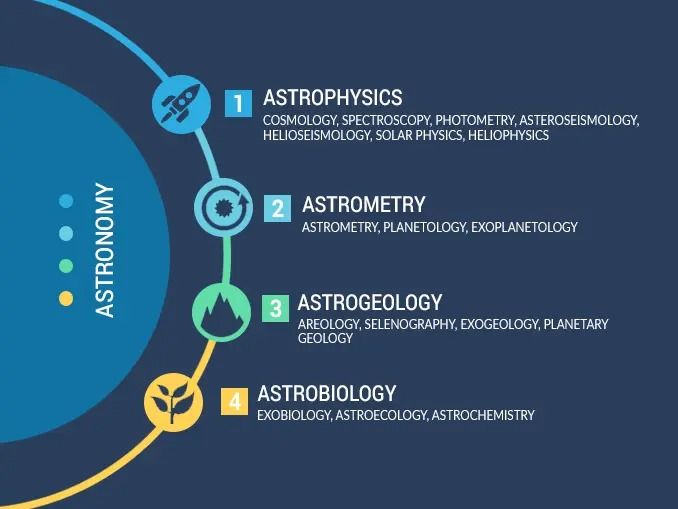
Astronomy maps and observes celestial objects, while astrophysics applies physical tools to explain them and cosmology studies the universe's origin, structure, evolution, and fate. This overview of astronomy follows a field transformed from naked-eye records into telescope observations, spectroscopy, gravitational-wave detection, and searches for planetary biosignatures. Its discoveries repeatedly changed models of the cosmos, from geocentrism to heliocentrism and an expanding universe.
Astronomy is the oldest of the natural sciences, the discipline that charts the cosmos and asks how the universe is structured, how it works, and where it came from.
It began with naked-eye observations of the predictable cycles of the Sun, Moon, and planets, accumulated across millennia into the first computational science in human history.
It has since become a discipline of extraordinary technological ambition: tracking gravitational waves from black hole mergers a billion light-years distant, photographing the event horizon of a supermassive black hole for the first time, and searching for biosignatures in the atmospheres of planets orbiting other stars.
Astronomy sits at the intersection of physics, chemistry, mathematics, and philosophy, and its findings have repeatedly required fundamental revision of humanity's picture of its place in the cosmos.
Astronomy, Astrophysics, and Cosmology: Distinct but Overlapping Fields
These three terms are often used interchangeably in casual conversation, but they describe meaningfully distinct intellectual territories.
Astronomy in its broadest and oldest sense refers to the observational and descriptive science of celestial objects. It encompasses the cataloguing of stars, the measurement of planetary positions, the mapping of nebulae, and the recording of phenomena like eclipses and meteor showers.
For most of human history, astronomy was purely a geometric and positional discipline: it told you where things were and how they moved, but not what they were made of or why they behaved as they did.
Astrophysics emerged as a distinct field in the second half of the nineteenth century when physicists began applying the tools of spectroscopy and thermodynamics to celestial objects.
William Huggins's pioneering work in the 1860s demonstrated that stellar spectra contained the same absorption lines as terrestrial elements, proving that the stars are made of the same matter as Earth.
Astrophysics asks the physical questions: what powers the Sun, why do stars of different masses evolve along different tracks, how do supernovae detonate, what generates the magnetic fields of neutron stars.
Cosmology is the study of the universe as a whole, covering its origin, large-scale structure, evolution, and ultimate fate.
It draws on both observational astronomy and theoretical physics, including general relativity and quantum field theory, to grapple with questions like the nature of dark matter and dark energy, the processes of the first seconds after the Big Bang, and whether our universe is one of many in a multiverse.
| Field | Primary Questions | Key Methods |
|---|---|---|
| Astronomy | Where are celestial objects? How do they move? | Astrometry, photometry, spectroscopy |
| Astrophysics | What are they made of? How do they work? | Spectroscopy, nuclear physics, fluid dynamics |
| Cosmology | Where did the universe come from? How will it end? | CMB analysis, large-scale surveys, general relativity |
In practice, the boundaries are porous. Many researchers cross all three disciplines in a single career.
From Naked Eye to Telescope: The Transformation of Astronomical Knowledge
For most of human history, astronomy was practiced with naked eyes and extraordinary patience. The Babylonians had compiled systematic records of planetary positions by the second millennium BCE. The ancient Greeks constructed geometric models that explained planetary motions as combinations of circular orbits.
Claudius Ptolemy's geocentric model, synthesized in the Almagest around 150 CE, was sufficiently accurate to predict planetary positions for over a thousand years and remained the standard of astronomical computation throughout the medieval period.
Nicolaus Copernicus's heliocentric model, presented in "De Revolutionibus" in 1543, placed the Sun at the center and the Earth as one of several orbiting planets. This was initially a mathematical convenience, simplifying some calculations, but it carried profound philosophical implications.
Johannes Kepler's three laws of planetary motion (1609-1619), derived empirically from Tycho Brahe's systematic observational records, replaced circular with elliptical orbits and established precise quantitative relationships between orbital period and distance.
Isaac Newton's "Principia Mathematica" (1687) unified terrestrial and celestial mechanics under a single gravitational law, explaining why Kepler's laws held.
When Galileo Galilei turned his improved refracting telescope toward the sky in 1609, the consequences for human understanding were profound and irreversible.
Galileo had not invented the telescope (that credit belongs to Dutch optician Hans Lippershey, who patented a design in 1608), but he improved its magnification and pointed it at celestial objects.
What he saw shattered the Aristotelian cosmos that had dominated Western thought for two thousand years.
Jupiter had four satellites of its own; the Moon's surface was rugged and cratered; Venus went through phases like the Moon, explicable only if Venus orbited the Sun; the Milky Way resolved into countless individual stars.
William Herschel, using a reflecting telescope of his own construction in the 1780s, built the first reasonably accurate model of the Milky Way's structure and discovered Uranus, the first planet found by instrumental means.
Edwin Hubble, using the 100-inch Hooker telescope at Mount Wilson, resolved Cepheid variable stars in the Andromeda nebula in the early 1920s, establishing that it lay far outside the Milky Way.
His subsequent demonstration that galaxy recession velocities were proportional to their distances provided the observational foundation for the Big Bang theory.
"The nitrogen in our DNA, the calcium in our teeth, the iron in our blood, the carbon in our apple pies were made in the interiors of collapsing stars. We are made of star stuff." - Carl Sagan
The Hertzsprung-Russell Diagram and Stellar Evolution
The Hertzsprung-Russell (H-R) diagram, developed independently by Danish astronomer Ejnar Hertzsprung and American astronomer Henry Norris Russell in the early twentieth century, is one of the most informative scientific plots ever constructed.
It places stars on a two-dimensional graph according to their luminosity (vertical axis) and surface temperature or spectral class (horizontal axis, with hot blue stars on the left and cool red stars on the right).
When thousands of stars are plotted, they do not scatter randomly but cluster into distinct regions that encode the entire physics of stellar evolution.
The most prominent feature is the main sequence, a diagonal band running from upper-left to lower-right. Stars on the main sequence are fusing hydrogen into helium in their cores.
Position on the band is determined almost entirely by mass: massive stars burn hot and bright at the upper left; low-mass stars burn cool and dim at the lower right.
Our Sun sits comfortably in the middle of the main sequence. A star spends the vast majority of its lifetime on the main sequence, approximately 10 billion years for a solar-mass star.
When a star exhausts hydrogen in its core, it expands dramatically and moves rightward and upward on the diagram, becoming a red giant or red supergiant. The subsequent evolution depends critically on mass:
| Stellar Mass | Main Sequence Lifespan | End State |
|---|---|---|
| Less than ~0.08 solar masses | Never fuses hydrogen (brown dwarf) | Cools indefinitely |
| ~0.08 to ~8 solar masses | Billions of years | Planetary nebula + white dwarf |
| ~8 to ~20 solar masses | Millions of years | Core-collapse supernova + neutron star |
| Greater than ~20 solar masses | Millions of years | Core-collapse supernova + black hole |
For a star like the Sun, the red giant phase ends with the ejection of outer layers as a planetary nebula and the collapse of the core into a white dwarf, a dense Earth-sized remnant that appears in the lower left of the H-R diagram.
For stars more than roughly eight times the Sun's mass, the end is a core-collapse supernova, one of the most energetic events in the universe, releasing more energy in seconds than the Sun will emit in its entire lifetime.
The process of stellar nucleosynthesis, the forging of heavy elements in stellar interiors, was outlined by Burbidge, Burbidge, Fowler, and Hoyle in their landmark 1957 paper (the "B2FH paper").
Stars fuse hydrogen into helium, helium into carbon and oxygen, and through successive stages of fusion in increasingly massive stars, carbon through to iron.
Elements heavier than iron can only be formed in supernovae or, as established by the gravitational wave observation GW170817 in 2017, in neutron star mergers.
Every atom of carbon in living things, every atom of oxygen breathed with each breath, was forged in the nuclear furnace of a star that died before the Sun was born.
Black Holes: Theory, Evidence, and First Images
A black hole is a region of spacetime where gravity is so strong that nothing (not matter, not electromagnetic radiation, not information of any kind) can escape once it crosses the boundary called the event horizon. The concept follows mathematically from Einstein's general theory of relativity, published in 1915.
Karl Schwarzschild derived the first exact solution to Einstein's field equations just weeks after publication while serving on the Russian front in World War I, describing the geometry of spacetime around a non-rotating spherical mass.
The Schwarzschild radius, the critical size to which a mass must be compressed to become a black hole, is about 3 kilometers per solar mass, meaning the Sun would need to be squeezed to approximately 3 kilometers in radius.
For decades, black holes were regarded as mathematical curiosities. Evidence began accumulating in the 1970s with X-ray astronomy.
The binary system Cygnus X-1, detected by the Uhuru satellite in 1971, appeared to contain a compact object of roughly 15 solar masses orbiting a blue supergiant star, far too massive to be a neutron star, making a black hole the only plausible interpretation.
Hawking and Thorne famously made a wager on whether it was a black hole; Hawking conceded in 1990.
In 2015, the LIGO collaboration detected gravitational waves, ripples in spacetime predicted by general relativity, from the merger of two black holes 1.3 billion light-years away. The signal matched theoretical predictions with extraordinary precision and earned the Nobel Prize in Physics in 2017 for Weiss, Barish, and Thorne.
In 2019, the Event Horizon Telescope collaboration published the first direct image of a black hole's shadow: a glowing ring of hot plasma surrounding the event horizon of M87, a 6.5-billion-solar-mass black hole at the center of galaxy Messier 87, 55 million light-years distant.
The image was assembled from radio telescope data collected simultaneously across six continents, creating an Earth-sized interferometer. In 2022, the Event Horizon Telescope released an image of Sagittarius A, the 4-million-solar-mass black hole at the center of our own Milky Way galaxy.
Exoplanets: A Transformed Picture of Planetary Systems
The first confirmed detection of a planet orbiting a main-sequence star other than the Sun came in 1995, when Michel Mayor and Didier Queloz announced the discovery of 51 Pegasi b using the radial velocity method, detecting the tiny wobble the planet imparted on its host star as it orbited.
The planet was a gas giant orbiting extraordinarily close to its star, completing a full orbit in just four days. This "hot Jupiter" confounded theorists who assumed planets formed where we find them rather than migrating inward, and launched an era of rethinking planetary formation.
Mayor and Queloz received the Nobel Prize in Physics in 2019.
The discovery rate exploded with NASA's Kepler space telescope, launched in 2009, which monitored the brightness of over 150,000 stars simultaneously using the transit method, detecting the tiny dips in brightness when a planet passed in front of its host star.
By the time Kepler's mission ended in 2018, it had confirmed over 2,600 exoplanets. The total count from all methods exceeded 5,500 confirmed exoplanets by 2023.
Among the most significant findings is the TRAPPIST-1 system, announced in 2017. This ultracool red dwarf star, 40 light-years from Earth, harbors seven Earth-sized planets, three of which orbit in the habitable zone where liquid water could exist on a planetary surface.
Atmospheric characterization of the TRAPPIST-1 planets is among the primary science goals of the James Webb Space Telescope.
Statistical analysis of Kepler data suggests that virtually every star in the galaxy hosts at least one planet, and that Earth-sized planets in habitable zones are common, with estimates ranging from tens of billions of such planets in the Milky Way alone.
The Drake Equation and the Fermi Paradox
The Drake equation was formulated in 1961 by radio astronomer Frank Drake as an organizing framework for the first meeting of the Search for Extraterrestrial Intelligence at Green Bank, West Virginia. It expresses the number of communicating civilizations currently active in the Milky Way as the product of successive factors:
N = R* x fp x ne x fl x fi x fc x L
Where R* is the rate of star formation, fp is the fraction of stars with planets, ne is the number of habitable planets per system, fl is the fraction where life develops, fi is the fraction where intelligence develops, fc is the fraction that develop detectable technology, and L is the average longevity of such civilizations.
The astronomical terms of the equation are now much better constrained than in 1961. We know that planet formation is extremely common and that habitable-zone rocky planets are abundant. The biological and sociological terms, however, remain deeply uncertain.
The longevity term L may be the most important and most unknowable: if civilizations typically destroy themselves within a century of developing radio technology, the galaxy could be largely silent.
The Fermi paradox, named for physicist Enrico Fermi, sharpens the tension. Given the age of the galaxy (roughly 13 billion years), the abundance of potentially habitable planets, and the physical possibility of interstellar travel on timescales of millions of years, the galaxy should plausibly have been colonized many times over, yet we see no evidence of extraterrestrial intelligence.
Proposed resolutions range from the Great Filter hypothesis (some barrier eliminates civilizations, either behind us in the form of life's rare origin, or ahead in the form of inevitable self-destruction), to the Zoo hypothesis (advanced civilizations are deliberately silent), to the statistical argument that we may be among the earliest technological civilizations.
The James Webb Space Telescope
The James Webb Space Telescope (JWST), launched on December 25, 2021 and entering full scientific operation in mid-2022, represents the most significant advance in space-based astronomy since the Hubble Space Telescope.
Hubble observes primarily in ultraviolet and visible wavelengths; JWST is optimized for near-infrared and mid-infrared wavelengths.
This distinction is scientifically fundamental: light from the most distant galaxies, formed when the universe was only a few hundred million years old, has been redshifted by cosmic expansion from visible wavelengths into the infrared.
JWST's 6.5-meter gold-coated beryllium mirror (nearly three times the light-collecting area of Hubble's 2.4-meter mirror), combined with infrared detectors operating from a stable orbit at the Earth-Sun Lagrange point L2, gives it a lookback time of approximately 13.5 billion years.
Early JWST results have surprised even optimistic theorists. Galaxies discovered in the first year of observations were larger, more massive, and more structurally mature than models predicted for such early cosmic epochs, suggesting that galaxy formation may have begun earlier and proceeded more rapidly than many models had predicted, though whether this requires revising standard cosmology or reflects gaps in galaxy-formation modeling specifically is actively debated.
These findings have triggered active theoretical debate about the physics of the early universe.
JWST has also transformed exoplanet atmospheric science. Its spectroscopic capabilities allow detection of specific molecules in planetary atmospheres during transits with a sensitivity Hubble could not approach.
Initial results on TRAPPIST-1 planets suggest some have thin or absent atmospheres, while ongoing observations search for biosignatures: chemical signals like oxygen, methane, or more exotic compounds that might indicate biological processes.
"Somewhere, something incredible is waiting to be known." - Sharon Begley (often misattributed to Carl Sagan)
Practical and Cultural Significance
Astronomy is often asked to justify itself economically, as a field with no obvious immediate practical applications. The answer operates on multiple levels.
Technological spinoffs from astronomical instrumentation have been substantial. Charge-coupled device (CCD) detectors developed for astronomy now underpin digital cameras worldwide. Wi-Fi technology was developed in part from radio astronomy signal processing techniques.
Medical imaging technologies including MRI and CT scanning draw on mathematical techniques originally developed for radio interferometry.
Navigation: GPS and other satellite navigation systems require relativistic corrections, both special relativistic (time dilation from satellite velocity) and general relativistic (gravitational time dilation), to achieve centimeter-level accuracy.
Without these corrections, GPS positions would drift by approximately 10 kilometers per day.
Cultural impact: Astronomy has repeatedly forced revisions of humanity's self-understanding. The Copernican revolution displaced Earth from the center of the universe. The demonstration that the Milky Way is one of billions of galaxies displaced humanity to the periphery of an ordinary galaxy.
The discovery that the universe had a beginning in the Big Bang raised questions that overlap with theology and philosophy. JWST's images of galaxy clusters and stellar nurseries have reached hundreds of millions of people worldwide, making it one of the most visible scientific instruments in human history.
Astronomy remains one of the few sciences in which amateur observers can still make genuine contributions, monitoring variable stars, discovering comets, and contributing to surveys of near-Earth asteroids, while the professional field deploys instruments of extraordinary power at the frontiers of human knowledge about the universe.