
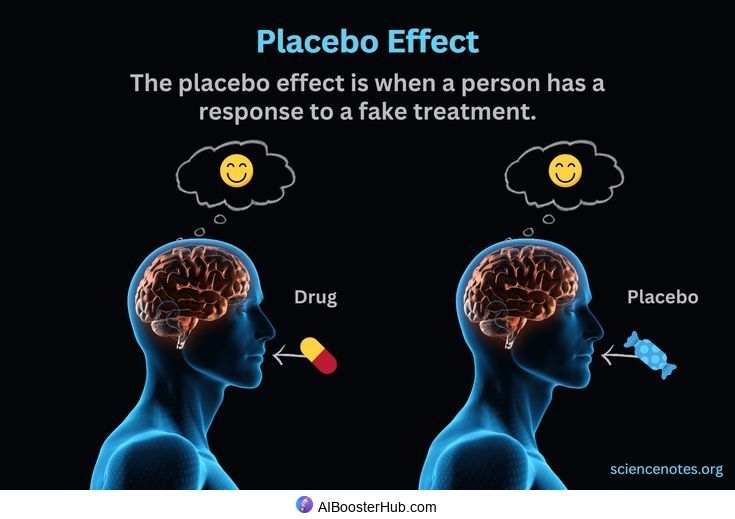
What Is the Placebo Effect?
The placebo effect is the measurable improvement in health outcomes that occurs when a patient receives a treatment with no pharmacologically active ingredients - such as a sugar pill, saline injection, or sham surgery - due to psychological and contextual factors including expectation, conditioning, and the therapeutic relationship.
The effect is not imagined: it involves documented changes in brain chemistry, hormonal activity, immune function, and neurological activity.
Modern placebo research demonstrates that contextual factors - how a treatment is presented, the patient-clinician relationship, the symbolic meaning of a clinical encounter - are present to some degree in every medical intervention, meaning the placebo effect is a component of all treatment, not only inert ones.
In 1955, Henry Beecher published a paper in the Journal of the American Medical Association titled "The Powerful Placebo." Drawing on 15 controlled studies involving more than 1,000 patients, Beecher concluded that roughly 35 percent of patients obtained satisfactory relief from placebos alone.[1]
The number was controversial then and has been disputed since, but the fundamental observation - that inert treatments produce real outcomes - has only grown more robust in the decades that followed.
The placebo effect is one of the most consistently documented phenomena in medicine and one of the most poorly understood. It is not trickery, and it is not patients imagining that they feel better. It involves measurable changes in brain chemistry, hormonal activity, immune function, and neurological firing patterns.
It is produced by sugar pills, saline injections, and sham surgeries alike. And in some conditions, it accounts for a substantial fraction of the benefit attributed to active drugs.
Understanding the placebo effect is not merely academic. It has implications for how clinical trials are designed, how clinicians communicate with patients, and what we believe drugs and treatments are actually doing.
A Brief History of Placebo Research
The word "placebo" comes from the Latin for "I shall please" and entered medical usage as far back as the 13th century, initially referring to prayers sung in place of a funeral office by mourners who were not genuine grievers.
Its medical usage, meaning a treatment given more to satisfy a patient than to cure them, dates to the 18th century.
The systematic scientific study of placebo effects, however, began in the mid-20th century. Henry Beecher's 1955 paper catalyzed the field, though Beecher's methodology and conclusions were later questioned.
A landmark 1994 re-analysis by Kienle and Kiene challenged Beecher's data, arguing that many of the improvements he attributed to placebos reflected natural disease progression, regression to the mean, and reporting biases rather than genuine placebo effects.
The debate this created was productive. It forced researchers to more carefully distinguish between: (1) spontaneous improvement unrelated to any treatment, (2) regression to the mean (people often seek treatment when symptoms are worst, and symptoms naturally improve), and (3) genuine placebo-specific effects driven by expectation, conditioning, or the therapeutic encounter.
A landmark 2001 Cochrane review by Hrobjartsson and Gotzsche analyzed 114 studies comparing placebo to no treatment and found that placebo effects on objective outcomes (like blood pressure, lung function) were small and often statistically non-significant, while effects on subjective outcomes (pain, nausea, anxiety) were larger and more consistent.[2]
This nuanced picture - placebo effects are real but domain-specific and often smaller than Beecher suggested - is the current scientific consensus.
The field was transformed in the 1970s and 1980s by the discovery that placebo effects had neurobiological mechanisms. This moved placebo science from clinical curiosity to mainstream neuroscience.
What the Placebo Effect Actually Is
A placebo is a treatment with no known active ingredients or mechanisms relevant to the condition being treated. A placebo effect is the measurable improvement in health outcomes that follows from receiving a placebo.
The term is also used more broadly to refer to any improvement in outcomes attributable not to the specific pharmacological or physical properties of a treatment but to contextual factors: expectation, the therapeutic relationship, conditioning, and the symbolic meaning of the clinical encounter.
This broader definition is important. Even active drugs produce effects beyond their pharmacological action.
A patient who trusts their doctor, who is told a drug is highly effective, and who takes it in a comfortable clinic will often respond better than a patient receiving identical medication in a cold, impersonal context with a clinician who communicates uncertainty.
This "active placebo component" is present in every medical treatment. The placebo effect, strictly speaking, is just this component in isolation.
"The placebo effect is not a nuisance to be eliminated from clinical trials. It is a window into the biology of the therapeutic encounter." - Fabrizio Benedetti, University of Turin
The Neuroscience: What Happens in the Brain
The most significant advance in placebo research has been demonstrating that the effect is neurobiologically real, not merely subjective. Several mechanisms have been identified.
Endogenous Opioids
The most well-established placebo mechanism involves the body's own pain-suppression system. In a landmark 1978 experiment, Jon Levine, Newton Gordon, and Howard Fields at UCSF demonstrated that blocking opioid receptors with naloxone partially reversed placebo analgesia in dental patients.[3]
This was the first direct evidence that placebo pain relief operates through the same neurochemical pathways as morphine. The brain, primed by the expectation of relief, releases endogenous opioids - particularly endorphins and enkephalins - that genuinely reduce pain signaling.
Subsequent neuroimaging studies confirmed this. PET and fMRI studies showed that placebo administration activates the anterior cingulate cortex, prefrontal cortex, and periaqueductal gray matter - exactly the areas involved in opioid-mediated analgesia.
The subjective experience of pain relief following a placebo is correlated with objectively measurable changes in brain activity.
Wager and colleagues (2004), in a landmark fMRI study published in Science, demonstrated that placebo analgesia was associated with decreased brain activity in pain-sensitive regions including the thalamus, anterior insula, and anterior cingulate cortex.[4]
The brain was not merely reporting less pain - it was processing less pain. This study was particularly influential because it showed the effect could be visualized and measured in real time.
Dopaminergic Mechanisms
For Parkinson's disease, a different mechanism operates. Parkinson's involves the progressive loss of dopamine-producing neurons in the substantia nigra.
Multiple studies, including work by Fabrizio Benedetti at the University of Turin, have shown that placebo administration triggers measurable dopamine release in Parkinson's patients, producing genuine though temporary improvement in motor function.
Patients' neurons - what remains of them - fire in response to expectation alone.
de la Fuente-Fernandez and colleagues (2001), using PET imaging, quantified dopamine release in Parkinson's patients receiving placebo.[5] They found that placebo administration triggered substantial dopamine release in the striatum, with the magnitude of release correlating with the size of the expected benefit.
The brain was not merely receiving expectation passively - it was actively responding to it with the same machinery that responds to active drugs.
The Role of Cholecystokinin in Nocebo
On the negative side, the nocebo effect - the worsening of outcomes through negative expectation - involves cholecystokinin (CCK), a neurotransmitter involved in anxiety and the modulation of pain.
Benedetti and colleagues demonstrated that pharmacologically blocking CCK reduced nocebo hyperalgesia, establishing the neurochemical pathway through which negative expectation amplifies pain.
This finding is practically significant: the biology of nocebo is as specific and as real as the biology of placebo.
Conditioning
Classical conditioning, the process Pavlov identified in dogs salivating at bells, also drives placebo effects.
When a patient has repeatedly taken a medication and experienced its effects, the environment, ritual, and sensory cues associated with taking medication become conditioned stimuli that trigger physiological responses on their own.
The act of swallowing a pill - any pill - can activate the conditioned response to previous medication.
This mechanism explains why placebo effects are often stronger in patients with prior experience of effective treatment for a condition than in treatment-naive patients. The conditioning history matters. It also explains one of the most striking recent findings in placebo research: open-label placebos.
Open-Label Placebos: Effect Without Deception
The most counterintuitive finding in modern placebo research is that placebos can work even when patients know they are receiving them. This was demonstrated most rigorously by Ted Kaptchuk and colleagues at Harvard Medical School in a series of studies beginning in the 2010s.
In a 2010 randomized controlled trial published in PLOS ONE, Kaptchuk's team recruited 80 patients with irritable bowel syndrome (IBS) and randomly assigned them to either an open-label placebo group (told explicitly they were receiving sugar pills with no active ingredients but that "placebo pills, given honestly, have been shown in rigorous clinical testing to produce significant mind-body self-healing processes") or a no-treatment control group.[7]
After three weeks, the open-label placebo group showed significantly greater improvement on global IBS symptom scores and adequate relief measures.
A 2018 follow-up study, published in Scientific Reports, extended these findings to cancer-related fatigue - one of the most debilitating symptoms experienced by cancer survivors - with similar results.
Patients receiving open-label placebos twice daily reported significantly reduced fatigue compared to controls, despite knowing the pills contained nothing active.
A 2021 study by Carvalho and colleagues, published in PAIN, replicated the open-label placebo finding in chronic low back pain patients, with significant reductions in both pain intensity and pain-related disability after 3 weeks compared to controls.[8]
The effect size (0.52) was comparable to what many modestly effective active treatments achieve.
These findings upend the assumption that deception is a necessary component of placebo efficacy. They suggest that the ritual of treatment, the therapeutic framing, and perhaps conditioned responses to pill-taking are sufficient to produce measurable effects even in the absence of false beliefs.
The honest disclosure that "placebos can trigger real physiological responses through conditioning and expectation" is apparently itself sufficient to initiate those processes.
The Nocebo Effect: When Expectation Harms
If expectation can heal, it can also harm. The nocebo effect is the mirror image of the placebo effect: negative expectations produce negative outcomes. The term, from the Latin for "I will harm," describes the genuine physiological deterioration that follows from expecting deterioration.
The nocebo effect has been documented across numerous contexts:
- Patients told that a venipuncture will hurt report more pain than those given neutral instructions.
- In randomized trials, patients warned of side effects on drug information sheets experience those side effects at higher rates, including on placebo pills.
- In one striking study, patients diagnosed with heart disease who were told they were at high risk died at significantly higher rates than equally ill patients given more neutral framing - a finding that has been replicated in several forms.
A systematic review by Mitsikostas and colleagues (2011), published in the Journal of Neurology, analyzed nocebo effects in migraine treatment trials.[13]
Across 22 trials, drop-out rates due to adverse events were 23.4% in the active drug groups but 9.0% in the placebo groups - suggesting that patients who knew they were on active drugs were more likely to experience side effects in part because they expected to.
The pharmacology was real, but the expectation amplified it.
The nocebo effect has particular relevance for clinical communication. A doctor who emphasizes risks, speaks pessimistically about prognosis, or uses language that triggers fear may inadvertently worsen patient outcomes through nocebo mechanisms.
This is not an argument for withholding information, but it is an argument for how information is delivered.
| Mechanism | Direction | Example | Neurochemistry |
|---|---|---|---|
| Expectation (positive) | Improvement | "This will reduce your pain" | Endorphin release |
| Expectation (negative) | Worsening | "This will be very painful" | CCK release, cortisol elevation |
| Conditioning | Improvement | Prior experience of effective treatment | Conditioned drug response |
| Social observation | Improvement | Watching others respond to treatment | Mirror neuron involvement |
| Open-label placebo | Improvement | Honest disclosure with positive framing | Conditioning and expectation combined |
| Nocebo via written information | Worsening | Side effects listed in package insert | CCK, anxiety-pathway activation |
Fabrizio Benedetti's Research Program
No researcher has done more to place placebo science on rigorous neurobiological footing than Fabrizio Benedetti, professor of physiology at the University of Turin Medical School.
Over three decades, Benedetti's laboratory has systematically mapped the neural pathways, neurotransmitters, and molecular mechanisms involved in placebo and nocebo responses.[6]
Benedetti's work has several major contributions:
Pain and opioids: Benedetti confirmed and extended the naloxone studies, demonstrating that different types of placebo analgesia involve different mechanisms.
Expectation-driven analgesia involves opioid pathways; conditioning-driven analgesia can involve either opioid or non-opioid pathways depending on the drug used in prior conditioning. This means the mechanism shifts depending on the learning history of the patient.
Parkinson's disease: As noted above, Benedetti's group showed that placebos trigger dopamine release in Parkinson's patients and cause neurons in the subthalamic nucleus to reduce their aberrant firing - a measurable electrophysiological change, not merely self-report.
Altitude and respiratory response: In a series of altitude studies, Benedetti's team showed that placebo oxygen - subjects told they were breathing enriched oxygen when breathing normal air - reduced altitude sickness symptoms and changed measurable physiological parameters including prostaglandin E2 levels, indicating that expectation can modulate the biochemistry of hypoxic stress.
Neuroplasticity and learning: Benedetti has argued that the placebo effect is best understood as a form of Pavlovian and expectancy-based learning, and that the neural circuits involved overlap substantially with those involved in reward learning, fear conditioning, and social learning.
His 2014 book Placebo Effects: Understanding the Mechanisms in Health and Disease is the most comprehensive scientific treatment of the subject.
Benedetti's broader conclusion is particularly important for how medicine is practiced: the therapeutic relationship is not a soft, incidental aspect of clinical care. It is a neurobiologically active ingredient.
How Strong Is the Placebo Effect? Looking at the Evidence
The strength of the placebo effect varies dramatically by condition, outcome measure, and the specific context of administration. Some generalizations are possible.
Pain
Pain is the condition where placebo effects are best documented and often largest. Meta-analyses consistently find that placebo arms in pain trials show substantial improvement - often 30 to 50 percent reductions in pain scores. The gap between placebo and active analgesic is smaller than many people assume.
A 2015 analysis by Tuttle and colleagues, published in the journal Pain, found that placebo response rates in neuropathic pain trials increased from approximately 27 percent before 2000 to approximately 39 percent by 2013 - a trend that has led some pharmaceutical companies to abandon drug development programs that might have succeeded in earlier eras simply because the growing placebo response makes it statistically harder to demonstrate separation.
Depression
Antidepressant trials have generated significant controversy about placebo effects. Irving Kirsch's 2008 meta-analysis of FDA trial data, published in PLOS Medicine, concluded that the difference between antidepressant and placebo was below the threshold of clinical significance for all but the most severely depressed patients.[9]
Critics challenged the analysis on several grounds - particularly the relevance of the specific outcome measure used - but the finding that placebo response rates in depression trials are high, typically 30 to 40 percent, is not disputed.
A 2019 large-scale analysis by Cipriani and colleagues in The Lancet, which examined 522 trials and over 116,000 patients, confirmed that all antidepressants outperformed placebo - but effect sizes were generally modest, and the variation in outcomes across trials was large.
The placebo component of antidepressant treatment is real and substantial.
IBS and Functional Disorders
Kaptchuk's research and several independent meta-analyses have found large placebo effects in IBS and other functional gastrointestinal disorders. A 2010 meta-analysis by Patel and colleagues found that placebo response rates in IBS trials averaged approximately 40 percent.
Some researchers argue that conditions defined primarily by subjective symptom experience are particularly susceptible to placebo effects - and Kaptchuk's open-label placebo work suggests this susceptibility can be harnessed therapeutically.
Surgery
Perhaps the most dramatic placebo findings come from sham surgery studies. A famous Finnish randomized controlled trial of arthroscopic knee surgery for osteoarthritis, published in the New England Journal of Medicine in 2002 (Moseley and colleagues), found that sham surgery produced equivalent outcomes to actual surgery at two-year follow-up.[10]
A similar finding emerged from a 2017 NEJM trial of spinal fusion versus sham surgery for spinal stenosis.
A 2016 systematic review by Wartolowska and colleagues identified 53 sham surgery trials and found that in 74% of cases, the real surgery was no better than sham.[11]
These findings are controversial - critics point out that patients in sham surgery trials may receive unusually intensive post-operative care that itself improves outcomes - but they are methodologically rigorous and point to a genuine phenomenon: the ritual, expectation, and recovery context of surgery generate substantial placebo effects independent of the specific procedure performed.
Placebo Responses Across Cultures
A dimension of placebo research that has received less attention is cultural variability. The strength and nature of placebo responses varies across cultures in ways that are clinically significant and theoretically informative.
Research has found that German patients show unusually high placebo responses to ulcer treatments but weak responses to antihypertensive placebos, while the reverse is true for Brazilian patients.
A study by Moerman (2000) found that across 31 different anti-ulcer drug trials, the percentage healed by placebo varied from 0% to 100%, with much of this variation appearing to be explained by cultural factors including the authority invested in different types of medical encounters, expectations about drug efficacy, and the size and appearance of pills.
Ritual matters: Kaptchuk and colleagues (2008) conducted a randomized trial comparing no treatment, sham acupuncture, and sham acupuncture delivered with either limited or enhanced therapeutic ritual (attentiveness, warmth, positive expectation communicated by the practitioner).[12]
The enhanced ritual condition produced substantially larger effects than the limited ritual condition, with effect sizes comparable to published results from active treatment trials. The ritual was not incidental to the therapeutic benefit; it was a central mechanism.
The Ethics of Placebo Use
The ethics of placebo administration in clinical medicine has been debated since at least the 1950s. The central tension is between therapeutic benefit and respect for patient autonomy.
Deceptive placebos - giving patients inert treatments while claiming they are active drugs - are broadly considered unethical in modern medical practice. They violate the principle of informed consent, undermine trust in the medical relationship, and are largely prohibited by medical ethics codes in most countries.
A 2008 survey published in the British Medical Journal found that 46-58% of American internists and rheumatologists reported regularly prescribing "impure placebos" - treatments they knew were not specifically effective for the condition in question but which might benefit through placebo mechanisms.
These included vitamins for patients with no deficiency, antibiotics for viral infections, and sub-therapeutic doses of active drugs. The practice was common, largely unacknowledged, and ethically murky.
Open-label placebos sidestep the deception problem. If a patient can be given an honest explanation of how the placebo effect works, told they are receiving an inert treatment, and still derive benefit from it, no deception has occurred.
The growing body of evidence supporting open-label placebo efficacy has made this approach increasingly attractive to researchers and clinicians.
Harnessing the context effect is a third and arguably most defensible approach. Because placebo-like mechanisms are active in every clinical encounter - not just when inert pills are given - clinicians can legitimately optimize these mechanisms through honest communication, attentiveness, warmth, positive expectation where evidence supports it, and ritual.
This does not require any deception; it requires recognizing that the therapeutic relationship is itself a therapeutic tool.
What This Means for Clinical Trials
The existence of strong placebo effects creates methodological challenges for clinical research.
Randomized controlled trials use placebo arms specifically to subtract the placebo effect from the measured benefit of active drugs, on the assumption that the placebo response in the control arm equals the placebo response in the active arm. But this assumption may not always hold.
Researchers have noted that placebo responses in clinical trials have been growing over time, particularly in the United States - a phenomenon documented in the 2015 Tuttle analysis in Pain.[14]
If placebo responses increase while drug effects remain constant, drugs will fail to achieve statistical separation from placebo even if they are genuinely effective.
This has real consequences: effective drugs may be abandoned in late-stage trials not because they do not work but because placebo responses in the trial population are higher than anticipated.
Understanding what drives placebo responses - and what drives their variability between countries, populations, and trial designs - is therefore not merely an academic question but a practical one for pharmaceutical development.
The growing field of biomarker-based patient stratification offers a partial solution: identifying genetic, neurological, or behavioral markers that predict placebo response could allow researchers to design trials with more homogeneous expected placebo responses, or to use placebo responders in separate natural history studies rather than including them in drug efficacy trials.
Practical Implications for Patients and Clinicians
For patients: The evidence on placebo effects suggests several things. First, the context in which treatment is received matters.
Feeling understood, trusting your provider, and maintaining positive but realistic expectations about treatment are not trivial psychological factors - they have physiological correlates that influence how you respond to treatment.
Second, being informed about the placebo effect does not eliminate it. Third, nocebo effects from negative framing or catastrophizing about symptoms are real and worth managing.
For clinicians: Communication is treatment. How diagnoses are framed, what language is used to describe prognosis, and how warmly patients are treated in the clinical encounter all influence outcomes through mechanisms overlapping with placebo.
A clinician who communicates confidence where evidence warrants it, acknowledges uncertainty honestly where it exists, and treats patients as partners rather than passive recipients of care is not just being kind - they are being effective.
Research by Verheul and colleagues (2010), in a systematic review published in PLOS ONE, found that when clinicians provided "warm, attentive, and empathic" consultations - described as an "enhanced" therapeutic relationship - patients reported significantly better outcomes across a range of conditions than those receiving "cold" or impersonal consultations with the same active treatment.
The effect size of the therapeutic relationship was, in several studies, comparable to or larger than the pharmacological effect of the drug being tested.
Key Takeaways
The placebo effect is not imagination or self-deception. It is a set of neurobiologically real mechanisms - involving opioids, dopamine, CCK, conditioning, and expectation - that produce measurable changes in pain, symptoms, and disease markers.
Its strength varies by condition: large in pain, functional gastrointestinal disorders, and depression; smaller in objectively measured outcomes like tumor regression or blood pressure.
Open-label placebos work even when patients know they are receiving inert treatment, suggesting that deception is not the active ingredient. The nocebo effect demonstrates that the same mechanisms that produce benefit can produce harm when expectations are negative.
The clinical implications are practical: the therapeutic relationship, communication style, and expectation management are tools with measurable physiological consequences. Understanding this does not reduce medicine to suggestion; it expands what counts as treatment.
Sources & Further Reading
- Beecher, H. K. (1955). The powerful placebo. Journal of the American Medical Association, 159(17), 1602-1606.
- Hrobjartsson, A., & Gotzsche, P. C. (2001). Is the placebo powerless? An analysis of clinical trials comparing placebo with no treatment. New England Journal of Medicine, 344(21), 1594-1602.
- Levine, J. D., Gordon, N. C., & Fields, H. L. (1978). The mechanism of placebo analgesia. The Lancet, 312(8091), 654-657.
- Wager, T. D., Rilling, J. K., Smith, E. E., Sokolik, A., Casey, K. L., Davidson, R. J., ... & Cohen, J. D. (2004). Placebo-induced changes in FMRI in the anticipation and experience of pain. Science, 303(5661), 1162-1167.
- de la Fuente-Fernandez, R., Ruth, T. J., Sossi, V., Schulzer, M., Calne, D. B., & Stoessl, A. J. (2001). Expectation and dopamine release: Mechanism of the placebo effect in Parkinson's disease. Science, 293(5532), 1164-1166.
- Benedetti, F. (2014). Placebo Effects: Understanding the Mechanisms in Health and Disease (2nd ed.). Oxford University Press.
- Kaptchuk, T. J., Friedlander, E., Kelley, J. M., Sanchez, M. N., Kokkotou, E., Singer, J. P., ... & Lembo, A. J. (2010). Placebos without deception: A randomized controlled trial in irritable bowel syndrome. PLOS ONE, 5(12), e15591.
- Carvalho, C., Caetano, J. M., Cunha, L., Rebouta, P., Kaptchuk, T. J., & Kirsch, I. (2016). Open-label placebo treatment in chronic low back pain. PAIN, 157(12), 2766-2772.
- Kirsch, I., Deacon, B. J., Huedo-Medina, T. B., Scoboria, A., Moore, T. J., & Johnson, B. T. (2008). Initial severity and antidepressant benefits: A meta-analysis of data submitted to the Food and Drug Administration. PLOS Medicine, 5(2), e45.
- Moseley, J. B., O'Malley, K., Petersen, N. J., Menke, T. J., Brody, B. A., Kuykendall, D. H., ... & Wray, N. P. (2002). A controlled trial of arthroscopic surgery for osteoarthritis of the knee. New England Journal of Medicine, 347(2), 81-88.
- Wartolowska, K., Judge, A., Hopewell, S., Collins, G. S., Dean, B. J., Rombach, I., ... & Carr, A. J. (2014). Use of placebo controls in the evaluation of surgery: Systematic review. BMJ, 348, g3253.
- Kaptchuk, T. J., Kelley, J. M., Conboy, L. A., Davis, R. B., Kerr, C. E., Jacobson, E. E., ... & Lembo, A. J. (2008). Components of placebo effect: Randomised controlled trial in patients with irritable bowel syndrome. BMJ, 336(7651), 999-1003.
- Mitsikostas, D. D., Mantonakis, L. I., & Chalarakis, N. G. (2011). Nocebo is the enemy, not placebo: A meta-analysis of reported side effects after placebo treatment in headaches. Cephalalgia, 31(5), 550-561.
- Tuttle, A. H., Tohyama, S., Ramsay, T., Kimmelman, J., Schweinhardt, P., Bennett, G. J., & Mogil, J. S. (2015). Increasing placebo responses over time in US clinical trials of neuropathic pain. Pain, 156(12), 2616-2626.