
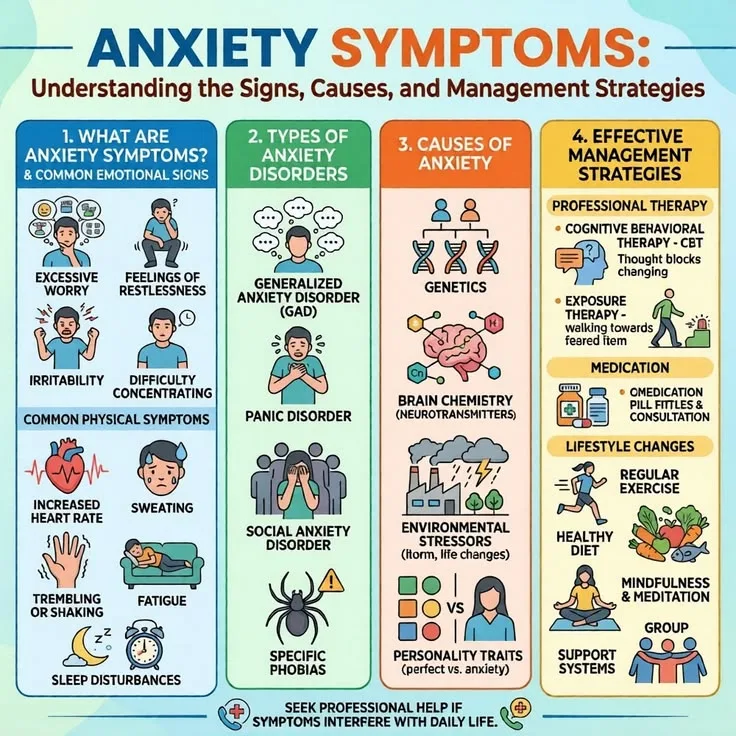
Anxiety is the most common category of mental health problem in the world. The World Health Organization estimated in its 2017 report that approximately 264 million people globally live with an anxiety disorder - more than depression, and more than any other mental health category.
In the United States, the National Institute of Mental Health estimates that 31% of adults will experience an anxiety disorder at some point in their lifetime. Despite this prevalence, anxiety disorders are frequently misunderstood, undertreated, or treated ineffectively.
Understanding what they are, how they differ from ordinary anxiety, what drives their persistence, and what the evidence says about treatment is essential for anyone affected by them - which, over a lifetime, is most people.
Normal Anxiety Versus Clinical Disorder
Anxiety is a universal human experience that serves an adaptive function. The physiological stress response - involving sympathetic nervous system activation, cortisol release, and heightened alertness - evolved to prepare organisms for threat detection and response.
Anxiety before an important presentation, examination, or medical procedure is not pathological; it is appropriate and can even enhance performance at moderate intensity. The Yerkes-Dodson curve (1908) describes the relationship: moderate arousal optimizes performance, while too little or too much impairs it.
The distinction between normal anxiety and an anxiety disorder rests on several dimensions.
Clinical criteria focus on two core features: clinically significant distress (subjective suffering beyond ordinary discomfort) and functional impairment (meaningful interference with occupational performance, social relationships, academic functioning, or other important life domains).
A person who experiences intense fear of dogs but lives in a city, rarely encounters them, and organizes their life effectively does not meet threshold for specific phobia diagnosis despite having the relevant cognitive and physiological profile.
A person whose fear of social judgment prevents them from attending school, building friendships, or maintaining employment warrants a diagnosis of social anxiety disorder.
Avoidance behavior is one of the most important maintaining factors across all anxiety disorders. When people avoid feared situations, they prevent the corrective learning that would occur from direct encounter with feared stimuli - learning that the fear was disproportionate to actual danger.
Short-term avoidance reduces distress but maintains and often worsens anxiety over time. This dynamic explains why anxiety disorders so often escalate without treatment: the natural adaptive response (avoid what is frightening) is precisely the mechanism that makes the disorder worse.
The Major Types
The DSM-5 recognizes a family of anxiety disorders that share excessive fear and anxiety as their core feature but differ substantially in the focus of the feared stimuli and the clinical presentation.
| Disorder | Core Feature | Typical Onset |
|---|---|---|
| Generalized Anxiety Disorder (GAD) | Excessive worry about multiple life domains | Often gradual; young adulthood |
| Panic Disorder | Recurrent unexpected panic attacks with subsequent concern | Often late adolescence to mid-adulthood |
| Social Anxiety Disorder | Fear of negative evaluation in social situations | Typically adolescence |
| Specific Phobia | Intense fear of specific objects or situations | Often childhood; varies by type |
| Separation Anxiety Disorder | Excessive fear of separation from attachment figures | Childhood; adult presentations recognized in DSM-5 |
| Agoraphobia | Fear of situations where escape might be difficult | Often develops from panic disorder |
Generalized Anxiety Disorder (GAD) is characterized by excessive, difficult-to-control worry about multiple domains of life, including work, health, family, and finances, accompanied by physical symptoms such as muscle tension, fatigue, difficulty concentrating, and sleep disturbance.
The worry in GAD is pervasive and hard to control, distinguishing it from situational worries most people experience.
Adrian Wells's metacognitive model (1994) identifies a particularly important maintenance mechanism in GAD: positive beliefs about worry ("worrying helps me prepare for bad outcomes") combined with negative beliefs about worry ("I can't control my worry and it will harm me") create a self-perpetuating metacognitive loop that keeps worry going independently of the actual situations being worried about.
Panic disorder involves recurrent, unexpected panic attacks - abrupt surges of intense fear peaking within minutes, accompanied by somatic symptoms including palpitations, shortness of breath, dizziness, chest pain, and depersonalization - combined with persistent concern about future attacks or significant behavioral changes to avoid them.
The unexpected quality distinguishes panic disorder from situationally bound panic attacks that occur in other anxiety disorders.
Many panic disorder patients develop agoraphobia, avoiding situations from which escape might be difficult if a panic attack occurred, which can progressively restrict their lives.
Social anxiety disorder involves marked fear or anxiety about social situations in which scrutiny by others may occur. The person fears acting in a way or showing anxiety symptoms that will be negatively evaluated. This is one of the most common anxiety disorders and causes substantial occupational and interpersonal impairment.
Clark and Wells's 1995 cognitive model identifies self-focused attention - the tendency to monitor one's own behavior and appearance from an "observer perspective" - as a central maintaining mechanism, explaining why safety behaviors (avoiding eye contact, rehearsing sentences before speaking) paradoxically worsen rather than reduce social anxiety.
The DSM-5 notably separated OCD and PTSD from the anxiety disorders chapter, reflecting evidence of distinct etiological processes. OCD sits in its own obsessive-compulsive and related disorders chapter, while PTSD is in the trauma-related disorders chapter.
This distinction has treatment implications: exposure and response prevention (ERP) is the gold-standard for OCD, while trauma-focused therapies are indicated for PTSD.
The Neurobiology of Fear: Amygdala, Prefrontal Cortex, and the Fear Circuit
The neuroscience of fear and anxiety centers on circuits involving the amygdala, prefrontal cortex, hippocampus, and their interconnections. Joseph LeDoux's foundational work, summarized in The Emotional Brain (1996), identified two parallel pathways through which threatening stimuli reach the amygdala:
A rapid subcortical pathway from the thalamus directly to the amygdala (the "low road") enables fast, automatic threat responses before conscious processing occurs. This pathway sacrifices accuracy for speed: it can produce fear responses to stimuli that only vaguely resemble the original threat.
A slower cortical pathway through the sensory cortex provides more detailed, context-sensitive threat appraisal (the "high road"). In real danger, the rapid system is life-saving. In anxiety disorders, it generates fear responses to stimuli that do not warrant them.
The basolateral amygdala (BLA) is the primary site of fear learning and memory, where conditioned fear associations are encoded. The central nucleus is the primary output hub, driving defensive behaviors, autonomic activation, and stress hormone release.
The ventromedial prefrontal cortex and hippocampus play critical roles in fear extinction - the process by which learned fear is reduced through repeated non-reinforced exposure. Failure of prefrontal inhibitory control over amygdala reactivity is a consistent finding across anxiety disorders on neuroimaging.
"Fear learning is perhaps the most well-understood form of emotional learning in the brain.
But extinction - the mechanism of therapy - is less studied, and the gap between our understanding of fear and our understanding of its reversal remains one of the most important in all of neuroscience." - Joseph LeDoux, adapted from various writings
David Barlow's false alarm model of panic disorder proposes that panic attacks begin as a true alarm (appropriate fear response) to genuine physical threat, which then becomes associated through learning with internal physiological cues and external situations.
Subsequent panic attacks represent learned false alarms - an automatic fear response to stimuli that were present during the original alarm.
The interoception dimension is particularly important: individuals with panic disorder show heightened sensitivity to internal bodily states and catastrophic interpretations of normal physiological fluctuations (heart palpitation interpreted as heart attack; slight dizziness interpreted as impending loss of consciousness).
Cognitive Behavioral Therapy: Mechanisms and Evidence
Cognitive behavioral therapy (CBT) is the gold-standard psychological treatment for anxiety disorders, with a strong evidence base accumulated over decades of randomized controlled trials.
Effect sizes for CBT across the anxiety disorders are large relative to most psychological interventions, typically in the range of 0.8 to 1.5 standardized mean differences compared to control conditions.
Specific phobias treated with brief exposure therapy (sometimes as few as one to five sessions) show response rates exceeding 90% in research settings.
The behavioral core of CBT for anxiety is exposure therapy, in which patients systematically confront feared stimuli in a graduated, controlled manner while refraining from avoidance and safety behaviors.
Classical explanations held that anxiety extinguishes through habituation - repeated non-reinforced exposure reduces the conditioned fear response.
Michelle Craske and colleagues' inhibitory learning theory, published in influential 2008 and 2014 papers, revised this account significantly.
Craske's model proposes that exposure works not primarily through habituation but by creating new inhibitory memories that compete with the original fear memory. The original fear association is not erased; a new memory is formed that inhibits its expression.
Under this model, within-session anxiety reduction is not necessary for or even predictive of long-term fear reduction. The optimal exposure approach maximizes violation of fear expectancies: the patient discovers that predicted catastrophes do not occur.
This reframing has important practical implications:
- Variability of exposure contexts promotes generalization beyond the specific treatment setting
- Removal of safety behaviors prevents partial avoidance that blocks expectancy violation
- Deepened extinction (conducting exposures in multiple modalities) may strengthen the inhibitory memory
- Post-exposure retrieval cues can help patients access the extinction memory when the feared situation is subsequently encountered
The cognitive component of CBT targets the systematic cognitive distortions that maintain anxiety: overestimation of threat probability ("There is a high chance something terrible will happen"), overestimation of the cost of the feared outcome ("If I have a panic attack it will be unbearable"), and underestimation of coping capacity ("I won't be able to handle it").
Techniques include thought records, behavioral experiments designed to test feared predictions, and cognitive restructuring.
Pharmacological Treatment
Selective serotonin reuptake inhibitors (SSRIs) and serotonin-norepinephrine reuptake inhibitors (SNRIs) are the first-line pharmacological treatments for most anxiety disorders, with good evidence for efficacy across GAD, panic disorder, social anxiety disorder, and specific phobias.
They are effective but slow - typically requiring 4-6 weeks of treatment before significant benefit, with full response often requiring 8-12 weeks. Side effects including initial activation and sexual dysfunction are common.
Benzodiazepines provide rapid relief from anxiety symptoms but carry significant risks: physical dependence, cognitive impairment, and paradoxical rebound anxiety on discontinuation.
They are appropriate for short-term use in specific contexts (acute management of severe anxiety, procedural sedation) but are not recommended as long-term monotherapy for anxiety disorders.
Their mechanism - potentiating GABA-A receptor activity to enhance inhibitory neurotransmission - actually impairs fear extinction by blunting the arousal that drives inhibitory learning. Long-term benzodiazepine use may thus actively interfere with the conditions needed for natural recovery.
Combined CBT plus medication approaches show roughly equivalent long-term outcomes to CBT alone for most anxiety disorders, though combination may offer faster initial response. For severe anxiety with significant functional impairment, combination treatment is often preferred clinically.
Genetic and Environmental Risk Factors
Anxiety disorders show moderate heritability estimates, typically in the range of 30-40% based on twin studies. An important feature of the genetic architecture is that genetic risk is substantially shared across different anxiety disorders and also overlaps considerably with the genetic risk for major depression.
This is consistent with the concept of a general internalizing factor (sometimes called the p-factor) that reflects shared liability to anxiety and mood disorders, with disorder-specific factors then determining the particular diagnostic presentation.
| Risk Factor Category | Key Examples |
|---|---|
| Genetic | Variants in glutamatergic, GABAergic, and serotonergic systems; shared liability with depression |
| Temperamental | Behavioral inhibition (fearfulness and withdrawal in response to novelty) predicts later anxiety |
| Parenting | Overprotective or controlling parenting limits corrective learning experiences |
| Early adversity | Childhood maltreatment, parental loss, chronic stress alter HPA axis calibration |
| Conditioning | Traumatic aversive events produce specific phobias through classical conditioning |
| Social | Ongoing life stress, social isolation, poor social support maintain anxiety |
Behavioral inhibition, a temperament characterized by fearfulness and withdrawal in response to novelty, is one of the strongest early childhood predictors of later anxiety disorder development.
Longitudinal research by Kagan and colleagues found that children classified as behaviorally inhibited at age two were significantly more likely to show social anxiety disorder by adolescence.
Cultural Variations in Anxiety Expression
Anxiety disorders are found across all cultures studied, but their content, expression, and meaning vary in culturally informed ways.
Taijin kyofusho (TKS) is a Japanese and Korean cultural expression of social anxiety recognized in the DSM-5 as a cultural concept of distress.
While Western social anxiety disorder centers on fear that the self will be judged negatively, taijin kyofusho involves fear of offending, embarrassing, or making others uncomfortable - with the feared objects typically involving one's gaze, odor, blushing, body movements, or physical imperfections.
This other-directed fear is consistent with Japanese and Korean cultural emphases on social harmony and consideration for others. TKS responds to CBT approaches adapted to incorporate these cultural themes.
Ataque de nervios, a syndrome recognized among Latino populations, involves episodes of intense emotional distress including uncontrollable screaming, dissociation, and convulsive movements, often triggered by family conflict or stressful life events.
It overlaps with panic disorder but has distinct cultural features including a stronger family/social context and different phenomenology.
Somatic presentations of anxiety are more common in many non-Western contexts. Diagnostic instruments developed in Western research contexts may systematically miss or miscategorize anxiety presentations that emphasize bodily channels.
Culturally competent assessment requires attention to the local idioms of distress and explanatory models that patients bring to clinical encounters.
Anxiety and Creativity: A Complex Relationship
The relationship between anxiety and cognitive performance is complex and non-linear, described by the Yerkes-Dodson inverted U function. The proposed link between anxiety and creativity is an area of active investigation with nuanced findings.
High trait anxiety is associated with elevated sensitivity to negative feedback, hyperactive threat detection, and heightened sensitivity to discrepancies between current and ideal states.
Some researchers have argued that this motivational sensitivity, combined with a tendency toward extensive information sampling and rumination, could in some individuals feed creative output.
This is related to the concept of defensive pessimism, in which some anxious individuals use anticipatory worry strategically to motivate careful preparation.
However, high anxiety is also associated with cognitive rigidity, reduced cognitive flexibility on experimental tasks, and perseverative thinking patterns that may constrain rather than expand creative generation. Experimental work using state anxiety induction generally finds impaired divergent thinking under anxious conditions.
The observation that many prominent creative figures have had histories of anxiety disorders may reflect shared underlying traits such as high sensitivity and openness to experience, rather than anxiety itself being causally productive of creative work.
The suffering associated with untreated anxiety disorders is real and substantial - and romanticizing anxiety as creatively necessary risks discouraging effective treatment.
The Prevalence Crisis and Access to Treatment
The prevalence of anxiety disorders has been rising, particularly among young people. A 2019 meta-analysis by Racine and colleagues found that prevalence rates of childhood anxiety and depression have roughly doubled since the 1990s.
The COVID-19 pandemic produced a further increase: a 2021 Lancet analysis by Santomauro and colleagues estimated that the pandemic caused an additional 76.2 million cases of anxiety disorders globally.
Despite effective treatments being available, the treatment gap remains enormous. The WHO World Mental Health Survey found that between 33% and 71% of people with anxiety disorders receive no treatment, with the highest gaps in low- and middle-income countries.
Even in high-income countries, the median delay between onset of disorder and first treatment contact is over a decade for anxiety disorders.
Barriers to treatment include stigma, limited access to mental health professionals, cost, and lack of awareness that effective treatments exist.
Digital health interventions, including internet-delivered CBT and app-based treatments, have shown effect sizes in controlled trials roughly comparable to face-to-face CBT for some anxiety conditions, offering potential to address the treatment gap - though engagement and completion rates for self-directed digital programs remain significantly lower than for therapist-delivered treatment.
Conclusion
Anxiety disorders are not a weakness of character, a failure of willpower, or an inevitable feature of certain temperaments. They are genuine clinical conditions with identifiable neurobiological correlates, well-understood maintaining mechanisms, and effective treatments.
The convergence of cognitive science, neurobiology, and clinical psychology over the past four decades has produced one of the strongest evidence bases in mental health - a growing understanding of what these conditions are, how they develop and persist, and how they can be treated.
The primary challenges now are not scientific but structural: ensuring that effective treatments reach the hundreds of millions of people who need them.
Health note: This article is general educational information about how a topic works, not medical, psychological, or mental-health advice, diagnosis, or treatment. Everyone's situation is different, and research findings describe groups, not individuals.
If you are struggling or have concerns about your health, please talk to a qualified professional such as a doctor or licensed therapist.
If you are in crisis or thinking about harming yourself, contact your local emergency services or a crisis line right away, in the US you can call or text 988 (Suicide & Crisis Lifeline); elsewhere, find local lines at findahelpline.com.