
In the spring of 1920, a psychologist at Columbia University named Edward Lee Thorndike published a short but consequential paper in the Journal of Applied Psychology. The paper was only a few pages long, but it described a finding that would quietly reshape the next century of research in personnel psychology, social cognition, and organizational behavior. Thorndike had asked commanding officers in the United States Army to rate their soldiers on a range of separate qualities: physical appearance, intelligence, leadership, dependability, character. The ratings were supposed to be independent assessments of distinct attributes. They were not.
Thorndike noticed, with a degree of precision that his contemporaries found uncomfortable, that the ratings clustered together in ways that could not be explained by the soldiers themselves. Officers who judged a man to be physically impressive tended to rate him highly on nearly everything else — on intelligence, on leadership ability, on loyalty, on the quality of his character. The reverse was equally true: an unfavorable impression on one dimension spread like weather across all the others. The officers, asked to evaluate distinct qualities one at a time, were in practice doing something else entirely. They were forming a general impression and then using that impression to fill in the blanks. Thorndike called this the "halo effect" — a term he borrowed from the luminous ring that medieval painters placed above the heads of saints, an aura that surrounds a figure and makes everything about them seem lit from within.
The halo effect, as Thorndike defined it in that 1920 paper, is the tendency for a positive impression in one area to produce correspondingly positive impressions in other, logically unrelated areas. Its inverse — where a negative impression in one domain contaminates judgments across others — would later be termed the "horn effect," by analogy to the iconography of the devil. Both are manifestations of the same underlying cognitive process: the mind's tendency to replace the difficult task of evaluating multiple independent attributes with the simpler task of expressing a single overall feeling about a person or thing.
What Thorndike had identified in those Army ratings was not a quirk of military culture or of the particular officers he studied. It was a pervasive feature of human social cognition — one that would take researchers another half-century to fully characterize, and that remains incompletely understood even today.
What the Halo Effect Is and What It Is Not
The halo effect is frequently discussed alongside a family of related cognitive biases, and conflating them produces muddled thinking. Each concept in this neighborhood describes a distinct mechanism, even when the effects look superficially similar.
| Concept | Definition | Key Distinction from the Halo Effect |
|---|---|---|
| Halo Effect | A positive impression in one domain creates positive impressions in unrelated domains | The distortion flows from a holistic evaluation contaminating specific judgments |
| Confirmation Bias | The tendency to search for and favor information that confirms pre-existing beliefs | About selective evidence-gathering; the halo effect shapes perception before evidence is sought |
| Attribution Error | Overattributing behavior to character rather than situation | About causal explanation, not perceptual generalization across traits |
| Affinity Bias | Preference for people who resemble oneself | Based on perceived similarity; halo operates through overall positive impression regardless of resemblance |
| Horn Effect | A negative impression in one domain creates negative impressions in unrelated domains | The inverse of the halo: the same mechanism, but driven by an unfavorable initial cue |
| Status Quo Bias | Preference for the current state of affairs over change | Driven by loss aversion and inertia, not by contamination of specific judgments by general impressions |
The halo effect is also sometimes confused with the concept of the physical attractiveness stereotype, but the relationship between them is more precise than simple equivalence: physical attractiveness is one of the most potent and well-documented triggers of halo cognition, but the halo effect can be initiated by any globally positive attribute — warmth, prestige, fame, competence — not only by looks. Physical attractiveness research is best understood as a particularly well-studied instance of the broader phenomenon.
The Cognitive Science Behind the Effect
The machinery that produces halo cognition sits at the intersection of social perception, working memory, and what psychologists call "implicit personality theories" — the naive, largely unconscious frameworks that people use to organize social information.
The foundational account draws on associative network theory. When you encounter a person and register one strongly positive attribute — say, exceptional physical attractiveness or apparent warmth — that attribute activates a network of associated concepts in memory. In most people's implicit personality theories, attractiveness is associated with competence, warmth with trustworthiness, confidence with intelligence. These associations are not randomly distributed: they reflect statistical regularities in social experience, cultural stereotypes inherited from childhood, and evolutionary pressures that linked certain physical cues to fitness and social reliability. The problem is that these associations, however useful as rough heuristics, override the effortful process of evaluating each attribute independently. The mind shortcuts from the salient positive impression to a cluster of positive inferences without doing the work that genuine independent assessment would require.
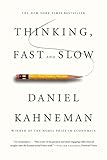
Daniel Kahneman, whose 2011 book Thinking, Fast and Slow synthesized decades of behavioral research, located the halo effect within the broader framework of what he calls System 1 thinking — automatic, fast, associative cognition that operates below the threshold of conscious deliberation. Kahneman described the underlying mechanism with a phrase that captures its epistemological implications with unusual precision: WYSIATI, or "What You See Is All There Is." When we form impressions, we do not wait for complete information; we construct the most coherent story possible from whatever information is currently available, and we experience that story as a full and adequate account of reality. The halo effect is WYSIATI applied to social judgment: the mind notices one strong positive signal, builds a coherent positive narrative around it, and experiences that narrative as a complete and independent evaluation of each separate trait.
Richard Nisbett and Timothy Wilson provided some of the most striking experimental evidence for this process in their 1977 paper "Telling More Than We Can Know," published in Psychological Review (Vol. 84, No. 3). The paper is primarily about the limits of introspective access to cognitive processes, but a central experiment demonstrates the halo effect with elegant simplicity. Nisbett and Wilson asked Belgian university students to evaluate a lecturer on film. One group saw the lecturer behave warmly and engagingly; another group saw him behave in a cold, distant manner. The experimental manipulation was purely about interpersonal warmth — the content of the lecture was identical. But when participants were subsequently asked to rate the lecturer's physical appearance, his accent, and the quality of his mannerisms, the warm-condition participants rated all three more favorably than the cold-condition participants. The lecturer's warmth had radiated outward and lit up attributes — his looks, his voice, his gestures — that were logically independent of it. When participants were told about the manipulation and asked whether the lecturer's warmth might have influenced their ratings of his appearance, they overwhelmingly denied it. They believed they had made independent assessments. They had not.
This dissociation between the actual cognitive process and participants' accounts of it is central to Nisbett and Wilson's argument: the halo effect operates at a level below conscious access. People do not merely fail to notice it in the moment; they actively confabulate independent reasons for judgments that were actually produced by a unified impression. This is why awareness of the halo effect does not reliably neutralize it. The bias precedes the reasoning.
What the Research Shows
The research literature on the halo effect is broad and spans multiple methodological approaches, from laboratory experiments with student samples to field studies of employment decisions, elections, and consumer behavior.
Physical Attractiveness and the "What Is Beautiful Is Good" Stereotype
Karen Dion, Ellen Berscheid, and Elaine Walster published a study in the Journal of Personality and Social Psychology in 1972 with the title that became shorthand for the entire line of research: "What Is Beautiful Is Good." They presented participants with photographs of people varying in physical attractiveness and asked them to rate these individuals on a range of personality attributes and life outcomes — including social competence, intellectual capacity, and the likelihood of leading a happy and fulfilling life. Participants had never met these people and had no information about them beyond the photographs. Despite this, attractive individuals were rated as more socially skilled, more intelligent, more morally virtuous, and more likely to achieve occupational success. Attractiveness was functioning not merely as a cue to aesthetic judgment but as a proxy for a comprehensive assessment of the whole person.
Subsequent research confirmed and extended these findings across cultures and decades. Judith Langlois and colleagues, in a 1990 meta-analysis published in Psychological Bulletin, found that the attractiveness stereotype was robust across age groups and rater populations, and that it had measurable real-world consequences: attractive people received higher pay, more favorable evaluations in job interviews, and lighter criminal sentences. The mechanisms were not primarily about conscious discrimination; they were about halo cognition operating automatically and below the threshold of deliberate evaluation.
Political Elections and the Appearance of Leadership
The halo effect's influence extends into democratic politics. Multiple studies have documented that physically attractive and taller candidates win elections at rates above chance. Timothy Budesheim and Stephen DePaola, writing in the Journal of Personality and Social Psychology in 1994, found that physically attractive candidates were perceived as more competent, more trustworthy, and more capable of leadership — even by voters who explicitly denied that appearance should influence political choice.
The height research is particularly striking. Timothy Judge and Daniel Cable published a study in the Journal of Applied Psychology in 2004 documenting a height premium in earnings, but the electoral evidence is even more consistent: since 1960, the taller of the two major U.S. presidential candidates has won the popular vote in the majority of contests. The inference drawn from height — that it signals dominance, strength, and authority — is a halo operating across dimensions of competence that have nothing logically to do with physical stature.
Rosenthal and Jacobson: The Pygmalion Effect
One of the most consequential demonstrations of halo-adjacent cognition in applied settings came in 1968, when Robert Rosenthal and Lenore Jacobson published their study of teacher expectation effects, Pygmalion in the Classroom. The study told elementary school teachers at the beginning of the academic year that certain students — randomly selected, not distinguished by any real test — were "intellectual bloomers" on the verge of significant cognitive gains. By the end of the year, those students showed measurably higher IQ gains than their classmates. The teachers, having formed a positive general impression of these students as capable and promising, had treated them differently in ways they did not consciously register: calling on them more, providing more elaborated feedback, tolerating more failures with patience. The halo had operated not just as a perceptual distortion but as a behavioral mechanism that generated the very outcomes it had anticipated.
The Pygmalion effect, as it came to be known, is the halo effect operating prospectively — not merely distorting past observations but shaping future interactions and outcomes. It represents perhaps the most socially significant variant of halo cognition, because it shows that the illusion of a halo can become, through differential treatment and self-fulfilling expectation, something that resembles reality.
Phil Rosenzweig and the Corporate Performance Halo
In 2007, management scholar Phil Rosenzweig published The Halo Effect: ...and the Eight Other Business Delusions That Deceive Managers, a book that applied the concept to a domain where its consequences are most economically significant: the analysis of corporate performance.
Rosenzweig's central observation was that business journalists, consultants, and researchers systematically construct halo narratives around successful companies. When a company is performing well — when its stock is rising and its market share is growing — observers attribute its performance to a coherent set of virtues: brilliant strategy, decisive leadership, innovative culture, operational excellence. The attributes are evaluated not independently but as projections of the overall positive outcome. Rosenzweig analyzed coverage of companies like Cisco Systems in the 1990s and ABB in the late 1980s: when their performance was strong, journalists and analysts described their leadership as visionary and their strategy as prescient; when performance deteriorated, the same writers described the same leaders as arrogant and overextended, and the same strategy as reckless. The underlying decisions had not changed. What changed was the outcome, and the outcome retroactively illuminated or discredited everything that had preceded it.
This retroactive halo — sometimes called "outcome bias" in narrower contexts — is particularly pernicious in business and organizational research because it means that studies purporting to identify the managerial practices of successful companies are often measuring not independent causes but reflections of the outcome variable they claim to explain. Rosenzweig noted that influential business books including In Search of Excellence (Peters and Waterman, 1982) and Built to Last (Collins and Porras, 1994) drew their conclusions from data that was saturated with halo attribution: interviewees and raters who knew which companies were successful or unsuccessful and whose descriptions of those companies' cultures and practices were inevitably colored by that knowledge.
Case Studies
Elizabeth Holmes and the Silicon Valley Halo
In the early 2010s, Elizabeth Holmes founded and led Theranos, a Silicon Valley blood-testing company that claimed to be able to run hundreds of diagnostic tests from a single finger-prick of blood. Holmes cultivated, and the press eagerly amplified, a set of comparisons to Steve Jobs: she dressed in black turtlenecks, spoke in a deep and deliberate voice, and framed her mission in the world-historical terms that characterized Jobs's public persona. The comparison triggered an immediate and widespread halo. Investors who had not independently verified Theranos's technology — and some who had received equivocal information about it — wrote checks for hundreds of millions of dollars. Board members including former Secretaries of State and Defense, decorated generals, and eminent scientists lent their reputations to a company whose core technology had not been independently validated. Journalists from major outlets published laudatory profiles that described Holmes as a visionary who would transform medicine.
The halo, in this case, was doing something more specific than just generating favorable attributions: it was actively suppressing the due diligence that would have been applied to a less charismatic founder. The confidence, the aesthetic, the explicitly invoked parallel to one of the most celebrated entrepreneurs in American history — all of these functioned as halo cues that made skeptical inquiry feel inappropriate, even churlish. When the fraud was eventually exposed, in reporting by John Carreyrou at the Wall Street Journal beginning in 2015, the collapse of the halo was as total as its original construction had been: Holmes was retrospectively described as a manipulative deceiver, and the board members who had granted her credibility were described as credulous and incompetent. The halo had become a horn. The person had not changed; the performance outcome had.
Hiring Discrimination and the Attractive Applicant
Research on employment discrimination has consistently documented that physical attractiveness produces measurable advantages in hiring, salary, and performance evaluation. A study by Daniel Hamermesh and Jeff Biddle, published in the American Economic Review in 1994, estimated that workers in the bottom third of attractiveness earned roughly ten to fifteen percent less than workers in the top third, controlling for education, experience, and occupation. This "plainness penalty" and "beauty premium" could not be explained by productivity differences, because the attractiveness ratings were made by independent assessors who had not observed the workers' performance.
In hiring simulation studies, equally qualified candidates are rated more favorably when their application materials include an attractive photograph than an unattractive one. The halo from attractiveness spreads to inferences about competence, interpersonal skill, and cultural fit — all of the ambiguous dimensions where a general positive impression can most easily substitute for independent evidence. The injustice is not that evaluators are making deliberately biased decisions; most of them believe they are making objective assessments. The injustice is that a perceptual mechanism they cannot consciously access is making the decision for them.
Brand Halo Effects in Consumer Behavior
The halo effect operates not only in person perception but in the domain of product and brand evaluation. Apple Inc. provides the most thoroughly documented example. Research by Maoz and Tybout, published in Journal of Consumer Research in 2002, and extended by subsequent studies, found that positive experiences with one Apple product substantially increased consumers' purchase intentions and quality assessments for other Apple products — even products the consumers had not yet encountered. The "iPod halo effect" — widely discussed in the early 2000s as the iPod's popularity drove Mac computer sales — was a transfer of brand equity from one product category to another, mediated by a positive general impression of the brand's competence, elegance, and reliability.
The brand halo is commercially significant because it means that a company's investment in quality in one area generates positive spillover into entirely separate areas. It also means that a brand failure in one highly visible product can initiate a horn effect that depresses evaluations across the entire product line. Volkswagen's 2015 diesel emissions scandal ("Dieselgate") produced significant declines in brand trust that affected models entirely unrelated to the emissions fraud. The horn effect is not logically justified — an emissions cheat in diesel engines reveals nothing about the mechanical reliability of unrelated gasoline-powered vehicles — but logic is not what drives halo cognition.
The Corporate Performance Narrative: Cisco in the 1990s
Cisco Systems in the late 1990s was one of the most celebrated companies in the world. Its stock price, which rose approximately 1,000 percent between 1995 and 2000, was treated as evidence of the company's extraordinary management, its prescient strategy, and the cultural brilliance of its leadership team under CEO John Chambers. Business publications ran cover stories praising Cisco's acquisition strategy as a model for the technology industry; management consultants cited Cisco's practices as best-in-class across a range of dimensions. When the dot-com bubble collapsed and Cisco's stock fell by more than 80 percent in 2001, the same publications ran cover stories questioning whether the acquisition strategy had ever made sense and examining the cultural dysfunction that had, it was now said, long existed within the company.
As Rosenzweig documents in careful detail, the underlying facts about Cisco's operations had not changed dramatically from one period to the next. What had changed was the performance context against which those operations were interpreted. The halo had inflated not just perceptions of Cisco's strategy but the very data on which those perceptions were based: employees and analysts who rated Cisco's culture and practices while the company was performing brilliantly could not cleanly separate their assessments from their knowledge of the performance. The horn, when it arrived, worked the same way in reverse.
The Intellectual Lineage
The history of the halo effect as a scientific concept is longer and more contested than its current textbook treatment suggests.
Thorndike's 1920 paper, "A Constant Error in Psychological Ratings," published in the Journal of Applied Psychology (Vol. 4, No. 1), established the phenomenon and coined the term, but it did not fully explain the mechanism. Thorndike knew that the correlations between distinct trait ratings were too high to reflect genuine inter-correlations among the traits themselves, and he proposed that raters were either consciously or unconsciously allowing a general impression to color their specific ratings. But the paper was short and empirically narrow, and it prompted more questions than it answered.
Through the 1930s and 1940s, research on rater errors in industrial and military psychology continued, but the halo effect was treated primarily as a methodological nuisance to be controlled rather than a cognitive phenomenon to be explained. Rating scale designers developed forced-choice formats and behaviorally anchored rating scales specifically to reduce halo contamination in performance evaluations, often with limited success.
The cognitive revolution of the 1960s and 1970s transformed the study of the halo effect by reframing it as a question about social cognition rather than measurement error. Jerome Bruner's and Renato Tagiuri's early work on person perception, published in the Handbook of Social Psychology (1954), established that people approach social judgment with pre-existing implicit personality theories — coherent frameworks of trait co-occurrence — that shape the inferences they draw from social information. The halo effect, in this framing, was not an error in rating behavior but a reflection of how the mind organizes social knowledge.
Nisbett and Wilson's 1977 paper, and the parallel development of attribution theory by Harold Kelley and others, shifted the analysis further toward the question of self-knowledge: not just that people make halo-contaminated judgments, but that they cannot accurately report why they made them. This was a more destabilizing finding than Thorndike's original observation, because it implied that standard methods for correcting bias — training, awareness, feedback — were limited by the fact that the bias operated beneath conscious access.
The modern integration came through Kahneman's dual-process framework, which located halo cognition within the broader architecture of automatic, associative System 1 thinking. Kahneman's work, drawing on decades of research with Amos Tversky and later with Shane Frederick and others, placed the halo effect in a family of related phenomena — all stemming from the mind's tendency to substitute an easy question (How do I feel about this person overall?) for a hard one (What are the independent values of each of this person's distinct attributes?). This substitution is not random; it is systematic and predictable. And it is this predictability that makes the halo effect scientifically tractable and practically consequential.
When the Halo Effect Is Adaptive
The halo effect is routinely described as a bias, an error, a failure of rational cognition — and in many high-stakes contexts, that characterization is accurate and important. But it is also worth understanding why the cognitive mechanism exists, because it persists not out of inertia but because it often works well enough.
In environments where information is scarce and decisions must be made quickly, integrating multiple weak signals into a single overall impression is a reasonable strategy. Thorndike's military officers did not have the luxury of constructing independent dossiers on each soldier across each dimension; they were making rapid social assessments under time pressure and limited observation. In such conditions, using one clear positive signal — physical bearing, confident demeanor, apparent competence in a visible task — as a proxy for overall quality is not irrational. It is a heuristic, and heuristics sacrifice accuracy for efficiency. When efficiency matters and the stakes of individual errors are low, the trade-off can be sensible.
Evolutionary accounts of the attractiveness halo suggest that the cues which trigger halo cognition — physical symmetry, clear skin, upright posture, confident social behavior — were historically genuine signals of health, status, and social reliability. The halo did not arise from nowhere; it arose because, on average, over long timescales, it tracked something real. The problem is that modern environments have decoupled these cues from the outcomes they once predicted. Physical attractiveness in a job candidate tells you little about their competence in software development or financial analysis. The halo still fires, but the environment no longer supports the inference.
There is also a coherence argument: in genuinely integrated domains, trait correlations are real, and treating them as such is accurate rather than biased. A person whose character is genuinely excellent will often be reliable, kind, and principled across multiple dimensions; someone whose work is genuinely brilliant will often produce high-quality outputs across related tasks. The halo effect becomes problematic specifically when it generalizes across domains that are not genuinely integrated — from physical appearance to intellectual ability, from warmth in one context to competence in another, from success in one business line to soundness of strategy in a different one.
The key adaptive limit, then, is domain relevance. When the generalizing inference crosses domain boundaries that have no real-world basis, the halo effect produces errors whose costs accumulate. In high-stakes decisions — hiring, investment, legal sentencing, medical diagnosis — those costs justify deliberate effort to decontaminate judgment. In low-stakes social perception, the cost of the error is low enough that the efficiency benefit may outweigh it.
Debiasing and Its Limits
The practical question that follows from understanding the halo effect is whether it can be corrected, and the answer the research supports is: partially, and with effort.
Simple awareness does not provide much protection. Nisbett and Wilson's Belgian instructor experiment showed that participants who were asked directly whether the lecturer's warmth had influenced their ratings of his appearance denied that it had — even though it manifestly had. Awareness of the halo effect does not translate into the ability to detect its operation in one's own real-time judgment.
Structured evaluation procedures provide more reliable debiasing. Breaking an evaluation into strictly sequential, dimension-by-dimension assessments — and completing each dimension before proceeding to the next — reduces halo contamination by interrupting the holistic impression formation that produces it. Blind review processes, which strip identifying and appearance-related information from applications and submissions, eliminate some of the most powerful halo triggers. Research on blind orchestral auditions by Claudia Goldin and Cecilia Rouse, published in the American Economic Review in 2000, found that blind auditions substantially increased the probability that female musicians were advanced to later rounds — consistent with the interpretation that evaluators had previously been influenced by appearance-based halos.
Deliberate accountability — being required to justify each evaluation independently and in writing — also attenuates the effect, though it does not eliminate it. The mechanism is that explicit justification requirements force the kind of effortful, dimension-by-dimension processing that halo cognition bypasses when allowed to operate unchecked.
The deeper problem is that many of the environments where the halo effect matters most — job interviews, venture capital pitches, judicial proceedings, performance reviews — are social settings that are particularly rich in the global impression cues that trigger halo cognition. Attractiveness, confidence, warmth, social ease: these attributes are highly legible in face-to-face interaction, and they are precisely the attributes most likely to initiate halo distortion. Debiasing in these settings requires not just procedural safeguards but a genuine restructuring of how the evaluation environment is designed — a challenge that most organizations have not yet fully undertaken.
References
Thorndike, E. L. (1920). A constant error in psychological ratings. Journal of Applied Psychology, 4(1), 25-29.
Nisbett, R. E., & Wilson, T. D. (1977). The halo effect: Evidence for unconscious alteration of judgments. Journal of Personality and Social Psychology, 35(4), 250-256.
Nisbett, R. E., & Wilson, T. D. (1977). Telling more than we can know: Verbal reports on mental processes. Psychological Review, 84(3), 231-259.
Dion, K., Berscheid, E., & Walster, E. (1972). What is beautiful is good. Journal of Personality and Social Psychology, 24(3), 285-290.
Rosenthal, R., & Jacobson, L. (1968). Pygmalion in the classroom: Teacher expectation and pupils' intellectual development. Holt, Rinehart and Winston.
Rosenzweig, P. (2007). The halo effect: ...and the eight other business delusions that deceive managers. Free Press.
Kahneman, D. (2011). Thinking, fast and slow. Farrar, Straus and Giroux.
Langlois, J. H., Kalakanis, L., Rubenstein, A. J., Larson, A., Hallam, M., & Smoot, M. (2000). Maxims or myths of beauty? A meta-analytic and theoretical review. Psychological Bulletin, 126(3), 390-423.
Hamermesh, D. S., & Biddle, J. E. (1994). Beauty and the labor market. American Economic Review, 84(5), 1174-1194.
Goldin, C., & Rouse, C. (2000). Orchestrating impartiality: The impact of "blind" auditions on female musicians. American Economic Review, 90(4), 715-741.
Judge, T. A., & Cable, D. M. (2004). The effect of physical height on workplace success and income: Preliminary test of a theoretical model. Journal of Applied Psychology, 89(3), 428-441.
Bruner, J. S., & Tagiuri, R. (1954). The perception of people. In G. Lindzey (Ed.), Handbook of Social Psychology, Vol. 2 (pp. 634-654). Addison-Wesley.
Frequently Asked Questions
What is the halo effect?
The halo effect is the tendency for a positive impression of a person in one area to influence our judgments of them in entirely unrelated areas. First identified by Edward Thorndike in 1920, who found that Army officers' ratings of soldiers on separate traits — physique, intelligence, leadership — were so highly correlated that they could not be independent assessments. A soldier rated high on physical appearance was systematically rated high on every other dimension too, regardless of evidence.
Who discovered the halo effect?
Edward Lee Thorndike identified and named the halo effect in a 1920 paper in the Journal of Applied Psychology, based on his analysis of military officer rating data. Richard Nisbett and Timothy Wilson's 1977 experiment with a Belgian instructor provided a controlled laboratory demonstration — subjects shown a warm versus cold instructor rated his accent, appearance, and mannerisms differently based solely on his perceived warmth, while denying that warmth had influenced them.
How does the halo effect affect hiring?
The halo effect in hiring means that a single strong positive signal — an impressive university, confident demeanor, physical attractiveness, or a prestigious former employer — can elevate a candidate's ratings across all dimensions including irrelevant ones. Research on blind auditions (Goldin & Rouse 2000) found that screening gender-blind substantially increased the probability of female musicians advancing, demonstrating how visible characteristics create halos that contaminate ostensibly merit-based assessments.
What is the horn effect?
The horn effect is the inverse of the halo effect: a single negative impression contaminates all subsequent judgments of a person. Where the halo effect causes one positive attribute to inflate ratings across unrelated dimensions, the horn effect causes one negative attribute — an awkward manner, an unflattering appearance, a past failure — to deflate them. Both effects reflect the same underlying mechanism: the brain's tendency to construct a coherent global impression and filter new information through it.
What is the halo effect in business?
In business, the halo effect means that companies performing well financially receive positive attributions across all dimensions — their strategy is called visionary, their culture praised, their leadership celebrated. When performance declines, the same attributes get reinterpreted negatively. Phil Rosenzweig's 2007 book The Halo Effect documented this systematically, showing that business press coverage of companies like Cisco and ABB shifted from enthusiastic to critical without any new information about culture or strategy — only financial results had changed.


![Pensar rápido, pensar despacio [Think Fast, Think Slowly]](https://images-na.ssl-images-amazon.com/images/P/B085NZ4HVD.01._SL200_.jpg)