
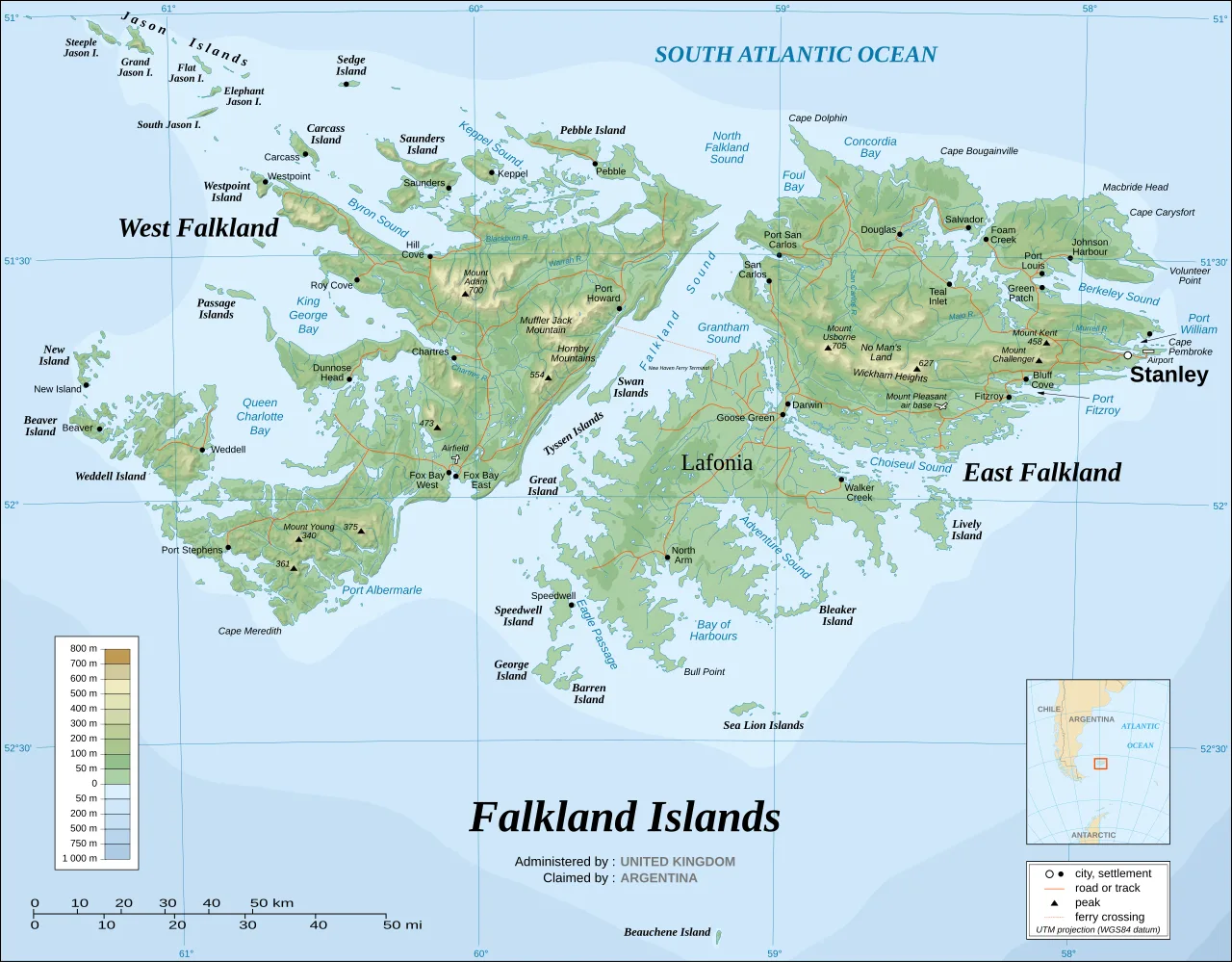
"A map is not the territory it represents, but, if correct, it has a similar structure to the territory, which accounts for its usefulness." - Alfred Korzybski, Science and Sanity, 1933
On the morning of September 23, 1998, a conference call convened at the Federal Reserve Bank of New York that would later be described as one of the most consequential phone calls in financial history. The firm on the other end was Long-Term Capital Management.
It had, in less than four years, grown to manage $126 billion in assets using $4.8 billion in equity - a leverage ratio that reflected supreme confidence in something specific: its models.
LTCM's partners included Myron Scholes and Robert Merton, who had shared the 1997 Nobel Prize in Economics for their work on options pricing. The firm's core strategy rested on the assumption that financial markets, over time, behave according to measurable statistical regularities.
Price discrepancies would converge. Volatility would revert to historical means. The mathematics said so.
What the models did not say - could not say - was that in August 1998, when Russia defaulted on its domestic debt, traders around the world would simultaneously rush for liquidity. The correlations between assets that the models assumed were independent collapsed into near-perfect unity.
The "five-sigma event" - statistically expected to occur once every several billion years - arrived in a single month. By late September, LTCM had lost $4.6 billion. The New York Fed orchestrated a $3.6 billion private bailout to prevent what officials feared would be a systemic financial meltdown.[18]
The LTCM partners had not made a clerical error. They had committed a deeper mistake: they confused the map with the territory.
What Korzybski Actually Said
Alfred Korzybski was a Polish-American philosopher and engineer who coined the phrase "the map is not the territory" in his 1933 magnum opus Science and Sanity: An Introduction to Non-Aristotelian Systems and General Semantics. Korzybski was not making a casual observation.
He was laying the foundation of a new discipline - General Semantics - concerned with how human beings systematically misuse language and symbols to misrepresent reality, and how this misrepresentation drives conflict, error, and suffering.
His core insight was deceptively simple: every representation of reality is an abstraction. A map of Paris is not Paris. A photograph of a tree is not a tree. A statistical model of market behavior is not market behavior. The representation selects, simplifies, and distorts.
It is constructed by observers with specific purposes, specific instruments, and specific blind spots. The territory - reality itself - is always richer, stranger, and more complex than any representation of it.
Korzybski identified three key properties of maps that distinguish them from territories:
- A map is not the territory. The word "fire" does not burn. The model of a hurricane is not wet.
- A map does not represent all features of the territory. Every map omits. Every model simplifies. The question is whether the simplification preserves the features that matter.
- A map is self-reflexive. A map may include a representation of itself - but that representation is still a map, not territory. We can model our models, but we never escape the act of modeling.
These distinctions have since migrated far beyond philosophy into systems thinking, cognitive science, organizational behavior, and risk management. But the core principle remains unchanged: all models are wrong. The question is whether they are usefully wrong, or catastrophically wrong.
Map vs. Territory: A Comparison
| Property | The Map (Model) | The Territory (Reality) |
|---|---|---|
| Completeness | Selective - includes only modeled variables | Total - contains all variables, including unknown ones |
| Precision | Exact within defined scope | Irreducibly complex and partly unknowable |
| Stability | Fixed at creation; updated by choice | Continuously evolving, often nonlinearly |
| Purpose | Built for a specific user, goal, or time horizon | Indifferent to human purposes |
| Failure mode | Becomes dangerous when mistaken for reality | Cannot be "wrong" - it simply is |
| Author | Human, with cognitive biases and limited data | None - no observer perspective embedded |
| Revision cost | Cognitive and institutional resistance to change | Changes independently of whether observers notice |
Why Humans Confuse Maps and Territory
The confusion is not stupidity. It is, as cognitive scientist Daniel Kahneman documented across decades of research, a feature of how human cognition is built.[11]
Reification is the cognitive tendency to treat abstract concepts as concrete things. When we name something, we grant it substance. "The economy is growing" treats "the economy" as a single object with a trajectory, when in fact it is an abbreviation for billions of individual transactions, expectations, and behaviors.
Economists at the International Monetary Fund produce GDP forecasts that are reported as if they were measurements of an existing thing, when they are projections of a model calibrated on historical data that no longer fully describes current conditions.
The availability heuristic, documented by Kahneman and Amos Tversky in a landmark 1973 paper in Cognitive Psychology, causes people to estimate the probability of events based on how easily examples come to mind.[9]
This means the models people build in their heads are systematically skewed toward recent, vivid, and emotionally salient events.
After a stock market crash, people overestimate the probability of another crash. During a decade of calm, they underestimate tail risks. Their mental maps become caricatures of recent experience.
The narrative fallacy, which Nassim Nicholas Taleb developed in The Black Swan (2007), describes the human compulsion to impose causal stories on sequences of events. We are pattern-matching animals. When we see data, we construct a narrative.
When we construct a narrative, we mistake it for explanation. The narrative becomes the map, and the map eclipses the territory. The Gaussian copula model - which helped structure the trillions of dollars in mortgage-backed securities that collapsed in 2008 - was not a data error.
It was a narrative error: the story that housing prices across different U.S. regions were only weakly correlated.
Anchoring explains why even expert forecasters, once they have adopted a model, adjust it too little in response to new data. Philip Tetlock's landmark 20-year study of expert political judgment, published in 2005 as Expert Political Judgment: How Good Is It?[7]
How Can We Know?, found that expert forecasters were barely better than random chance on long-range predictions - and that the more famous and confident the expert, the worse they tended to perform. The map, once internalized, resists updating.
The deepest reason for the confusion may be evolutionary. Human brains evolved to act quickly in environments where a good-enough model was better than no model.
As neuroscientist Lisa Feldman Barrett has argued in How Emotions Are Made (2017), the brain is fundamentally a prediction machine: it constructs models of expected sensory input and updates them only when prediction errors exceed a threshold.[19]
We are, literally, built to mistake our models of the world for the world itself.
Four Case Studies in Map-Territory Confusion
1. The Gaussian Copula and the 2008 Financial Crisis
The Map: In 2000, David X. Li, a quantitative analyst at JPMorgan, published a paper in The Journal of Fixed Income introducing the Gaussian copula function as a method for modeling correlations between credit default events.
The model expressed the probability that a set of mortgage borrowers would default simultaneously as a single, elegantly tractable equation. It made the pricing of collateralized debt obligations - previously too complex to model - suddenly computable.
Why It Was Trusted: The model was mathematically coherent, computationally tractable, and gave consistent results across firms. Credit rating agencies adopted it. Regulators accepted its outputs. By 2006, the CDO market based on this framework had grown to over $500 billion.
Felix Salmon, writing in Wired in February 2009, called the formula "the secret formula that destroyed Wall Street."[4]
How It Diverged from Territory: The Gaussian copula assumed that correlations between mortgage defaults were stable over time and could be estimated from historical data.
What it could not model was the systemic feedback loop: when housing prices fell nationally rather than locally, correlations between defaults ceased to be the historical 0.3 and approached 1.0.
The map had been built for a world where regional housing markets moved somewhat independently. In 2007-2008, that world ceased to exist.
Consequence: The IMF estimated total global financial losses from the crisis at $4 trillion. U.S. GDP contracted 4.3% from peak to trough. The model that was supposed to price risk had systematically mispriced it at every level of the financial system.
2. McNamara's Body Count and the Vietnam War
The Map: Robert McNamara, U.S. Secretary of Defense from 1961 to 1968, institutionalized the "body count" - the number of enemy combatants killed - as the primary measure of progress in Vietnam. The model was simple: if the U.S.
was killing more enemy soldiers than were being recruited, the enemy would eventually collapse. Military analysts called it "the crossover point."
Why It Was Trusted: McNamara had used quantitative management at Ford with spectacular success. The body count was objective, auditable, and unambiguous. It gave commanders a clear performance metric. It satisfied Washington's demand for evidence of progress.
How It Diverged from Territory: The body count measured what was easily measurable, not what mattered. Field commanders under pressure to show results inflated counts. The metric assumed a fixed enemy population that would eventually be depleted - but North Vietnam mobilized replacements faster than they were killed.
Meanwhile, the metric said nothing about political will, popular legitimacy, or the enemy's asymmetric tolerance for attrition. The "crossover point" never came.
Consequence: The United States spent $168 billion (approximately $1 trillion in 2024 dollars) on the Vietnam War and lost 58,000 soldiers.
McNamara himself acknowledged in his memoir In Retrospect (1995): "We were wrong, terribly wrong." The body count model had not just failed to measure progress - it had actively obscured the absence of progress.[13]
3. The Soviet Central Planning Model
The Map: Beginning in the late 1920s, the Soviet Union attempted to replace market mechanisms with centralized economic planning. Gosplan, the state planning agency, produced five-year plans that allocated resources, set production targets, and coordinated thousands of enterprises.
The model rested on the assumption that an economy was a sufficiently knowable system that its inputs and outputs could be rationally planned.
Why It Was Trusted: The Soviet economy achieved genuine early success. Between 1928 and 1940, industrial output grew at rates that impressed Western economists.
Paul Samuelson's influential economics textbook, through multiple editions spanning from 1961 to 1989, projected that Soviet GDP would surpass that of the United States within decades.
How It Diverged from Territory: Friedrich Hayek had argued in his 1945 essay "The Use of Knowledge in Society" (American Economic Review) that the fundamental problem with central planning was epistemic: the information required to coordinate a complex economy is distributed across millions of individuals and cannot be aggregated in any central authority.[14]
Prices, which in market economies encode millions of dispersed judgments about scarcity and value, were replaced with administered prices that encoded political priorities. The result was systematic misallocation, chronic shortages, and pervasive inefficiency.
Consequence: The Soviet economy stagnated through the 1970s and 1980s. When the USSR dissolved in 1991, its GDP per capita was approximately one-third that of the United States. Samuelson's projection had inverted completely.
4. Ptolemy's Epicycles and the Geocentric Universe
The Map: For more than 1,400 years, the dominant cosmological model was the Ptolemaic system, articulated by Claudius Ptolemy in his Almagest (circa 150 CE). Earth sat at the center of the universe.
When observations failed to match predictions, the model was patched with "epicycles" - smaller circles within circles - to account for the discrepancies.
Why It Was Trusted: The Ptolemaic model worked. It predicted the positions of planets with sufficient accuracy for navigation and calendar-keeping. It had the authority of Aristotelian physics and, later, the institutional backing of the Catholic Church.
Its complexity (by the sixteenth century, it required dozens of epicycles) was seen as sophistication, not pathology.
How It Diverged from Territory: When Nicolaus Copernicus proposed the heliocentric model in De revolutionibus orbium coelestium (1543), he initially solved the complexity problem.
Galileo's telescopic observations of Jupiter's moons (1610) and Venus's phases provided direct empirical evidence that the Ptolemaic map contradicted the territory.
Johannes Kepler's discovery of elliptical orbits (1609) revealed that even the heliocentric model had been wrong in its specifics - circles were not the right shape.
Consequence: The Ptolemaic episode illustrates a particular failure mode: a model wrong in its foundations can nevertheless accumulate enormous institutional authority, generate accurate-enough local predictions, and resist replacement for centuries.
The cost is not just error but the opportunity cost of the better models that the dominant map suppresses.
Applications Across Domains
Financial Modeling
Every financial model is a map. The Black-Scholes options pricing model, the CAPM, value-at-risk (VaR) calculations - all assume properties of financial systems (normally distributed returns, stable correlations, mean-reverting volatility) that are approximations at best and catastrophically wrong during the tail events that matter most.
Nassim Taleb has argued in The Black Swan (2007) and Antifragile (2012) that the financial system's reliance on Gaussian models creates systematic blindness to the fat-tailed distributions that actually characterize asset returns.
*Example*: When JPMorgan reported a $6.2 billion trading loss in 2012 (the "London Whale" incident), internal investigations found that traders had changed the VaR model in early 2012 in a way that halved the measured risk of the positions. The map had been modified to make the territory look safer. It was not safer.
Organizational Strategy
Strategic plans are maps. Henry Mintzberg documented in The Rise and Fall of Strategic Planning (1994) that the planning process itself elevates the map to the status of reality.[16] Resources are allocated to defend the plan. Deviations from the plan are treated as failures rather than information.
The territory - actual customer behavior, competitor moves, technological shifts - becomes noise to be filtered rather than signal to be heeded.
*Example*: Nokia's strategic plan in 2007 correctly identified that mobile phones were becoming computing devices. But Nokia's model of the competitive landscape did not include Apple as a realistic entrant. Nokia's global market share fell from 40% in 2007 to under 5% by 2012. The territory did not cooperate with the model.
Scientific Models
Science is the most rigorous and self-correcting system humans have devised for building better maps. But it is not immune to the map-territory confusion.
Thomas Kuhn's The Structure of Scientific Revolutions (1962) documented how scientific communities resist paradigm shifts not because of evidence failures but because of model attachment - the existing map is so embedded in institutions, instruments, and careers that replacing it requires a generational change.[15]
First-order vs second-order effects matter enormously here: the first-order effect of a dominant scientific model is useful coordination around shared methods. The second-order effect is that the model defines what counts as a valid observation - gradually shaping the questions away from anything the model cannot answer.
Personal Mental Models
Every individual operates from a set of mental models: beliefs about how the world works, what other people want, and what causes success or failure.
Carol Dweck's research, published in Mindset (2006), demonstrated that individuals with "fixed mindsets" - the model that ability is innate and unchangeable - systematically underperform compared to those with "growth mindsets," not because their innate abilities differ, but because their maps of their own potential constrain the territory they attempt to explore.[17]
*Example*: A manager who models their team members as motivated primarily by salary will design incentive structures around salary - and will be persistently surprised by turnover when employees leave for roles with lower pay but greater autonomy.
The model is not corrected by experience because the manager interprets departures as further evidence of their model's prediction rather than refutation.
The Intellectual Lineage
Alfred Korzybski (1933) coined the phrase and built the systematic framework of General Semantics around it.[1] His work influenced an entire generation of communicators, therapists, and systems thinkers.
Jorge Luis Borges explored the logical extreme in his 1946 one-paragraph story "On Exactitude in Science," in which an empire creates a map so detailed it is the same size as the empire itself - and finds the map useless.[2]
"In that Empire, the Art of Cartography attained such Perfection that the map of a single Province occupied the entirety of a City, and the map of the Empire, the entirety of a Province...
In the western Deserts, tattered Fragments of the Map are still to be found, Sheltered by Animals and Beggars." - Jorge Luis Borges, "On Exactitude in Science," 1946
Gregory Bateson extended Korzybski's framework into biology, anthropology, and systems theory.
In Steps to an Ecology of Mind (1972), Bateson argued that the fundamental error of Western civilization was its confusion of the map (mental categories, abstractions, logical types) with the territory (ecological relationships, living systems).[3]
He was particularly concerned with the second-order effects of bad models: a culture with a wrong model of its relationship to the natural environment would systematically destroy the environment while believing it was managing it.
George Box made the idea precise for scientists with his 1976 aphorism, published in the Journal of the American Statistical Association: "All models are wrong, but some are useful." Box was making a methodological point: the goal of modeling is not truth but utility, and utility is always conditional on the context for which the model was built.[12]
What the Research Shows
Philip Tetlock's Superforecasting research produced the most rigorous empirical data on model accuracy in complex domains.[8] Across nearly 30,000 forecasts from 300 expert political forecasters, performance was only marginally better than chance for predictions more than one year out.
Experts who used simple models and updated frequently ("foxes") outperformed experts who relied on a single organizing framework ("hedgehogs") by a substantial margin. The conclusion: model diversity and frequent updating beat model sophistication.
Nassim Taleb's empirical argument in The Black Swan (2007) focuses on the asymmetry between what models can and cannot measure.[5] Models are built from historical data. Historical data cannot, by definition, contain events that have never occurred.
His central claim, supported by analysis of financial time series data, is that the distribution of financial returns has much fatter tails than Gaussian models predict - and that the fat-tail portion accounts for the majority of total variance.[6]
The map does not just miss some territory; it systematically misrepresents the most important territory.
A 2012 study by Spyros Makridakis, Robin Hogarth, and Anil Gaba, published in The International Journal of Forecasting, found that across multiple domains - economic forecasting, weather prediction, epidemiology - simple models consistently outperformed complex models on out-of-sample data.
A model perfectly tuned to historical data has been mistaken for a model that describes future territory.
Daniel Kahneman and Gary Klein's 2009 paper in American Psychologist, "Conditions for Intuitive Expertise," provides a framework for when models can be trusted: when the environment is regular enough to be learnable, feedback is fast and clear, and the model has been trained on a representative sample.[10]
Models are untrustworthy when the environment is irregular, feedback is slow, or the domain is dominated by rare, high-impact events.
Most of the domains where organizations rely most heavily on formal models - macroeconomics, geopolitics, long-term strategy - fall into the untrustworthy category.
When It Is Okay to Trust Models
The argument here is not that models are worthless. It is that models are always maps, and maps have specific, bounded validity. Several conditions make models more trustworthy:
Short time horizons. Weather forecasts are reasonably accurate at 48 hours and nearly useless at 10 days. The shorter the horizon, the less time for divergence between map and territory to accumulate.
Stable environments. A model calibrated in a stable environment will predict well in that environment. Newton's laws, calibrated on the behavior of medium-sized objects moving at ordinary velocities, predict accurately in that domain. The danger is failing to notice when you have left the regime of stability.
Rapid feedback and active updating. Aviation safety improved dramatically through the twentieth century not because aircraft models became perfect but because incident reporting systems and post-accident investigations provided fast, accurate feedback that drove model revision.
Explicit acknowledgment of uncertainty. A model that reports "X will happen with 65% confidence, and the principal sources of uncertainty are A, B, and C" maintains the map-territory distinction. A model that reports "X will happen" collapses it.
Domain diversity. In the Good Judgment Project, the best forecasters used multiple models, checked them against each other, and weighted predictions by each model's track record. The portfolio of maps was more accurate than any individual map.
The philosopher Karl Popper argued that the hallmark of a scientific model is falsifiability - it must make predictions specific enough to be wrong. The practical implication: if you cannot specify the conditions under which your model would be wrong, you have ceased to treat it as a map and have begun to treat it as reality.
The Recursive Problem
There is one more layer to consider. This article is itself a map. The concept of "map vs. territory" is a model of how models work. Like all models, it simplifies. It suggests a clean binary between representation and reality that may itself be misleading.
Korzybski was aware of this. His system was explicitly non-Aristotelian - it rejected the law of excluded middle and acknowledged that statements about reality are always made from within particular linguistic and conceptual frameworks.
This recursive quality is not a reason for paralysis. It is a reason for epistemic humility.
The goal is not to abandon models - we cannot think without them - but to hold them lightly, to specify their scope conditions, to invest in feedback systems that detect divergence, and to resist the institutional momentum that turns working approximations into unquestionable truths.
The Long-Term Capital Management partners were not stupid. They were brilliant people who had, understandably, come to trust their brilliant models. The models had been calibrated on more history than any human could intuitively process. They had survived many tests.
They had delivered extraordinary returns. They had, over time, ceased to feel like maps and had begun to feel like reality.
That is the moment the map becomes most dangerous.
Sources & Further Reading
- Korzybski, Alfred. Science and Sanity: An Introduction to Non-Aristotelian Systems and General Semantics. Institute of General Semantics, 1933.
- Borges, Jorge Luis. "On Exactitude in Science." Dreamtigers, 1946. View source
- Bateson, Gregory. Steps to an Ecology of Mind. Chandler Publishing, 1972.
- Salmon, Felix. "Recipe for Disaster: The Formula That Killed Wall Street." Wired, February 23, 2009. View source
- Taleb, Nassim Nicholas. The Black Swan: The Impact of the Highly Improbable. Random House, 2007. View source
- Taleb, Nassim Nicholas. Antifragile: Things That Gain from Disorder. Random House, 2012. View source
- Tetlock, Philip E. Expert Political Judgment. Princeton University Press, 2005. View source
- Tetlock, Philip E., and Gardner, Dan. Superforecasting. Crown Publishers, 2015. View source
- Kahneman, Daniel, and Tversky, Amos. "Availability: A Heuristic for Judging Frequency and Probability." Cognitive Psychology, 5(2), 1973. DOI: 10.1016/0010-0285(73)90033-9
- Kahneman, Daniel, and Klein, Gary. "Conditions for Intuitive Expertise: A Failure to Disagree." American Psychologist, 64(6), 2009. DOI: 10.1037/a0016755
- Kahneman, Daniel. Thinking, Fast and Slow. Farrar, Straus and Giroux, 2011. View source
- Box, George E. P. "Science and Statistics." Journal of the American Statistical Association, 71(356), 1976. DOI: 10.1080/01621459.1976.10480949
- McNamara, Robert S. In Retrospect: The Tragedy and Lessons of Vietnam. Times Books, 1995.
- Hayek, Friedrich A. "The Use of Knowledge in Society." American Economic Review, 35(4), 1945. View source
- Kuhn, Thomas S. The Structure of Scientific Revolutions. University of Chicago Press, 1962. View source
- Mintzberg, Henry. The Rise and Fall of Strategic Planning. Free Press, 1994.
- Dweck, Carol S. Mindset: The New Psychology of Success. Random House, 2006.
- Lowenstein, Roger. When Genius Failed: The Rise and Fall of Long-Term Capital Management. Random House, 2000. View source
- Barrett, Lisa Feldman. How Emotions Are Made. Houghton Mifflin Harcourt, 2017.