
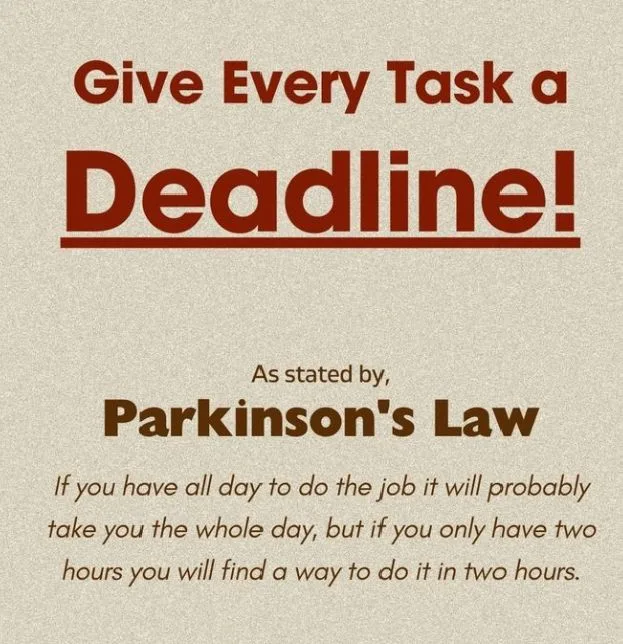
Understanding: On the morning of November 19, 1955, readers of The Economist opened their weekly edition to find an unsigned essay that began with a disarming confession.
"It is a commonplace observation that work expands so as to fill the time available for its completion." The author - revealed only in the book edition three years later as Cyril Northcote Parkinson, a British naval historian and professor at the University of Malaya - had spent the previous decade puzzling over a paradox embedded in the records of the British Admiralty.
As the Royal Navy shrank after the First World War, the bureaucracy administering it grew, with a consistency that looked less like accident and more like iron law.
The numbers Parkinson marshalled were precise and, by the standards of satire, startling. In 1914, the Admiralty employed 2,000 officials to administer a fleet of 62 capital ships crewed by 146,000 officers and men.
By 1928 - after the catastrophic losses of the war, the Washington Naval Treaty, and a decade of severe retrenchment - the fleet had shrunk to 20 ships and roughly 100,000 personnel.
The Admiralty's permanent staff, however, had grown to 3,569 officials: an increase of 78 percent while the fleet it administered had contracted by two-thirds.
Dockyard officials had risen from 3,249 to 4,558. Parkinson calculated that Admiralty staffing grew at a rate of approximately 5.6 percent per year, compounding steadily, regardless of what the navy was or was not doing. He was not criticising individual officials.
He was identifying a structural force that operated independently of anyone's intentions, a kind of organisational gravity that pulled bureaucracies toward expansion as naturally as water finds its level.[10]
The essay ran to fewer than 2,000 words. It would eventually give a name to one of the most durable ideas in the social sciences.
Defining the Law - and Its Cousins
Parkinson's Law, as it has since been known, states:
Work expands so as to fill the time available for its completion.
- C. Northcote Parkinson, The Economist (1955) The formulation sounds like a witticism. It operates like a theorem.
Give a person two hours to write a report they could complete in forty minutes, and the report will take two hours - not because forty minutes of work has been padded with ninety minutes of deliberate waste, but because the mind, presented with a time budget, fills it: the research phase extends, the outline proliferates, the revisions accumulate, the email threads multiply.
The work does not merely feel larger; it actually becomes larger, because time itself functions as an implicit specification of effort.
Parkinson's insight is frequently confused with related but distinct ideas:
| Law | Core Claim | When It Fires | Characteristic Error |
|---|---|---|---|
| Parkinson's Law | Work expands to fill available time | Whenever a deadline or time budget is set | Tasks take as long as allowed, not as long as necessary |
| Parkinson's Law of Triviality (Bikeshedding) | Discussion time is inversely proportional to the sum of money involved | In committee meetings and group decisions | Groups spend hours on a bicycle shed and minutes on a nuclear reactor |
| Hofstadter's Law | It always takes longer than you expect, even when you account for Hofstadter's Law | During project planning | Recursive underestimation; the correction never catches the problem |
| The Planning Fallacy | People systematically underestimate time and costs for their own projects | During individual and organisational forecasting | Optimism bias overrides base-rate information |
These are not the same mistake wearing different hats. The Planning Fallacy (identified by Daniel Kahneman and Amos Tversky in 1979) is a forecasting error: we predict too little time.[7] Hofstadter's Law is a meta-cognitive trap: we know we underestimate, and we still underestimate.
Parkinson's Law of Triviality describes a misallocation of collective attention: a finance committee can approve a 10 million reactor construction in minutes because no member feels qualified to object, but will spend forty-five minutes arguing about a 350 bicycle shed because everyone can visualise one.
Parkinson's original law is different from all three: it is not about forecasting or attention allocation but about the elastic relationship between time and work.
The Cognitive Science of Why Work Expands
Parkinson himself offered a sociological explanation, not a psychological one. He proposed that every official wants to multiply subordinates - never rivals - and that officials make work for each other.[12]
An overwhelmed senior administrator does not hire one peer to share the burden; he hires two subordinates, because a peer would represent competition, while two subordinates generate coordination work, meeting requests, and document review that justify his continued seniority.
The subordinates, in turn, generate memos to demonstrate their necessity. The law thus reproduces itself at each level of the hierarchy.
Modern cognitive science has added a richer layer to this institutional account. Uncertainty aversion plays a central role. When a deadline is distant, the open-endedness of a task is uncomfortable: we do not know when we have done enough. Time, paradoxically, becomes a substitute for quality criteria.
Filling the available time signals to ourselves - and to observers - that we have applied appropriate effort. This is what Veblen would have recognised as conspicuous industry: the performance of effort as a social signal, independent of its productive output.
There is also the psychology of scope creep. A task assigned a two-week window becomes, in the assignee's mind, a two-week task.
Options that might never have been considered under a two-hour deadline become plausible - even obligatory - when two weeks are available: literature reviews, sensitivity analyses, stakeholder consultations, design alternatives.
Each addition is genuinely reasonable in isolation. The aggregate, however, is an expansion of scope that traces almost perfectly to the expansion of time.
Dan Ariely and Klaus Wertenbroch provided the most rigorous empirical investigation of deadline structure and its behavioural consequences in a landmark 2002 paper published in Psychological Science, "Procrastination, Deadlines, and Performance: Self-Control by Precommitment."
Working with students in three experiments, they showed that people recognise their own procrastination tendencies sufficiently to voluntarily impose costly binding deadlines on themselves.
They also found that self-imposed evenly-spaced deadlines significantly improve performance compared to a single end deadline.
However, people do not set their self-imposed deadlines optimally: they still grant themselves more time than is needed, and performance under externally imposed evenly-spaced deadlines was best of all.
The study established that Parkinson's Law is not merely an observation about bureaucracies. It operates at the individual level, in the heads of graduate students writing papers, and the corrective is not willpower but structural constraint.
Parkinson's second law - articulated in The Law and the Profits (1960) - extends the original insight from time to money: "Expenditure rises to meet income." An organisation given a larger budget finds purposes for every additional dollar.[3]
A household that earns more spends more, often with no increase in reported happiness or security. As time is to work, income is to expenditure: the resource defines its own consumption.
Four Case Studies in the Law at Work
1. The British Admiralty, 1914-1928
This is Parkinson's founding case, and it bears close examination because it is more than anecdote - it is quantitative. The Royal Navy's capital ships fell from 62 to 20; its officers fell from 146,000 to 100,000; its dockyard workers remained roughly stable.
Yet Admiralty officials grew from 2,000 to 3,569. Parkinson computed the annual growth rate at 5.6 percent, compounded, with a mathematical precision that was partly satirical and partly serious.
The counterfactual is available: had the Admiralty's headcount tracked the fleet, it would have employed approximately 645 officials in 1928. It employed 3,569.
The excess cannot be explained by increased complexity of individual ships, changes in technology, or the aftermath of the war's administrative burden - all of which would predict temporary, not permanent, growth.
The explanation is structural: with time and budget guaranteed, work expanded to fill both.
2. NASA's Bureaucratic Accumulation, 1960s-2000s
NASA was founded in 1958 with a clear mission, a tight timeline, and political urgency.
The Mercury, Gemini, and Apollo programs operated under extreme deadline pressure - the Kennedy commitment to land on the Moon before the decade's end created a constraint so severe that engineers famously worked to solve problems rather than document them.
The first Moon landing occurred in July 1969, eight years after Kennedy's speech.
After Apollo, the urgency evaporated. The Space Shuttle program, begun in 1972 and originally projected to fly 50 missions per year at a cost of $10 million per flight, ultimately flew 135 missions over 30 years at costs ranging from $450 million to $1.5 billion per flight.
The James Webb Space Telescope, initially budgeted at roughly $1 billion in the mid-1990s, reached $9.7 billion by launch - a cost overrun of nearly 870 percent. Each programme extended timelines and budgets to fill the available space.
3. The EU Common Agricultural Policy, 1962-Present
The Common Agricultural Policy (CAP) was established in 1962 with a straightforward rationale: stabilise European food supplies and farm incomes in the aftermath of wartime scarcity.
By the early 1980s, it consumed 66 percent of the entire European Community budget, generating infamous "butter mountains" and "wine lakes" - structural surpluses produced because the guaranteed price support meant that supply would always expand to consume available subsidy.
This is Parkinson's second law operating in agricultural form: output rises to meet the income guaranteed.
The administrative apparatus followed the same logic. CAP compliance now requires monitoring of 60 distinct environmental "conditionality" measures, multiannual programming cycles, cross-compliance documentation, inspection regimes, and appeals procedures.
In the German state of Baden-Württemberg, measured administrative costs alone consume 13 percent of support payments before a single euro reaches a farm. The EU allocated 387 billion to the CAP for 2021-2027. The policy has been "reformed" more than a dozen times since 1962. Each reform added complexity.
4. Microsoft Windows Vista, 2001-2007
In May 2001, five months before Windows XP shipped, Microsoft began work on its successor, codenamed "Longhorn." The original target was 2003 - a two-year window.
As the deadline remained notional, the project absorbed ambitions originally reserved for a later operating system: a new file system (WinFS), a new graphics subsystem (Avalon), a new communication layer (Indigo).
Engineers described the project as a "grand tour of everything we've ever wanted to do." By mid-2004, after three years of expansion, the codebase was so entangled that Microsoft's internal assessment found it effectively unshippable.
The company reset the entire development effort in August 2004, discarding years of accumulated work.
Vista eventually shipped in January 2007 - roughly four years late, with many of its most ambitious features stripped out. The irony is precise: six years of open-ended development time produced a less capable result than the constrained reset delivered.
Windows 7, built on Vista's foundation but developed under strict schedule discipline, shipped in October 2009 - praised as everything Vista should have been, in roughly half the time.
Applications Across Domains
In personal productivity, the standard antidote is timeboxing: assigning a fixed block of time to a task rather than working until the task feels finished. The Pomodoro Technique, developed by Francesco Cirillo in the late 1980s, operationalises this with 25-minute intervals separated by five-minute breaks.
Research published in a 2025 PMC meta-analysis confirmed that "time-structured Pomodoro interventions consistently improved focus, reduced mental fatigue, and enhanced sustained task performance" compared to self-paced work - a direct experimental validation of Parkinson's inverse: when time shrinks to match necessary effort, output quality rises.
In software development, the invention of the sprint - the fixed two-week iteration at the heart of Agile methodology - is essentially a structural response to Parkinson's Law. Open-ended projects accumulate scope. Two-week sprints with fixed deliverables force prioritisation because the budget is non-negotiable.
Organisations that have tried to extend sprints to four or six weeks to reduce planning overhead have consistently observed scope creep returning: the expanded window fills.
In organisational design, the implication is counterintuitive but consistent: smaller budgets and tighter timelines, applied judiciously, can produce better-calibrated outputs than generous ones.
Zero-based budgeting - requiring each budget cycle to justify expenditures from scratch rather than from the prior year's baseline - is one institutional response to Parkinson's second law.
Sunset provisions that automatically terminate programmes unless actively renewed perform a similar function for headcount.
In budgeting, the consistent pattern is that capital projects estimated without binding constraint experience average cost growth of 30-50 percent over baseline, as documented repeatedly by Bent Flyvbjerg's research on megaprojects.
Setting contingency budgets separately, with genuine barriers to access, reduces Parkinsonian budget expansion - not because the contingency disappears, but because accessing it requires explanation, which functions as a soft deadline.
The Intellectual Lineage
Parkinson published his essay in The Economist on November 19, 1955, anonymously.[1] It was reprinted with additional essays in the 1958 book Parkinson's Law: Or, the Pursuit of Progress (John Murray, London), which became a bestseller in Britain and the United States.[2]
Parkinson was a naval historian of considerable conventional standing, but it was the satirical essays that made him famous. He always maintained, with characteristic ambiguity, that the law was both a joke and a genuine contribution to social science. The data from the Admiralty suggested the latter.
Laurence J. Peter and Raymond Hull published The Peter Principle in 1969, proposing that in any hierarchy, every employee tends to rise to their level of incompetence.[5]
The mechanism is distinct from Parkinson's: where Parkinson described institutional expansion as a force independent of individual behaviour, Peter described individual career trajectories that collectively produce institutional dysfunction.
Both were framed as satire; both were received as insight.
The Peter Principle has since received qualified empirical support, including a 2018 paper by Alan Benson and colleagues in The Quarterly Journal of Economics examining promotion patterns in sales organisations.[8]
What management science has done with these ideas is largely disappointing. The formal literature on bureaucratic growth developed along separate tracks - principally through the public choice school associated with James Buchanan and Gordon Tullock, and through principal-agent theory - without much cross-referencing of the satirists who anticipated many of its conclusions.
Niskanen's 1971 model of budget-maximising bureaucrats is formally equivalent to what Parkinson described in 1955, but the mathematical apparatus of the former has obscured its satirical ancestor.[6]
What the Empirical Research Shows
The Ariely and Wertenbroch 2002 study remains the most-cited controlled experiment on deadline structure.[4] Their design was elegant: in one condition, MIT students self-selected their own due dates for three papers across a semester, with late penalties for missing their chosen dates.
In a second condition, students could submit all three papers at the end of the semester with no intermediate deadlines. In a third condition, the instructor imposed evenly-spaced deadlines.
Students in the self-imposed condition chose deadlines spread across the semester - demonstrating self-awareness about their procrastination - but not as efficiently spaced as the externally imposed condition. The externally imposed condition produced the best grades. The freely timed condition produced the worst.
The implication is nuanced: people understand, in the abstract, that they need constraint. They do not impose sufficient constraint on themselves. External structure outperforms even well-intentioned self-regulation.
This is not a finding about laziness or poor character; it is a finding about the cognitive difficulty of accurately anticipating one's future states of motivation and distraction.
Bent Flyvbjerg's data on megaprojects, compiled from transportation, IT, and Olympics infrastructure projects across 70 nations over 20 years, shows that cost overruns of 40-200 percent are the norm, not the exception.[9]
His research attributes this partly to the Planning Fallacy but partly to what he calls "scope creep optimism" - the systematic addition of features and complexity once a project has commenced and its budget is effectively committed.
Where the Law Breaks Down
Parkinson's Law is not universal, and treating it as such produces its own pathologies.
Creative and intellectual work presents the clearest counterexample. The incubation phase of problem-solving - the period of apparently idle rumination that precedes insight - is well-documented in cognitive psychology.
Graham Wallas described the four stages of creative thought in The Art of Thought (1926): preparation, incubation, illumination, and verification.
Artificially truncating the incubation phase with aggressive deadlines can eliminate the insight that would have arrived.
Time pressure in creative work does not always produce more; it often produces less, or produces the obvious answer instead of the good one.
Research on deadline proximity and cognitive narrowing shows that severe time pressure activates availability heuristics: under stress, people reach for the most mentally accessible solution rather than the best available one. This is efficient when the most accessible solution is adequate.
It is dangerous when the problem is novel. The organisational culture at NASA in the weeks before the Challenger launch on January 28, 1986 illustrates this precisely.
Engineers at Morton Thiokol who argued for postponing the launch due to O-ring failure risk at low temperatures were overridden by managers operating under schedule pressure.[11]
The schedule pressure - a record 15 shuttle missions planned for 1986, political desire to launch before the State of the Union address - had converted deadline management from a productivity tool into a mechanism for suppressing safety-critical information. Seven astronauts died.
The principle that emerges is one of dosage and domain: Parkinson's Law operates most reliably on routine, well-defined work where quality criteria are established and scope is bounded.
It becomes unreliable - and dangerous - for novel, complex, or safety-critical work where the optimal solution is unknown in advance and where time pressure systematically degrades the quality of information processed.
Parkinson understood this. The original essay was playful precisely because the law it described was structural and impersonal - no individual was culpable, no organisation was uniquely pathological.
The Admiralty officials who expanded their ranks as the fleet contracted were not corrupt or lazy; they were responding to institutional incentives with exactly the ingenuity that institutions reward.
That is what makes the law durable: it describes not a failure of character but a property of time itself, and of the minds that fill it.
Sources & Further Reading
Parkinson, C. N. "Parkinson's Law." The Economist, 19 November 1955.
Parkinson, C. N. Parkinson's Law: Or, The Pursuit of Progress. London: John Murray, 1958.
Parkinson, C. N. The Law and the Profits. London: John Murray, 1960.
Ariely, Dan, and Klaus Wertenbroch. "Procrastination, Deadlines, and Performance: Self-Control by Precommitment." Psychological Science 13, no. 3 (May 2002): 219-224.
Peter, Laurence J., and Raymond Hull. The Peter Principle: Why Things Always Go Wrong. New York: William Morrow and Company, 1969.
Niskanen, William A. Bureaucracy and Representative Government. Chicago: Aldine-Atherton, 1971.
Kahneman, Daniel, and Amos Tversky. "Intuitive Prediction: Biases and Corrective Procedures." TIMS Studies in Management Science 12 (1979): 313-327.
Benson, Alan, Danielle Li, and Kelly Shue. "Promotions and the Peter Principle." The Quarterly Journal of Economics 134, no. 4 (November 2019): 2085-2134.
Flyvbjerg, Bent, Nils Bruzelius, and Werner Rothengatter. Megaprojects and Risk: An Anatomy of Ambition. Cambridge: Cambridge University Press, 2003.
Light, Paul C. The True Size of Government. Washington, D.C.: Brookings Institution Press, 1999.
Rogers Commission. Report of the Presidential Commission on the Space Shuttle Challenger Accident. Washington, D.C.: U.S. Government Printing Office, 1986.
Downs, Anthony. Inside Bureaucracy. Boston: Little, Brown, 1967.