
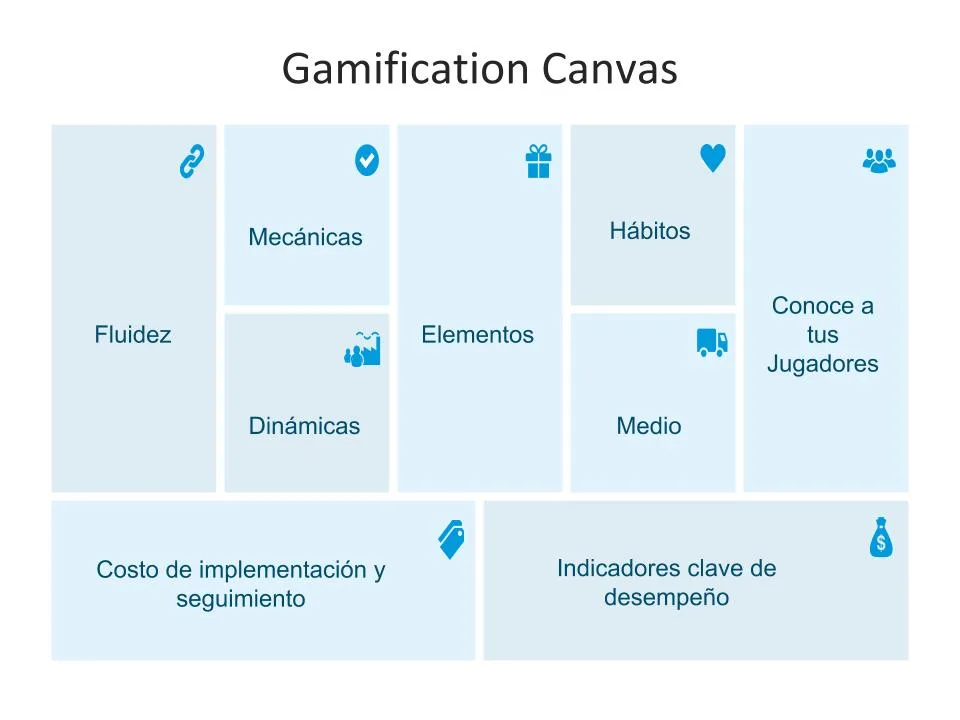
Gamification: In 2011, Carnegie Mellon professor Luis von Ahn launched Duolingo. The app taught languages using something it called a "streak": a count of consecutive days on which a user completed a lesson. Missing a day reset the streak to zero.
It was not a profound insight. Streaks are a simple mechanic. But the behavior it generated was remarkable. Users became deeply invested in maintaining their streaks, sometimes completing lessons at 11:58 pm to avoid losing a 300-day count.
Duolingo's retention metrics improved dramatically. By 2022, Duolingo had over 500 million registered users and had become the most downloaded education app in history.
The streak mechanic is gamification in its clearest form: a psychological intervention borrowed from game design, applied to a non-game activity, producing behavior change that other design approaches had not achieved.
The story of gamification is also more complicated than this success suggests. For every Duolingo, there are dozens of enterprise point systems, educational badge programs, and customer loyalty schemes that launched with excitement and quietly died because they produced engagement that was shallow, temporary, and ultimately manipulative.
Understanding when gamification works and when it does not requires understanding the psychology that underlies it.
Defining Gamification
The Deterding Definition
Sebastian Deterding, now a professor at the Royal College of Art, worked with colleagues Dale Dixon, Rilla Khaled, and Lennart Nacke to produce the most widely cited academic definition of gamification in a 2011 paper: "the use of game design elements in non-game contexts."
This definition does important conceptual work. It distinguishes gamification from:
- Serious games: full games designed for non-entertainment purposes (flight simulators, surgical training games, policy simulations). Serious games replace an activity with a game; gamification adds game elements to an existing activity.
- Playfulness or game-like qualities: adding game elements is different from making something fun in an unstructured way
- Toy-like design: a physical product with tactile pleasure is not gamified unless it uses specific game mechanics
The "game design elements" that Deterding and colleagues catalog include:
Mechanics: the rules and systems that produce game behavior: points, levels, leaderboards, badges, progress bars, challenges, time limits, random rewards
Dynamics: the run-time behavior that emerges from mechanics: competition, cooperation, exploration, achievement
Aesthetics: the emotional responses that dynamics produce: fun, challenge, aesthetic pleasure, narrative immersion
Gamification typically focuses on the most visible mechanics (points, badges, leaderboards, sometimes called "PBL") while often neglecting the deeper dynamics and aesthetics that make games actually engaging.
PBL: The Most Common and Least Effective Form
Points, badges, and leaderboards are the most widely deployed gamification mechanics, and also the most often criticized. They are easy to implement and immediately legible, and when implemented without attention to underlying motivation, they are the most likely to fail.
Points provide a running measure of progress or performance. They work when they are calibrated to create meaningful feedback about progress toward a goal the user actually cares about.
They fail when they measure activity rather than achievement, when the numbers are arbitrary, or when accumulating them bears no meaningful relationship to actual mastery.
Badges are visual representations of achievements. They work when they represent milestones that users find meaningful and when earning them requires genuine effort or skill. They fail when they are given out for trivial actions, when the collection of badges has no meaning beyond accumulation, or when users perceive them as patronizing.
Leaderboards show users their ranking relative to peers. They work for users near the top, who receive validation and competitive motivation. They frequently backfire for users in the middle or bottom of the ranking, who receive information that they are behind and may disengage rather than intensify effort.
Research by Juho Hamari and others suggests that leaderboards produce engagement mainly when the competition is tight and participants believe they can improve their ranking.
The Psychology Behind Gamification
Self-Determination Theory
The most useful framework for predicting when gamification will work is Self-Determination Theory (SDT), developed by Edward Deci and Richard Ryan at the University of Rochester. SDT identifies three universal psychological needs whose satisfaction underlies intrinsic motivation:
Autonomy: the sense that one's behavior is self-determined, not externally controlled. Gamification that feels coercive, such as "you must complete this module to unlock the next level," undermines autonomy and reduces intrinsic motivation.
Competence: the sense of efficacy and mastery. Gamification that provides clear feedback on skill development, that presents appropriately challenging tasks, and that marks genuine progress toward mastery supports competence satisfaction.
Relatedness: the sense of connection to others. Social gamification mechanics, such as collaborative challenges, team achievements, and sharing milestones, can support relatedness and leverage social motivation.
Game mechanics that support these three needs produce durable, genuine engagement. Game mechanics that satisfy none of them, such as arbitrary points, meaningless badges, or rankings that make people feel incompetent, produce temporary behavior change at best, resistance and disengagement at worst.
"The question is not whether to use game elements, but whether those elements support or undermine the psychological needs that drive genuine motivation." (Richard Ryan, co-developer of Self-Determination Theory)
The Overjustification Effect
In 1973, psychologists Mark Lepper, David Greene, and Richard Nisbett published a landmark study with preschool children who enjoyed drawing. The researchers offered some children a "good player award" for drawing. After the experiment, they observed children's spontaneous drawing behavior without any reward.
Children who had received expected rewards for drawing, who had done something they found intrinsically interesting in exchange for an external reward, subsequently drew significantly less than children who had received no reward or unexpected rewards.
The overjustification effect (also called crowding out) describes this phenomenon: external rewards can replace intrinsic motivation rather than adding to it. When an activity becomes associated with earning a reward, people begin to experience it as work rather than play.
When the reward is removed, the intrinsic motivation that was there before is partially or fully gone.
This has significant implications for gamification:
Don't gamify intrinsically motivating activities. Adding points and badges to reading, creative work, meaningful professional tasks, or volunteer activity can reduce the quality and quantity of engagement.
Expected rewards are more dangerous than unexpected ones. Announcing in advance that completing a task earns a badge creates a contingent reward relationship that triggers the overjustification effect. Providing surprise recognition for achievements is less damaging.
Informational rewards are safer than controlling rewards. Rewards that provide information about mastery (performance feedback, skill levels) are less likely to undermine intrinsic motivation than rewards that feel controlling (bonuses tied to specific behaviors, points that substitute for performance evaluation).
Where Gamification Works
Fitness and Health Behaviors
Fitness apps represent some of the most successful gamification deployments. Fitbit, Apple Fitness+, Strava, and Peloton all use a combination of streaks, badges, challenges, and social competition to sustain exercise behavior.
These applications succeed for a structural reason: exercise is an activity most people believe they should do (so the goal is pre-existing), the barrier is motivation and consistency rather than skill or knowledge, and the benefits are delayed (better health over time) while the costs are immediate (effort now).
Game mechanics can provide immediate rewards, such as a streak, a badge, or a ranking improvement, that bridge the gap between immediate cost and delayed benefit.
Research on fitness gamification is generally positive but shows important nuances.
A 2019 randomized controlled trial by Mitesh Patel and colleagues at Penn Medicine assigned hospital employees to one of four conditions: control, a financial incentive, individual gamification (points for daily step goals), or social gamification (team-based points).
After 24 weeks, all three intervention conditions outperformed control, with social gamification producing the largest increase in step counts.
The social dimension matters: gamification that connects people, through collaborative challenges or shared leaderboards among friends, typically outperforms individual mechanics.
Language Learning: The Duolingo Model
Duolingo's success is probably the most studied gamification case study. The app uses:
- Streaks: consecutive days of lessons, reset if a day is missed
- Hearts: a life system that resets on errors (in some versions)
- XP (experience points): accumulated for completing lessons
- Leagues: competitive leaderboards that advance or demote users based on weekly XP
- Badges and achievements: for various milestones
- Streak shields: purchasable protection against streak loss
Research on Duolingo's learning effectiveness is generally positive for beginner levels. A 2012 study commissioned by Duolingo (and subject to obvious conflict-of-interest caveats) found that 34 hours of Duolingo use produced learning outcomes comparable to a university semester of Spanish.
Independent research shows more modest but still meaningful results.
The retention metrics are remarkable for a free educational app: users return daily at rates far above comparable services without gamification. Whether the gamification is driving learning or just driving app usage is a distinction the company's metrics do not always make clear.
The streak mechanic deserves particular analysis. It is a form of loss aversion exploitation: users develop an attachment to their streak count, and the prospect of losing it motivates behavior in a way that forward-looking rewards (gaining XP) do not.
This is effective but also contested ethically, because it leverages anxiety about loss rather than positive motivation toward a goal.
Enterprise Software
Enterprise gamification has a less consistent track record. Applications to customer service software, sales force management, compliance training, and onboarding have produced mixed results.
Where it works: SAP Jam and similar social business platforms have used gamification to increase employee participation in knowledge sharing. Call center software with real-time performance dashboards and team competition has shown modest improvements in call handling metrics.
Cybersecurity training with simulated phishing exercises and scoring has improved email security behavior.
Where it fails: Applications that try to gamify creative, collaborative, or complex professional work frequently backfire. Leaderboards in knowledge work create gaming the metric (people optimize for points rather than value). Badges for completing mandatory training treat employees like children and signal distrust.
Points systems that reduce complex professional contribution to a single number create resentment rather than motivation.
The crucial variable is whether the game mechanics are aligned with what employees actually value about their work. Mechanics that support mastery, autonomy, and meaningful progress work. Mechanics that substitute for genuine recognition, or that optimize for measurable activity rather than actual quality, do not.
Where Gamification Fails
The Motivation Substitution Problem
A key failure pattern in gamification is motivation substitution: the game mechanics become the goal rather than supporting the underlying goal.
When users optimize for points rather than learning, for badges rather than mastery, for streaks rather than progress, the gamification has replaced the original motivation rather than supporting it.
Duolingo's streak mechanic illustrates the tension. Users who maintain streaks at 11 pm not because they are learning effectively but because they fear losing the count are exhibiting motivation substitution. The streak has become the goal; language learning is the means to maintain it.
This may still produce language learning, but it may also produce low-effort lesson completion that satisfies the streak without genuine acquisition.
The Novelty Effect
Research consistently finds that gamification produces strong initial engagement followed by declining returns. The points, badges, and levels that feel rewarding when first encountered become mundane over time. Users who registered to watch their stats grow become indifferent to the stats as they accumulate.
This novelty effect is particularly pronounced for extrinsic reward mechanics. Streaks, leaderboards, and points lose their motivational charge as they become familiar and as users establish their position within the system.
Applications that sustain engagement beyond the novelty effect do so by continuously adding genuinely new challenges, by leveraging intrinsic motivation rather than extrinsic rewards, or by building strong social mechanics that create ongoing investment in the community.
Competition and Collaboration Conflicts
Leaderboards and competitive mechanics create winners and losers. For users near the top of a leaderboard, competition is motivating. For the majority, who are definitionally below the top, competition can be demoralizing.
Research by Juho Hamari and Jonna Koivisto (2015) found that social comparison through leaderboards had mixed effects: users who found themselves in competitive positions felt motivated, while users who perceived the competition as unwinnable or unfair disengaged.
This finding suggests that effective competitive gamification requires carefully calibrated matching, meaning competition between users of similar ability, or designs that allow multiple dimensions of "winning" so that more users can experience success.
Competitive mechanics also create organizational tensions in workplace contexts. When colleagues compete for points, they may hoard knowledge, avoid helping others, or prioritize visible metrics over collaborative value, directly contrary to organizational goals.
Ethical Design Principles
The Distinction Between Support and Manipulation
Gamification exists on a spectrum from genuinely supportive to genuinely manipulative, and the difference matters both ethically and practically.
Supportive gamification helps users achieve goals they have already set for themselves. The mechanics provide motivation, feedback, and structure for goals that users would pursue if they had better tools.
Fitness apps that help users exercise more consistently, language apps that help users practice daily, and productivity apps that help users maintain habits all serve user interests.
Manipulative gamification exploits psychological vulnerabilities to drive behavior that serves the platform's interests at the expense of user welfare.
Variable reward schedules that maximize compulsive checking, loss aversion mechanics that create anxiety about non-engagement, social comparison that generates status anxiety, and artificial scarcity that drives purchases are the dark patterns of gamification.
The ethical distinction aligns with the practical one: supportive gamification produces durable, expanding engagement; manipulative gamification produces compulsive engagement followed by burnout and resentment.
Design Principles for Ethical Gamification
| Principle | Supportive Design | Manipulative Design |
|---|---|---|
| Goal alignment | Serves user's stated goals | Serves platform engagement metrics |
| Reward structure | Progress toward mastery | Variable rewards for compulsive return |
| Loss mechanics | Mild friction, not anxiety | Streak loss induces stress |
| Social features | Collaboration and connection | Social comparison and status anxiety |
| Transparency | Mechanics are visible | Mechanics are hidden |
| Off-boarding | Easy to disengage | Dark patterns make quitting difficult |
The FTC and EU regulators have increasingly scrutinized gamification mechanics in mobile applications, particularly games targeting children. Mechanics that use loss aversion, social pressure, and variable rewards to drive in-app purchases have been subject to enforcement action in multiple jurisdictions.
The Research Landscape
A comprehensive meta-analysis by Juho Hamari, Jonna Koivisto, and Harri Sarsa (2014) reviewed 24 empirical studies of gamification and found:
- Most studies reported positive effects on engagement, particularly for health-related behaviors
- Effect sizes were generally modest
- Context mattered significantly: gamification worked better in some domains and poorly in others
- Methodological quality was variable, limiting strong conclusions
More recent research has continued to find positive average effects while documenting the large variability in outcomes by context, design quality, and user characteristics. The emerging consensus is that gamification works, but the effect depends heavily on how it is designed and for whom.
The field has been criticized for an abundance of practitioner enthusiasm and a relative shortage of rigorous long-term studies. Most studies measure short-term engagement; less is known about whether gamification produces durable behavior change when mechanics are removed.
Summary
Gamification is a real phenomenon with real effects on behavior: the research evidence is clear enough on that. Whether those effects are beneficial, sustainable, and ethical depends on how the mechanics are designed and whose interests they serve.
The fundamental insight from the research is that external rewards can support or undermine intrinsic motivation depending on whether they feel informational (providing useful feedback about genuine progress) or controlling (substituting for meaningful engagement).
Points, badges, and leaderboards are tools. Their effects depend on whether they are aligned with what users actually value.
The most successful gamified applications, such as Duolingo, Peloton, Habitica, and fitness trackers, succeed because they provide motivational scaffolding for activities users already want to do.
The least successful, including most enterprise badge systems and many loyalty programs, fail because they impose game mechanics on top of activities without understanding the underlying motivational structure.
Gamification is not magic. It is applied behavioral science, and like all applied science, it works best when the application is grounded in an honest understanding of how the underlying mechanisms actually function.