
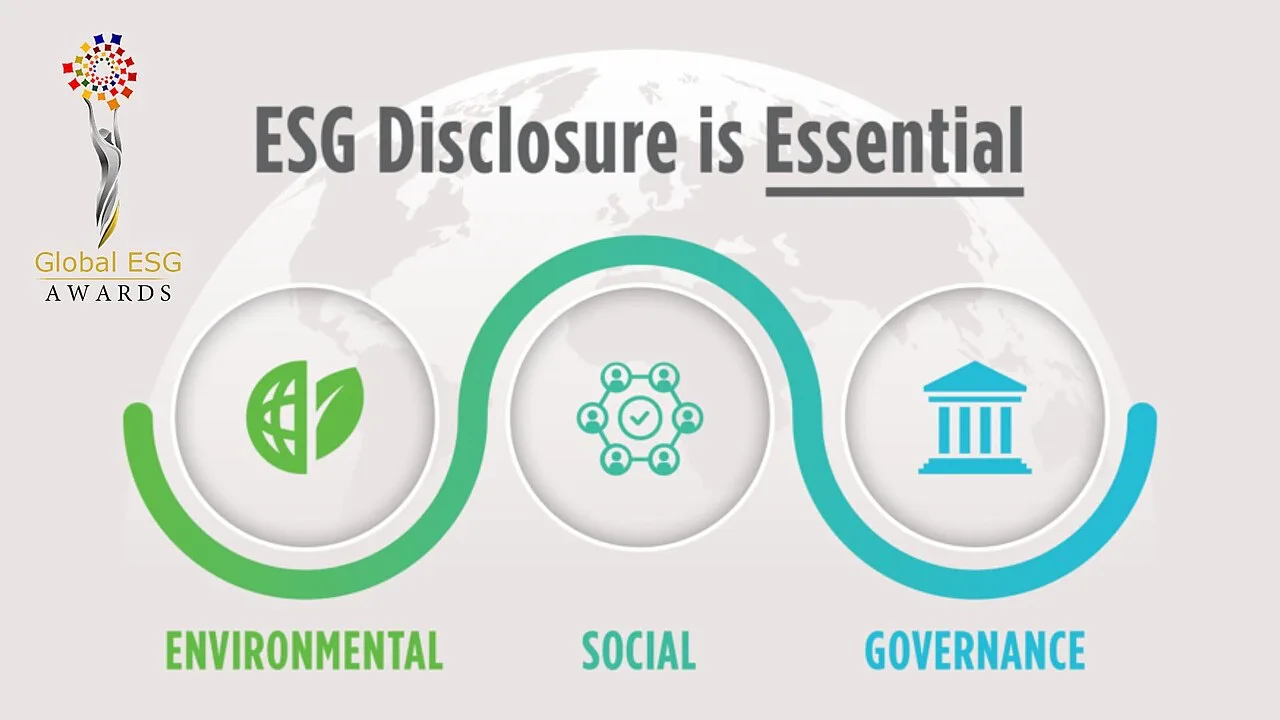
ESG investing evaluates environmental, social, and governance factors as potentially material business risks and opportunities, not simply as a measure of moral virtue. Different approaches range from ethical exclusion screens to broad factor analysis and targeted impact investment. Its rapid growth has brought disputes over ratings, labels, evidence of performance, and whether funds match their stated commitments.
In 2004, the United Nations Global Compact published a report titled Who Cares Wins. It argued that incorporating environmental, social, and governance factors into investment analysis would produce better long-term financial results and help build more sustainable capital markets.
The report coined the term ESG and planted a seed that would grow, over the next two decades, into a multi-trillion-dollar industry.
By the early 2020s, sustainable-investment assets were very large: the Global Sustainable Investment Alliance reported roughly $35 trillion for 2020 and about $30 trillion in its 2022 review (as of end-2021, excluding Japan), with the decline largely reflecting stricter definitions rather than actual outflows: roughly one-third of all professionally managed assets. Politicians gave speeches. Asset managers launched hundreds of new ESG funds.
Corporations published thick sustainability reports and set ambitious net-zero targets.
Then the doubts arrived, and they arrived loudly. Regulators in the US and EU launched investigations into misleading ESG fund labeling. A former sustainability chief at a major asset manager became a whistleblower, alleging that ESG was being used to attract capital without genuine commitment.
Academic studies found that ESG ratings from different agencies barely agreed with each other. The energy sector, which many ESG funds had reduced or eliminated, surged in 2022.
ESG investing is simultaneously one of the most influential and most contested ideas in modern finance. Understanding it clearly (what it is, how it works, what the evidence says, and who it actually benefits) requires moving past both the promotional claims and the reflexive dismissals.
What ESG Actually Measures
The Three Categories
Environmental factors assess how companies interact with the natural world. This includes:
- Greenhouse gas emissions (Scope 1, 2, and 3)
- Energy efficiency and renewable energy use
- Water consumption and management
- Waste and pollution
- Climate transition risk and physical climate risk
- Biodiversity impact
Social factors assess company relationships with people: employees, suppliers, communities, and customers:
- Labor practices and working conditions
- Worker health and safety
- Supply chain standards and human rights
- Diversity and inclusion
- Data privacy and customer protection
- Community relations
Governance factors assess how companies are controlled and directed:
- Board composition and independence
- Executive compensation and alignment with long-term performance
- Shareholder rights
- Anti-corruption policies and enforcement
- Transparency and disclosure quality
What ESG Is Not
ESG is not primarily an ethical framework; it is an analytical one. The original argument for incorporating ESG into investment analysis was that these factors represent material risks and opportunities that traditional financial analysis misses.
A company with poor environmental practices may face regulatory penalties, legal liability, or reputational damage. A company with poor governance may be mismanaging shareholder capital. A company with poor labor practices may face high turnover, strikes, or supply chain disruptions.
This distinction matters because it explains why ESG analyses can produce counterintuitive results. An oil company that scores highly on governance and manages its environmental risks well may receive a higher ESG score than a solar company with poor labor practices and weak oversight.
The ESG framework, properly applied, is asking "how well is this company managing its non-financial risks?" rather than "is this company doing good in the world?"
The materiality principle is not merely theoretical. Research by Khan, Serafeim, and Yoon published in The Accounting Review in 2016 found that companies that improved on "material" ESG issues, those most relevant to their specific industry, tended to outperform firms with poor ratings on those issues, while performance on issues that are immaterial to the industry showed little such relationship.
This was a comparison of high- versus low-materiality-rated firms rather than a study of firms that improvement on immaterial ESG issues had no significant financial effect.
The implication: not all ESG factors matter equally for all companies, and indiscriminate application of broad ESG screens may miss the financially relevant signal.
The ESG Ecosystem: SRI, ESG, and Impact Investing
| Approach | Origin | Method | Primary Goal |
|---|---|---|---|
| SRI (Socially Responsible Investing) | 1960s-70s | Negative exclusion screens | Align investments with ethical values |
| ESG Integration | 2000s | Factor-based analysis of all companies | Identify risk-adjusted financial opportunity |
| ESG Thematic Funds | 2010s | Concentrated in ESG-aligned sectors | Benefit from sustainability transition |
| Impact Investing | 2010s | Targeted investment in measurable outcomes | Generate intentional social/environmental impact |
Socially Responsible Investing (SRI) is the oldest approach, rooted in religious and ethical traditions. Quaker investors in the 18th century avoided investments in the slave trade. Methodist founder John Wesley preached in 1760 against investments that harm one's neighbor.
Modern SRI typically uses negative screens to exclude specific industries: tobacco, weapons, alcohol, gambling, pornography, or fossil fuels. The investor's goal is to ensure their capital does not support activities they consider objectionable.
The performance implications of SRI exclusions have been extensively studied. Excluding tobacco has generally improved portfolio performance since the 1990s as health litigation and regulatory pressure eroded tobacco industry profitability.
Excluding defense and weapons manufacturers has generally hurt performance during periods of elevated geopolitical tension and defense spending. Excluding fossil fuels hurt ESG portfolios dramatically in 2022 when energy stocks were among the best performers globally.
ESG integration is a more recent and analytically oriented approach. Rather than excluding industries, it assesses all companies across ESG dimensions and uses that information in the investment process.
A pure ESG integration approach might hold oil companies, defense contractors, or fast food chains if those companies score well on the relevant metrics.
Impact investing goes furthest in connecting investment to intentional real-world outcomes. It typically operates in private markets (development finance, social impact bonds, green infrastructure) and requires not just avoidance of harm but demonstration of positive measurable impact.
Impact investors often accept below-market returns in exchange for confirmed social or environmental outcomes, though some market-rate impact strategies exist.
The Global Impact Investing Network's 2022 survey estimated impact investment assets under management at approximately $1.164 trillion, up dramatically from roughly $502 billion in 2019.
The boundaries between these categories have blurred considerably as the industry has grown and marketing pressures have pushed all sustainable investing into a single "ESG" bucket.
How ESG Ratings Work, and Why They Disagree
The Rating Process
ESG ratings are produced by specialist firms including MSCI, Sustainalytics, ISS, Bloomberg, and several dozen smaller providers. The basic process involves:
- Collecting data from company sustainability disclosures, regulatory filings, news monitoring, and surveys
- Weighting criteria by industry: environmental factors matter more in manufacturing than in software
- Scoring companies on each dimension and aggregating to an overall rating
- Updating scores as new information becomes available
The inputs are imperfect. Companies control much of the information they disclose about their own ESG practices. Disclosure requirements vary by country and sector. Smaller companies often disclose less simply because they have fewer resources to produce reports.
The Correlation Problem
A 2019 study by Florian Berg, Julian Kolbel, and Roberto Rigobon published in the Review of Finance analyzed the ESG ratings of hundreds of companies from six major rating agencies and found that the average correlation between any two agencies' ratings was approximately 0.61.
For context, credit ratings from Moody's and S&P correlate at around 0.99.
The researchers identified three reasons for the divergence:
- Scope disagreement: agencies differ on which attributes to measure
- Measurement disagreement: agencies use different data and proxies for the same attribute
- Weight disagreement: agencies assign different importance to different factors
A subsequent 2022 paper by the same authors in Management Science found that the disagreement was not random: it was systematically biased by what the researchers called "rater effect": agencies that rate a company higher on one dimension tend to rate them higher on all dimensions, regardless of actual performance.
This means ESG ratings capture, in part, a halo effect related to corporate disclosure quality and investor relations sophistication rather than actual sustainability performance.
The practical implication is significant: a company can be considered an ESG leader by one rating agency and a laggard by another. When fund managers select "high ESG" companies, they may be selecting for very different things depending on which ratings they use.
"ESG ratings suffer from a fundamental problem: there is no agreed-upon definition of what sustainability means for an investment portfolio, so different raters are essentially measuring different things."
A concrete example: Tesla has been assigned ESG scores ranging from excellent to poor by different rating agencies simultaneously. MSCI gave it a top rating based on its climate transition alignment. S&P Global rated it lower based on governance concerns and labor practices.
Sustainalytics placed it in the medium-risk category based on its regulatory and operational risk exposure. None of these assessments is technically wrong; they are measuring different things and calling them all "ESG."
Does ESG Investing Outperform?
There is no robust, replicable evidence that ESG investing as a category consistently outperforms conventional investing after fees and controlling for factor exposures. Specific ESG approaches, in specific sectors, over specific time periods, may show advantages, but the overall category does not show a reliable premium. The academic literature on the question is genuinely mixed.
The Evidence
The question of whether ESG funds outperform conventional funds has generated a substantial academic literature with genuinely mixed findings.
Evidence for outperformance:
- A 2015 meta-analysis by Clark, Feiner, and Viehs at Oxford, reviewing 200 studies, found that 88% showed positive relationships between ESG practices and financial performance. However, many of these studies examined corporate-level ESG practices, not fund-level performance, and the relationship between the two is indirect.
- Research from MSCI published in 2020 found that companies with high ESG scores exhibited lower volatility and higher return on equity over 10-year periods, particularly for the governance component. The MSCI research attributed much of this to lower "tail risk": high-ESG companies were less likely to experience catastrophic events like accounting scandals, environmental disasters, or labor crises.
- A 2021 Deutsche Bank review of 56 academic studies found that 65% reported a positive correlation between ESG ratings and financial performance, while only 8% found a negative correlation.
Evidence against consistent outperformance:
- A comprehensive 2020 review by Bradford Cornell and Aswath Damodaran in the Journal of Sustainable Finance and Investment argued that high ESG ratings, if they genuinely produce lower risk, should translate into lower expected returns, not higher ones, because investors pay a premium for safety. The implication: ESG may reduce risk, but the premium investors pay for that risk reduction should eliminate much of the financial benefit.
- Research by Lucian Bebchuk and Scott Hirst at Harvard Law School has documented that many large "ESG" funds are essentially closet index funds with minimal meaningful ESG differentiation in their actual holdings, undermining claims about their distinctive performance characteristics.
- Analysis of the 2022 performance divergence (when ESG funds underperformed dramatically due to energy sector exclusions as oil and gas prices surged) illustrates that ESG's sector biases create substantial tracking error in specific market environments.
The honest answer: There is no robust, replicable evidence that ESG investing as a category consistently outperforms conventional investing after fees and controlling for factor exposures. Specific ESG approaches, in specific sectors, over specific time periods, may show advantages. The overall category does not show a reliable premium.
Why the Evidence Is Murky
The difficulty in assessing ESG performance stems from several structural problems:
The "ESG" label covers too much: A fund that excludes tobacco and weapons is fundamentally different from one that uses ESG ratings to tilt a broad portfolio. Aggregating their performance into a single "ESG" category produces noise.
Survivorship bias: Poor-performing ESG funds close. Academic databases, and fund comparison services, tend to capture the survivors, overstating average ESG fund performance.
The time-period problem: ESG strategies heavily exposed to growth stocks dramatically outperformed during the 2010s low-interest-rate environment. The same strategies underperformed in the 2022 rising rate environment. Extending or shortening the study period changes the conclusion.
Factor overlap: ESG funds tend to hold high-quality, large-cap, low-debt companies. These characteristics overlap substantially with "quality" and "low volatility" factors that have independently shown performance advantages in some research. ESG "outperformance" may be factor exposure, not ESG per se.
Greenwashing: The Credibility Problem
What Greenwashing Looks Like
Greenwashing in investment products takes several forms:
Labeling issues: Funds that use the word "sustainable," "responsible," or "ESG" in their name but hold companies with poor environmental or social records. The problem is definitional: ESG has no single legal meaning, so the term can be applied very broadly.
Governance-heavy ratings: Some companies receive high ESG scores primarily because of strong governance structures (independent boards, transparent reporting) even if their environmental impact is severe. This can produce portfolios of well-governed coal companies or pharmaceutical firms with pricing controversies.
Scope exclusion: Many ESG analyses focus on a company's direct emissions and operations while excluding emissions in their supply chain (Scope 3), which are often the largest source. A retailer with a low-carbon logistics operation but an emissions-intensive supply chain may look much better in ESG analysis than it should.
Selective disclosure: Companies choose what to disclose. Organizations with strong governance practices are likely to disclose extensively, which inflates their apparent ESG performance relative to less transparent organizations that may have similar or better actual practices.
The DWS Whistleblower Case
In 2021, Desiree Fixler, the former sustainability chief at DWS Group (the investment management arm of Deutsche Bank), became one of the most prominent ESG whistleblowers.
She alleged that DWS had systematically overstated the degree to which ESG considerations were integrated into its investment process, claiming the firm had marketed over half its $900 billion in assets as ESG-integrated when the reality was far more limited.
The SEC and German regulators launched investigations. DWS paid a $25 million settlement to the SEC in 2023 without admitting wrongdoing.
The case drew significant attention to the gap between ESG marketing claims and operational reality across the asset management industry, and contributed to regulatory pressure for more specific, auditable disclosure requirements.
Regulatory Responses
Regulators have begun addressing the labeling problem. The European Union's Sustainable Finance Disclosure Regulation (SFDR), implemented in 2021, is primarily a disclosure regime. Funds make disclosures that in practice map to three groupings: Article 6 (funds that disclose how, or whether, they integrate sustainability risks), Article 8 (funds that promote environmental or social characteristics), and Article 9 (funds with sustainable investment as their objective).
This framework provided significantly more transparency than the prior free-for-all, though substantial regulatory concern emerged in 2022-2023 as many Article 9 funds were downgraded to Article 8 when managers concluded they could not meet the higher standard.
The SEC in the United States proposed enhanced disclosure requirements for funds using ESG terminology in marketing materials in 2022. The proposed rules would require funds to disclose specifically which ESG factors they consider, how they weight them, and what third-party data or ratings they rely on.
The regulatory trend is toward greater specificity: what exactly does this fund do, how does it measure ESG factors, and how does that affect the portfolio? This is useful, but the underlying problem of inconsistent ESG measurement will persist until reporting standards converge more than they currently have.
Who ESG Investing Actually Benefits
Investors
For long-term individual investors, ESG investing offers three potential benefits: alignment of portfolio with values, potential for long-term risk reduction (if ESG factors genuinely predict future underperformance of non-ESG companies), and signaling to companies that governance and sustainability practices affect their cost of capital.
Whether the risk-reduction benefit materializes depends significantly on which ESG methodology is used and whether the investor actually needs the sector diversification that ESG approaches sometimes sacrifice.
Investors who hold ESG funds with heavy energy exclusions should recognize they are making an implicit bet that fossil fuel prices will remain depressed, a sector timing call embedded in an ostensibly diversified strategy.
Companies
Companies with high ESG ratings may benefit from lower cost of capital, as ESG-committed investors bid up their equity and are willing to accept lower yields on their bonds.
Research by Harvard's George Serafeim and colleagues, published in a 2018 NBER working paper, found that companies with strong ESG trajectories (improving sustainability practices, not just high static scores) had lower cost of equity capital than peers with deteriorating ESG metrics.
The effect was modest but statistically significant.
A 2021 study by Baulkaran and Sapp in Financial Management found that bonds with green bond labels (a specific form of ESG-aligned debt) priced at a small premium, the so-called "greenium," reflecting investor willingness to accept slightly lower yields for green-labeled instruments.
The greenium was estimated at approximately 5-15 basis points in primary issuance, modest but real.
Society and the Environment
This is where the most important and contested question lies: does ESG investing actually improve environmental or social outcomes?
The mechanism would be: ESG investors withdraw capital from bad actors, raising their cost of capital and reducing their ability to operate; simultaneously, ESG investment directs capital toward better actors, giving them a competitive advantage.
The evidence for this mechanism is weak. For most publicly traded large-cap companies, secondary market trading in their shares does not affect their cost of capital in any significant way: the original capital raise happened in a primary offering, and subsequent trading is just investors buying and selling shares from each other.
As financial economist Aswath Damodaran has argued repeatedly, selling Exxon shares to a more ESG-focused investor does not take a single dollar away from Exxon; it just changes who owns its equity. The environmental impact of secondary market ESG investing is essentially zero through this channel.
Shareholder engagement is probably a stronger mechanism: large ESG-committed institutional investors using their voting power to push for emissions targets, board diversity, or supply chain standards.
Research by Dimson, Karakas, and Li published in The Review of Financial Studies (2015) found that successful engagements by large ESG-oriented institutional investors were associated with positive abnormal stock returns, suggesting that the market views governance improvements as value-creating.
Engagement outcomes varied significantly by firm size and institutional investor size: large institutional investors targeting large companies showed the strongest effects.
Primary market impact (green bonds, sustainability-linked loans, and private impact investments that direct capital toward new environmentally beneficial projects) is probably the strongest channel through which ESG investing affects real-world outcomes.
A green bond that finances a new offshore wind farm is genuinely capital-allocating. An ESG fund trading public equities is not.
ESG Investing in Practice: Questions to Ask
If you are considering ESG investments, the following questions help cut through marketing language:
| Question | Why It Matters |
|---|---|
| Which ESG rating system does this fund use? | Methodologies differ dramatically |
| What does this fund actually hold? | "ESG" labels can cover very different portfolios |
| What is the ESG fund's carbon intensity vs. a conventional benchmark? | Reveals actual environmental exposure difference |
| Does the fund engage in active ownership? | Engagement has more real-world impact than exclusion |
| What are the fees vs. a comparable conventional fund? | ESG funds typically charge 0.1-0.3% more annually |
| How has the fund performed relative to a standard benchmark? | Understand the financial trade-off, if any |
| Is the ESG focus systematic or cosmetic? | Ask for methodology documentation, not just marketing claims |
The Fee Problem
ESG funds typically charge higher fees than comparable conventional funds. A Morningstar analysis in 2022 found that the average expense ratio for ESG equity funds in the United States was approximately 0.20% higher than conventional equivalents.
Over 30 years on a $100,000 investment, that 0.20% fee difference costs approximately $45,000 in foregone returns at 7% annualized growth, a non-trivial sum for a benefit that has not been shown to produce commensurate returns.
The fee premium has been declining as competition from index-based ESG products has increased. Some ESG index funds now approach conventional index fund prices, making the fee argument less decisive for the most competitive products.
The Future of ESG: Mandatory Disclosure and Standardization
The most important structural change underway in the ESG ecosystem is the move toward mandatory standardized disclosure. Currently, ESG ratings are based largely on voluntary corporate disclosures, leading to the measurement problems described above. Several regulatory and standard-setting bodies are working to change this:
The International Sustainability Standards Board (ISSB), established in 2021 under the IFRS Foundation, published its first climate and general sustainability disclosure standards in 2023.
These standards, once adopted by national regulators, would require companies to disclose climate-related risks and sustainability information using a standardized format, dramatically improving the comparability and reliability of ESG data.
The EU Corporate Sustainability Reporting Directive (CSRD), which began phasing in for large EU companies in 2024, requires far more detailed and audited sustainability reporting than any previous requirement. Original estimates suggested roughly 50,000 companies would eventually fall under CSRD, but a 2025-2026 EU simplification (Omnibus) package significantly narrowed the scope, so far fewer companies are now expected to be covered.
SEC climate disclosure rules, first proposed in 2022, were adopted in a scaled-back final form on March 6, 2024, then voluntarily stayed by the SEC in April 2024 pending litigation; by 2025-2026 the Commission had moved toward rescinding them.
As proposed they would have required large U.S. public companies to disclose greenhouse-gas emissions and climate-related risks in SEC filings. If implemented, this would provide investors with comparable, auditable climate data for the first time.
If these regulatory initiatives succeed in standardizing sustainability disclosure, the ESG data quality problem may be substantially reduced over the next decade, which would make ESG analysis considerably more rigorous than it currently is.
Key Takeaways
- ESG stands for Environmental, Social, and Governance: a framework for evaluating non-financial company attributes alongside traditional financial analysis
- ESG is not a moral framework but an analytical one, originally designed to identify material financial risks that conventional analysis misses
- ESG, SRI, and impact investing are distinct approaches that are often conflated in marketing and media coverage
- ESG ratings from different agencies have shockingly low correlations (average 0.61 vs. 0.99 for credit ratings), making the category less coherent than it appears
- Evidence for consistent ESG outperformance is mixed; there is no robust proof of a reliable ESG premium, and the theoretical case for outperformance has significant counterarguments
- Greenwashing is a real and documented problem, driven by loose labeling standards and incentives to attract capital, illustrated by the 2023 DWS SEC settlement
- ESG's actual impact on real-world sustainability outcomes is modest through secondary market trading, but may be more significant through active ownership, engagement, and primary market capital allocation
- Mandatory disclosure standards (ISSB, CSRD, SEC rules) may substantially improve ESG data quality over the next decade
- Investors considering ESG products should ask specific questions about methodology, holdings, fees, and engagement practices rather than relying on the label alone