
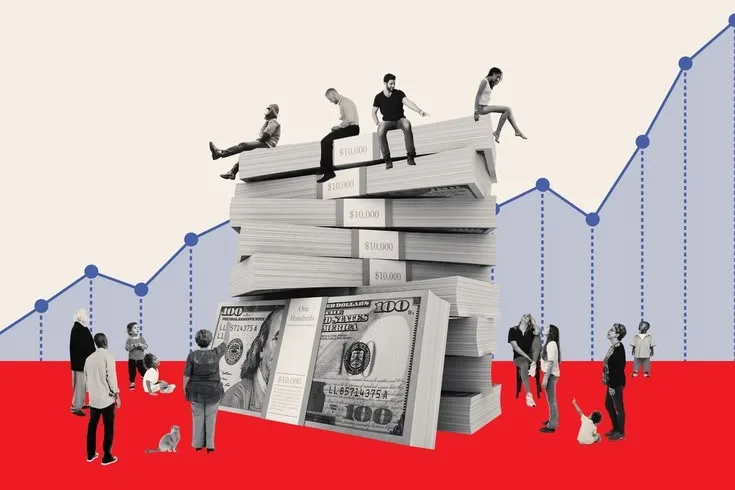
What is narrative economics? It is a framework that treats widely shared stories about the economy as forces that can influence spending, investment, borrowing, and hiring. It does not reject conventional economic variables, but argues they are incomplete. By modeling narratives as contagious and tracking their prominence in texts, the approach seeks to study their relationship to aggregate economic behavior.
In the autumn of 1929, after the stock market crashed and banks began to fail, something unusual happened. Millions of Americans who still had jobs and savings stopped spending. It was not because they had to: it was because they had adopted a story.
The story said that the crash was the natural punishment for years of reckless consumption, and that the virtuous response was radical frugality. To spend was to be complicit in the cycle of sin that had caused the catastrophe.
That story helped turn a severe recession into the Great Depression. Contracting consumer spending was not driven by economic mechanics alone; widely shared stories about the economy plausibly reinforced the downturn, alongside monetary, banking, and policy failures that economists have long emphasized.
This is the central claim of narrative economics, a framework developed by Yale economist and Nobel laureate Robert Shiller, most fully articulated in his 2019 book Narrative Economics: How Stories Go Viral and Drive Major Economic Events.
It is a serious academic argument that popular stories, or economic narratives, function as causal forces in economic history, comparable to interest rates or employment data in their ability to shape behavior at scale.
What Narrative Economics Claims
Standard economic models are built on agents who respond to incentives. Lower interest rates encourage borrowing; higher unemployment reduces consumer confidence; rising profits attract capital. The inputs are measurable, the mechanisms are modeled, and the predictions (however imperfect) are grounded in observable data.
Shiller does not reject this framework. He argues it is incomplete.
Human economic behavior is also driven by the stories people tell about the economy: stories about what caused the last recession, what technology will dominate the next decade, whether it is a good time to buy a house, whether hard work reliably leads to prosperity.
These stories are not merely commentary on economic conditions. They are themselves economic forces: they change how people spend, invest, borrow, and hire.
"Economics has too little concerned itself with how the narratives that people adopt, stories about other people, but also stories about the nature of their world, can have major economic effects." Robert Shiller, Narrative Economics, 2019
The innovation in Shiller's framework is not the observation that stories matter: John Maynard Keynes wrote about "animal spirits" in his 1936 General Theory of Employment, Interest and Money, and behavioral economists have been documenting irrationality for decades.
The innovation is his proposal to study narratives using the same tools epidemiologists use to study infectious diseases.
Shiller's approach builds on a tradition that includes earlier work by George Akerlof and himself in their 2009 book Animal Spirits: How Human Psychology Drives the Economy, which argued that psychological forces (confidence, fairness, corruption, money illusion, and stories) are essential to understanding macroeconomic fluctuations.
Narrative economics extends that work by giving it a specific empirical methodology and a more formal theoretical structure.
The Epidemiological Model of Narrative Spread
Epidemiologists use the SIR model to track how diseases spread through populations: Susceptible (not yet infected), Infected (currently carrying the disease), and Recovered (no longer transmitting).
The key parameters are the infection rate (how likely an infected person is to transmit to a susceptible person) and the recovery rate (how quickly infected people stop being infectious).
A disease spreads when its basic reproduction number (R0) exceeds 1, meaning each infected person infects more than one other. The same logic, Shiller argues, applies to narratives.
A narrative spreads when:
- It is emotionally resonant (fear, hope, moral outrage, identity threat)
- It is simple enough to repeat accurately
- It attaches to a memorable, concrete example or story
- It has a clear protagonist and antagonist
- It connects to existing beliefs people already hold
A narrative declines when people stop repeating it because it becomes stale, is contradicted by events, or is displaced by a more compelling competing narrative.
| Epidemiological Concept | Narrative Equivalent |
|---|---|
| Infection rate | How readily a story is repeated when heard |
| Recovery rate | How quickly people stop telling the story |
| Superspreaders | Influential voices (celebrities, politicians, major media) |
| Mutation | How narratives evolve as they spread |
| Herd immunity | When narrative saturation reduces further spread |
| Epidemic curve | Rise and fall of a narrative's cultural prominence |
Shiller and his collaborators tested this framework empirically by using newspaper archive searches (particularly ProQuest) to track the frequency of narrative terms over time and correlating these with economic indicators.
A narrative about frugality that peaks in newspaper mentions in 1932 and falls through the late 1930s can be mapped against consumption data to estimate its economic effect.
This is imprecise, since narrative mentions are a proxy and not a measure, but it is the kind of systematic empirical approach that separates Shiller's work from more impressionistic claims that culture affects economics.
In his own quantitative work on narrative economics (for example his 2017 American Economic Association presidential address and related NBER papers), Shiller presented evidence that narrative activity, measured through text-frequency searches, correlates with economic fluctuations in ways not fully captured by conventional economic variables alone.
What Makes a Narrative "Economic"?
Not every story that circulates in a society is an economic narrative. Shiller distinguishes economic narratives as stories that directly shape economic decisions at scale: savings rates, investment behavior, labor market participation, consumer spending. The key criterion is causal connection to aggregate economic outcomes.
Economic narratives typically operate by changing one or more of the following:
- Expectations about the future: stories about what the economy will do change decisions made today
- Perceptions of risk: stories about financial danger change willingness to invest or spend
- Social norms around economic behavior: stories about what "people like us" do with money change individual behavior through social pressure
- Trust in institutions: stories about bank failures, government incompetence, or corporate fraud change institutional behavior
The distinction between "just a story" and "an economic narrative" is not always sharp. A celebrity divorce that goes viral is not inherently economic.
A celebrity divorce that generates a major story about prenuptial agreements and wealth management might generate a modest economic narrative about asset protection that affects behavior at some scale.
The Epidemiological Method: Measuring Narrative Spread
One of the most concrete methodological contributions of narrative economics is its approach to measurement. Shiller and colleagues have developed several techniques for tracking narrative spread in historical data:
Google Ngram analysis: The frequency of specific word combinations in the corpus of books scanned by Google (representing roughly 4% of all books ever published) can be tracked over time. This provides an indicator of narrative prevalence in published discourse going back to the 18th century.
ProQuest newspaper archive searches: Searching digitized newspaper archives for specific phrases allows researchers to track when particular narratives entered mainstream discourse, how rapidly they spread, and how long they persisted.
Google Trends: For contemporary narratives, search volume provides real-time data on narrative attention and spread across the population.
Social media analysis: More recent work applies natural language processing to Twitter, Reddit, and other platforms to track the spread of economic narratives in near real-time.
A growing body of central-bank and academic research has explored whether text- and social-media-based narrative indices can anticipate movements in consumer-confidence surveys, with some studies reporting modest predictive value at short horizons. The strength and reliability of these results still vary across data sources and methods.
None of these measures is perfect. They capture attention and mention rather than genuine belief adoption. They bias toward literate, media-consuming populations. They cannot directly measure the economic behavior driven by narratives.
But they represent a genuine advance over purely qualitative historical analysis, and the correlations with economic outcomes are often strong enough to suggest real causal relationships.
Historical Case Studies
The Great Depression Frugality Narrative
Shiller's most extended historical case study involves the Great Depression. The crash of 1929 could plausibly have led to a severe recession lasting two to three years. The Depression lasted over a decade. Why?
Standard explanations invoke monetary contraction (Milton Friedman's account in A Monetary History of the United States, 1963), fiscal austerity, structural banking failures, and the Smoot-Hawley tariff. Shiller accepts these.
But he argues they are insufficient to explain the depth and duration of the contraction without adding a narrative component.
The frugality narrative had several elements:
- Moral dimension: Spending had been sinful; frugality was virtuous.
- Identity component: "People like us" are careful, not wasteful.
- Historical anchor: The 1920s "roaring" prosperity was retrospectively recast as recklessness.
- Social enforcement: Conspicuous consumption became socially embarrassing.
This narrative suppressed consumer demand even among people who had not lost significant wealth or employment, a pattern that fundamental economic models predict poorly.
The narrative was self-reinforcing: reduced spending worsened business conditions, validating the story of economic fragility, which justified further spending reduction.
What makes this account empirically interesting is the timing. ProQuest searches show narrative terms associated with frugality, "living within means," and condemnation of "speculation" spiking dramatically in 1930-1932 and persisting through the mid-1930s.
Consumer spending data shows similar patterns that cannot be fully explained by income and wealth losses alone. Shiller estimates that the narrative component may have accounted for perhaps 20-30% of the consumption shortfall beyond what income effects alone predict, a substantial contribution that standard models simply omit.
Bitcoin and the "Get Rich Quick" Narrative
Bitcoin's price history is impossible to understand through fundamental analysis alone. Bitcoin has no earnings, no dividends, and its intrinsic value as a currency or asset is contested. Yet it has experienced multiple bubbles in which prices rose by multiples of thousands of percent and then collapsed by 80-90%.
What drives these cycles? Shiller argues it is a rotating set of narratives:
- Early adopter narrative (2009-2012): Bitcoin as libertarian escape from government-controlled money; appeal to cypherpunks and ideological early adopters.
- Get rich quick narrative (2013 and 2017): Stories of ordinary people who bought early and became millionaires, spreading through social media and news coverage.
- Institutional legitimacy narrative (2020-2021): Major companies adding Bitcoin to balance sheets; "digital gold" framing for inflation protection.
- Web3/NFT narrative (2021): Broader crypto ecosystem promises of decentralized finance and creator ownership.
Each bubble was driven primarily by a narrative that made Bitcoin adoption seem not just financially rational but identity-relevant.
"Bitcoin is for smart, forward-thinking people." "Not owning Bitcoin means missing the future." These stories drove buying that pushed prices to levels disconnected from any plausible fundamental valuation, and when the narrative lost momentum, prices collapsed.
The fundamental technology changed little between Bitcoin at $3,000 and Bitcoin at $69,000. The narratives changed enormously.
Academic researchers have begun quantifying the narrative-price link. Research by Leopoldo Catania, Stefano Grassi, and Francesco Ravazzolo on forecasting cryptocurrencies (International Journal of Forecasting, 2019) found that including sentiment and related variables could improve short-run forecasts of Bitcoin returns, evidence that sentiment carries information beyond price history alone. This is consistent with Shiller's claim that narrative dynamics are causal, not merely correlational.
The "Automation Will Destroy Jobs" Narrative
Shiller traces recurring waves of anxiety about labor displacement by technology, from the Luddite movement of the 1810s through fears about computing in the 1960s to contemporary concerns about AI.
These narratives have affected economic behavior (slowing adoption of automation, influencing labor negotiations, shaping regulatory responses) even during periods when the empirical evidence for broad technological unemployment was weak.
The narrative recurs not because it accurately predicts labor market outcomes (in aggregate, mechanization has historically created as many jobs as it destroyed) but because it has persistent structural features that make it emotionally compelling:
- It features a clear villain (the machine, or its owners)
- It speaks to identity and dignity (what makes human labor valuable?)
- It can be validated by individual examples (the specific factory worker who lost a job) even when aggregate data contradicts it
Understanding that this narrative is recurring and structurally compelling, independent of the specific technology, helps predict when and how it will affect economic behavior, without requiring that its predictions about unemployment be correct.
Historical data supports the pattern. Shiller and co-author Stefano Giglio, in a 2020 National Bureau of Economic Research working paper, showed that "technological unemployment" terms in newspaper archives spike with each major technology wave (the 1920s electrification, the 1960s computer era, the 1990s internet boom), and that each spike is followed by labor market anxiety that affects wage negotiations and investment in worker retraining programs, regardless of actual unemployment trends.
Housing Bubble Narratives and Irrational Exuberance
Shiller's work on narrative economics builds on his earlier empirical research on asset price bubbles, particularly his book Irrational Exuberance (2000, revised 2005 and 2015). His price-earnings ratio analysis, the "Shiller CAPE ratio," documented that U.S.
stock prices and housing prices were driven to unsustainable levels by narratives rather than fundamentals.
In his analysis of the 2000s housing bubble, Shiller identified a specific narrative complex that sustained house price increases far beyond any fundamental justification:
- "Real estate always goes up": a belief with no long-run historical support that became widely accepted as wisdom
- "You're throwing money away renting": a narrative that created urgency to buy regardless of price
- "Get in before you're priced out forever": a scarcity narrative that suppressed rational price comparison
Shiller's survey research, conducted with Karl Case beginning in the 1980s, tracked homebuyer expectations and found that as late as 2005, many buyers in bubble markets expected prices to continue rising by double digits indefinitely.
The surveys also found that buyers were consciously aware they were participating in something bubble-like, but the narrative of "different this time" and "permanent plateau" suppressed the rational response to that awareness.
How to Identify Narrative-Driven Market Moves
For investors and economic analysts, the practical challenge is distinguishing moves driven primarily by changing fundamentals from those driven primarily by changing narratives.
No clean test exists, but several signals are useful:
Fundamental moves tend to be:
- Correlated with measurable changes (earnings revisions, interest rate shifts, economic data)
- Proportionate to the size of the fundamental change
- Accompanied by analyst upgrades/downgrades and model revisions
- Spread unevenly across related assets based on exposure
Narrative-driven moves tend to be:
- Accompanied by high media coverage and social sharing of vivid stories
- Disproportionate to any identifiable fundamental change
- Characterized by "everyone is talking about it" across social networks
- Self-referential (the rise in price is itself used as evidence for the narrative)
- Driven by retail investor flows and social media sentiment rather than institutional repositioning
- Correlated across unrelated assets that share narrative association (e.g., all "AI stocks" rising together)
The 2021 GameStop episode illustrates narrative dynamics: a story about retail investors challenging short-selling hedge funds spread virally on Reddit and, together with the mechanics of a short squeeze and options-driven buying, contributed to massive price action that had no relationship to GameStop's fundamental business prospects.
GameStop's revenues were declining, its business model was challenged by digital distribution, and no fundamental analysis could justify a price above $20. The stock reached $483 at its peak. The narrative, "we can make the suits pay," was the entire causal story.
The Narrative Investor Framework
Recognizing narrative dynamics does not provide a clear trading strategy: it is more useful as a risk management and position-sizing tool. Specifically:
Be suspicious of unanimous conviction: When a narrative becomes so dominant that disagreement seems irrational, the narrative premium is probably at its peak.
Watch for narrative exhaustion: Narratives decay because they become familiar, contradicted, or displaced. The rate of new narrative content (search volume growth, social mention growth) is often a better signal than the absolute level.
Track the counter-narrative: Strong counter-narratives suggest a narrative peak. When mainstream financial media is writing "why [bullish narrative] may be wrong" pieces, the narrative is no longer expanding its susceptible population.
Separate the narrative from the underlying: In 2021, electric vehicle stocks as a group rose dramatically. Some of that was narrative (the "EV revolution" story). Some was fundamental (genuine growth in EV adoption and improving economics).
Separating the two requires drilling into earnings, production data, and market share, and discounting the premium that cannot be explained by fundamentals.
Implications for Policy
If narratives are genuine economic forces, they have implications for economic policy that standard models miss.
Counter-narrative policy: In a recession driven partly by a harmful narrative (e.g., extreme precautionary saving), standard monetary and fiscal tools may be insufficient.
Policymakers may also need to explicitly address and counter the dominant narrative, something Franklin Roosevelt's fireside chats attempted, with some apparent success.
Shiller cites FDR's famous inaugural declaration, "the only thing we have to fear is fear itself," as explicit narrative intervention in the Depression's psychological dynamics.
Research by Barry Eichengreen and others on the gold standard suggests that countries that left the gold standard earlier, and whose leaders communicated more optimistically about economic recovery, tended to recover more quickly than countries that stayed on gold.
The causal story is not purely monetary; the narrative of recovery may have contributed independently to recovery.
Narrative management is not propaganda: Shiller is careful to distinguish truthful, evidence-based counter-narrative from manipulation.
The appropriate response to a false narrative is not a false counter-narrative but truthful communication designed to spread effectively, using the same viral dynamics that make harmful narratives powerful.
Long-lag narrative effects: Narratives established in one period can have economic effects that persist for decades. The frugality narrative from the Depression shaped spending behavior for a generation.
Understanding these long lags is important for correctly attributing current economic behavior to its narrative origins, which may be years or decades in the past.
Research by Malmendier and Nagel (2011) in the Quarterly Journal of Economics documented that individuals who experienced the Great Depression during their formative years had permanently lower stock market participation throughout their lives. This is evidence that economic experience creates lasting narrative-based priors about financial risk that persist far beyond the period when the underlying conditions have changed.
Monetary policy and narrative: Central banks communicate as much through narrative as through policy. The concept of "forward guidance," stating publicly what interest rate policy will be in the future, is explicitly a narrative tool.
The Federal Reserve's credibility depends on narratives about its commitment to inflation control.
Ben Bernanke's academic work on the "expectations channel" of monetary policy is a formal acknowledgment that what the Fed says about future policy can be as economically powerful as what it does.
Shiller's framework makes the narrative dimension of central banking explicit and tractable.
Pandemic economics and narrative: The COVID-19 pandemic provided a natural experiment in narrative economics. The rapid spread of "precautionary savings" narratives in early 2020 suppressed consumer spending beyond what economic uncertainty alone predicted.
Simultaneously, narrative dynamics drove massive divergence in asset prices: tech stocks soared on "remote work is permanent" narratives while travel stocks crashed on "travel will never recover" narratives.
By 2022, many of those narratives had reversed, with real-world behavior diverging significantly from what pandemic narratives had predicted.
Criticisms and Limits of Narrative Economics
Narrative economics has attracted significant attention but also substantive criticism.
Causal identification is difficult. Showing that a narrative was prominent at the same time as an economic event is not the same as showing it caused the event. The directionality is often unclear: does the narrative cause the economic behavior, or do the economic conditions cause the narrative to spread?
Shiller acknowledges this and argues for studying narrative as a contributing cause alongside others, not a sole cause.
Measurement is imprecise. Newspaper archive searches capture mentions of terms, not the actual spread of narratives through the population or the economic decisions they influenced. The gap between measurable proxy and actual phenomenon is wide.
Selection bias in historical examples. Narrative economics draws on case studies where the narrative is clearly prominent and the economic effects are large.
There are presumably many viral economic narratives that had limited effects, and many economic events driven by fundamentals where no prominent narrative played a significant role. The framework needs more systematic evidence about when narratives do and do not matter.
Integration with existing models is incomplete. Shiller identifies an important phenomenon but has not yet produced a fully formal model that integrates narrative dynamics with standard macroeconomic modeling.
A common assessment among economists is that, while the qualitative insights of narrative economics are compelling, its added predictive power relative to standard models that already include sentiment variables remains unclear.
The boundary problem: What distinguishes a "narrative" from a "belief" or "expectation" in standard economic models?
If animal spirits, consumer confidence, and sentiment can be incorporated into existing models without invoking a separate epidemiological framework, is narrative economics a genuinely new paradigm or a reframing of existing concepts? Critics argue the distinction is not always clear.
Despite these limitations, the core insight is compelling: the stories that circulate in a society about how economics works, who is to blame for hardship, what the future holds, and what virtuous economic behavior looks like are not merely reflections of economic reality.
They are part of economic reality, shaping the behavior that produces the outcomes economists then try to explain.
Conclusion
Robert Shiller has spent a career arguing that economists take human psychology too little seriously.
His work on irrational exuberance in stock markets, on the housing bubble, and now on narrative economics represents a sustained argument that the models of human behavior embedded in mainstream economics are systematically wrong in ways that matter enormously for real people.
Narrative economics is his most ambitious contribution: not just that sentiment affects asset prices, but that the stories societies tell about themselves propagate through populations by mechanisms analogous to infectious diseases, and that these stories are genuine macroeconomic forces comparable to monetary policy.
The framework is incomplete and difficult to operationalize precisely. But the basic insight is too important to dismiss: a story about frugality spreading through a Depression-era population, or a story about crypto wealth spreading through 2021 social media, can cause economic outcomes that cannot be explained by any model that ignores it.
For individuals trying to make sense of markets, for policymakers trying to steer economies, and for analysts trying to identify the sources of economic change, narrative economics offers an essential complement to conventional analysis.
It asks: what stories are people telling themselves, how are those stories spreading, and what economic behavior will they produce?
Understanding the narratives circulating in an economy is not just cultural commentary. It is economic analysis.