
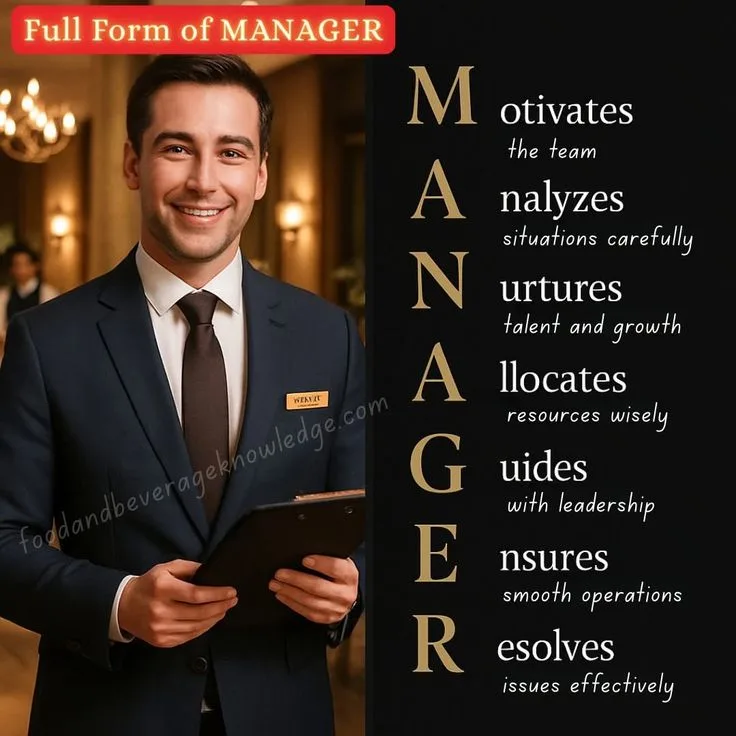
The characteristics of great managers are distinct from the skills of strong individual contributors: they develop people, build trust, give direct feedback, create psychological safety, and enable team output. Regular one-on-one meetings provide a central mechanism for relationship-building and growth. Research on engagement and organizational performance shows why manager quality is consequential, but promotion systems often fail to train or reward these people-management capabilities.
Most people do not leave companies - they leave managers. This observation, born from decades of employee engagement research, points to something important about what organizational life actually runs on.
The formal structure of a company, its strategy, its culture statement, its benefits package - all of these are mediated through the day-to-day relationship between an employee and their manager.
A great manager can make a mediocre company a good place to work. A bad manager can make an excellent company miserable.
And yet management is treated surprisingly casually in most organizations. Individual contributors are promoted to management because they are technically excellent - not because they show aptitude for developing people, building trust, or creating conditions for team performance.
The assumption is that the skills that made someone effective as an individual contributor will transfer. They do not, or at least not automatically. Managing people is a distinct set of skills, and the evidence is reasonably clear about what those skills are.
The gap between what good management research says and what most organizations actually do remains wide.
This article surveys what research and experience tell us about what distinguishes great managers from average ones, starting with Google's Project Oxygen as a landmark empirical study, moving through Kim Scott's radical candor framework and Amy Edmondson's work on psychological safety, and examining the practical mechanics of 1-on-1 meetings.
It also addresses the most common failure modes that trip up both new and experienced managers, and draws on the broader body of industrial-organizational psychology to give a full picture of what exceptional management actually looks like in practice.
"Almost everything I know about management I learned by doing it wrong first, and then having someone honest enough to tell me what I was missing." - Kim Scott, paraphrased from 'Radical Candor'
Key Definitions
Project Oxygen: A Google research initiative beginning around 2008 that analyzed management behavior data to identify the characteristics of the company's highest-performing managers. One of the most systematic empirical studies of management behaviors in a major organization.
Radical candor: Kim Scott's framework describing the combination of caring personally about direct reports while challenging them directly with honest feedback.[2] Positioned against three failure modes: ruinous empathy, obnoxious aggression, and manipulative insincerity.
Psychological safety: A team climate in which members feel safe to take interpersonal risks - to speak up, ask questions, challenge assumptions, and admit mistakes - without fear of humiliation or punishment. Researched extensively by Amy Edmondson at Harvard Business School.
1-on-1 meeting: A regular private meeting between a manager and direct report. Considered by many practitioners and researchers to be the highest-leverage management activity for building relationships, providing feedback, and developing people.
Individual contributor mindset: The orientation of someone who succeeds through their own technical work and expertise. The shift away from this mindset toward enabling and developing others is the core psychological transition required in moving to management.
High Output Management: Andrew Grove's concept, developed at Intel, that a manager's output is the output of their team and of the teams they influence - not the direct output of the manager's own work. This reframing is the central intellectual shift required to be effective in management.
Manager effectiveness: The degree to which a manager produces high performance, high engagement, and meaningful development in their direct reports over time - as distinct from the manager's own technical output or personal productivity.
The Scale of the Problem: Why Manager Quality Matters More Than Almost Anything Else
Before examining what great managers do, it is worth establishing why this matters so enormously at the organizational level. The data here are striking and consistent across decades of research.
Gallup's annual State of the Global Workplace report, which draws on surveys of millions of workers across hundreds of countries, has found year after year that only around 23% of the global workforce is engaged at work (Gallup, 2023).[5]
In the United States, the figure is somewhat higher - approximately 32% - but still represents a substantial majority of the workforce either not engaged or actively disengaged.
The same research consistently attributes the largest share of this engagement variance to the direct manager relationship: Gallup estimates that managers account for at least 70% of the variance in employee engagement scores (Harter et al., 2020).[15]
The economic consequences are substantial. Gallup's 2023 report estimated that low engagement costs the global economy approximately $8.8 trillion annually in lost productivity - equivalent to 9% of global GDP.
When this figure is attributed primarily to the manager relationship, it becomes clear that manager quality is not a soft HR concern but a fundamental economic variable.
James Harter and colleagues at Gallup published a landmark meta-analysis in the Journal of Applied Psychology in 2002 analyzing the relationship between employee satisfaction and engagement and business-unit performance across 42 studies involving 7,939 business units in 36 companies.
They found consistent, significant relationships between employee engagement and business outcomes including customer satisfaction, productivity, profit, turnover, and safety incidents (Harter et al., 2002).[9] The manager relationship was the primary driver of engagement in the model.
McKinsey's research on organizational effectiveness makes a parallel point from a different direction.
Their research on large-scale organizational transformations - strategy changes, culture shifts, major operational overhauls - consistently finds that success or failure is most reliably predicted not by the quality of the strategy but by the quality of middle management: the layer of managers closest to front-line workers.
The middle manager either translates strategy into daily action or lets it die in translation.
McKinsey research from 2021 found that organizations with strong middle management capabilities were 2.4 times more likely to successfully implement major strategic changes than those without.
Google Project Oxygen: Top Manager Behaviors
| Rank | Behavior | Why It Matters |
|---|---|---|
| 1 | Good coach | Helps people develop rather than solving problems for them |
| 2 | Empowers team; avoids micromanaging | Gives real responsibility and trusts people with it |
| 3 | Expresses interest in team members' success and wellbeing | Treats people as whole human beings, not just role-holders |
| 4 | Is productive and results-oriented | Focuses team on outcomes; participates in the work |
| 5 | Is a good communicator and listener | Hears the team; communicates clearly in return |
| 6 | Helps with career development; discusses performance | Invests in long-term growth, not just immediate output |
| 7 | Has a clear vision and strategy for the team | Provides meaningful direction beyond task management |
| 8 | Has key technical skills to advise the team | Understands the work well enough to be useful |
| 9 | Collaborates across the organization | Builds relationships and removes cross-functional barriers |
| 10 | Is a strong decision-maker | Makes timely, well-reasoned decisions that the team can execute against |
What the Research Says
Google's Project Oxygen
In 2009, Google's People Analytics team completed Project Oxygen - a systematic attempt to answer the question: what do Google's best managers actually do? The project was driven partly by an internal skepticism at Google (famously a company that prized technical brilliance) about whether managers mattered at all.
Larry Page had briefly experimented with a flat structure with no managers in 2001, before finding that people still needed someone to resolve disputes, make decisions, and provide career guidance.
The team analyzed data from performance reviews, employee surveys, and interviews with high- and low-performing managers.
They identified eight behaviors that consistently distinguished Google's highest-rated managers - later expanded to ten - and in doing so produced one of the most practically useful empirical studies of management behavior in organizational history (Garvin, Wagonfeld & Kind, 2013).[1]
The finding that surprised many within Google was how far down the list technical skills appeared. The top predictor of a manager's effectiveness was coaching ability - the capacity to help people grow. Technical knowledge was important but ranked eighth.
This was, at the time, counterintuitive in an organization that had built its culture around technical excellence and where the implicit hierarchy placed engineers above everyone else.
What the data was measuring, in retrospect, was not a demotion of technical skill but a recognition that technical skill serves a different function in a management role. An individual contributor's technical depth directly drives their output.
A manager's technical depth serves their team's output indirectly - by enabling them to ask good questions, recognize strong work, and give credible guidance - but cannot substitute for the higher-order behaviors: coaching, empowerment, communication, and development.
Google's subsequent research built on Project Oxygen in two ways. First, the original eight behaviors were expanded to ten, adding 'collaborates across Google' and 'strong decision-making skills.'
Second, Project Aristotle (2012-2015) examined not individual manager behaviors but team-level dynamics, finding that the most important predictor of team effectiveness was psychological safety, a variable that, as we will discuss below, is almost entirely determined by manager behavior.
The Gallup and McKinsey Evidence
Google's research aligns with the broader management research base. Gallup's Q12 employee engagement survey, developed through extensive research into what survey items most reliably predict business outcomes, includes items that directly measure manager behavior: whether employees have had a conversation about their development in the past six months, whether someone at work seems to care about them as a person, whether they have received recognition in the past week.
These manager-driven items are among the strongest predictors of engagement in the model.
McKinsey's research on organizational effectiveness consistently identifies middle management as the highest-leverage point for organizational transformation.
A 2021 McKinsey analysis of 1,500 organizations found that the companies with the strongest middle management capabilities were 2.4 times more likely to sustain performance improvement over a three-year period.
The reason is that middle managers are the primary mechanism through which strategy, culture, and organizational values are either realized or abandoned in daily practice.
First-Time Manager Failure Rates
The Center for Creative Leadership (CCL) has conducted longitudinal research on first-time manager success and failure across multiple industries and organizational types.
Their findings suggest that between 50 and 60 percent of first-time managers fail within their first 18 months - a figure that has remained largely stable across decades of research (Gentry et al., 2016).[10]
The most common failure modes are not technical incompetence but interpersonal: inability to delegate, failure to give effective feedback, difficulty managing conflict, and the inability to make the psychological transition from doing to enabling.
"The manager's job is not to do the work. It is to create the conditions in which the work can be done well by others." - Andrew Grove, High Output Management (1983)
The Individual Contributor to Manager Transition
The psychological transition from individual contributor to manager is one of the most underestimated challenges in organizational life. It requires not just learning new skills but unlearning the orientation that made you successful in your previous role.
As an individual contributor, you are rewarded for your personal output - the code you write, the deals you close, the analysis you produce. The feedback loop is direct: you do good work, good things happen. The path to advancement is personal excellence.
As a manager, the feedback loop inverts. Your output is the output of your team. When your team performs well, the team gets the credit. When your team performs poorly, you bear responsibility - even if the individual failures were not yours.
Your satisfaction must come from other people's growth and performance, not your own direct contributions.
Researchers including DeRue and Wellman (2009) have documented that this transition requires a genuine identity shift - not merely a skill acquisition.[12]
Managers who retain their individual contributor identity (who are still fundamentally oriented toward being the best engineer, analyst, or salesperson) tend to underperform as managers because they direct their effort toward the wrong activities.
They solve problems when they should be coaching. They do work when they should be delegating. They hold on to control when they should be building trust.
Andy Grove at Intel articulated this shift most directly in High Output Management (1983), describing the manager's output as the output of their organizational unit and the units they influence.[11]
This single reframing has practical consequences throughout the entire role: if my output is my team's output, then training my team member to do something well is more valuable than doing it myself, because their ability compounds over time in all the work they touch, whereas my doing it produces output only once.
Kim Scott and Radical Candor
The Framework
Kim Scott developed the radical candor framework from her experience managing teams at Google, Apple University, and other technology companies. Her book, published in 2017, articulates the core tension in management feedback: we want to be kind to the people we work with, and we also have an obligation to be honest with them.
When these pull in opposite directions, most managers choose kindness - and in doing so, deprive their direct reports of the honest feedback they need to improve.
Scott uses a two-by-two matrix to map feedback behaviors against two axes: 'care personally' (whether the manager has a genuine relationship with the direct report and cares about their success) and 'challenge directly' (whether the manager gives honest, specific feedback even when it is uncomfortable).
Radical candor sits in the high-care, high-challenge quadrant. The three failure modes occupy the other three:
Ruinous empathy - high care, low challenge - is the most common failure mode in Scott's experience. The manager cares about the person, wants to avoid hurting their feelings, and so softens or withholds critical feedback.
The employee continues making the same mistakes, their performance suffers, and eventually they are surprised by a negative review or termination that the manager had been internally preparing for but never clearly communicated. The kindness was ultimately unkind.
Obnoxious aggression - high challenge, low care - produces the feedback but damages the relationship in doing so. The feedback may be accurate, but the delivery is harsh, dismissive, or public.
The employee hears the criticism but loses trust in the manager, becomes defensive, and is less likely to change than they would be under radical candor. This is sometimes mistaken for directness, but directness without care is aggression.
Manipulative insincerity - low care, low challenge - is the failure mode of political managers who give vague positive feedback to avoid confrontation while privately forming negative opinions. It is the management behavior most corrosive to team trust, because it creates a gap between what is said publicly and what is believed privately.
The Research on Feedback Avoidance
Scott's framework is supported by a consistent finding in the feedback research literature.
Zenger and Folkman (2021), writing in the Harvard Business Review, reported results from a survey of 7,631 managers and employees that found 92% of respondents agreed with the statement that 'negative feedback, if delivered appropriately, is effective at improving performance.'
A separate finding in the same research showed that employees, when asked directly, reported wanting constructive critical feedback at a significantly higher rate than managers assumed they did.[8]
The implication is that managers who avoid difficult feedback conversations are typically making an error about their direct reports' preferences. Most people are not as fragile as the manager's discomfort projects them to be.
What they want is not to be spared criticism but to receive it honestly, specifically, and in a way that signals genuine care about their development.
A 2019 study by Jackman and Strober, published in the Harvard Business Review, identified what they termed "feedback avoidance" as a distinct manager behavior pattern and found it to be significantly associated with higher employee turnover within the avoiding manager's team - particularly turnover of high-performing employees who are most attuned to the absence of honest developmental conversation and most capable of finding environments where it exists.
The Relational Foundation
Scott emphasizes that radical candor is not primarily a feedback technique but a relationship approach.
Caring personally is not performative - it requires genuinely knowing your direct reports as people, understanding what they want from their career, what is going on in their lives that might affect their work, and what kind of feedback they need and can receive.
This relational foundation is what makes direct challenge feel like help rather than attack.
The practical implication is that radical candor requires investment in the relationship before it can work effectively in feedback moments. Managers who only connect with direct reports around work tasks and deliverables have not built the relational context that makes candid feedback land as it is intended.
Scott recommends that managers ask their direct reports directly: 'What kind of feedback do you most need? What is the thing you are working on that you are not sure is going well?' These questions signal that the manager is oriented toward the direct report's development, not toward evaluation and judgment.
Amy Edmondson and Psychological Safety
The Research
Amy Edmondson, Novartis Professor of Leadership and Management at Harvard Business School, coined the term 'psychological safety' in her 1999 study of medical teams. She had initially hypothesized that higher-performing teams would report fewer errors.
The data showed the opposite: higher-performing teams reported more errors. The explanation was that psychologically safe teams - where members felt safe to report mistakes and speak up about problems - identified and corrected errors faster, while lower-performing teams underreported errors out of fear (Edmondson, 1999).[3]
Subsequent research extended this finding across industries and contexts. Edmondson's book 'The Fearless Organization' (2018) synthesizes decades of research and makes the case that psychological safety is the foundational condition for learning, innovation, and performance in environments where people need to take risks, share incomplete ideas, and admit uncertainty - which describes nearly all knowledge work.
Google's Project Aristotle, which studied what made Google's teams effective, found psychological safety as the most important team variable, followed by dependability, structure and clarity, meaning, and impact (Rozovsky, 2015).[7]
A 2017 meta-analysis by Newman, Donohue, and Eva, published in the Journal of Organizational Behavior, examined 136 studies on psychological safety and found consistent positive relationships with information sharing, learning behavior, creativity, and team performance.[14]
The effect sizes were particularly strong in teams doing complex, non-routine work - precisely the kind of work that characterizes most knowledge-economy organizations.
The Manager's Role
Psychological safety is not a personality trait of a team or its members - it is a climate that is actively created or undermined by leader behavior. Edmondson identifies specific manager behaviors that build or erode it.[4]
Framing work as a learning problem rather than an execution problem signals that uncertainty is expected and mistakes are part of the process rather than failures of competence.
A manager who says 'we have not done this before, so we will make mistakes and learn from them' creates a different expectation than one who treats every error as evidence of inadequacy.
Acknowledging one's own fallibility - admitting mistakes, asking for help, expressing uncertainty - models the behavior that creates psychological safety. Managers who project infallibility signal that admitting weakness is dangerous, suppressing the honest communication they need from their team.
Responding curiously to problems rather than judgmentally is perhaps the most moment-to-moment determinant of psychological safety. When someone brings a problem, mistake, or concern to their manager, the manager's immediate reaction either reinforces or undermines the person's likelihood of doing so again.
Curiosity ('tell me more about what happened') builds safety; blame ('how did you let this happen') destroys it.
Setting inclusive norms for meetings - explicitly soliciting quieter voices, asking 'what is the best argument against what we just decided?', making disagreement a valued contribution rather than a signal of disloyalty - creates structural conditions for psychological safety at the group level.
Edmondson's research shows that the manager's behavior in group settings is disproportionately influential in setting norms for what kind of speech is acceptable, because everyone is watching.
Quantifying the Impact
The business case for psychological safety has moved well beyond anecdote. A 2021 study by Frazier and colleagues, published in the Journal of Management, conducted a meta-analysis of 136 psychological safety studies and found that psychological safety was positively associated with team learning (r = 0.53), team performance (r = 0.35), individual creativity (r = 0.31), and negatively associated with counterproductive work behavior (r = -0.38).[17]
These are not trivial effects; they represent meaningful performance differences between teams with high and low psychological safety.
Google's internal analysis of Project Aristotle data went further, finding that teams with high psychological safety scores were significantly more likely to stay with the company, generate innovative ideas, and receive high performance ratings from senior leadership.
The measurability of the construct - Google used survey items to generate team-level psychological safety scores - made it possible to track changes over time and connect management behavior to team-level outcomes.
The Mechanics of 1-on-1 Meetings
Why 1-on-1s Are the Core Practice
The 1-on-1 meeting - a regular, private meeting between a manager and each direct report - is not merely a scheduling convention.
It is the primary mechanism through which the manager-employee relationship is built and maintained, feedback flows in both directions, career development happens, and early-warning signals about problems, dissatisfaction, and blocks are surfaced.
Ben Horowitz, in 'The Hard Thing About Hard Things' (2014), describes the 1-on-1 as fundamentally the direct report's meeting rather than the manager's.[6] Its purpose is not for the manager to receive a status update - that information can be obtained through written communication and team meetings.
Its purpose is to give the direct report a dedicated, protected forum for whatever they most need to discuss with their manager: concerns they would not raise in group settings, career questions they are turning over privately, interpersonal tensions they have not known how to address, feedback about the manager's own behavior that they hesitate to offer unsolicited.
Andrew Grove developed one of the earliest and most systematic frameworks for 1-on-1 meetings in High Output Management (1983), describing them as the primary mechanism for information exchange between manager and direct report and arguing for high frequency - weekly for most reporting relationships - as essential to maintaining the real-time understanding of team dynamics that effective management requires.
Frequency, Format, and Structure
Weekly 1-on-1s are generally recommended, particularly for new reporting relationships, during challenging periods, or for developing employees.
Less frequent cadences (biweekly or monthly) are sometimes appropriate for experienced, autonomous direct reports in stable situations, but erring toward more frequent connection is usually better than less.
Research on the effectiveness of 1-on-1 meeting cadences is relatively limited, but practitioner research and meta-analyses on feedback frequency consistently support the principle that more proximate, frequent feedback produces better performance outcomes than delayed, aggregated feedback.
The 1-on-1 is the most natural vehicle for frequent feedback in the manager-employee relationship.
Effective 1-on-1s often follow a loose structure. A useful template, derived from common practitioner frameworks and aligned with the CCL's research on developmental conversations:
| Segment | Time | Purpose |
|---|---|---|
| Open agenda (direct report leads) | 10-15 min | Surface what is most on the direct report's mind; problems, concerns, achievements |
| Coaching and problem-solving | 10-15 min | Work through what the direct report needs help with; ask questions before giving answers |
| Manager feedback | 5-10 min | Specific, timely feedback on recent behavior using SBI or similar structure |
| Development focus | 5-10 min | (Not every meeting) Connect recent work to longer-term development goals; career conversation |
Managers who allow 1-on-1s to become dominated by project status updates are missing the point of the format entirely. Status updates can and should travel through asynchronous communication channels - written reports, project management tools, shared documents.
The 1-on-1 is the irreplaceable space for the relational, developmental, and emotionally honest dimensions of the manager-employee relationship that cannot happen in group settings or through written updates.
What Great Managers Do Differently in 1-on-1s
Research by Marcus Buckingham and colleagues, published in Harvard Business Review (2019), found that the single weekly ritual most predictive of high employee engagement was a brief check-in conversation between manager and direct report - not an annual review, not a quarterly development discussion, but a regular, low-stakes touchpoint.
The specific format mattered less than the regularity and the focus on the direct report's work and needs.
The managers who ran the most effective 1-on-1s in Buckingham's research shared several behaviors: they asked about what their direct reports were working on before asking about what they had completed; they asked what they, as managers, could do to remove obstacles; they followed up on previous conversations; and they spent more time listening than talking.[16]
These are not difficult behaviors - they are disciplines.
Common Manager Failure Modes
Micromanagement
Micromanagement - retaining control over work details that should be delegated, over-checking progress, revising work that was adequately done - is among the most consistently cited sources of employee frustration and the most common complaint about managers.
Its causes are generally anxiety about outcomes (which leads to controlling the process), difficulty trusting others to do things differently than the manager would, and failure to make the psychological shift from individual contributor to leader.
The cost of micromanagement is high: it suppresses initiative, reduces ownership and engagement, creates bottlenecks on the manager, and prevents people from developing the skills they need to take on greater responsibility.
Delegating well - giving people real responsibility, providing context and resources, setting clear expectations, checking in without controlling - is a skill that requires practice and comfort with uncertainty.
A 2014 study by Kim and colleagues, published in the Journal of Applied Psychology, found that employees reporting high levels of micromanagement showed significantly lower creative performance, lower organizational commitment, and higher intention to leave - even when controlling for other job characteristics.
The effect was strongest among high performers, who are most sensitive to constraint and most capable of finding alternative employment.
The cure for micromanagement is not hands-off management but calibrated trust: explicit agreements about what level of oversight is appropriate for a given task and a given employee's demonstrated competence, with the expectation that oversight decreases as trust is established.
Situational leadership frameworks, originally developed by Paul Hersey and Ken Blanchard in the 1970s and extensively updated since, provide a useful rubric: the appropriate level of direction versus delegation depends on the direct report's competence and commitment for the specific task, not on a fixed management style.
Avoiding Hard Conversations
Scott's 'ruinous empathy' - withholding honest feedback to avoid discomfort - is probably the single most common management failure. It is understandable: giving someone critical feedback feels unkind in the moment, and most managers lack models for how to do it well.
The result is that performance problems persist, addressed only obliquely if at all, until they become severe enough that the conversation must happen under conditions that are far worse than if it had happened early.
The research on feedback consistently shows that people want honest, specific feedback - even critical feedback - more than they want validation.
A 2021 study by Jack Zenger and Joseph Folkman found that 92% of respondents agreed that 'negative feedback, if delivered appropriately, is effective at improving performance.' The issue is not that people resist honest feedback; it is that most managers have not learned to deliver it in ways that are both honest and caring.
What makes a difficult conversation feel safe to receive? Edmondson's research suggests that it comes down to the relational context in which the conversation occurs and the framing with which it is delivered.
Difficult feedback delivered by a manager who has demonstrated over time that they care about the person's success, who frames the feedback as relevant to the person's own goals, and who invites response rather than pronouncing judgment is received very differently from the same words spoken by a manager who has not established that relational foundation.
Technical Expertise Over Management Investment
In technical fields, managers are often promoted specifically because of deep technical expertise, and they continue to derive identity and satisfaction from technical work after moving into management.
This creates a pattern where managers do technical work rather than management work: they take on complex technical tasks themselves rather than coaching their reports through them, they solve problems rather than teaching problem-solving, and they remain hands-on in domains where they should be building the team's capacity.
Effective managers recognize that their leverage shifts: as an individual contributor, you produce output proportional to your hours worked. As a manager, you produce output proportional to your team's performance, which is in turn significantly affected by how you invest your time.
Investing in developing people compounds over time in a way that doing technical work yourself does not.
Grove's formulation makes this concrete: if a manager spends three hours teaching a direct report a skill, and that skill makes the direct report 10% more effective for the next two years, the compounded return on that three-hour investment exceeds anything the manager could have produced by spending those three hours on technical work themselves.
This is the core logic of management leverage.
Inconsistency and Unpredictability
A failure mode that receives less attention in management literature than feedback avoidance or micromanagement is managerial inconsistency - applying standards unevenly, making decisions that appear arbitrary, saying one thing and doing another, treating team members differently without transparent rationale.
Edmondson's psychological safety research points to inconsistency as a significant contributor to unsafe team climates: when people cannot predict how their manager will react to a given action, they become risk-averse - they stop volunteering information, stop raising concerns, and stop taking the interpersonal risks that learning and innovation require.
Consistency - applying the same standards, living the stated values, following through on commitments - is a foundational management behavior that rarely appears on best-of lists but is quietly determinative of team culture.
A 2018 Gallup analysis found that employees who strongly agreed that their manager was consistent and kept their commitments were 4 times more likely to be engaged at work than those who did not, independent of other engagement drivers.
Consistency, in this framing, is not a soft interpersonal quality but a direct driver of the psychological conditions for performance.
Neglecting Development
Linda Hill of Harvard Business School, whose book Becoming a Manager (1992) drew on longitudinal research following 19 new managers through their first year, found that the vast majority of new managers focused almost exclusively on managing task performance and almost entirely neglected the development dimension of their role.[13]
They were tracking outputs, running meetings, managing deadlines - but investing little time in understanding what their direct reports wanted to grow toward and creating conditions for that growth.
The consequence, Hill found, was that direct reports who were not having development conversations either found them elsewhere - through external coaches, through other relationships in the organization, through external communities - or stopped expecting them and adjusted their engagement accordingly.
The manager who neglects development is not maintaining a neutral state; they are creating a deficit that eventually registers in turnover, disengagement, and the loss of the most motivated employees.
What Great Managers Do That Average Ones Don't: A Summary
The behaviors that distinguish great managers from average ones are not mysterious or inaccessible. They are documented, learnable, and consistent across the research base.
The gap between knowing them and practicing them is primarily a gap of habit, discomfort tolerance, and identity - the willingness to orient fully toward enabling others rather than performing oneself.
| Behavior | What Great Managers Do | What Average Managers Do |
|---|---|---|
| Feedback | Give honest, specific, timely feedback in a caring context | Avoid difficult conversations; give vague, positive feedback |
| Delegation | Give real responsibility with context and support; check in without controlling | Either micromanage or abdicate; don't differentiate by task and competence |
| Development | Have regular career conversations; connect daily work to long-term growth | Address performance only at review time; focus on current tasks only |
| 1-on-1s | Treat as the direct report's meeting; ask before telling; follow up | Use as status updates; do most of the talking; cancel when busy |
| Psychological safety | Acknowledge uncertainty; respond to mistakes with curiosity; invite challenge | Project infallibility; respond to mistakes with blame; suppress dissent |
| Consistency | Apply standards evenly; follow through on commitments; live stated values | Apply standards inconsistently; make commitments they don't keep |
| Identity | Derive satisfaction from team performance; embrace management as a discipline | Continue to identify as individual contributors; resent management overhead |
Practical Takeaways
Great management is, at bottom, an investment in people: in their development, their clarity, their trust, and their ability to do their best work. The specific behaviors that research identifies as most important - coaching, candid feedback, psychological safety, and genuine care - are all expressions of that fundamental orientation.
The most actionable starting point for most managers is the question Kim Scott poses: 'When is the last time I gave honest, specific, critical feedback to each of my direct reports - and did I deliver it in a way that was genuinely caring rather than harsh?' The gap between the answer most managers give and the answer their reports would give is usually where the real development work begins.
A second starting point, informed by Edmondson's research: 'What is the last mistake I made that I acknowledged to my team, and how did I respond to the last mistake they brought to me?' The pattern of the manager's response to fallibility - their own and their team's - is the most powerful determinant of team psychological safety and, through it, of team learning and performance.
A third, informed by Grove: 'What is the highest-leverage use of my time this week - and is the work I am currently doing that thing?' For most managers, the highest-leverage activity is developing people, giving feedback, removing obstacles, and ensuring clarity of direction.
Technical work, however satisfying, rarely competes with those activities in terms of return on time invested.
Sources & Further Reading
- Garvin, D. A., Wagonfeld, A. B., & Kind, L. (2013). 'Google's Project Oxygen: Do managers matter?' Harvard Business School Case 9-313-110.
- Scott, K. (2017). "Radical Candor: Be a Kick-Ass Boss Without Losing Your Humanity". St. Martin's Press.
- Edmondson, A. C. (1999). 'Psychological safety and learning behavior in work teams.' Administrative Science Quarterly, 44(2), 350-383.
- Edmondson, A. C. (2018). The Fearless Organization: Creating Psychological Safety in the Workplace for Learning, Innovation, and Growth. Wiley.
- Gallup. (2023). State of the Global Workplace Report. Gallup Inc.
- Horowitz, B. (2014). The Hard Thing About Hard Things: Building a Business When There Are No Easy Answers. HarperBusiness.
- Rozovsky, J. (2015). 'The five keys to a successful Google team.' re:Work Blog, November 17.
- Zenger, J., & Folkman, J. (2021). 'The best managers are humble managers.' Harvard Business Review, November 10.
- Harter, J. K., Schmidt, F. L., & Hayes, T. L. (2002). 'Business-unit-level relationship between employee satisfaction, employee engagement, and business outcomes.' Journal of Applied Psychology, 87(2), 268-279.
- Gentry, W. A., et al. (2016). 'Why first-time managers fail and what to do about it.' Center for Creative Leadership White Paper.
- Grove, A. S. (1983). High Output Management. Random House.
- DeRue, D. S., & Wellman, N. (2009). 'Developing leaders via experience: The role of developmental challenge, learning orientation, and feedback availability.' Journal of Applied Psychology, 94(4), 859-875.
- Hill, L. A. (1992). Becoming a Manager: How New Managers Master the Challenges of Leadership. Harvard Business School Press.
- Newman, A., Donohue, R., & Eva, N. (2017). 'Psychological safety: A systematic review of the literature.' Human Resource Management Review, 27(3), 521-535.
- Harter, J. K., Mann, A., & Adkins, A. (2020). 'The right culture: Not just about employee satisfaction.' Gallup Workplace, April.
- Buckingham, M., & Goodall, A. (2019). 'The feedback fallacy.' Harvard Business Review, March-April.
- Frazier, M. L., Fainshmidt, S., Klinger, R. L., Pezeshkan, A., & Vracheva, V. (2017). 'Psychological safety: A meta-analytic review and extension.' Personnel Psychology, 70(1), 113-165.