
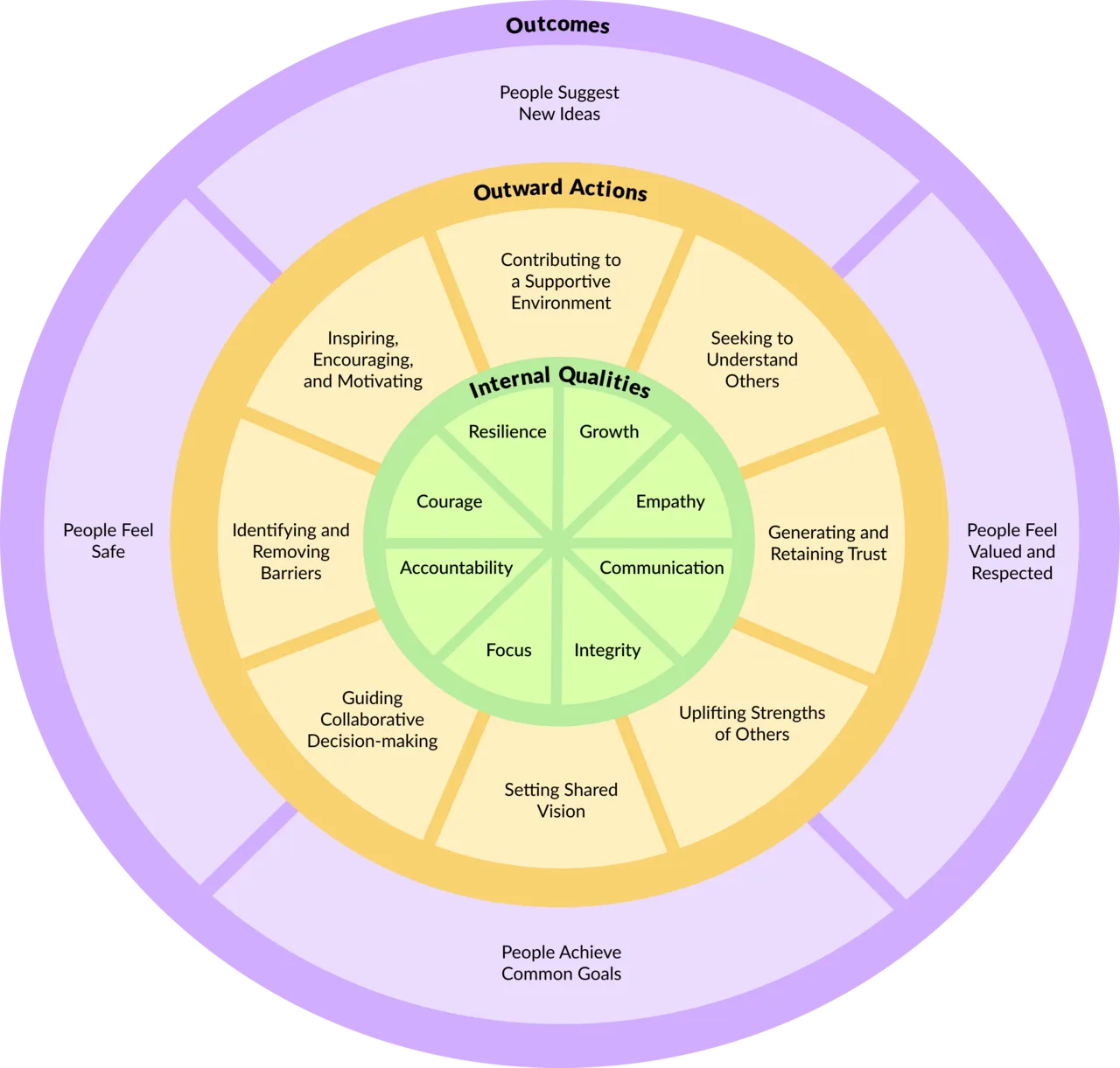
Leadership defined is the ability to influence how a group thinks, feels, and acts in pursuit of a shared purpose. It differs from management, which coordinates people, resources, and processes to execute defined work reliably. Effective leaders establish direction, create alignment, and motivate sustained effort, while adapting styles to context. Organizations need both leadership for change and management for operational discipline.
When Satya Nadella became CEO of Microsoft in February 2014, the company's market capitalization stood at roughly $300 billion. The stock had been essentially flat for a decade.
The culture, famously documented in a 2012 Vanity Fair piece by Kurt Eichenwald, had calcified into a system of "stack ranking" that pitted employees against each other, rewarded political maneuvering over genuine contribution, and drove away talented people who had better options.
Microsoft had missed mobile, lost ground in cloud, and was widely regarded in the technology industry as a slow, defensive giant protecting aging franchises.
By 2024, Microsoft's market capitalization exceeded $3 trillion, making it one of the most valuable companies in history. Azure had become a genuine competitor to Amazon Web Services.
Microsoft had acquired GitHub, made transformative investments in OpenAI, and rebuilt its cultural reputation sufficiently that it was winning engineering talent again. The stack ranking system was gone in the first year.
The standard explanation is strategic: Nadella made the right technology bets. But the people who worked through the transformation point to something prior and more fundamental: he changed how leadership was understood and practiced inside the company.
He introduced Carol Dweck's growth mindset framework as a serious cultural operating principle rather than a motivational slogan. He replaced a culture of knowing with a culture of learning.
He modeled the behavior himself - taking responsibility publicly for his own failures, acknowledging uncertainty openly, asking questions rather than asserting answers.
This is what leadership actually is. Not the title. Not the formal authority. The ability to influence how a group of people think, feel, and behave in ways that advance a shared purpose - and the judgment to do it appropriately given whatever context exists.
"Leadership is the capacity to translate vision into reality."
Warren Bennis
Leadership vs. Management: The Crucial Distinction
The most important conceptual clarification in this field is the one between leadership and management, which are routinely conflated in organizations and in everyday conversation.
Management is the practice of coordinating resources, processes, and people to achieve defined objectives reliably and efficiently. A manager ensures that the project ships on time and within budget, that the team has what it needs, that processes are followed, and that performance issues are addressed.
Management asks how: how do we execute this, how do we organize it, how do we measure it. Done well, management creates the conditions in which reliable, predictable excellent work can happen.
Leadership is different in kind. Leadership establishes direction, creates alignment around it, and motivates the sustained effort required to move in that direction - especially when doing so is difficult, ambiguous, or requires genuine sacrifice.
Leadership asks why and where: why does this work matter, and where are we trying to go? It operates primarily through influence rather than authority, through inspiring commitment rather than directing compliance.
"Management is doing things right; leadership is doing the right things."
Warren Bennis, not Peter Drucker
John Kotter at Harvard Business School has spent decades studying the distinction and argues that most large organizations are over-managed and under-led: they have sophisticated systems for maintaining current activities but insufficient leadership capacity to generate meaningful change.[4]
The inverse problem also exists in young organizations - plenty of inspirational vision, insufficient operational discipline to execute.
In practice, most people in organizational roles need both capabilities. The manager who never asks why and never inspires becomes a bureaucrat. The leader who never manages becomes a visionary whose ideas never materialize.
Confusing the two leads to specific failure modes: leaders who try to direct every operational detail (over-controlling), managers who try to run teams without any sense of shared meaning (under-inspiring).
Clarity about which mode a situation requires, and the capacity to shift between them, is itself a leadership competency.
Leadership Styles: When Each Approach Works
Research on leadership style has produced several well-validated frameworks, and the most important finding across all of them is the same: context determines which approach works. Leaders who apply a single style rigidly, regardless of circumstances, are reliably less effective than leaders who read their situation and adapt.
| Style | Description | When to Use | Risk |
|---|---|---|---|
| Transformational | Inspires through vision, values, and emotional engagement | Organizational change, mission-driven work, knowledge environments | Charisma substituting for substance; follower dependence |
| Servant | Prioritizes followers' needs, development, and wellbeing above leader's own status | Building long-term trust, high-talent retention environments | Misread as weakness; slow in crisis situations |
| Situational | Adjusts directive and supportive behavior to each individual's competence and commitment | Mixed-experience teams, diverse developmental needs | Requires high behavioral flexibility; hard to sustain consistently |
| Autocratic | Directive, authority-based, centralized decision-making | Genuine crisis, emergency response, acute existential threat | Damaged trust, stifled creativity, talent attrition in stable environments |
| Democratic | Involves followers in significant decisions; seeks genuine input | Stable environments, expert teams, complex strategic decisions | Decision fatigue, unclear accountability, too slow in urgent situations |
Transformational Leadership
Transformational leadership, the most extensively studied style in academic literature, focuses on inspiring followers through compelling vision, strong values, and genuine emotional engagement.
The transformational leader connects followers' work to something larger than the immediate task, elevates their sense of what they are capable of, and produces high commitment and discretionary effort.
Bernard Bass, who developed much of the theoretical framework for transformational leadership, identified its core components as idealized influence (providing a role model), inspirational motivation (articulating a compelling vision), intellectual stimulation (challenging followers to think creatively), and individualized consideration (attending to each follower's specific development needs).[1]
Research consistently shows transformational leadership correlating with higher team performance, greater innovation, and stronger follower commitment.
It is particularly effective during periods of organizational change, in mission-driven organizations, and in knowledge work environments where commitment and creativity are the primary inputs.
Its limits appear in highly technical environments where the leader lacks domain expertise to provide intellectual credibility, in crisis situations where immediate decisive action is needed rather than alignment-building, and when taken to an extreme - highly charismatic leaders who substitute vision for substance can produce follower dependence and poor organizational judgment.
Servant Leadership
Robert Greenleaf articulated servant leadership in a 1970 essay, arguing that the fundamental orientation of a true leader is to serve: to prioritize the needs, development, and wellbeing of followers above the leader's own status, power, or recognition.
Servant leaders invest heavily in developing people's capabilities and removing obstacles from their work. They are distinguished by high empathy, genuine attentiveness to individual team members, and a consistent pattern of taking less credit and distributing more to the people doing the work.
"Leaders eat last."
Simon Sinek
The organizational outcomes associated with servant leadership are strong: high trust, low turnover, strong team cohesion, and cultures in which psychological safety allows people to take risks and admit mistakes without fear of punishment.
Google's extensive Project Oxygen research, which analyzed data from tens of thousands of performance reviews and manager surveys to identify what distinguishes great managers from poor ones, consistently found servant-leader qualities - caring about team members' wellbeing, developing people, listening well - near the top of the list.[2]
Servant leadership works least well in organizations that require fast directional decisions with limited deliberation, where a more decisive directive style may be situationally appropriate, and in cultures where a strongly service-oriented leader is interpreted as weakness rather than strength.
Situational Leadership
Paul Hersey and Ken Blanchard's situational leadership model makes explicit what effective leaders tend to do intuitively: adjust the style to fit the person and the task.
Their model identifies two axes - directive behavior (telling people what to do and how) and supportive behavior (encouraging, listening, developing) - and argues that the appropriate combination depends on the follower's competence and commitment relative to the specific task at hand.
A new employee with high motivation but limited experience needs high direction and high support: detailed guidance on how to approach the work, combined with encouragement and relationship investment.
An experienced employee with high competence but temporarily low motivation needs low direction but high support: they know what to do, but they need engagement, acknowledgment, and attention to whatever is affecting their commitment.
A highly skilled and motivated veteran needs low direction and low support: delegation and autonomy, with light check-ins to maintain connection.
The practical strength of situational leadership is that it treats each individual team member as having a specific developmental state on each task, rather than applying a single management approach to the whole team.
The practical challenge is that it requires leaders to accurately diagnose each person's state and then genuinely shift their approach - a level of behavioral flexibility that many leaders find difficult.
Autocratic and Democratic Leadership
Autocratic leadership - directive, authority-based, centralized decision-making - is often dismissed in contemporary discussions as an outdated or toxic style. This is too simple. In genuine crisis situations, where speed and clarity of direction matter more than broad participation, an autocratic style can be the most effective approach.
Military units in combat, emergency response organizations, and companies facing acute existential threats often need decisive leadership with minimal deliberation.
The problem with autocratic leadership is not its characteristics but its context-inappropriate use. Leaders who apply it habitually in stable, collaborative, knowledge-work environments produce damaged trust, stifled dissent, reduced creativity, and the departure of talented people who have options.
Democratic or participative leadership - involving followers in significant decisions, seeking genuine input before direction is set - produces stronger commitment to decisions and often better decisions, because diverse perspectives surface information and risks that any individual, including the leader, would miss.
Its limits appear when decisions must be made fast, when the group lacks the expertise to contribute meaningfully to certain decisions, or when sustained participation creates decision fatigue and unclear accountability.
The Born vs. Made Debate: What the Research Actually Shows
The intuition that great leaders are born rather than made has deep cultural roots. We describe certain people as "natural leaders," admire what looks like innate authority and presence, and tell stories of individuals who led brilliantly without formal training.
The research does not support a strong version of this view. Twin studies suggest that roughly 30 percent of variation in leadership effectiveness has a heritable genetic component, associated primarily with traits like extraversion, emotional stability, and general cognitive ability.[5]
These traits create a degree of natural advantage for certain people in certain leadership situations.
The remaining approximately 70 percent of variation is attributable to developmental factors: the quality of leadership experiences a person has had, particularly early stretch assignments with real stakes; the quality of feedback received; the deliberateness with which experiences are reflected on and translated into learning; and the quality of coaching and mentoring.
Longitudinal studies of leadership development programs - the rigorous ones that include real practice opportunities, structured feedback, and coaching rather than just classroom instruction - show measurable, meaningful improvements in leadership effectiveness.
"The most dangerous leadership myth is that leaders are born - that there is a genetic factor to leadership. That's nonsense; in fact, the opposite is true. Leaders are made rather than born."
Warren Bennis
The practical implication is that leadership potential is far more widely distributed than the "natural leader" narrative suggests, and that the question is not whether someone has it but whether the developmental investment has been made.
Organizations that believe leadership is innate will under-invest in development and under-identify talent. Organizations that treat leadership as learnable will build deeper leadership pipelines and develop people who would otherwise have been overlooked.
What Followers Actually Need
Amy Edmondson at Harvard Business School has produced what is arguably the most important body of research on team effectiveness of the past 30 years, centered on the concept of psychological safety: the shared belief within a team that it is safe to take interpersonal risks - to raise concerns, admit mistakes, offer unconventional ideas, or challenge authority - without fear of punishment, humiliation, or rejection.
Edmondson's original research, which studied error reporting in hospital nursing units, found a counterintuitive result: the highest-performing units were not those that reported the fewest errors, but those that reported the most.[3]
Subsequent investigation revealed that the high-performing units had leaders whose behavior created an environment in which nurses felt safe surfacing problems.
The low-performing units had leaders whose response to error reports created fear, so problems went unreported - and unaddressed.
Google's own research confirmed this finding at scale. Project Aristotle, an internal study of team effectiveness at Google that analyzed data from over 180 teams, identified psychological safety as the most important factor distinguishing high-performing teams from others - more important than team composition, resources, or any individual competency.
And psychological safety is created or destroyed primarily by leader behavior.
Gallup's extensive employee engagement research identifies additional core needs that followers have from their direct leaders: knowing what is expected of them, having the resources and support to meet those expectations, feeling that someone cares about their development as a person, and having their contributions acknowledged.
These findings, replicated across industries and countries, point toward a consistent conclusion: followers need leaders who provide clarity, remove obstacles, invest in their development, and notice and recognize their work.
How Context Changes What Leadership Requires
Leading a startup in its first year and leading a 50,000-person enterprise are sufficiently different activities that comparing them without qualification is misleading. The skills, dispositions, and behaviors that produce excellent leadership in one context can be actively counterproductive in the other.
Early-stage startup leadership requires an extremely high tolerance for ambiguity and rapid change, comfort making significant decisions on radically incomplete information, the ability to attract and inspire talent through mission and culture when compensation cannot compete with established companies, and a direct involvement in nearly every area of the business.
The leader who thrives here is energized by uncertainty, moves fast, and creates forward momentum through personal conviction.
Enterprise leadership requires navigating complex organizational politics, building coalitions across functions with different interests, creating alignment at scale through systems and culture rather than direct personal influence, developing other leaders rather than doing the work directly, and maintaining trust while managing stakeholder diversity that would be absent in a smaller organization.
The skills are genuinely different, and people who excel at one are often mediocre or worse at the other without significant intentional development.
Leading in crisis - a product failure, a regulatory challenge, an acquisition gone wrong - requires a decisiveness and a capacity for calm under pressure that stable operations do not demand in the same way.
The best crisis leaders create a psychological container for the team: they project confidence without minimizing the seriousness of the situation, they make and communicate decisions quickly, and they keep the team oriented toward solvable next actions rather than dwelling on how bad things are.
Leading highly skilled professionals - engineers, doctors, lawyers, researchers - requires a particular calibration of authority and autonomy. These populations are intrinsically motivated by their craft and can evaluate competence accurately within their domain.
Leaders who try to direct their work technically without the expertise to do so lose credibility immediately.
Effective leadership of expert populations involves providing context and goals rather than methods, removing organizational obstacles, protecting their work time from bureaucratic distraction, and demonstrating genuine respect for their expertise.
"The key to successful leadership today is influence, not authority."
John C. Maxwell
Toxic Leadership: Patterns and Damage
Toxic leadership is the persistent pattern of leader behavior that systematically harms followers, teams, and organizations - even when, sometimes especially when, it produces impressive short-term metrics.
Research by Robert Hogan and others has identified recurring toxic patterns. Narcissistic leadership presents as confidence and vision but involves systematic self-promotion at followers' expense, taking credit for others' work, refusing to acknowledge limitations or failure, and creating cultures of performance theater around leadership rather than actual contribution.
Abusive supervision - demeaning, humiliating, or bullying behavior toward subordinates - is more common than most organizational surveys suggest, partly because it tends to concentrate in leaders who are otherwise operationally effective and who create fear that suppresses reporting.
The organizational damage is real and quantifiable. High-performing employees - those with the most options - leave toxic leaders disproportionately.
Research by Christine Porath at Georgetown shows that rudeness from leaders is contagious: it spreads negative affect through teams, reduces cognitive performance, and suppresses the helping behaviors and information sharing that team effectiveness depends on.
The recruitment and replacement costs of turnover driven by toxic leadership are rarely calculated against the performance metrics that the same leader is judged on.
Organizations frequently rationalize tolerating toxic leaders when short-term performance is strong.
The research consistently shows this is a poor trade: the long-run costs in attrition, disengagement, cultural damage, and suppressed internal feedback - which means the organization stops hearing important information - substantially outweigh the short-term gains.
Leadership Development That Actually Works
The research on leadership development is sobering: most formal programs, including expensive executive education and multi-day leadership workshops, produce minimal lasting behavioral change. Understanding why illuminates what actually works.
Leadership skill develops through the interaction of three elements: challenging experience, critical reflection, and honest feedback. Any two without the third produces limited development.
Experience without reflection and feedback produces confident incompetence: people learn the wrong lessons from experience if there is no structured process for extracting the right ones. Feedback without experience is theoretical. Reflection without feedback is self-serving.
The most effective leadership development therefore combines real developmental assignments - progressively larger scope, higher stakes, more complex people situations - with structured after-action reflection and high-quality feedback from people who observe the leader directly and have the relationship to give honest input.
Executive coaching provides a dedicated context for that reflection and feedback loop, which is why well-designed coaching engagements have among the highest returns on development investment of any approach studied.
Howard Schultz's return to Starbucks as CEO in 2008, after the company had overexpanded and diluted its culture, offers a case study in leadership that matches approach to context. Schultz had been a transformational leader who built Starbucks through vision and culture.
Returning in crisis, he temporarily closed every US store for three hours of retraining - a move that cost $6 million in lost revenue and was widely criticized - as a commitment signal from a leader who meant what he said about restoring what Starbucks had been. By 2010, the company had returned to growth and profitability.
Measuring Leadership Effectiveness
Leadership effectiveness is ultimately measured by outcomes rather than behaviors.
The most direct measures are whether the leader's team or organization consistently achieves its goals over time and whether those results are sustainable - achieved without burning people out, depleting trust, or degrading the organization's capacity for future performance.
Employee engagement and voluntary retention of high performers are leading indicators. Talented people leave bad leaders when they have options; their retention is a continuous vote of confidence in leadership quality.
The development of people within the leader's purview - whether individuals grew in capability, responsibility, and career progress during their time on this team - is one of the most important and most underused measures of leadership quality.
360-degree feedback assessments, which collect ratings from direct reports, peers, and managers, provide a multi-perspective view of how leadership behavior is actually experienced by those it most affects.
The research on 360 assessments shows they predict leadership effectiveness and are genuinely developmental when followed by coaching and accountability - and are largely ineffective when treated as data collection exercises without follow-through.
Practical Takeaways
Leadership is not a trait you have or lack. It is a set of skills and practices that develop through the right combination of experience, reflection, and feedback - and the evidence that roughly 70 percent of leadership effectiveness is developmental rather than genetic should be taken seriously as an argument for sustained investment.
The single most important practice for aspiring leaders at any level is seeking honest feedback from people who observe you directly and have the relationship to tell you the truth. Most leaders have significant blind spots - patterns of behavior that are clearly visible to the people they work with but invisible to themselves.
Those blind spots do not resolve through good intentions; they resolve through honest input and deliberate behavioral change.
Create psychological safety on your team by responding to mistakes and bad news with curiosity rather than blame. The quality of information that flows to you - including the risks, failures, and concerns you most need to hear - is directly determined by whether people believe surfacing those things is safe.
And study the context you are in rather than applying a fixed leadership template to it. The question is not what kind of leader you want to be. It is what kind of leadership this specific situation - these specific people, this specific challenge, this specific organization - actually requires.
Answering that question honestly, and then delivering it, is the practice of leadership.
Sources & Further Reading
- Bass, B.M. & Avolio, B.J. (1994). Improving Organizational Effectiveness Through Transformational Leadership. Sage Publications.
- Google (2018). "Project Oxygen: What makes a good manager?" Re:Work. Google LLC. (Original research conducted 2008.)
- Edmondson, A. (1999). "Psychological safety and learning behavior in work teams." Administrative Science Quarterly, 44(2), 350-383.
- Kotter, J.P. (1990). A Force for Change: How Leadership Differs from Management. Free Press.
- Zaccaro, S.J. (2007). "Trait-based perspectives of leadership." American Psychologist, 62(1), 6-16.