Thought leadership is the practice of advancing a field's understanding by demonstrating expertise so specific, well-grounded, and original that others change their thinking because of it. It is not content marketing repackaged with a prestige label. It is not posting motivational quotes on LinkedIn. Genuine thought leadership means contributing ideas that reshape how practitioners, decision-makers, or entire industries approach a problem -- and doing so with enough credibility and specificity that the contribution sticks. This article explains what thought leadership actually is, the research on what makes it effective, the practical path to building it, and how to measure whether you have achieved real influence or merely visibility.
"Thought leader" has become one of the most diluted terms in professional life. LinkedIn is full of people claiming the title. Content agencies offer to manufacture it for a monthly retainer. Yet when you encounter genuine thought leadership -- writing that changes how you see a problem, a speaker who reframes an entire field, an analyst whose framework becomes industry standard -- the contrast with the manufactured variety is obvious. The difference is not polish or volume. It is substance.
"In a time of drastic change, it is the learners who inherit the future. The learned usually find themselves equipped to live in a world that no longer exists." -- Eric Hoffer, Reflections on the Human Condition (1973)
Hoffer's observation captures the core of what makes thought leadership valuable: not the accumulation of credentials but the capacity to see what is changing, to articulate it clearly, and to help others navigate it. The best thought leaders are perpetual learners who translate their learning into frameworks others can use.
What Thought Leadership Actually Is: A Precise Definition
The key elements of the definition are worth unpacking because each one distinguishes genuine thought leadership from its imitations.
Advancing, not just summarizing. Curating other people's ideas is useful but not thought leadership. A thought leader contributes something new to the field -- a novel framework, original data, a synthesis that reveals something previously invisible, or a dissenting view backed by evidence. Dorie Clark, who studied how professionals build recognized expertise for her 2015 book Stand Out, found that the single most common characteristic of recognized thought leaders across industries was the willingness to articulate a specific, distinctive point of view that differed from consensus.
Specific and well-grounded. Vague pronouncements about disruption, agility, or innovation are not thought leadership. Credibility comes from specificity: a precise claim about a defined domain, backed by direct experience or verifiable evidence. The more specific the claim, the more credible -- and the harder to replicate.
Changes how others think. The ultimate test of thought leadership is influence on practice. Do practitioners cite your framework? Do journalists call you for context? Do decision-makers modify their approach after reading your work? If the answer is no, you may have visibility, but you do not have influence. The 2021 Edelman-LinkedIn B2B Thought Leadership Impact Study found that 54% of decision-makers said they spent more than one hour per week consuming thought leadership content, but only 15% rated the quality as "very good" or "excellent." The gap between the volume of content labeled "thought leadership" and the amount that actually influences decisions is enormous.
What Thought Leadership Is Not
Understanding the failure modes is as important as understanding the definition:
- Content volume is not thought leadership. Publishing three LinkedIn posts a day about "lessons from my morning run" is content production, not expertise demonstration. Frequency without substance produces noise, not signal.
- Being famous in your field is not thought leadership. Fame and credibility are different constructs. Many famous people have neither original ideas nor demonstrable expertise that changes how others think.
- Agreeing with consensus is not thought leadership. Restating what everyone already knows with confident language is a form of intellectual cosplay. If your position is what the majority already believes, you are reflecting the field, not advancing it.
- A job title is not thought leadership. Chief Innovation Officers, VPs of Strategy, and Heads of Thought Leadership (a real title at some organizations) who produce no original thinking are not thought leaders regardless of what their business card says.
Why Thought Leadership Matters: The Research on Professional Influence
Genuine thought leadership creates compounding career and organizational advantages, and the research quantifying these effects is substantial.
Inbound opportunity: When you are known for specific expertise, opportunities come to you rather than requiring you to pursue them. Speaking invitations, consulting inquiries, job offers, and media requests all flow toward people recognized as authoritative on a topic. A 2023 LinkedIn survey of 1,600 B2B buyers found that 64% of respondents said thought leadership content directly validated their decision to work with a particular vendor or consultant.
Pricing power: Consultants, advisors, and practitioners with recognized thought leadership command significantly higher fees. The 2021 Edelman-LinkedIn study found that 58% of B2B decision-makers said thought leadership directly influenced their purchasing decisions, and 55% said they used thought leadership to vet organizations before engaging. The premium is real and measurable.
Organizational influence: Within organizations, reputation for expertise confers informal authority that transcends the org chart. Research by Rob Cross at Babson College on organizational network analysis (2004) found that employees identified as "thought leaders" by their peers had disproportionate influence on organizational decisions, regardless of their formal position.
Talent attraction: Teams want to work with known experts. Adam Grant's research at Wharton on organizational behavior found that employees who perceived their leaders as genuinely expert -- not just credentialed -- reported higher engagement, lower turnover intention, and greater willingness to contribute discretionary effort.
| Thought Leadership Benefit | Evidence | Source |
|---|---|---|
| Influences B2B purchasing decisions | 58% of decision-makers influenced | Edelman-LinkedIn, 2021 |
| Validates vendor selection | 64% of buyers used it for vetting | LinkedIn B2B Survey, 2023 |
| Commands fee premium | Recognized experts charge 20-50% more | Consulting industry benchmarks |
| Increases organizational influence | Network centrality predicts influence | Cross & Parker, 2004 |
| Improves talent retention | Perceived expertise increases engagement | Grant, 2013 |
The Foundation: Specificity and a Genuine Point of View
The single most important differentiator between real thought leadership and its imitation is specificity.
Generic territory -- "leadership," "productivity," "digital transformation" -- is already so crowded that new entrants cannot establish any signal above the noise. Specific territory -- "how middle-market manufacturers should structure their digital transformation programs given limited IT capacity" -- is legible, credible, and defensible.
The narrowing formula is: Domain + Audience + Angle.
- Domain: What field or problem are you focused on?
- Audience: Whose thinking are you trying to change? (Not "everyone.")
- Angle: What is your distinctive view that differs from the conventional wisdom?
The angle is critical. If your position is what everyone already believes, you have nothing to contribute. Thought leadership requires taking a stance -- often an unpopular or counterintuitive one -- and backing it with reasoning or evidence. This creates intellectual risk, which is exactly why most "thought leadership" content avoids it. Peter Thiel's formulation in Zero to One (2014) captures this well: "What important truth do very few people agree with you on?" That question, answered seriously and with evidence, is the foundation of a thought leadership position.
The Expertise Hierarchy
Not all sources of expertise are equally credible. Understanding where your knowledge sits on this hierarchy determines both your credibility ceiling and your strategy for building it:
| Expertise Type | Credibility | Examples |
|---|---|---|
| Original primary research | Highest | Academic studies, proprietary data analysis, original experiments |
| Deep operational experience | Very high | 20 years running supply chains, building and shipping products at scale |
| Systematic observation | High | Case study analysis, pattern recognition across dozens of clients |
| Expert synthesis | Medium | Curating and integrating others' research with genuine analytical value |
| Secondhand summary | Low | Restating news articles, reports, and others' ideas |
| Opinion without basis | None | Confident assertions with no evidential grounding |
Thought leadership built on the top tiers is durable because it cannot be easily replicated. The lower tiers are increasingly commoditized, especially as AI tools improve at synthesis and summarization.
Building Thought Leadership: The Practical Path
Phase 1: Staking Your Territory (Months 1-6)
Before producing content, clarify what you actually know that others do not. This requires honest inventory, and Cal Newport's concept of rare and valuable skills from So Good They Can't Ignore You (2012) is a useful frame:
- Where have you spent significant time and accumulated specific knowledge that most people in your field have not?
- What do you see differently than most practitioners?
- What questions do you genuinely find interesting and unresolved?
- What mistakes do you see experts and practitioners making repeatedly?
The answers to these questions are your intellectual territory. Write them down. Many people discover at this stage that their genuine expertise is narrower than their professional ambitions -- and that is fine. Narrow expertise, well communicated, is more valuable than broad generality. Clayton Christensen did not become the most cited business thinker of his generation by writing about "innovation" generally. He became it by articulating a specific theory -- disruptive innovation -- with precise mechanisms and testable predictions.
Phase 2: Consistent Contribution (Years 1-3)
Volume and consistency matter in the building phase. The goal is to produce enough high-quality content in your specific domain that people start to associate your name with that territory. Seth Godin, who has published a daily blog post since 2002, calls this "dripping" -- the steady accumulation of work that builds an audience's trust incrementally.
What "high quality" means varies by format:
Long-form writing (essays, articles, newsletters): Minimum 1,000 words, contains at least one original insight or data point, takes a specific position, and engages with counterarguments. The bar is a reader finishing the piece and thinking something they did not think before.
Speaking: Focused on a specific problem, not a general survey. Includes concrete examples. Advances beyond what the audience already knows. Great talks make one argument well; poor talks survey ten topics superficially.
Social media: Useful only when it contains a specific, original insight or genuinely useful information -- not motivational content, not recycled news. The most effective LinkedIn thought leaders, according to analysis by content strategist Andy Crestodina (2023), post substantive content 3-5 times per week, mixing long-form articles with shorter analytical posts.
A practical cadence for most professionals: one substantial piece of long-form content per month, one shorter contribution per week. Quality over frequency. One rigorously argued essay beats ten shallow posts every time.
Phase 3: Building Social Proof (Years 2-4)
At some point, thought leadership requires external validation -- evidence that others in your field take your ideas seriously. Malcolm Gladwell did not become a thought leader by claiming to be one. He became one because practitioners in psychology, business, and public policy began using his frameworks (the tipping point, 10,000 hours, outlier effects) to describe phenomena in their own fields.
Key signals include:
- Citations: Other writers, researchers, or practitioners cite your work
- Media mentions: Journalists identify you as an expert source
- Invitations: Conferences invite you to speak; organizations invite you to consult
- Community response: Your content generates substantive discussion, disagreement, and engagement from domain experts -- not just generic positive feedback
Building social proof accelerates when you engage seriously with others in your field -- not just broadcasting but reading, citing, responding to, and building on others' work. Thought leadership is a conversation, not a monologue. Robert Cialdini's principle of reciprocity, documented in Influence (1984), applies directly: generously engaging with others' ideas makes them more likely to engage with yours.
Channels and Formats: Where to Build
Different channels serve different purposes and audiences. Most thought leaders use multiple channels but anchor on one primary format.
Most effective for: B2B audiences, executives, consulting and professional services, hiring contexts.
LinkedIn rewards consistency, engagement, and clear professional positioning. The algorithm heavily rewards early engagement, so posting when your audience is active matters. The 2023 Edelman Trust Barometer found that LinkedIn was the most trusted social platform for professional content, with 65% of B2B professionals citing it as their primary source of industry thought leadership.
Limitation: LinkedIn credibility often does not transfer outside the platform. Heavy LinkedIn presence can even signal a lack of "real world" credibility to some audiences -- particularly in academia, journalism, and senior executive circles.
Newsletters and Long-Form Writing
Most effective for: Building a committed readership; demonstrating rigorous thinking; academic, technical, and intellectually demanding audiences.
Substack, Beehiiv, Ghost, and similar platforms have created a renaissance of long-form writing. A newsletter forces you to produce substantive content on a regular schedule, builds a direct relationship with your audience not mediated by an algorithm, and creates an archive of work that demonstrates intellectual development over time. Ben Thompson's Stratechery, which has operated since 2013 and reportedly generates over $3 million annually in subscription revenue, demonstrates the ceiling for thought leadership delivered through newsletters.
Speaking
Most effective for: Building credibility fastest within professional communities; business development; creating personal connections at scale.
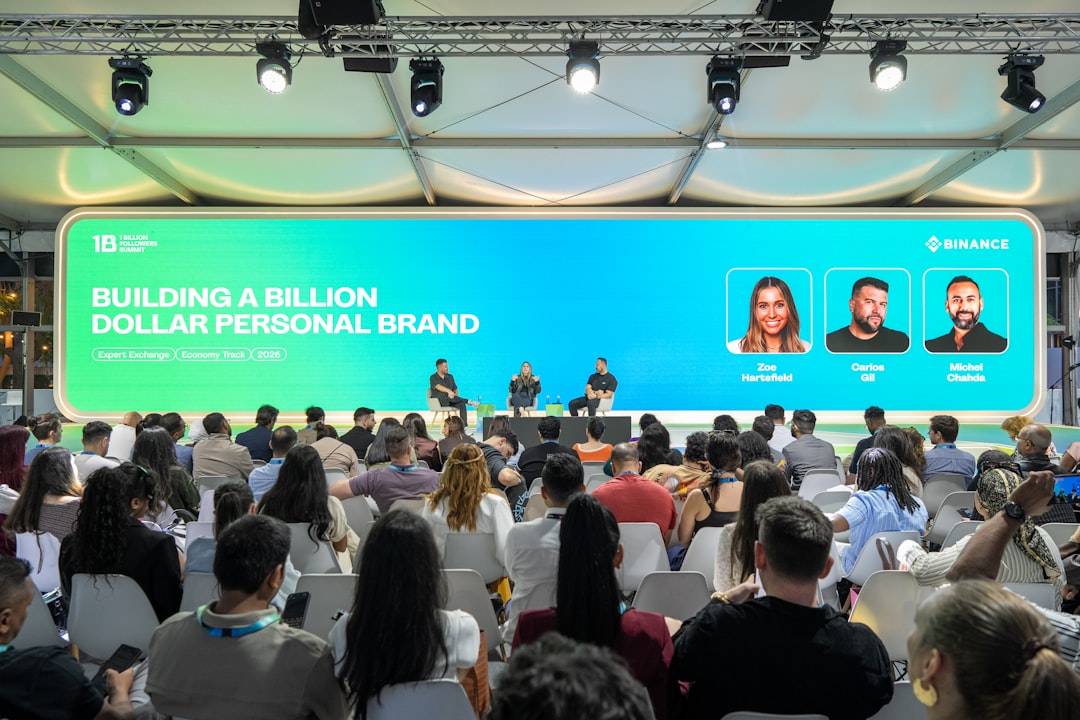
A well-delivered talk at a well-attended industry conference establishes credibility in a way that months of social media posting cannot match. Amy Edmondson's 2014 TEDx talk on psychological safety has been viewed millions of times and directly contributed to "psychological safety" becoming standard vocabulary in organizational development. The challenge: speaking opportunities at high-credibility venues are competitive and typically require an existing reputation to obtain.
Books
Most effective for: Establishing definitive authority; reaching audiences who do not follow social media; creating a permanent reference point.
A well-researched, well-argued book remains the highest-status signal of expertise in most fields. Daniel Kahneman's Thinking, Fast and Slow (2011), Jim Collins' Good to Great (2001), and Nassim Taleb's The Black Swan (2007) did not just build their authors' reputations -- they introduced concepts that permanently changed the vocabulary of their fields. Books get reviewed, cited, assigned in courses, and discussed for years. The downside is the investment: a rigorous non-fiction book typically requires 12-24 months of research and writing.
Measuring Real Influence
Vanity metrics -- follower counts, likes, post impressions -- are the wrong measures of thought leadership progress. What matters is influence: are you changing how people think and act?
Inbound requests: Journalists, conference organizers, and potential clients reaching out proactively is the clearest signal that your thought leadership is working. Track these systematically.
Citation frequency: How often do others in your field reference your work, framework, or arguments? Google Scholar (for academic work), Google Alerts, and systematic reading of field publications can track this.
Conversation direction: Are you setting the agenda for discussions in your field, or reacting to others' agendas? The difference between a participant and a thought leader is often who raises the questions.
Practitioner adoption: Do practitioners change their behavior or terminology based on your contributions? A framework that enters common use -- like Christensen's "disruptive innovation" or Edmondson's "psychological safety" -- is the gold standard of influence.
The Thought Leadership Audit
Every 6-12 months, conduct an honest audit:
- What is the most original idea I have contributed in the past year?
- Who, specifically, has changed their thinking based on my work?
- Am I advancing my field or recycling its existing ideas?
- Is my expertise deepening or merely broadening without deepening?
These questions are uncomfortable precisely because they measure what matters. Most people who call themselves "thought leaders" and run this audit honestly discover they have been producing content rather than contribution.
Common Pitfalls
Broadening too early: Once you have established territory in a specific domain, there is pressure to expand -- to comment on adjacent topics, to broaden your audience. Expanding before deep credibility is established in the original domain dilutes both. Michael Porter spent decades refining competitive strategy before extending to healthcare and social impact. Build depth before breadth.
Chasing formats: Video is popular; podcasts are popular; short-form is popular. Chasing whatever format is currently trending produces content that matches the format but often lacks the depth that builds real credibility. Match format to how your expertise is best expressed, not to what is currently fashionable.
Confusing agreement with influence: Audiences that consistently agree with everything you say are not being influenced -- they already believed what you are telling them. The most meaningful engagements are with skeptics and with people who update their views. As the physicist Richard Feynman observed, the first principle of intellectual honesty is that you must not fool yourself -- and you are the easiest person to fool.
Ghostwriting without disclosure: Outsourcing your thinking -- having others write under your name without meaningful contribution from you -- is a short-term visibility strategy that creates long-term credibility risk. When audiences encounter you live (on stage, in interviews, in conversation), the gap between the ghostwritten persona and your actual thinking becomes visible and damaging.
Thought Leadership in the Age of AI Content
A new challenge has entered the thought leadership landscape: AI tools that can produce competent, grammatically polished content on virtually any topic at high volume. This development makes the distinction between genuine and manufactured thought leadership more consequential, not less.
AI-generated content can produce fluent summaries of what is already known. It cannot contribute original perspectives grounded in direct experience, original data, or genuine expertise. As the volume of competent-but-generic content increases exponentially, the signal value of specifically original, experientially grounded thinking increases proportionally.
The practical implication: the return on genuine expertise grows as generic content becomes commoditized. A synthesis article on a common topic is now worth less because AI can produce one instantly. A firsthand analysis of how a specific operational change affected specific outcomes -- drawing on experience AI cannot replicate -- is worth more than ever.
This also affects how audiences evaluate credibility. Readers are developing sharper instincts for AI-assisted content and are beginning to weight original evidence -- case studies, original data, specific named examples with verifiable details -- more heavily. Thought leadership in the coming decade will increasingly be distinguished by the things only you can know, because you were there, because you did the work, because you collected the data.
For related reading, see how to set career goals that actually work, what makes feedback actually useful, how to write clearly for a professional audience, and what is personal branding.
The Long Game
Real thought leadership is a compounding asset. Each piece of rigorous work builds on the last. Early contributions create the credibility that gets later contributions read. Frameworks get adopted and cited. Invitations arrive. Conversations find you.
The path is straightforward even if it is not quick: identify what you genuinely know that others do not, take specific and defensible positions, produce consistently in a format that showcases rigorous thinking, engage seriously with your field, and measure influence rather than attention.
Warren Buffett once described his investment strategy as "slow getting rich." The same principle applies to thought leadership. There are no shortcuts that produce the real thing. But the slow version, done well, is durable in a way that manufactured visibility is not. The world has enough content. What it lacks -- and what it rewards -- is genuine thinking.
References and Further Reading
- Edelman & LinkedIn. (2021). 2021 B2B Thought Leadership Impact Study. https://business.linkedin.com/marketing-solutions/b2b-thought-leadership-impact-study
- Clark, D. (2015). Stand Out: How to Find Your Breakthrough Idea and Build a Following Around It. Portfolio/Penguin.
- Newport, C. (2012). So Good They Can't Ignore You: Why Skills Trump Passion in the Quest for Work You Love. Grand Central Publishing.
- Christensen, C. M. (1997). The Innovator's Dilemma: When New Technologies Cause Great Firms to Fail. Harvard Business Review Press.
- Cialdini, R. B. (1984). Influence: The Psychology of Persuasion. Harper Business.
- Cross, R., & Parker, A. (2004). The Hidden Power of Social Networks: Understanding How Work Really Gets Done in Organizations. Harvard Business Review Press.
- Grant, A. (2013). Give and Take: Why Helping Others Drives Our Success. Viking.
- Thiel, P., & Masters, B. (2014). Zero to One: Notes on Startups, or How to Build the Future. Crown Business.
- Kahneman, D. (2011). Thinking, Fast and Slow. Farrar, Straus and Giroux.
- Edelman. (2023). Edelman Trust Barometer. https://www.edelman.com/trust-barometer
- Crestodina, A. (2023). LinkedIn Content Strategy Analysis. Orbit Media Studios. https://www.orbitmedia.com/blog/
Frequently Asked Questions
What is thought leadership?
Thought leadership is the practice of building and demonstrating genuine domain expertise in a way that shapes how other practitioners, decision-makers, or the public think about a field or problem. A thought leader is not simply famous or prolific — they are credible, specific, and original enough that people change their thinking based on what the thought leader says. The term is widely misused to describe generic content production; real thought leadership requires a distinctive perspective backed by demonstrable knowledge.
How is thought leadership different from personal branding?
Personal branding is about managing how you are perceived — your professional identity, visibility, and reputation. Thought leadership is a specific type of personal brand built entirely around intellectual contribution to a field. You can have a strong personal brand without being a thought leader (actors and athletes do this), but you cannot be a thought leader without demonstrating original thinking. Thought leadership is a subset of personal brand that requires substantive expertise, not just visibility.
How long does it take to establish thought leadership?
Building genuine thought leadership typically takes three to five years of consistent, focused contribution to a specific domain. The timeline compresses when you have genuine firsthand expertise (operational experience, original research, or unique access to data) and lengthens when you are primarily synthesizing others' ideas. Virality can create temporary spikes in visibility, but durable thought leadership is built through consistent, credible output over time.
What platforms are best for establishing thought leadership?
The best platform depends on your audience and format strengths. LinkedIn is most effective for B2B audiences, executives, and hiring contexts. Substack and long-form newsletters build a committed readership willing to engage deeply. Speaking at industry conferences builds credibility fastest within professional communities. Writing books remains the highest-status signal of expertise. Most effective thought leaders use multiple channels, with one primary format that plays to their strengths.
What is the biggest mistake people make when trying to build thought leadership?
The most common mistake is trying to cover too much ground. Generic content about broad topics ('leadership,' 'innovation,' 'productivity') is indistinguishable from thousands of other voices and builds no meaningful credibility. Thought leadership requires staking out a specific territory, taking a defensible position, and being willing to be wrong about something specific. Specificity — a narrow domain, a clear angle, a distinctive view — is what makes thought leadership recognizable and citable.